
REVIEW · EASTER ISLAND TOURS
Shore Excursion: Easter Island Highlights for Cruise Passengers
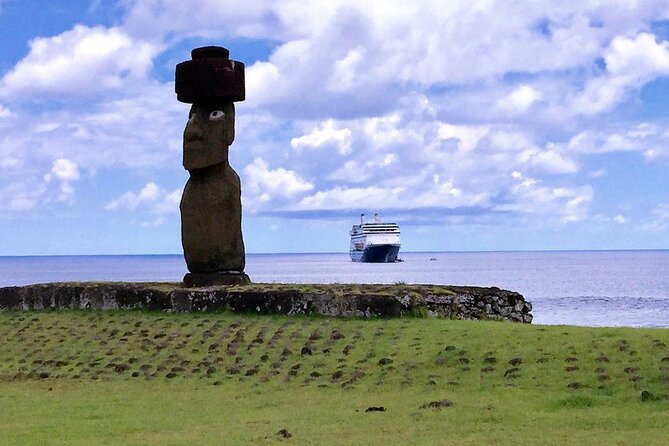
Easter Island packs a huge story into a small island. I like this small-group tour, limited to eight people, and I like the smart mix of moai sites, volcano views, and Anakena Beach. The main concern is timing: park admission and lunch cost extra, and a cruise passenger must keep a close eye on the return schedule.
The route covers six major sights in about six and a half hours, with an English and Spanish-speaking guide handling transport and the pier connection. I also appreciate the clear cruise focus, with pickup at Hanga Piko before the first tender arrives and a planned return before the ship sails.
In This Review
- Key points at a glance
- Why this route works for a cruise stop
- Rano Raraku: where the moai took shape
- Ahu Tongariki: fifteen statues by the sea
- Anakena Beach: a change of pace
- Orongo: the crater-edge ceremonial village
- Rano Kau Trailhead: a broad volcanic view
- Ahu Akivi: seven moai away from the coast
- What $279 buys you
- The cruise timing deserves serious attention
- Who should book this Easter Island tour?
- FAQ
- What is the price of the Easter Island shore excursion?
- How long does the excursion last?
- What time does the tour start?
- Where does the tour begin and end?
- How many people can join the tour?
- Is the guide available in English?
- Is cancellation free?
- Should you book it?
Key points at a glance
- Six major Rapa Nui sights: Visit Rano Raraku, Ahu Tongariki, Anakena Beach, Orongo, Rano Kau, and Ahu Akivi in one full sightseeing loop.
- Small group of up to eight: A compact group should make it easier to hear the guide and keep the day moving.
- Cruise-friendly pickup: The team waits at the pier with a sign showing your name, then brings you back to the same meeting point.
- Moai in different settings: See statues at a quarry, on a restored ceremonial platform, near the beach, and inland at Ahu Akivi.
- Park entry is extra: The Rapa Nui National Park entrance fee is not included in the $279 price.
- Lunch is not included: Plan for the meal cost separately, and keep enough time for the return tender.
Why this route works for a cruise stop
Easter Island is not a place where you want to rely on a loose plan. Cruise passengers usually reach Hanga Roa by tender, and the day can feel short once the boat transfer is added. This tour tackles the main practical problem by arranging pier pickup and drop-off, rather than leaving you to find transport after stepping ashore.
The meeting point is Hanga Piko in Hanga Roa, and the advertised start time is 9:00 am. The team plans to wait before the first tender arrives, holding a sign with your name. That is a useful detail, since a tender landing can be busy and the island is not the place for a long search through a crowd.
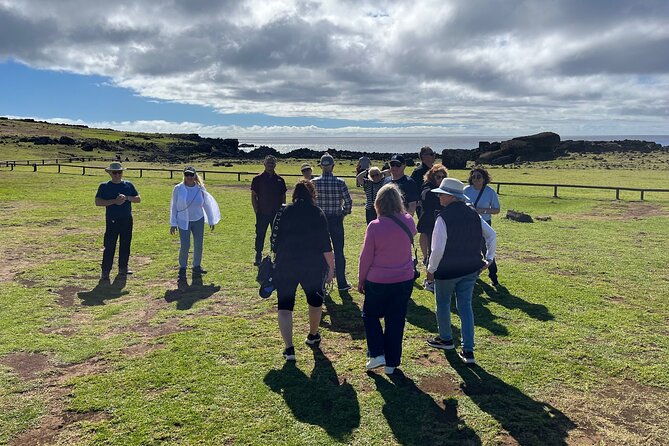
The group size matters here. With no more than eight people, you should get a more personal day than you would on a large coach. It also helps at archaeological sites, where a guide may need to explain what you are looking at before moving the group to the next viewpoint.
The total duration is about six hours and thirty minutes. The listed visits add up to roughly six hours and ten minutes, leaving a modest amount of time for driving between sites, organizing the group, and handling the cruise pickup and return. That schedule is efficient, but not generous. I would keep your watch handy and avoid adding independent plans at lunch.
More shore excursions in Easter Island:
- Shore Excursion: Highlights of Easter Island
★ 5.0 · 9 reviews - Easter Island Shore Excursion – Small Group Tour
★ 5.0 · 2 reviews - Shore Excursion: Petrohue Waterfalls, Frutillar & Puerto Varas
★ 4.5 · 554 reviews
Rano Raraku: where the moai took shape
The first stop is Rano Raraku, a volcanic tuff quarry that supplied the stone used for the island’s moai. This is one of the most important places on the route because it changes the way you see the statues. Instead of viewing finished figures only on ceremonial platforms, you see the setting where many were cut and prepared.
The planned visit lasts about 50 minutes. That gives you enough time to take in the quarry and hear the basic story of moai construction, though it is not a long archaeological walk. The site’s value is visual and historical: the rough volcanic stone here allowed statue builders to work on a much larger scale.
Admission to Rapa Nui National Park is not included. You should budget for that separately before setting out, since the tour price covers the guide and transport but not the national park entrance.
Rano Raraku can be a demanding stop for anyone who prefers very little walking. The supplied details do not specify the walking distance, trail surface, or accessibility arrangements, so you should ask the operator if mobility is a concern. Most people can participate, but that broad statement does not replace a question about your own needs.
Ahu Tongariki: fifteen statues by the sea
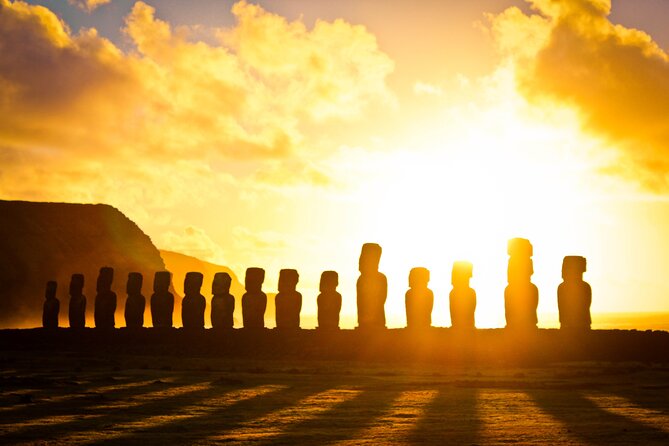
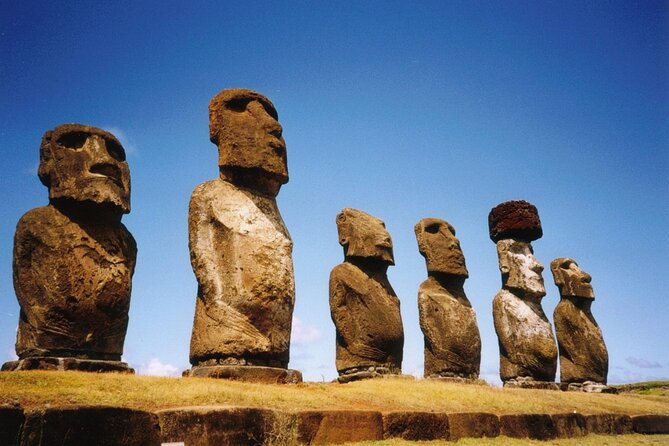
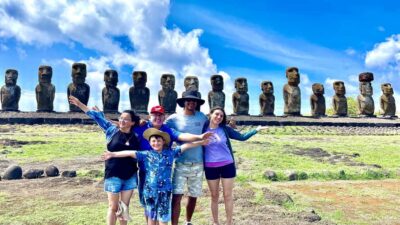
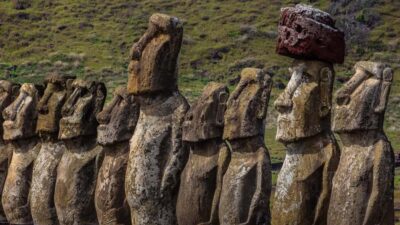
Ahu Tongariki is opposite Rano Raraku and receives about 50 minutes. It is the largest reconstructed ceremonial platform on the island, with fifteen visible standing moai. This is likely to be one of the day’s strongest visual moments.
The scale is the point. At other sites, you may focus on one statue or a smaller group. Here, the line of figures gives you a better sense of the effort behind the ahu, the ceremonial platform, and the importance of collective projects in Rapa Nui culture.
The stop follows naturally after the quarry. You have just seen where stone was obtained, and now you can see statues arranged in their intended ceremonial setting. That sequence makes the tour feel more coherent than a random collection of photo stops.
Fifty minutes should work well for an explanation, photographs, and a good look at the platform. It may feel brief if you want long quiet time at the site, particularly if the group gathers quickly for the next drive. I would listen to the guide first, then use the remaining time for pictures rather than trying to photograph everything before understanding the place.
Anakena Beach: a change of pace

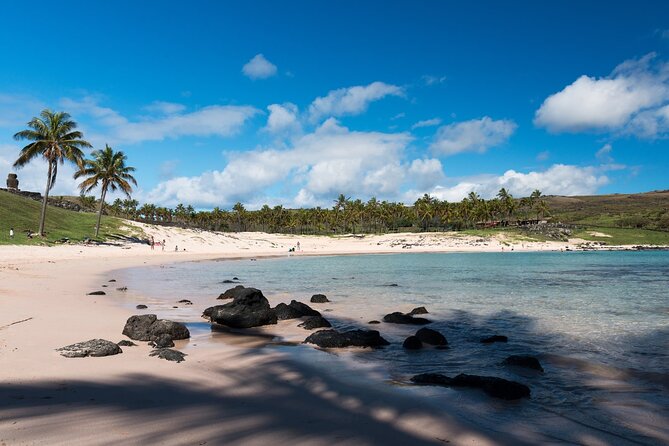
After two major moai sites, Anakena Beach gives the day a different rhythm. The beach has warm turquoise water and coral sand, and it is described as the island’s main beach. The planned visit lasts one hour and twenty minutes, the longest stop on the schedule.
Anakena is not just a swimming break. It was the ancestral home of the Miru Araki royal family, and Ahu Nau Nau adds an important ceremonial element to the visit. You get beach scenery and archaeological interest in one place, which helps keep the middle of the day from becoming a string of similar statue platforms.
The extra time here may be useful for a relaxed walk, photographs, and a meal break. Lunch is not included, so this is the natural point to arrange food if the group and guide do so. The supplied details do not promise a restaurant, picnic, or swimming time, so do not assume any one of those options is part of the tour.
The beach can also expose the limits of a tightly timed cruise excursion. If you want a long swim or a slow lunch, one hour and twenty minutes can disappear quickly. I would treat the stop as a chance to see the beach, the ceremonial platform, and perhaps pause for food, rather than expecting a full beach day.
More Boat Trips in Easter Island:
- Tour to the Motus: Boat trip and snorkeling in Rapa Nui
★ 5.0 · 8 reviews - T3+T4-RAPA NUI ARCHAEOLOGICAL SITES (non-cruise visitors)
★ 5.0 · 8 reviews - T2-THE MUST-HAVES OF RAPA NUI (non-cruise visitors)
★ 4.5 · 4 reviews - T1-THE GRAND TOUR (non-cruise visitors)
★ 5.0 · 3 reviews
Orongo: the crater-edge ceremonial village
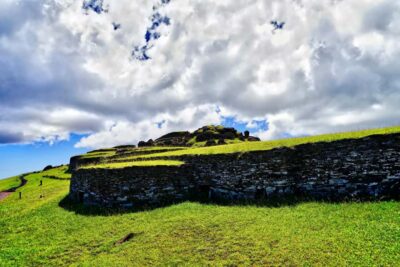
Orongo sits beside the crater of Rano Kau and receives about one hour. Its appeal comes from the combination of setting, archaeology, and historic importance. The village occupies a dramatic position near the volcano, so this is a place to look outward as well as down at the remains.
Orongo is associated with the island’s ceremonial past and is described as a site with unusual complexity. That makes it a good counterpoint to the quarry and Ahu Tongariki. At Rano Raraku, the focus is statue production. At Orongo, the focus shifts to ceremony, belief, and the island’s relationship with its volcanic surroundings.
An hour is enough for a guided visit without turning the stop into a rushed glance. You should expect the guide to frame the site for you, because ruins alone do not always explain their purpose. The English and Spanish format is useful for mixed-language groups, though a bilingual tour can sometimes require a little patience as information is presented in two languages.
The operator does not provide specific details about walking conditions or shade. If you need a certain level of physical ease, ask before booking. The tour description says most people can participate, but Orongo’s setting makes it sensible to confirm what the visit involves.
Rano Kau Trailhead: a broad volcanic view
The Rano Kau stop lasts about one hour and is located in the southwest of the island. The crater is described as about 1.5 kilometers wide and as an important reserve for endemic plant life. Even without a long walk, this should be one of the day’s best natural viewpoints.
The name given for the stop is Rano Kau Trailhead, so you should clarify with the operator exactly how far the group goes from the vehicle. The information supplied identifies the crater and its scenery, but it does not promise a full trail hike. That distinction matters if you are choosing this tour for walking rather than sightseeing by vehicle.
Rano Kau also fits well beside Orongo. The two stops are connected by location and subject, but they offer different views. Orongo gives you the archaeological site. Rano Kau gives you the volcanic setting and a sense of the island’s natural scale.
One hour should allow for photographs and an explanation of the crater. I would save a little attention for the plants and the shape of the crater, not just the camera view. The island’s story is easier to understand when you see how its volcanoes shaped both the scenery and the supply of stone.
Ahu Akivi: seven moai away from the coast
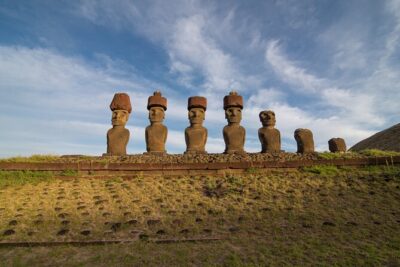
Ahu Akivi is the final listed stop and lasts about one hour. Its seven moai are unusual because the platform is inland rather than beside the sea. Archaeologists William Mulloy and Gonzalo Figueroa, working with Rapa Nui people, restored the statues to their standing positions.
That inland setting makes Ahu Akivi a useful final stop. By this point, you have seen statues at their quarry, on the largest reconstructed platform, and beside a beach. Ahu Akivi adds another arrangement and prevents the day from ending with a repeat of the same view.
The hour should give you time to understand why the site differs from the coastal ahu. I would ask the guide to compare the sites directly, since the contrast between them is more useful than treating each platform as an isolated monument.
As with the other archaeological locations, national park entry is not included. Keep your ticket arrangements and any required payment in mind before the tour begins.
What $279 buys you
At $279 per person, this is not a cheap island outing. The price makes more sense when you count what is included: a professional guide, English and Spanish service, transport, pier pickup, pier return, and a maximum group of eight.
For a cruise passenger, the logistics have real value. You are not just buying visits to six sites. You are paying for a planned route that connects the tender pier with distant parts of Easter Island and aims to return you before departure. A private vehicle or private guide could cost more, while a large group tour might offer a lower price but less personal attention.
The main extra cost is the Rapa Nui National Park entrance fee. Lunch is also separate. Since the tour lasts most of the day, I would include both in your budget rather than treating the advertised price as the final total.
The value depends on your priorities. If you want a broad first look at Easter Island and have only one cruise call, the coverage is strong. If you prefer slow photography, extended beach time, or long walks at one site, the six-stop plan may feel too fast.
The cruise timing deserves serious attention
The operator aims to meet you before the first tender arrives and return you to Hanga Piko before the ship departs. That is exactly the sort of arrangement cruise passengers need, but you should still confirm the ship’s actual arrival, tender process, and all-aboard time before booking.
The activity begins at 9:00 am. Cruise schedules can change, and the tour details do not state a guaranteed return clock beyond the promise to get you back in time for your tender. I would give the operator your ship name, arrival time, and departure time during booking, then reconfirm the meeting instructions.
A mobile ticket is provided, which makes booking convenient. Keep the ticket and the operator’s contact details available on your phone, and make sure your device is charged before leaving the ship. The meeting point is Hanga Piko, and the end point is the same meeting point.
Free cancellation is available if you cancel at least 24 hours before the local start time. Changes or cancellations made inside that window are not accepted for a refund, so keep the policy in mind if your cruise schedule is uncertain.
Who should book this Easter Island tour?
I would choose this excursion if you want to see the island’s main sights in one organized day. It suits first-time visitors, cruise passengers who dislike transport puzzles, and people who value a small group over the lowest possible price.
It also works for anyone who wants variety. The route includes a quarry, a major ceremonial platform, a beach, a crater village, a volcanic viewpoint, and an inland ahu. That range gives you a more rounded picture of Rapa Nui than a tour focused only on the most famous moai.
I would think twice if your main goal is a relaxed beach day or a long hike. The schedule is full, lunch is not included, and the national park fee is extra. The details also do not specify walking distances, meal arrangements, or exact trail access, so people with mobility concerns should ask before paying.
The bilingual format suits English and Spanish speakers, but each explanation may take longer when the guide presents information in both languages. In a group of eight, that should remain manageable, though it is another reason to expect a structured rather than leisurely day.
FAQ
What is the price of the Easter Island shore excursion?
The price is $279 per person. The Rapa Nui National Park entrance fee and lunch are not included.
How long does the excursion last?
The tour lasts approximately 6 hours and 30 minutes.
What time does the tour start?
The scheduled start time is 9:00 am.
Where does the tour begin and end?
The tour begins at Hanga Piko in Hanga Roa, Easter Island, and ends back at the same meeting point.
How many people can join the tour?
The activity has a maximum of eight participants.
Is the guide available in English?
Yes. The tour includes a bilingual guide who speaks English and Spanish.
Is cancellation free?
You can cancel for a full refund up to 24 hours before the experience start time. Cancellations or changes made less than 24 hours before the start are not accepted for a refund.
Should you book it?
Book this tour if your cruise gives you one main day on Easter Island and you want the broadest sensible coverage without arranging every transfer yourself. The small group, pier pickup, six major stops, and return plan make the $279 cost easier to justify.
Before booking, confirm the national park fee, lunch plan, walking requirements, and ship timing. If you accept a busy schedule and want to see Rano Raraku, Ahu Tongariki, Anakena, Orongo, Rano Kau, and Ahu Akivi in one outing, this is a practical and well-balanced choice.
Just added in Easter Island
- Volcanic Refuges: Excursion to Underground Civilization★ 4.7 · 8 reviews
- Volcanic Wonders and the Kingdom of the Birdman: Half Day★ 5.0 · 6 reviews
- Half Day Private Tour: Caves and Volcanic Refuges★ 4.0 · 14 reviews
- Easter Island Ancestral Dinner and Show with Transport★ 4.5 · 2 reviews
- 2 Day Small Group Tour in Moai Monuments and Historic Pathways★ 5.0 · 22 reviews
- Visit Rapa Nui in 4 days with 3 Tours and Accommodation included★ 4.0 · 2 reviews
- Tour to the Motus: Boat trip and snorkeling in Rapa Nui★ 5.0 · 8 reviews
- The birdman journey in Easter Island★ 5.0 · 1 review
Easter Island Tours, compared.
Two days of Full Day Tour of Rapa Nui + Sunrise in Tongariki
Read our review →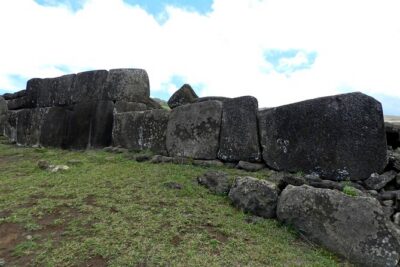
2-Day Private Tour Easter Island Highlights Complete Discovery
Read our review →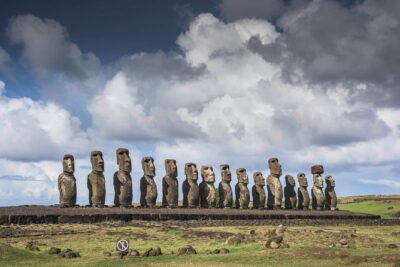
Private Tour: Full Day Easter Island Highlights
Read our review →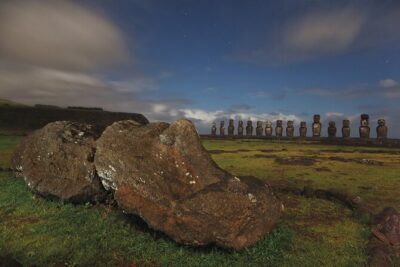
Browse the lists this tour appears in