
REVIEW · EASTER ISLAND TOURS
T1-THE GRAND TOUR (non-cruise visitors)
The Moai tell their story in stone. This full-day circuit gives you a close look at Rapa Nui’s major ceremonial sites, from the restored platforms at Tahai to the volcano crater at Rano Kau. I especially like the private transport and the route’s broad coverage: you see beaches, petroglyphs, quarries, platforms, and the Bird Man village in one long day. I also like the chance to have a guide explain how the island’s ancient people shaped their surroundings rather than simply pointing at statues.
The main drawback is cost. At $344.50 per person, this is not a casual sightseeing outing, and the national park entrance fee of $80 per adult is extra. The description also needs clarification on language, since it says the experience is offered in English but lists a private French-speaking guide. Ask about that before paying, especially if you need commentary in a particular language.
In This Review
- Key points at a glance
- Why this grand circuit makes sense on Rapa Nui
- Tahai begins the day beside Hanga Roa
- Anakena brings sand, palms, and origin stories
- Te Pito Kura and Papa Vaka show scale and symbolism
- Pu o Hiro is brief but unusual
- Tongariki offers the classic Moai view
- Rano Raraku is where the stone giants began
- Puna Pau explains the red stone crowns
- Rano Kau and Orongo shift the story to the Bird Man
- What $344.50 really buys you
- Who should choose this full-day route
- Should you book it?
- FAQ
- How long does the tour last?
- What time does pickup begin?
- Where can pickup take place?
- Is this tour available to cruise passengers?
- Is the tour private?
- Is the entrance fee included?
- Is lunch included?
- What language is the tour offered in?
- Can most people participate?
Key points at a glance
- Ten major stops in one day: The route covers Tahai, Anakena, Te Pito Kura, Papa Vaka, Pu o Hiro, Tongariki, Rano Raraku, Puna Pau, Rano Kau, and Orongo.
- Private transport and private guiding: Your group has its own vehicle and guide, rather than joining a large shared outing.
- The quarry is the star: Rano Raraku lets you see hundreds of unfinished or abandoned Moai where most of the statues were carved.
- Anakena adds a welcome change: White sand, translucent water, and the island’s notable coconut grove break up a day otherwise filled with stone and volcanic ground.
- The $80 park ticket matters: One adult ticket is valid for 10 days and covers all sites, but it is not included in the tour price.
- French guide details should be confirmed: The named guide in the praise is David, but the advertised language information is mixed.
Why this grand circuit makes sense on Rapa Nui
Rapa Nui is compact on a map, but its most important sites are scattered around the coast and interior. If you have only one full day, this route gives you a useful framework for understanding the island. You are not just checking off Moai. You are seeing where they were displayed, where they were made, how their red stone topknots were produced, and how later religious life shifted toward the Bird Man ceremony.
The day begins at 9:00 a.m. with pickup from a hotel, residence, boarding house, or campsite in Hanga Roa. That door-to-door service is valuable here. You do not need to arrange separate transport between remote sites, and private travel lets your group ask questions as the day develops.
The outing lasts about nine to ten hours. That is a full day by any measure. I would treat it as the main cultural day of your visit, not as a light morning activity followed by a relaxed afternoon. The schedule includes ten stops, so most visits are focused rather than leisurely.
The private format is one of the strongest reasons to consider the price. Only your group participates, and the guide can explain the sites at your pace. The available praise gives special attention to a guide named David, described as passionate, well documented, and good-humored. If David is assigned to your group, that may be a plus for French-speaking visitors. Still, confirm the guide’s language when you book because the tour information also advertises English.
More Boat Trips in Hanga Roa:
- Tour to the Motus: Boat trip and snorkeling in Rapa Nui
★ 5.0 · 8 reviews - T3+T4-RAPA NUI ARCHAEOLOGICAL SITES (non-cruise visitors)
★ 5.0 · 8 reviews - T2-THE MUST-HAVES OF RAPA NUI (non-cruise visitors)
★ 4.5 · 4 reviews
Tahai begins the day beside Hanga Roa
Ahu Tahai is a practical first stop because it introduces the basic parts of Rapa Nui ceremonial architecture. An ahu is a stone platform, and the Moai once stood on these platforms as important ancestral figures. The restored complex sits by the bay in Hanga Roa, close to the village, so you begin with an accessible site before heading farther afield.
You have about an hour here. Use it to look beyond the famous faces. The arrangement of the platforms shows how the ancient community organized ceremonial space and changed the natural setting to support enormous stone structures.
Tahai is also known for sunset views, but this tour arrives in the morning at 9:00 a.m. Do not expect the famous evening light during this outing. The bay still gives the stop a strong sense of place, but anyone hoping to photograph sunset with the Moai should plan a separate return visit.
Admission is not included in the tour price. The supplied details list an $80 entrance charge under this stop, but the main park ticket is also described as an $80 adult pass valid for 10 days across all sites. That appears to refer to the same island-wide access requirement, not two separate charges. Confirm the exact arrangement before departure.
Anakena brings sand, palms, and origin stories
After Tahai, the route crosses to Anakena Beach on the opposite side of the island. This is Rapa Nui’s best-known white-sand beach, with clear water and the island’s only coconut grove. After several stops centered on stone, a beach visit gives the day some welcome variety.
The planned visit lasts about an hour and a half, the longest single stop apart from Rano Raraku. The beach is tied to the arrival of the first Polynesian settlers, so it is more than a pretty place for photographs. It connects the island’s ceremonial story to the ocean and to the people who first made Rapa Nui home.
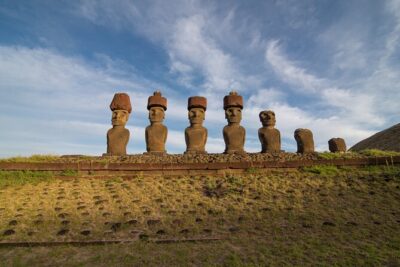
Anakena’s restored Moai are described as among the best preserved on the island. You can study how the statues relate to the platform and the beach instead of seeing them as isolated objects in a museum-like setting.
Lunch is not included. You can eat at a restaurant on site or bring a picnic for the developed picnic area. The timing makes Anakena a sensible place to plan food, but the tour information does not specify restaurant hours, prices, or what you should bring. If you prefer a picnic, arrange it before leaving Hanga Roa.
Te Pito Kura and Papa Vaka show scale and symbolism
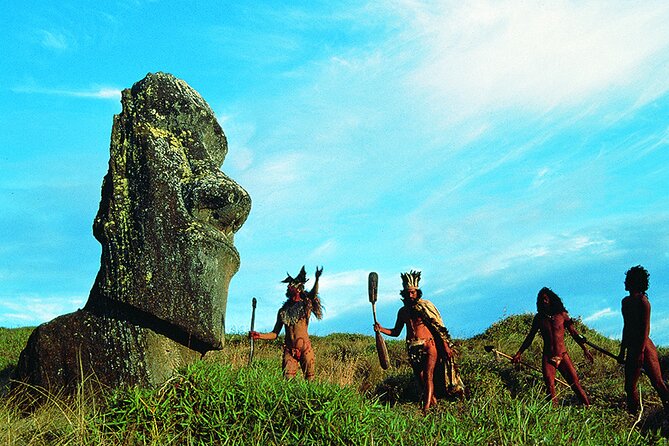
Ahu Te Pito Kura follows Anakena, with about 30 minutes at the site. The main attraction is the largest Moai ever raised on an ahu. It fell in the 19th century and broke in two, so you see both the ambition of the builders and the damage that ended the statue’s time upright.
Next to the platform is a stone associated with magnetic anomalies. The description presents it as a protective stone, so your guide’s explanation will matter here. This is a short stop, but it offers a useful contrast with the polished restoration at Anakena. Not every major Moai is still standing.
Papa Vaka takes about 20 minutes. Here, petroglyphs carved into a basalt outcrop focus on fish and other marine resources. The images point to the importance of the sea in daily life and belief. You will not spend long at the rock, so listen carefully and stay close enough to see the carvings.
The short visit also reminds you that Rapa Nui culture is not only about Moai. Petroglyphs are another major artistic expression, and Papa Vaka puts the marine world at the center.
More things to do on Easter Island:
- From Hanga Roa: Rapa Nui Culture Sightseeing Tour
★ 4.6 · 307 reviews - From Hanga Roa: Easter Island Highlights 2-Day Tour
★ 4.3 · 205 reviews - Full Day Tour in Rapa Nui
★ 4.5 · 122 reviews - 2-Day Private Tour Easter Island Highlights Complete Discovery
★ 5.0 · 110 reviews
Pu o Hiro is brief but unusual
Pu o Hiro is a stop of only about five minutes. The attraction is an aerophone stone, a stone associated with sound when played or blown across in a particular way. Because the visit is so brief, you should not expect a long demonstration or extended interpretation.
This is the kind of stop that works best when your guide gives a compact explanation and points out exactly what to notice. It is not a reason alone to choose the tour, but it adds another small piece to the island’s material culture.
Tongariki offers the classic Moai view
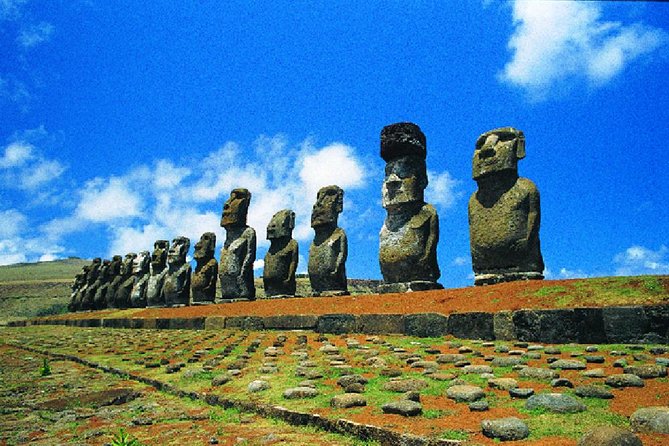
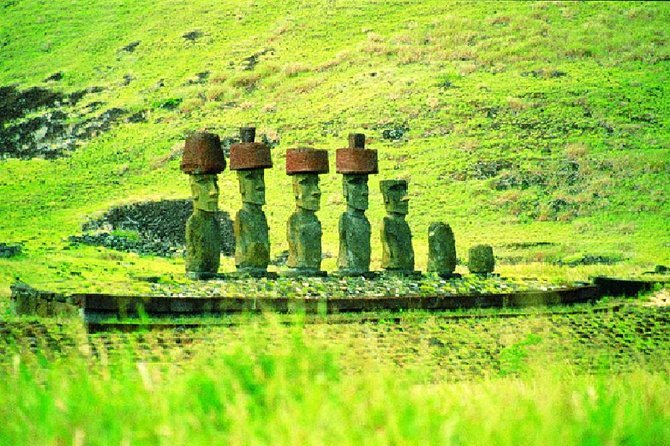
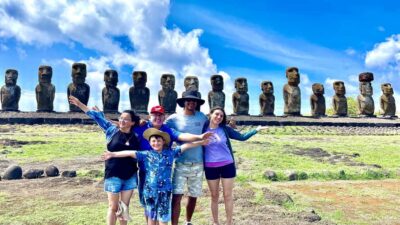
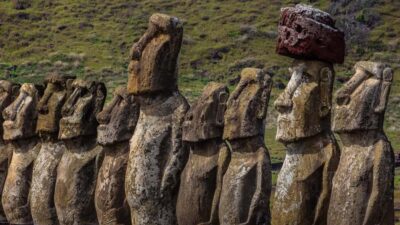
Ahu Tongariki is likely to be one of the day’s most memorable sites. Fifteen Moai face inland from a long ceremonial platform, creating the grandest single grouping on the route. The site has been restored and is often treated as the defining image of Rapa Nui.
You have about an hour here. That is enough time to take in the full line, examine individual figures, and hear how the site fits into the island’s ceremonial system. Look back from different distances. The Moai change character as you move from a close view of their carved bodies to the wider setting of platform, volcanic ground, and open sky.
Tongariki is also associated with sunrise, when early light can give the statues a striking appearance. This itinerary reaches the site later in the day, so you will not get the sunrise experience. That is not a flaw in the tour, but it is worth knowing if dawn photography is one of your priorities.
The site is not included separately from the park pass. Keep your entrance ticket with you throughout the day.
Rano Raraku is where the stone giants began
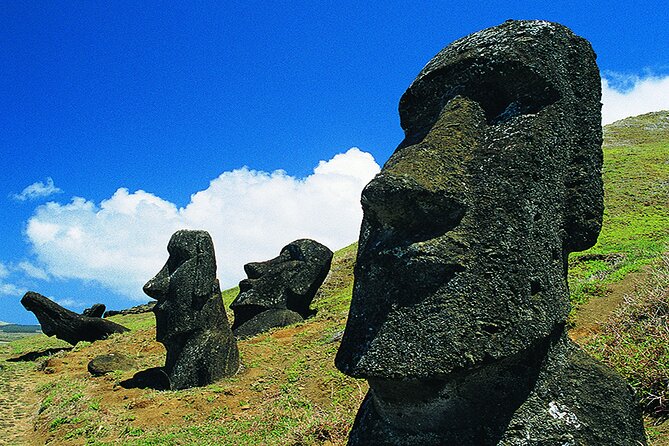
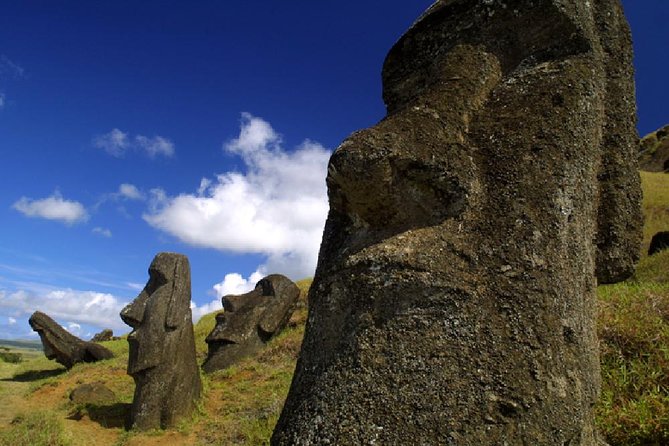
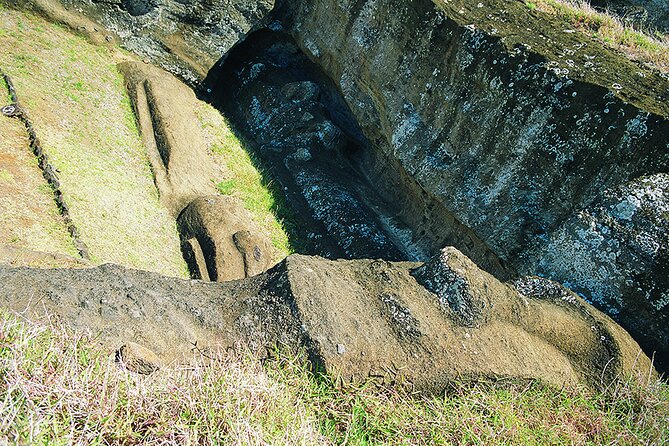
Rano Raraku is the emotional center of the route for many people. This volcanic quarry supplied the stone for almost all of Rapa Nui’s Moai. Hundreds of statues remain around the quarry, including figures that were never transported to a ceremonial platform.
The planned visit lasts an hour and a half, giving you more time here than at most stops. That matters because the quarry rewards slow looking. You can see statues in different stages and positions, which helps you understand that a Moai was a carved project, not a ready-made object that appeared on an ahu.
The setting also changes your view of the famous statues. At Tongariki, the Moai look formal and complete. At Rano Raraku, they appear connected to the mountain and the work of carving. Some seem to emerge from the stone itself. Your guide’s explanation can help you separate confirmed details from popular stories, so use this stop to ask questions.
The ground may require more attention than a platform site. The provided information does not give a detailed accessibility description, so if walking conditions are a concern, ask the operator what the route inside the quarry involves.
Puna Pau explains the red stone crowns
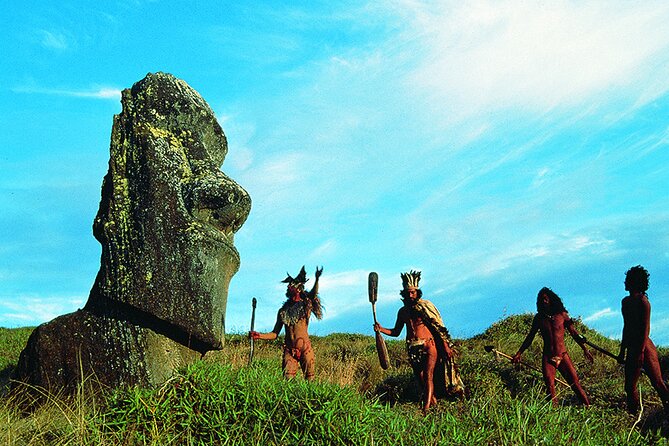
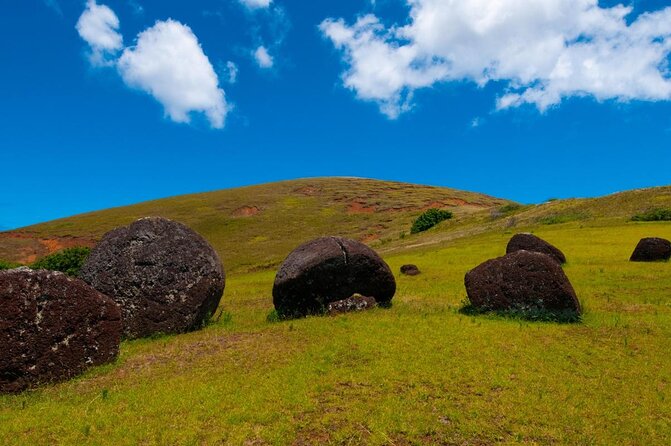
Puna Pau is the island’s other important quarry. Instead of the gray stone used for most Moai, it supplied the red volcanic stone used for their hats or hair arrangements, often called pukao.
The stop lasts about 30 minutes. It is short, but it answers a basic question that can otherwise be missed: how did the red pieces appear on top of the statues? The scale of the Moai was not considered enough on its own, so the red stone added another visual element.
Puna Pau also gives a wide view toward Hanga Roa Bay. After the enclosed feeling of Rano Raraku, that outlook helps you see how small the settled area is compared with the rest of the island.
Rano Kau and Orongo shift the story to the Bird Man
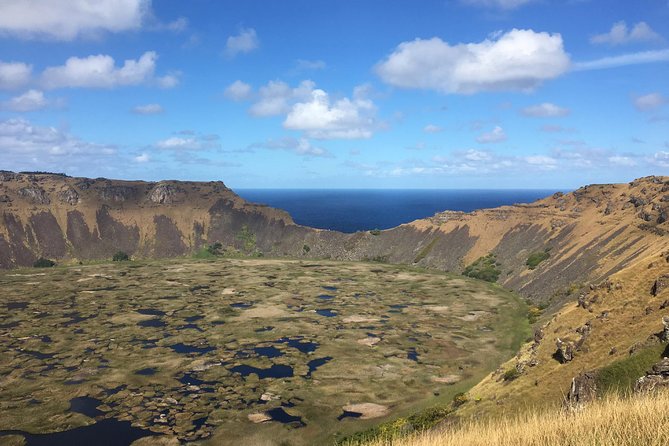
The final pair of major stops moves from the Moai tradition to the later Tangata Manu, or Bird Man, cult. At Rano Kau, you spend about 20 minutes beside the crater of an extinct volcano. The view extends toward the South Pacific and makes Rapa Nui’s isolation easy to grasp.
The crater is large and visually powerful, but the visit is brief. Have your camera ready before the vehicle stops, and stay attentive to the guide’s explanation. The site is included in the admission information, unlike most of the other listed stops.
Orongo is the final one-hour visit. The ceremonial village sits on a cliff facing small offshore islets where seabirds laid eggs during the southern spring. The annual quest for the first egg determined the religious authority for the coming year.
This is a major change in belief and political power. The Moai sites focus on ancestors and monumental stone platforms. Orongo centers on competition, seabirds, cliffs, and seasonal ritual. The village has been restored several times, so your guide can help you understand what you are seeing without reducing the place to a collection of stone houses.
What $344.50 really buys you
The listed price is $344.50 per person. That sounds high until you separate the costs. You receive private transportation and a private guided tour lasting roughly nine to ten hours. The entrance fee is extra, with an adult ticket listed at $80 and a youth price of $40 for ages 7 to 17. The ticket remains valid for 10 days and covers all sites, which is useful if you plan to return independently.
Lunch is also extra. You need to budget for a restaurant meal or prepare a picnic. Group discounts may be available, but the exact amount is not stated, so ask for the total price for your party rather than assuming the discount will apply automatically.
For two people, the cost is a serious splurge. For a group that values private transport, a full island circuit, and a guide who can explain legends and history in detail, the price may be reasonable. A shared outing could cost less, but it would not offer the same private setting or control over questions and pace.
I would not choose this tour just to get quick photographs of Moai. I would choose it if you want the island’s main sites explained as parts of one connected story.
Who should choose this full-day route
This tour suits you best if you are staying in Hanga Roa and want to cover the major archaeological sites in one organized day. It is also a good match if you prefer a private group, need pickup from your accommodation, or want a guide rather than relying on signs and a map.
It may suit French-speaking visitors particularly well if David is available, since the praise attached to his guiding emphasizes clear explanations, passion, and good humor. Confirm the language before booking because the experience is also advertised in English.
The pace may be demanding for anyone who prefers long, unhurried visits. Ten stops leave little room for wandering, and the day includes several short photo and interpretation breaks. Families can participate according to the supplied information, but the tour details do not provide a specific child age policy beyond the reduced entrance price for ages 7 to 17.
Pickup is available from hotels, residences, boarding houses, and campsites. Cruise passengers cannot use this departure, so the tour is aimed at people staying on the island rather than those making a short ship call.
Should you book it?
Book this tour if you have one main sightseeing day and want to understand how the Moai were carved, displayed, topped with red stone, and later replaced by the Bird Man ceremony. The strongest parts are the private format, the wide coverage, the generous time at Anakena and Rano Raraku, and the chance for lively, well-told explanations.
Skip it if the $344.50 price feels uncomfortable, if you already have several days for independent visits, or if you want a relaxed beach day rather than a packed cultural circuit. Before paying, confirm the guide’s language, the exact treatment of the $80 entrance fee, and your lunch plan. With those points settled, this is a strong choice for seeing the major face of Rapa Nui in a single day.
FAQ
How long does the tour last?
The experience lasts approximately nine to ten hours.
What time does pickup begin?
Departure is scheduled for 9:00 a.m.
Where can pickup take place?
Pickup is offered from your hotel, residence, boarding house, or campsite.
Is this tour available to cruise passengers?
No. The pickup service is not available for cruise passengers.
Is the tour private?
Yes. Only your group participates, with private transportation and private guided touring.
Is the entrance fee included?
No. The adult entrance ticket is listed at $80, while the price for ages 7 to 17 is $40. The ticket is valid for 10 days and covers all sites.
Is lunch included?
No. You can eat at a restaurant on site or bring a picnic for the developed picnic area.
What language is the tour offered in?
The experience is advertised in English, but the included private guide is described as French-speaking. Confirm the language available for your departure before booking.
Can most people participate?
The tour information says most people can participate. It does not provide more detailed accessibility conditions for each site.
Just added in Hanga Roa
- Volcanic Refuges: Excursion to Underground Civilization★ 4.7 · 8 reviews
- Volcanic Wonders and the Kingdom of the Birdman: Half Day★ 5.0 · 6 reviews
- Half Day Private Tour: Caves and Volcanic Refuges★ 4.0 · 14 reviews
- Easter Island Ancestral Dinner and Show with Transport★ 4.5 · 2 reviews
- 2 Day Small Group Tour in Moai Monuments and Historic Pathways★ 5.0 · 22 reviews
- Visit Rapa Nui in 4 days with 3 Tours and Accommodation included★ 4.0 · 2 reviews
- Tour to the Motus: Boat trip and snorkeling in Rapa Nui★ 5.0 · 8 reviews
- The birdman journey in Easter Island★ 5.0 · 1 review
Easter Island Tours, compared.
Two days of Full Day Tour of Rapa Nui + Sunrise in Tongariki
Read our review →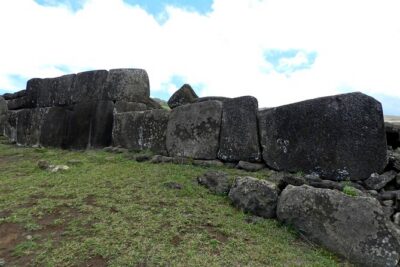
2-Day Private Tour Easter Island Highlights Complete Discovery
Read our review →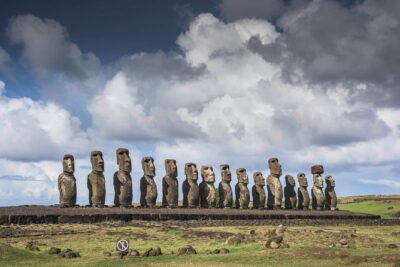
Private Tour: Full Day Easter Island Highlights
Read our review →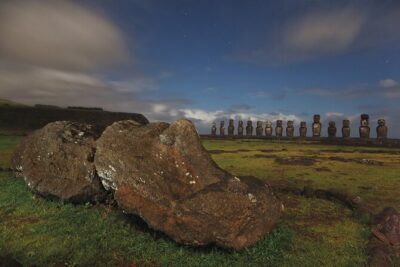
Browse the lists this tour appears in