
REVIEW · EASTER ISLAND TOURS
Shore Excursion: Highlights of Easter Island
The moai tell only part of the story. This six-hour shore excursion gives you a strong first look at Easter Island through its great stone statues, volcanic craters, royal beach, and the old Birdman ceremony. I like the way the route mixes famous sights with places that explain how Rapa Nui society worked. I also like the small group size, capped at eight people, which should make it easier to ask questions and hear your guide.
The main drawback is cost. The tour is $285 per person, and the mandatory National Park ticket adds another $100, bringing the known total to $385 per person before food or drinks. The tour is also non-refundable, so a ship delay or change of plans deserves careful thought.
Guides are a major part of the experience. Hugo is praised for his warmth and pride in the island, while Nikolas, who was born on Easter Island, brought local stories to the Birdman site at Orongo. That local connection can turn a quick stop into something you remember.
In This Review
- Key Points to Know Before You Book
- Meeting Your Guide at Hanga Piko
- Rano Raraku, Where the Moai Took Shape
- Ahu Tongariki and Fifteen Moai by the Pacific
- Anakena Beach and the Royal Connection
- Ahu Akivi and the Seven Statues Facing the Sun
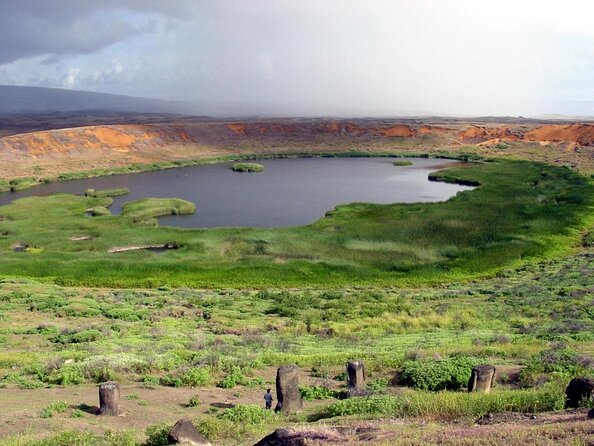
- Rano Kau, Easter Island’s Great Volcanic Bowl
- Orongo and the Story of the Birdman Ceremony
- What the $385 Total Really Buys You
- Who Will Get the Most From This Excursion?
- Should You Book Highlights of Easter Island?
- FAQ
- How long does the Easter Island shore excursion last?
- What time and where does the tour start?
- Is pickup available from the cruise ship pier?
- How many people can join the tour?
- Is the National Park entrance fee included?
- Are food and lunch included?
- Is the tour available in English?
- Can the tour be canceled or changed for a refund?
Key Points to Know Before You Book
- Eight people maximum: The small group format allows more personal attention than a large coach tour.
- Six major sites in about six hours: You visit Rano Raraku, Ahu Tongariki, Anakena Beach, Ahu Akivi, Rano Kau, and Orongo.
- The National Park fee costs extra: The required entrance ticket is $100 per person and is not included.
- Pier pickup is built for cruise passengers: The guide waits at the pier before the first tender arrives and returns you before the ship leaves.
- Local guides add character: Hugo and Nikolas are specifically praised for warmth, island knowledge, and storytelling.
- The schedule is full: Several stops last an hour, but Orongo receives two hours and Rano Kau only 30 minutes.
Meeting Your Guide at Hanga Piko
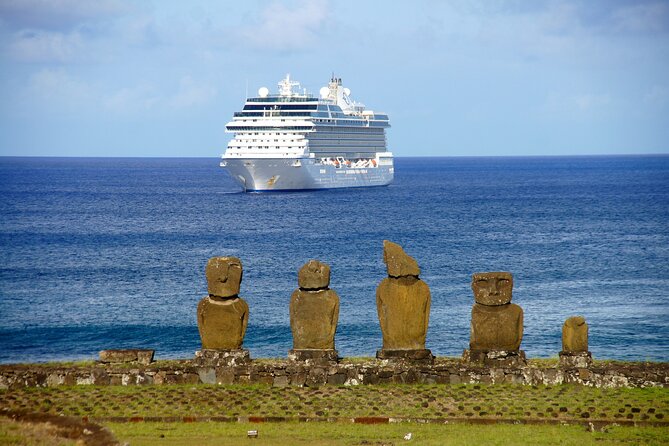
The tour begins at 8:00 am at Hanga Piko in Hanga Roa. Since cruise ships use tenders here, the pickup plan matters. The guide waits at the docking area before the first tender arrives and looks for a sign with your name. Once the group is together, the tour begins.
At the end, you return to the pier and tender area before the ship leaves. That is important on Easter Island, where a missed departure is not a minor inconvenience. Still, you should allow for the possibility of a late tender or delayed docking. One party had a ship delay that pushed its tour back by three hours. The operator adjusted the day and worked to cover the planned sights, but a late start can make an already full schedule feel tight.
The vehicle arrangement can vary. One account describes two guides and drivers using two vehicles, while the tour details allow a maximum of eight people per booking. The practical takeaway is simple: ask how your group and vehicles will be arranged if that matters to you. The small-group limit is a real benefit, but it does not automatically mean the entire outing is exclusive to you.
The tour is offered in English and includes a bilingual English and Spanish guide, pier pickup and drop-off, professional guiding, and bottled water. Wear light, comfortable clothing, a hat, sunscreen, and flat shoes. You will spend time outside at exposed archaeological sites, and the itinerary has little room for fussing with uncomfortable footwear.
More shore excursions in Easter Island:
- Easter Island Shore Excursion – Small Group Tour
★ 5.0 · 2 reviews - Shore Excursion: Easter Island Highlights for Cruise Passengers
★ 5.0 · 1 review - Shore Excursion: Petrohue Waterfalls, Frutillar & Puerto Varas
★ 4.5 · 554 reviews
Rano Raraku, Where the Moai Took Shape
Rano Raraku is the essential starting point for understanding the statues. This volcanic cone is the island’s only quarry made from volcanic tuff, the soft material used to carve the moai on a large scale.
You have about an hour here. The value is not simply seeing statues. This is where the moai were shaped before being moved to ceremonial platforms around the island. The site helps you picture the work in stages: stone selected from the quarry, a figure cut from the slope, and a finished statue transported to an ahu.
The setting also gives you a chance to consider the scale of the undertaking. The moai are not isolated objects placed randomly around the island. They were part of a social and ceremonial system, and Rano Raraku is the workshop at its center.
Admission is not included, so you need the $100 National Park ticket to enter. The one-hour stop is enough for an introduction, though anyone fascinated by archaeology may wish for more time. Because this excursion covers six major places, you should expect a clear overview rather than a slow, scholarly visit.
Ahu Tongariki and Fifteen Moai by the Pacific
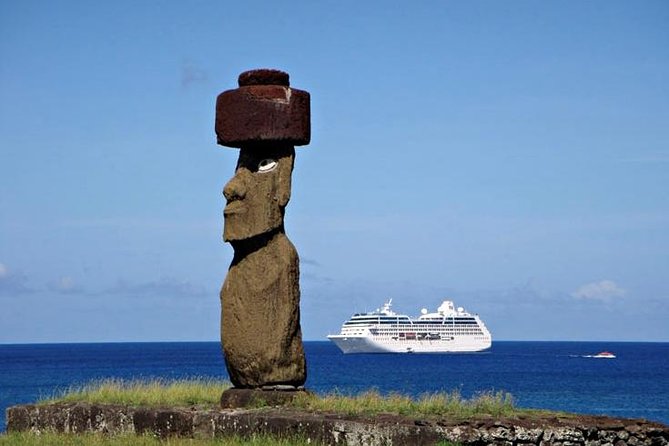
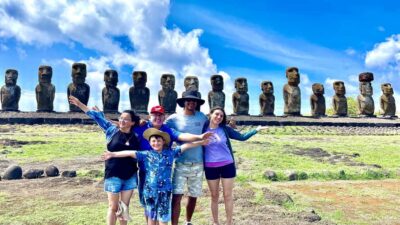
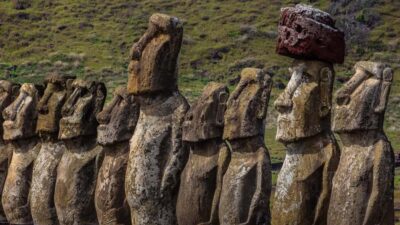
Ahu Tongariki is opposite Rano Raraku and receives another hour. It is the largest reconstructed ceremonial platform on Easter Island, with fifteen moai arranged in a line, their backs to the Pacific Ocean.
This is likely to be one of the tour’s most powerful visual moments. The row gives you a direct sense of the ceremonial order of the ahu. Each statue faces inland, while the ocean lies behind them. That arrangement helps explain that these figures were connected to the community and its ancestors, not placed simply as decoration.
The site is also a good place to listen to your guide’s explanation of reconstruction. The platform you see today has been restored, so the visit involves both ancient construction and modern archaeological work. A guide who can explain those layers without drowning you in dates is especially useful here.
You might want to take your time with the whole row rather than photograph only the largest statue. Look at the spacing, the platform, and the way the figures relate to the open setting. The one-hour allocation gives you room for photos and explanation, but the larger group schedule means you will need to move on.
Anakena Beach and the Royal Connection
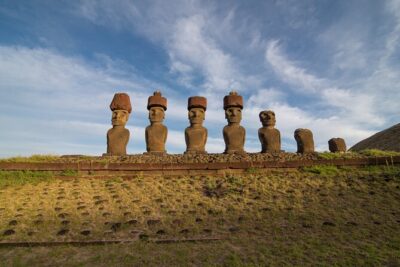
After the quarry and the great ceremonial platform, Anakena Beach changes the mood. The beach has warm turquoise water and coral sand, and it was the ancestral residence of the Miru Araki royal family.
You have about an hour here. Anakena shows that Easter Island is not only about moai and volcanic remains. The beach connects ceremonial life with royal tradition and daily use of the island’s coastline.
Ahu Nau Nau is the key archaeological feature. Its moai are known for their refined workmanship, making this a useful contrast with the massive line at Tongariki. At Tongariki, the power comes from the number and scale of the statues. At Anakena, you can pay closer attention to the finish and detail of individual figures.
The schedule does not say that swimming is included, so treat this as a sightseeing stop rather than a guaranteed beach break. The water may look inviting, but your guide’s timing and the overall route determine how much free time you have. If you want a relaxed beach visit, this packed excursion may not be the best fit.
More things to do on Easter Island:
- From Hanga Roa: Rapa Nui Culture Sightseeing Tour
★ 4.6 · 307 reviews - From Hanga Roa: Easter Island Highlights 2-Day Tour
★ 4.3 · 205 reviews - From Hanga Roa: Easter Island Sightseeing Full Day Tour
★ 4.5 · 189 reviews - Two days of Full Day Tour of Rapa Nui + Sunrise in Tongariki
★ 4.5 · 132 reviews
Ahu Akivi and the Seven Statues Facing the Sun
Ahu Akivi is unusual because it is one of the few ceremonial platforms on Easter Island that is not beside the sea. Its seven restored moai look toward the setting sun and have a particular astronomical alignment.
You spend about an hour here. The site adds variety to the tour because it raises questions about orientation and sky watching, not only ancestry and ceremony. Your guide can help you understand why the location and alignment matter.
The restoration work was carried out by archaeologists William Mulloy and Gonzalo Figueroa with help from the Rapa Nui community. That detail is worth noting. The site is not just an ancient ruin preserved by outsiders. Its present form also reflects local participation and modern archaeological effort.
Ahu Akivi may appeal most to you if you enjoy the connection between monuments and the heavens. It is also a quieter counterpoint to Tongariki’s grand row of fifteen statues, though the tour does not promise a completely quiet visit.
Rano Kau, Easter Island’s Great Volcanic Bowl
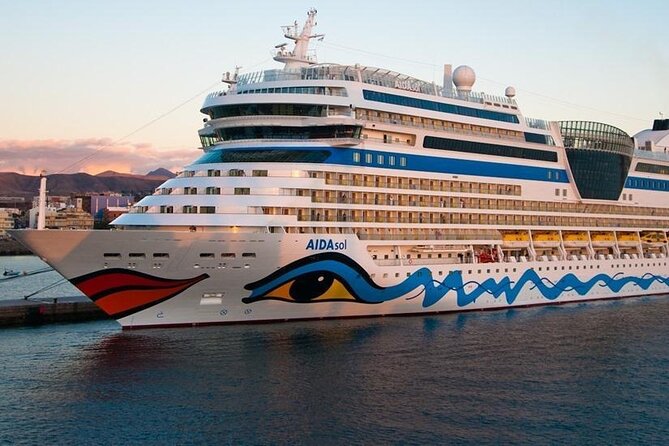
The route then moves to Rano Kau on the southwest side of the island. The crater measures about 1.5 kilometers across and contains a lake that once served as an important source of drinking water.
This stop lasts 30 minutes, so expect a scenic look rather than a long walk or detailed exploration. Rano Kau is also a major reserve for endemic flora, giving you a glimpse of the island’s natural side after several archaeological sites.
I think the short timing is the clearest weakness in the schedule. The crater deserves attention, but the excursion gives it less time than every other stop except none, since Rano Raraku, Tongariki, Anakena, and Akivi each receive an hour. If nature matters more to you than checking off several moai sites, you may wish for a tour built around Rano Kau and Orongo instead.
Still, the brief stop serves an important purpose. Rano Kau sets up the final visit by showing you the volcanic crater beside which Orongo was built.
Orongo and the Story of the Birdman Ceremony
Orongo receives two hours, the longest stop of the day. It sits on one side of Rano Kau and combines dramatic scenery with major archaeological and historical importance.
This is where the Birdman ceremony took place. The ceremony was tied to competition and status, and the site’s position beside the crater makes the story easier to grasp. Ask your guide to explain the contest in full. Nikolas, who was born on the island, was especially praised for telling the Birdman story at Orongo, and that kind of local voice can give the site more force than a standard recorded explanation.
Orongo also has a visitor reception center with a permanent interpretive exhibition. That makes the two-hour allocation worthwhile. You are not limited to viewing stone structures outdoors. You can also use the exhibition to organize what you have seen across the day.
The stop combines several things you want from a good Easter Island visit: unusual ceremony, a strong setting, archaeological remains, and an interpretive center. It is also where the guide’s storytelling matters most. The statues are visually striking, but the Birdman ceremony adds a human contest, belief system, and political dimension to the island’s past.
What the $385 Total Really Buys You
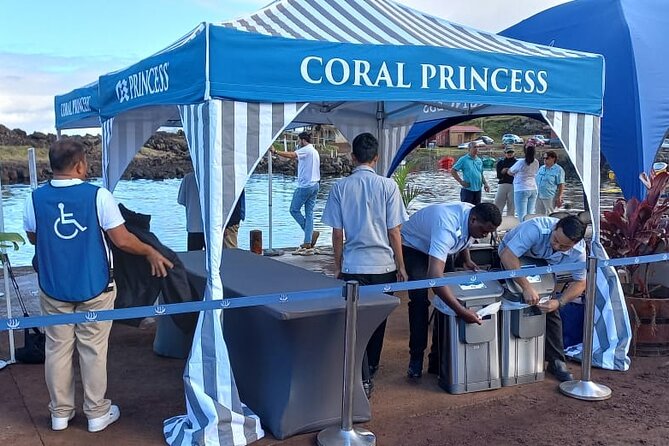
The listed tour price is $285 per person. The compulsory National Park ticket is another $100, so your known cost reaches $385 per person. Food, drinks, and lunch are not included.
That is a high price for six hours, but the value depends on what you need from a shore excursion. You are paying for a route that covers the island’s major highlights, a professional guide, bottled water, pier transport, and a group limited to eight. On a remote island with limited time between ship arrival and departure, efficient transport and a guide who can put the sites in order have real value.
The fee is harder to justify if you prefer a slow visit, want a beach afternoon, or are comfortable arranging your own transport and explanations. The schedule is ambitious, and the extra park charge should be part of your decision from the start, not a surprise at checkout.
The guide quality may make the difference. Hugo is described as warm, well informed, and proud of his island. Nikolas brings the added perspective of being born on Easter Island. Those qualities are not small extras here. Without clear explanations, six archaeological stops can blur together. With a strong guide, the quarry, platforms, beach, crater, and ceremony form one connected story.
Who Will Get the Most From This Excursion?
I would choose this tour if you are visiting Easter Island from a cruise ship and want to cover the major sites in one day. It suits first-time visitors who want context, reliable pier transport, and a small group rather than a large bus.
It is also a good match if you enjoy asking questions. A maximum of eight people gives you a better chance to speak with the guide and request clarification. The bilingual format works for English and Spanish speakers.
You should think twice if you want long periods at one site. Orongo gets two hours, but the other main stops are tightly timed, and Rano Kau gets only 30 minutes. The outing is built for range and orientation, not for lingering.
Bring water, though bottled water is supplied, and dress for sun and outdoor walking. Flat shoes, a hat, sunscreen, and light clothing are practical choices. Lunch is not provided, so plan around that fact without assuming the schedule includes a full meal break.
Because the tour cannot be changed or refunded after booking, I would avoid booking it until your cruise plans are firm. Confirmation is immediate in most cases, but bookings made within four days of travel may take up to 48 hours and remain subject to availability.
Should You Book Highlights of Easter Island?
Book it if you want a well-planned introduction to Rapa Nui and value a small group, local guiding, and pier-to-pier transport. The combination of Rano Raraku, Tongariki, Anakena, Akivi, Rano Kau, and Orongo gives you a broad picture in six hours, and the guides’ warmth appears to be one of the strongest parts of the experience.
Skip it if the $385 known total feels too high, if you want a leisurely beach day, or if a delayed ship arrival would make a non-refundable booking uncomfortable. For many cruise passengers, though, the route and timing make sense. You see the island’s best-known moai sites, hear the Birdman story where it happened, and return to the pier with the day’s major sights covered.
FAQ
How long does the Easter Island shore excursion last?
The tour lasts approximately six hours.
What time and where does the tour start?
It starts at 8:00 am at Hanga Piko in Hanga Roa, Easter Island.
Is pickup available from the cruise ship pier?
Yes. The guide waits at the pier before the first tender arrives, meets the group in the docking area, and returns you to the pier and tender area after the tour.
How many people can join the tour?
The maximum is eight people per booking.
Is the National Park entrance fee included?
No. The mandatory National Park entrance ticket costs $100 per person.
Are food and lunch included?
No. Food, drinks, and lunch are not included. Bottled water is provided.
Is the tour available in English?
Yes. It includes a bilingual live guide in English and Spanish.
Can the tour be canceled or changed for a refund?
No. The experience is non-refundable and cannot be changed for any reason.
Just added in Easter Island
- Volcanic Refuges: Excursion to Underground Civilization★ 4.7 · 8 reviews
- Volcanic Wonders and the Kingdom of the Birdman: Half Day★ 5.0 · 6 reviews
- Half Day Private Tour: Caves and Volcanic Refuges★ 4.0 · 14 reviews
- Easter Island Ancestral Dinner and Show with Transport★ 4.5 · 2 reviews
- 2 Day Small Group Tour in Moai Monuments and Historic Pathways★ 5.0 · 22 reviews
- Visit Rapa Nui in 4 days with 3 Tours and Accommodation included★ 4.0 · 2 reviews
- Tour to the Motus: Boat trip and snorkeling in Rapa Nui★ 5.0 · 8 reviews
- The birdman journey in Easter Island★ 5.0 · 1 review
Easter Island Tours, compared.
Two days of Full Day Tour of Rapa Nui + Sunrise in Tongariki
Read our review →
2-Day Private Tour Easter Island Highlights Complete Discovery
Read our review →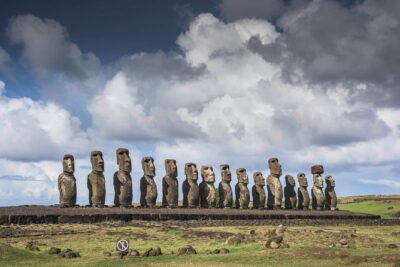
Private Tour: Full Day Easter Island Highlights
Read our review →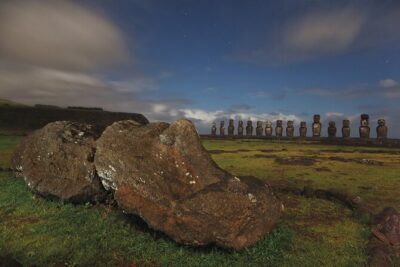
Browse the lists this tour appears in