
REVIEW · EASTER ISLAND TOURS
2-Day Private Tour Easter Island Highlights Complete Discovery
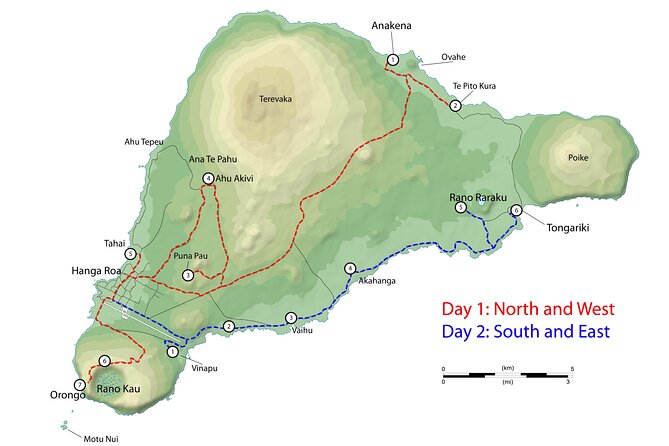
Rapa Nui rewards a slower look. This private tour takes you from Anakena Beach to the moai quarry, volcano craters, ancient villages, and the grand platform at Tongariki, so you see the island as a connected story rather than a string of isolated photo stops. I especially like the two-day pacing and the chance to travel with a local guide who can explain traditions, archaeology, and daily life in a personal way. The main drawback is cost: at $560 per person, plus the $80 national park ticket, this is a serious expense for a short island stay.
I also like the door-to-door pickup, air-conditioned minivan, and private format. Guides such as Yeni, Joaquin Soler Hotu, Yoyo Tuki, Andres, Alberto, Franco, and Kohu have earned especially warm praise for their local insight and flexibility, though your assigned guide may be different. Expect a full schedule, plenty of walking on uneven ground, and no included lunch, even though some past arrangements included meals with the operator’s family.
In This Review
- What makes this Rapa Nui tour worth considering
- Why two days makes sense on Easter Island
- Anakena, Te Pito Kura, and the northern coast
- Akivi and Tahai, where the statues meet the sea
- Rano Kau and Orongo, the island’s most dramatic setting
- Vinapu and Hanga Poukura, stonework and rough lava
- Vaihu and Akahanga, daily life among the ruins
- Rano Raraku and the unfinished moai
- Ahu Tongariki, the powerful final platform
- Guides, vehicles, meals, and the real cost
- Practical advice before you book
- Should you book this private Rapa Nui experience?
- FAQ
- How long does the tour last?
- What time does the tour begin?
- Is hotel pickup included?
- Is this a private tour?
- Is the national park ticket included?
- Is lunch included?
- Can cruise ship passengers join this tour?
What makes this Rapa Nui tour worth considering
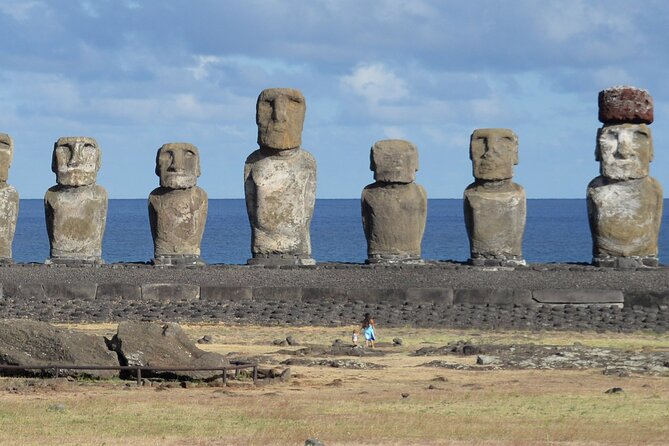
- Fifteen moai at Ahu Tongariki: The island’s largest restored platform is a grand finale, with the statues framed by the Pacific.
- Rano Raraku’s unfinished statues: You walk through the volcanic quarry where most moai were carved and where many were left unfinished.
- A genuinely private format: Your group has its own guide and vehicle, making it easier to adjust the pace or spend longer with a favorite site.
- Local guides add context: Guides from Rapa Nui have explained family connections, oral traditions, archaeology, rituals, and present-day island life.
- The itinerary covers the major sites: Anakena, Orongo, Rano Kau, Vinapu, Akivi, Tahai, Akahanga, Vaihu, Puna Pau, and Tongariki are all included.
- Plan for a national park fee: The required ticket costs $80 per person and must be carried throughout the tour.
Why two days makes sense on Easter Island
Easter Island is not large on a map, but the sites are spread around the coast and inland hills. A single day would force you to race between major stops, and you would lose the chance to pause at places such as Rano Raraku or Orongo.
This tour divides the island sightseeing over two days. The supplied duration is listed as approximately 13 hours overall, while the experience is presented as a two-day program. Confirm the exact daily timetable with the operator after booking, since the length of transfers and the final schedule can change.
The private setup matters here. You can ask for more time at a moai platform, slow down for photographs, or make reasonable adjustments based on your group’s interests. Past guide pairings have included one guide each day, and some groups had different guides on the two days. That is not necessarily a problem, since several guides have been praised for bringing different strengths to the experience.
A private tour also gives you more direct conversation than a large bus tour. Guides have helped with restaurant suggestions, local food, airport-related problems, and minor comfort issues. Those extras are not guaranteed parts of the booking, but they show why a strong guide can make this tour feel like more than transport between monuments.
More things to do on Easter Island:
- From Hanga Roa: Rapa Nui Culture Sightseeing Tour
★ 4.6 · 307 reviews - From Hanga Roa: Easter Island Highlights 2-Day Tour
★ 4.3 · 205 reviews - Full Day Tour in Rapa Nui
★ 4.5 · 122 reviews
Anakena, Te Pito Kura, and the northern coast
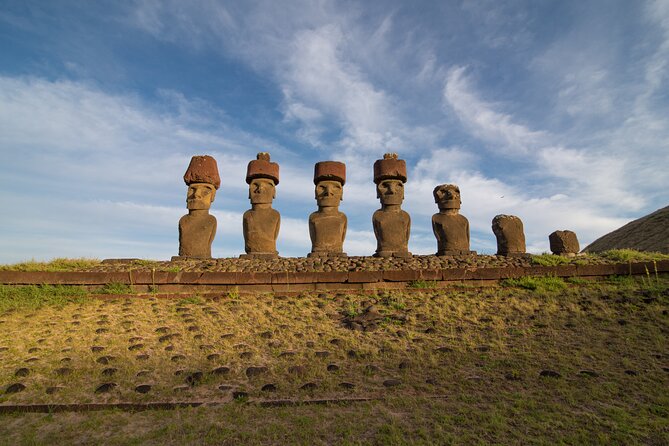
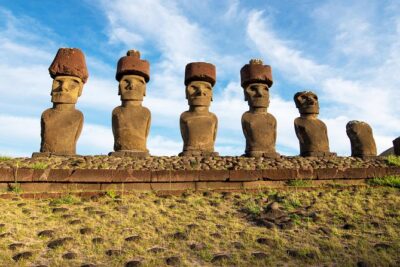
The first listed stop, Anakena Beach, combines tropical scenery with one of Rapa Nui’s most important ancient settlements. This was the capital area of the old society, and the sand is backed by a platform with some of the island’s best-preserved restored moai.
The visit lasts about 35 minutes. That is enough for an archaeological introduction and photographs, but not enough for a leisurely beach outing. If you want to swim or spend real time in the sand, plan to return independently. The tour’s focus here is the ancient settlement and its statues, not a beach holiday.
At Ahu Te Pito Kura, you see the fallen remains of the tallest moai ever successfully moved to an ahu. It reached about 9.9 meters, an astonishing achievement even before you consider the distance it had to travel. The statue remains unrestored, which gives the site a different feel from the standing figures at Tongariki or Anakena.
This stop also includes a round magnetic rock associated with local stories about magical power. The visit is scheduled for about 25 minutes. You will get the essential explanation and a chance to look closely, but not an extended walk through the area.
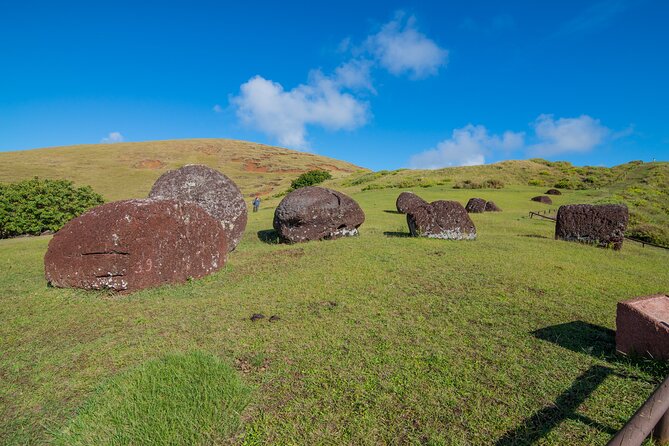
Puna Pau is a small volcanic site where the red scoria used for moai topknots, or pukao, was quarried. Every pukao came from this source. The stop lasts about 20 minutes, and it is valuable because it shows that the statues and their red headpieces came from separate parts of the island, adding another layer to the engineering challenge.
Akivi and Tahai, where the statues meet the sea
Ahu Akivi is unusual because its seven moai face toward the sea. One traditional interpretation connects them with the first seven settlers who arrived on Rapa Nui, though explanations of the island’s past can include more than one view.
You have around 20 minutes here. It is a compact stop, but an important one for understanding how each ahu has its own design and meaning. Your guide’s explanation will be particularly useful because the statues can look similar at first glance when you see several platforms in a short period.
At Ahu Tahai, you encounter a former village area with three ahu platforms. The ancient community built an ocean access ramp here, and the site gives you a good sense of how ceremonial spaces, homes, and the shoreline fit together.
The scheduled visit is about 30 minutes. Tahai is also close to Hanga Roa, so it can be a practical place to revisit on your own if you want more photographs or a slower look. I like this stop because it helps connect the moai with the people who lived around them. You are not just seeing statues in an empty field. You are seeing the remains of a working settlement.
Rano Kau and Orongo, the island’s most dramatic setting
Rano Kau offers one of the best views on Rapa Nui. The huge volcanic crater holds a lake that served as an important source of drinking water in ancient times. The crater’s curved walls and broad interior make this one of the places where the island’s geology becomes as memorable as its archaeology.
The stop is scheduled for about 20 minutes, so expect a viewpoint visit rather than a long crater walk. Bring water, use sun protection, and keep your camera ready. The view can change quickly with light and cloud.
Nearby Orongo is a ceremonial stone village on the ridge of Rano Kau. It is tied to the birdman competition, one of the most compelling ritual traditions associated with Rapa Nui. From the village, you also look back toward the crater, creating a strong visual link between ceremony, volcano, and sea.
You get approximately 45 minutes at Orongo, making it one of the longer stops. That is useful because the site benefits from explanation. The stone houses, cliffs, crater, and ceremonial setting make more sense when your guide explains the contest and the beliefs connected with it.
This is one area where the guide can make a major difference. Joaquin Soler Hotu has been praised for explaining Rapa Nui culture and archaeology with unusual passion, while other guides, including Yeni and Andres, have also received strong praise for answering detailed questions. Names are not guaranteed, but it is worth asking who will lead your tour.
A few more options to weigh up in Hanga Roa
- Private Full-Day Easter Island Highlights North and West
★ 5.0 · 84 reviews - Full Day Private Tour: Factory of the Moai the stone giants
★ 4.5 · 63 reviews - Private Easter Island Full-Day Tour
★ 5.0 · 61 reviews - Private Full-Day Easter Island Highlights South and East
★ 5.0 · 60 reviews
Vinapu and Hanga Poukura, stonework and rough lava
Ahu Vinapu is known for the carefully fitted stones of Ahu Tahira. The precision of the wall has led some people to suggest contact with the Inca Empire. That idea remains part of the discussion around the site, rather than a simple settled fact, so listen for the different interpretations your guide presents.
You have about 30 minutes here. The important thing is to look closely at the joins between the stones. The construction is easy to miss if you only take a quick photograph from a distance.
The itinerary lists Ahu Vinapu again for the nearby Hanga Poukura area. Here, rough lava formations line the coast, and several fallen statues are buried in a row with only their backs visible. It is an eerie sight, especially beside the carefully made ahu.
Hanga Poukura also has a blowhole. When the waves and ocean conditions are right, water shoots upward through the lava. The visit lasts about 30 minutes, but the blowhole is naturally unpredictable. Do not expect a dramatic spout every time. The coastal rock can also be rough underfoot, so sturdy shoes are a sensible choice.
Vaihu and Akahanga, daily life among the ruins
Ahu Vaihu includes a modern reconstruction of an ancient village. You can see examples of old planting methods and enter replicas of boat-shaped houses, which were used centuries ago. This is a useful change of pace after several ceremonial platforms because it focuses on how people lived rather than only on monumental statues.
The planned visit is about 30 minutes. The reconstructions are modern, so they should be understood as interpretive aids, not untouched ancient buildings. Their value is in helping you picture village organization and food production.
Ahu Akahanga brings you back to ruins. You walk among the remains of a large village, including boat-shaped house foundations, earth ovens, and a major platform where moai still lie toppled. A nearby unrestored ahu holds 13 statues of different sizes.
Local tradition identifies Akahanga as the burial place of Hotu Matu’a, regarded as the island’s first king. The site carries both archaeological importance and oral tradition, and your guide can help you keep those kinds of evidence distinct without stripping away the power of the story.
The stop lasts around 30 minutes. The admission ticket is not included in the tour price, but access to the national park as a whole requires the separate $80 ticket. The ground is uneven, and several stops involve walking over rock or slopes. Wear firm shoes, not casual sandals.
Rano Raraku and the unfinished moai
Rano Raraku is the heart of the tour for anyone fascinated by how the moai were made. This volcanic slope became the main carving site for the giant statues. Hundreds of figures remain where workers left them, including statues at different stages of completion.
The visit lasts about 90 minutes, the longest scheduled stop. That time is welcome. You need it to walk among the unfinished figures, study the way they emerge from the volcanic stone, and understand how a statue could be carved in place before being moved elsewhere.
This is also a site where rushing would flatten the story. The unfinished moai show that production stopped suddenly or changed in a major way. You can see the scale of the work more clearly here than at a restored platform, where the statues look finished and self-contained.
The terrain calls for attention. Expect walking on uneven ground and some uphill or downhill sections. One family specifically praised a guide for helping a parent with limited walking ability, but you should still discuss mobility concerns when booking. The tour is suitable for most people, yet it is not a completely flat sightseeing outing.
Ahu Tongariki, the powerful final platform
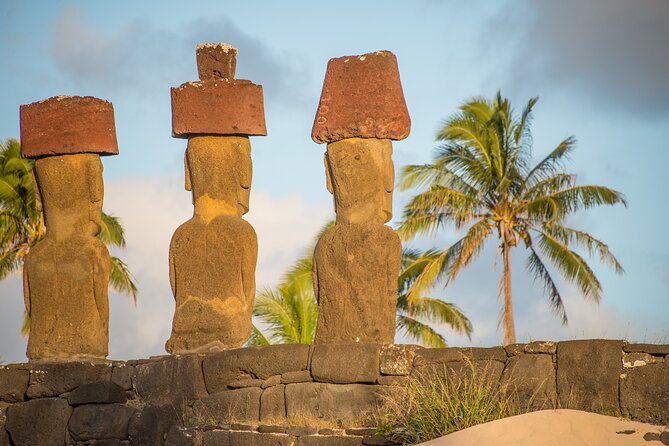
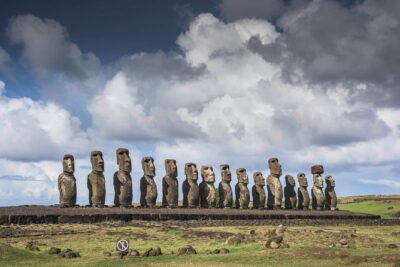
Ahu Tongariki is the largest monument on Rapa Nui. Fifteen enormous moai face inland with the ocean behind them, creating one of the island’s strongest views.
The platform was damaged by an earthquake and later swept inland by a tsunami. Restoration returned the statues to their ahu, creating the arrangement you see today. The visit lasts about 45 minutes, enough time to walk around the viewing area, take photographs, and hear how the restoration changed the site.
Many people consider Tongariki and Rano Raraku the high points of the two-day route. That pairing makes sense. At Rano Raraku, you see the statues in their unfinished birthplace. At Tongariki, you see a large group restored and set against the ocean. One explains the making of the moai, the other shows their ceremonial effect.
If sunrise at Tongariki is important to you, note that it is not part of this standard program. One past guest arranged an additional third day with a guide to visit the site at sunrise. You can ask the operator about extra guiding, but do not assume it is included.
Guides, vehicles, meals, and the real cost
The tour includes hotel pickup and drop-off, an air-conditioned minivan, bottled water, and a driver-guide. Since only your group participates, you avoid the usual problem of waiting for strangers at every stop.
The price is $560 per person. Add the required $80 national park ticket, bringing the basic cost to $640 per person before lunch and any extra arrangements. That is expensive, especially for couples or families, but the value improves if you have only a few days on Rapa Nui and want to cover the main sites without renting a vehicle or assembling separate excursions.
The strongest value is the guide. A local Rapa Nui guide such as Kohu may add personal insight into farming, island ecology, family connections, and modern life. Guides such as Alberto have been praised for explaining geology, botany, archaeology, and competing theories. Joaquin has been singled out for helping guests with photography and adding local stops when time allowed.
Do not treat those individual stories as promises. Guide assignments vary, and extras such as local meals, restaurant help, family visits, airport assistance, or off-route stops are not listed inclusions. Lunch is officially excluded. Some past itineraries included lunch with the operator’s family, and one meal received mixed praise, so ask ahead about the actual meal plan for your dates.
The tour begins at 9:30 a.m. Hotel pickup and drop-off make the day easier, especially if your accommodation is outside central Hanga Roa. The activity is not available to cruise ship passengers, and children must be accompanied by an adult.
Practical advice before you book
Buy or arrange the national park ticket before sightseeing. The instructions say it should be bought online beforehand for $80 per person, while another note says tickets should be bought upon arrival at the airport. Because those directions conflict, confirm the current process with Easter Island Travel before arrival.
Carry the ticket with you at all times. It is required for all visitors to Rapa Nui, even though individual stops are often shown with no separate admission charge.
Bring strong walking shoes, water, sun protection, and a hat. Bottled water is included, but lunch is not. Allow room in your day for the fact that transfer times are approximate and can change with traffic and local conditions.
Ask for the two-day schedule in writing. The listed stops are divided across the program, but the supplied duration of approximately 13 hours does not spell out the precise hours for each day. A clear schedule helps you plan meals, independent beach time, and any extra visit you may want.
The cancellation policy is forgiving if your plans change: you can receive a full refund when canceling at least 24 hours before the start time. Confirmation is sent within 48 hours of booking, subject to availability.
Should you book this private Rapa Nui experience?
Book it if you have two full days, want to see nearly all the major archaeological sites, and prefer a guide rather than a rental car or a collection of shorter outings. It is particularly well suited to first-time visitors, photographers who want time at each platform, families, and anyone who values local stories as much as monument checklists.
Think twice if you mainly want beach time, dislike a full sightseeing schedule, or are watching every peso. Anakena is only a short archaeological stop, lunch costs extra, and the national park fee adds substantially to the price.
For most short visits, I think the private format earns its keep. The route covers the quarry, the great platforms, volcanic viewpoints, ancient villages, and coastal ruins, while the two-day structure keeps the experience from becoming one long blur of statues. Confirm the ticket rules, meal arrangements, guide assignment, and daily timing before paying. If those details fit your plans, this is one of the most efficient and personal ways to get a meaningful first look at Rapa Nui.
FAQ
How long does the tour last?
The experience is presented as a two-day tour with an approximate total duration of 13 hours. Exact transfer times and daily scheduling can vary.
What time does the tour begin?
The stated start time is 9:30 a.m.
Is hotel pickup included?
Yes. Hotel pickup and drop-off are included.
Is this a private tour?
Yes. Only your group participates in the activity.
Is the national park ticket included?
No. The required ticket costs $80 per person and is valid for all tours and sites. The instructions say to arrange it before the tour and carry it at all times. Since the supplied purchase instructions differ between online purchase and airport purchase, confirm the current procedure with the operator.
Is lunch included?
No. Lunch is not included in the listed price. Some past arrangements included meals with the operator’s family, but you should confirm whether that will apply to your booking.
Can cruise ship passengers join this tour?
No. The tour is not available to cruise ship passengers.
Just added in Hanga Roa
- Volcanic Refuges: Excursion to Underground Civilization★ 4.7 · 8 reviews
- Volcanic Wonders and the Kingdom of the Birdman: Half Day★ 5.0 · 6 reviews
- Half Day Private Tour: Caves and Volcanic Refuges★ 4.0 · 14 reviews
- Easter Island Ancestral Dinner and Show with Transport★ 4.5 · 2 reviews
- 2 Day Small Group Tour in Moai Monuments and Historic Pathways★ 5.0 · 22 reviews
- Visit Rapa Nui in 4 days with 3 Tours and Accommodation included★ 4.0 · 2 reviews
- Tour to the Motus: Boat trip and snorkeling in Rapa Nui★ 5.0 · 8 reviews
- The birdman journey in Easter Island★ 5.0 · 1 review
Easter Island Tours, compared.
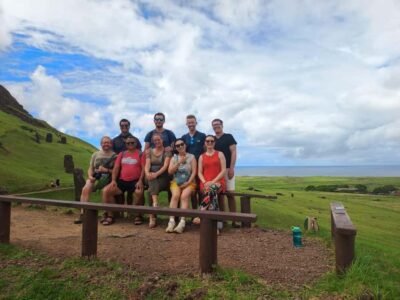
Two days of Full Day Tour of Rapa Nui + Sunrise in Tongariki
Read our review →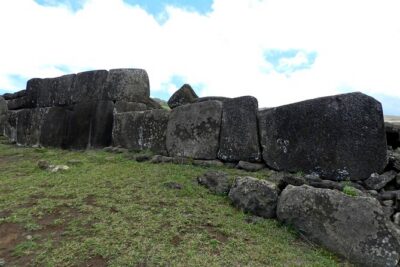
Private Tour: Full Day Easter Island Highlights
Read our review →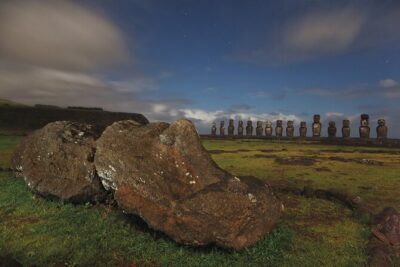
Private Full-Day Easter Island Highlights North and West
Read our review →Browse the lists this tour appears in