
REVIEW · EASTER ISLAND TOURS
T2-THE MUST-HAVES OF RAPA NUI (non-cruise visitors)
Rapa Nui rewards a full day. This private tour links the island’s essential moai sites, volcanic craters, ceremonial villages, and Anakena Beach without making you arrange several separate outings. I like the private transportation and the wide route, which reaches both the coast and the island’s interior. The small setting also gives your group room to ask questions.
I also like the focus on Ahu Tongariki and Rano Raraku, the two places most closely tied to the island’s famous stone figures. Guide David receives especially warm praise for his command of Rapa Nui culture and history, and his ability to keep a full day interesting. The main drawback is cost: at $257.63 per person, you still pay the $80 adult park entrance separately, and lunch is not included.
The tour runs about eight hours and is built for non-cruise visitors staying in Hanga Roa. It is a strong choice if you want one private day covering the major sights, but the schedule is full. You will spend much of the day getting in and out of the vehicle, walking around exposed archaeological sites, and keeping an eye on the clock.
In This Review
- Key points to know before booking
- Why this private Rapa Nui day works well
- Ahu Tahai begins the day beside Hanga Roa
- Rano Kau shows Rapa Nui’s isolation
- Orongo connects cliffs, seabirds, and political power
- Anakena offers the day’s beach break
- Ahu Tongariki puts fifteen moai in one view
- Rano Raraku explains where the moai came from
- Ahu Akivi finishes with an inland view
- What the $257.63 price really covers
- Pickup, language, and the pace of the day
- Who should book this Rapa Nui tour?
- Should you book T2?
- FAQ
- How long does the tour last?
- What time does pickup begin?
- Where can I be picked up?
- Is the tour private?
- Which languages are available?
- Is the park entrance ticket included?
- Is lunch included?
- Can I cancel and receive a refund?
Key points to know before booking
- Private transport and guiding: Only your group takes part, with pickup available from a hotel, residence, guesthouse, or campsite.
- Seven major stops: The route includes Tahai, Rano Kau, Orongo, Anakena, Tongariki, Rano Raraku, and Ahu Akivi.
- David is a highly praised guide: Direct praise highlights his strong grasp of Rapa Nui culture and his ability to answer questions throughout the day.
- The park ticket costs extra: Allow $80 per adult or $40 for children ages 7 to 17. The ticket lasts 10 days and covers all sites.
- Lunch is your responsibility: You can eat at a restaurant on site or bring a picnic for a developed picnic area.
- Check the pickup time: The information gives both a 9:00 departure and a 9:30 start, so confirm the exact time after booking.
Why this private Rapa Nui day works well
Rapa Nui is not a place where the headline sights sit neatly along one compact road. The major sites are spread around the island, and each one tells a different part of the story. Ahu Tahai shows an early settlement and ceremonial platform. Rano Kau and Orongo explain the island’s volcanic setting and later Bird Man tradition. Tongariki and Rano Raraku bring you closest to the moai.
This tour gathers those pieces into one long day. I like that balance. You get the island’s best-known places, but not only the standard postcard stop. The route includes the quarry, an inland platform, a beach linked with the first Polynesian settlers, and two sites connected with ceremonial power.
The private format matters here. Your group is the only group on the vehicle and can ask questions as the day unfolds. That is particularly useful at sites such as Orongo and Rano Raraku, where a short explanation can change what you notice among the stones.
The route is ambitious. The listed stops add up to roughly seven and a half hours before allowing for driving, meals, and short transitions. That explains the eight-hour estimate, but it also means this is a survey of Rapa Nui rather than a slow archaeological study. You will see a great deal in one day, with limited time to linger at some stops.
More Boat Trips in Hanga Roa:
- Tour to the Motus: Boat trip and snorkeling in Rapa Nui
★ 5.0 · 8 reviews - T3+T4-RAPA NUI ARCHAEOLOGICAL SITES (non-cruise visitors)
★ 5.0 · 8 reviews - T1-THE GRAND TOUR (non-cruise visitors)
★ 5.0 · 3 reviews
Ahu Tahai begins the day beside Hanga Roa
Ahu Tahai is a good opening stop because it introduces the island’s ceremonial architecture close to Hanga Roa. The site is described as a royal residence and one of the first human settlements on Rapa Nui. Its restored structures give you a sense of how an ancestral living area was shaped over time.
The setting adds much to the visit. From the ahu, you get a view toward Hanga Roa Bay, so the stop connects ancient settlement with the island’s present-day center. Allow about 90 minutes here, enough time for an explanation, photographs, and a proper look at the restored site.
Admission is not included. Since the same park ticket applies across the day, you should not think of this as a separate payment for each stop. Buy or arrange the required entrance ticket once, then use it at the eligible sites during its 10-day validity.
Rano Kau shows Rapa Nui’s isolation
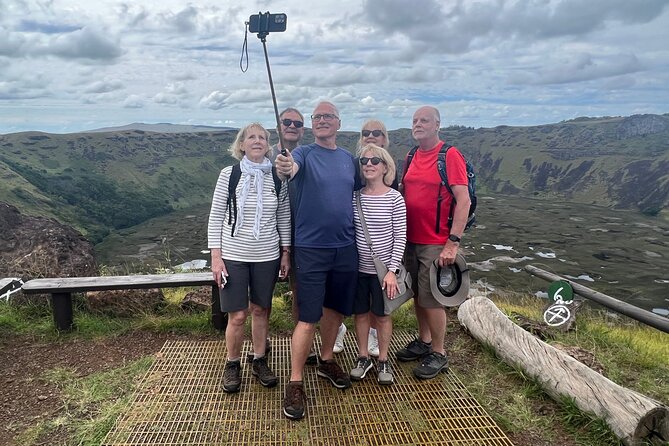
The short stop at Rano Kau lasts about 20 minutes, and that is enough for a strong viewpoint if your group keeps moving. You look into the broad crater of an extinct volcano, with the South Pacific stretching beyond it.
This is one of the day’s clearest geographic moments. The crater and ocean together show how isolated Rapa Nui is. You are not simply looking at a scenic hole in the ground. You are seeing the volcanic setting that helped shape the island’s settlement and identity.
There is no admission charge listed for Rano Kau itself. The stop is brief, so have your camera ready and listen closely to the guide’s explanation. If you prefer long walks and extended viewpoints, this will feel short. If you want a quick orientation to the island’s scale, it works well.
Orongo connects cliffs, seabirds, and political power
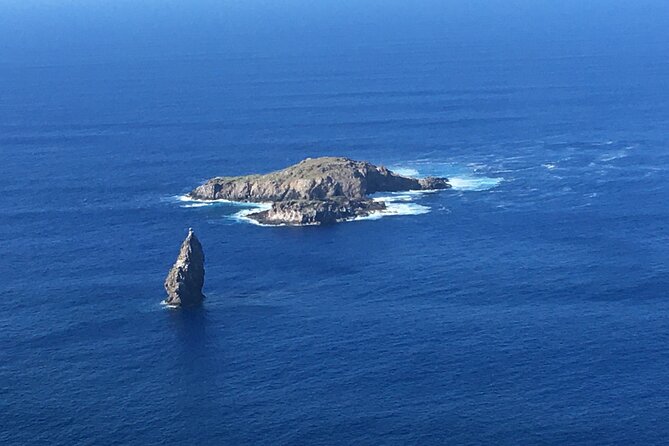
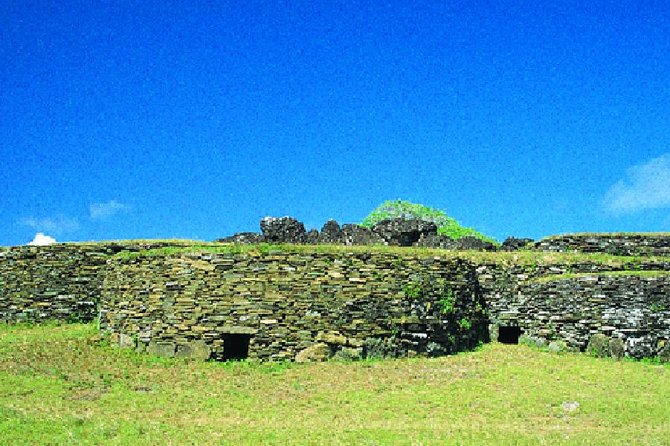
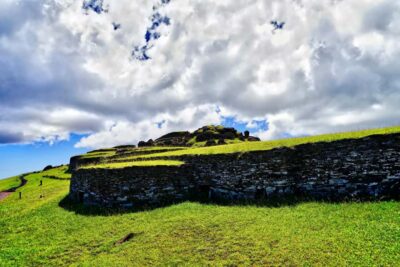
Orongo is more than another stone site. This ceremonial village sits on a cliff facing offshore islets where seabirds came to lay eggs during the southern spring. The Tangata Manu, or Bird Man, tradition centered on retrieving the first egg. The successful challenger’s sponsor gained religious authority for the year.
That detail gives the stop a strong human focus. At other sites, you are mainly studying platforms and statues. At Orongo, you are considering competition, ritual, authority, and the relationship between the island and its offshore bird colonies.
Plan for about an hour. The village has been restored repeatedly, and its cliffside position makes the setting part of the experience. Admission is not included, but the general park ticket covers the relevant sites for 10 days.
This stop also shows why the guide makes a difference. A short visit can become a quick walk among old structures unless someone explains how the Bird Man ceremony worked. David is praised specifically for presenting Rapa Nui culture and history in a way that holds attention and for answering questions clearly. If your guide is David, ask him to connect Orongo’s ritual authority with the other ceremonial platforms on the route.
More things to do on Easter Island:
- From Hanga Roa: Rapa Nui Culture Sightseeing Tour
★ 4.6 · 307 reviews - From Hanga Roa: Easter Island Highlights 2-Day Tour
★ 4.3 · 205 reviews - Full Day Tour in Rapa Nui
★ 4.5 · 122 reviews - 2-Day Private Tour Easter Island Highlights Complete Discovery
★ 5.0 · 110 reviews
Anakena offers the day’s beach break
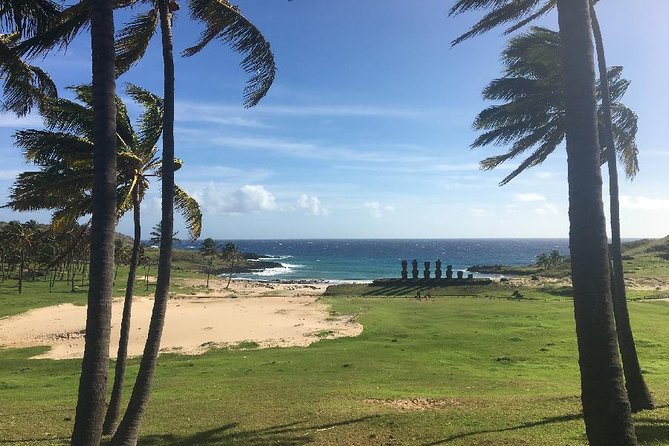
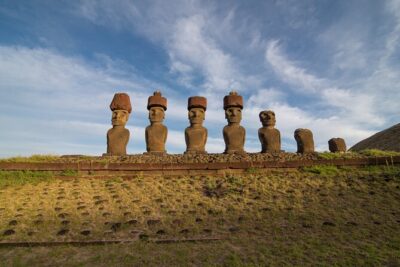
Anakena is the tour’s change of pace. On Rapa Nui’s north side, this white sandy beach sits beside translucent water and the island’s only coconut grove. The beach is linked with the arrival of the first Polynesian settlers, giving the stop cultural importance as well as visual appeal.
You have about 90 minutes here. That is enough time to see the restored site, look at the moai, and enjoy a more relaxed setting after the crater and cliff stops. The beach is described as the island’s only white sandy beach, which helps explain its special appeal.
Anakena’s moai are among the best-preserved examples still visible. That makes this more than a lunch stop by the sea. You are seeing ceremonial remains in a setting that feels very different from the inland quarry or the exposed platforms along the coast.
Lunch is not included. You can eat at a restaurant on site or bring a picnic for a developed area. I would clarify the meal plan before departure, since 90 minutes can pass quickly if you need to find food, eat, and explore.
Admission is not included, so keep the park ticket handy. The beach may be the most relaxed stop, but the day remains scheduled. Do not assume you can turn it into a long beach afternoon without affecting the rest of the route.
Ahu Tongariki puts fifteen moai in one view
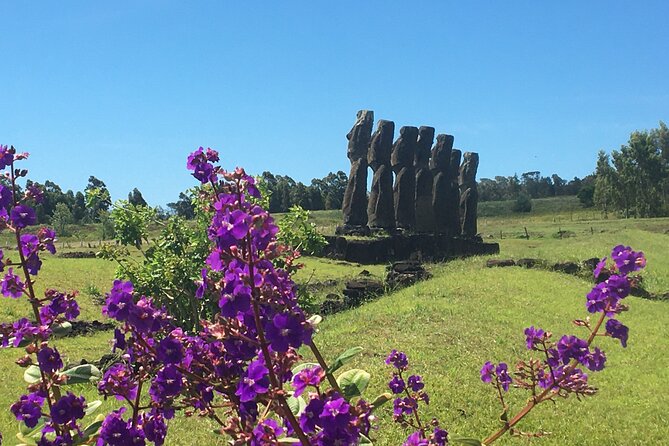
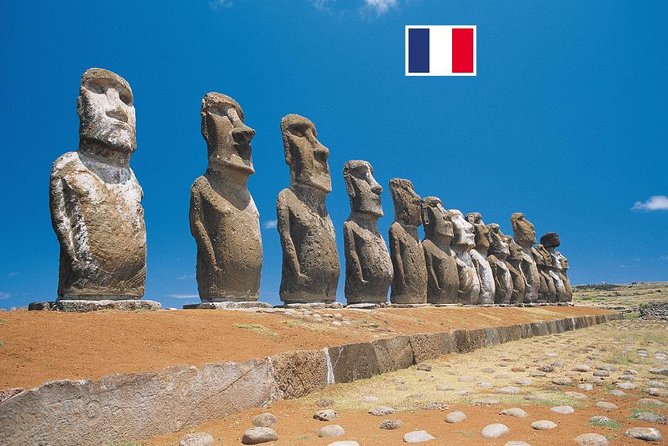
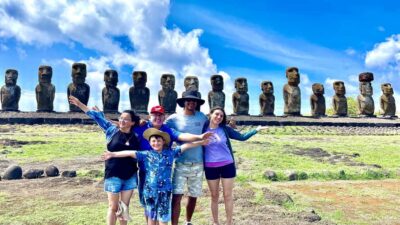
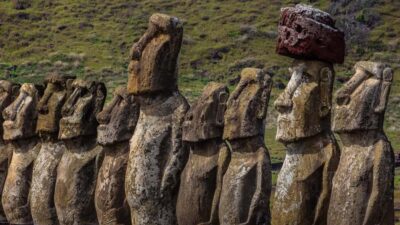
Ahu Tongariki is the grand visual centerpiece. Fifteen moai face the visitor from a restored ceremonial platform, creating one of the most recognizable views on Rapa Nui. The site is described as the island’s most important and most remarkable restored complex.
The platform’s astronomical orientation adds another layer. Sunrise is said to give Tongariki a special atmosphere, but this tour reaches the site during a daytime route rather than a dedicated sunrise outing. You will still see the alignment and scale, but you should not book this day expecting the early morning light associated with the famous sunrise photographs.
Allow an hour. That is enough to take in the line of statues and hear the explanation, though you may wish for longer if moai are your main reason for visiting Rapa Nui. Admission is not included, but the same 10-day ticket applies.
Tongariki also gives you a useful point of comparison. At Tahai, the setting is tied to Hanga Roa and an early settlement. At Anakena, the moai share space with a beach and palm grove. Here, the repeated figures and long platform create a much more imposing sight. Seeing all three helps you understand that Rapa Nui’s monuments are not interchangeable.
Rano Raraku explains where the moai came from
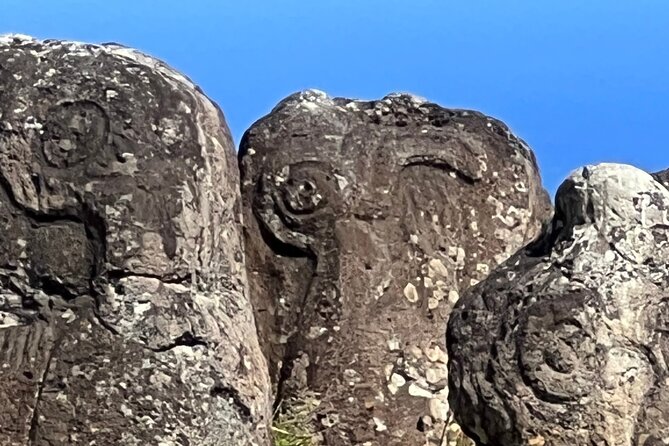
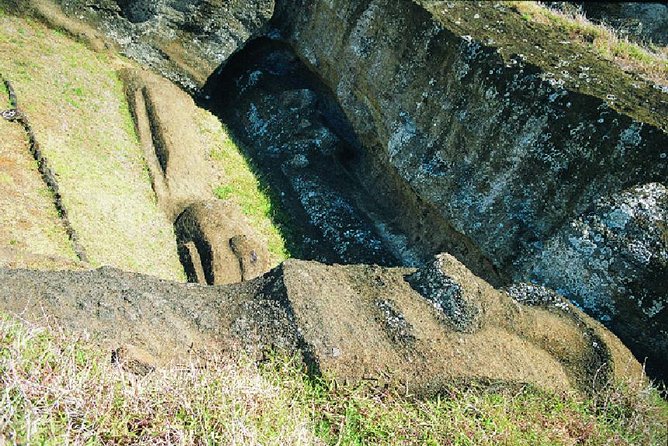
Rano Raraku is the stop that most clearly changes your understanding of the stone figures. Almost all of the island’s moai were carved here, and hundreds of statues remain around the quarry. Instead of seeing finished figures only on ceremonial platforms, you see the place where the work began.
The tour allows 90 minutes, which is welcome. You can wander among unfinished or partially completed statues and see how the quarry holds the memory of the carving process. The setting makes the moai feel less like isolated monuments and more like the products of a large, organized craft tradition.
This is also where sturdy shoes and sensible pacing matter, although the supplied details do not specify trail conditions. You should expect an outdoor archaeological visit, not a museum floor. Stay attentive to the guide and the route, since the sheer number of statues can make the site feel confusing without context.
Rano Raraku is one reason the private format has real value. You can ask why certain figures were left unfinished, how the quarry relates to Tongariki, and what distinguishes a quarry statue from one placed on an ahu. The tour description does not promise a specialist archaeological lecture, but David’s praise for his grasp of the island’s culture and history suggests that this is a good place to make use of your questions.
Ahu Akivi finishes with an inland view
Ahu Akivi is a shorter final stop, lasting about 30 minutes. Its inland location gives it a different feel from the coastal platforms, with different colors and scenery. The celestial orientation of the platform adds to its importance.
Because this is the final site and the visit is brief, think of it as a focused closing stop rather than a long exploration. It rounds out the route by showing that Rapa Nui’s ceremonial places are not limited to the shoreline.
Ahu Akivi also helps prevent the day from becoming a simple greatest-hits loop. You have already seen major coastal sites, the quarry, and the volcanic rim. This inland platform adds another setting and another example of how ceremonial construction was placed in relation to the sky and the island.
What the $257.63 price really covers
The listed price is $257.63 per person. That is not the final all-in cost because the adult entrance ticket costs another $80 per person. Children ages 7 to 17 pay $40 for the ticket. Lunch is also separate.
The price makes the most sense for a small group that values privacy and a full route. You are paying for private transportation and private guiding in English, French, or Spanish, along with pickup from your accommodation. If two or more people share the experience, the cost buys a convenient way to cover sites that would otherwise require more planning.
For a solo visitor, the price is harder to justify. You receive the same private service, but there is no group with whom to spread the cost. Group discounts are offered, so ask about the price for your party before committing.
The 10-day ticket softens the extra entrance cost if you are staying longer. You can use it across the included sites during that period, rather than treating the fee as a charge for one day only. If this is your only full day on Rapa Nui, the tour’s broad coverage may provide good value. If you have several days and prefer to visit sites slowly, you may find the fixed eight-hour route less appealing.
Pickup, language, and the pace of the day
Pickup is offered from hotels, residences, guesthouses, and campsites, which is useful in Hanga Roa and removes the need to reach a central meeting point. The information gives a 9:00 departure and also lists a 9:30 start time. Confirm the exact pickup time after your booking is accepted.
Confirmation is sent within 48 hours, subject to availability. The activity is private, and only your group participates. Most people can take part, though the schedule includes several outdoor archaeological sites and movement between stops.
Guiding is available in English, French, or Spanish. English is the stated offering for this version of the tour, so confirm your preferred language when booking. David is the guide named in the strongest praise, with special credit for his ability to explain the island and keep the group engaged all day.
The itinerary includes no formal lunch arrangement. You can use a restaurant on site or take a picnic to a developed area. Bring your own plan rather than assuming food is built into the price.
Who should book this Rapa Nui tour?
I would choose this experience if you have one main sightseeing day and want the major sites handled in a logical private route. It suits couples, families, and small groups who want to ask questions without sharing a vehicle with strangers.
It also works for anyone who wants more than a parade of moai. The route includes settlement remains, a volcanic crater, the Bird Man village, a beach tied to Polynesian arrival, the major restored platform, the quarry, and an inland ahu. That range gives you a fuller picture of Rapa Nui.
I would pause before booking if you dislike long touring days or prefer to spend half a day at one archaeological site. The $257.63 price, added park admission, and separate lunch also require a clear budget. Finally, the non-refundable policy is strict: cancellation or changes do not result in a refund, so book only when your plans are firm.
Should you book T2?
Book it if you want a private, full-island overview and value a guide who can connect the sites rather than simply point them out. A day with David could be especially rewarding if available, given the strong praise for his cultural knowledge, clear explanations, and attentive answers.
The best reason to choose this tour is its range. You see the island’s most important restored platforms, the quarry that produced the moai, the Bird Man site, the great volcanic crater, and Anakena Beach in one outing. The main tradeoff is pace and price. If those are acceptable, this is a practical first look at Rapa Nui that leaves you with a clear sense of how its monuments, geography, and traditions fit together.
FAQ
How long does the tour last?
The experience lasts approximately eight hours, including the seven scheduled stops and the time spent traveling between them.
What time does pickup begin?
The pickup information gives a 9:00 departure, while the tour details list a 9:30 start. Confirm the exact time after booking.
Where can I be picked up?
Pickup is offered from your hotel, residence, guesthouse, or campsite.
Is the tour private?
Yes. Only your group participates in the activity, and private transportation is included.
Which languages are available?
Private guiding is available in English, French, or Spanish. English is the stated language for this offering, so confirm your preferred language when booking.
Is the park entrance ticket included?
No. The entrance ticket costs $80 per adult and $40 for children ages 7 to 17. It is valid for 10 days and covers all the sites.
Is lunch included?
No. You can eat at a restaurant on site or bring a picnic for a developed picnic area.
Can I cancel and receive a refund?
No. The experience is non-refundable and cannot be changed for any reason.
Just added in Hanga Roa
- Volcanic Refuges: Excursion to Underground Civilization★ 4.7 · 8 reviews
- Volcanic Wonders and the Kingdom of the Birdman: Half Day★ 5.0 · 6 reviews
- Half Day Private Tour: Caves and Volcanic Refuges★ 4.0 · 14 reviews
- Easter Island Ancestral Dinner and Show with Transport★ 4.5 · 2 reviews
- 2 Day Small Group Tour in Moai Monuments and Historic Pathways★ 5.0 · 22 reviews
- Visit Rapa Nui in 4 days with 3 Tours and Accommodation included★ 4.0 · 2 reviews
- Tour to the Motus: Boat trip and snorkeling in Rapa Nui★ 5.0 · 8 reviews
- The birdman journey in Easter Island★ 5.0 · 1 review
Easter Island Tours, compared.
Two days of Full Day Tour of Rapa Nui + Sunrise in Tongariki
Read our review →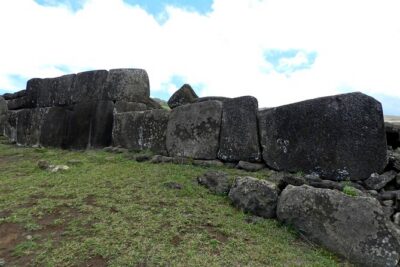
2-Day Private Tour Easter Island Highlights Complete Discovery
Read our review →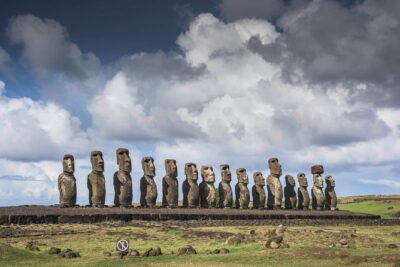
Private Tour: Full Day Easter Island Highlights
Read our review →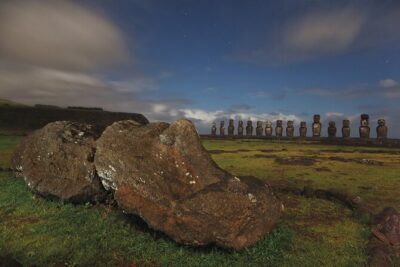
Browse the lists this tour appears in