
REVIEW · EASTER ISLAND TOURS
T3+T4-RAPA NUI ARCHAEOLOGICAL SITES (non-cruise visitors)
Moai are only part of Rapa Nui’s story. This two-day private tour connects the island’s great ceremonial platforms, volcanic craters, petroglyphs, beaches, and quarries in a well-planned circuit from Hanga Roa. I especially like the private vehicle and guide, since you can focus on the sites without joining a large group, and I like the way the route includes both famous places such as Rano Raraku and quieter stops such as Ahu Huri a Urenga.
The main consideration is cost. At $330.40 per person, this is not a budget outing, and the separate $80 archaeological-site ticket adds to the total for most adults. Still, two full days, pickup at your accommodation, and a private English, French, or Spanish guide make this a serious option for anyone who wants more than a quick look at a few moai.
In This Review
- Key points to know before booking
- Why two days works well on a small island
- Akahanga and Vinapu: the island before and after restoration
- Rano Kau and Orongo: a crater above the Pacific
- Huri a Urenga, Puna Pau, and Ahu Akivi
- Anakena Beach, the island’s postcard stop
- Te Pito Kura and Papa Vaka: giants and sea life in stone
- Pu o Hiro and Rano Raraku: from a sound-making stone to the quarry
- Ahu Tongariki: fifteen moai facing the day
- What the $330.40 price really covers
- Who should choose this private Rapa Nui tour?
- Final call: book it for depth, not speed
- FAQ
- Where does the tour take place?
- How long does the experience last?
- What time does pickup begin?
- Can I be picked up from my accommodation?
- Is this a private tour?
- What languages are available?
- Is the archaeological-site entrance ticket included?
- Is lunch included?
- Can I cancel or change the booking?
Key points to know before booking
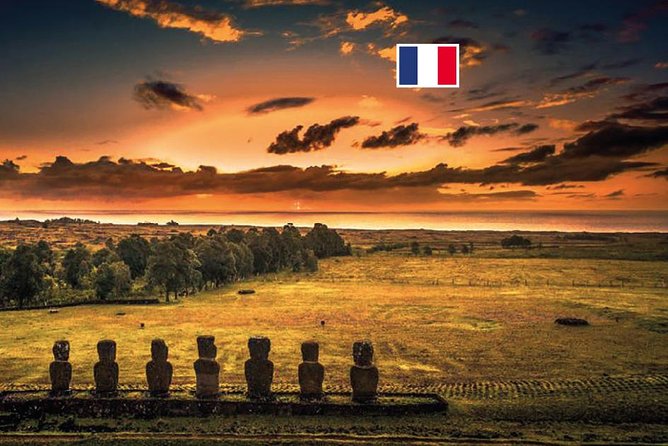
- The tour covers 13 important sites across Rapa Nui, including Ahu Tongariki, Rano Raraku, Orongo, Anakena Beach, and Ahu Akivi.
- You get a private tour, with only your own group in the vehicle and guide.
- The schedule is split over two days, beginning at 9:30 a.m. on the first day and 9:15 a.m. on the second.
- The $80 site ticket is extra, but it remains valid for 10 days and covers all archaeological sites.
- Lunch is not included, though you return to Hanga Roa and can choose from small local restaurants.
- Pickup is available anywhere you are staying, including a hotel, residence, guesthouse, or campsite.
Why two days works well on a small island
Rapa Nui may look small on a map, but its archaeological sites are spread around the coast and across the island’s interior. Trying to see all of these places in one rushed day would turn great monuments into a blur of names and photo stops.
This tour gives the sites room to breathe. You visit 13 locations over roughly two days, with stops ranging from 10 minutes at Pu o Hiro to 90 minutes at Anakena Beach and Rano Raraku. That mix matters. Some sites need only a short look, while others reward time to walk, study the stones, and understand their setting.
The private format also helps. You do not have to wait for a large group at every stop, and your guide can explain why one ahu differs from another. The experience is offered in English, French, or Spanish, so choose your preferred language when booking.
Pickup is practical and broad. You can be collected from a hotel, residence, guesthouse, or campsite in Hanga Roa. The first morning starts at 9:30 a.m., and the second begins at 9:15 a.m. Those are manageable times for a sightseeing program, though the second day has a particularly full route.
More Boat Trips in Hanga Roa:
- Tour to the Motus: Boat trip and snorkeling in Rapa Nui
★ 5.0 · 8 reviews - T2-THE MUST-HAVES OF RAPA NUI (non-cruise visitors)
★ 4.5 · 4 reviews - T1-THE GRAND TOUR (non-cruise visitors)
★ 5.0 · 3 reviews
Akahanga and Vinapu: the island before and after restoration
The first stop, Ahu Akahanga, offers an important contrast with the polished sites later in the tour. The platform has not been restored, and the fallen moai remain where they were left. That roughness is useful, not disappointing. It helps you picture the breakdown of the moai tradition and the arrangement of a traditional coastal settlement.
You get about 45 minutes here. Use it to look beyond the statues. The platform, fallen stones, and nearby remains show how ceremonial places fit into village life. Since admission is not included at this stop, you need the archaeological-site ticket.
At Ahu Vinapu, the focus shifts to stonework. You have about an hour to see the carefully fitted blocks and the unusual finish of the platform. The precision has sometimes been used to support theories of contact between Rapa Nui and South America, but that conclusion is not established simply by looking at the masonry.
Your guide can help keep the discussion grounded. The real value of Vinapu is visible in the stone itself: large blocks shaped and placed with striking care. This is one of the best stops for anyone interested in construction methods rather than only the familiar silhouette of a moai.
Rano Kau and Orongo: a crater above the Pacific
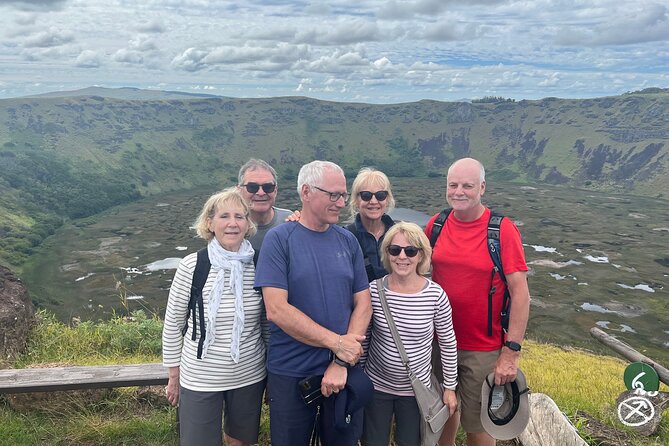
Rano Kau gives you one of the broadest views on the island. The extinct volcano’s crater spreads below the viewpoint, while the South Pacific stretches beyond it. You get roughly 20 minutes here, enough for photographs and a clear sense of Rapa Nui’s isolation.
The crater is a strong reminder that the island’s archaeological sites are inseparable from its natural setting. The ocean is not just scenery. It explains the island’s distance, the importance of seafaring, and the limited resources available to the people who built these monuments.
The itinerary identifies admission at Rano Kau as included, but the general tour terms say the archaeological-site entrance ticket costs an additional $80 per person. I would confirm this detail before paying, because the broader ticket is required for the sites listed here.
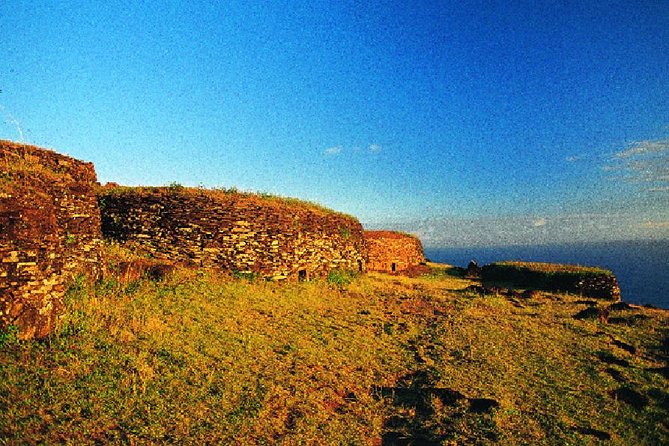
From Rano Kau, you continue to Orongo, the ceremonial village linked to the Tangata Manu, or Bird Man, tradition. The settlement sits along a cliff facing offshore islets where seabirds arrived to lay eggs during the southern spring.
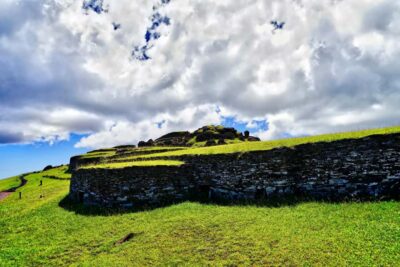
You have one hour at Orongo. That is enough time to view the stone houses, look toward the islets, and understand the contest that shaped the religious and political authority of the year. The site has been restored several times, so it feels more orderly than Akahanga. That makes it easier to read, though the contrast between restored and unrestored places is part of what makes the overall tour useful.
Huri a Urenga, Puna Pau, and Ahu Akivi
Ahu Huri a Urenga is a short but memorable stop. The restored platform holds one moai, unusual because it has four hands. The altar also has an astronomical orientation, a reminder that these monuments were positioned with care rather than placed at random.
The stop lasts about 20 minutes. You will not spend long here, but it adds variety to the tour. Instead of confronting a row of statues, you study one unusual figure and the relationship between the platform and the sky.
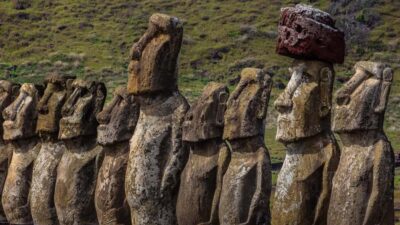
At Puna Pau, you see the quarry that supplied the red stone used for moai topknots or headdresses. The tour description also refers to red siding, but the main point for most people is the shift in appearance: the island’s stoneworkers added red elements after the huge statues alone no longer provided enough visual effect.
Allow about 30 minutes. The hill also gives you a view over Hanga Roa Bay, making it a good place to connect the quarry with the village and coast below. The red stone is distinct from the darker volcanic material seen at other sites, so this stop helps explain how different kinds of rock shaped the island’s monuments.
Ahu Akivi sits inland, which gives it a different feeling from the coastal platforms. Its restored ahu supports seven moai, and the figures face toward the sea. The astronomical alignment is another key feature, though the exact meaning of the arrangement is best handled with care rather than a dramatic explanation.
You have about 30 minutes here. The colors and scenery differ from the coastal circuit, and the inland location gives the site a more open setting. This is one of the places where a private guide adds real value, since the platform’s position and orientation deserve more than a quick photograph.
More things to do on Easter Island:
- From Hanga Roa: Rapa Nui Culture Sightseeing Tour
★ 4.6 · 307 reviews - From Hanga Roa: Easter Island Highlights 2-Day Tour
★ 4.3 · 205 reviews - Full Day Tour in Rapa Nui
★ 4.5 · 122 reviews - 2-Day Private Tour Easter Island Highlights Complete Discovery
★ 5.0 · 110 reviews
Anakena Beach, the island’s postcard stop
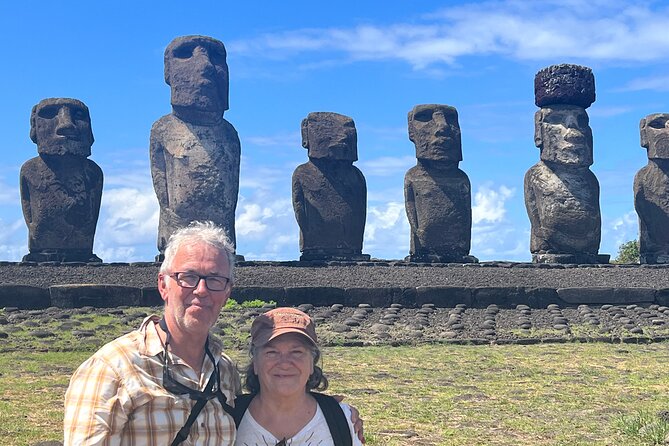
After the inland sites, the tour crosses to Anakena Beach, on the far side of the island from Hanga Roa. This is Rapa Nui’s white-sand beach, with clear water and the island’s only coconut grove. The setting is unusually gentle after the stark volcanic sites and exposed cliffs.
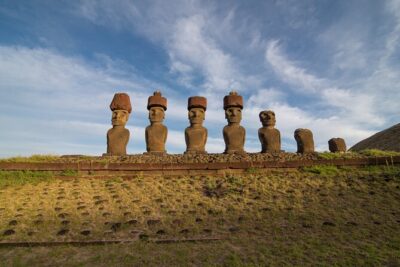
You get 90 minutes here, the longest stop on the route. That makes sense. Anakena is not only an archaeological site. It is also a place to pause, enjoy the view, and take in the setting associated with the first Polynesian settlers.
The restored moai platforms here are described as among the best preserved on the island. Look at the relationship between the beach, the grove, and the ceremonial structures. The appeal is not just that the site is pretty. It shows how religious monuments, settlement, food, travel, and the sea existed together.
Lunch is not included. The tour provides free time and a choice of small restaurants in the village, so plan to pay for your meal separately. Since this is the longest stop, it is the natural point to ask your guide about the day’s lunch plan and how much time you will have to eat.
Te Pito Kura and Papa Vaka: giants and sea life in stone
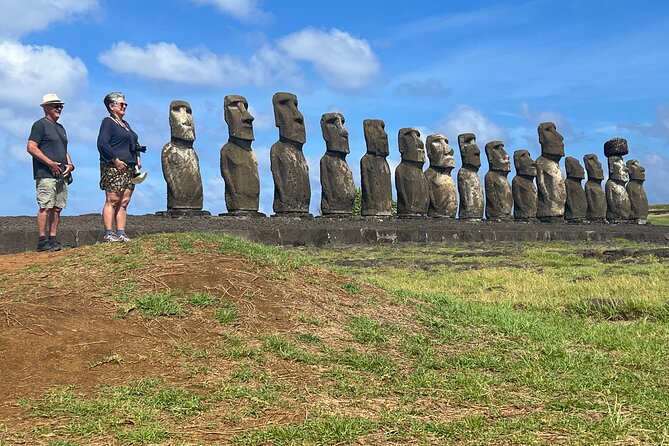
Near the route between Anakena and the Poike peninsula, Ahu Te Pito Kura presents a fallen giant. The moai was the largest known to have been raised on an ahu, but it was knocked down in the 19th century and later broke in two.
That damage is part of the story. The monument shows both the ambition of Rapa Nui’s stoneworkers and the later collapse of the moai tradition. You have about 30 minutes here, enough to see the fallen statue, the platform, and the nearby stone associated with magnetic anomalies.
Do not expect a standing statue at Te Pito Kura. Its power comes from scale and failure. A fallen moai can tell you as much about the island’s changing society as a restored one.
At Papa Vaka, the subject changes from monumental sculpture to marine resources. Basalt outcrops carry petroglyphs connected with fish and other elements of fishing life. You have about 20 minutes.
The carvings point to the sea as a basic part of Rapa Nui life. They also offer a welcome change after so many platforms and statues. Look closely at the rock surfaces, and let your guide explain what is known about the images without forcing every carving into a neat interpretation.
Pu o Hiro and Rano Raraku: from a sound-making stone to the quarry
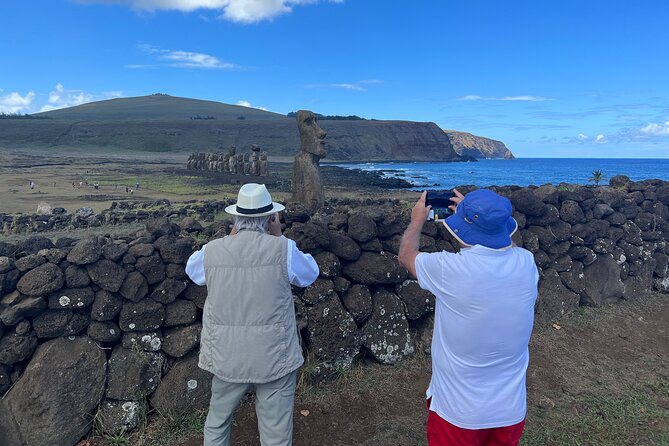
Pu o Hiro is the briefest stop, at about 10 minutes. The site features an aerophone stone, a rock associated with sound when blown or played in a particular way. It is a small encounter, but it widens your view of Rapa Nui culture beyond statues and tombs.
Because the stop is short, you may want to ask your guide to explain what to watch for before leaving the vehicle. Ten minutes passes quickly.
Then comes Rano Raraku, the site many people most want to see. This volcanic quarry supplied the stone for almost all of the island’s great moai. Hundreds of statues remain in and around the quarry, including figures at different stages of carving and transport.
You have about 90 minutes, which is appropriate. This is not a place to rush through. The moai here appear in the earth, on the slopes, and beside the paths, giving you a sense of the working process rather than only the finished monument.
The quarry also changes how you understand the statues elsewhere. At an ahu, a moai can seem like an isolated object. At Rano Raraku, you see the scale of the production area and the number of figures left behind. The site is central to the island’s story, so keep your ticket and follow the guide’s timing carefully.
Ahu Tongariki: fifteen moai facing the day
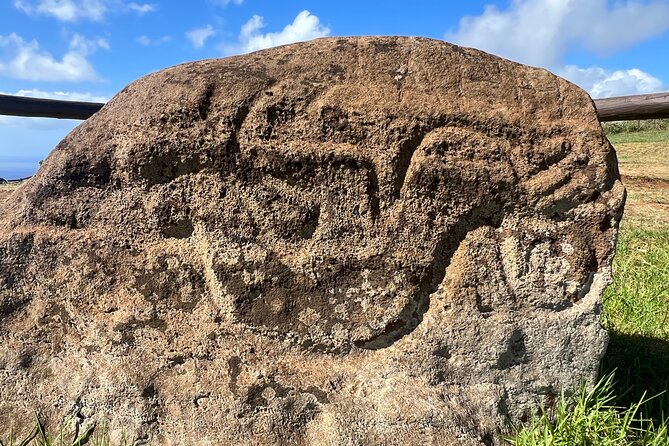
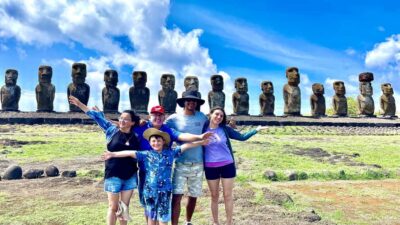
The final major stop is Ahu Tongariki, the most impressive restored platform on this route. Fifteen moai face out from the ahu, creating the grandest single grouping in the itinerary.
You have about an hour. That gives you time to take in the full row, study the different sizes and shapes, and listen to the explanation of the site’s astronomical orientation. Sunrise is said to give Tongariki a special mood, but this tour begins in the morning rather than presenting itself as a sunrise outing. Do not book it expecting to arrive for dawn.
Tongariki is a fitting closing site because it gathers so many themes from the two days: monumental scale, careful placement, restoration, astronomy, and the enduring image that made Easter Island famous. It is also a good place to compare with Akahanga. One platform is unrestored and fallen, while the other is reconstructed and monumental. Seeing both gives you a more honest picture than visiting only the most photogenic places.
What the $330.40 price really covers
The listed price is $330.40 per person. For that amount, you receive private transportation and private guided tours over approximately two days. Pickup is included from your accommodation, and only your group participates.
The key extra cost is the archaeological-site admission ticket: $80 per adult, or $40 for children ages 7 to 12. The ticket is valid for 10 days and covers all sites, which is useful if you are staying on Rapa Nui longer or want to revisit a place independently. Children under the stated age range are not given a price here, so confirm their ticket requirements directly.
Lunch is also extra. You can choose from small restaurants in Hanga Roa, but the tour does not package meals into the price. This keeps the schedule flexible, though you should budget for food and avoid assuming the advertised tour price is your complete cost.
I see the price as reasonable for people who value privacy and a full archaeological circuit. It is less compelling if you only want a few famous moai or are comfortable arranging transport and guides yourself. The high rating of 5 from eight submitted reviews supports the experience’s appeal, with particular praise for Rapa Nui’s archaeological sites, peaceful character, and beautiful scenery. That praise matches the route, which combines cultural sites with dramatic volcanic and coastal views.
Who should choose this private Rapa Nui tour?
I would recommend it most strongly if you have about two days, want to see the major sites, and prefer a guide dedicated to your own group. It suits couples, families, and small groups who want pickup and a less rigid experience than a large coach tour.
It is also a good fit if you want context. Ahu Akahanga, Vinapu, Orongo, Puna Pau, Rano Raraku, and Tongariki do not all tell the same story. The route helps you compare construction, ceremony, astronomy, quarrying, sea life, and social change.
You may want another option if your budget is tight, if you need a fully inclusive price with meals and entrance fees, or if a short half-day outing is all your schedule allows. The no-change, non-refundable cancellation rule also means you should book only after your Rapa Nui dates and accommodation are firm.
Final call: book it for depth, not speed
Book this tour if you want a thorough, private introduction to Rapa Nui and do not mind paying separately for the $80 site ticket and lunch. Its strongest feature is the range: restored and unrestored ahu, the Bird Man village, red-stone quarry, inland moai, white-sand Anakena, petroglyphs, the great quarry at Rano Raraku, and fifteen statues at Tongariki.
Skip it if you only want a quick monument checklist or prefer to travel independently. For most people with two days on the island, though, the route offers a strong balance of famous sights, quieter archaeological places, and scenery that explains why Rapa Nui feels both beautiful and remote.
FAQ
Where does the tour take place?
The tour is based in Hanga Roa, Chile, on Rapa Nui, also known as Easter Island.
How long does the experience last?
It lasts approximately two days.
What time does pickup begin?
Pickup starts at 9:30 a.m. on the first day and 9:15 a.m. on the second day.
Can I be picked up from my accommodation?
Yes. Pickup is offered from a hotel, residence, guesthouse, or campsite.
Is this a private tour?
Yes. Only your group participates in the activity.
What languages are available?
Private guided tours are offered in English, French, or Spanish.
Is the archaeological-site entrance ticket included?
The general tour information says the entrance ticket is not included. It costs $80 per person, or $40 for children ages 7 to 12, and is valid for 10 days at all sites. The stop information marks admission as included at Rano Kau, so confirm that detail before booking.
Is lunch included?
No. Lunch is free time, with a choice of small restaurants in the village.
Can I cancel or change the booking?
No. The experience is non-refundable and cannot be changed for any reason.
Just added in Hanga Roa
- Volcanic Refuges: Excursion to Underground Civilization★ 4.7 · 8 reviews
- Volcanic Wonders and the Kingdom of the Birdman: Half Day★ 5.0 · 6 reviews
- Half Day Private Tour: Caves and Volcanic Refuges★ 4.0 · 14 reviews
- Easter Island Ancestral Dinner and Show with Transport★ 4.5 · 2 reviews
- 2 Day Small Group Tour in Moai Monuments and Historic Pathways★ 5.0 · 22 reviews
- Visit Rapa Nui in 4 days with 3 Tours and Accommodation included★ 4.0 · 2 reviews
- Tour to the Motus: Boat trip and snorkeling in Rapa Nui★ 5.0 · 8 reviews
- The birdman journey in Easter Island★ 5.0 · 1 review
Easter Island Tours, compared.
Two days of Full Day Tour of Rapa Nui + Sunrise in Tongariki
Read our review →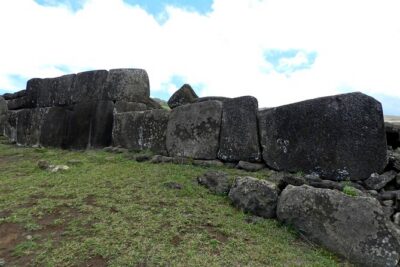
2-Day Private Tour Easter Island Highlights Complete Discovery
Read our review →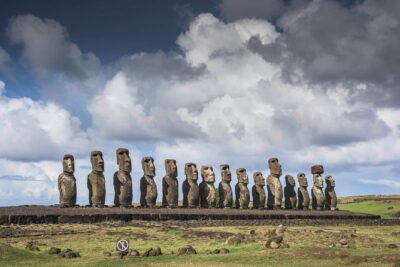
Private Tour: Full Day Easter Island Highlights
Read our review →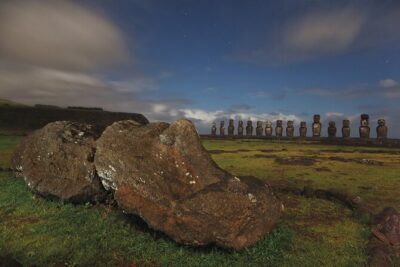
Browse the lists this tour appears in