
REVIEW · EASTER ISLAND TOURS
Full day tour – DREAM
The moai tell only half the story. Rapa Nui Dream’s full-day circuit links Easter Island’s major archaeological sites with beaches, village remains, old fishing grounds, and the quarry where hundreds of moai were carved. That wide reach is the tour’s greatest strength.
I like the seven-stop route, especially the long visits at Rano Raraku and Ahu Tongariki. I also like the guides’ strong cultural storytelling. Esteban, Christian, Joaquin, Andres, and Chris have all been praised for clear explanations, careful answers, and good photo help. The main concern is consistency: most outings last about seven to nine hours, but one holiday departure was much shorter and skipped some planned stops.
At $120 per person, the tour is a fair deal if you want to cover nearly the entire eastern side of the island in one day. Foreign visitors must also pay the separate National Park entrance fee of $80, so your real total is about $200 before lunch and drinks. That is not cheap, but Easter Island is remote, and this route gives you a useful first look at its most important sites.
In This Review
- Key points about the Rapa Nui Dream tour
- Why this full-day circuit works well
- Meeting in Hanga Roa at 9:30 a.m.
- Ahu Vaihu and Ahu Akahanga: villages beside the sea
- Rano Raraku: two hours at the moai factory
- Ahu Tongariki: fifteen moai facing inland
- Ahu Te Pito Kura and the island’s magnetic stone
- Ahu Nau Nau and Anakena Beach
- Guides, language, and the quality of the explanations
- Is $120 a good value?
- Who should book this Easter Island tour?
- Should you book Rapa Nui Dream?
- FAQ
- How long does the Rapa Nui Dream full-day tour last?
- What sites are included?
- Is the National Park ticket included?
- Is lunch included?
- Where does the tour start and finish?
- How large is the group?
Key points about the Rapa Nui Dream tour
- Seven major sites in one day: The route includes Ahu Vaihu, Ahu Akahanga, Rano Raraku, Ahu Tongariki, Ahu Te Pito Kura, Ahu Nau Nau, and Anakena Beach.
- Two hours at Rano Raraku and Ahu Tongariki: These are the tour’s main attractions, and the schedule gives them the time they deserve.
- Strong local guiding: Guides such as Esteban are praised for explaining both ancient Rapa Nui culture and modern island life.
- Route changes may reduce crowds: Some departures operate the circuit in reverse, beginning at Anakena, to reach busy sites at quieter times.
- Lunch is not included: You need to bring food or plan to buy it, and the meal stop can be late, sometimes around 3:00 p.m.
- Park fees are extra: Foreign visitors pay $80 for the National Park ticket, while Chilean citizens pay CLP20,000 per person.
Why this full-day circuit works well
Easter Island is compact on a map, but its archaeological sites are spread around the coast and interior. If you visit independently, you need to organize transport, understand the park’s entry rules, and decide how much time each site deserves. This tour removes much of that work.
The route also gives you more than a parade of moai. At Ahu Vaihu, you see a fishing bay and traces of an ancestral village. At Ahu Akahanga, you get a glimpse of an old settlement beside a small cove. At Anakena, the story reaches back to King Hotu Matu’a and the arrival traditions of the Rapa Nui people.
The best guides connect these pieces. Esteban, in particular, has been praised for explaining the meaning of the moai, correcting common misconceptions, and discussing present-day island life. One especially useful detail is his explanation of Tapati, the major Rapa Nui cultural festival, when the island is in season for it.
The experience is designed for a moderate level of fitness. You will walk around archaeological sites, stand outdoors for long periods, and manage a full day of sightseeing. It is not a strenuous hike, but it is not a sit-in-the-van outing either.
More things to do on Easter Island:
- From Hanga Roa: Rapa Nui Culture Sightseeing Tour
★ 4.6 · 307 reviews - From Hanga Roa: Easter Island Highlights 2-Day Tour
★ 4.3 · 205 reviews - From Hanga Roa: Easter Island Sightseeing Full Day Tour
★ 4.5 · 189 reviews
Meeting in Hanga Roa at 9:30 a.m.
The listed meeting point is Iglesia Católica Tu’u Koihu in Hanga Roa. The tour starts at 9:30 a.m. and returns to the same meeting point after roughly eight to nine hours.
Hotel pickup has happened on some departures, but you should not treat that as guaranteed from the supplied meeting details. Confirm the exact pickup arrangement through the WhatsApp message sent the day before. That message is the main practical update you receive before setting out.
Group size is listed at a maximum of 15 people. A small group makes a real difference at places such as Rano Raraku, where you want enough time to stop, listen, take pictures, and walk among the carved figures without feeling herded along. Several departures have operated with much smaller groups, creating a more personal outing.
There is one important warning about timing. A departure on Christmas Eve was affected by an early National Park closure. The group was reorganized into smaller vehicles and moved through the sites faster. The operator said the full route was completed, but the outing felt much shorter to the people on board. If you are visiting during a holiday or special park schedule, confirm the opening hours and expected route before paying.
Ahu Vaihu and Ahu Akahanga: villages beside the sea
Ahu Vaihu is scheduled for about 30 minutes. Its platform once held eight moai, and the setting beside an ancestral fishing bay helps place the statues within everyday Rapa Nui life. This is not simply a photo stop. The area also includes a representative example called Poko Manu Mea, connected with village customs and traditions.
The short time here is enough for an introduction, though you may wish you had longer if you enjoy examining stonework or asking detailed questions. The guide’s explanation matters more than the clock because the setting can otherwise look like a scattered collection of stones.
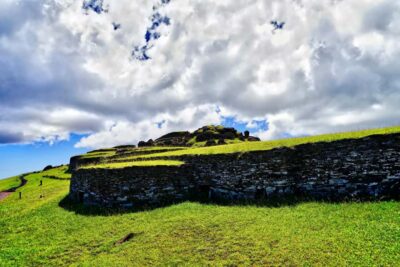
Ahu Akahanga follows, also for about 30 minutes. Here you can see the remains of an old village near a small bay. The site gives you a useful contrast with the more monumental platforms later in the day. Instead of focusing only on upright moai, your attention turns to settlement patterns, the coast, and the way people lived near the ceremonial sites.
Admission is listed as not included at both Ahu Akahanga and Ahu Nau Nau, but the National Park ticket is required for the excursion as a whole. In practice, buy your park ticket before the tour and carry proof of entry. You can purchase it in person at the Ma’u Henua offices or through the official Rapa Nui National Park ticket website.
Rano Raraku: two hours at the moai factory
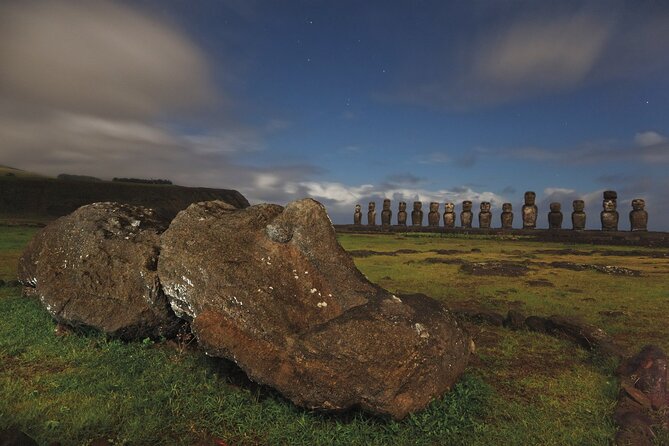
Rano Raraku is the heart of the day. This volcanic quarry is described as the moai factory, with about 400 unfinished figures still present. The phrase is easy to understand once you see the unfinished statues in and around the slopes. Some remain partly attached to the rock, while others were abandoned at different stages of carving.
The two-hour stop is exactly what makes this tour worthwhile. A quick visit would let you photograph a few famous figures, but it would not give you time to understand how the quarry functioned. You can walk, look closely at the unfinished forms, and ask why so many statues were left behind.
This is also where a good guide can correct the familiar idea that the moai are simply heads. The figures were carved as full bodies, although many were buried over time by soil and erosion. The tour’s guides have been praised for giving accurate explanations rather than repeating old myths.
Bring water, sun protection, and shoes suited to uneven ground. The physical demand is moderate, but the combination of walking, heat, and a long day can catch you off guard. Two hours sounds generous, yet Rano Raraku is the kind of place where you will be glad not to rush.
A completely different kind of day out:
- Two days of Full Day Tour of Rapa Nui + Sunrise in Tongariki
★ 4.5 · 132 reviews - Full Day Tour in Rapa Nui
★ 4.5 · 122 reviews - 2-Day Private Tour Easter Island Highlights Complete Discovery
★ 5.0 · 110 reviews - Private Tour: Full Day Easter Island Highlights
★ 5.0 · 106 reviews
Ahu Tongariki: fifteen moai facing inland
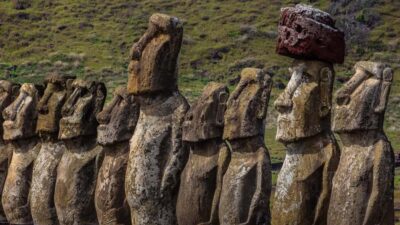
Ahu Tongariki receives another two-hour visit, and rightly so. It is the largest platform in Polynesia, with 15 upright moai lined up above the shore, their backs toward the ocean.
The scale is the point. Rano Raraku shows how the statues were made. Tongariki shows the finished ceremonial effect. From a distance, the figures form a powerful row, but the smaller details become clearer as you move around the site. Give yourself time to take in the entire platform before reaching for your camera.
This is one of the places where guides such as Esteban have earned high praise. Explanations about the moai, the ahu platform, and the wider culture turn a striking view into something easier to understand. Guides have also helped with photographs, which is useful when the group is small and there is time to frame the platform properly.
The site can be emotional without needing theatrical presentation. Fifteen figures standing together, with the Pacific behind them, provide one of the clearest images of Rapa Nui. If you have limited time on the island, Tongariki is one of the stops I would protect.
Ahu Te Pito Kura and the island’s magnetic stone
Ahu Te Pito Kura is scheduled for one hour. The stop is linked with a magnetic stone and the longest moai, making it an important part of the route even though it receives less time than the quarry and Tongariki.
The site adds variety to the day. You are not seeing another identical row of statues. Instead, the focus turns to unusual stone features and a famous large moai. Your guide’s explanation is especially helpful here because the details can be easy to miss if you only stop for a photograph.
This stop was absent from one poorly timed departure, which is a serious issue because it was specifically promised as part of the route. Most descriptions of the tour include it, but I would confirm the planned stops on the morning of departure, particularly if park hours are reduced or weather causes changes.
Ahu Nau Nau and Anakena Beach
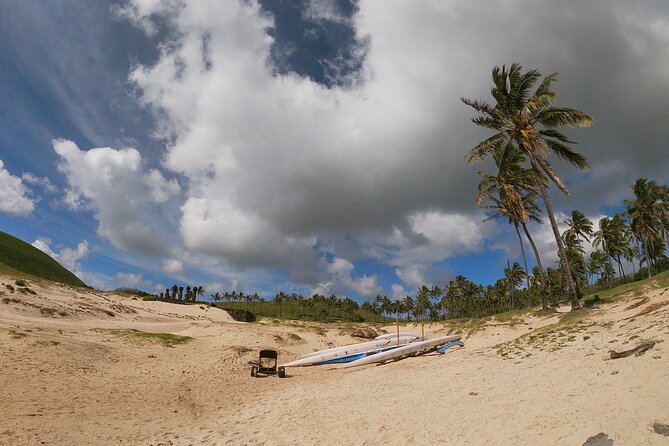
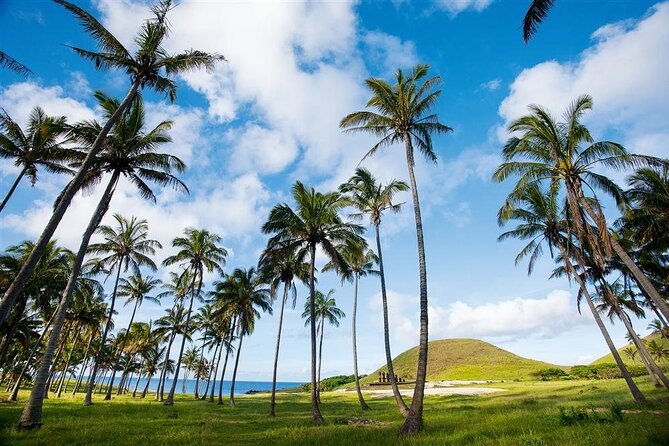
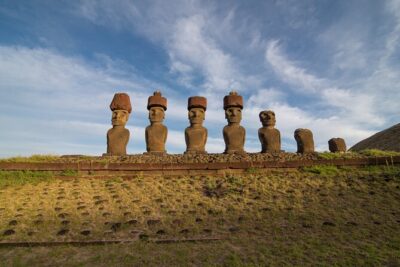
Ahu Nau Nau sits about 150 meters inland from Anakena Beach. The platform holds seven moai, and the setting gives you a different mood from the open coastal platforms. The statues are close to a sandy beach and are tied to the traditions surrounding the arrival of King Hotu Matu’a.
Anakena’s traditional name is Hanga Rau o Te Ariki. The beach stop is scheduled for about 30 minutes and is free to enter. Depending on the day’s timing, you may have a chance to swim, buy lunch, or simply sit near the shore.
Be clear about the focus of this outing: it is an archaeological and cultural tour, not a dedicated beach day. Some departures have placed Anakena at the beginning to avoid crowds or work around park hours. Others have ended there, with lunch available at a local restaurant. One group found the service slow and returned late to the vehicle, so do not assume you will have a relaxed beach lunch with plenty of swimming time.
Lunch and drinks are not included. One reported departure reached the meal stop around 3:00 p.m., which is late for many people. I would carry snacks and water even if you plan to buy lunch at Anakena.
Guides, language, and the quality of the explanations
The strongest part of Rapa Nui Dream is the guiding. Esteban has been singled out for clear English, detailed knowledge of ancient culture, and a warm explanation of modern life on the island. Christian has been praised for being friendly and funny, while Joaquin has been noted for linking stories directly to the places in front of you.
Chris has also received praise for giving detailed information, even if his quieter style may not suit everyone. Andres has been described as extremely well informed and organized. Since guide assignments can change, you should not book solely on the promise of one particular person, but the pattern of praise is encouraging.
Good guiding matters more on Easter Island than it does on many sightseeing circuits. The statues are visually impressive, but the meaning of an ahu, the reason a quarry matters, and the connection between a beach and a founding story are not always obvious. A well-prepared guide helps you see the island as a living culture, not an outdoor collection of giant stone figures.
The main weakness is uneven communication. One outing involved a long wait in a hot minivan while late passengers arrived, with little information provided during the delay. Another departure had trouble with the vehicle’s air conditioning. These may be isolated problems, but they show why it is worth asking what happens if the group is delayed or the vehicle changes.
Is $120 a good value?
The base price is $120 per person. Foreign visitors then pay an $80 National Park entrance fee, bringing the basic cost to about $200 per person. Chilean citizens pay CLP20,000 for the park ticket instead.
That total is substantial, but the tour covers a lot of ground and includes the most important archaeological highlights. You get transport, a guide, a full day of interpretation, and long stops at Rano Raraku and Tongariki. If you have only a few days on Rapa Nui, I think the price can be justified.
The value drops sharply if the route is shortened, stops are skipped, or a long delay eats into the day. That is why I would confirm the start time, group size, expected stops, and park opening hours before departure. You should also compare the total price, including the separate park ticket, rather than comparing only the $120 tour cost.
Free cancellation is available up to 24 hours before the start time. The activity requires good weather, and a weather cancellation offers either another date or a full refund.
Who should book this Easter Island tour?
I would choose this tour if you want a broad first day on Rapa Nui and prefer a guide to explain what you are seeing. It is particularly useful for first-time visitors, solo visitors, couples, and anyone with limited time who wants the quarry, the great platforms, the village remains, and Anakena in one outing.
It also suits people who care about cultural context and photography. Guides have allowed time for pictures, and the small-group format on many departures makes it easier to ask questions.
I would think twice if your top priority is swimming at Anakena, eating a leisurely lunch, or spending long quiet periods at each site. This is a busy archaeological circuit. You may also prefer a private arrangement if you need a precise schedule or want to avoid the risk of group delays.
Should you book Rapa Nui Dream?
Yes, with a few checks first. The route is strong, the two-hour visits at Rano Raraku and Tongariki are generous, and the guides have repeatedly added real value through clear cultural explanations. For a single day on Easter Island, it covers an impressive amount.
Before you book, confirm that the National Park ticket is in your hands, ask whether pickup is included, verify the maximum group size, and check that all seven stops are planned for your date. Pack lunch or snacks, carry water, and do not count on the beach stop becoming a full afternoon swim.
If you accept those limits, this is a practical way to meet the moai on their own ground and understand more than their famous silhouettes.
FAQ
How long does the Rapa Nui Dream full-day tour last?
The planned duration is approximately eight to nine hours, with a 9:30 a.m. start and a return to the meeting point in Hanga Roa. Actual timing can change because of park schedules, group arrangements, and delays.
What sites are included?
The route includes Ahu Vaihu, Ahu Akahanga, Rano Raraku, Ahu Tongariki, Ahu Te Pito Kura, Ahu Nau Nau, and Anakena Beach.
Is the National Park ticket included?
No. Foreign visitors pay $80 per person, while Chilean citizens pay CLP20,000 per person. You must have the ticket before the first day of the excursion.
Is lunch included?
No. Food and drinks are not included. You may be able to buy lunch at Anakena, but the meal stop can be late, so bringing snacks and water is sensible.
Where does the tour start and finish?
The meeting point is Iglesia Católica Tu’u Koihu in Hanga Roa, Easter Island. The tour ends back at the meeting point.
How large is the group?
The stated maximum is 15 people. Some departures have operated with smaller groups, but group size can vary. Confirmation and the WhatsApp message sent the day before should provide the latest details.
Just added in Easter Island
- Volcanic Refuges: Excursion to Underground Civilization★ 4.7 · 8 reviews
- Volcanic Wonders and the Kingdom of the Birdman: Half Day★ 5.0 · 6 reviews
- Half Day Private Tour: Caves and Volcanic Refuges★ 4.0 · 14 reviews
- Easter Island Ancestral Dinner and Show with Transport★ 4.5 · 2 reviews
- 2 Day Small Group Tour in Moai Monuments and Historic Pathways★ 5.0 · 22 reviews
- Visit Rapa Nui in 4 days with 3 Tours and Accommodation included★ 4.0 · 2 reviews
- Tour to the Motus: Boat trip and snorkeling in Rapa Nui★ 5.0 · 8 reviews
- The birdman journey in Easter Island★ 5.0 · 1 review
Easter Island Tours, compared.
Two days of Full Day Tour of Rapa Nui + Sunrise in Tongariki
Read our review →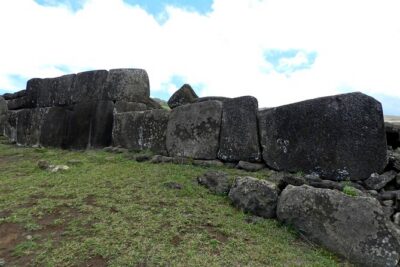
2-Day Private Tour Easter Island Highlights Complete Discovery
Read our review →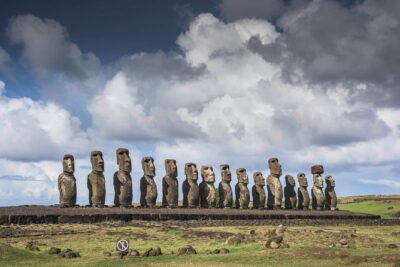
Private Tour: Full Day Easter Island Highlights
Read our review →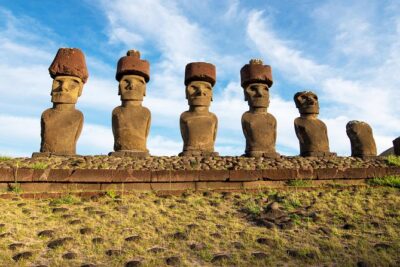
Private Full-Day Easter Island Highlights North and West
Read our review →Browse the lists this tour appears in