
REVIEW · EASTER ISLAND TOURS
From Hanga Roa: Easter Island Highlights 2-Day Tour
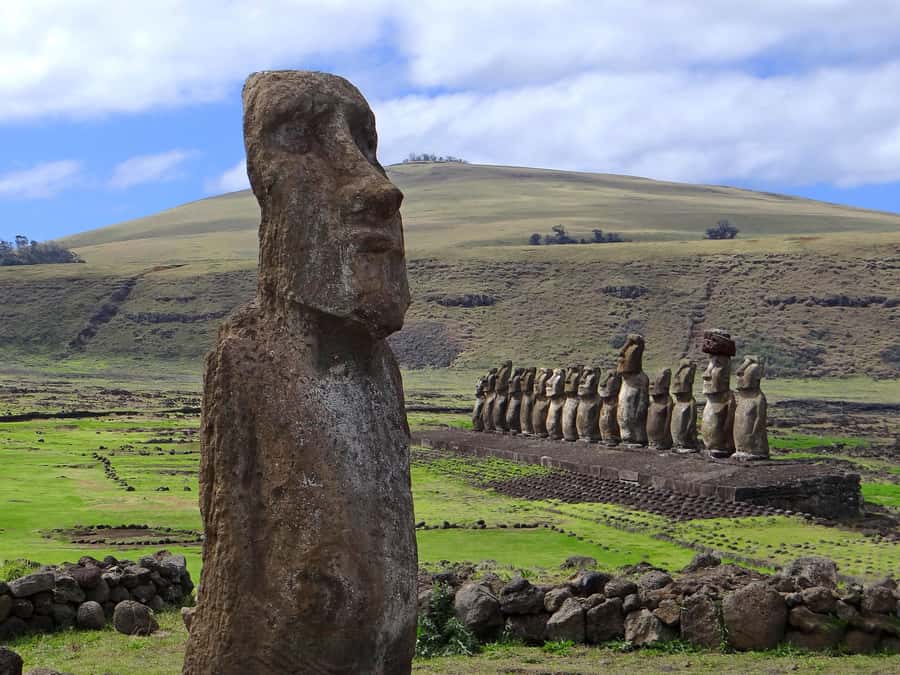
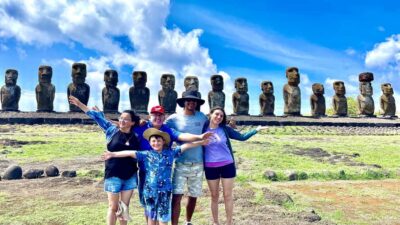
Fifteen moai face the morning light at Tongariki. This two-day tour gives you a well-planned introduction to Rapa Nui, linking its major archaeological sites with local stories, island traditions, and plenty of Pacific scenery. I especially like the native expert guides and the efficient route, which covers far more ground than most visitors could manage alone. The small groups, limited to 14 people, also keep the experience personal.
I also like the practical touches: hotel pickup, a comfortable minibus, rain capes, and lanterns for the cave visit. The main drawback is that the two days are not equally strong for every English speaker. The second day can include extended Spanish commentary, and some visitors find its schedule hurried or finish earlier than expected. Bring food, sun protection, and patience.
In This Review
- Key points to know before booking
- Why a guide matters on Rapa Nui
- Day one: the southern coast and the island’s greatest moai sites
- Vaihu and Akahanga: moai in fallen repose
- Rano Raraku: where the moai began
- Tongariki: fifteen moai in one frame
- Te Pito Kura and Anakena Beach
- Day two: cliffs, red stone, caves, and unusual moai placement
- Orongo and Rano Kau: dramatic views with cultural weight
- Vinapu: precise stonework and unanswered questions
- Puna Pau: the red scoria quarry
- Ana Te Pahu: a cooler, more intimate stop
- Ahu Akivi: seven moai facing the sea
- Comfort, timing, and what to pack
- Is $170 a fair price?
- Who will enjoy this two-day route?
- Should you book it?
- FAQ
- Where does the tour begin?
- How long does the experience last?
- How much does the tour cost?
- What languages are offered?
- How large is the group?
- Is transportation included?
- Is lunch included?
- Are entrance fees included?
- What equipment is provided for the cave visit?
- Are rain capes supplied?
- Are drones allowed?
- Can I cancel the booking?
Key points to know before booking
- Tongariki is the visual centerpiece: Fifteen restored moai create the tour’s most powerful group view.
- Local guides add meaning: Guides such as Jeremías, Zoe, Enerike Hey, Roberto, Simon, and Franko have been praised for explaining Rapa Nui culture, family traditions, and modern island life.
- Day one is the fuller archaeological circuit: It includes Vaihu, Akahanga, Rano Raraku, Tongariki, Te Pito Kura, and Anakena.
- Day two mixes cliffs, caves, and stonework: Orongo, Vinapu, Puna Pau, Ana Te Pahu, and Ahu Akivi show a different side of the island.
- Plan your meals: Lunch is not included, and the second day may have no meal stop before the tour ends.
- The price is strong for the coverage: At $170 per person, the tour can be a good deal if you want guided access to the major sites in two days.
Why a guide matters on Rapa Nui
Rapa Nui is easy to picture as a place of giant statues and empty fields. That image is accurate, but incomplete. The moai make more sense when you understand the communities that created them, the role of ceremonial platforms, the movement of the statues, and the beliefs that shaped their placement.
That is where this tour earns its keep. Guides explain the sites in English and Spanish, and several have been praised for sharing not only archaeological information but also personal connections to the island. Zoe, for example, was noted for explaining traditions through both family experience and historical context. Jeremías was praised for making the island’s daily life and competing moai theories easy to follow.
You should know that bilingual guiding can affect the pace. If the group includes both English and Spanish speakers, the guide may repeat each explanation. That can double the time at some stops. English-only visitors have sometimes found this frustrating, while others appreciated the chance to share the experience with a mixed group.
The group size is capped at 14, though one reported day had 12 people and another had 14. That is small enough for questions and easier movement than a large coach tour, but it is not a private trip. Guide quality can also vary by day because you may have a different guide for each route.
More things to do on Easter Island:
- From Hanga Roa: Rapa Nui Culture Sightseeing Tour
★ 4.6 · 307 reviews - Full Day Tour in Rapa Nui
★ 4.5 · 122 reviews - 2-Day Private Tour Easter Island Highlights Complete Discovery
★ 5.0 · 110 reviews
Day one: the southern coast and the island’s greatest moai sites
The first day begins with pickup from your accommodation in Hanga Roa. The spacious minibus keeps the day simple, especially since the route crosses much of the island and includes several walks over open ground.
Vaihu and Akahanga: moai in fallen repose
Vaihu introduces you to the island’s coastal ceremonial sites. The setting is raw and open, with the Pacific nearby and moai lying where they fell or were later toppled. It is a useful first stop because you see that Rapa Nui is not just about upright statues arranged for photographs. Ruined platforms and fallen figures are part of the story too.
At Akahanga, the mood becomes quieter. The site is an archaeological record of change, with toppled moai and remains of an ancient settlement. Your guide can help you picture the ahu, or ceremonial platform, as part of a living community rather than an isolated stone monument.
I like beginning with these sites because they give you context before the more famous stops. The tradeoff is that the early locations may feel less polished than Tongariki or Anakena. That is precisely their value, but visitors focused only on perfect moai photographs may find them less immediately dramatic.
Rano Raraku: where the moai began
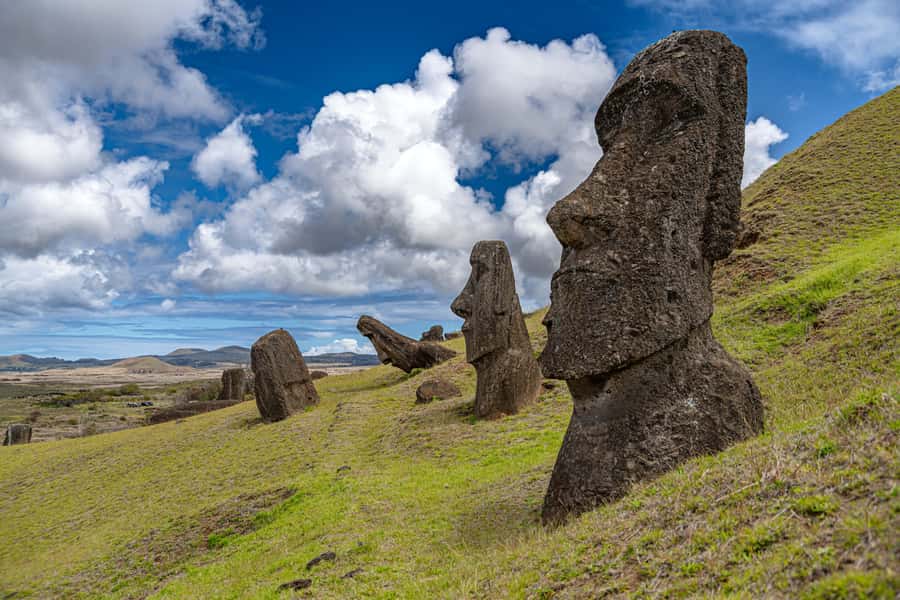
Rano Raraku is the volcanic quarry where many moai were carved from volcanic tuff. The unfinished figures around the quarry make the place feel like a workshop paused in time. You can see how the statues were shaped from the rock and begin to understand the enormous labor involved in producing and moving them.
This is one of the most important stops on the whole tour. A guide helps you notice details that are easy to miss, including unfinished figures and the relationship between the quarry and the statues spread across the island.
The site can also be busy. One full-day schedule included a lunch stop at the quarry café, but the café was busy enough that the group continued rather than wait. That is a useful warning: do not rely on a quick restaurant visit as your only food plan.
A completely different kind of day out:
- Private Full-Day Easter Island Highlights North and West
★ 5.0 · 84 reviews - From Hanga Roa: Journey from Orongo to Ana Te Pahu
★ 4.3 · 75 reviews - Journey of the Ancestors: Tongariki, Rano Raraku & Anakena Beach
★ 4.5 · 70 reviews - Full Day Private Tour: Factory of the Moai the stone giants
★ 4.5 · 63 reviews
Tongariki: fifteen moai in one frame
Tongariki is the stop most likely to appear in your mental picture of Easter Island. Fifteen moai are arranged on a long ceremonial platform, facing inland with the ocean behind you. The scale is impressive, but the guide’s explanation adds the human dimension: these statues were connected to communities, ancestors, status, and ceremony.
Allow yourself time to look beyond the standard group photograph. Notice the variation in size, posture, and weathering. The broad setting makes Tongariki feel monumental without requiring a long walk.
This is also a good place to use your guide’s time wisely. Ask about the restoration of the platform, the meaning of the figures, and how this site compares with Ahu Akivi on day two. The guides have been particularly praised for discussing different ideas about the moai rather than presenting one neat answer to every mystery.
Te Pito Kura and Anakena Beach
Te Pito Kura brings you back to the island’s sacred traditions and legends. It is a smaller stop than Tongariki, but it adds another layer to the day by connecting the physical remains with stories that continue to shape Rapa Nui identity.
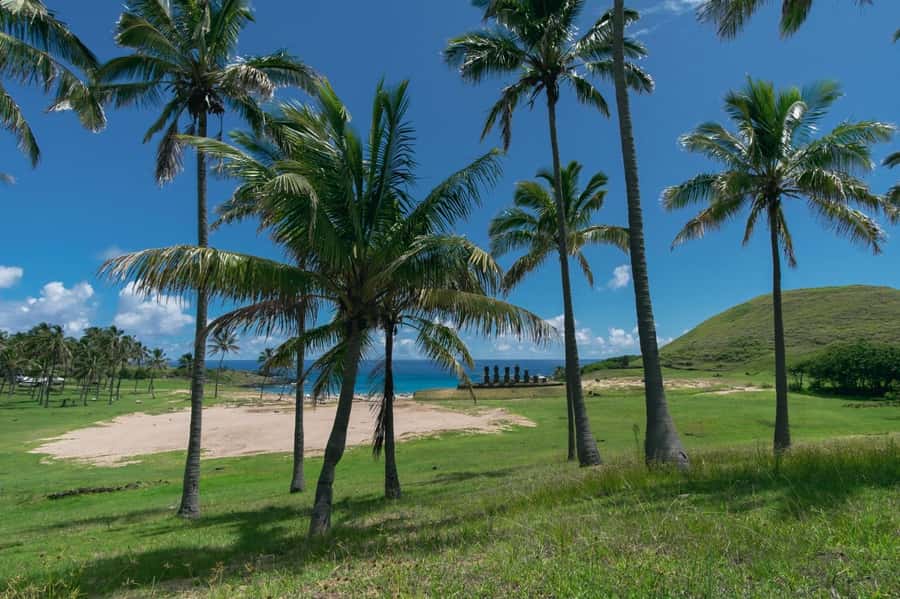
The route then reaches Anakena, a sandy beach lined with palms and moai. After a day of quarries and fallen statues, Anakena offers a welcome change of pace. You get a more relaxed coastal setting, and the beach is a natural place to pause, eat, and let the information settle.
Do not assume lunch will happen at a standard midday hour. One schedule reached Anakena at about 4:30 p.m. after the group skipped a busy café. Pack a substantial snack or picnic, even if you plan to buy food. You will be happier looking at moai with a sandwich in your bag.
The first day can run from around 9:30 a.m. pickup until about 6 p.m., depending on the route and group. That makes it a full day, not a casual half-day outing. Sun protection matters because much of the sightseeing takes place in direct sunlight.
Day two: cliffs, red stone, caves, and unusual moai placement
The second day covers a different set of sites and can feel more varied. It also tends to be the more uneven day in terms of pacing, especially when a bilingual guide must repeat explanations.
Orongo and Rano Kau: dramatic views with cultural weight
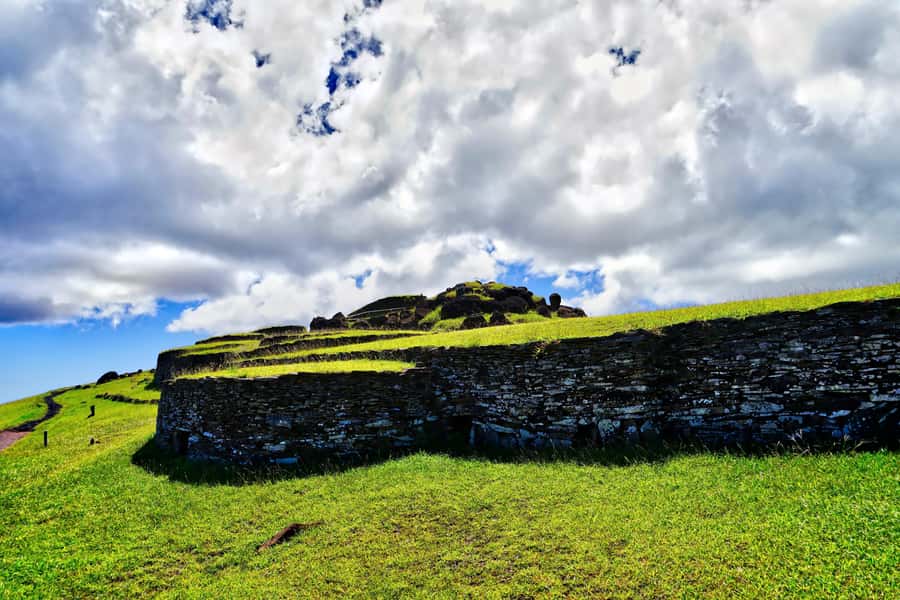
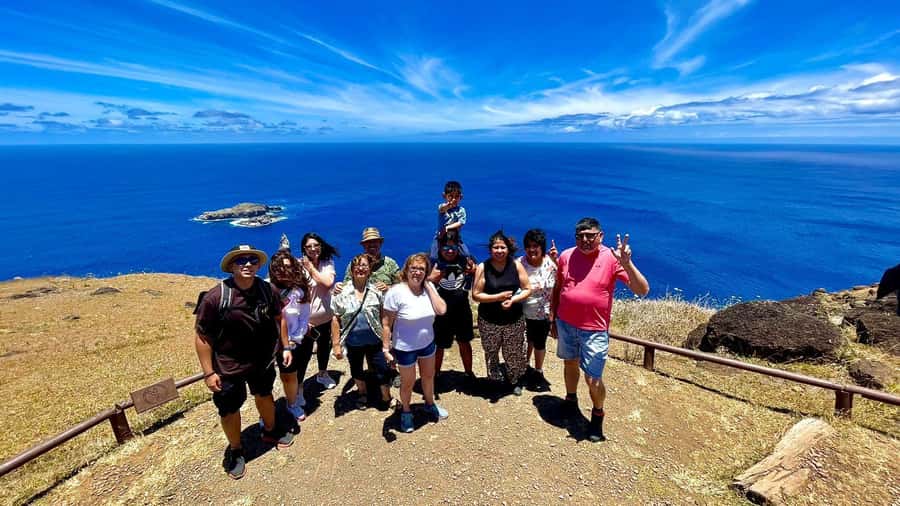
Orongo sits near the rim of Rano Kau, a large volcanic crater with broad views across the island and sea. The setting is one of the most dramatic on Rapa Nui, but Orongo matters for more than its scenery. It is tied to the island’s birdman ceremony, an important part of its ceremonial and political past.
This is the second day’s strongest stop for many visitors. The cliffs and crater give the tour a visual change from the open coastal platforms, while the guide’s interpretation connects the village remains with island beliefs and leadership.
Take care on the exposed paths and listen to local instructions. The information supplied for the tour confirms the site visit and its cliffside position, but it does not provide a detailed walking distance or terrain grade. If you have mobility concerns, ask the operator for current route details before booking. The tour is listed as wheelchair accessible, but individual archaeological sites can still have uneven surfaces.
Vinapu: precise stonework and unanswered questions
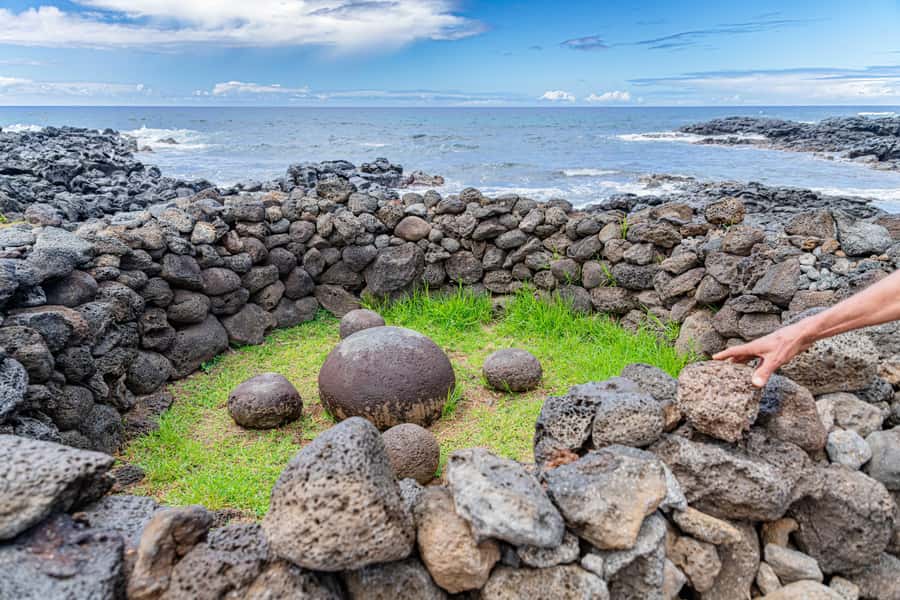
Vinapu is known for carefully fitted stone walls. The masonry has prompted comparisons with South American construction, giving your guide a chance to explain theories and limits of the evidence.
This stop is especially useful if you enjoy archaeology more than simple sightseeing. Look closely at the joints between stones. The fit is the point, and it is easy to rush past if you are focused only on statues.
Because the site is less instantly recognizable than Tongariki, the quality of the explanation matters. A guide who can separate established facts from speculation will make Vinapu far more rewarding.
Puna Pau: the red scoria quarry
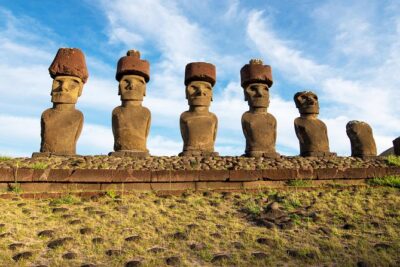
Puna Pau supplied the red scoria used for the topknots, or pukao, placed on some moai. The color and material create a clear contrast with the darker volcanic stone used for many statues.
This short stop helps complete the technical picture. Rano Raraku explains where many bodies were carved, while Puna Pau explains where the distinctive headpieces came from. You begin to see the moai tradition as a large production and transport system rather than a collection of unrelated monuments.
Ana Te Pahu: a cooler, more intimate stop
Ana Te Pahu is a cave network with chambers and ancient markings. The tour provides personal lanterns, which are genuinely useful here. They let you see into darker sections and make the cave visit feel more active than a quick glance at an entrance.
The cave is also a good reminder that Rapa Nui’s past was not lived only on ceremonial platforms. Caves offered shelter and private spaces, and they add a more intimate sense of how people used the island.
Wear sensible footwear and expect the ground to be less even than at a paved viewpoint. The supplied details do not specify the cave’s exact walking conditions, so ask if you need a precise accessibility assessment. The lanterns and small-group format should help, but they do not turn a natural cave into a fully level attraction.
Ahu Akivi: seven moai facing the sea
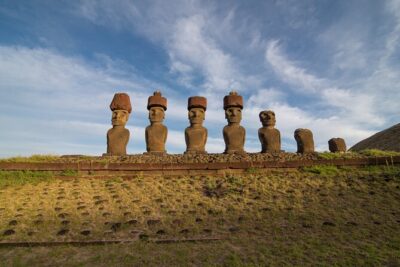
The final stop is Ahu Akivi, where seven moai face toward the ocean. Their placement differs from the usual inland-facing arrangement, which makes this a fitting end to the two-day route.
It is a quieter conclusion than Tongariki. Instead of ending with the biggest group of statues, the tour closes with a site that invites comparison and questions. Why are these figures positioned differently? What did the site mean to the people who built it? Your guide can help you consider those questions without pretending every mystery has a certain answer.
The second day may end around 3 p.m., according to one schedule. That can be convenient if you have evening plans, but it may also feel abrupt after a route that includes several stops. Confirm the expected finish time when you reserve.
Comfort, timing, and what to pack
Pickup from your accommodation is included, and the minibus removes the need to arrange transport between distant sites. That matters on Rapa Nui, where seeing the full circuit independently requires more planning and a vehicle.
Rain capes are supplied for sudden showers. Weather can change quickly, so the capes are a thoughtful addition rather than a gimmick. Lanterns are provided for Ana Te Pahu, and you should keep both items handy instead of leaving them buried in your day bag.
I would pack:
- A full lunch or several substantial snacks
- Plenty of water
- A hat and strong sun protection
- Comfortable shoes
- Extra layers for changing weather
- A phone or camera with spare battery power
Lunch is not included, and the stops are not always timed around a conventional meal. The guides can suggest places to eat, but your best plan is to carry food from the start.
Entrance fees to the archaeological sites are also separate. Add that cost to your budget before deciding if the $170 tour price fits your plans. The exact fee amount is not provided here, so confirm it before departure.
Drones are not allowed. That restriction is easy to follow and protects the character of the archaeological sites.
Is $170 a fair price?
At $170 per person for two days, the tour offers solid value if you want a guided overview of the island’s major sites. You receive accommodation pickup, transport, a small group, bilingual guiding, cave lanterns, and rain protection. Just as important, the route covers locations that are difficult to understand fully without interpretation.
The value is strongest for a first visit. One visitor paired a self-guided motorcycle day with this tour and found that the two approaches worked well together. That is a smart plan if you want both freedom and context: explore independently first, then use the guided days to understand what you saw.
The price is less attractive if you already have private transport, strong archaeological background, and permission to visit every site you want without a guide. You also need to budget separately for lunch and entrance fees.
Free cancellation up to 24 hours ahead and reserve-now, pay-later booking make it easier to fit into a changing itinerary. The tour is offered in English and Spanish, and wheelchair accessibility is listed, though you should confirm the practical details of each site if that is important for you.
Who will enjoy this two-day route?
I would choose this tour for a first-time visitor who wants to see the major moai sites without spending hours arranging transport. It is also a good fit if you want local cultural explanation rather than a quick series of photo stops.
It suits travelers who enjoy a full sightseeing day, mixed groups, and a steady flow of archaeological sites. Families and older visitors may appreciate the vehicle pickup and organized route, but should ask about walking surfaces at Ana Te Pahu and the outdoor sites.
You may want another plan if you need an English-only tour, dislike repeated bilingual commentary, or prefer slow visits with long breaks. The first day receives the strongest praise for route and pacing, while the second day can feel rushed or less satisfying for some English speakers.
The guides are a major part of the experience. Specific guides praised for warmth, storytelling, and cultural pride include Jeremías, Javier’s Hucke, Enerike Hey, Zoe, Roberto, Simon, and Franko. Guide assignments can change, so book for the route and format rather than expecting one particular person.
Should you book it?
Yes, if this is your first time on Rapa Nui and you want an efficient, culturally informed overview. The first day is especially compelling, with Rano Raraku, Tongariki, and Anakena forming a strong sequence of quarry, ceremony, and coast.
Book with realistic expectations about day two. Confirm the language balance, expected finish time, entrance fees, and meal plan. Carry snacks and sun protection, and treat the $170 price as the cost of transport and interpretation, not an all-inclusive package.
If you want the island’s main archaeological story in two days, this is a sensible choice. If you have several extra days, add independent exploring afterward rather than replacing the guided route.
FAQ
Where does the tour begin?
Pickup directly from your accommodation in Hanga Roa is included.
How long does the experience last?
The experience lasts two days. Starting times vary, so check availability when booking.
How much does the tour cost?
The listed price is $170 per person.
What languages are offered?
Live guiding is available in English and Spanish.
How large is the group?
The tour is described as a small-group experience limited to 14 participants.
Is transportation included?
Yes. Pickup and transport in a spacious minibus are included.
Is lunch included?
No. Lunch is not included. The guide can suggest places to eat, and you can also bring your own food.
Are entrance fees included?
No. Entrance fees to the sites are separate from the tour price.
What equipment is provided for the cave visit?
You receive a personal lantern for exploring Ana Te Pahu.
Are rain capes supplied?
Yes. Rain capes are provided in case of sudden showers.
Are drones allowed?
No. Drones are not allowed on the tour.
Can I cancel the booking?
You can cancel up to 24 hours in advance for a full refund. Reserve-now, pay-later booking is also available.
Just added in Hanga Roa
- Volcanic Refuges: Excursion to Underground Civilization★ 4.7 · 8 reviews
- Volcanic Wonders and the Kingdom of the Birdman: Half Day★ 5.0 · 6 reviews
- Half Day Private Tour: Caves and Volcanic Refuges★ 4.0 · 14 reviews
- Easter Island Ancestral Dinner and Show with Transport★ 4.5 · 2 reviews
- 2 Day Small Group Tour in Moai Monuments and Historic Pathways★ 5.0 · 22 reviews
- Visit Rapa Nui in 4 days with 3 Tours and Accommodation included★ 4.0 · 2 reviews
- Tour to the Motus: Boat trip and snorkeling in Rapa Nui★ 5.0 · 8 reviews
- The birdman journey in Easter Island★ 5.0 · 1 review
Easter Island Tours, compared.
Two days of Full Day Tour of Rapa Nui + Sunrise in Tongariki
Read our review →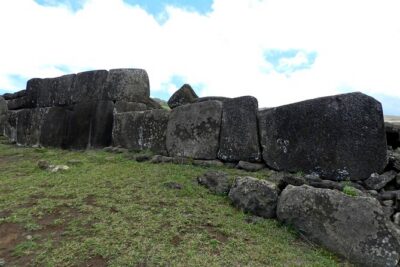
2-Day Private Tour Easter Island Highlights Complete Discovery
Read our review →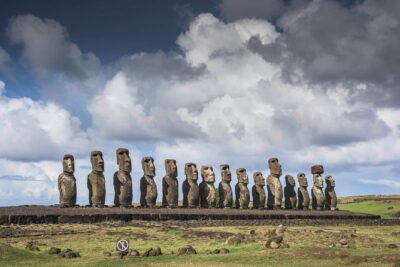
Private Tour: Full Day Easter Island Highlights
Read our review →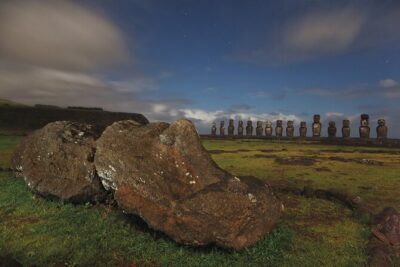
Private Full-Day Easter Island Highlights North and West
Read our review →Browse the lists this tour appears in