
REVIEW · EASTER ISLAND TOURS
T5-GIANT STATUES (non-cruise visitors)
Stone giants await. This private Rapa Nui tour links Anakena Beach, Ahu Tongariki, and Rano Raraku, giving you a clear introduction to Easter Island’s most famous monuments in about four hours. I like the personal format and the choice of English, French, or Spanish guiding.
I also like the flexible pace, since the guide can adjust the outing to your interests and try to avoid busy periods at the sites. The main point to consider is the walking: you should expect uneven ground and some hillside climbing, especially at Rano Raraku.
The experience costs $108.66 per person, before the separate national park entrance fee. That makes it a useful choice for a first look at Rapa Nui, especially if you value private transport and direct attention instead of joining a large group.
In This Review
- Key points to know before booking
- Why this private Rapa Nui tour makes sense
- Anakena Beach: moai beside Rapa Nui’s only famous sand
- Ahu Tongariki: fifteen moai in one powerful row
- Rano Raraku: where the stone giants began
- A guide can shape the whole four-hour experience
- What the $108.66 price really covers
- Timing, pickup, and what to prepare
- Who should book this experience?
- Should you book the T5 Giant Statues tour?
- FAQ
- Where does the tour take place?
- How long does the tour last?
- Which sites are included?
- Is transportation included?
- Is the tour private?
- Which languages are available?
- Is the national park entrance fee included?
- How long is the entrance ticket valid?
- Can most people participate?
Key points to know before booking
- Three major sites in four hours: You visit Anakena Beach, Ahu Tongariki, and Rano Raraku, with about three and a half hours allocated to the stops.
- Private transportation and guiding: Only your group takes part, with a guide in English, French, or Spanish.
- The entrance fee is separate: Budget another $80 per person, or $40 for ages 7 to 17. The ticket works for 10 days at all sites.
- Rano Raraku requires effort: Uneven surfaces and hillsides make sensible shoes important.
- Cecilia received especially warm praise: She was described as outgoing and well informed, with a strong ability to make the island drive engaging.
- An adaptable schedule: The guide aims to match your pace and reduce the effect of crowded periods where possible.
Why this private Rapa Nui tour makes sense
Easter Island is compact, but its important archaeological sites are spread around the coast and interior. Hanga Roa is the only village, while Anakena lies at the far end of the island. A private vehicle saves you from arranging separate transport and lets you focus on the story behind each ahu and moai.
The tour is built around three very different places. Anakena gives you the beach and the island’s settlement tradition. Ahu Tongariki supplies the classic line of restored statues. Rano Raraku shows you where most of those statues were carved, including unfinished figures still attached to the volcanic rock.
That combination is the real strength. You do not simply collect photographs of standing moai. You see the setting, the ceremonial platforms, and the quarry that explains how the statues came into being.
The private format also matters on an island where a short stop can feel rushed. You can ask questions as they come up, spend more time at a detail that interests you, or move along when you have had enough. The guide aims to keep the visit at your pace and avoid the thickest crowds when possible, though no private tour can guarantee an empty archaeological site.
More Boat Trips in Hanga Roa:
- Tour to the Motus: Boat trip and snorkeling in Rapa Nui
★ 5.0 · 8 reviews - T3+T4-RAPA NUI ARCHAEOLOGICAL SITES (non-cruise visitors)
★ 5.0 · 8 reviews - T2-THE MUST-HAVES OF RAPA NUI (non-cruise visitors)
★ 4.5 · 4 reviews
Anakena Beach: moai beside Rapa Nui’s only famous sand
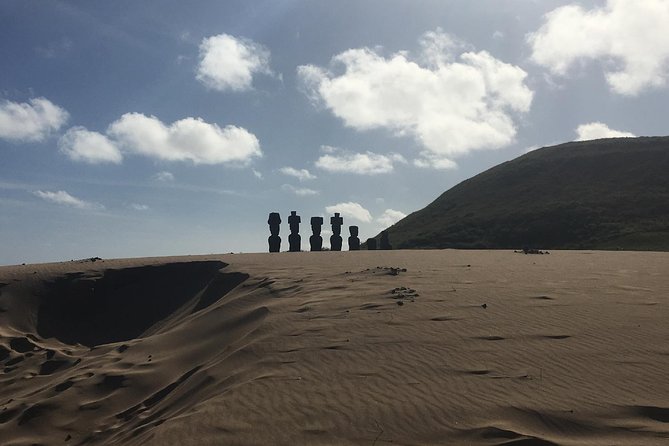
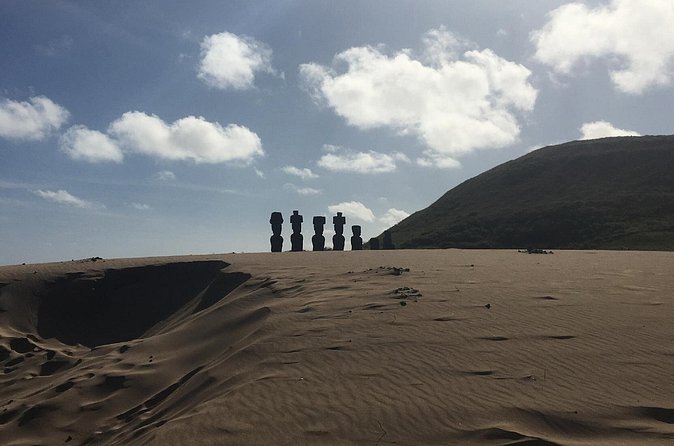
The first stop lasts about an hour at Anakena Beach, on the opposite side of the island from Hanga Roa. It is the island’s white-sand beach, backed by its only coconut grove and translucent water. The setting is a sharp change from the stark volcanic scenery you may expect from Rapa Nui.
Anakena also carries great importance in the island’s origin story. This is traditionally identified as the arrival point of the first Polynesian settlers. Your guide can connect the peaceful beach setting with the wider story of settlement and ceremonial life.
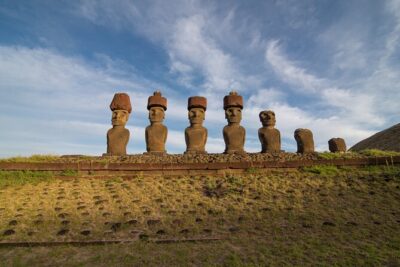
The moai here are among the best preserved you can see at a restored site. That makes Anakena a good early stop because you get a close look at the statues without the quarry surroundings competing for your attention.
I would use the hour for both the archaeological remains and the setting. Look at the proportions of the figures, the stonework of the ahu, and the way the monuments relate to the beach. Then give yourself a moment to take in the palms and water. The visit is not only about statues.
The limitation is time. One hour allows a useful introduction, but it does not turn Anakena into a beach day. The tour is designed to show you the site, not provide a long swim or extended relaxation period. The itinerary also does not include the entrance ticket, so you need to have the required park admission ready.
Ahu Tongariki: fifteen moai in one powerful row
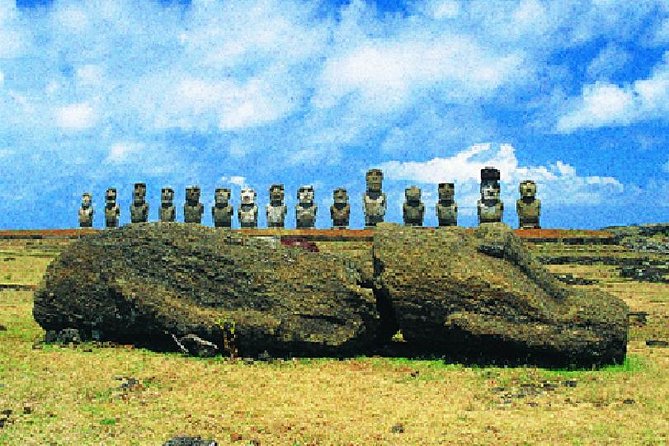
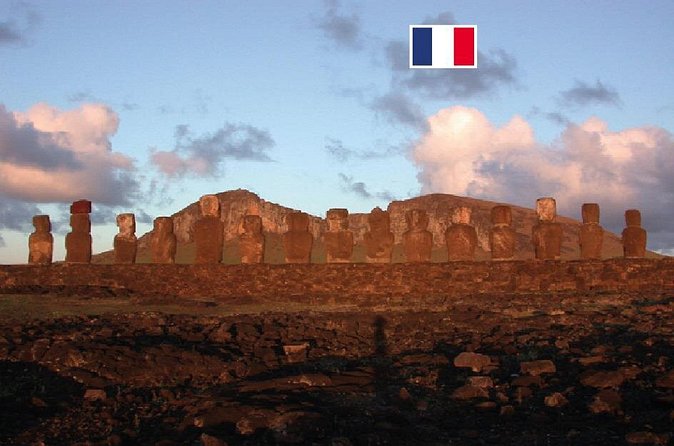
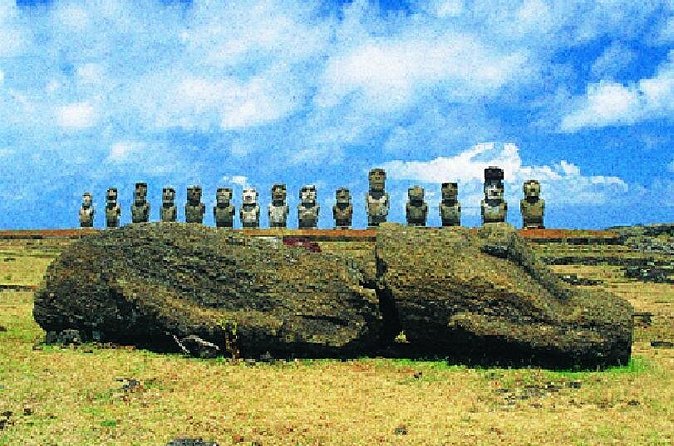
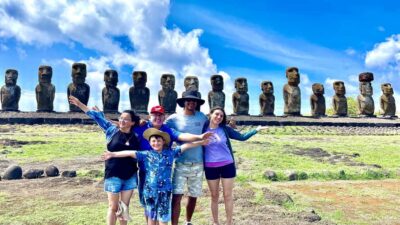
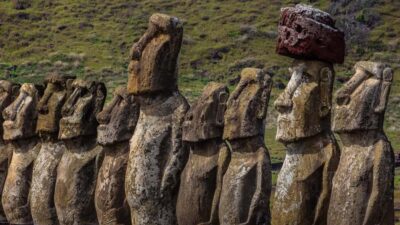
After Anakena, the tour continues to Ahu Tongariki, the largest and most striking restored ceremonial site included here. Fifteen moai face the inland side, creating the image most associated with Rapa Nui for many people.
This is the place where scale really registers. At Anakena, you have a beach and a smaller site context. At Tongariki, the long line of figures gives you a sense of ceremony, planning, and sheer labor. Even if you have seen photographs, the physical arrangement is harder to grasp until you stand in front of it.
The stop lasts about an hour. That should give you time to view the platform from different angles and listen to the guide explain the site’s purpose and restoration. The setting is also linked with astronomy, and sunrise is said to give Tongariki a special atmosphere. This excursion is not a sunrise departure, so you should not expect that particular light during the standard outing. Still, the astronomical connection adds meaning to the orientation of the site.
Tongariki is also a good test of what a private guide adds. Fifteen statues can become a quick photo stop if nobody explains what you are seeing. With a guide, you can ask about the arrangement, the scale of the restoration, and the way the site fits into Polynesian architecture.
You should keep your expectations practical. The tour does not promise a specialist archaeological lecture, and the exact amount of detail will depend on your guide and your questions. Its advantage is having a person with you who can set the scene in a language you choose and respond to your interests.
Rano Raraku: where the stone giants began
Rano Raraku is the longest stop, at about one hour and thirty minutes. It is also the most physically demanding and, for many people, the most absorbing part of the trip.
Almost all of the island’s moai were carved here. Hundreds of statues remain in and around the quarry, including figures at different stages of completion. Walking among them changes the way you see the finished monuments. The statues stop being mysterious objects placed around the island and become evidence of a long carving process that was interrupted before every figure reached its final destination.
The quarry offers variety that the ceremonial platforms cannot. At Tongariki, the moai are arranged in a formal row. At Rano Raraku, you encounter them in the rock and on the slopes, with some appearing partly buried or unfinished. The setting gives you a direct look at the worksite behind the monuments.
This is where you need to take the walking warning seriously. The ground is uneven, and you may climb hillsides. The only detailed physical comment available about the outing points to a good amount of walking over rough surfaces and uphill sections. I would wear sturdy shoes, move at a comfortable pace, and avoid treating the 90-minute visit as a race through every path.
The private format helps here. If you need to slow down, you can say so. If you are especially interested in carving marks or unfinished statues, you can ask to spend more time looking closely. The guide can also help you judge how to use the available time.
Rano Raraku may be less comfortable for anyone with difficulty walking on uneven ground. The tour says most people can participate, but that broad statement does not remove the need for care on slopes and rough surfaces.
More things to do on Easter Island:
- From Hanga Roa: Rapa Nui Culture Sightseeing Tour
★ 4.6 · 307 reviews - From Hanga Roa: Easter Island Highlights 2-Day Tour
★ 4.3 · 205 reviews - Full Day Tour in Rapa Nui
★ 4.5 · 122 reviews - 2-Day Private Tour Easter Island Highlights Complete Discovery
★ 5.0 · 110 reviews
A guide can shape the whole four-hour experience
The provider offers private guiding in English, French, or Spanish. That is a useful feature on Rapa Nui, where names, traditions, and archaeological terms can be difficult to follow without clear explanation.
A private guide is not just a driver who points out the next stop. The stated service includes private guided tours and private transportation, so you have one person helping connect the sites and manage the timing. This can make the half-day feel more coherent than a series of disconnected photo stops.
Cecilia received particularly strong praise for being outgoing and well informed. If she is assigned to your outing, that combination should suit the tour well. Her approach was described as engaging during the island drive, which matters because the time between the three sites is part of the experience, not just dead time in a vehicle.
Guide assignments can change, so I would not book on the assumption that Cecilia will definitely lead your group. The reliable point is the private format and the choice of language. If a particular language or guide matters to you, state that clearly when arranging the tour.
The guide also aims to avoid tourist overcrowding. Treat that as a sensible effort, not a promise of solitude. The most famous sites can still be busy, and timing depends on other groups, opening conditions, and the day’s schedule.
What the $108.66 price really covers
The listed price is $108.66 per person. It covers private transportation and a private guide, but it does not cover the national park entrance ticket.
The additional admission costs $80 per adult and $40 for visitors ages 7 to 17. That means an adult should budget about $188.66 in total for the tour and admission. The entrance ticket remains valid for 10 days and covers all the sites, which is useful if you plan to spend more time on Rapa Nui beyond this half-day outing.
The price is easier to justify for a small group than for a solo participant. You are paying for a private vehicle, direct attention, language choice, and a schedule that can respond to your pace. Group discounts are offered, so larger parties should ask how the reduced rate affects the total before booking.
For a larger group, this may compare well with arranging separate transport and guiding. For one person, the cost is harder to spread, although the private format still offers convenience. The key question is how much you value control and personal explanation.
I would not choose this tour only because it is cheap. It is not a bare-bones transfer. I would choose it if you want the three essential sites covered in one organized outing and prefer not to share the vehicle with other groups.
Timing, pickup, and what to prepare
The excursion lasts about four hours. The three stops account for roughly three and a half hours: one hour at Anakena, one hour at Ahu Tongariki, and 90 minutes at Rano Raraku. The remaining time allows for driving between Hanga Roa and the sites.
Pickup is offered, but the supplied details do not specify the exact pickup points or schedule. Confirm those details when you book, particularly if you are staying outside central Hanga Roa or need a precise start time.
Wear shoes that can handle uneven ground and hillsides. Bring enough attention for walking, not just photography, because the quarry is best understood on foot. The information provided does not specify meals, drinks, equipment, or beach activities, so you should not assume those are included.
The tour is private, and only your group participates. Most people can take part, but the walking conditions make this less suitable if you need flat, paved routes throughout the visit.
Confirmation is normally sent within 48 hours, subject to availability. The experience is non-refundable and cannot be changed after booking, so check the date, number of people, language, and pickup details carefully before paying.
Who should book this experience?
I would recommend it to a first-time Rapa Nui visitor who wants the essential moai sites explained in one half-day. It also suits families and small groups who prefer a private vehicle, though children and adults alike should be ready for uneven walking at Rano Raraku.
It works well if you want to see contrasts: beach and settlement tradition at Anakena, formal ceremonial architecture at Tongariki, and the working quarry at Rano Raraku. The route gives you a stronger foundation than visiting one famous platform alone.
You may want a different plan if you want a slow beach visit, a specialist archaeological program, or a full-day schedule with many additional stops. The four-hour design is focused. That is its advantage, but also its limit.
Should you book the T5 Giant Statues tour?
Book it if you want a private, efficient introduction to Rapa Nui’s three essential moai sites, with transportation and guiding handled for you. The standout benefits are the adaptable pace, the language choice, and the chance to spend a full 90 minutes at Rano Raraku rather than treating the quarry as a quick roadside stop.
Before committing, add the $80 adult entrance fee to your budget and be honest about your comfort with rough ground and hills. If those points work for you, this is a well-focused way to meet Anakena, Ahu Tongariki, and Rano Raraku in a single morning or afternoon.
FAQ
Where does the tour take place?
The experience begins in or around Hanga Roa, Chile, and visits Anakena Beach, Ahu Tongariki, and Rano Raraku on Rapa Nui.
How long does the tour last?
The tour lasts approximately four hours.
Which sites are included?
The route includes Anakena Beach, Ahu Tongariki, and Rano Raraku.
Is transportation included?
Yes. Private transportation is included.
Is the tour private?
Yes. Only your group participates in the activity.
Which languages are available?
Private guiding is available in English, French, or Spanish.
Is the national park entrance fee included?
No. The entrance ticket costs $80 per person, or $40 for ages 7 to 17.
How long is the entrance ticket valid?
The ticket is valid for 10 days and can be used at all sites.
Can most people participate?
Yes, most people can participate, but the tour involves considerable walking over uneven surfaces and climbing hillsides.
Just added in Hanga Roa
- Volcanic Refuges: Excursion to Underground Civilization★ 4.7 · 8 reviews
- Volcanic Wonders and the Kingdom of the Birdman: Half Day★ 5.0 · 6 reviews
- Half Day Private Tour: Caves and Volcanic Refuges★ 4.0 · 14 reviews
- Easter Island Ancestral Dinner and Show with Transport★ 4.5 · 2 reviews
- Visit Rapa Nui in 4 days with 3 Tours and Accommodation included★ 4.0 · 2 reviews
- 2 Day Small Group Tour in Moai Monuments and Historic Pathways★ 5.0 · 22 reviews
- Tour to the Motus: Boat trip and snorkeling in Rapa Nui★ 5.0 · 8 reviews
- The birdman journey in Easter Island★ 5.0 · 1 review
Easter Island Tours, compared.
Two days of Full Day Tour of Rapa Nui + Sunrise in Tongariki
Read our review →
2-Day Private Tour Easter Island Highlights Complete Discovery
Read our review →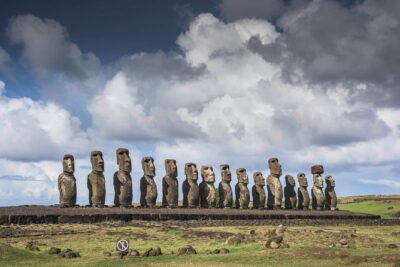
Private Tour: Full Day Easter Island Highlights
Read our review →
Browse the lists this tour appears in