
REVIEW · EASTER ISLAND TOURS
Rapa Nui Highlights Program: 3 incredible tours to discover!
Rapa Nui rewards a well-planned visit. This two-day program links the island’s major archaeological sites with volcanic craters, ceremonial platforms, and the Pacific coast. I like the small groups of up to 15 and the way the three tours cover both famous sights and less familiar places such as Ahu Uri Aurenga. I also like that the guides explain the customs and beliefs behind the stonework instead of treating the moai as photo stops.
The main drawback is that the National Park ticket, meals, and drinks cost extra, so the $220 price is not your final spend. Pickup details can also arrive later than you would prefer. Still, the 4.8 rating from 18 bookings, along with repeated praise for punctual pickups and strong guiding, makes this a solid choice for a first visit to Easter Island.
In This Review
- Key points to know before you book
- Why two days works well on Rapa Nui
- Ahu Akivi, Puna Pau, and the meaning of the seven moai
- Vinapu and the stonework at Rano Kau
- A full day among fallen statues and volcanic quarries
- Te Pito Kura and the final stop at Anakena
- Guides, transport, and what the praise means
- Price, exclusions, and practical planning
- Who should book the Rapa Nui Highlights Program?
- FAQ
- How long does the Rapa Nui Highlights Program last?
- What is included in the Ahu Akivi tour?
- What sites are included in the Orongo tour?
- What sites are included in the Anakena full-day tour?
- Is the National Park ticket included?
- Are meals and drinks included?
- Is hotel pickup available?
- Which languages are available?
- Can cruise ship guests or wheelchair users join?
Key points to know before you book
- Three tours cover the island in two days: You visit Ahu Akivi, Puna Pau, Tahai, Orongo, Vinapu, Rano Kau, Rano Raraku, Tongariki, Te Pito Kura, and Anakena.
- The schedule alternates by day: Ahu Akivi and Orongo run on Mondays, Wednesdays, and Fridays, while the full-day Anakena route runs on Tuesdays, Thursdays, and Saturdays.
- Moai history is central: Rano Raraku preserves 397 moai, while Ahu Tongariki has 15 large statues restored on one ceremonial platform.
- The guides are a major strength: Jaime guided a small group in both Spanish and English, while Ugo earned special praise for his passionate explanation of island culture.
- Bring extra money for park entry and food: Neither the National Park ticket nor meals and drinks are included.
- This is not a cruise excursion: Cruise ship guests cannot join, and the program is not suitable for wheelchair users or pregnant women.
Why two days works well on Rapa Nui
Rapa Nui is not an island you understand from one monument. Its story is spread across volcanic slopes, coastal platforms, quarries, caves, ceremonial villages, beaches, and quiet inland sites. Seeing the highlights in two days gives you a useful framework for the island and its past.
The program divides the sightseeing sensibly. Two half-day outings handle Ahu Akivi and Orongo, while the full day is saved for the eastern coast and Anakena. That keeps the longest route together rather than chopping it into rushed pieces.
You will travel with a live guide in English or Spanish. The group limit is 15 people, though the group may be much smaller. Jaime once led a near-private outing with only three participants, two from the United States and one from Ecuador. Small numbers matter here because a good explanation at an ahu, or ceremonial platform, is easier to follow when you are not standing behind a large crowd.
The program is priced at $220 per person. That is fair if you want organized transport, a guide, and a concentrated look at the island’s major sites. It becomes less attractive if you already have a rental car, plenty of time, or a strong interest in exploring slowly on your own. Add the park ticket and your meals to the budget before you decide.
More things to do on Easter Island:
- From Hanga Roa: Rapa Nui Culture Sightseeing Tour
★ 4.6 · 307 reviews - From Hanga Roa: Easter Island Highlights 2-Day Tour
★ 4.3 · 205 reviews - Full Day Tour in Rapa Nui
★ 4.5 · 122 reviews
Ahu Akivi, Puna Pau, and the meaning of the seven moai
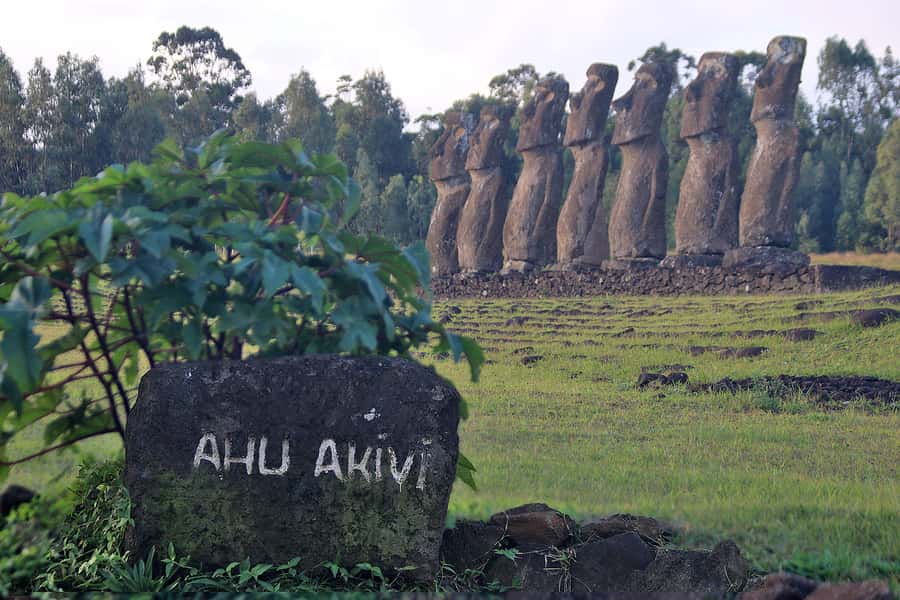
The Ahu Akivi half-day begins at your hotel and heads inland to Ahu Akivi. This platform is unusual because its seven moai face toward the ocean. The statues represent the seven explorers sent by King Hotu Matu’a before the settlement voyage to Rapa Nui.
That story gives the site a different feeling from the coastal platforms where statues traditionally turn their backs to the sea. Your guide can help connect the figures to the island’s origin stories, rather than leaving you with only their size and shape to admire.
The route continues to Puna Pau, a small crater made of red volcanic slag. This is where the pukao were produced. These topknots, often described as hats or headdresses, were placed on some moai and add a second layer to the island’s stoneworking tradition.
Puna Pau is useful because it shows that moai construction was not one simple task. The statues and their pukao came from different volcanic materials and different production areas. You get a clearer picture of the labor involved when you see the source of the red stone.
The final stop is Ahu Uri Aurenga, which has a single statue. Its orientation is linked to the winter solstice and to the seasonal rules that governed fishing and other activities. The platform also faces east and lines up with nearby hills and smaller ahu.
This is one of the more rewarding stops for visitors who like astronomy and cultural detail. It may not have the visual drama of 15 statues lined up at Tongariki, but its position gives your guide a chance to explain how the people of Rapa Nui connected the sky, seasons, food, and social rules.
The Ahu Akivi route also includes Tahai, listed as part of this half-day experience. Since the supplied schedule does not specify the order or time spent at each location, keep your expectations flexible. The strength of this outing is the combination of well-known Ahu Akivi with smaller sites that add context.
Vinapu and the stonework at Rano Kau
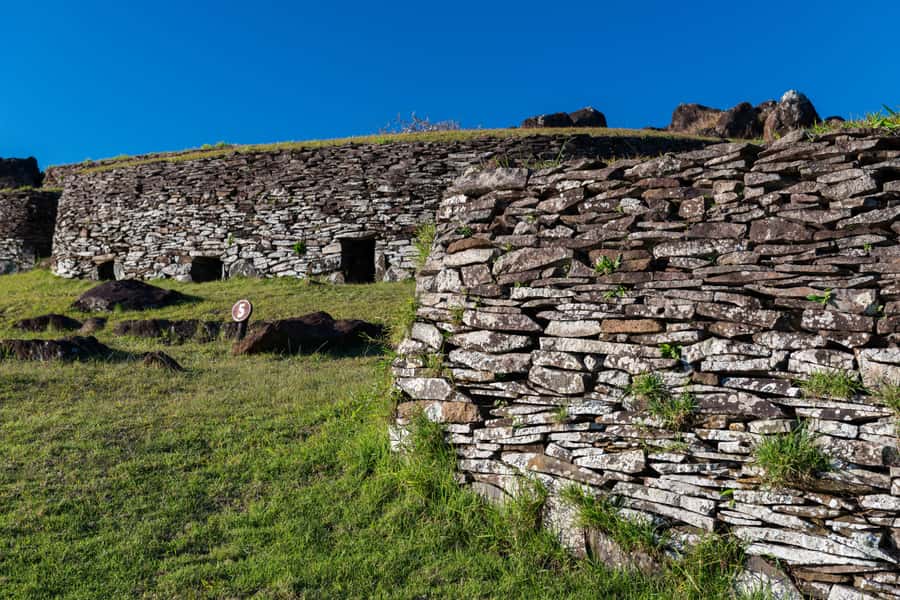
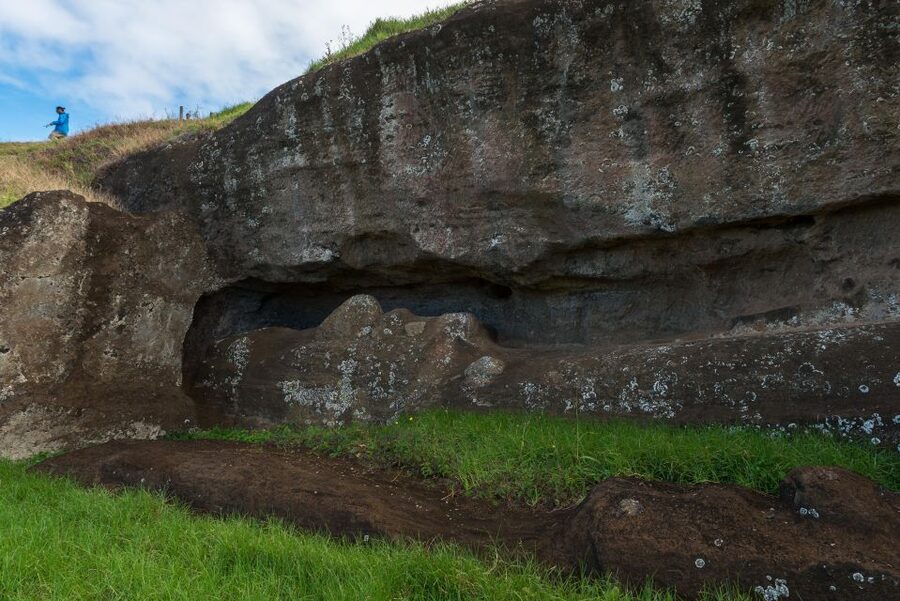
The Orongo half-day begins at Vinapu. This archaeological site is known for large basalt blocks fitted closely together. The construction has often been compared with the stonework at Machu Picchu, though the comparison should not make you forget that Rapa Nui has its own building traditions and cultural setting.
Vinapu is a good reminder that the island’s stonework was more precise than a quick glance at the moai might suggest. Look closely at the joints and the scale of the blocks. Your guide’s explanation is especially useful here because the site does not announce its importance as clearly as a row of giant statues.
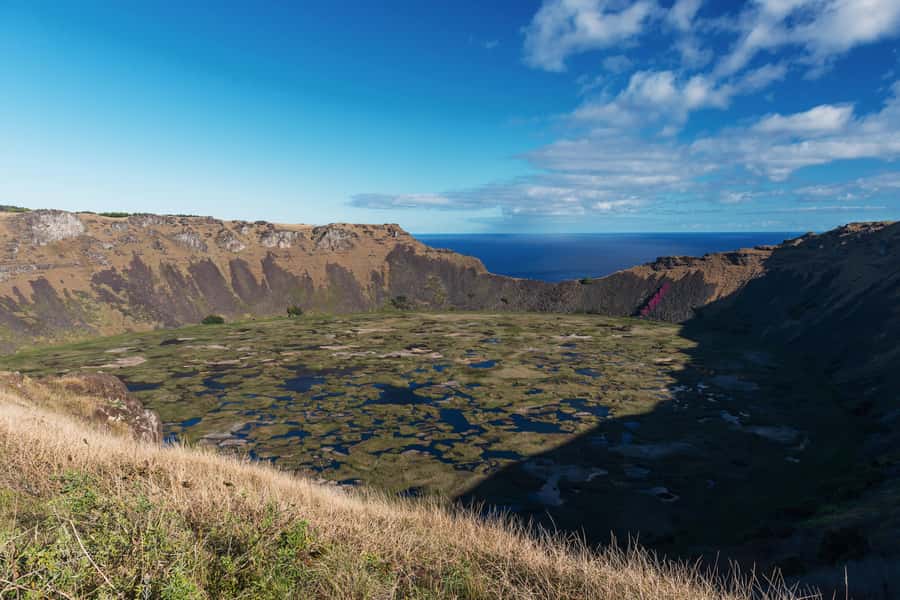
Next comes Rano Kau, a volcanic crater with a lake, small reed-covered islands, abundant plant life, and small forms of lake life. The crater’s size and setting make it one of the island’s most memorable natural sights.
The word natural matters here. The program is not only about monuments made by people. Rano Kau shows the volcanic setting that shaped Rapa Nui’s settlement, travel routes, food sources, and ceremonial spaces.
The half-day ends at Orongo, a ceremonial village associated with the Birdman contest. The village sits beside the crater and the Pacific, giving the stop both a strong setting and a complicated cultural story.
The Birdman ceremony involved competition, status, and sacred rules. Your guide can help you understand why Orongo was more than a collection of stone houses. This is also a place where an English or Spanish explanation adds real value, since the significance is not obvious from the ruins alone.
A practical point: both Ahu Akivi and Orongo are listed for Mondays, Wednesdays, and Fridays. The order of the two half-day outings may depend on the operator’s schedule, so check the starting times when you book. The whole program is sold as a two-day experience, but the exact hours are not provided.
A full day among fallen statues and volcanic quarries
The Anakena day carries the heaviest archaeological load. You begin with Ahu Vaihu and Akahanga, ceremonial platforms where moai and pukao are gathered. These sites help you see a different chapter of the island’s story, including statues that are no longer standing on their platforms.
The fallen figures at Vaihu and Akahanga can be less immediately impressive than a restored platform, but they are important for understanding the changes that took place on Rapa Nui. Your guide’s role is crucial here. Without context, you may simply see scattered stones. With an explanation, you can place the sites within the island’s ceremonial past.
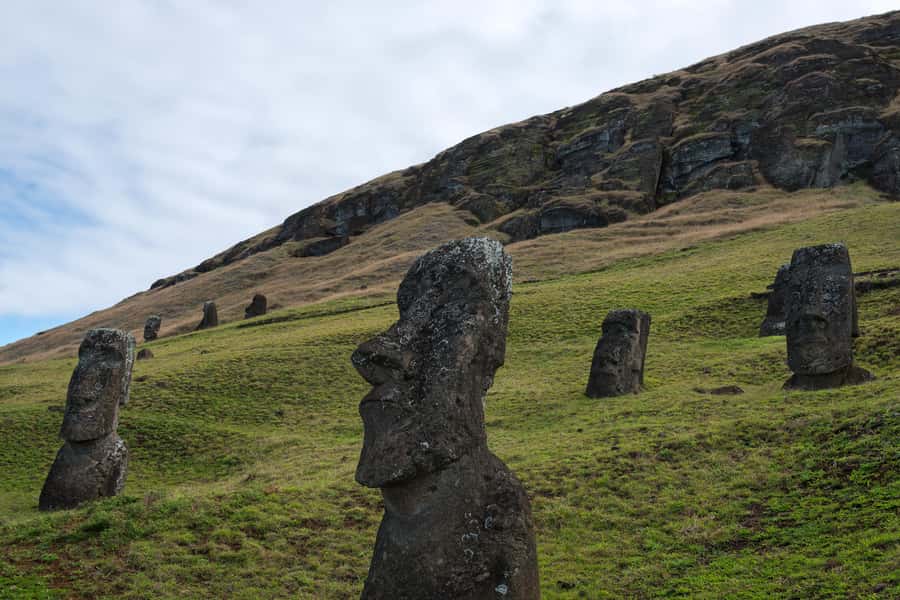
The route then reaches Rano Raraku, the volcanic crater where the moai were carved. The crater formed from consolidated volcanic ash and also contains a lagoon. Most important, its slopes preserve 397 moai.
Rano Raraku is arguably the key stop of the entire program. You are not just seeing finished statues transported to distant ahu. You are seeing the production area itself, where the figures were shaped from the volcanic rock. The unfinished and partly buried statues give the site a work-in-progress quality that no restored platform can match.
Allow yourself time to notice the range of sizes and stages. Some figures appear to emerge from the slope, while others are more complete. The site makes the old question of how the statues were made and moved feel immediate, even if the program cannot answer every mystery.
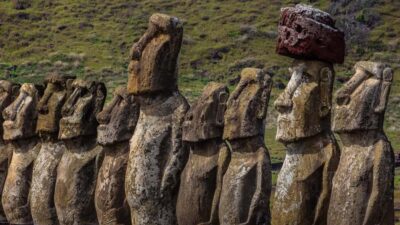
From Rano Raraku, the route continues to Ahu Tongariki. Its 15 moai form the most dramatic row in the program. This is the image many people carry in their minds before arriving on Rapa Nui, and seeing the full platform in person gives the scale a force that photographs miss.
Tongariki is also a useful contrast with Rano Raraku. At the quarry, you see statues in various stages of creation. At Tongariki, you see a ceremonial arrangement designed to be read as a group. The visit works best if you resist racing from one statue to the next and take in the full line.
A completely different kind of day out:
- 2-Day Private Tour Easter Island Highlights Complete Discovery
★ 5.0 · 110 reviews - Private Full-Day Easter Island Highlights North and West
★ 5.0 · 84 reviews - From Hanga Roa: Journey from Orongo to Ana Te Pahu
★ 4.3 · 75 reviews - Journey of the Ancestors: Tongariki, Rano Raraku & Anakena Beach
★ 4.5 · 70 reviews
Te Pito Kura and the final stop at Anakena
The next stop is Te Pito Kura, home to the moai Paro. At around 10 meters tall and weighing about 85 tons, Paro is identified as the largest statue erected on an ahu.
The statue’s scale is impressive, but the unfinished or fallen state of the site also invites questions. As with Vaihu and Akahanga, you will get more from the stop if you listen to the explanation rather than judging the place only by what remains upright.
Nearby is Te Pito o Te Henua, a large spherical stone known as the navel of the world. The name reflects Rapa Nui’s own cultural geography and gives the visit a small, memorable detail beside the larger monuments.
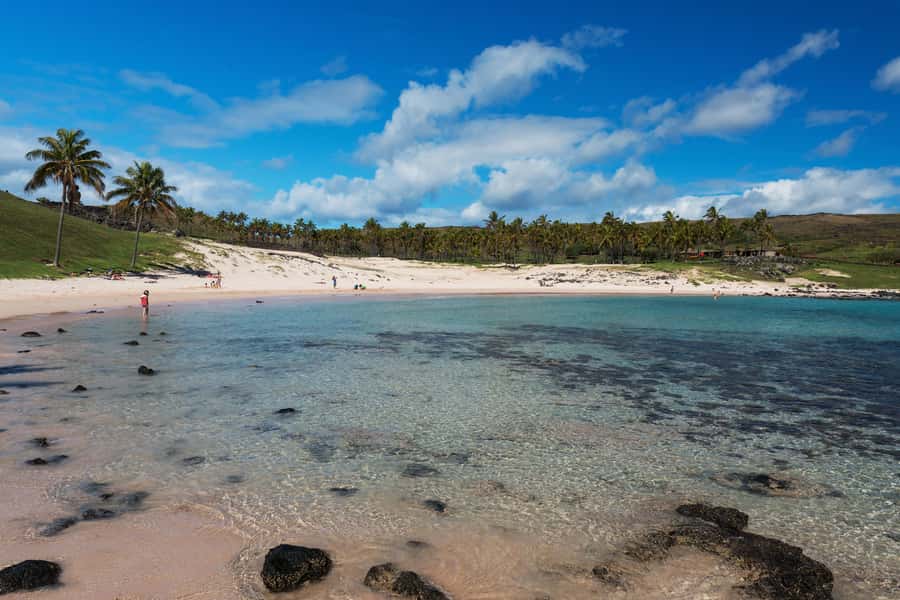
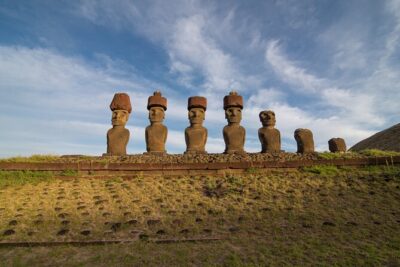
The day ends at Anakena, the island’s best-known beach. After hours among stone platforms and volcanic terrain, the pale sand and ocean provide a welcome change of pace.
Anakena is not simply a swimming stop. Two ahu with moai face inland, turning their backs to the sea. That arrangement gives the beach a special connection between recreation, settlement, and ceremony. The program describes Anakena as the place to rest before returning to your hotel, and that pacing makes sense after the long eastern route.
You should not expect the beach portion to feel like a full resort day. It comes at the end of a packed sightseeing schedule, and the exact time available is not stated. Think of it as a calm finish and a chance to appreciate the setting, not as the sole reason to book the excursion.
Guides, transport, and what the praise means
The strongest part of this experience is the guiding. Ugo received particular praise for bringing the island’s culture to life with enthusiasm and detailed explanations. Jaime was praised for covering the sites thoroughly in both Spanish and English, while a German-speaking guide provided clear information without rushing and included stops with good restroom facilities.
Those details matter on Rapa Nui. A stop at Rano Raraku or Orongo can easily become a quick photograph if nobody explains what you are looking at. The right guide helps you connect the monument to seasonal practices, origin stories, ceremony, astronomy, and the island’s volcanic setting.
Hotel pickup is included, and you are asked to wait in the lobby 10 minutes before departure. Punctual pickups were praised, but one important weakness was noted: confirmation of the activity and approximate pickup time could be clearer. If you book, keep an eye on your messages and ask the provider for the final pickup details if they have not arrived.
The program uses small groups limited to 15 people. That is a useful middle ground. You get organized transport and a guide without the feel of a large coach group. The vehicle type is not specified, so do not assume a particular model or level of comfort.
Price, exclusions, and practical planning
At $220 per person, the program offers a good amount of coverage for two days. You would need to arrange transport to every site yourself if you skipped the tours, and the guide’s cultural explanation is a major part of the value.
The price does not include the National Park ticket. It also excludes food and drinks, so plan for those separately. The information does not specify meal stops, so carry what you need or confirm arrangements before departure.
Pickup and drop-off at Explora Hotel are excluded. Standard hotel pickup is included, but the provider specifically does not cover Explora. That distinction is easy to miss and could affect your transport budget.
The program is available in English and Spanish. The listed schedule requires careful planning:
- Ahu Akivi, including Puna Pau and Tahai, runs Monday, Wednesday, and Friday.
- Orongo, including Vinapu and Rano Kau, runs Monday, Wednesday, and Friday.
- Anakena, including Akahanga, Rano Raraku, Tongariki, Te Pito Kura, and Anakena, runs Tuesday, Thursday, and Saturday.
Since the two half-day tours share the same operating days, the full two-day combination fits best when your visit includes a Monday, Wednesday, or Friday for the two shorter routes and a Tuesday, Thursday, or Saturday for Anakena. Check availability and start times before paying.
You can cancel up to 24 hours ahead for a full refund, and the reserve-now, pay-later option keeps your plans flexible. Cruise ship guests cannot join, and the program is not suitable for wheelchair users or pregnant women.
Who should book the Rapa Nui Highlights Program?
I would choose this program if you have only two days on Easter Island and want the major archaeological sites explained in a logical order. It suits you especially well if you prefer a guide, do not want to arrange island transport, and value cultural background as much as scenery.
It is also a good fit for English or Spanish speakers who want a small group rather than a large coach. The strong guiding from Ugo, Jaime, and the other language-specific guides adds real value.
I would hesitate if you want long, unstructured time at each site, plan to visit the same places several times, or already have independent transport. The schedule is full, and the exact time at each stop is not stated. You should also confirm your pickup details and budget for park admission, food, and drinks.
For most first-time visitors, though, the program covers the right places. You see the statues at their quarry, their ceremonial platforms, the Birdman village, volcanic craters, and the beach at Anakena. That is a lot of Rapa Nui in two days, and the 4.8 rating reflects a package that generally delivers strong guides, punctual transport, and broad coverage.
FAQ
How long does the Rapa Nui Highlights Program last?
The program lasts two days and includes three tours: two half-day outings and one full-day outing.
What is included in the Ahu Akivi tour?
The Ahu Akivi half-day includes Puna Pau, Ahu Akivi, and Tahai. It operates on Mondays, Wednesdays, and Fridays.
What sites are included in the Orongo tour?
The Orongo half-day visits Vinapu, Rano Kau, and Orongo. It operates on Mondays, Wednesdays, and Fridays.
What sites are included in the Anakena full-day tour?
The full-day route includes Akahanga, Rano Raraku, Ahu Tongariki, Te Pito Kura, and Anakena. It operates on Tuesdays, Thursdays, and Saturdays.
Is the National Park ticket included?
No. The National Park ticket is not included in the $220 price.
Are meals and drinks included?
No. Food and drinks are not included.
Is hotel pickup available?
Pickup from your hotel is included. Explora Hotel pickup and drop-off are specifically excluded. You should wait in your hotel lobby 10 minutes before the scheduled pickup.
Which languages are available?
The live guides operate in English and Spanish.
Can cruise ship guests or wheelchair users join?
No. The program is not suitable for wheelchair users, pregnant women, or cruise ship guests.
Just added in Hanga Roa
- Volcanic Refuges: Excursion to Underground Civilization★ 4.7 · 8 reviews
- Volcanic Wonders and the Kingdom of the Birdman: Half Day★ 5.0 · 6 reviews
- Half Day Private Tour: Caves and Volcanic Refuges★ 4.0 · 14 reviews
- Easter Island Ancestral Dinner and Show with Transport★ 4.5 · 2 reviews
- 2 Day Small Group Tour in Moai Monuments and Historic Pathways★ 5.0 · 22 reviews
- Visit Rapa Nui in 4 days with 3 Tours and Accommodation included★ 4.0 · 2 reviews
- Tour to the Motus: Boat trip and snorkeling in Rapa Nui★ 5.0 · 8 reviews
- The birdman journey in Easter Island★ 5.0 · 1 review
Easter Island Tours, compared.
Two days of Full Day Tour of Rapa Nui + Sunrise in Tongariki
Read our review →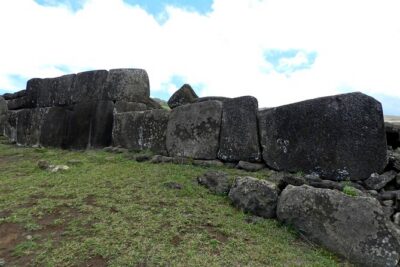
2-Day Private Tour Easter Island Highlights Complete Discovery
Read our review →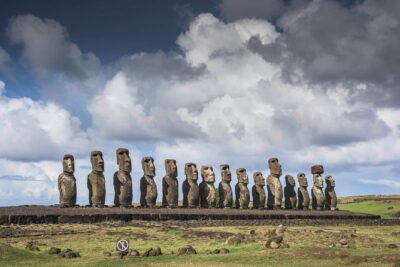
Private Tour: Full Day Easter Island Highlights
Read our review →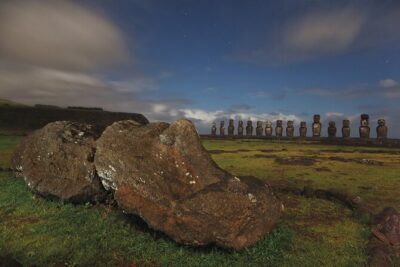
Browse the lists this tour appears in