
REVIEW · EASTER ISLAND TOURS
Rapa Nui Astrophotography and Stargazing Night Tour Combination
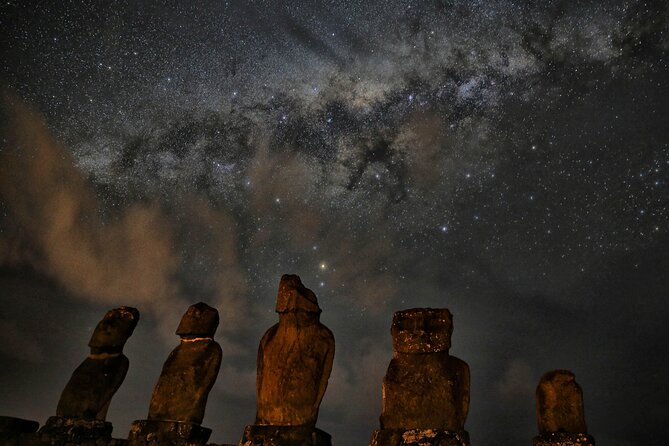
The moai look different after sunset. This two-day Rapa Nui tour pairs Polynesian star navigation with telescope viewing, then adds carefully timed photographs at Anakena Beach and Ahu Tongariki. I like the mix of culture and practical sky watching, and I like that the private astrophotography portion gives you time for a proper portrait rather than a rushed snapshot. The main drawback is the $695 price, especially since the $80 national park ticket is extra.
Guide Marc leads the astronomy talk, while Hekii handles the photography portion. Their relaxed approach includes Polynesian navigation, constellations, planets, and, on one evening, even singing and acoustic guitar. Still, Easter Island weather can change quickly, so a perfect star-filled sky is never guaranteed.
In This Review
- What makes this Rapa Nui night tour special
- Why Rapa Nui works so well after sunset
- Day one: Ahu Nau Nau, Anakena, and the first star session
- The telescope session is more than a photo stop
- Day two: Ahu Tongariki under a different sky
- The photography has real value, with limits
- Is $695 a fair price?
- Who will enjoy this most?
- Timing, pickup, and cancellation advice
- Should you book Rapa Nui Astrophotography and Stargazing?
- FAQ
- How long does the tour last?
- Where does the shared stargazing tour meet?
- Does the astrophotography portion include hotel pickup?
- Is the National Park ticket included?
- When will I receive the astrophotography image?
- Can Ahu Anakena replace Ahu Tongariki?
- What happens if the weather is poor?
What makes this Rapa Nui night tour special
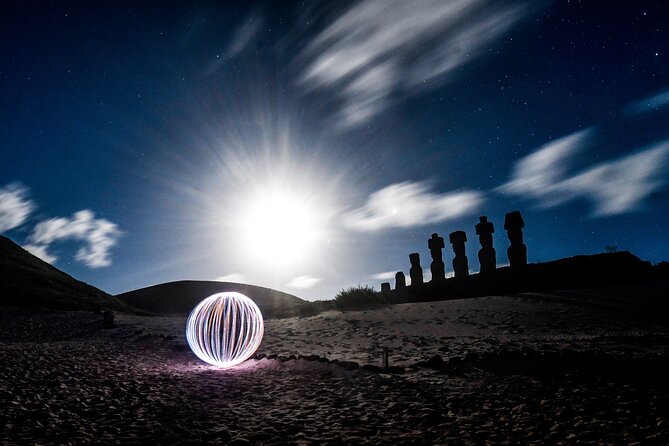
- Anakena Beach after dark: Photograph the beach, moai, and night sky together, with the final image sent by email in about five days.
- Polynesian navigation explained: Learn how the stars helped guide ocean voyagers before modern instruments.
- Telescope viewing: Marc helps you locate stars, constellations, and planets during the evening talk.
- Ahu Tongariki at night or sunrise: See Rapa Nui’s largest moai platform under a very different kind of light.
- A shared and private format: Stargazing is shared, while the astrophotography portion includes private hotel pickup.
- Weather matters: Poor conditions can lead to a new date or a full refund, and a flexible schedule helps when the sky turns moody.
Why Rapa Nui works so well after sunset
Rapa Nui is famous for its moai, but darkness changes the way you read the island. In daylight, the statues command attention through their size and setting. At night, the sky becomes part of the story, and the moai feel tied to the same ocean-going culture that studied the stars.
That connection is the heart of this tour. You are not simply taken somewhere dark and asked to look upward. Marc explains Polynesian navigation and the general layout of the night sky, giving you a cultural reason to pay attention to the constellations.
The talk also gives the evening some shape. Instead of standing around waiting for a photograph, you learn how the sky was used as a guide across the Pacific. Then the telescope brings the subject closer, with time to locate stars, constellations, and planets.
I especially like this balance. You get an introduction to Rapa Nui culture, a simple astronomy lesson, and a chance to make a personal image at one of the island’s most important sites. It feels more thoughtful than a standard evening transfer to a viewpoint.
More stargazing nights in Easter Island:
- The Rapa Nui Stargazing Experience
★ 4.5 · 32 reviews - Easter Island: Rapa Nui Stargazing Tour
★ 4.8 · 16 reviews - Astronomical Tour on Easter Island
★ 3.5 · 3 reviews
Day one: Ahu Nau Nau, Anakena, and the first star session
The first evening begins with a meeting in Hanga Roa. Shared stargazing participants meet in front of Katipare library, with the approximate meeting time around 19:30 in winter and 20:30 in summer. The stated start time is 8:00 pm, so you should confirm the exact local pickup or meeting time when booking.
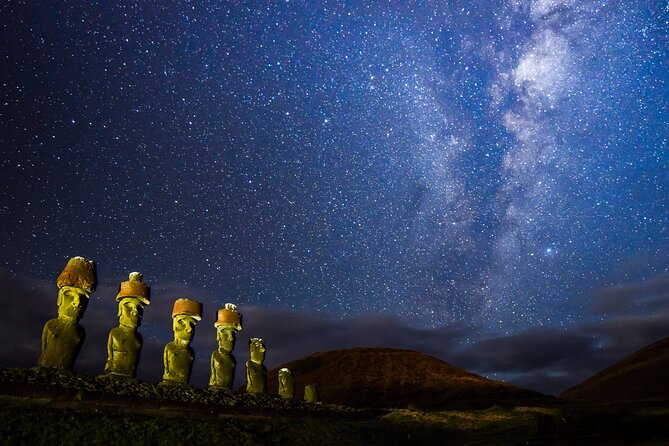
The group then heads toward the Anakena area, near Ahu Nau Nau. This platform is an important setting for the evening because it places the astronomy lesson close to the beach and the moai. Transportation is included, and the first evening lasts about three hours in total, including the return to your lodging.
The talk on Polynesian navigation is the main cultural feature here. You will hear how the stars fit into traditional wayfinding, then use the telescope to look at selected objects in the sky. The setting gives the lesson more meaning than it would have in town, since you are learning about ocean navigation while surrounded by one of the island’s major ceremonial areas.
A coffee break is included, which is a small but welcome touch during an evening outdoors. Exact refreshments beyond coffee are not specified, so do not expect a full meal. You should eat beforehand if you need dinner.
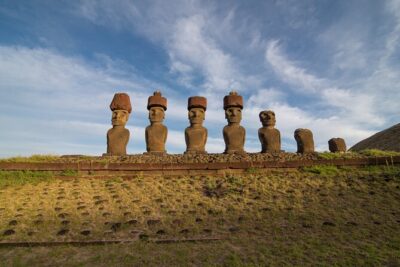
The evening continues at Anakena for photographs. The beach is particularly important to the tour because the final image can combine you, the moai, the sand, and the stars. One carefully timed visit took place before a nearly full moon rose, allowing the photographer to preserve a darker sky behind the subjects. That detail matters: moonlight can be attractive, but it can also wash out faint stars.
Hekii allows time for the photography portion rather than treating it as a quick stop. You should still remember that astrophotography depends on weather, moonlight, cloud cover, and timing. The photograph is sent by email in about five days, though slow internet on Rapa Nui can delay delivery.
The telescope session is more than a photo stop
The telescope viewing gives the first night a useful focus. Marc helps you find stars, constellations, and planets, and explains the sky in terms that connect to Polynesian navigation. This is a good fit if you enjoy understanding what you are seeing instead of simply pointing a camera upward.
The information provided does not specify the telescope model, the number of objects viewed, or the exact length of the astronomy presentation. That means you should treat the session as an accessible introduction, not a specialist observatory program.
The small maximum group size of 10 helps. A group this size should make it easier to hear the talk and take turns at the telescope, although the stargazing portion is shared. The private astrophotography portion gives you a more personal pace.
The mood also seems deliberately informal. Marc and his partner have included singing and acoustic guitar during the drive or evening, adding a local, human touch. That will appeal to you if you like a tour with conversation and personality. If you want silent, technical astronomy from start to finish, the music may feel less central to your interests.
Day two: Ahu Tongariki under a different sky
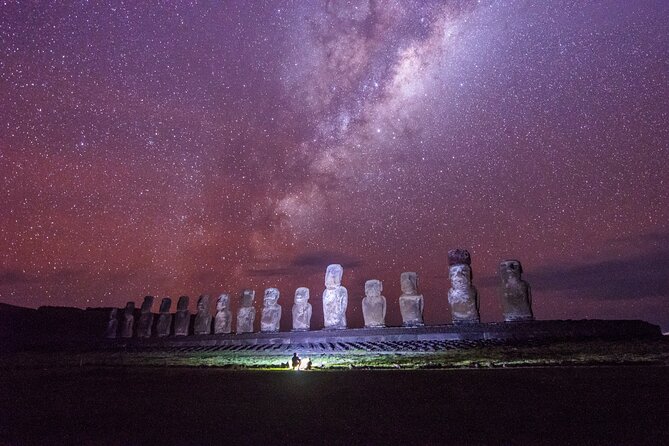
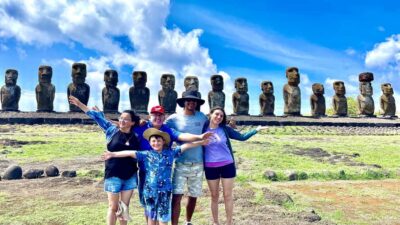
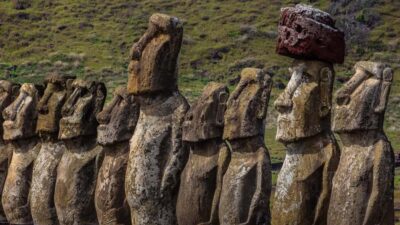
The second visit focuses on Ahu Tongariki, the largest moai platform in Rapa Nui. The platform is a major draw in daylight, but the tour offers the chance to see it at sunrise or at night, depending on the arrangement.
This change in light is not a minor detail. Sunrise gives the moai a strong sense of place and scale, while nighttime removes much of the visual clutter and puts more attention on the figures and sky. The exact timing should be confirmed with the provider because the available option affects the entire rhythm of your second day.
There is also a possible alternative: Ahu Anakena may be used instead of Tongariki. This makes the plan somewhat flexible, but it also means you should not assume that both sites are guaranteed as part of the second outing.
The National Park ticket is not included. You must buy it online before the tour, and the stated cost is $80 per person. That is a substantial extra expense, so add it to the advertised $695 when comparing this tour with other activities on Rapa Nui.
Ahu Tongariki is the largest platform, but size alone is not the reason to choose this visit. The value comes from seeing a major moai site at a time when ordinary daytime touring has ended. If you already plan to visit Tongariki during daylight, the night or sunrise visit gives you a second way to experience it. If you are watching your budget, however, paying both the tour price and the park fee deserves careful thought.
More things to do on Easter Island:
- From Hanga Roa: Rapa Nui Culture Sightseeing Tour
★ 4.6 · 307 reviews - From Hanga Roa: Easter Island Highlights 2-Day Tour
★ 4.3 · 205 reviews - From Hanga Roa: Easter Island Sightseeing Full Day Tour
★ 4.5 · 189 reviews - Two days of Full Day Tour of Rapa Nui + Sunrise in Tongariki
★ 4.5 · 132 reviews
The photography has real value, with limits
The included photograph is the strongest practical reason to book this tour. Rapa Nui is not an easy place for an amateur to reproduce a portrait with moai and stars in the background. You need a stable camera setup, a long exposure, careful positioning, and enough patience to keep the subjects still.
Hekii’s role is important because the image is not treated as an afterthought. You are given time for the astrophotography portion, and the finished photograph is emailed to you later. That creates a lasting souvenir rather than just another phone image in a crowded camera roll.
Still, you should keep expectations realistic. The weather on Easter Island can be moody, and a clear sky cannot be promised. Clouds may block stars, wind may affect comfort, and moonlight may change the look of the image. The tour makes a strong effort to work with conditions, but photography remains partly a matter of luck.
A longer stay helps. If your schedule allows several nights on Rapa Nui, you have a better chance of moving the outing to a night with clearer weather. The cancellation terms also recognize this uncertainty: if bad weather forces cancellation, you can receive a different date or a full refund.
The five-day delivery time is reasonable for an edited night photograph, but it is not instant. Slow island internet is given as the reason, so do not worry if the image does not arrive immediately.
Is $695 a fair price?
At $695 per person, this is an expensive Rapa Nui activity. The price becomes easier to understand when you separate the package into its parts: transportation on two evenings, a shared astronomy presentation, telescope viewing, a private astrophotography session, guide time, and a finished photograph.
You are paying for more than a ride to a dark location. The cultural explanation, private photo work, and access to important moai sites give the tour a broader purpose. For a special occasion, honeymoon, anniversary, or major once-in-a-lifetime trip, the photograph and unusual setting may justify the cost.
The value is weaker if you mainly want to see stars. You could prefer a simpler stargazing activity, especially if you already have a camera and do not care about a professional image. You also need to add the $80 National Park ticket, which brings the basic cost to at least $775 per person before any other personal spending.
The average booking lead time is about 76 days. That is a useful warning for planning. If this is important to your Rapa Nui visit, reserve early and leave some flexibility in your schedule for weather.
Who will enjoy this most?
I would recommend the tour to you if you like archaeology, astronomy, photography, or cultural storytelling and want to combine them in one outing. It is also well suited to couples and small groups who want a polished portrait in a setting that is difficult to recreate alone.
The experience should work for most people, since most participants can take part and the maximum group size is 10. You should be comfortable spending time outdoors at night and traveling to remote moai sites, although the supplied information does not give specific details about walking distances or terrain.
You may want to skip it if your main goal is a guaranteed clear sky. No guide can control Rapa Nui weather, and the photograph depends on conditions. It may also be poor value if you are traveling on a tight budget or already have a full photography setup and strong night-sky skills.
The shared stargazing and private photography split is worth noting. You will not have a fully private two-day tour from start to finish. Instead, you get a social astronomy session and a more personal photography segment. That arrangement keeps the astronomy portion lively while allowing the portrait work to receive proper attention.
Timing, pickup, and cancellation advice
Astrophotography includes hotel pickup, which makes the private portion easy to manage. The shared stargazing meeting point is in front of Katipare library in Hanga Roa, with seasonal meeting times that may differ from the stated 8:00 pm start.
At the end of the tour, you are dropped at your lodging in Hanga Roa. Confirmation is provided at booking, and the activity accepts a maximum of 10 people.
You can cancel free of charge up to 24 hours before the start time for a full refund. Changes made less than 24 hours before the start are not accepted, and late cancellations are not refunded. If poor weather cancels the activity, you are offered another date or a full refund. The same applies if the minimum number of participants is not reached.
Should you book Rapa Nui Astrophotography and Stargazing?
Book it if you want a personal photograph with moai and stars, plus a clear introduction to Polynesian navigation. The combination of Marc’s sky presentation, telescope viewing, Hekii’s patient photography, and the option to see Ahu Tongariki after dark gives the tour more substance than a simple night outing.
I would book well ahead, budget for the extra $80 park ticket, and keep at least one flexible evening on Rapa Nui. If your priority is value or guaranteed astronomy, choose a less expensive activity. If you want a memorable image and a thoughtful night with the island’s moai, this is a strong choice, as long as you accept the weather risk and high total cost.
FAQ
How long does the tour last?
The full experience takes place over approximately two days. The first evening lasts about three hours, including transportation back to your lodging. The second visit is listed as about two hours.
Where does the shared stargazing tour meet?
The shared stargazing excursion meets in front of Katipare library in Hanga Roa. The approximate meeting time is 19:30 in winter and 20:30 in summer, while the stated start time is 8:00 pm.
Does the astrophotography portion include hotel pickup?
Yes. Astrophotography is a private tour and includes pickup from your hotel or lodging.
Is the National Park ticket included?
No. The National Park ticket is not included. The stated price is $80 per person, and you must purchase it online before the tour.
When will I receive the astrophotography image?
The photograph is sent by email in about five days. Internet on the island is slow, so delivery may take some time.
Can Ahu Anakena replace Ahu Tongariki?
Yes. The second visit may use Ahu Anakena instead of Ahu Tongariki. Ahu Tongariki is the largest moai platform on Rapa Nui and may be visited at sunrise or at night.
What happens if the weather is poor?
If poor weather causes cancellation, you are offered a different date or a full refund. A minimum number of participants is also required, and a cancellation for that reason comes with the choice of another date or experience, or a full refund.
Just added in Easter Island
- Volcanic Refuges: Excursion to Underground Civilization★ 4.7 · 8 reviews
- Volcanic Wonders and the Kingdom of the Birdman: Half Day★ 5.0 · 6 reviews
- Half Day Private Tour: Caves and Volcanic Refuges★ 4.0 · 14 reviews
- Easter Island Ancestral Dinner and Show with Transport★ 4.5 · 2 reviews
- 2 Day Small Group Tour in Moai Monuments and Historic Pathways★ 5.0 · 22 reviews
- Visit Rapa Nui in 4 days with 3 Tours and Accommodation included★ 4.0 · 2 reviews
- Tour to the Motus: Boat trip and snorkeling in Rapa Nui★ 5.0 · 8 reviews
- The birdman journey in Easter Island★ 5.0 · 1 review
Easter Island Tours, compared.
Two days of Full Day Tour of Rapa Nui + Sunrise in Tongariki
Read our review →
2-Day Private Tour Easter Island Highlights Complete Discovery
Read our review →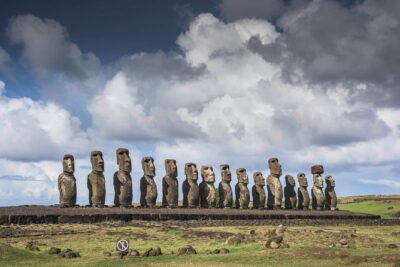
Private Tour: Full Day Easter Island Highlights
Read our review →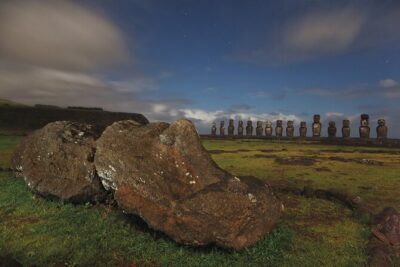
Browse the lists this tour appears in