
REVIEW · EASTER ISLAND TOURS
Easter Island: Rapa Nui Stargazing Tour
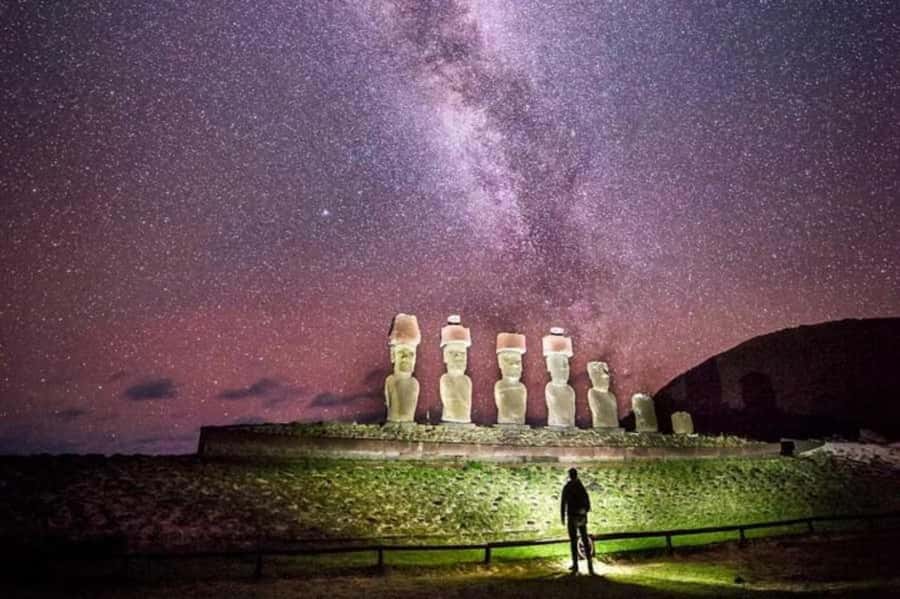
The best guidebook here is the night sky. This three-hour Rapa Nui stargazing tour links Polynesian navigation with real sky watching, giving you more than a telescope session. I like the small group size, capped at 12, and the rare chance to visit Ahu Nau Nau after dark, with a telescope, warm chocolate, local cake, and a digital photo included. The guide Marc can also add a song and a personal touch to the evening.
The main drawback is simple: astronomy needs clear skies. Clouds can limit the show, and the tour does not operate close to the full moon, from four days before through two days after it. At $140 per person, this is not a cheap night out, so you should book it for the Polynesian sky story and the setting, not only for the number of planets you hope to see.
In This Review
- Key points to know before you book
- Why Rapa Nui is a powerful place for stargazing
- Meeting at Katipare and setting off after dark
- Learning how Polynesian voyagers read the sky
- Ahu Nau Nau after dark
- The telescope session and what you may see
- Hot chocolate, local cake, and a human finish
- Is $140 good value for three hours?
- Who will enjoy this evening most?
- Practical details that can shape the night
- My recommendation: book it for the story, not only the stars
- FAQ
- Where does the tour meet?
- What time does the tour start?
- How long does the experience last?
- Is hotel pickup included?
- Is the National Park ticket included?
- What happens if the weather is poor?
- Can I cancel for a full refund?
Key points to know before you book
- The meeting time changes by season: Meet outside Centro Lector Katipare at 21:00 in summer or 19:00 in winter.
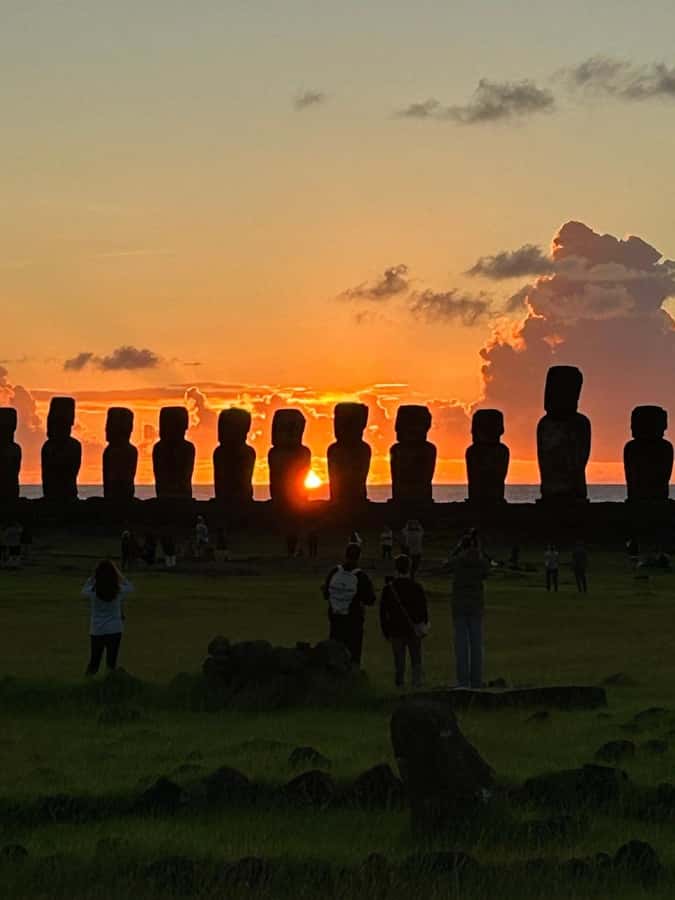
- Ahu Nau Nau is part of the night experience: You can see the moai and nearby surroundings after dark, a very different setting from a daytime visit.
- Polynesian navigation anchors the tour: The guide explains how voyagers used stars, constellations, and the ocean to find their way.
- The telescope is used at a remote site: You will view stars and planets under one of the world’s more isolated skies.
- The group stays intimate: A maximum of 12 people makes it easier to hear the guide and get time at the telescope.
- Bring the National Park ticket: It is not included, and hotel pickup is not provided.
Why Rapa Nui is a powerful place for stargazing
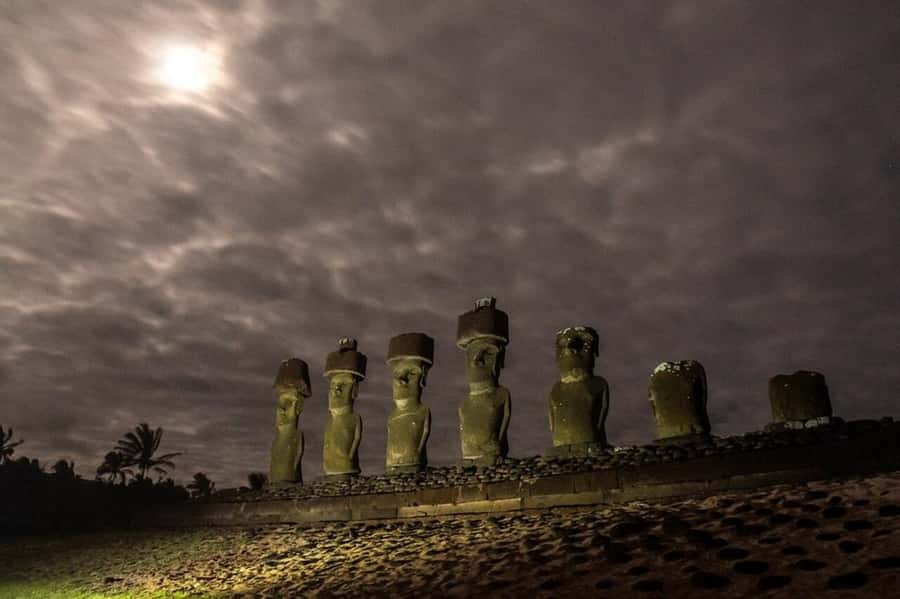
Easter Island is far from major cities and bright urban lights. That isolation gives the night sky a major role in the experience. You are not simply looking upward at a few bright points. You are seeing the same broad sky that Polynesian navigators studied while crossing enormous stretches of ocean.
The tour places basic astronomy beside Rapa Nui culture. You learn about stars and planets, but also about the practical use of the sky. Polynesian voyagers needed to read stars, ocean movement, winds, and other natural signs. The night sky was not decoration. It was a working map.
I find that context important. A standard telescope session can become a list of objects: this planet, that constellation, next person at the eyepiece. Here, the guide explains why particular stars mattered to people who settled islands scattered across the Pacific. That makes the sky easier to remember.
The experience also includes archeo-astronomy, the study of how ancient places relate to the sky. On Rapa Nui, this gives the visit an added layer. You are connecting stone ceremonial sites, traditional observation areas, and the movement of the heavens rather than treating the island’s archaeological sites as isolated monuments.
More stargazing nights in Easter Island:
- The Rapa Nui Stargazing Experience
★ 4.5 · 32 reviews - Astronomical Tour on Easter Island
★ 3.5 · 3 reviews - Rapa Nui Astrophotography and Stargazing Night Tour Combination
★ 5.0 · 3 reviews
Meeting at Katipare and setting off after dark
You meet in front of the Katipare Library, also called Centro Lector Katipare, in Hanga Roa. There is no hotel pickup, so you need to reach this meeting point yourself. Hotel drop-off is included at the end, which is useful after a late evening.
The starting hour depends on the season. In summer, the meeting time is 21:00. In winter, it is 19:00. Check your confirmed start time carefully because the difference affects dinner plans and how much daylight you have before the tour.
The drive to the observation areas is part of the outing. You ride with a driver-guide and receive live commentary on board. The tour description does not promise a long sequence of separate stops, so think of it as a focused night program rather than a sightseeing circuit with many scheduled attractions.
That is a good fit for Rapa Nui. After dark, the point is to slow down and let your eyes adjust. The remote setting matters more than a crowded list of locations. A group of 12 or fewer also keeps the journey from feeling like a large coach excursion.
Learning how Polynesian voyagers read the sky
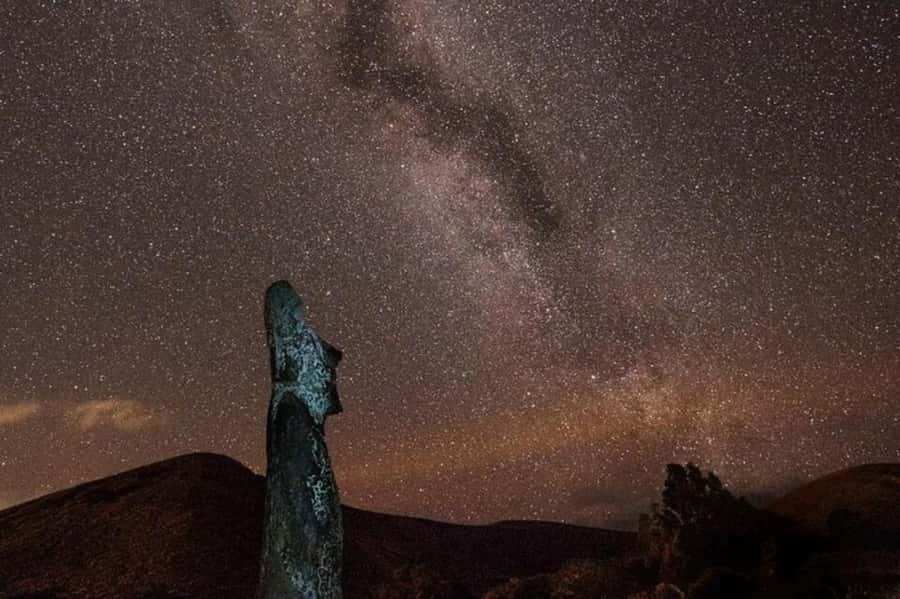
The cultural heart of the tour is the explanation of Polynesian voyaging. Your guide covers basic astronomy, the settlement of Rapa Nui, navigation techniques, and the relationship between the sky and traditional observation sites.
You should expect an educational talk rather than a formal classroom lesson. The value comes from connecting simple astronomy to human movement across the Pacific. The guide may explain how certain stars and constellations helped sailors maintain direction, including celestial features visible from the Southern Hemisphere.
This is one reason I would recommend the tour even to people who are not serious about astronomy. You do not need to know the names of stars in advance. You only need some curiosity about how people crossed the ocean without modern instruments.
The guide’s personality can shape the evening. Marc has been especially memorable for some groups, including one night when he sang a song he had written and later offered a traditional song to close the evening. That sort of personal moment is not a formal guarantee, but it shows how the guide can make the program feel less mechanical.
Still, expectations should stay sensible. Commentary quality depends on the guide, the group, and the conditions that night. The subject is fascinating, but the tour is only three hours, so it cannot cover every part of Rapa Nui culture or Polynesian navigation in great depth.
Ahu Nau Nau after dark
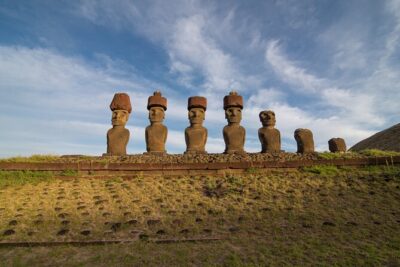
Access to Ahu Nau Nau at night is one of the experience’s strongest features. Daylight visits let you study the moai, the ahu platform, and the surrounding area clearly. At night, the same place becomes quieter and more atmospheric, with the statues set against the Southern Hemisphere sky.
The tour includes time for photographs near the moai. A digital photo is included, and you can also take your own pictures. One particularly useful detail is that you may take private star photographs with your phone and tripod if you want to try your own setup.
Do not expect a fully lit monument or a bright photo stop. Darkness is the reason you are there. Your pictures may require patience, a steady tripod, and realistic expectations about phone cameras. The included digital photo gives you a simpler keepsake, while personal photography lets you experiment.
The ground can be uneven. That matters more at night than it would during a daytime archaeological visit. One older participant found the surface difficult to navigate safely, and the suggestion of better lighting, such as a headlamp, is sensible. The available information does not say that a headlamp is provided, so I would ask the operator before departure or bring a small light if permitted.
The tour is not suitable for wheelchair users. Anyone with limited balance or mobility should consider the uneven outdoor ground before paying. This is not a criticism of the site. It is a practical issue created by darkness, outdoor surfaces, and archaeological access.
More things to do on Easter Island:
- From Hanga Roa: Rapa Nui Culture Sightseeing Tour
★ 4.6 · 307 reviews - From Hanga Roa: Easter Island Highlights 2-Day Tour
★ 4.3 · 205 reviews - From Hanga Roa: Easter Island Sightseeing Full Day Tour
★ 4.5 · 189 reviews - Two days of Full Day Tour of Rapa Nui + Sunrise in Tongariki
★ 4.5 · 132 reviews
The telescope session and what you may see
At the remote observation site, the guide sets up the telescope for stars and planets visible from the Southern Hemisphere. The scope is the main hands-on part of the experience, and you should receive explanations as you look rather than simply being left to wait in line.
The length of time at the telescope can vary with the night. On a clear evening, you might see several objects and spend a good amount of time listening to explanations about constellations and navigation. On a less active night, the telescope remains useful, but the program may feel quieter and shorter in substance.
That distinction matters at $140. If you want a packed astronomy show with constant movement, this may feel expensive. If you value the remote setting, the cultural background, the nighttime archaeological access, and a small group, the price becomes easier to justify.
The full-moon restriction is a practical clue about the tour’s priorities. It does not operate from four days before through two days after the full moon. Bright moonlight can wash out fainter stars, so the schedule protects the darker conditions needed for stargazing.
Weather is another major factor. If poor conditions make the activity impossible, the operator offers another date or a full refund. I would avoid placing this tour on the last night of your stay if seeing the sky is important to you. A flexible schedule gives you a better chance of moving to another date if clouds interfere.
Hot chocolate, local cake, and a human finish
The coffee break includes hot chocolate and local cake. That may sound like a small addition, but warm food matters during a late outdoor activity. It gives the group a pause and makes the three-hour program feel more social.
The food is not the reason to book, and you should not expect a full meal. Plan dinner separately, especially if your start time is 21:00 in summer. The break is best viewed as a comfort stop between explanations and sky watching.
The possibility of music adds another personal layer. Marc has sung during the evening, including a traditional song at the end of one tour. Since this is not listed as a guaranteed performance, treat it as a welcome extra rather than part of the fixed itinerary.
That flexibility can be a strength. The best moments on a small tour often come from a guide responding to the place, the weather, and the group. The risk is that not every evening will have the same energy. If the sky is quiet and the guide keeps the commentary brief, the experience may feel less full.
Is $140 good value for three hours?
The price is $140 per person. That puts this among the more expensive short activities, so you should examine what is included.
You receive transportation during the activity, a driver-guide, live commentary, hotel drop-off, telescope viewing, access to Ahu Nau Nau at night, hot chocolate, local cake, and a digital photo. You can also take your own pictures, including phone photos with a tripod.
The National Park ticket is extra. That cost should be included in your trip budget, and you need to have the ticket ready for the relevant access. Hotel pickup is also not included, so you must arrange your way to Katipare Library.
I think the price works best for three kinds of visitors:
- You care about Polynesian navigation and want the sky explained through Rapa Nui culture.
- You value a small group and a quieter outdoor setting.
- You want nighttime access and photography near the moai, not just telescope viewing.
The value is weaker if your only goal is to look through a telescope. One quiet evening can offer less to do, particularly if clouds or limited viewing reduce the number of objects available. The setting and interpretation are doing much of the work here.
Who will enjoy this evening most?
I would suggest this tour to couples, solo visitors, families with older children, and anyone drawn to astronomy or archaeology. It suits people who enjoy listening, asking questions, and spending time outdoors at night.
It is also a good choice for visitors who already toured the main archaeological sites by day. Seeing Ahu Nau Nau after dark changes your sense of the place without repeating a standard daytime visit.
You should think twice if you dislike late starts, uneven ground, or uncertain weather. The summer meeting time of 21:00 may be too late for young children, and the winter start at 19:00 can still involve standing outside in darkness.
People using wheelchairs should not book this activity because it is specifically listed as unsuitable for wheelchair users. If you have other mobility concerns, ask the operator about current ground conditions before booking.
The language options are English and Spanish. The group limit is 12, which helps keep the commentary personal and makes telescope time more manageable than it would be in a large group.
Practical details that can shape the night
The activity lasts three hours. You should arrive at the Katipare meeting point before the stated start time, since there is no hotel pickup. The tour returns you to your hotel afterward.
The operator confirms the booking within 48 hours of purchase. Free cancellation is available up to 24 hours in advance for a full refund. If the minimum number of participants is not reached, the operator offers another date or experience, or a full refund.
The tour may also be canceled for poor weather. In that case, you can move to another date or receive a full refund. Since the sky is the main attraction, I would keep one spare evening open if your itinerary allows.
Bring clothing suitable for a late outdoor outing and footwear that feels secure on uneven ground. The supplied information does not specify exact equipment or clothing requirements, so do not assume that lighting or warm outerwear will be supplied.
My recommendation: book it for the story, not only the stars
I recommend the Rapa Nui Stargazing Tour if you want astronomy tied to Polynesian voyaging, a small group, and the unusual privilege of seeing Ahu Nau Nau at night. The telescope is important, but the strongest part is the link between the stars and the people who used them to cross the Pacific.
I would not book it as a guaranteed planet-spotting spectacle. Weather, the moon, and the night’s viewing conditions can change the program. At $140, plus the National Park ticket, the cost demands a clear interest in the setting and the cultural explanation.
Choose a night away from the full moon, keep your schedule flexible, and arrive ready for uneven ground and a late return. If those conditions suit you, this can become one of the more memorable ways to experience Rapa Nui after sunset.
FAQ
Where does the tour meet?
You meet in front of Katipare Library, also called Centro Lector Katipare, in Hanga Roa, Easter Island.
What time does the tour start?
The meeting time is 21:00 in summer and 19:00 in winter. Check the available start time when booking.
How long does the experience last?
The tour lasts three hours.
Is hotel pickup included?
No. You must reach the Katipare Library meeting point yourself. Hotel drop-off is included after the tour.
Is the National Park ticket included?
No. You need to purchase or already have your National Park ticket separately.
What happens if the weather is poor?
If poor weather causes a cancellation, you can choose another date or receive a full refund.
Can I cancel for a full refund?
Yes. You can cancel up to 24 hours in advance for a full refund.
Just added in Easter Island
- Volcanic Refuges: Excursion to Underground Civilization★ 4.7 · 8 reviews
- Volcanic Wonders and the Kingdom of the Birdman: Half Day★ 5.0 · 6 reviews
- Half Day Private Tour: Caves and Volcanic Refuges★ 4.0 · 14 reviews
- Easter Island Ancestral Dinner and Show with Transport★ 4.5 · 2 reviews
- 2 Day Small Group Tour in Moai Monuments and Historic Pathways★ 5.0 · 22 reviews
- Visit Rapa Nui in 4 days with 3 Tours and Accommodation included★ 4.0 · 2 reviews
- Tour to the Motus: Boat trip and snorkeling in Rapa Nui★ 5.0 · 8 reviews
- The birdman journey in Easter Island★ 5.0 · 1 review
Easter Island Tours, compared.
Two days of Full Day Tour of Rapa Nui + Sunrise in Tongariki
Read our review →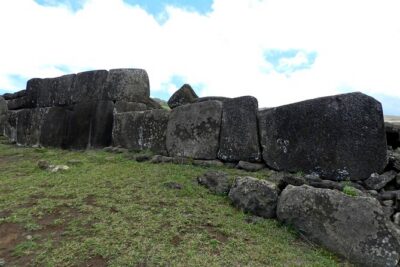
2-Day Private Tour Easter Island Highlights Complete Discovery
Read our review →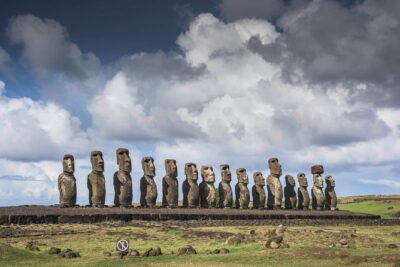
Private Tour: Full Day Easter Island Highlights
Read our review →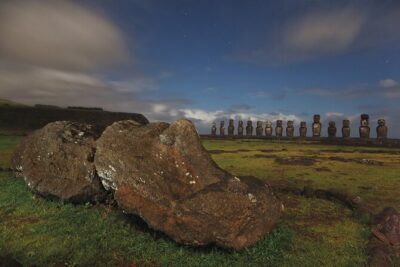
Browse the lists this tour appears in