
REVIEW · EASTER ISLAND TOURS
Mysteries and Legends: Complete Journey of Rapa Nui in 3 Tours
Moai, volcanoes, beaches, and old rivalries await. This three-day tour gives you a well-planned route through Rapa Nui, with major sites such as Rano Raraku, Ahu Tongariki, Orongo, and Anakena Beach all included. You travel in an air-conditioned vehicle, receive hotel pickup, and visit the island with a guide in a group capped at 15 people.
I especially like the wide coverage and the chance to see the island in three manageable outings rather than rushing through everything in one long day. I also like the guides’ strong local focus, with names such as Maitu and Nicholas Paka receiving particular praise for bringing the island’s stories to life. The main drawback is cost: at $290 per person, the tour does not include the National Park entrance fee or picnic lunch, and one guest felt the price was higher than booking directly on Rapa Nui.
In This Review
- Key points to know before booking
- Why three outings work better than one long day
- Day one: Akahanga, the quarry, and Anakena
- Ahu Akahanga and the island’s royal legends
- Rano Raraku, where the moai took shape
- Ahu Tongariki and fifteen restored moai
- Ahu Te Pito Kura and the largest moai
- Anakena Beach, a welcome change of pace
- Day two: stonework, volcanoes, and the Bird Man
- Ahu Vinapu and finely fitted volcanic stone
- Orongo and the Tangata Manu contest
- Rano Kau, a crater with its own small world
- Day three: red stone, star alignment, and Tahai
- Puna Pau and the red stone headdresses
- Ahu Akivi and the seven inland-facing statues
- Ahu Tahai, the best closing stop
- What $290 buys you, and what it does not
- Who will get the most from this tour
- Six practical questions before you reserve
- Is the National Park entrance fee included?
- Is lunch included?
- How many people can join the tour?
- Is hotel pickup included?
- Is transportation provided?
- Can the tour be canceled for bad weather?
- Should you book Mysteries and Legends?
Key points to know before booking
- Rano Raraku and Ahu Tongariki share the first day, creating the strongest moai-focused section of the tour.
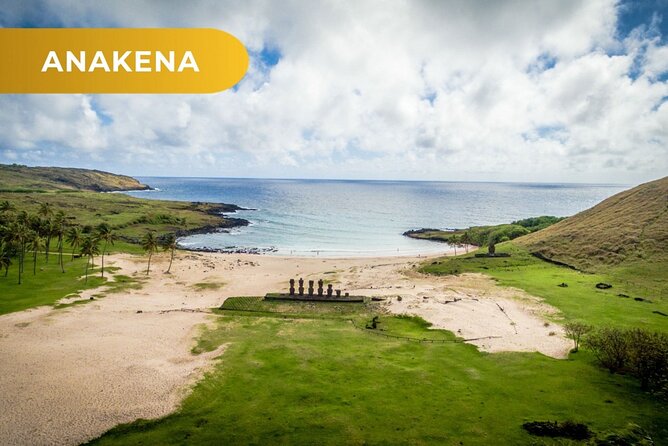
- Anakena Beach adds welcome rest time, with white sand, palm trees, turquoise water, and restored moai nearby.
- Orongo and Rano Kau are paired on day two, linking the Bird Man ceremony with the island’s volcanic setting.
- Three separate outings keep the schedule practical, though the exact order may depend on weather and local arrangements.
- The group limit is 15 people, with hotel pickup and an air-conditioned vehicle included.
- Park admission and lunch cost extra, so add both to your budget before comparing prices.
Why three outings work better than one long day
Rapa Nui is small enough to cross by road, but its archaeological sites deserve time. A single rushed circuit can leave you staring at statues without understanding why they were built, moved, toppled, or restored. This program spreads the main sights across three days, giving each area room to breathe.
The format also helps with weather. Rapa Nui can shift from clear views to mist and rain without much warning. One person was taken back to Orongo after fog blocked the view on the first attempt, an example of the flexibility that can make a real difference here. You are not guaranteed a second visit, but the experience suggests that the local team may adjust when conditions spoil an important stop.
The tour is listed at approximately three days, with each outing lasting several hours. That leaves some breathing room between visits and avoids turning the island into a checklist. Still, you should expect a full sightseeing program, not a casual drive with brief photo stops.
More things to do on Easter Island:
- From Hanga Roa: Rapa Nui Culture Sightseeing Tour
★ 4.6 · 307 reviews - From Hanga Roa: Easter Island Highlights 2-Day Tour
★ 4.3 · 205 reviews - Full Day Tour in Rapa Nui
★ 4.5 · 122 reviews
Day one: Akahanga, the quarry, and Anakena
Ahu Akahanga and the island’s royal legends
Ahu Akahanga begins the first day with fallen moai and a strong sense of unresolved history. Local legends connect this ceremonial area with the burial place of Hotu Matu’a, traditionally regarded as the first king of Rapa Nui.
The toppled statues are important because they show the island after its period of monumental construction. You do not see only polished, upright figures. You see evidence of conflict, change, and the eventual collapse of the old ceremonial order. The stop lasts about 45 minutes, enough to take in the platform and hear the main stories without lingering for half a day.
The entrance fee is not included. As with every National Park stop, you need to account for that separate cost.
Rano Raraku, where the moai took shape
Rano Raraku is the first major highlight. This volcanic quarry supplied the stone for most of the island’s moai, and the hillsides still show unfinished figures in different stages of carving.
The planned visit lasts about 90 minutes, the longest stop of the day. That is sensible. The quarry is not simply a place to see statues. It helps you understand the basic question at the heart of Rapa Nui: how did people carve these enormous figures from volcanic tuff, then transport them across the island?
A good guide can turn the scattered stone forms into a clear story about work, status, ceremony, and movement. Maitu was singled out for making the island’s history and culture easy to follow, while Nicholas Paka received similar praise for an enthusiastic and well-informed approach. If your guide is strong, Rano Raraku becomes the point where the whole trip starts to make sense.
Wear practical shoes and allow time for uneven ground. The exact walking conditions are not specified, so you should not assume that every part of the quarry is effortless.
A completely different kind of day out:
- 2-Day Private Tour Easter Island Highlights Complete Discovery
★ 5.0 · 110 reviews - Private Full-Day Easter Island Highlights North and West
★ 5.0 · 84 reviews - From Hanga Roa: Journey from Orongo to Ana Te Pahu
★ 4.3 · 75 reviews - Journey of the Ancestors: Tongariki, Rano Raraku & Anakena Beach
★ 4.5 · 70 reviews
Ahu Tongariki and fifteen restored moai
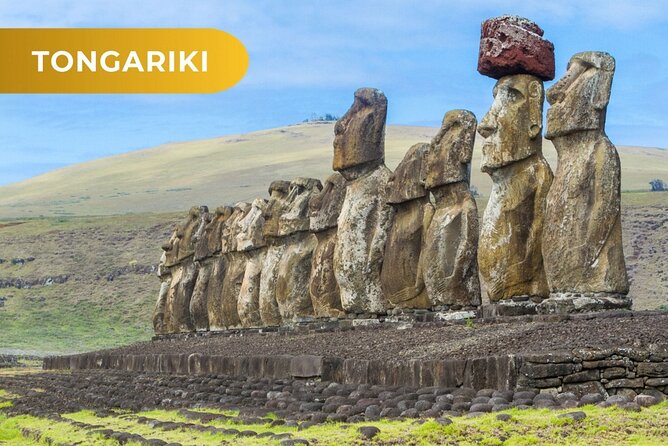
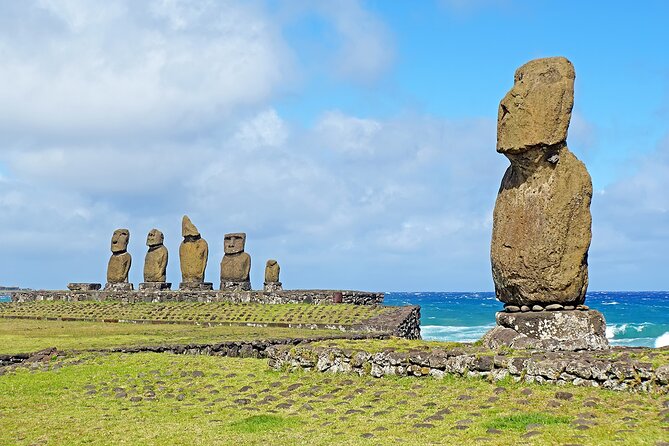
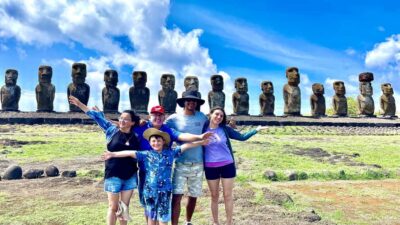
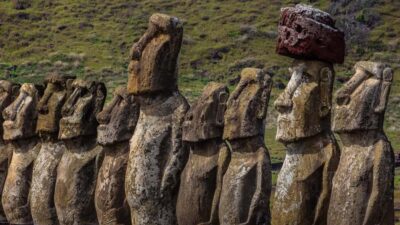
Ahu Tongariki is the classic Rapa Nui view: fifteen moai lined up on a restored ceremonial platform, facing inland. The site was badly damaged in the past, including by a tsunami, and the statues were restored and raised again in recent decades.
You have about 45 minutes here. That gives you time to see the platform from different angles and appreciate the scale of the restoration. The statues are not identical, and the arrangement rewards a closer look.
Tongariki can feel grand even if you know very little about archaeology. It also pairs well with Rano Raraku because you have just seen where many moai were carved. The quarry explains the beginning of the process, while Tongariki shows the final ceremonial setting.
Ahu Te Pito Kura and the largest moai
Ahu Te Pito Kura is a shorter stop, lasting around 25 minutes. Its main claim is the largest moai ever built, although the statue lies fallen and was never raised on its platform.
This is a useful reminder that size alone did not guarantee success. The figure’s scale hints at the ambitions of the island’s clans, but its unfinished story also raises questions about transport, labor, and social change. You may find this stop less visually dramatic than Tongariki, but it fits well into the day’s larger story.
Anakena Beach, a welcome change of pace
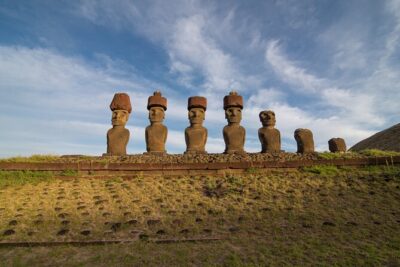
Anakena is where day one changes mood. The beach has white sand, palm trees, and turquoise water, with restored moai nearby. You receive about an hour here, which gives you a chance to rest and enjoy the setting instead of moving from one archaeological site to the next.
The beach is also tied to Rapa Nui’s founding traditions, making it more than a swimming stop. Even if you simply sit under the palms, Anakena gives the day a human rhythm. Ancient platforms can be intense and solemn. A little sand and sea make a welcome counterpoint.
Bring your own picnic lunch or plan to buy food separately, since lunch is not included. The information provided does not confirm swimming arrangements, meal stops, or facilities, so do not book this tour assuming that a beach meal is part of the package.
Day two: stonework, volcanoes, and the Bird Man
Ahu Vinapu and finely fitted volcanic stone
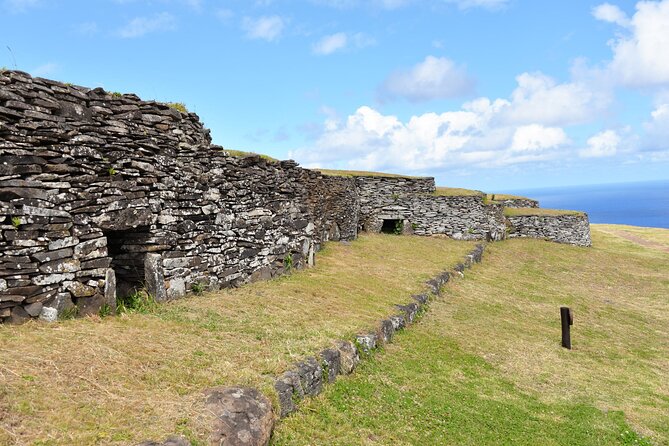
Ahu Vinapu focuses on construction. The carefully fitted volcanic blocks show how Rapanui builders worked hard stone with impressive control. The site also contains fallen moai, linked to the internal clan conflicts of the 18th century.
The visit lasts about 45 minutes. It is a good stop for anyone who wants more than the familiar moai image. Here, the engineering matters as much as the statues. Look closely at the stone joins and the platform’s structure. Your guide’s explanation will help you understand why Vinapu has often drawn comparisons with other ancient stone-building traditions, though the supplied information does not claim a direct connection.
Orongo and the Tangata Manu contest
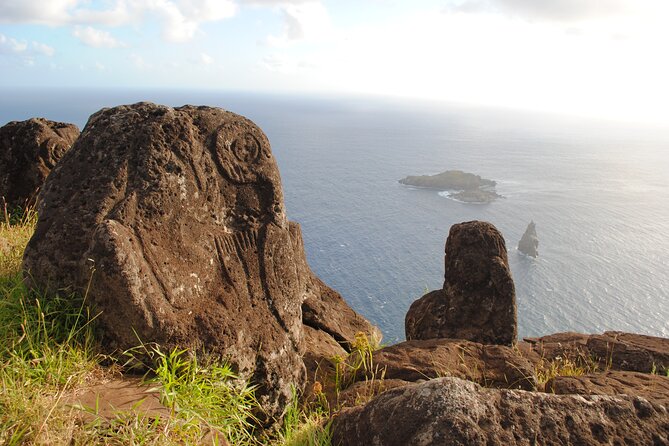
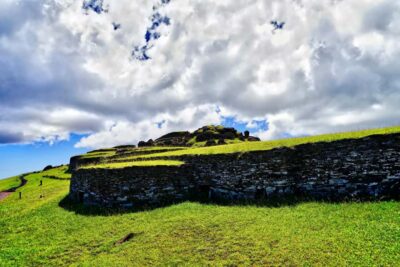
Orongo sits beside the Rano Kau crater and is one of the island’s most distinctive ceremonial areas. This is where the Tangata Manu, or Bird Man, competition took place. The winning clan controlled the island for a year, giving the contest real political weight.
The site receives about an hour, and it deserves that time. Orongo is not just about carved houses and a dramatic setting. It shows a later form of power, one based on ritual competition rather than the earlier moai-centered system.
Mist can limit the views. That happened during one visit, and the guide team returned on another attempt. If the weather is poor, ask whether the schedule can be adjusted. The tour’s cancellation terms also recognize weather as a factor: if conditions make the experience impossible, you may be offered another date or a full refund.
Rano Kau, a crater with its own small world
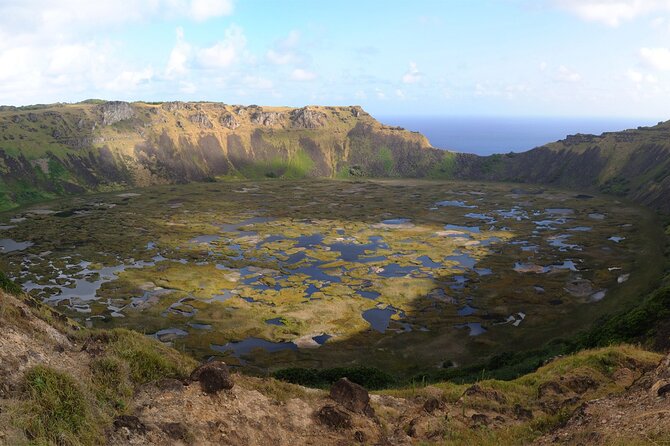
Rano Kau is scheduled for about 20 minutes, making it one of the briefest stops. The volcano’s crater contains a striking natural sanctuary, and the view helps explain why Orongo held such importance.
The short time may feel tight if you want to study the crater or take many photographs. On the other hand, Rano Kau is close in theme and location to Orongo, so the two stops work efficiently together. One explains the ceremony, the other provides the setting.
This is a day of ideas rather than sheer quantity. Vinapu shows skilled masonry, Orongo explains political competition, and Rano Kau connects both to the island’s volcanic origins.
Day three: red stone, star alignment, and Tahai
Puna Pau and the red stone headdresses
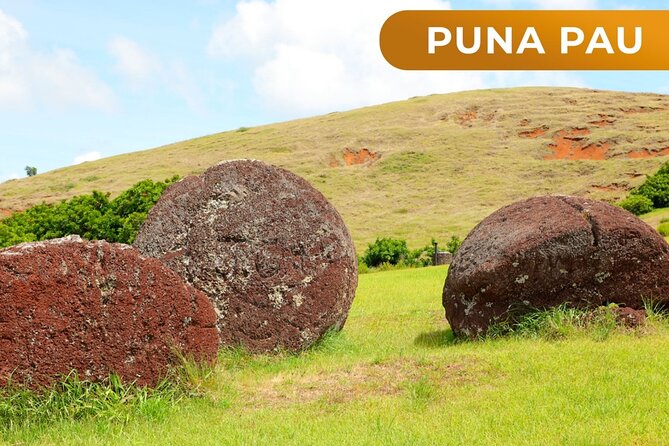
Puna Pau is the quarry where pukao were carved. These red stone headdresses once sat on top of some moai, adding another layer to the familiar statues.
The stop lasts about 30 minutes. It is short, but it answers a question many people have after seeing the statues: what are those red cylinders, and where did they come from? Puna Pau also shows that moai construction involved more than one quarry and more than one type of volcanic stone.
The visit works best after the previous two days because you already understand the basic role of the moai. Now you can add the pukao to the picture.
Ahu Akivi and the seven inland-facing statues
Ahu Akivi has seven restored moai of equal dimensions. Unlike many statues that face inland toward their communities, these figures face the sea. Their position also connects with the spring and autumn equinoxes, when the alignment relates to sunset and sunrise.
You have about 35 minutes here. This is a compact stop, but the astronomical detail gives it unusual appeal. If you enjoy the way archaeology connects with the sky, ask your guide to explain the alignment clearly. The supplied details do not promise an equinox visit, so treat the information as part of the site’s design, not as a special event built into your booking.
Ahu Akivi also makes a useful contrast with Tongariki. At Tongariki, fifteen statues create a broad ceremonial display. At Akivi, seven equal figures create a more ordered and mysterious arrangement.
Ahu Tahai, the best closing stop
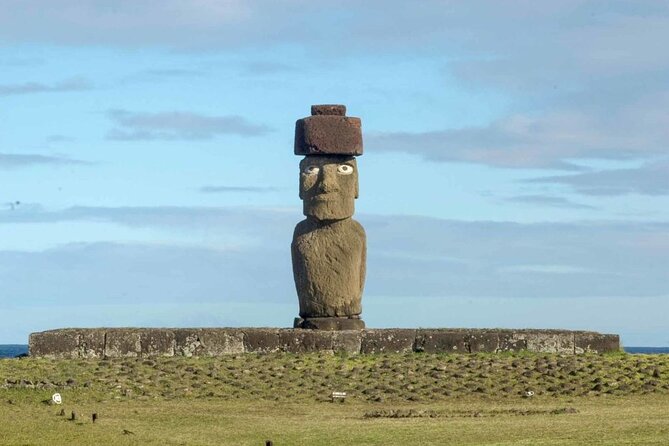
Ahu Tahai brings several restored platforms together in one area: Ahu Tahai, Ahu Vai Uri, and Ahu Ko Te Riku. The site includes archaeological remains and more recent restoration work, making it a fitting final stop.
The visit lasts about 45 minutes. You can compare the different platforms, look at the restored figures, and gather many of the themes from the previous days in one place. Tahai is also near Hanga Roa, though the exact route and return timing are not specified.
Ending here makes sense. You finish with a compact display of platforms, statues, and restoration rather than another remote quarry. It leaves you with a clearer sense of how the island’s ceremonial centers varied from one another.
What $290 buys you, and what it does not
The price is $290 per person. For three guided outings covering the island’s key archaeological areas, that can be fair, especially if you value hotel pickup, air-conditioned transport, and a small group with no more than 15 people.
The value depends heavily on the guide. The strongest praise goes to the people leading the visits, including Maitu, Nicholas Paka, Nico, and Mera. Good interpretation matters on Rapa Nui because many sites are visually spare. Without context, a fallen statue or stone platform can look like a quick photo stop. With a good explanation, it becomes part of a larger story about authority, ceremony, engineering, and change.
There are two clear extra costs:
- National Park admission is not included.
- Picnic lunch is not included.
One person felt the package could be cheaper when arranged directly on the island, and another found it hard to reach the agency by message, eventually visiting in person. That does not erase the positive reports about punctual pickups and flexible guiding, but it is worth considering if price is your main concern. Booking ahead offers a fixed plan. Booking locally may offer a lower rate, though availability is less certain.
The tour is often booked about 73 days ahead, so early planning may matter during busy periods. Confirmation is sent within 48 hours, subject to availability.
Who will get the most from this tour
I would choose this program if you have limited time on Rapa Nui and want the major sites arranged for you. It suits people who prefer cultural context to independent driving and who want to avoid spending their visit working out routes between distant archaeological areas.
It is also a good fit if you want a small-group format rather than a large coach. The maximum of 15 people is not private touring, but it should allow a better chance to hear the guide and ask questions.
You may want another option if you are highly price-sensitive, prefer complete control over your schedule, or want meals and park admission bundled into one payment. You should also allow for changing weather, since mist can affect Orongo and other exposed sites.
The tour is described as suitable for most people, but no detailed mobility information is provided. If uneven paths or longer walks are a concern, ask the provider before booking.
Six practical questions before you reserve
The cancellation policy is simple: cancel at least 24 hours before the experience starts for a full refund. Changes made inside that 24-hour window are not accepted, and late cancellations are not refunded. The provider can also offer another date or a full refund if poor weather or an insufficient number of bookings forces cancellation.
Is the National Park entrance fee included?
No. Entrance to the National Park is not included in the $290 price.
Is lunch included?
No. Picnic lunch is not included, so you need to arrange food separately.
How many people can join the tour?
The maximum group size is 15 people.
Is hotel pickup included?
Yes. Hotel pickup is included, and one reported arrangement also included a hotel that was not on the individual pickup list.
Is transportation provided?
Yes. The tour includes an air-conditioned vehicle.
Can the tour be canceled for bad weather?
Yes. If poor weather causes cancellation, you will be offered a different date or a full refund. The experience also requires a minimum number of people, so the same alternatives apply if that minimum is not reached.
Should you book Mysteries and Legends?
I would book it if you want a structured introduction to Rapa Nui with the main moai platforms, quarries, volcanoes, ceremonial sites, and Anakena Beach covered across three days. The program is well designed, the group size is reasonable, and the guides appear to be the strongest part of the experience.
Before paying, add the National Park fee and your lunch costs to the advertised price. If you are staying on the island long enough to compare local rates, you may find a cheaper direct booking. But if you value advance planning, hotel pickup, air-conditioned transport, and a route that does not miss the major sites, $290 can be a reasonable price for a carefully organized introduction to Rapa Nui.
Just added in Hanga Roa
- Volcanic Refuges: Excursion to Underground Civilization★ 4.7 · 8 reviews
- Volcanic Wonders and the Kingdom of the Birdman: Half Day★ 5.0 · 6 reviews
- Half Day Private Tour: Caves and Volcanic Refuges★ 4.0 · 14 reviews
- Easter Island Ancestral Dinner and Show with Transport★ 4.5 · 2 reviews
- 2 Day Small Group Tour in Moai Monuments and Historic Pathways★ 5.0 · 22 reviews
- Visit Rapa Nui in 4 days with 3 Tours and Accommodation included★ 4.0 · 2 reviews
- The birdman journey in Easter Island★ 5.0 · 1 review
- The Route of Hotu Matua Full-Day Tour from Hanga Roa★ 5.0 · 1 review
Easter Island Tours, compared.
Two days of Full Day Tour of Rapa Nui + Sunrise in Tongariki
Read our review →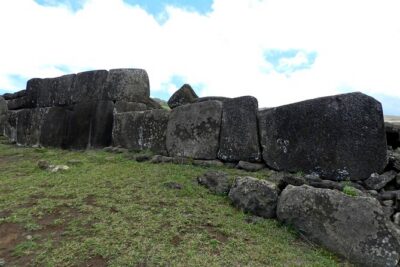
2-Day Private Tour Easter Island Highlights Complete Discovery
Read our review →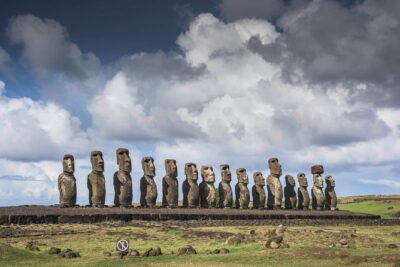
Private Tour: Full Day Easter Island Highlights
Read our review →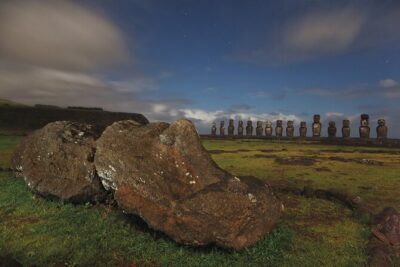
Browse the lists this tour appears in