
REVIEW · EASTER ISLAND TOURS
Full Day Tour: The Moai Trail
Moai, beaches, and island legends fill one long day. The Moai Trail packs six major Rapa Nui sites into a 6 to 8 hour outing, giving you a useful first look at the island’s ceremonial platforms, ancient village remains, quarry, and royal beach. I especially like the small group size of up to 10 people and the chance to hear local stories from guides such as Aranui and Nico. I also like the broad route, which covers both famous moai sites and less familiar village remains.
The main drawback is cost clarity. The $110 tour price does not include the Rapa Nui National Park entrance fee, listed at $100 per person for most international visitors or CLP40,000 for Chileans. Pickup communication has also been uneven, so you should confirm the meeting details and have your park ticket ready before the morning begins.
In This Review
- Key points to know before booking
- Why this route works for a first day on Rapa Nui
- Ahu Vaihu and the practical side of ancient village life
- Ahu Akahanga and the island’s oral traditions
- Rano Raraku, where the moai were carved
- Ahu Tongariki and the grandest group of statues
- Ahu Te Pito Kura and the Paro moai
- Anakena Beach, a royal setting at day’s end
- Guides Aranui and Nico add the human element
- Price, park fees, and the real value
- Pickup, timing, and what to pack
- Who should book the Moai Trail?
- Should you book it?
- FAQ
- How long does the Moai Trail tour last?
- What locations does the tour visit?
- Is the Rapa Nui National Park entrance fee included?
- Is lunch included?
- Is hotel pickup available?
- Is the tour offered in English?
- How many people can join the tour?
Key points to know before booking
- Six major sites in one day: Visit Ahu Vaihu, Ahu Akahanga, Rano Raraku, Ahu Tongariki, Ahu Te Pito Kura, and Anakena Beach.
- A local guide shapes the day: Aranui and Nico received especially warm praise for clear storytelling and an engaging approach with children, adults, and older visitors.
- The park fee is extra: Add the separate Rapa Nui National Park admission to the advertised tour price.
- Anakena provides a welcome change: Finish among white sand, palms, clear water, and moai after a day of stone platforms and quarry slopes.
- Pickup starts around 9:30 a.m.: Be at your accommodation entrance 5 to 10 minutes early.
- Expect a full, active day: The operator says you need to be physically suited to the activity, and the schedule leaves little room for long delays.
Why this route works for a first day on Rapa Nui
Rapa Nui can feel difficult to understand if you see the moai one by one without context. Ahu means a ceremonial platform, and many of the island’s famous statues were placed on these platforms facing inland, toward the communities they represented. This tour helps connect the statues with the village structures, quarry, oral traditions, and coastal settings around them.
I like the order and range of the route. You begin with evidence of everyday life at Vaihu, move through the stories and remains at Akahanga, then reach Rano Raraku, where the statues were carved. Ahu Tongariki gives you the grandest group view, Te Pito Kura brings a remarkable single statue and an unusual stone, and Anakena ends the day on a beach tied to the island’s first royal settlement.
The tour lasts about 6 to 8 hours, depending on pickup and the pace of the group. With six stops, this is not a slow, private archaeology walk. It is a wide survey of the island’s most important places, useful if you have limited time or want a guided introduction before exploring further.
More things to do on Easter Island:
- From Hanga Roa: Rapa Nui Culture Sightseeing Tour
★ 4.6 · 307 reviews - From Hanga Roa: Easter Island Highlights 2-Day Tour
★ 4.3 · 205 reviews - Full Day Tour in Rapa Nui
★ 4.5 · 122 reviews
Ahu Vaihu and the practical side of ancient village life
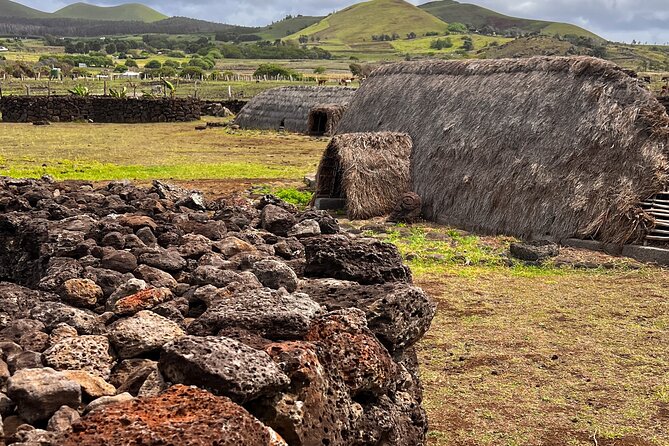
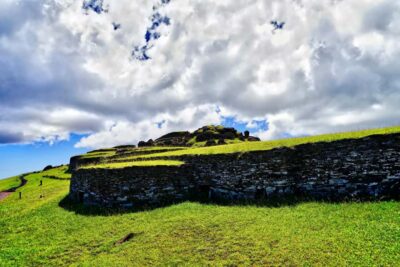
Your first stop is Ahu Vaihu, where a replica of an ancient Rapa Nui village helps show how daily life once worked. Instead of looking only at statues, you get a sense of the structures that supported a community.
The recreated village includes chicken coops, stone gardens, and boat houses. These details matter because they shift your attention from the monumental moai to food, shelter, storage, farming, and seafaring. You can begin to picture the island as a lived-in society rather than an open-air collection of statues.
The stop lasts about 30 minutes. That is enough time for a guide to explain the layout and point out the main structures, but it is not a long independent visit. Admission is not included in the tour price, so your national park ticket needs to be arranged separately.
Ahu Akahanga and the island’s oral traditions
At Ahu Akahanga, the focus turns toward oral history and royal tradition. Local stories identify the area with Hotu Matu’a, regarded as the first king of Rapa Nui, whose remains are said to lie there but have not been found.
You will also see an original village area, its structures, platforms, and moai positioned in front of the ahu. This combination of physical remains and spoken tradition is one of the stronger parts of the experience. Much of Rapa Nui’s past has been carried through oral history, so a local guide can add meaning that a sign alone cannot provide.
The scheduled visit is about 45 minutes. That gives you time to hear the story and examine the remains without making the morning feel rushed. I would pay close attention here, since the value lies as much in the explanation as in the visible stones.
Rano Raraku, where the moai were carved
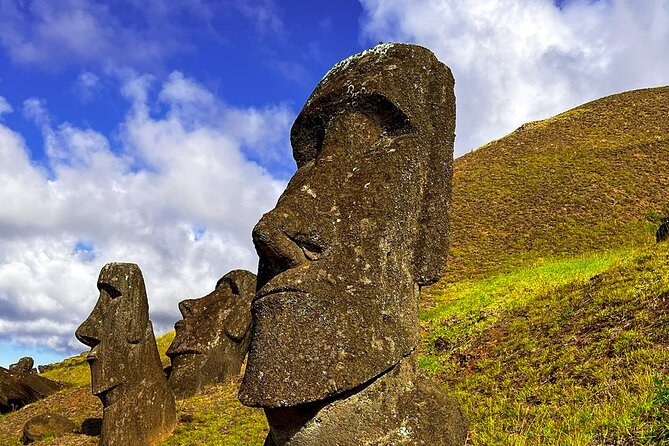
Rano Raraku is the centerpiece of the day. This volcanic quarry is where many of the moai were carved, and the site gives you the clearest sense of how these enormous figures began as unfinished forms in the rock.
The visit lasts about 1 hour and 30 minutes, longer than any other stop. That extra time is well used. You can see moai at different stages of completion, which helps explain that the statues were not simply found and transported as finished objects. The quarry also gives the day a stronger sense of process: stone was selected, shaped, separated, and moved toward ceremonial platforms around the island.
The provided description calls Rano Raraku the largest ceremonial center in the Pacific and connects its restoration with damage from the tsunami caused by the Valdivia earthquake. It also credits Japanese contributors Tadano and Sano for major restoration support. The site is associated with the famous platform of the 15 moai, though that platform itself is at Ahu Tongariki, your next major stop.
Because this is the longest visit, you should be ready for a physically active portion of the day. The operator does not promise a completely easy outing, and the general note about being physically compatible with the activity is worth taking seriously. Wear practical clothing and shoes, though the supplied details do not specify a required dress code or equipment list beyond essential equipment being included.
A completely different kind of day out:
- 2-Day Private Tour Easter Island Highlights Complete Discovery
★ 5.0 · 110 reviews - Private Full-Day Easter Island Highlights North and West
★ 5.0 · 84 reviews - From Hanga Roa: Journey from Orongo to Ana Te Pahu
★ 4.3 · 75 reviews - Journey of the Ancestors: Tongariki, Rano Raraku & Anakena Beach
★ 4.5 · 70 reviews
Ahu Tongariki and the grandest group of statues
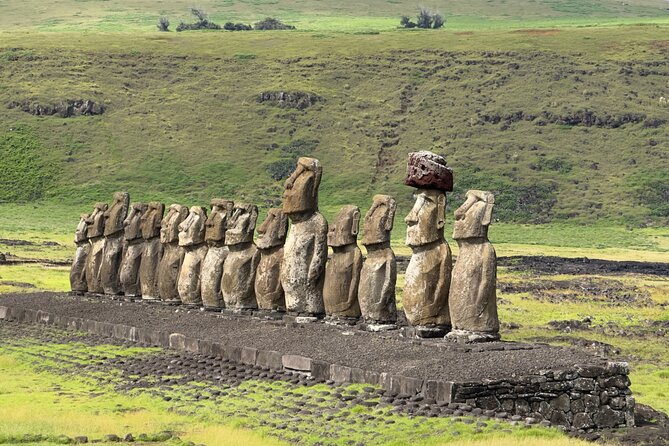
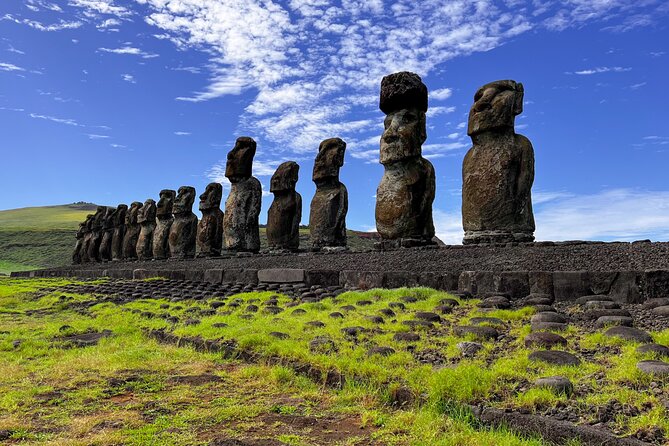
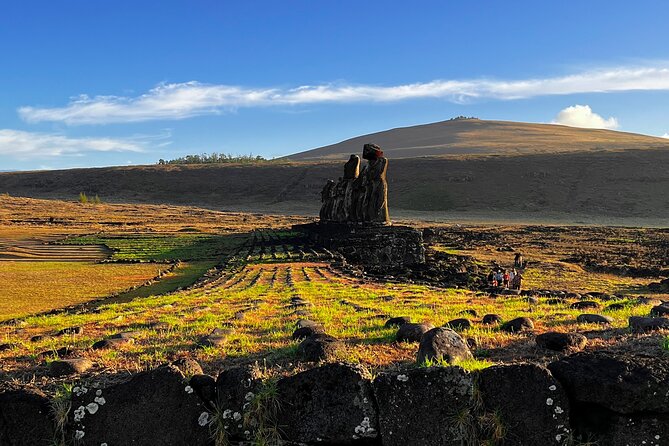
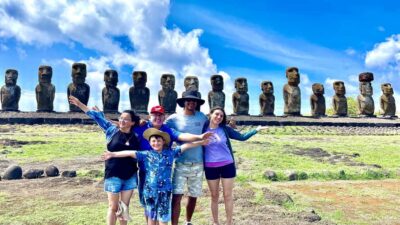
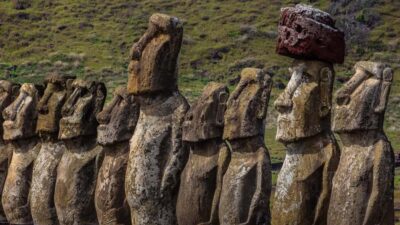
Ahu Tongariki is the visual high point for many people. Its line of 15 moai creates the broad, powerful view most closely associated with Rapa Nui.
This ceremonial center was badly damaged by the tsunami linked to the Valdivia earthquake and later restored with important Japanese support from Tadano and Sano. The restoration story adds another layer to the site. You are not seeing an untouched arrangement frozen in time, but a carefully recovered place that survived a major natural disaster.
The scheduled stop is about one hour. That is a sensible amount of time for taking in the full line, listening to the guide, and photographing the platform without turning the visit into a quick roadside pause. Admission is listed as not included, so again, the separate park entrance must be handled before or during the day according to the operator’s instructions.
If you want a single stop that explains why this island is so famous, Tongariki is probably it. Still, the experience is stronger when you have already visited the quarry at Rano Raraku. Seeing the statues in formation after seeing where they were carved gives the day a clear visual progression.
Ahu Te Pito Kura and the Paro moai
Ahu Te Pito Kura offers a different kind of spectacle. Here you find the Paro moai, described as the largest moai ever erected on its platform. It is about 10 meters high and weighs roughly 88 tons.
The scale is hard to grasp from a description alone, but the important point is that this is a single monumental figure rather than a row of statues. The stop also includes a round stone said to have magnetic qualities that can disorient compasses and that is associated with particular energies.
Treat the magnetic claim as part of the island’s local story rather than a scientific promise. It still makes the stop memorable, especially after the large group at Tongariki. The visit lasts around 30 minutes, so your guide’s explanation will likely carry much of the meaning.
This is also a good example of why the tour works better with a local guide than with a simple transport service. The moai are visually striking, but the stories, names, and traditions help you understand why different sites matter for different reasons.
Anakena Beach, a royal setting at day’s end
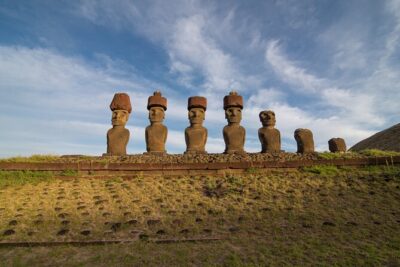
Anakena Beach gives the schedule a welcome change of pace. The bay was originally called Hanga Rau o Te Ariki, meaning king’s landing bay, and it is associated with the arrival and colonization of the island by the people led by Hotu Matu’a.
Over time, Anakena became an area reserved for royalty. Today, the setting includes white sand, clear water, palm trees, and moai. After several hours focused on stone platforms and archaeological remains, you get a coastal stop where you can pause and take in the setting at a less hurried pace.
The visit lasts about one hour, and admission is listed as free. Food and drinks are available in the park area, according to the tour information and direct experience shared by one participant, but lunch is not included in the tour unless specifically stated. Bring money for food, and do not assume that snacks or a meal will be supplied.
Anakena is more than a pretty final stop. It connects the island’s royal traditions, settlement story, ceremonial monuments, and natural setting in one place. If you want time to swim or relax, check the day’s pace with your guide, since the schedule includes several earlier stops and the tour’s total length can vary.
Guides Aranui and Nico add the human element
The strongest praise for this experience centers on its local guides. Aranui was described as a good fit for a group that included a 9-year-old child, an adult, and two seniors. That detail suggests a flexible style that can work across different ages and energy levels.
Nico was also singled out for leading a great day and bringing warmth to the route. The most useful takeaway is simple: the guide can make a major difference here. Rapa Nui sites are powerful, but the experience depends on how well the guide connects the stones to legends, village life, restoration, and local identity.
The tour is offered in English, and the maximum group size is 10 people. That is small enough for questions and a more personal feel, though the vehicle may not always be luxurious. One person reported being transported in a small, older truck that felt tight with five passengers. I would not book this expecting a polished coach or a high-end vehicle.
Price, park fees, and the real value
The advertised price is $110 per person. Add the $100 Rapa Nui National Park entrance fee for most international visitors, and the basic cost becomes about $210 per person before lunch or snacks. Chilean visitors pay the listed park fee of CLP40,000 instead.
That changes the value calculation. At $110 alone, six major sites with transport, pickup and drop-off, essential equipment, and a local English-speaking guide can look reasonable. Once the park ticket is added, the total becomes a serious part of your island budget.
Still, the route covers a lot of ground in one day, and arranging transport to all six locations independently may be difficult. I see the strongest value for a first visit, a short stay, or anyone who wants local explanation rather than simply taking photographs. If you have several days and prefer a slower pace, you may find a single full-day group tour less satisfying.
The key practical lesson is to buy the park ticket before the tour if possible. A failure to communicate this cost caused a major delay for one participant. Do not rely on the $110 price as the complete amount.
Pickup, timing, and what to pack
Pickup begins around 9:30 a.m., but the operator uses a time window based on your accommodation. Be at the main entrance 5 to 10 minutes before the expected pickup time.
Communication about pickup has not always been clear. One person waited about 45 minutes after other passengers had been collected, without knowing if the tour was still operating. I would confirm the pickup time directly and ask how the operator will contact you. If your accommodation lacks a clear reception area or easy access, send a useful landmark or meeting reference.
Hotels outside Hanga Roa may require another meeting point or an extra charge. The operator includes pickup and drop-off, but that promise has limits for outlying accommodation.
Lunch and snacks are not included unless specifically stated. Anakena has food and drink options, but you should still plan for a full day away from Hanga Roa. Bring water, sun protection, and clothing suitable for outdoor walking. The tour is described as physically accessible to most people, but you need to be comfortable with a long day and several site visits.
Free cancellation is available up to 24 hours before the start time. Changes or cancellations inside that window are not accepted for a refund.
Who should book the Moai Trail?
I would choose this tour if you want a broad introduction to Rapa Nui in one day, especially if you are staying briefly or want a guide to explain the island’s stories and ceremonial sites. Families and mixed-age groups may also like it, based on the positive experience with a young child, adults, and seniors.
I would hesitate if vehicle comfort is a top priority, if you want a private schedule, or if you dislike full days with several stops. The park fee must be added to the price, and pickup details need active confirmation.
Should you book it?
Book the Moai Trail if your priority is coverage, local storytelling, and seeing the major moai sites without arranging island transport yourself. The route is broad, the group is limited to 10, and guides such as Aranui and Nico can bring the history and legends to life.
Skip it if you want a polished vehicle, a slow archaeological visit, or complete cost simplicity. If you do book, budget for the separate national park ticket, confirm pickup, and bring lunch money. With those points handled, this is a useful and generally well-priced introduction to Rapa Nui’s most important places.
FAQ
How long does the Moai Trail tour last?
The tour lasts approximately 6 to 8 hours. Pickup begins from around 9:30 a.m., with the exact timing depending on your accommodation.
What locations does the tour visit?
The route includes Ahu Vaihu, Ahu Akahanga, Rano Raraku, Ahu Tongariki, Ahu Te Pito Kura, and Anakena Beach.
Is the Rapa Nui National Park entrance fee included?
No. The national park entrance must be purchased separately before the tour. The listed fee is $100 per person, or CLP40,000 per person for Chileans.
Is lunch included?
No. Lunch and snacks are not included unless specifically indicated. Food and beverage options are available at Anakena Beach.
Is hotel pickup available?
Pickup is offered from accommodations in Hanga Roa. Accommodations outside Hanga Roa may require another meeting point or an additional charge.
Is the tour offered in English?
Yes. The tour is offered in English and includes a local guide.
How many people can join the tour?
The tour has a maximum group size of 10 people.
Just added in Hanga Roa
- Volcanic Refuges: Excursion to Underground Civilization★ 4.7 · 8 reviews
- Volcanic Wonders and the Kingdom of the Birdman: Half Day★ 5.0 · 6 reviews
- Half Day Private Tour: Caves and Volcanic Refuges★ 4.0 · 14 reviews
- Easter Island Ancestral Dinner and Show with Transport★ 4.5 · 2 reviews
- 2 Day Small Group Tour in Moai Monuments and Historic Pathways★ 5.0 · 22 reviews
- Visit Rapa Nui in 4 days with 3 Tours and Accommodation included★ 4.0 · 2 reviews
- Tour to the Motus: Boat trip and snorkeling in Rapa Nui★ 5.0 · 8 reviews
- The birdman journey in Easter Island★ 5.0 · 1 review
Easter Island Tours, compared.
Two days of Full Day Tour of Rapa Nui + Sunrise in Tongariki
Read our review →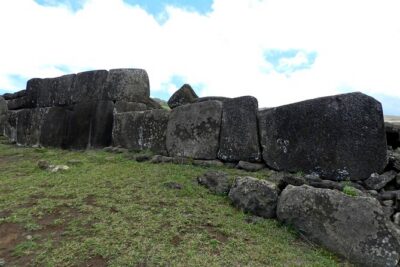
2-Day Private Tour Easter Island Highlights Complete Discovery
Read our review →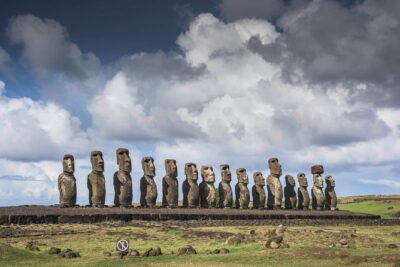
Private Tour: Full Day Easter Island Highlights
Read our review →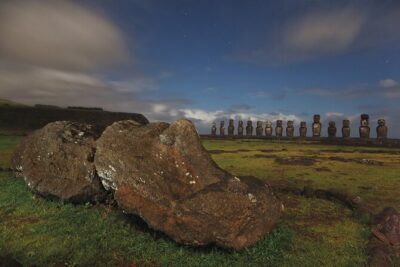
Browse the lists this tour appears in