
REVIEW · EASTER ISLAND TOURS
Full Day Hotu Matua Tour from Vaihu to Anakena
Rapa Nui rewards a full day outdoors. I like this tour because it links the island’s great eastern Moai sites in one efficient route, from fallen statues at Vaihu to the fifteen figures at Tongariki. I also like the small-group format, advertised for no more than 10 people, and the final stop at Anakena Beach. The main concern is timing: pickup delays and long drives can leave some stops feeling rushed.
The route is strong, but the guide can shape the day. Enrique, Gabriel, Enzo, and John have each been praised for clear English, good organization, or strong explanations, while other departures have suffered from weak storytelling. You may hear plenty of useful information, or you may need to ask questions and rely more on your own preparation.
At $70 per person, this is a fair way to cover the far eastern side of Easter Island without arranging a private vehicle. Remember to add the 20,000 CLP Chilean adult admission fee, and bring water, sun protection, and rain gear because food and drinks are not included.
In This Review
- Key points to know before booking
- Why this east-coast route makes sense
- Ahu Vaihu: fallen Moai beside the sea
- Ahu Akahanga: ruins that show daily life
- Rano Raraku: the quarry that explains the Moai
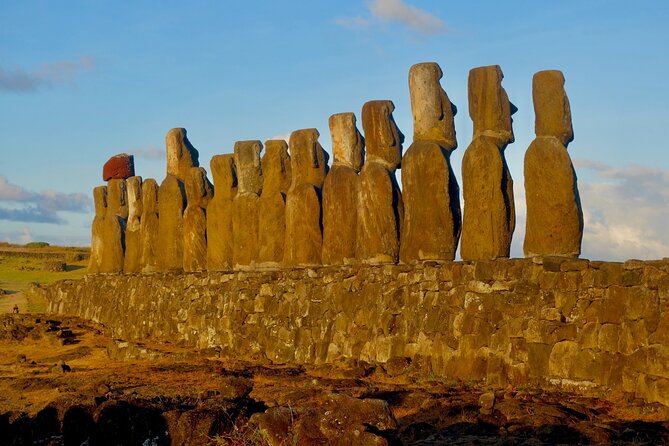
- Ahu Tongariki: fifteen Moai facing the Pacific
- Ahu Te Pito Kura and the Navel of the World
- Anakena Beach: a welcome final hour and a half
- Guide quality can change the value of the day
- Timing, transport, and the cost of convenience
- What to pack for the full eastern circuit
- Who should book the Hotu Matua Tour?
- FAQ
- What is included in the Hotu Matua Tour?
- How much is the tour?
- Is the national park admission included?
- What time does the tour start?
- How long does the tour last?
- How many people can join the tour?
- Is the tour physically demanding?
- Can I cancel for a full refund?
- Should you book it?
Key points to know before booking
- Six major stops in one day: The route covers Vaihu, Akahanga, Rano Raraku, Tongariki, Te Pito Kura, and Anakena.
- Rano Raraku is the centerpiece: You see the quarry where more than 400 unfinished Moai remain on the slopes.
- Tongariki delivers the famous view: Fifteen Moai face the Pacific, creating the tour’s most recognizable scene.
- Pickup can take longer than expected: The official start is 9:30 am, but collecting people from several accommodations may push the sightseeing start later.
- Anakena gives the day a softer finish: You have about 90 minutes for the beach, swimming, and a rest after the archaeological sites.
- Guide quality matters: English ability and storytelling have varied, so ask questions when something is unclear.
Why this east-coast route makes sense
Easter Island is small enough to look manageable on a map, but its most important archaeological sites are spread across open ground and distant roads. The eastern side is the part many people most want to see, yet it takes time and planning to reach each place in a sensible order.
This full-day route removes much of that work. Transportation and a guide are included, and the sequence moves from coastal ceremonial platforms to the quarry, then finishes at the island’s best-known beach. You do not need to negotiate several separate rides or decide which major site to sacrifice.
The stated duration is seven to nine hours, including driving. Pickup begins at 9:30 am, but allow for a loose schedule. One departure took about an hour to collect the group, with sightseeing beginning closer to 10:30 or 11 am. The return journey can also continue after the last site, so a late afternoon or early evening arrival is possible.
The group limit is listed as 10 people. One earlier departure had about 12, so the exact number may vary. Even so, this should feel more manageable than a large coach outing, especially at narrow viewpoints and busy archaeological areas.
More things to do on Easter Island:
- From Hanga Roa: Rapa Nui Culture Sightseeing Tour
★ 4.6 · 307 reviews - From Hanga Roa: Easter Island Highlights 2-Day Tour
★ 4.3 · 205 reviews - Full Day Tour in Rapa Nui
★ 4.5 · 122 reviews
Ahu Vaihu: fallen Moai beside the sea
Vaihu is a good opening stop because it immediately shows you that Rapa Nui is not only about statues standing upright. Several Moai lie fallen around the ceremonial platform, with the Pacific wind moving through the site.
You have about 45 minutes here. That is enough to look carefully, take photographs, and hear the basic explanation of the ahu, the ceremonial platform. It is not a long visit, so listen first if your guide begins with the site’s main story. Otherwise, you may spend the whole stop choosing between photographs and commentary.
The mood at Vaihu is spare and powerful. Fallen statues can seem less dramatic than the famous row at Tongariki, but they help you picture the island’s changing past. The open setting and ocean sound also make this a fine place to begin thinking about how the Moai relate to the wider community and ceremony.
Admission is not included in the tour price. The stated Chilean adult fee is 20,000 CLP for the archaeological sites.
Ahu Akahanga: ruins that show daily life
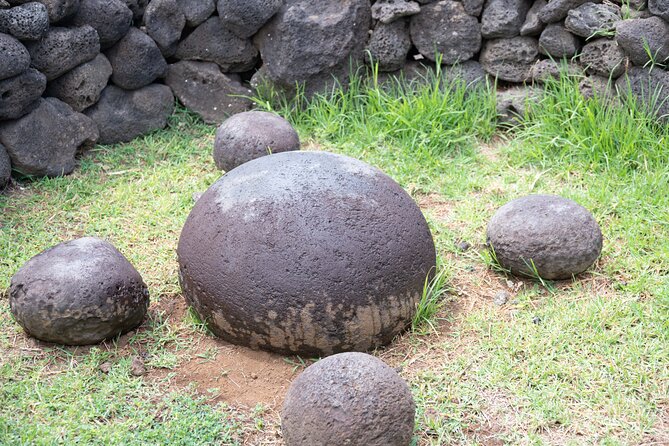
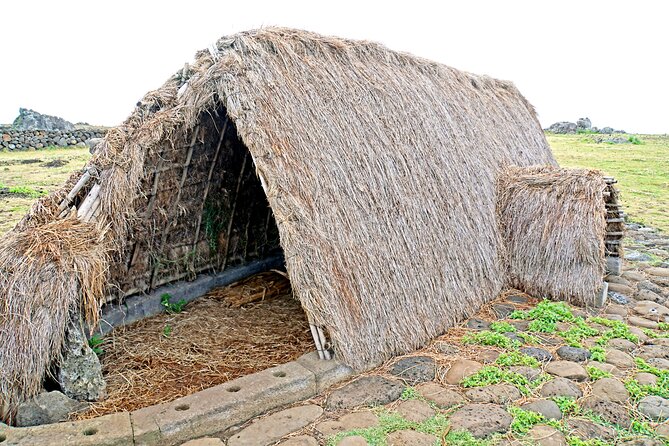
Akahanga shifts the focus from isolated Moai to the remains of a settlement. The site includes an ahu with twelve Moai and the ruins of traditional dwellings. You have about one hour, making this one of the more generous stops before the quarry.
I like Akahanga because it gives you more than a grand photograph. The fallen statues attract attention, but the house foundations and scattered remains help explain how people lived around these ceremonial places. Look beyond the figures and notice the shape of the old settlement.
This is also a place where a strong guide can make a real difference. A short explanation of the ahu, the houses, and the island’s social structure gives the stones meaning. With a quiet guide, you may find yourself walking through ruins without much context. Ask direct questions if you want more than a quick identification of the Moai.
Rano Raraku: the quarry that explains the Moai
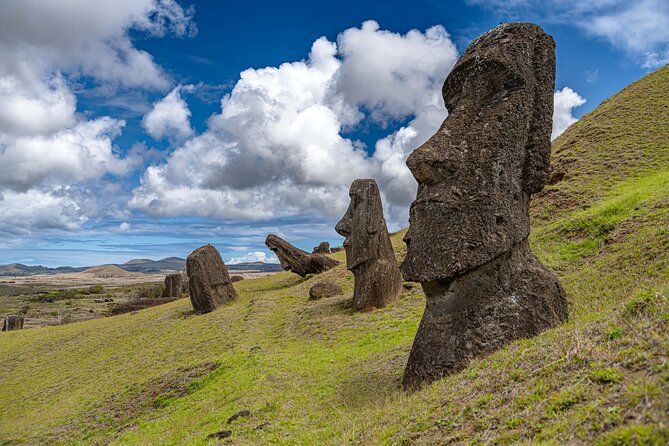
Rano Raraku is the tour’s essential stop. This volcanic quarry is where the Moai were carved, and more than 400 unfinished statues remain around the slopes. You have about 90 minutes here, longer than at Vaihu or Tongariki, and you will want every minute.
The unfinished figures make this place different from the coastal ahu. Some are still attached to the rock. Others lie partway down the slopes, as if the workers simply stopped and left. The scale of the site gives you a much clearer sense of the labor involved than a single completed statue can.
You can also see the crater lake from the quarry area. The combination of carved figures, volcanic stone, and open views is one of the most memorable scenes on the island.
Wear shoes suitable for uneven ground and expect moderate physical effort. The tour requires a moderate fitness level, and the stop is not simply a short walk from the vehicle followed by a photo. If rain arrives, the ground and visibility can change quickly. Wet weather has made this stop difficult on past departures, so a light waterproof layer is practical even when the morning looks calm.
A completely different kind of day out:
- 2-Day Private Tour Easter Island Highlights Complete Discovery
★ 5.0 · 110 reviews - Private Full-Day Easter Island Highlights North and West
★ 5.0 · 84 reviews - From Hanga Roa: Journey from Orongo to Ana Te Pahu
★ 4.3 · 75 reviews - Journey of the Ancestors: Tongariki, Rano Raraku & Anakena Beach
★ 4.5 · 70 reviews
Ahu Tongariki: fifteen Moai facing the Pacific
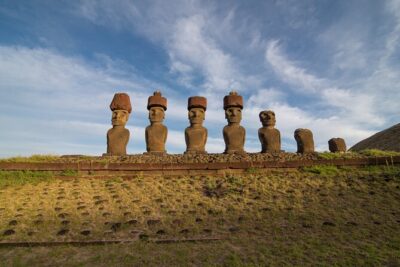
Tongariki is the visual high point for many people. Fifteen Moai rise together on the island’s largest and most impressive ahu, with the Pacific behind them.
The planned visit lasts about 45 minutes. That gives you time for the classic wide photograph, a closer look at the individual statues, and a short explanation of the platform. It does not give you unlimited time to wander, especially if the group arrives behind schedule.
Try to pause before lifting your camera. The power of Tongariki comes from the whole arrangement, not only from one statue. The scale of the platform and the number of figures make the engineering achievement easier to grasp.
This is also where a rushed schedule is most frustrating. You may want to listen closely, photograph the row from different angles, and simply sit with the view. If the guide is giving a detailed explanation, stay nearby. If the group has lost time earlier, expect the visit to follow the planned 45 minutes rather than expand.
Ahu Te Pito Kura and the Navel of the World
Te Pito Kura provides a smaller, more mysterious stop after the grandeur of Tongariki. It is associated with the largest Moai successfully moved into place, as well as the smooth magnetic stone known as the Navel of the World.
You have about 45 minutes here. The site is less extensive than Rano Raraku, but the legends give it a different character. It is a good moment to ask your guide what is known, what is traditional belief, and what remains uncertain.
Do not expect another Tongariki-sized spectacle. Te Pito Kura works best when you appreciate the story attached to the place and the contrast with the huge quarry and ceremonial platforms. A guide who can explain the local traditions clearly will add a lot here. A guide who offers only a brief label may leave the stop feeling thin.
Anakena Beach: a welcome final hour and a half
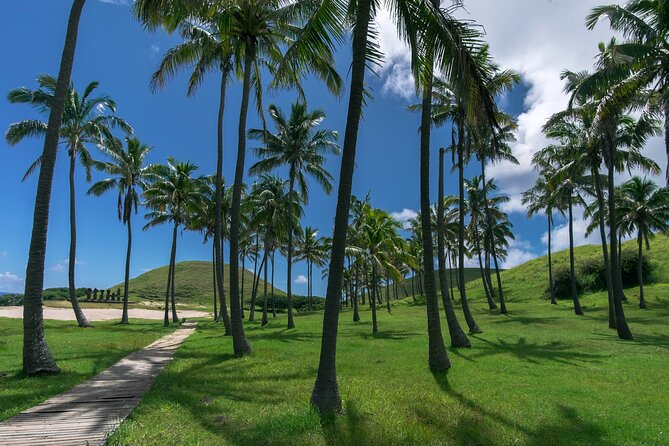
The last stop is Anakena, a palm-lined beach with clear water and time to relax. After several archaeological sites, the change of pace is welcome. The planned stay is about 90 minutes, enough for a swim, photographs, and a quiet break.
Anakena also helps you see Rapa Nui as a lived-in island rather than an outdoor museum. You can reflect on the Moai while sitting beside the sea, then cool off in the water if conditions suit you.
Food and drinks are not included. A meal at the beach may be available, but I would not treat it as part of the package. Bring water and a snack so you are not depending on an uncertain lunch stop.
The beach is a useful reason to pack a change of clothes. Rain can arrive during the day, and one wet-weather departure ended with people visiting the most important sites in soaked clothing. You may also want a towel and swimwear if you plan to enter the water.
Guide quality can change the value of the day
The strongest departures have included guides such as Gabriel, whose English and island knowledge were praised, Enrique, who was described as friendly and effective, and Enzo, who received high marks for professionalism. John was also able to rescue a disrupted day with strong guiding after a major delay.
That range matters. Rapa Nui’s sites are visually striking, but the stones do not explain themselves. You benefit from a guide who can connect the ahu, the Moai quarry, the settlement remains, and the island’s traditions without turning the visit into a list of names.
English ability has not been equally strong on every departure. Some guides have spoken very little unless asked a question, while others have provided clear explanations throughout the day. If your guide is reserved, ask about the quarrying process, the purpose of an ahu, the fallen Moai, and the stories connected with Te Pito Kura.
This is not a reason to reject the tour, but it is a reason to read a little about Rapa Nui before you go. Basic preparation will help you get more from a quieter guide and make it easier to recognize what you are seeing.
Timing, transport, and the cost of convenience
The $70 price is attractive for a full day that includes transport and guiding. The route reaches the sites farthest from Hanga Roa, and arranging that same coverage privately would normally require more planning and expense.
The tradeoff is control. You cannot decide to stay another 30 minutes at Tongariki or skip a less important stop for more beach time. The group moves according to the shared schedule, and pickup may take longer than the advertised 9:30 start.
The listed stop times add up to more than six hours, before driving is counted. That explains why the day feels full even when the official duration says seven to nine hours. The tour is efficient, but it is not leisurely.
The admission charge is separate, with the stated Chilean adult price at 20,000 CLP. Add that amount to the $70 when comparing the cost with other sightseeing options. Free cancellation is available if you cancel at least 24 hours before the start time. Changes or cancellations inside that window are not accepted for a refund.
What to pack for the full eastern circuit
Keep your day bag simple but useful:
- Water, since no drink is included
- A snack, because lunch is not part of the tour
- Sun protection
- A light rain jacket
- Shoes for moderate walking on uneven ground
- Swimwear and a towel for Anakena
- A change of clothes in case of heavy rain
The weather can affect the experience more than any other factor. Rano Raraku and Tongariki are the places you most want to see clearly, so a waterproof layer is worth carrying even if the sky looks friendly at breakfast.
Who should book the Hotu Matua Tour?
I would choose this tour if you want the main eastern sites in one day, prefer a shared price, and are comfortable following a fixed schedule. It is especially useful for solo visitors, couples, and families who want transport handled for them.
It also suits people who want both archaeology and scenery. You get the fallen Moai at Vaihu and Akahanga, the quarry at Rano Raraku, the grand row at Tongariki, the legends of Te Pito Kura, and a beach finish.
I would look for a private guide if you want long, unhurried photography sessions or detailed discussion at every stop. A private arrangement also gives you more control if a late pickup would cause stress. For most people, though, this group outing offers a sensible balance of coverage, convenience, and price.
FAQ
What is included in the Hotu Matua Tour?
The tour includes transportation and a guide.
How much is the tour?
The listed price is $70 per person.
Is the national park admission included?
No. The stated Chilean adult admission fee is 20,000 CLP and is paid separately.
What time does the tour start?
The scheduled start time is 9:30 am.
How long does the tour last?
The tour lasts approximately seven to nine hours, including travel time.
How many people can join the tour?
The activity is listed for a maximum of 10 people, although one earlier departure had about 12 people.
Is the tour physically demanding?
A moderate level of physical fitness is recommended. You should be prepared for walking at archaeological sites and uneven outdoor ground.
Can I cancel for a full refund?
Yes, if you cancel at least 24 hours before the local start time. Cancellations or changes made less than 24 hours before departure are not refunded.
Should you book it?
Book it if your priority is seeing the major east-coast Moai sites without paying for a private vehicle. The route is excellent, Rano Raraku and Tongariki are unforgettable, and Anakena gives the long day a pleasant finish.
Go in with realistic expectations. Pickup may run late, the group schedule may limit time for photographs, and guide quality can vary. Bring water, rain protection, and a little background reading. With those precautions, the Hotu Matua Tour is a good-value way to cover the essential eastern side of Rapa Nui in one demanding but rewarding day.
Just added in Hanga Roa
- Volcanic Refuges: Excursion to Underground Civilization★ 4.7 · 8 reviews
- Volcanic Wonders and the Kingdom of the Birdman: Half Day★ 5.0 · 6 reviews
- Easter Island Ancestral Dinner and Show with Transport★ 4.5 · 2 reviews
- Half Day Private Tour: Caves and Volcanic Refuges★ 4.0 · 14 reviews
- 2 Day Small Group Tour in Moai Monuments and Historic Pathways★ 5.0 · 22 reviews
- Visit Rapa Nui in 4 days with 3 Tours and Accommodation included★ 4.0 · 2 reviews
- Tour to the Motus: Boat trip and snorkeling in Rapa Nui★ 5.0 · 8 reviews
- The birdman journey in Easter Island★ 5.0 · 1 review
Easter Island Tours, compared.
Two days of Full Day Tour of Rapa Nui + Sunrise in Tongariki
Read our review →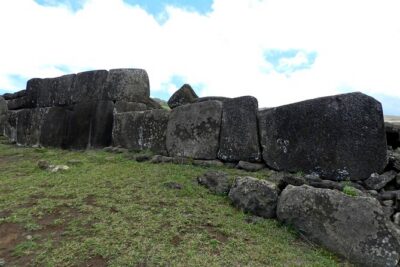
2-Day Private Tour Easter Island Highlights Complete Discovery
Read our review →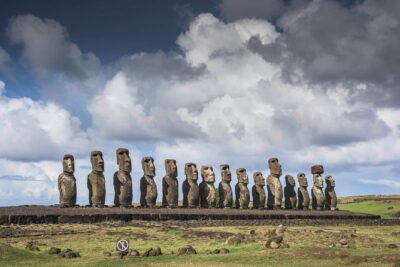
Private Tour: Full Day Easter Island Highlights
Read our review →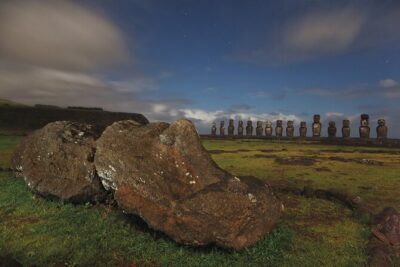
Browse the lists this tour appears in