
REVIEW · EASTER ISLAND TOURS
Easter Island: Half-Day Archaeology Tour
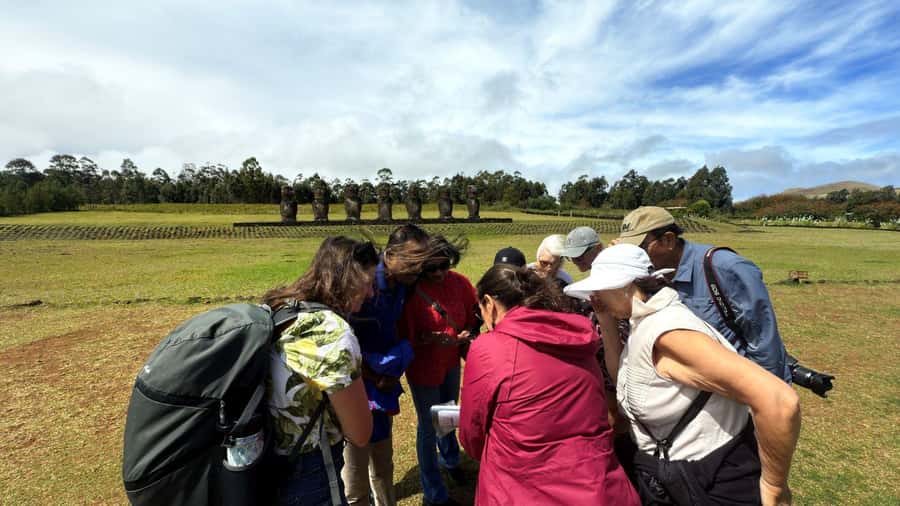
The moai tell a bigger story. This three-hour tour gives you a useful first look at Rapa Nui, linking major ahu, the red-stone pukao quarry, and the island’s unusual inland ceremonial sites. I like the compact route and the small group limit of 15 people. I also like that hotel pickup and return are included, which keeps a short visit simple.
The main drawback is the extra $100 National Park entrance fee, added to the $91 tour price. Three hours is enough for a strong introduction, but not enough for every major site on Easter Island. You should also confirm the exact stops, since Ahu Vianpu appears among the highlights while the detailed route names Ahu Tahai, Ahu Akivi, Puna Pau, and Ahu Huri A Urenga.
In This Review
- Key points at a glance
- Why this half-day route works
- Ahu Tahai and the first look at moai
- Puna Pau and the red-stone topknots
- The seven moai at Ahu Akivi
- Ahu Huri A Urenga and the inland story
- What $91 plus the park fee really buys you
- Timing, pickup, and group size
- How to prepare for the three hours
- Who should book this archaeology tour?
- FAQ
- How long is the Easter Island archaeology tour?
- Is hotel pickup included?
- What language is the tour offered in?
- Is the Rapa Nui National Park entrance fee included?
- Can cruise ship passengers join the tour?
- What should I bring?
- Should you book it?
Key points at a glance
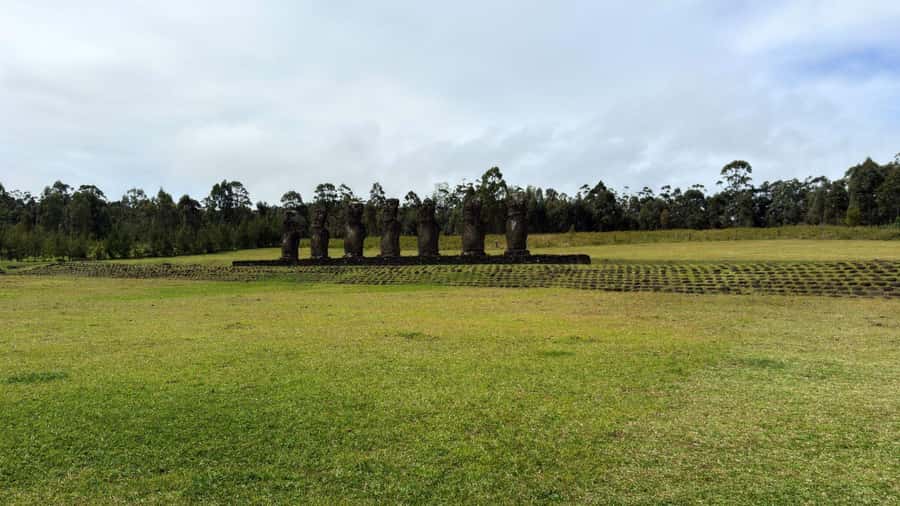
- Seven ocean-facing moai: Ahu Akivi has seven statues, each about 16 feet tall and weighing roughly 18 tons.
- Red pukao at Puna Pau: See the quarry where many moai topknots were made from red scoria.
- A rare inland ahu: Ahu Huri A Urenga sits away from the coast in an agricultural area.
- Easy hotel transport: Pickup and drop-off are provided at Easter Island hotels in Hanga Roa.
- Small-group format: The tour accepts up to 15 participants and offers English or Spanish guiding.
- Short but focused: In three hours, you get a clear introduction to Rapa Nui archaeology rather than a full-island visit.
Why this half-day route works
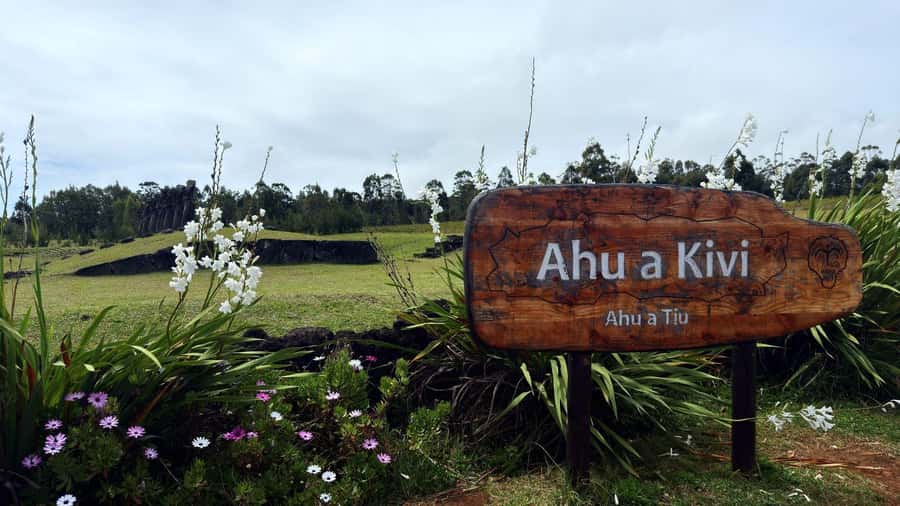
Rapa Nui National Park covers much of Easter Island and contains about 900 moai, along with around 300 ahu, the ceremonial platforms built for them. You cannot meaningfully see all of that in one short outing. What this tour does well is choose a few sites that show different parts of the island’s story.
You see a coastal ceremonial area at Ahu Tahai, the source of the red stone used for pukao at Puna Pau, the famous seven moai at Ahu Akivi, and an inland platform at Ahu Huri A Urenga. That mix gives you more than a series of similar photo stops.
I especially like the way the route moves from finished monuments to the materials used to create them. At Tahai and Akivi, the statues are the focus. At Puna Pau, you look at the production of the topknots. At Huri A Urenga, you get a reminder that Rapa Nui ceremonial life was not limited to the shoreline.
Your guide is important here. The tour is offered in English and Spanish, and the strongest praise in the available feedback focuses on clear explanations, a personable manner, and an easygoing pace. Daniela is specifically praised for explaining the history well. That matters at Rapa Nui, where a good explanation can turn a huge stone figure into part of a human story rather than just an impressive object.
More things to do on Easter Island:
- From Hanga Roa: Rapa Nui Culture Sightseeing Tour
★ 4.6 · 307 reviews - From Hanga Roa: Easter Island Highlights 2-Day Tour
★ 4.3 · 205 reviews - Full Day Tour in Rapa Nui
★ 4.5 · 122 reviews
Ahu Tahai and the first look at moai
After hotel pickup in Hanga Roa, the route heads into the park and to Ahu Tahai. The detailed description highlights a single moai here, a stone figure more than 13 feet tall. It is an imposing introduction because you can focus on one statue instead of trying to take in a long row all at once.
Ahu means ceremonial platform, and that word is worth keeping in mind throughout the tour. The moai were not simply placed wherever sculptors finished them. They were connected with tribal ceremony, ancestors, and people of high rank. The statues were carved from solidified volcanic ash, then moved and raised on ahu.
Tahai is also a useful place to begin because it introduces the basic visual language of Rapa Nui. You will see the scale of the moai, the careful stonework of the platform, and the way the statues relate to the surrounding coast.
The tour description refers to a unique moai at Tahai, protected by its size and presence. Do not expect a long stop with many separate structures explained in detail. This is a brief opening visit, designed to give you context before the quarry and the larger group at Ahu Akivi.
Puna Pau and the red-stone topknots
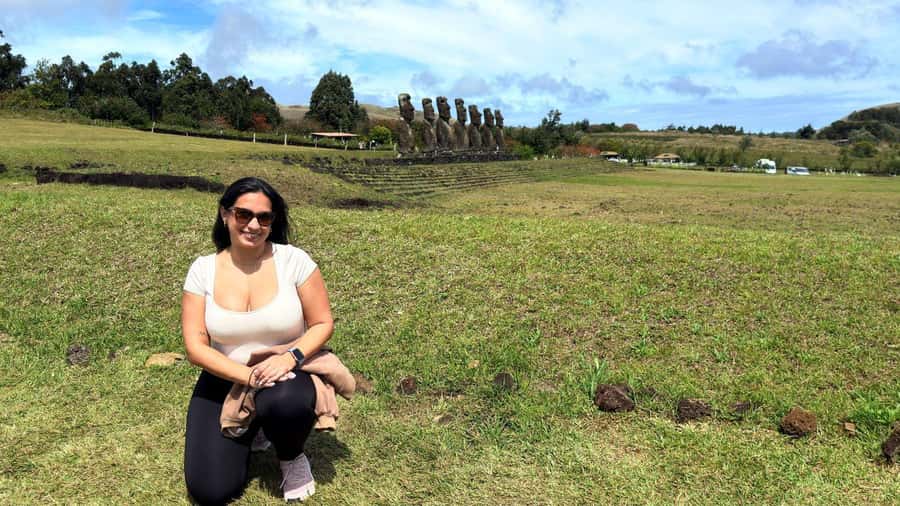
At Puna Pau, the focus shifts from the moai themselves to the pukao, the red topknots placed on the heads of some statues. Roughly 30 pukao are located in or near the quarry, where the red scoria was sourced.
The contrast is striking. Most moai were carved from volcanic ash, while these topknots came from a different volcanic rock. The red color gives the finished figures a different look, and the size of the stone helps you understand that the pukao were substantial objects, not small decorative caps.
The purpose of the pukao remains part of the island’s mystery. One interpretation is that the red stone helped impress rival tribes. Your guide can place that idea beside the broader story of status, ceremony, and competition among communities.
I like this stop because it corrects a common mistake. It is easy to think of a moai as one block of stone with every feature made from the same material. Puna Pau shows that the statues were part of a larger process involving separate materials, quarry sites, and considerable labor.
The practical limitation is that Puna Pau may appeal more to visitors who enjoy archaeological details than to anyone seeking the most instantly recognizable view. If your time on Easter Island is very short, you may value the stop more after seeing the larger statues at Akivi. A guide who explains what you are looking at makes a real difference.
The seven moai at Ahu Akivi
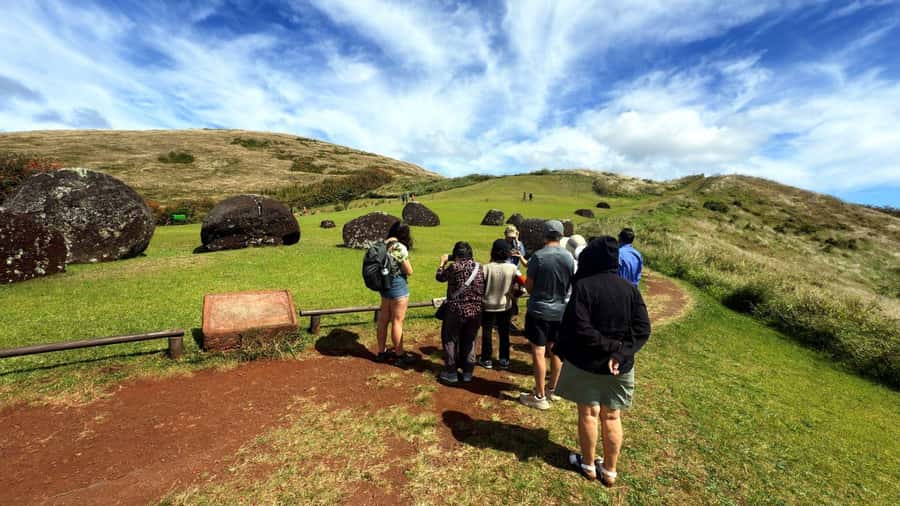
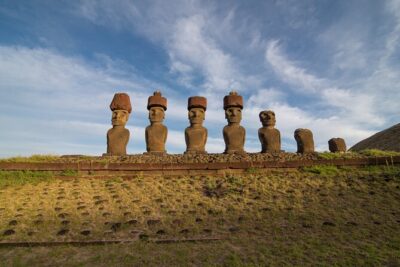
Ahu Akivi is likely the emotional center of this outing. Here, seven moai form a line and face toward the ocean. Each is about 16 feet tall and weighs approximately 18 tons.
Their direction is what makes the site unusual. Many other moai on ahu are positioned with their backs toward the water, but these seven look out toward the sea. That difference gives Ahu Akivi a question at its heart.
One theory says the seven statues represent explorers from Hiva, the Polynesian homeland. According to this idea, a chief sent them to find Rapa Nui, and the moai face the direction from which they came. The wording matters: this is a theory, not a settled fact. You should enjoy the story while keeping room for uncertainty, which is part of what makes the site so compelling.
The line of statues also gives you a better sense of scale than a single moai can. When you see seven large figures together, you can compare their shapes and proportions while taking in the work required to carve, move, and raise them.
This stop should suit photographers and first-time visitors especially well, but the short schedule means you may not have unlimited time to linger. Comfortable shoes are recommended, and they are a sensible choice for every stop on the tour. Large bags and luggage are not allowed, so carry only what you need.
A completely different kind of day out:
- 2-Day Private Tour Easter Island Highlights Complete Discovery
★ 5.0 · 110 reviews - Private Full-Day Easter Island Highlights North and West
★ 5.0 · 84 reviews - From Hanga Roa: Journey from Orongo to Ana Te Pahu
★ 4.3 · 75 reviews - Journey of the Ancestors: Tongariki, Rano Raraku & Anakena Beach
★ 4.5 · 70 reviews
Ahu Huri A Urenga and the inland story
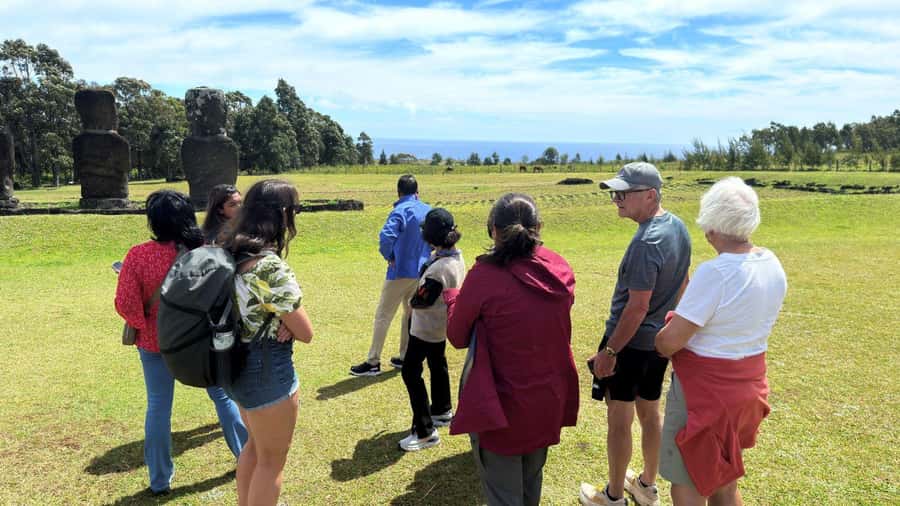
The final stop is Ahu Huri A Urenga, one of about 25 platforms located inland rather than along the coast. Its setting corresponds to an agricultural area, adding an important piece to the picture of life on Rapa Nui.
The coastal moai are often the images people remember, but an inland ahu shows that ceremonial places were tied to the island’s interior as well. This stop helps you think beyond the shoreline and see a connection between spiritual life and agriculture.
It is also a quieter way to finish the route. After the striking seven statues at Akivi, Huri A Urenga brings the focus back to the wider purpose of the platforms and the communities that used them.
The tour description does not provide a long list of features at this site, so you should expect the value to come mainly from the guide’s explanation and the setting. If your main goal is to see the largest number of famous moai, this may feel less dramatic than Akivi. If you want a broader archaeological picture, it earns its place on the route.
What $91 plus the park fee really buys you
The tour price is $91 per person, and the Rapa Nui National Park entrance fee is not included. That fee is listed as $100, bringing the combined cost to $191 per person before any other travel expenses.
That is a significant price for three hours. I would not call this the economical way to cover Easter Island if you plan to book several paid activities. The value depends on what you need.
For a first visit, the package can make sense because you receive transportation from your hotel, a guide in English or Spanish, and access to several important archaeological sites in a tightly organized morning or afternoon. You do not need to work out the route yourself, and a guide can explain the theories and terms that are easy to miss when you travel without context.
The price is less attractive if you already have a rental car, a full day on the island, and strong background knowledge about Rapa Nui. In that case, the fixed three-hour schedule may feel restrictive.
I would judge the value by the quality of the explanation. The available rating is 4.2 out of 5 from 19 reviews, with especially positive comments about the pleasant pace, informative guiding, and personable service. Those points match the tour’s purpose: it is a guided introduction, not an exhaustive archaeological survey.
Timing, pickup, and group size
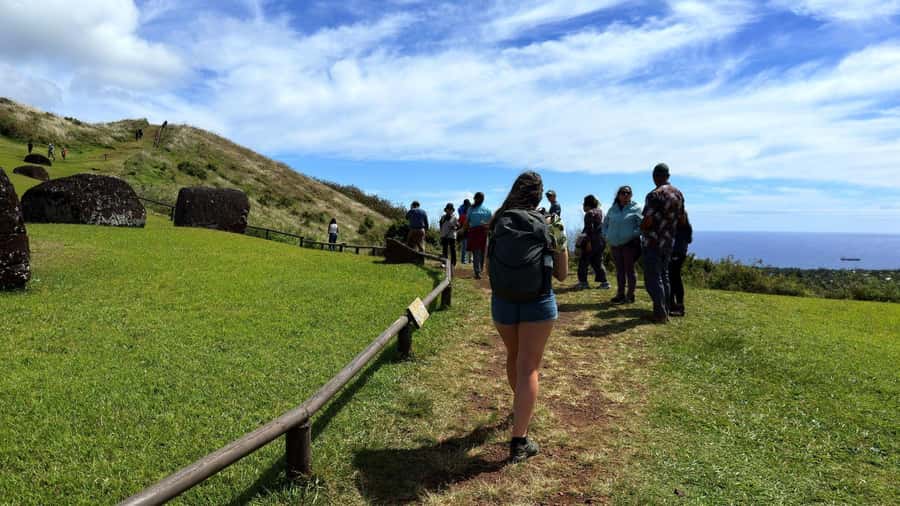
The activity lasts three hours, but starting times vary, so you need to check availability for your date. Hotel pickup and drop-off are included for Easter Island hotels, with pickup in Hanga Roa.
Plan to wait in your hotel lobby 10 minutes before the scheduled time. Drivers wait no longer than five minutes after pickup time, so this is not the moment to arrive casually with breakfast still in hand.
The group is limited to 15 people. That is small enough for a guide to address the group without the feel of a large coach outing, though it is not a private tour. A calm, easygoing pace is one of the qualities praised in the available feedback, and the group limit should help preserve that feeling.
Cruise ship passengers need to pay close attention to the restrictions. The tour is intended for people staying in hotels and is specifically not suitable for cruise ship guests. It is also not suitable for wheelchair users. Strollers, luggage, large bags, alcohol, and drugs are not allowed.
How to prepare for the three hours
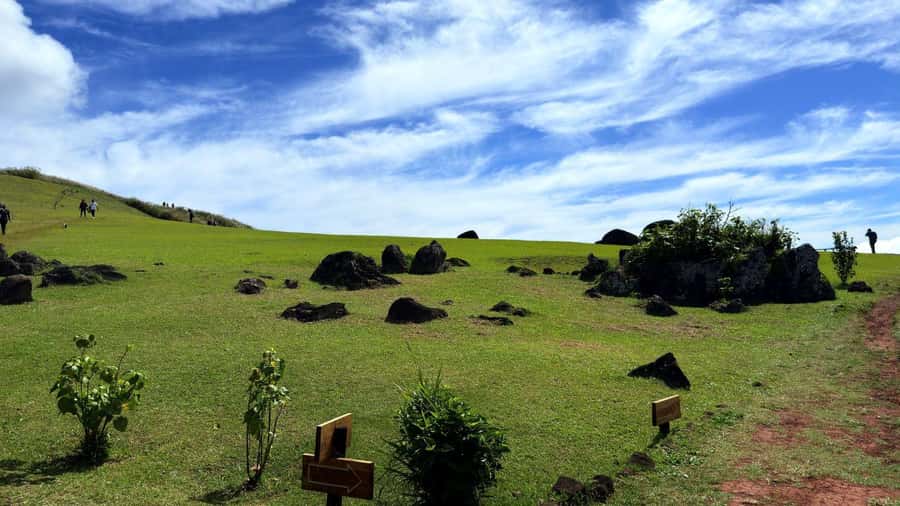
Wear comfortable shoes. The tour moves between archaeological sites, and even a short outing is more pleasant when you are not worrying about your feet.
Bring only small personal items. Large bags and luggage are prohibited, and there is no reason to load yourself down for a three-hour route.
It is also worth reading a little about ahu, moai, pukao, and Rapa Nui before you go. You do not need a textbook. Just knowing that ahu are ceremonial platforms and pukao are red-stone topknots will help you follow the guide’s explanations from the first stop.
Keep your expectations focused. This tour does not promise every major site on the island, and three hours cannot provide that. Instead, it gives you a sample of coastal ceremony, stone production, famous moai, and inland agriculture.
One point deserves clarification before booking: Ahu Vianpu is named among the highlights, but the detailed route describes Ahu Tahai, Puna Pau, Ahu Akivi, and Ahu Huri A Urenga. Ask the operator to confirm the final schedule if Ahu Vianpu is important to you.
Who should book this archaeology tour?
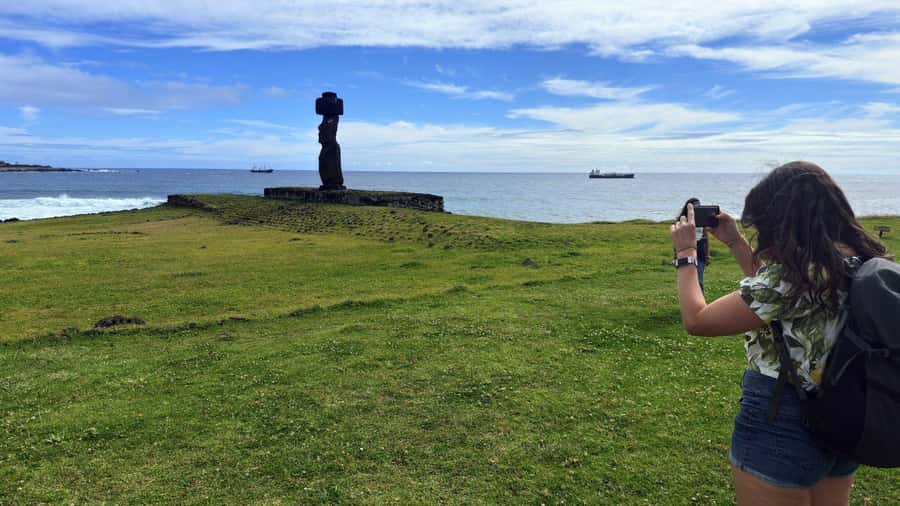
I would recommend it to you if you are staying in Hanga Roa, want a guided introduction, and prefer a short organized outing over arranging transport yourself. It is also a good fit if you want an English or Spanish guide to explain the meaning behind the statues rather than simply drive you to photo stops.
It suits a first day on Easter Island especially well. You can learn the basic sites and vocabulary, then decide how much more time you want to give the park and its monuments.
I would think twice if you have only a cruise stop, since cruise passengers are not accepted. I would also compare the cost carefully if you plan to book multiple tours, because the $100 park fee is separate and makes this a costly three-hour experience.
The tour is not the best choice for a wheelchair user, someone traveling with a stroller, or anyone who needs to bring luggage. It is also less suitable for you if you want long, unhurried visits at each site. The strength here is coverage and explanation within a compact schedule.
FAQ
How long is the Easter Island archaeology tour?
The tour lasts three hours. Starting times vary, so check availability for your preferred date.
Is hotel pickup included?
Yes. Pickup and drop-off are included for hotels in Hanga Roa. You should wait in the hotel lobby 10 minutes before the scheduled pickup time.
What language is the tour offered in?
The tour has a live guide in English or Spanish.
Is the Rapa Nui National Park entrance fee included?
No. The tour price is $91 per person, and the National Park entrance fee is listed separately at $100.
Can cruise ship passengers join the tour?
No. The activity is intended for passengers staying in hotels and is not suitable for cruise ship guests.
What should I bring?
Bring comfortable shoes. Large bags, luggage, baby strollers, alcohol, and drugs are not allowed.
Should you book it?
Book this tour if you want a well-organized three-hour introduction to Rapa Nui with hotel transport and a guide who can explain the island’s major archaeological ideas. Ahu Akivi’s seven ocean-facing moai and the red pukao at Puna Pau give the route real variety, while Ahu Huri A Urenga adds an inland perspective.
Skip it if you need a full-island experience, are arriving by cruise ship, or feel that $191 including the park fee is too much for a short outing. Before paying, confirm the exact stops, especially the reference to Ahu Vianpu. For the right visitor, this is a focused and practical first chapter, not the whole book of Easter Island.
Just added in Hanga Roa
- Volcanic Refuges: Excursion to Underground Civilization★ 4.7 · 8 reviews
- Volcanic Wonders and the Kingdom of the Birdman: Half Day★ 5.0 · 6 reviews
- Easter Island Ancestral Dinner and Show with Transport★ 4.5 · 2 reviews
- Half Day Private Tour: Caves and Volcanic Refuges★ 4.0 · 14 reviews
- 2 Day Small Group Tour in Moai Monuments and Historic Pathways★ 5.0 · 22 reviews
- Visit Rapa Nui in 4 days with 3 Tours and Accommodation included★ 4.0 · 2 reviews
- Tour to the Motus: Boat trip and snorkeling in Rapa Nui★ 5.0 · 8 reviews
- The birdman journey in Easter Island★ 5.0 · 1 review
Easter Island Tours, compared.
Two days of Full Day Tour of Rapa Nui + Sunrise in Tongariki
Read our review →
2-Day Private Tour Easter Island Highlights Complete Discovery
Read our review →
Private Tour: Full Day Easter Island Highlights
Read our review →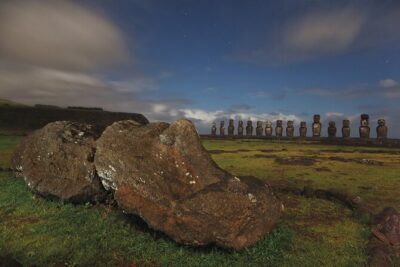
Browse the lists this tour appears in