
REVIEW · EASTER ISLAND TOURS
Easter Island: Full-Day Tour to Anakena
An island of giants awaits. This full-day route gives you 15 moai at Ahu Tongariki, the carved slopes of Rano Raraku, and time to swim at Anakena Beach. I especially like the mix of archaeology, volcanic scenery, and easy beach time. You see the famous monuments, but you also get a feel for the island’s open, dramatic setting.
I also like that the tour includes hotel pickup, drop-off, a picnic lunch, and a guide in English or Spanish. Guides Bruno and Vincent have earned special praise for making the island’s past understandable, including the damage caused by civil wars, tsunamis, and earthquakes. The main drawback is the extra $100 Rapa Nui National Park entrance fee, which makes the total cost noticeably higher than the advertised $171.
In This Review
- Key things to know before you go
- Why this full-day route works so well
- Starting from Hanga Roa and heading along the coast
- Ahu Akahanga and the first look at the moai sites
- Ahu Tongariki and its 15 statues by the ocean
- Rano Raraku, the volcanic quarry of the moai
- The route beyond the main quarry
- Anakena Beach and a change of pace
- Caves, Poike, and Ovahe
- What the guide adds to the experience
- Price, park fee, and what you receive
- Who should book this tour?
- Should you book the Anakena tour?
- FAQ
- How long does the Easter Island tour last?
- Where does the tour begin and end?
- Is lunch included?
- Is the Rapa Nui National Park entrance fee included?
- Which languages are available?
- Can cruise ship passengers join the tour?
- What should I bring?
- Can I cancel the tour for a refund?
Key things to know before you go
- Ahu Tongariki has 15 giant moai: This is the tour’s strongest monument stop and one of Easter Island’s most striking coastal views.
- Rano Raraku is the moai quarry: More than 390 figures can be found around the volcanic crater and its Cantera de los Moais.
- Anakena adds welcome beach time: Bring a towel if you want to swim or relax beside the white sand.
- Lunch is served outdoors at Rano Raraku: The picnic keeps the day moving without sending you back to Hanga Roa.
- The tour lasts eight hours: It covers much of the north and southeastern coast in one long day.
- Cruise passengers cannot use this service: Pickup is for people staying at Easter Island hotels, not ships.
Why this full-day route works so well
Easter Island can feel like a place of separate wonders. One stop gives you a moai platform. Another gives you a crater. Then a beach appears beyond the grass and volcanic rock. This tour connects those pieces into one clear day, starting and ending in Hanga Roa.
I like the route because it does not treat the moai as isolated statues for quick photographs. You visit ceremonial platforms, the quarry where many figures were made, small caves, volcanic sites, and beaches. That combination helps you understand how the island’s people shaped their world and how nature frames it.
The eight-hour length is useful if you have limited time on the island. You can cover Ahu Akahanga, Ahu Tongariki, Rano Raraku, Ahu Nau Nau, Anakena, and additional coastal stops without arranging several separate outings. The tradeoff is simple: this is a busy day, so you should expect a full schedule rather than long, unplanned pauses at every site.
The activity is priced at $171 per person, before the $100 national park entrance fee. I see reasonable value here if you want transport, guiding, lunch, and a single organized route. The total is less appealing if you already have a vehicle and plan to visit the same places independently. Still, the historical explanations can make a major difference, especially at the moai sites, where the meaning of the stones is not always obvious at first glance.
More things to do on Easter Island:
- From Hanga Roa: Rapa Nui Culture Sightseeing Tour
★ 4.6 · 307 reviews - From Hanga Roa: Easter Island Highlights 2-Day Tour
★ 4.3 · 205 reviews - Full Day Tour in Rapa Nui
★ 4.5 · 122 reviews
Starting from Hanga Roa and heading along the coast
The tour picks you up at your Easter Island hotel and heads toward the north and southeastern coasts. That hotel service matters on an island where you are likely to spend most of your time moving between scattered sites rather than walking from one attraction to the next.
The exact starting time depends on availability, so check the schedule before booking. Since the tour lasts eight hours, I would treat the day as your main activity rather than trying to fit another major excursion around it.
Your guide leads the day in English or Spanish. A strong guide is particularly valuable here. Bruno has been praised for his enthusiasm and the amount of information he shares, while Vincent has been noted for patiently explaining the island’s civil wars, tsunamis, earthquakes, and the restoration work that brought many statues back into view.
That human explanation is one of the best reasons to choose a guided tour. You get more than a drive to a photo stop. You get help connecting the damaged statues, ceremonial platforms, volcanic sites, and restored monuments into a story.
Ahu Akahanga and the first look at the moai sites
Ahu Akahanga is one of the first major archaeological stops. An ahu is a ceremonial platform, and the site introduces you to the relationship between the moai and the coast.
The attraction here is not simply the number of statues. It is the setting and the chance to see a ceremonial area before reaching the largest group at Tongariki. Your guide can help explain how the platforms functioned and how the island’s past is marked by both construction and destruction.
I would use Akahanga as a time to listen rather than rush toward a perfect photograph. The site prepares you for the larger scale of the next stop. It also gives the day some variety, since the tour is not just a procession of identical statues.
Ahu Tongariki and its 15 statues by the ocean
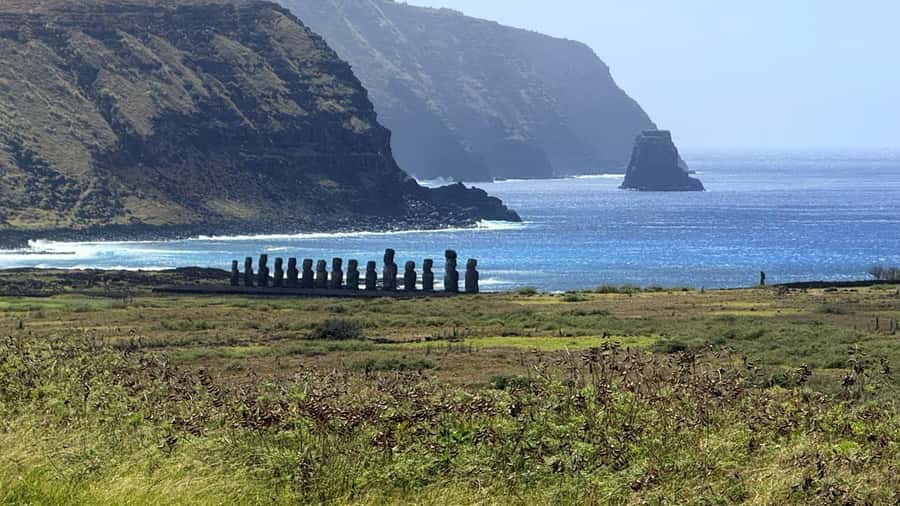
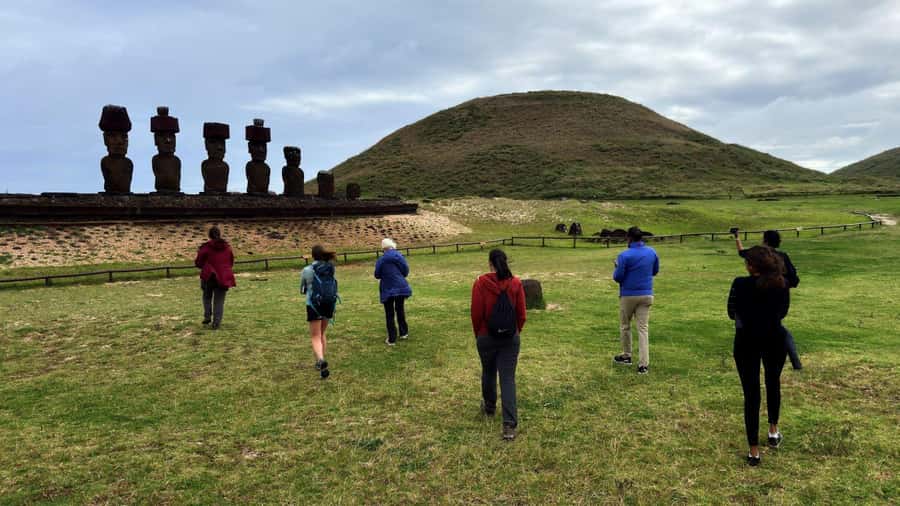
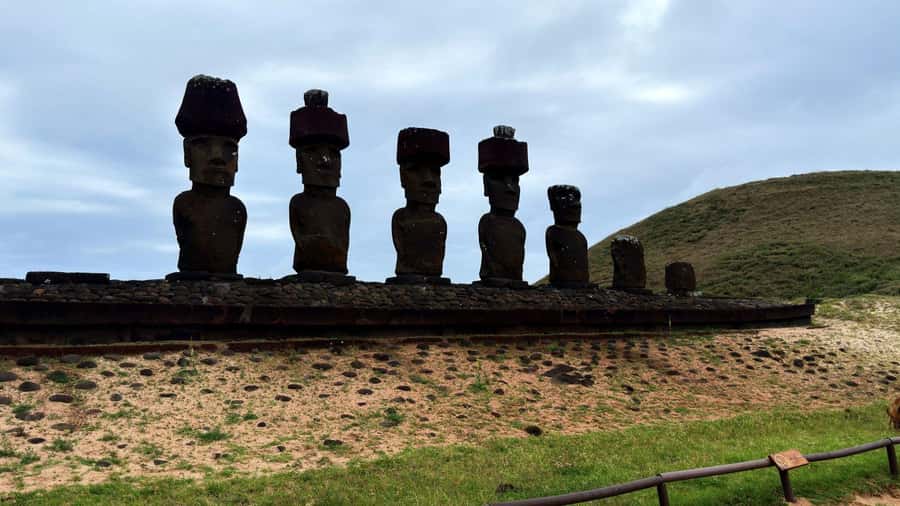
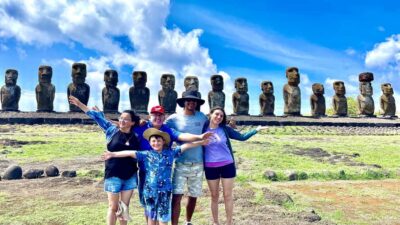
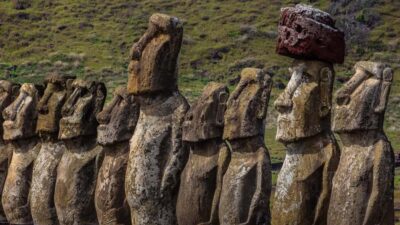
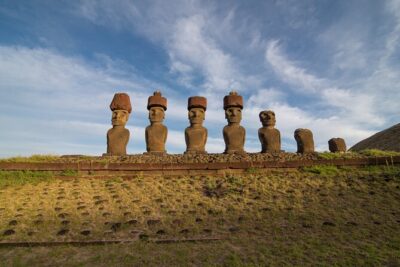
Ahu Tongariki is the visual high point for many people. Fifteen giant moai face inland from a long ceremonial platform near the ocean, creating one of Easter Island’s most memorable views.
The setting does much of the work. The figures are lined up against the open coast, with the platform, volcanic ground, and sea making the scale easy to grasp. You are not looking at one statue in isolation. You are seeing a whole ceremonial arrangement.
This is also the place where a guide’s explanation adds real value. The statues have not simply sat untouched for centuries. Natural disasters and human conflict affected the sites, and restoration work helped return many moai to positions where you can see them today. That context changes the way you look at the row.
Give yourself time to take in the whole platform before focusing on individual faces and details. The broad view is the one you will remember. Since the tour continues to several other sites, you should have enough time for photographs and an explanation, though the schedule may not allow an extended stay.
A completely different kind of day out:
- 2-Day Private Tour Easter Island Highlights Complete Discovery
★ 5.0 · 110 reviews - Private Full-Day Easter Island Highlights North and West
★ 5.0 · 84 reviews - From Hanga Roa: Journey from Orongo to Ana Te Pahu
★ 4.3 · 75 reviews - Journey of the Ancestors: Tongariki, Rano Raraku & Anakena Beach
★ 4.5 · 70 reviews
Rano Raraku, the volcanic quarry of the moai
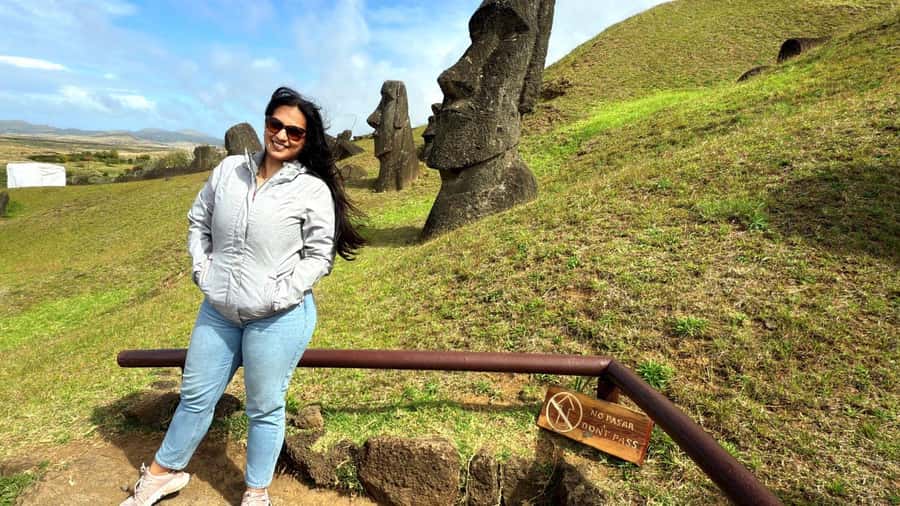
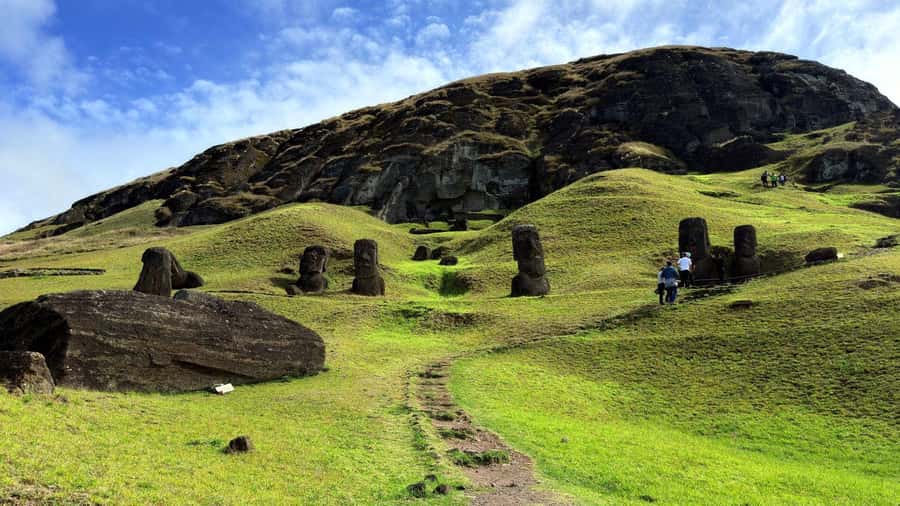
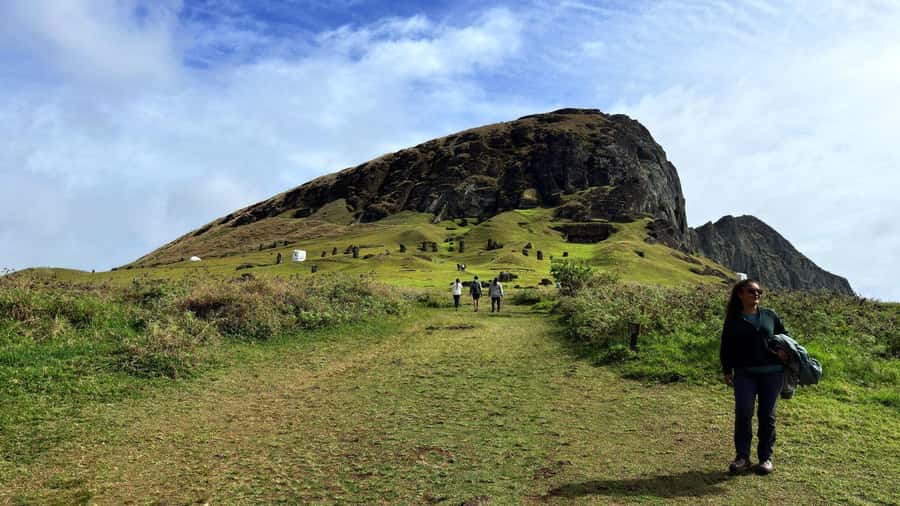
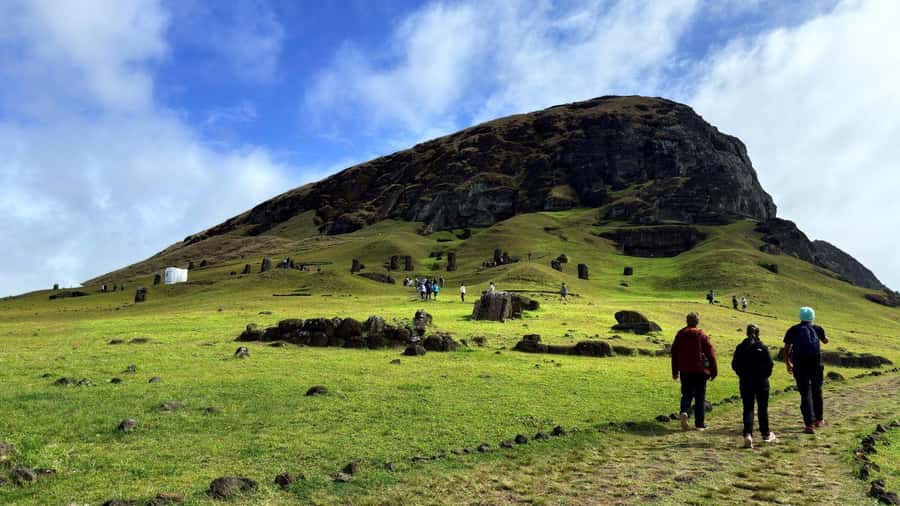
Rano Raraku is the day’s most important stop for understanding how the moai were made. More than 390 figures can be found around the volcanic crater and in the Cantera de los Moais, the quarry associated with their carving.
This stop changes the usual question from who placed the moai to how the statues began. Here, the volcanic setting and unfinished figures show that the monuments were part of a long process. Some remain connected to the slopes or appear at different stages of completion, giving you a clearer sense of the work involved.
I find this kind of site more revealing than a quick monument visit because it brings the production of the statues into view. The figures were not delivered as finished objects from some distant workshop. The quarry is part of the story.
A picnic lunch is served at Rano Raraku, surrounded by nature. That is practical for two reasons. First, it avoids losing time by returning to Hanga Roa. Second, it lets the day pause in a quiet outdoor setting after the morning’s major archaeological sites.
Bring water and sun protection even though only a towel is specifically listed as something to bring. The provided information does not specify the lunch menu, so you should think of it as a convenient picnic rather than a meal you can customize.
The route beyond the main quarry
After Rano Raraku, the tour continues to more moai structures, including Ahu Nau Nau. This keeps the focus on the island’s ceremonial sites while giving you a different setting from Tongariki and Akahanga.
Ahu Nau Nau is associated with the Anakena area, so it fits naturally into the day’s movement toward the beach. The stop is useful because it pairs a major archaeological site with the coastal setting where you later have time to relax.
The tour description also identifies Rano Kau as the island’s largest volcanic crater and lists it among the highlights. The detailed route information centers on Rano Raraku, however, so I would confirm at booking whether Rano Kau is included in the actual departure schedule if that crater is a priority for you. This is a small but important planning point, especially if you are choosing the tour for its volcanic sites.
Anakena Beach and a change of pace
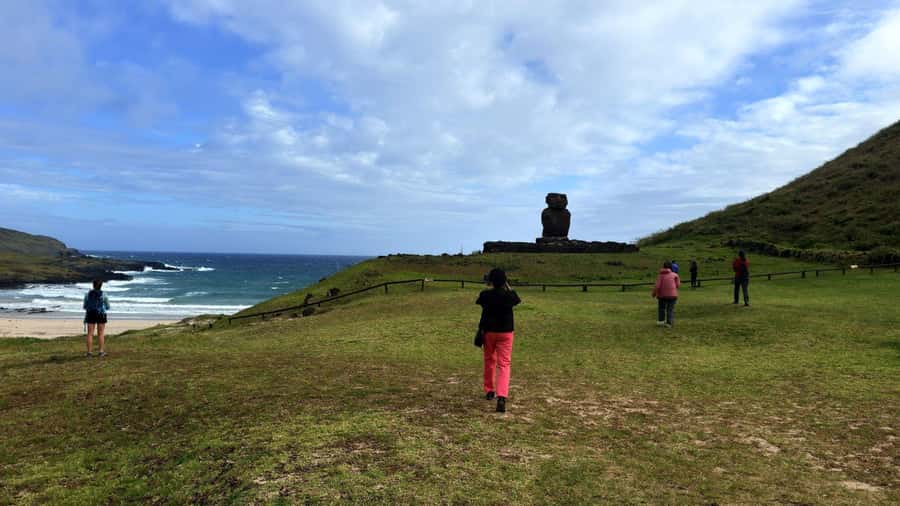
Anakena is the day’s reward for anyone who wants more than ruins and rock. It is a white-sand beach said to be the landing point of Hotu Matu’a, the Polynesian chief regarded as the island’s first settler.
The historical association gives the beach more meaning than a simple swimming stop. You can look across the sand and surrounding natural scenery while thinking about the island’s early settlement story. Then you can put the history aside for a while and enjoy the water.
Bring a towel, as requested, if you hope to swim. The tour identifies Anakena as one of the island’s best swimming beaches, but conditions can depend on the weather. The activity only operates in good weather, and the schedule may change if conditions are poor.
Anakena also provides needed balance. Eight hours of moai sites can become mentally heavy, especially if you want time to absorb what you are seeing. A beach break helps keep the day enjoyable rather than turning it into a museum visit without walls.
Caves, Poike, and Ovahe
The tour includes visits to two small caves within a gorge, followed by stops near the beaches of Poike and Ovahe. These locations add a more natural side of Easter Island to a route otherwise shaped by archaeology.
Do not expect a long cave expedition. The information describes two small caves, so I would think of them as short points of interest within the gorge. Their value is in the change of scenery and the chance to see how volcanic formations shape the island.
Poike and Ovahe offer additional places to pause and relax. The schedule does not specify how long you stay at each beach, so keep your expectations flexible. The route covers many sites, and the main beach time appears to be at Anakena.
These later stops are especially useful if you want photographs beyond the standard moai views. At the same time, anyone seeking a slow beach day should know that this is still a sightseeing tour. You will see several places, but you are not booking a full-day beach outing.
What the guide adds to the experience
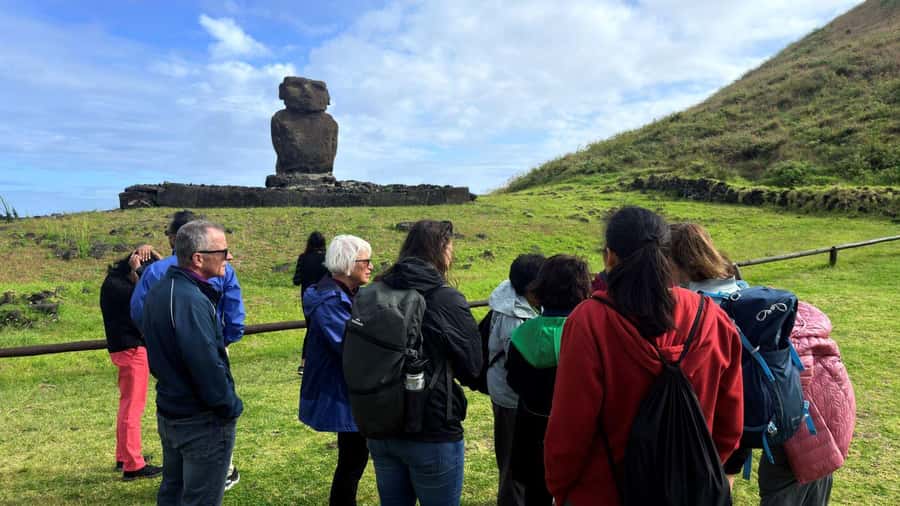
The guide may be the difference between a good day and a memorable one. Easter Island’s monuments are visually powerful, but without context it can be hard to understand why a platform matters, how the statues were made, or what happened to them over time.
Bruno has been praised for loving both the island and his work, with a strong supply of interesting information. Vincent has been noted for his patient explanations, especially on civil wars, tsunamis, earthquakes, and the restoration work connected with the statues.
That praise points to a useful expectation: ask questions. If you want to understand the ceremonial villages, the quarry, or the damage and rebuilding visible at the sites, an engaged guide can give you much more than a standard photo stop.
The tour operates in English and Spanish. If you have a preference, confirm the language available for your departure when you book.
Price, park fee, and what you receive
The listed price is $171 per person. It includes hotel pickup and drop-off at Easter Island hotels, a guided tour, and a picnic lunch at Rano Raraku. Those inclusions make the price easier to justify for someone who wants a simple, organized day.
The major extra cost is the Rapa Nui National Park entrance fee of $100. Add that to the tour price when comparing options. The real outlay is about $271 per person before any other personal spending, so this is not a budget excursion.
I would call it good value for a first visit if you do not want to arrange transport or research a route across the island. The guide, the range of stops, and the included lunch reduce the effort involved. If you are staying longer and already plan to rent transport or arrange private guiding, you may prefer more control over your pace.
Free cancellation is available up to 24 hours before the tour for a full refund, and you can reserve now and pay later. The service is not suitable for wheelchair users, and it is not available to cruise ship passengers. Pickup is specifically for people staying in Easter Island hotels.
Who should book this tour?
I would choose this tour if you have one full day for sightseeing and want to cover the major moai sites without arranging your own transport. It suits first-time visitors, history fans, photographers who want several distinct settings, and anyone who appreciates a guide who explains what happened at each place.
It also works well if you want a beach break but do not want to give up the archaeological sites. Anakena, Ovahe, and Poike add fresh air and open coast to a day centered on stone monuments.
I would hesitate if you want complete freedom to linger. The tour has many stops in eight hours, so the schedule must keep moving. I would also think twice if the extra $100 park fee pushes the cost beyond your comfort zone, or if you are arriving by cruise ship.
Should you book the Anakena tour?
Book it if you want the most efficient introduction to Easter Island’s moai, volcanic settings, and beaches in one day. The combination of Ahu Tongariki’s 15 statues, Rano Raraku’s quarry, Ahu Nau Nau, Anakena Beach, and the smaller coastal stops gives you a strong sense of the island’s range.
The tour earns its price through convenience and guiding, not through luxury. Remember to add the national park fee, bring a towel, and confirm the route if Rano Kau is essential to your plans. For a hotel-based visitor with limited time, I think this is one of the better ways to see the island’s major sights without turning the day into a logistical puzzle.
FAQ
How long does the Easter Island tour last?
The tour lasts eight hours, including the visits to the archaeological sites, volcanic areas, beaches, and the return to your hotel in Hanga Roa.
Where does the tour begin and end?
Hotel pickup and drop-off are included for Easter Island hotels. The tour begins from your hotel and ends with a return to Hanga Roa.
Is lunch included?
Yes. A picnic lunch at Rano Raraku is included in the tour.
Is the Rapa Nui National Park entrance fee included?
No. The national park entrance fee costs $100 and must be paid separately.
Which languages are available?
The guided tour is available in English and Spanish.
Can cruise ship passengers join the tour?
No. This service is only for passengers staying in Easter Island hotels and is not suitable for cruise ship guests.
What should I bring?
Bring a towel, particularly if you plan to swim or relax at Anakena Beach.
Can I cancel the tour for a refund?
Yes. You can cancel up to 24 hours in advance for a full refund. You can also reserve now and pay later.
Just added in Hanga Roa
- Volcanic Refuges: Excursion to Underground Civilization★ 4.7 · 8 reviews
- Volcanic Wonders and the Kingdom of the Birdman: Half Day★ 5.0 · 6 reviews
- Half Day Private Tour: Caves and Volcanic Refuges★ 4.0 · 14 reviews
- Easter Island Ancestral Dinner and Show with Transport★ 4.5 · 2 reviews
- 2 Day Small Group Tour in Moai Monuments and Historic Pathways★ 5.0 · 22 reviews
- Visit Rapa Nui in 4 days with 3 Tours and Accommodation included★ 4.0 · 2 reviews
- Tour to the Motus: Boat trip and snorkeling in Rapa Nui★ 5.0 · 8 reviews
- The birdman journey in Easter Island★ 5.0 · 1 review
Easter Island Tours, compared.
Two days of Full Day Tour of Rapa Nui + Sunrise in Tongariki
Read our review →
2-Day Private Tour Easter Island Highlights Complete Discovery
Read our review →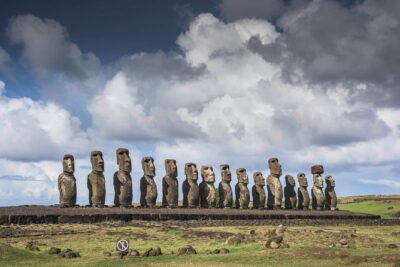
Private Tour: Full Day Easter Island Highlights
Read our review →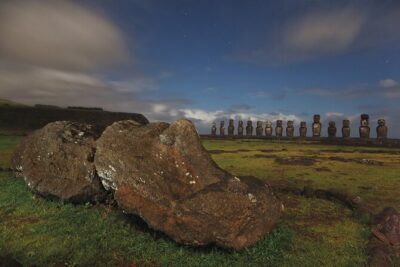
Browse the lists this tour appears in