
REVIEW · EASTER ISLAND TOURS
Easter Island: Birdman Cult Private Tour
Easter Island saves its strangest story for the crater. This six-hour private tour links the island’s major ceremonial sites with the Birdman story, giving you a clear route through some of Rapa Nui’s most important places. I especially like the private vehicle, which keeps the day comfortable, and the chance to visit Orongo with time to understand its unusual stone houses and ocean setting. The main drawback is cost: at $200 per person, you still need to add the $80 National Park entrance fee.
I also like the range of sights. You get moai, red scoria topknots, advanced stonework, a giant volcanic crater, and the restored eyes of Ko Te Riku at Tahai in one outing. The tour is not a good fit for anyone with limited mobility, and cruise ship passengers cannot join it.
In This Review
- Key points to know before booking
- Why this six-hour route works well
- Rano Kau: beginning with a volcano and a wide view
- Orongo and the Birdman ceremony
- Ahu Vinapu and the island’s careful masonry
- Puna Pau and the red scoria topknots
- Ahu Akivi and seven sea-facing moai
- Tahai and the return to Hanga Roa
- What the private format adds
- Is $200 per person a fair price?
- Who should book this Birdman tour?
- FAQ
- Where does the tour begin and end?
- How long does the tour last?
- Is the National Park entrance ticket included?
- Is the tour private?
- What languages are available?
- Can cruise ship passengers join?
Key points to know before booking
- Orongo gives the tour its purpose: You spend about 90 minutes at the ceremonial village and learn how the Birdman competition shaped late Rapa Nui society.
- Rano Kau is more than a scenic stop: The crater is a major visual highlight, with a guided visit lasting about 30 minutes.
- Ahu Vinapu shows expert stonework: Its carefully fitted masonry helps you look beyond the familiar moai.
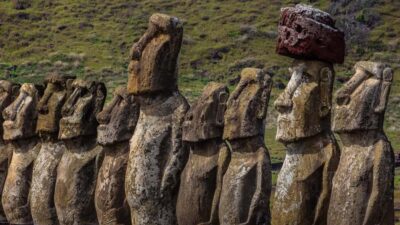
- Puna Pau explains the red topknots: The pukao were made from red scoria, an igneous rock with a strong red color.
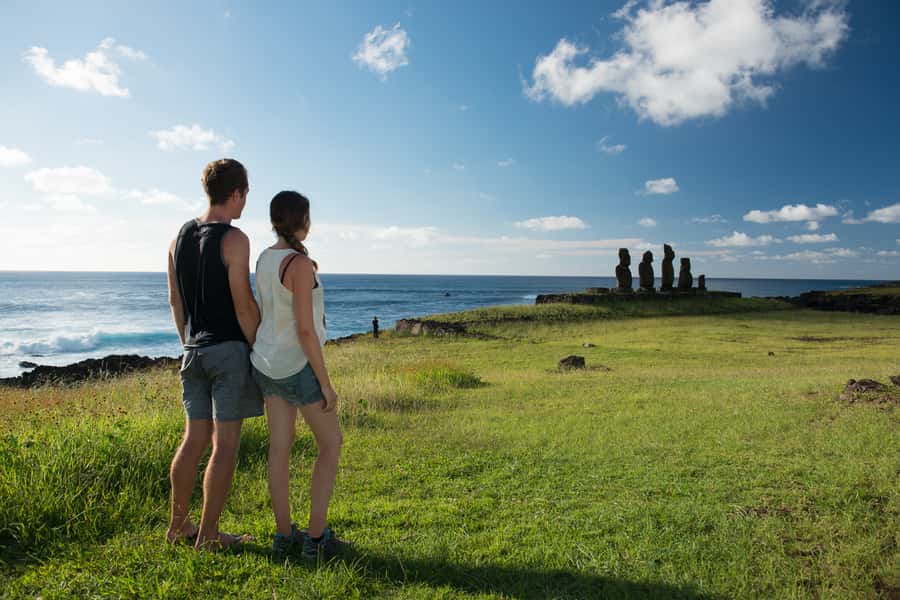
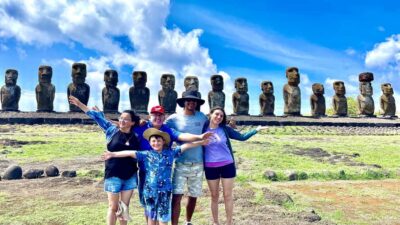
- Ahu Akivi breaks the usual moai pattern: Its seven figures face the sea, unlike most moai, which look inland.
- The tour is genuinely private: Hotel pickup, transport, and guiding are included for an English or Spanish-speaking private group.
Why this six-hour route works well
Many first-time visitors to Rapa Nui want the famous statues, but the island makes more sense when you connect the statues with the places and beliefs around them. This route does that well. It begins with the crater and Birdman ceremony, then moves through stonework, statue-making, and the moai sites at Ahu Akivi and Tahai.
You are picked up at any accommodation in Hanga Roa in a private vehicle. That matters on a six-hour tour. You do not have to organize several taxis, work around a large group, or waste time finding each site. A private guide can also explain the sequence rather than leaving you with a string of disconnected photo stops.
The guide is central to the experience. Sol received especially strong praise for her command of Rapa Nui history, her English, and her connection to the island as a Rapa Nui person who speaks the language. You cannot assume Sol will be assigned to every departure, but it is worth asking when you book. A guide who can explain local traditions from a Rapa Nui viewpoint adds something that a guidebook cannot.
The listed price is $200 per person. That is a serious amount, particularly because the National Park ticket costs another $80. Food and drinks are also extra. Still, the price can make sense if you value private transport, hotel pickup, a professional guide, and a full half-day that covers several separated sites.
More things to do on Easter Island:
- From Hanga Roa: Rapa Nui Culture Sightseeing Tour
★ 4.6 · 307 reviews - From Hanga Roa: Easter Island Highlights 2-Day Tour
★ 4.3 · 205 reviews - Full Day Tour in Rapa Nui
★ 4.5 · 122 reviews
Rano Kau: beginning with a volcano and a wide view
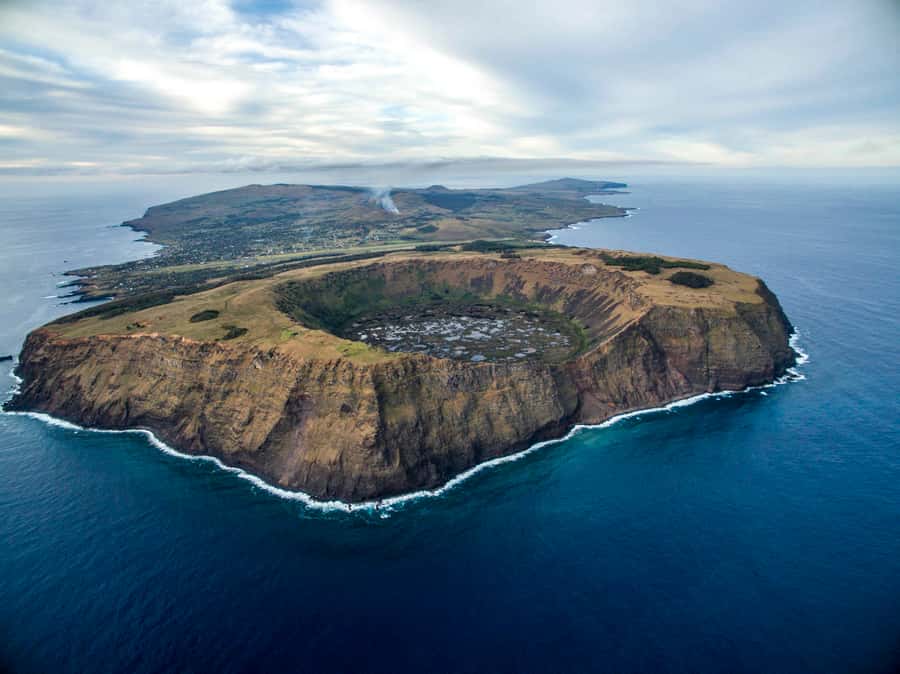
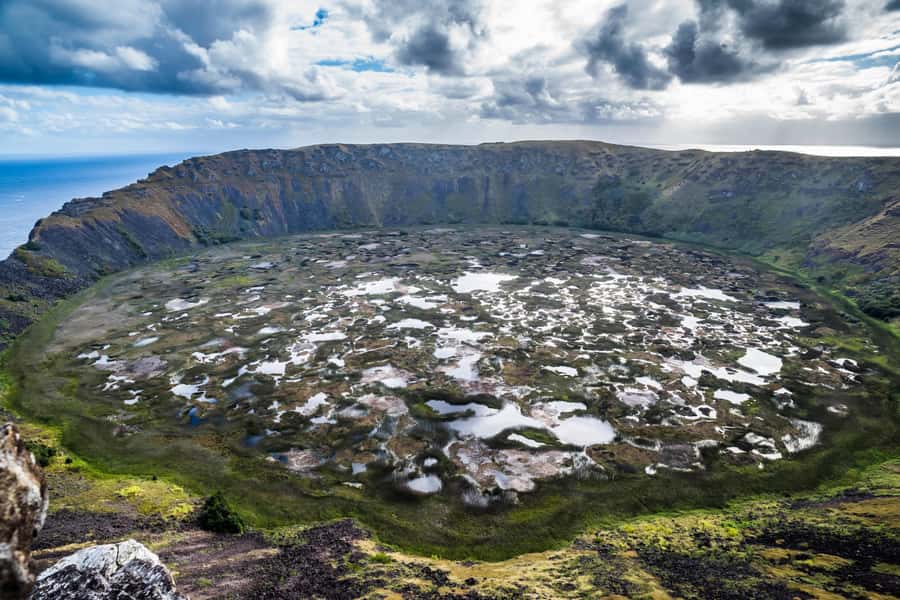
The first guided stop is Rano Kau, with about 30 minutes set aside for the visit. The crater is one of the most dramatic sights on the island, and it gives the tour a strong opening.
You will see a huge volcanic bowl filled with water and plant growth. The crater’s scale helps explain why Rapa Nui’s volcanic centers matter so much to the island story. It is not simply a quick scenic overlook. Your guide can connect the crater to the ceremonial village nearby and prepare you for the Birdman story.
Thirty minutes is enough for an introduction, photographs, and a clear explanation. It is not enough for an extended walk around the crater rim, so you should see this as a focused stop rather than a hiking trip. Wear shoes with a good grip, since the tour includes uneven surfaces.
The light can change quickly across the crater, so give yourself a moment to look before reaching for your camera. Rano Kau is one of those places where the size of the view does much of the talking.
Orongo and the Birdman ceremony
Orongo is the heart of this particular tour. You spend about 90 minutes at the ceremonial village, the longest stop of the day. That extra time is useful because the site needs explanation.
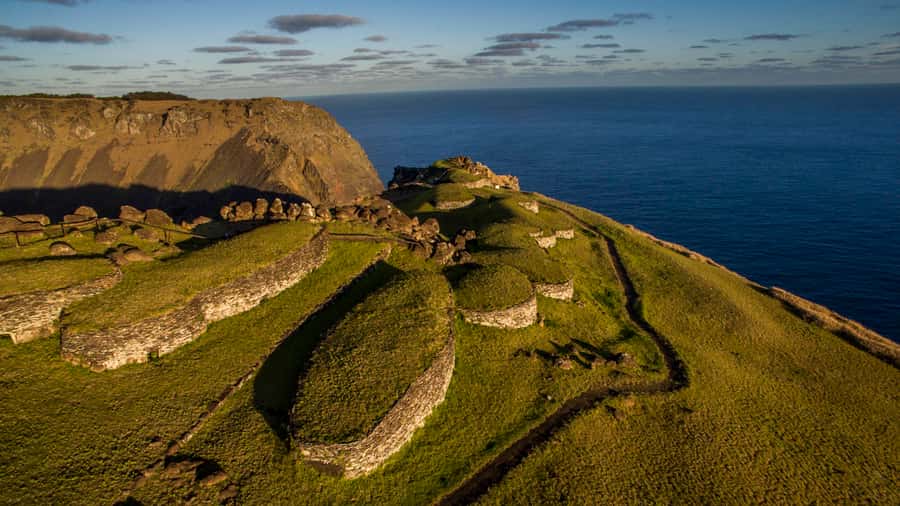
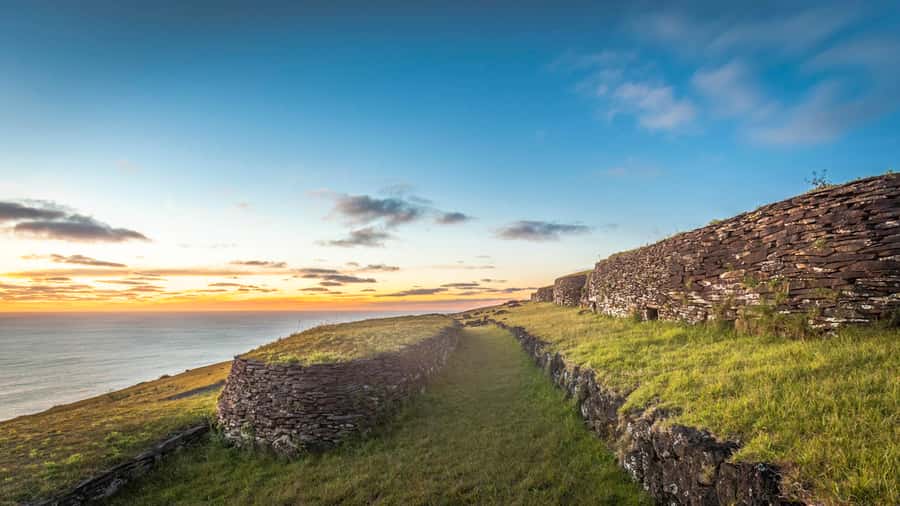
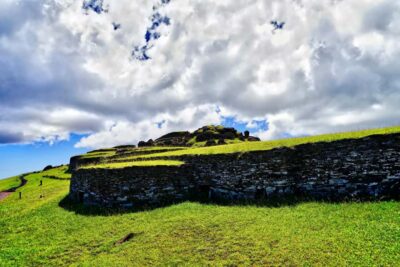
The village contains about 50 elliptical houses built with shale walls. Each has a small square entrance that looks toward the ocean. The houses are low and compact, and their design feels very different from ordinary modern buildings. Your guide will explain how Orongo was linked to the Birdman competition, one of the most important ceremonies of late Rapa Nui culture.
The competition involved a dangerous contest connected with the small offshore islets. The supplied tour information does not give every detail of the contest, so your guide will be the best person to ask about the legend, its rules, and the different ways scholars understand it. That is one reason the private format is useful. You can stop and ask questions instead of trying to keep up with a fixed group.
Amy, who joined the experience, paired the Birdman visit with a sunrise outing, then had breakfast before beginning the main tour. That combination is not presented as part of every departure, so you should confirm it before planning your morning. Still, it suggests a good way to think about the site: Orongo deserves more than a rushed glance between other attractions.
The ocean view from the village gives the ceremony a clear setting. You are not just hearing a legend in a museum room. You are standing among the stone houses, looking toward the water and the islets tied to the story. The site can feel exposed, so sunscreen, water, and a hat are sensible choices.
Ahu Vinapu and the island’s careful masonry
After Orongo, the route continues to Ahu Vinapu for about 40 minutes. This is the stop for people who want to look closely at construction, not only at statues.
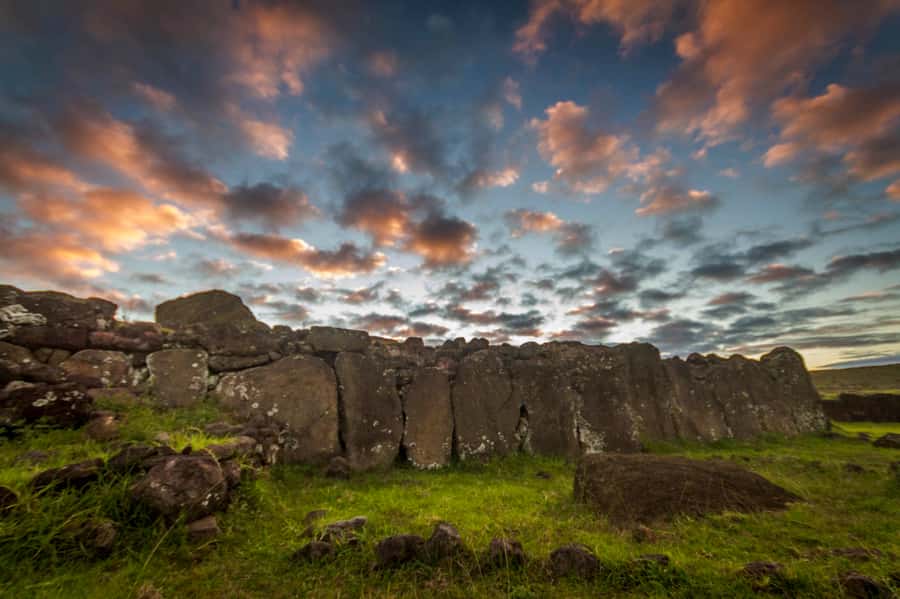
Vinapu is known for highly fitted stonework. The large blocks were placed with impressive precision, and the site is often discussed as one of the most advanced examples of masonry on Rapa Nui. Your guide can point out how the stones meet and why the construction attracts so much attention.
This stop helps correct a common mistake in Easter Island sightseeing. It is easy to focus only on the moai and miss the skill required to build the platforms, ceremonial structures, and stone walls around them. At Vinapu, the engineering takes center stage.
The 40-minute visit should give you enough time to examine the masonry and hear the main explanation. If you prefer long, unhurried photography sessions, the schedule may feel brisk. For a half-day tour covering six major sites, though, the timing is sensible.
A few more options to weigh up in Hanga Roa
- 2-Day Private Tour Easter Island Highlights Complete Discovery
★ 5.0 · 110 reviews - Private Full-Day Easter Island Highlights North and West
★ 5.0 · 84 reviews - Full Day Private Tour: Factory of the Moai the stone giants
★ 4.5 · 63 reviews - Private Easter Island Full-Day Tour
★ 5.0 · 61 reviews
Puna Pau and the red scoria topknots
Puna Pau is a 30-minute stop with a very specific purpose: it shows you where the red topknots, or pukao, came from.
The red pieces were carved from red scoria, an igneous rock known for its strong red color. These topknots sat on top of some moai and changed the appearance of the figures. Once you understand that the statues and their headpieces came from different materials and places, the moai become more interesting. The headgear was not a minor decoration. It added height, color, and visual weight.
Puna Pau is especially useful after Vinapu because the two stops show different kinds of stone expertise. Vinapu focuses on fitted masonry. Puna Pau focuses on the material and production of the red headpieces.
The short visit works best if you listen carefully to the guide rather than expecting a long walk. Bring water, since there is no food or drink included in the tour. You will also want comfortable shoes for the uneven ground.
Ahu Akivi and seven sea-facing moai
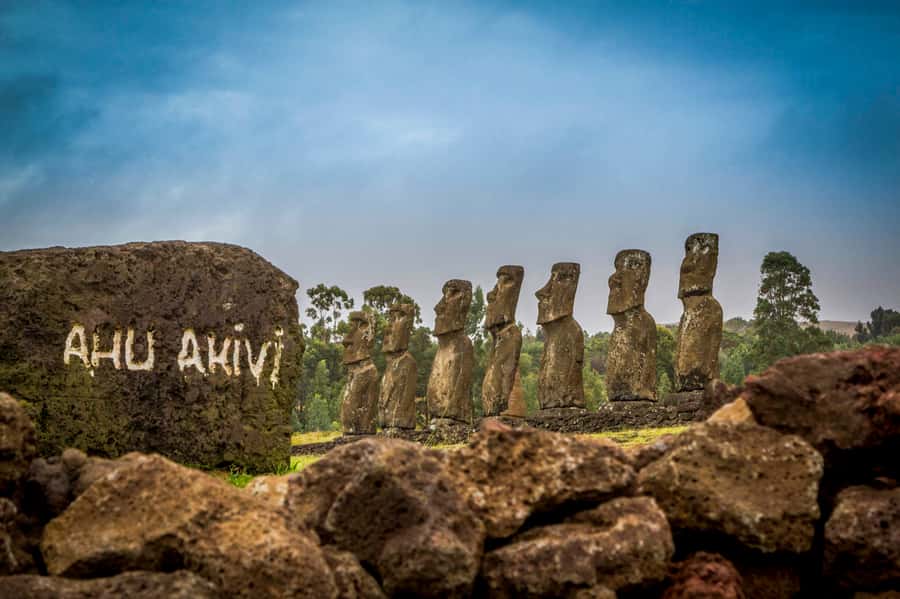
At Ahu Akivi, you see seven moai standing in a line, each about 16 feet, or five meters, tall. The visit lasts around 30 minutes.
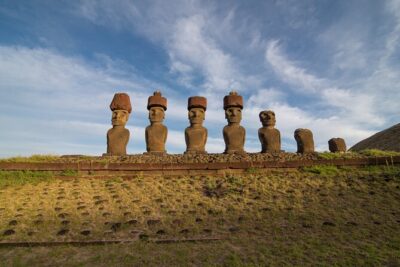
These statues are famous because they face toward the sea. Most other moai face inland, so the direction of Ahu Akivi has puzzled archaeologists for years. That difference gives your guide a natural opening to explain the theories and unanswered questions connected with the site.
The figures look solemn and carefully arranged. Their scale is easy to underestimate in photographs, so take time to notice how tall they are beside the platform. This is also a good place to ask about the role of the moai and the reasons different ahu were built in different settings.
Thirty minutes is enough for the central explanation and photographs. It is not a long archaeological walk, and the tour does not promise one. If you want extensive time at every moai site, you may prefer to add another National Park day to your plans.
Tahai and the return to Hanga Roa
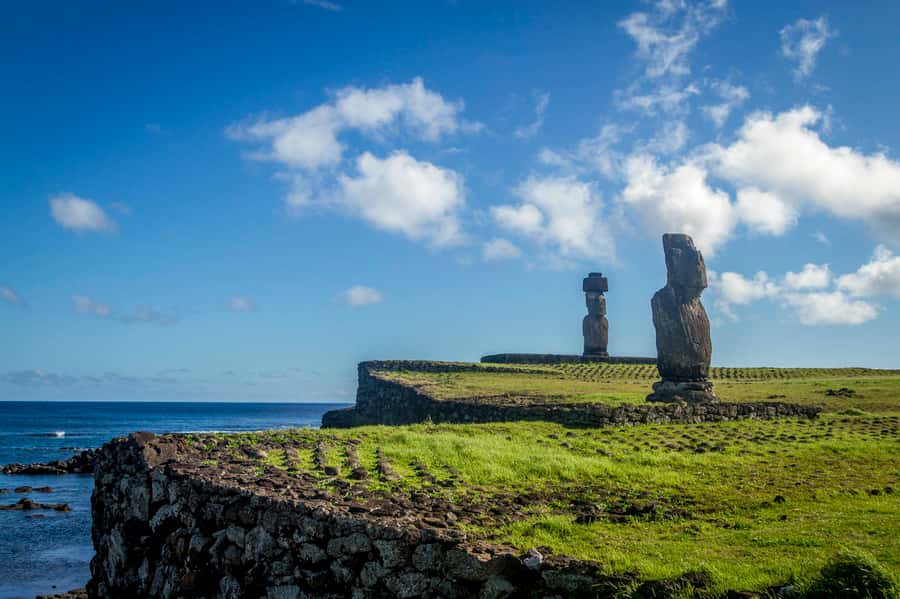
Before returning to your hotel, the tour visits Tahai. The site includes three principal groups from north to south: Ko Te Riku, Tahai, and Vai Ure.
Ko Te Riku is the group to watch for because its eyes have been restored. The eyes change the expression of the moai and help you picture how these figures may have appeared when their full features were in place. Tahai and Vai Ure add comparison, allowing you to look at several arrangements in one area.
Tahai is a fitting final stop because it brings together the main themes of the day: ceremonial platforms, moai, restoration, and the way interpretation changes what you see. It is also near Hanga Roa, making the return practical after a busy route.
The stated itinerary does not assign a separate visit length to Tahai. Your guide will determine how much time remains after the other stops. If Tahai is especially important to you, say so at the beginning of the tour. In a private group, it is easier to communicate your priorities, though the total six-hour duration still limits how long you can linger.
What the private format adds
Private does not mean every stop becomes leisurely. The tour still covers a lot in six hours. What you gain is control and direct access to the guide.
You can ask for a clearer explanation at Orongo, pause over the masonry at Vinapu, or request a second look at the moai at Ahu Akivi. You also avoid the social and timing demands of a large coach. For a remote island with major sites spread across different areas, private transport is a real convenience.
The tour is offered in English and Spanish. If language is important to you, choose carefully at booking and confirm your preferred language. The strongest available praise focused on the guide’s ability to explain both the history and the local people, not just point out monuments.
The route is not designed for wheelchairs or people with walking disabilities. Uneven surfaces are part of the experience, and comfortable shoes are essential. Bring sunscreen and water. Food and drinks are not included, so plan around the six-hour outing.
This tour is not available to cruise ship passengers. Pickup is from accommodation in Hanga Roa, so it suits people staying on the island rather than those working from a ship timetable.
Is $200 per person a fair price?
The tour costs $200 per person before the $80 National Park entrance ticket. That means your basic tour and entry cost reaches $280 per person, with food and drinks still separate.
That is not a budget excursion. The value depends on what you want from your time on Rapa Nui. If you want private transport, hotel pickup and drop-off, an English or Spanish-speaking guide, and one organized route through six major sites, the price is easier to justify. You are paying for structure and interpretation as much as for transport.
The price is less attractive if you already have transport, prefer to explore independently, or want to spend an entire day at only one or two locations. The tour moves at a useful pace, but it cannot provide unlimited time at every site.
The private format makes this a better choice for couples, families, and small groups who want to ask questions freely. It also suits anyone who wants the Birdman story explained properly rather than treated as a quick stop.
Who should book this Birdman tour?
I would choose this tour if I had one half-day and wanted the main ideas of Rapa Nui in a logical order. Orongo gives the day a strong focus, while Vinapu, Puna Pau, Ahu Akivi, and Tahai broaden the picture.
You should book it if you value a local perspective, want hotel pickup in Hanga Roa, and are comfortable walking over uneven ground. Ask about guide availability if you are hoping for Sol, whose Rapa Nui identity, language skills, and English were highly praised.
I would look for another option if you use a wheelchair, have significant mobility limits, arrive by cruise ship, or want a slow day with long walks and extended photography. I would also compare the total cost carefully after adding the National Park ticket.
For the right visitor, this is a well-planned introduction to Easter Island’s ceremonial sites. It gives you the moai, but it also gives you the stone, volcano, ceremony, and questions that make Rapa Nui much more than a collection of famous statues.
FAQ
Where does the tour begin and end?
Pickup and drop-off are provided at accommodation in Hanga Roa. The tour returns to Hanga Roa after the final stop at Tahai.
How long does the tour last?
The tour lasts six hours. The listed guided visits include 30 minutes at Rano Kau, 1.5 hours at Orongo, 40 minutes at Ahu Vinapu, 30 minutes at Puna Pau, and 30 minutes at Ahu Akivi.
Is the National Park entrance ticket included?
No. The National Park ticket costs $80 USD and must be brought with you on the day of the tour.
Is the tour private?
Yes. Transportation is by private vehicle, and the experience is offered as a private group tour with a professional guide.
What languages are available?
The live guide service is available in English and Spanish.
Can cruise ship passengers join?
No. The tour is not available for cruise ship passengers.
Just added in Hanga Roa
- Volcanic Refuges: Excursion to Underground Civilization★ 4.7 · 8 reviews
- Volcanic Wonders and the Kingdom of the Birdman: Half Day★ 5.0 · 6 reviews
- Half Day Private Tour: Caves and Volcanic Refuges★ 4.0 · 14 reviews
- Easter Island Ancestral Dinner and Show with Transport★ 4.5 · 2 reviews
- Visit Rapa Nui in 4 days with 3 Tours and Accommodation included★ 4.0 · 2 reviews
- 2 Day Small Group Tour in Moai Monuments and Historic Pathways★ 5.0 · 22 reviews
- Tour to the Motus: Boat trip and snorkeling in Rapa Nui★ 5.0 · 8 reviews
- The birdman journey in Easter Island★ 5.0 · 1 review
Easter Island Tours, compared.
Two days of Full Day Tour of Rapa Nui + Sunrise in Tongariki
Read our review →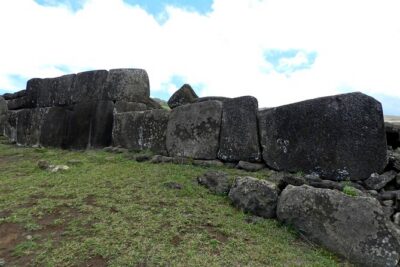
2-Day Private Tour Easter Island Highlights Complete Discovery
Read our review →
Private Tour: Full Day Easter Island Highlights
Read our review →
Browse the lists this tour appears in