
REVIEW · EASTER ISLAND TOURS
Private Easter Island Full-Day Tour
A small island demands a smart first day. This private Easter Island tour packs major Rapa Nui sites into about seven hours, with hotel pickup, a flexible pace, and a guide who can connect the moai to the island’s politics, family ties, and survival. I especially like the small private group, limited to six people, and the chance to see both famous monuments and less obvious places such as Ana Te Pahu cave. The main drawback is cost: at $230 per person, plus the separate national park fee, it is a serious splurge.
I also like that the route reaches several sides of the island in one day, including Orongo, Puna Pau, Vinapu, and Ahu Akivi. Guides such as Patricio, Yoyo, Tuhii, and Mark have earned strong praise for making the past understandable rather than simply pointing at stones. You should also know that lunch is not included, and access to park sites can be affected by local closures or strikes.
In This Review
- Key points to know before booking
- Why this private Easter Island day works well
- Ana Kai Tangata and the difficult side of Rapa Nui history
- Rano Kau gives the day its biggest view
- Orongo and the race for island leadership
- Vinapu shows the island’s careful stonework
- Puna Pau explains the red crowns
- Ahu Akivi and the seven statues facing the sea
- Ana Te Pahu reveals how lava tubes supported life
- What the private format is really worth
- Guides who make the monuments easier to understand
- Practical limits, park fees, and booking advice
- Who should book this Easter Island tour?
- Should you book it?
- FAQ
- What does the private Easter Island tour cost?
- How long does the tour last?
- What time does the tour start?
- Is hotel transportation included?
- Can I book this tour from a cruise ship?
- Is lunch included?
- How many people can join the private tour?
- Can I cancel for a refund?
Key points to know before booking
- Seven major stops in one day: Ana Kai Tangata, Rano Kau, Orongo, Vinapu, Puna Pau, Ahu Akivi, and Ana Te Pahu form a broad introduction to Rapa Nui.
- A private group of two to six people: You avoid a large bus and can ask questions or adjust the pace within the tour schedule.
- The national park fee costs extra: Plan on buying the $80 pass at the airport or online before visiting the main sites.
- Hotel pickup begins at 9:30 am: Transport to and from your Hanga Roa hotel is included, but port pickup is not.
- Guiding is the strongest part: Patricio, Yoyo, Tuhii, and Mark are praised for clear explanations, local insight, patience, and thoughtful photography.
- Some walking and uneven ground are involved: A moderate level of physical fitness is recommended, and the tour is not designed for cruise excursions.
Why this private Easter Island day works well
Easter Island looks compact on a map, but its important sites are spread across a broad volcanic island. A rental car can get you from place to place, yet it cannot explain why a ceremonial village mattered, how red scoria became a moai ornament, or why seven statues face inland rather than toward the ocean.
That is where this tour earns its keep. You have a driver-guide for the full route, live commentary during the day, and no strangers competing for the best question or photo stop. With only your own group, you can ask about ancient customs, modern island life, statue transport, or the meaning of a site without waiting for a microphone to reach you.
The schedule begins with pickup at your hotel around 9:30 am and lasts roughly 6.5 to 7 hours. That gives you a full day without turning the experience into an exhausting dawn-to-dark outing. Since lunch is not supplied, your guide will provide chances to buy food along the way. I would still plan a practical breakfast and carry water so your attention stays on the sites, not your stomach.
More things to do on Easter Island:
- From Hanga Roa: Rapa Nui Culture Sightseeing Tour
★ 4.6 · 307 reviews - From Hanga Roa: Easter Island Highlights 2-Day Tour
★ 4.3 · 205 reviews - Full Day Tour in Rapa Nui
★ 4.5 · 122 reviews
Ana Kai Tangata and the difficult side of Rapa Nui history
Ana Kai Tangata is a cave with paintings on its ceiling, making it a striking early stop. The name itself points to the period of warfare and cannibalism on the island, so this is not just a scenic cave visit. It introduces a harder part of Rapa Nui’s past, one that is easy to miss if you only see statues and wide sea views.
A good guide matters here. The site can feel brief if you only look upward and take a picture, but the story gives it weight. You can ask how the cave was used and how later conflict fits into the island’s broader changes. The information provided does not promise a long stay at every stop, so expect the guide to balance explanation with a full route.
This is one of the tour’s advantages over a simple sightseeing drive. You are not only collecting famous names. You are being given a frame for understanding how power, belief, and survival shaped life on a remote island.
Rano Kau gives the day its biggest view
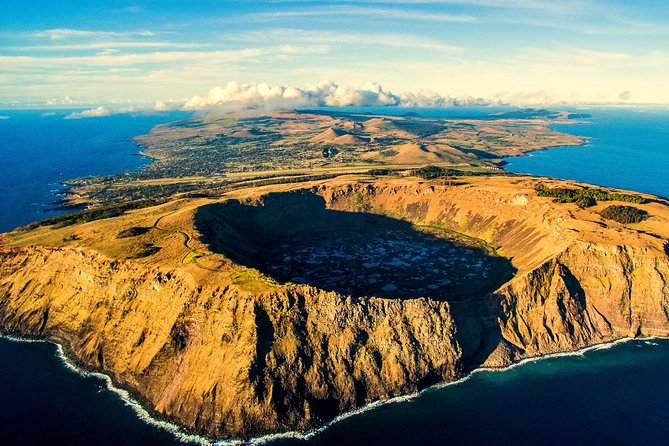
Rano Kau is a volcanic crater with a panoramic view across Easter Island. The crater drops about 200 meters, or 656 feet, to a lake below, creating one of the most dramatic settings on the route.
The attraction here is the scale. After the close, human-sized experience of a cave, the crater opens the scene wide. You can see how volcanic forces shaped the island and why this high point became so important to the ceremonial area nearby.
The ground and viewpoints require some walking, and the recommended fitness level is moderate. You do not need to treat this as a strenuous hike, but comfortable shoes are sensible. If you have limited mobility, ask about the walking demands before you book rather than assuming hotel transport means a low-effort day.
Orongo and the race for island leadership
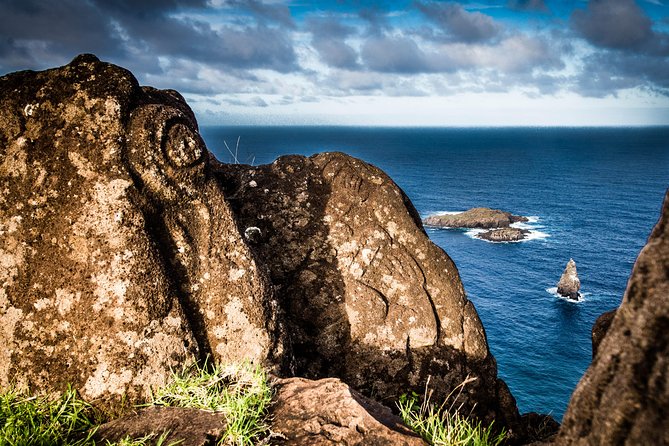
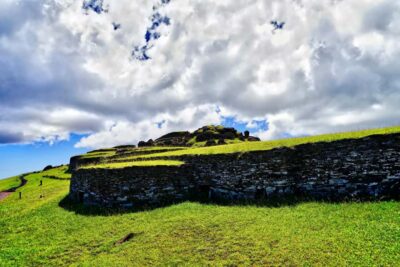
Near Rano Kau, the ceremonial village of Orongo explains one of the most memorable political contests in Rapa Nui history. During the 18th and 19th centuries, different tribes competed each year to choose a leader through the birdman ceremony.
The contest involved climbing down steep cliffs, swimming to offshore islets, and returning with the required prize. It sounds like a sporting event, but it was also a struggle for political authority. Standing at Orongo, you can connect the setting to the risks of the competition instead of seeing it as another collection of old stone structures.
This is a place where a clear guide can make a major difference. Yoyo is praised for making the day fun while explaining the island’s past, and Tuhii is praised for answering questions carefully and sharing information about Rapa Nui culture and people. Those qualities matter most at Orongo, where the basic facts are easy to memorize but the political meaning takes explanation.
The views from this part of the island are a major reward, though weather and site access can affect what you see. A past park strike prevented one group from completing the full route, even though its guide worked to reach parts of the closed area. That is a reminder that a private booking cannot guarantee access when park operations change.
A few more options to weigh up in Hanga Roa
- 2-Day Private Tour Easter Island Highlights Complete Discovery
★ 5.0 · 110 reviews - Private Full-Day Easter Island Highlights North and West
★ 5.0 · 84 reviews - Full Day Private Tour: Factory of the Moai the stone giants
★ 4.5 · 63 reviews - Private Full-Day Easter Island Highlights South and East
★ 5.0 · 60 reviews
Vinapu shows the island’s careful stonework
Vinapu offers a different lesson. Here you see stone construction that has often been compared with work associated with the Inca world of South America. The comparison is visually interesting, but you should treat it as a prompt for questions rather than a simple claim that the two cultures were connected.
The value of Vinapu is in the workmanship. Your guide can draw attention to how large stones were arranged and why the site matters within Rapa Nui archaeology. This is the kind of stop that benefits from a local explanation because the remains may not immediately tell you what to notice.
It also helps break up the day. You move from a crater and ceremonial village to a site focused on construction, engineering, and visual detail. That variety keeps the itinerary from becoming a repetitive sequence of moai platforms.
Puna Pau explains the red crowns
Puna Pau is the quarry where red scoria was taken for the adornments fitted onto the heads of many statues. Scoria is a light, cindery volcanic stone, and its red color makes these pieces easy to distinguish from the darker stone used for many moai.
The quarry helps correct a common misunderstanding. The statues were not all made from one kind of rock, and their head ornaments were not an afterthought with no practical or symbolic value. Seeing the source of the red stone helps you understand the amount of planning involved in creating and moving these monuments.
This is also where your guide’s storytelling can turn a quarry into a useful stop. One highly praised guide, Patricio, is credited with explaining how the statues were made and transported, along with the social links behind them. Mark is also praised for covering the expected highlights while adding extra details and taking photos from different angles.
Ahu Akivi and the seven statues facing the sea
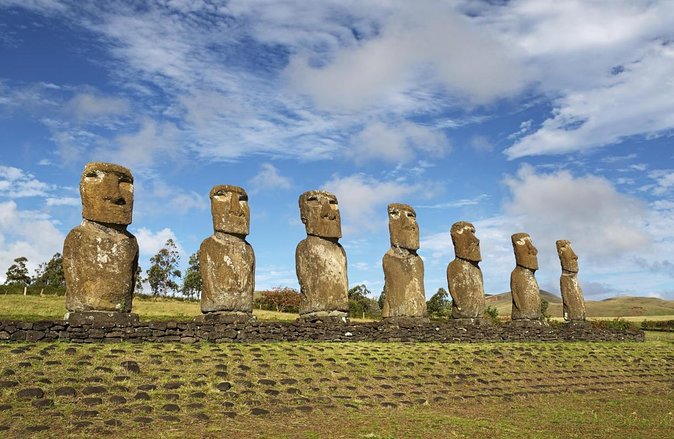
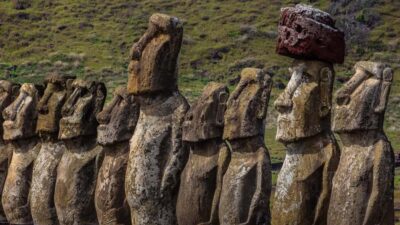
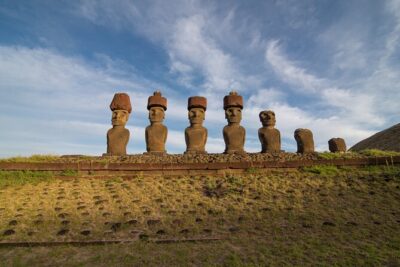
Ahu Akivi is a restored platform with seven moai. Tradition identifies them as representations of the first seven explorers who arrived on the island, and they are unusual because they are the only group of statues looking out toward the sea.
That detail makes Ahu Akivi especially memorable. Much of the popular image of Easter Island focuses on moai facing inland, so these seven figures offer a useful contrast. The site also gives your guide a chance to discuss origin stories and the way Rapa Nui communities understood their place in the wider Pacific.
Restoration means you are seeing a rebuilt site, not an untouched arrangement exactly as it appeared centuries ago. That is not a reason to skip it. It is simply worth understanding that modern preservation shapes what you see. The private format gives you room to ask what is known, what is traditional belief, and what has been reconstructed.
Ana Te Pahu reveals how lava tubes supported life
Ana Te Pahu is one of the island’s more extensive lava tube networks. Like many volcanic islands, Easter Island has underground passages created by old lava flows, but this site is more than a geological curiosity.
The ancient Rapa Nui used cave networks for several purposes. They lived in them, collected water, planted vegetables, and hid from aggressive outsiders during the 18th and 19th centuries. That list changes how you see the cave. It becomes a place connected to daily life and danger, not just a dark passage beneath the ground.
Expect this stop to involve uneven surfaces and some physical effort. The tour recommends moderate fitness, and that advice is especially relevant here. If you dislike confined spaces or have difficulty walking on rough ground, ask the operator for more details before paying.
Ana Te Pahu also adds balance to the monument-focused stops. After hearing about chiefs, ceremonies, statues, and quarrying, you see how ordinary people adapted to the island’s volcanic environment.
What the private format is really worth
The $230 price per person is high, particularly because the $80 national park pass is separate and food is not included. For two people, the total rises quickly. You are paying for a private vehicle, driver-guide, hotel transport, and the ability to shape the conversation around your interests, not for an inexpensive hop-on sightseeing ride.
I think the price makes the most sense when you have limited time on Easter Island. One full day can give you the basic map of the island, show you which sites deserve a return visit, and help you decide how to spend the rest of your stay. One person who used the tour this way found it useful for choosing the best spots to revisit by rental car the next day.
The value is also stronger for families, couples, or a small group of friends who would rather share a guide than join a large departure. Six people can book together, which may spread the cost more comfortably. A minimum of two people is required, so solo visitors cannot book this particular experience alone.
If you have several days and enjoy researching archaeological sites independently, you may find the price harder to justify. In that case, the guide’s interpretation is the main reason to choose it, not simply transportation between points.
Guides who make the monuments easier to understand
The strongest praise is directed at the guides. Patricio is described as bringing the island’s archaeology, social connections, and past to life. Yoyo is praised for his energy and clear command of the island’s story. Tuhii is described as patient, informative, and open to questions, while Mark is praised for local customs, photography, and a route that felt specially suited to the group.
You cannot select a particular guide based on the information provided, so treat those names as examples of the company’s reported guiding strength rather than a guarantee. Still, the pattern is useful: the experience works best when you want context and conversation, not just a ride.
A guide with local family ties can also add material that is difficult to find in a short guidebook, such as stories about ancient and present island life, traditional houses shaped like an upside-down canoe, and places connected with early chiefs and the first native child. These details appeared in one especially enthusiastic account of the day.
Practical limits, park fees, and booking advice
Hotel pickup and drop-off are included for Hanga Roa accommodations. Port pickup is not included, and the tour is explicitly not compatible with cruise excursions. Do not book it as a shore excursion unless the operator confirms a different arrangement.
The national park pass is also extra. The recommended pass costs $80, is valid for 10 days after purchase, and can be bought at the airport on arrival or online at rapanuinationalpark.org. Build that cost into your budget before comparing this tour with other options.
Confirmation is provided when you book. The experience is often reserved well ahead, with an average advance booking period of 66 days, so leaving it until the last minute may reduce your choices. Free cancellation is available if you cancel at least 24 hours before the local start time. Cancellations or changes inside that window are not refunded or accepted.
Service animals are allowed. The activity recommends moderate physical fitness, but no detailed accessibility information is supplied for each cave, crater viewpoint, or archaeological site. Ask specific questions if uneven ground, stairs, or confined spaces could affect your day.
Who should book this Easter Island tour?
I would choose this tour for a first visit when you want a strong overview without surrendering the day to a large group. It suits couples, families, and small parties who value direct questions, hotel transport, and a guide who can explain why the places matter.
It is also a good fit if you want to rent a car later. The route gives you a working knowledge of the island, and the guide can help you identify stops worth revisiting at a slower pace.
I would hesitate if your budget is tight, if you are arriving by cruise ship, or if you prefer to explore every site alone. The separate park fee, food costs, and high per-person price make this a premium outing. Park closures or strikes can also limit the itinerary, and a private booking cannot remove that risk.
Should you book it?
Book it if interpretation and efficiency matter as much as the monuments themselves. The route covers a lot, the private setting keeps the day personal, and the guides are repeatedly praised for clear explanations, local insight, kindness, and care.
Skip it if you only need transport or plan to spend many days exploring independently. For most first-time visitors staying in Hanga Roa, though, this is a practical way to understand Rapa Nui before deciding where to return.
FAQ
What does the private Easter Island tour cost?
The tour costs $230 per person. The national park fee is not included and is listed separately at $80.
How long does the tour last?
The experience lasts approximately seven hours, with the detailed schedule describing about 6.5 hours.
What time does the tour start?
The scheduled start time is 9:30 am.
Is hotel transportation included?
Yes. Hotel pickup and drop-off are included for the tour. Port pickup is not included.
Can I book this tour from a cruise ship?
No. The tour is not compatible with cruise excursions and does not include port pickup.
Is lunch included?
No. Lunch, food, and drinks are not included, but there are opportunities to buy food along the route.
How many people can join the private tour?
A minimum of two people is required, and the maximum is six people per booking. Only your group participates.
Can I cancel for a refund?
Yes. You can cancel at least 24 hours before the local start time for a full refund. Cancellations or changes made less than 24 hours before the start are not accepted or refunded.
Just added in Hanga Roa
- Volcanic Refuges: Excursion to Underground Civilization★ 4.7 · 8 reviews
- Volcanic Wonders and the Kingdom of the Birdman: Half Day★ 5.0 · 6 reviews
- Easter Island Ancestral Dinner and Show with Transport★ 4.5 · 2 reviews
- Half Day Private Tour: Caves and Volcanic Refuges★ 4.0 · 14 reviews
- 2 Day Small Group Tour in Moai Monuments and Historic Pathways★ 5.0 · 22 reviews
- Visit Rapa Nui in 4 days with 3 Tours and Accommodation included★ 4.0 · 2 reviews
- Tour to the Motus: Boat trip and snorkeling in Rapa Nui★ 5.0 · 8 reviews
- The birdman journey in Easter Island★ 5.0 · 1 review
Easter Island Tours, compared.
Two days of Full Day Tour of Rapa Nui + Sunrise in Tongariki
Read our review →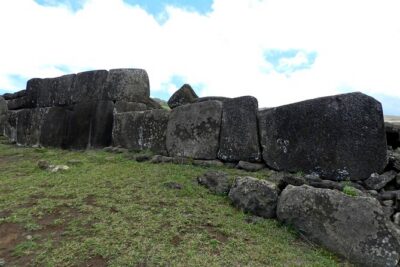
2-Day Private Tour Easter Island Highlights Complete Discovery
Read our review →
Private Tour: Full Day Easter Island Highlights
Read our review →
Browse the lists this tour appears in