
REVIEW · EASTER ISLAND TOURS
Birdman Ceremonial Route: Orongo, Ranu Kau Half-Day Tour
Easter Island’s strangest story begins with a race for an egg. This roughly three-hour tour connects the moai at Tahai, the petroglyphs at Ana Kai Tangata, the crater lake of Rano Kau, and the ceremonial village of Orongo. I especially like the mix of archaeology and dramatic scenery, plus the fact that hotel pickup and drop-off are included from Hanga Roa.
I also like the price: about $64 per person before the national park fee, which is fair for a guided half-day outing in a small group. The main concern is language balance. Some guides explain more in Spanish than English, so English-only visitors may miss parts of the story. The route details also vary, so confirm the exact stops before booking.
In This Review
- Key points to know before booking
- Why this half-day route matters
- Tahai and the moai: starting with Rapa Nui ancestors
- Ana Kai Tangata and the cave drawings by the sea
- Rano Kau’s crater lake and three lookout points
- Orongo village and the Tangata Manu ceremony
- Ahu Vinapu and an important route detail
- Guide quality and the bilingual experience
- Price, park fees, and what to bring
- Who should book this tour?
- FAQ
- How long does the Birdman Ceremonial Route tour last?
- What time does the tour start?
- Is hotel pickup included?
- Is the Rapa Nui National Park entrance fee included?
- Where can I buy the national park pass?
- Can cruise passengers join the tour?
- Is the tour private?
- Should you book it?
Key points to know before booking
- The Birdman story is the heart of the tour: Orongo explains the Tangata Manu contest, in which a competitor’s representative sought the first manutara egg from nearby Motu Nui.
- Rano Kau supplies the big view: You get several viewpoints over the crater lake, ocean, and offshore islets.
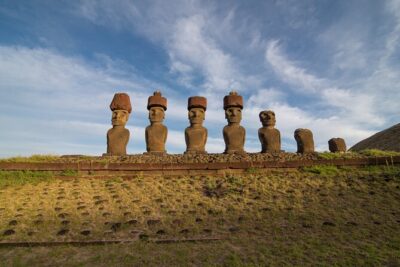
- Tahai adds the classic moai setting: Three ahu, or ceremonial platforms, show how ancestor figures were placed within a sacred community site.
- Ana Kai Tangata offers a rare cave visit: The coastal cave contains drawings and petroglyphs linked to the birdman tradition.
- The national park ticket costs extra: Budget another $100 per person and keep the ticket on your phone or in print.
- This is a shared tour: The group can reach 16 people, and port pickup is not available for cruise passengers.
Why this half-day route matters
Easter Island can feel like a giant outdoor museum, but the sites are spread across the island and their meaning is not always obvious at first glance. A guide helps connect the stones, crater, sea, and birdman ceremony into one story about power and belief in Rapa Nui society.
The tour also gives you a useful first look at several major sites without taking a full day. You travel in an air-conditioned van or bus, with hotel pickup around 9:00 am, then spend time at places that are difficult to understand from photographs alone.
The experience receives an overall rating of 4.3 from 16 published ratings. The strongest praise goes to the guides, scenery, and value. Cristina and Josefina are singled out for clear explanations, warmth, and personal attention. At the same time, bilingual guiding can create uneven English explanations, particularly when English speakers are a small part of the group.
That trade-off is worth understanding before you reserve. You are paying for shared transport and a local guide, not a private, perfectly paced lesson.
More things to do on Easter Island:
- From Hanga Roa: Rapa Nui Culture Sightseeing Tour
★ 4.6 · 307 reviews - From Hanga Roa: Easter Island Highlights 2-Day Tour
★ 4.3 · 205 reviews - Full Day Tour in Rapa Nui
★ 4.5 · 122 reviews
Tahai and the moai: starting with Rapa Nui ancestors
The tour begins with a drive from Hanga Roa toward the Tahai ceremonial complex. From the vehicle, you take a short walk to the site, then receive an introduction to the moai and the ahu platforms that support them.
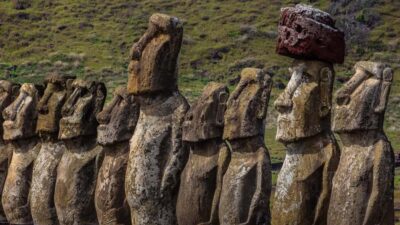
Tahai is a strong opening stop because it puts the island’s famous stone figures into a cultural setting. These are not simply giant statues scattered across a field. The moai represented ancestral spirits, and their position on the ceremonial platforms connected the living community with its forebears.
You can look closely at differences in size, posture, and facial treatment. Some figures have red pukao, the top knots carved from a different volcanic stone. Others show the darker obsidian set into the eyes or facial area, a detail that helps you see how much care went into finishing these enormous forms.
After the guide’s explanation, you have some time to look around independently. That pause matters. The site is easier to appreciate when you can stop listening, walk at your own pace, and compare the solitary moai with groups of figures on the platforms.
The stop is also a reminder that the famous moai were carved from hardened volcanic ash. Their scale is impressive, but the greater question is how Rapa Nui communities organized the work, movement, placement, and ceremony around them.
One limitation is time. A half-day route cannot give Tahai the same attention as a dedicated archaeology tour. If moai construction is your main interest, you will want a separate visit to Rano Raraku, which is not part of the route described here.
Ana Kai Tangata and the cave drawings by the sea
From Tahai, the van continues to Ana Kai Tangata, a coastal cave near the cliffs. This is one of the tour’s more unusual stops because it changes the mood completely. You leave the open ceremonial site and enter a darker space where the sound of waves becomes part of the experience.
The cave is noted for drawings in red and white, including images of birds in flight and figures associated with the manutara, or birdman. The supplied tour information describes it as the island’s only cave containing petroglyphs, which makes it especially important for anyone interested in Rapa Nui symbols and ritual life.
Your guide points out the images and explains the legends connected with the birdman contest. The central story concerns the search for the first egg laid by a native bird on Motu Nui. A competitor’s representative had to reach the offshore islet, find the egg, and return with it, while the result brought status and authority to the winning chief.
The story is dramatic, but the site gives it physical weight. The cliffs, waves, cave, and offshore islands are not just scenery behind a legend. They help you understand the danger and ceremony attached to the competition.
Conditions inside and around a coastal cave can vary, and the tour information advises comfortable clothing and shoes. Bring water and a snack, since food and drinks are not included. The stop may be less comfortable for anyone who dislikes uneven ground or confined spaces, although the activity is described as suitable for most people.
This part of the tour may also be affected by weather. The route can be modified when conditions are poor, so keep a little flexibility in your plans.
Rano Kau’s crater lake and three lookout points
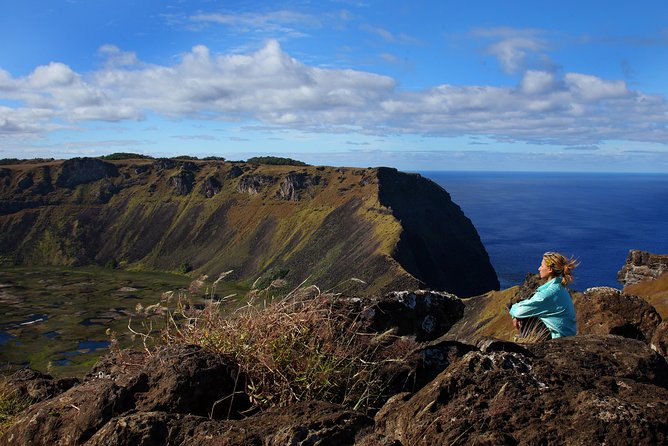
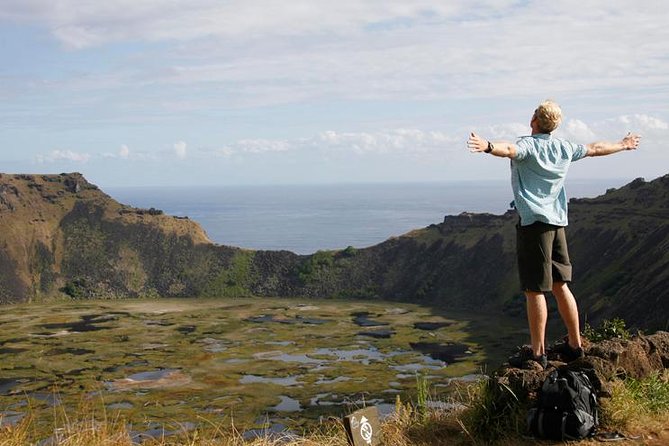
The next major stop is Rano Kau, an extinct volcano with a large crater lake. The views here are among the strongest reasons to choose this tour. You are shown three different vantage points, allowing you to see the crater, ocean, and Motu Nui from changing angles.
The crater lake has a striking appearance, with water held inside the broad volcanic rim. From above, you can see how the volcano forms a natural bowl and how closely the site is tied to the sea. This is not only a scenic stop. Rano Kau was part of the ceremonial world connected with Orongo and the birdman competition.
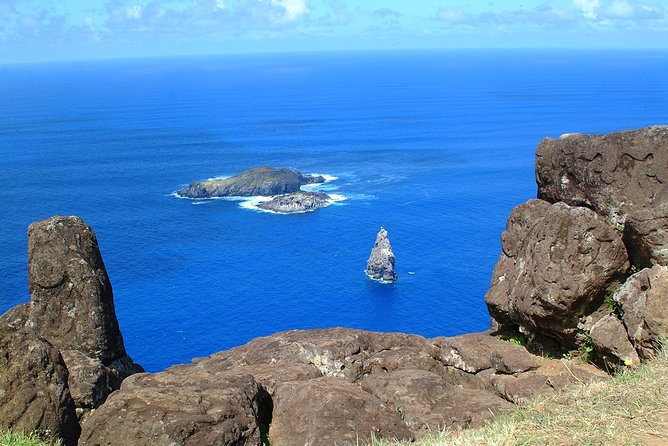
Take your time with photographs, but do not rush away from the viewpoints. The scale is difficult to grasp from a single image. Looking from more than one position helps you understand the relationship between the crater, the coast, and the small offshore islands used in the birdman ritual.
The visit lasts about 30 minutes according to the provided schedule. That is enough for the main views and an explanation, but not enough for a long walk around the crater. If you want an extended hike, this tour is not designed for that.
The van ride between stops also affects the pace. You are covering several sites in a short period, so this works best if you want a clear introduction rather than a slow, solitary day outdoors.
A completely different kind of day out:
- 2-Day Private Tour Easter Island Highlights Complete Discovery
★ 5.0 · 110 reviews - Private Full-Day Easter Island Highlights North and West
★ 5.0 · 84 reviews - From Hanga Roa: Journey from Orongo to Ana Te Pahu
★ 4.3 · 75 reviews - Journey of the Ancestors: Tongariki, Rano Raraku & Anakena Beach
★ 4.5 · 70 reviews
Orongo village and the Tangata Manu ceremony
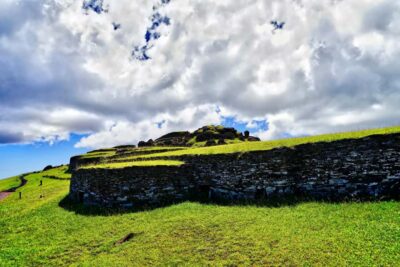
Orongo is the emotional center of the route. The village sits near Rano Kau and contains 54 oval houses built from natural materials. Their low, rounded forms look very different from modern buildings in Hanga Roa and make the settlement feel closely tied to the rock and ground around it.
The site was the ceremonial center of the Birdman tradition, known as Tangata Manu. In this contest, representatives competed to retrieve the first egg of the manutara bird from Motu Nui. The winner’s sponsor gained political and spiritual authority for the coming period.
Your guide explains how the ceremony reflected Rapa Nui ideas about leadership, nature, ancestors, and the sea. This is where the earlier cave drawings and crater views come together. The birds, cliffs, offshore islets, and village were part of one ritual system, not separate attractions.
You have time to walk independently through the village and take in the wide ocean views. The oval houses are the main physical feature, but the setting is just as important. From Orongo, you can look toward the islands associated with the egg hunt and picture why this location carried such power.
The visit is listed at about 45 minutes, with admission not included in the tour price. That duration gives you a useful introduction, but it can pass quickly if you want to read every sign and spend time at each viewpoint.
Orongo rewards preparation. Read a little about Tangata Manu before you arrive, or ask your guide to explain the sequence of the contest. The story is much easier to follow when you know who competed, what the egg represented, and why the result affected leadership.
Ahu Vinapu and an important route detail
The tour information also identifies Ahu Vinapu as a stop, with about 30 minutes to view its finely fitted stonework and possible pre-Incan connections. Vinapu is valuable for visitors interested in construction techniques because the stone blocks appear carefully shaped and placed.
However, the route descriptions do not match perfectly. One version describes Tahai and Ana Kai Tangata before Rano Kau and Orongo, while another lists Orongo, Rano Kau, and Ahu Vinapu. The stated highlights include all of these places, but the exact order and inclusion may depend on the operating day.
I would contact Gray Line Chile before paying if seeing a particular site is essential. Ask directly whether your departure includes Tahai, Ana Kai Tangata, and Ahu Vinapu, and whether weather or park conditions could change the plan.
This is not a small technical detail. On a short tour, losing one stop can make a noticeable difference, especially if you are choosing the experience because of the cave drawings or Vinapu’s stonework.
Guide quality and the bilingual experience
The guide can make or break a history-heavy tour, and the strongest part of this experience is clearly the human explanation. Josefina is praised for expertise and a personal touch. Cristina is praised for handling two languages well, with a helpful and informed approach.
The experience is not consistently private, however. The maximum group size is 16, and one published account describes the group as somewhat large. In a shared van, you may need to wait while people board, walk between points, or finish taking photographs.
Bilingual tours require patience. When English speakers are a minority, the guide may give longer explanations in Spanish and shorter versions in English. Some English-speaking participants found it hard to get the full picture because of translation issues.
That does not mean the tour is a poor choice for English speakers. It means you should ask questions when something is unclear and stay near the guide during explanations. A private tour would likely provide more control, but it would also cost more.
The value is strongest for visitors who want a local guide and basic cultural context without paying private-tour prices. The published price is about $64 per person, and one account describes a private departure at a similar price, though you should not count on that arrangement. Hotel-organized tours may cost considerably more, so compare what is actually included before paying a premium.
Price, park fees, and what to bring
The tour price covers a professional guide, air-conditioned transport, and hotel pickup and drop-off in Hanga Roa. It does not cover food, drinks, or the Rapa Nui National Park entrance fee.
The park ticket costs $100 per person. That makes the true cost about $164 per person before any snacks or other expenses. The ticket is valid for 10 consecutive days from its purchase date, so it can also cover other park visits during that period.
You can purchase the pass at the CONAF office inside Mataveri Airport or online through the official website. Download it to your phone or carry a printed copy because internet service can be limited near archaeological sites.
Wear comfortable clothes and shoes, and carry water and a snack. The tour includes walking at several sites, though the supplied information does not give a total walking distance.
Pickup is available from Hanga Roa hotels, but not from the pier. Cruise passengers cannot use this excursion, so do not book it if you are arriving by ship and need a port transfer.
Free cancellation is available if you cancel at least 24 hours before the start time. Changes or cancellations made inside that window are not accepted for a refund.
Who should book this tour?
I would choose this tour if you have one morning or afternoon available and want the major birdman sites explained in one compact outing. It suits first-time visitors who want a guide, hotel transport, and a mix of moai, caves, volcanic scenery, and ceremonial history.
It is also a good match if you value local stories more than long walks. The route gives you several short visits rather than one extended archaeological exploration.
I would hesitate if your English comprehension is limited and you need every explanation delivered fully in English. I would also hesitate if you want a private pace, a long hike, or a guaranteed visit to one specific site without first confirming the route.
FAQ
How long does the Birdman Ceremonial Route tour last?
The tour lasts approximately three hours, although the highlights describe it as about three and a half hours.
What time does the tour start?
The stated start time is 9:00 am.
Is hotel pickup included?
Yes. Round-trip pickup and drop-off are included for hotels in Hanga Roa.
Is the Rapa Nui National Park entrance fee included?
No. The park fee costs $100 per person and must be paid separately.
Where can I buy the national park pass?
You can buy it at the CONAF office inside Mataveri Airport or online through the official website. The pass is valid for 10 consecutive days from its purchase date.
Can cruise passengers join the tour?
No. Port pickup is not available, and the tour is not suitable for passengers arriving by cruise.
Is the tour private?
No. It is a shared tour with a maximum group size of 16 people.
Should you book it?
Book this tour if you want an affordable, guided introduction to the southwestern side of Easter Island, especially Orongo and the birdman tradition. The best features are the powerful crater views, the unusual coastal cave, the moai at Tahai, and guides such as Cristina and Josefina who can bring the old stories to life.
Before confirming, ask Gray Line Chile to verify the exact stops and the balance of Spanish and English guiding. If those details work for you, this is a practical way to understand why Rapa Nui is more than a field of famous statues.
Just added in Hanga Roa
- Volcanic Refuges: Excursion to Underground Civilization★ 4.7 · 8 reviews
- Volcanic Wonders and the Kingdom of the Birdman: Half Day★ 5.0 · 6 reviews
- Half Day Private Tour: Caves and Volcanic Refuges★ 4.0 · 14 reviews
- Easter Island Ancestral Dinner and Show with Transport★ 4.5 · 2 reviews
- 2 Day Small Group Tour in Moai Monuments and Historic Pathways★ 5.0 · 22 reviews
- Visit Rapa Nui in 4 days with 3 Tours and Accommodation included★ 4.0 · 2 reviews
- Tour to the Motus: Boat trip and snorkeling in Rapa Nui★ 5.0 · 8 reviews
- The birdman journey in Easter Island★ 5.0 · 1 review
Easter Island Tours, compared.
Two days of Full Day Tour of Rapa Nui + Sunrise in Tongariki
Read our review →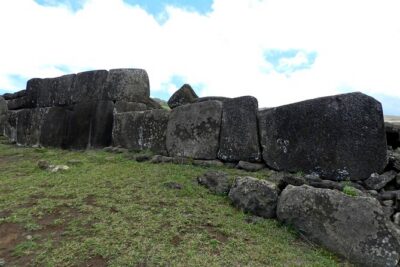
2-Day Private Tour Easter Island Highlights Complete Discovery
Read our review →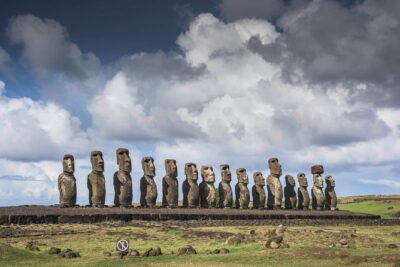
Private Tour: Full Day Easter Island Highlights
Read our review →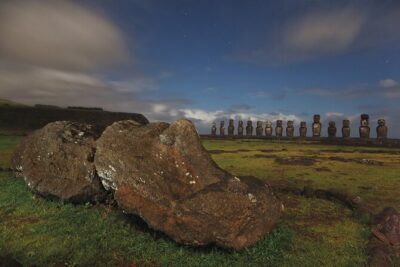
Browse the lists this tour appears in