
REVIEW · EASTER ISLAND TOURS
Anakena and Rapa Nui Culture in Easter Island
The moai tell the story. This six-hour circuit links Easter Island’s most important sites, from the toppled statues of the southern coast to the quarry at Rano Raraku and the broad ceremonial platform at Ahu Tongariki. I like the small maximum of 10 people, which gives you a better chance to hear your guide, and I like the mix of archaeology, ocean views, and beach time. The main drawback is that the Rapa Nui National Park entrance fee and lunch are extra.
You start at 9:30 a.m. with pickup from selected central hotels, then travel around the island with an English-speaking guide. Guides Luis and Cesar received especially warm praise for their clear explanations and helpful attitude. Still, confirm your pickup point, final price, and what is included before paying, since some bookings have involved different meeting instructions and much higher charges than the local operator’s direct rate.
In This Review
- Key points to know before booking
- Why this six-hour Rapa Nui circuit works
- Starting in Hanga Roa at 9:30 a.m.
- Ahu Vaihu and Ahu Akahanga: an atmospheric first look
- Rano Raraku and the unfinished moai
- Ahu Tongariki and the island’s most famous row of moai
- Ahu Te Pito Kura and Moai Paro
- Anakena Beach: a gentler final hour
- What the $100.84 price really covers
- Pickup, park entry, and other practical points
- Who will get the most from this tour?
- Should you book Anakena and Rapa Nui Culture?
- FAQ
- How long does the Anakena and Rapa Nui Culture tour last?
- What sites does the tour visit?
- Is hotel pickup included?
- Is lunch included?
- Is the Rapa Nui National Park entrance fee included?
- How many people can join the tour?
- Can cruise passengers book this experience?
Key points to know before booking
- 397 unfinished moai at Rano Raraku: This volcanic crater is the tour’s most memorable stop, with statues left in different stages of carving.
- Fifteen moai at Ahu Tongariki: The island’s largest restored ceremonial platform gives you the classic Easter Island view.
- Lunch and park entry cost extra: Plan for both when judging the true price of the experience.
- A maximum of 10 people: The small group suits anyone who wants more room for questions and less crowding in the vehicle.
- Anakena adds a beach finish: You can eat lunch beside the coast and see moai near one of Rapa Nui’s best-known beaches.
- Not for cruise passengers: Cruise excursions and transfers follow a separate operation and rate.
Why this six-hour Rapa Nui circuit works
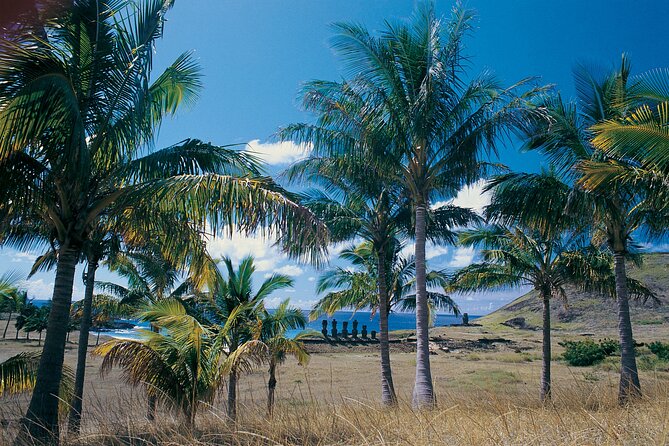
Easter Island, known locally as Rapa Nui, is not a place where one monument tells the whole story. The famous moai are only part of the picture. You also need to see the ceremonial platforms, the quarry where many statues were made, the coastal setting, and the places that remain close to their original condition.
This tour gives you that broad view in a single outing. It does not focus on one site for a long time, but it covers several of the island’s major highlights without requiring you to arrange separate transport.
I especially like the order of the day. The route begins with coastal ahu, moves inland to the statue quarry, continues to the great platform at Tongariki, and ends at Anakena Beach. That progression makes sense: you first see the monuments in their ceremonial settings, then visit the place where many of them began, and finish with an easier hour by the sea.
The pace is fairly brisk. Most stops receive about an hour, and some locations are listed separately even though they are close enough to feel like part of the same section of the route. You should expect walking at each site, along with time getting in and out of the vehicle.
More things to do on Easter Island:
- From Hanga Roa: Rapa Nui Culture Sightseeing Tour
★ 4.6 · 307 reviews - From Hanga Roa: Easter Island Highlights 2-Day Tour
★ 4.3 · 205 reviews - Full Day Tour in Rapa Nui
★ 4.5 · 122 reviews
Starting in Hanga Roa at 9:30 a.m.
The day begins with pickup from a centrally located hotel or a nearby meeting point if your accommodation falls outside the pickup area. You need to provide your hotel name and address when booking.
This detail matters more than it may seem. One booking resulted in guests being sent to the operator’s office instead of receiving the expected hotel pickup. Another guest had to walk to a meeting point after a change from a full-day tour to shorter excursions. Those problems may not affect every departure, but I would confirm the exact meeting place and pickup time the day before.
The advertised start time is 9:30 a.m. The total experience lasts about six hours, though the description also calls it a full-day experience. I would rely on the six-hour estimate when planning your afternoon.
The group limit is 10 people. That is a useful size for an island tour, especially at archaeological sites where a good explanation can matter as much as the view. An English-speaking professional guide accompanies the group, and the strongest guide feedback singled out Luis for detailed explanations and Cesar for patience and practical help.
Ahu Vaihu and Ahu Akahanga: an atmospheric first look
The first major section includes Ahu Vaihu and Ahu Akahanga, two coastal ceremonial sites tied to the early Rapa Nui story.
At Ahu Vaihu, the ocean crashes against the cliffs while stone platforms and fallen moai recall the upheaval that affected many of the island’s ahu. The setting gives you an immediate sense that these monuments were built for a community, not simply placed as isolated statues for photographs.
Ahu Akahanga has a different mood. It remains in an original state dating from the period when early explorers first recorded the site. That makes it less polished than a restored platform, but also useful for understanding how the moai and ceremonial structures looked after centuries of change.
You get about an hour for this part of the route. Wear shoes suitable for walking over uneven ground, since the tour includes walking and the sites are archaeological areas rather than paved attractions.
Rano Raraku and the unfinished moai
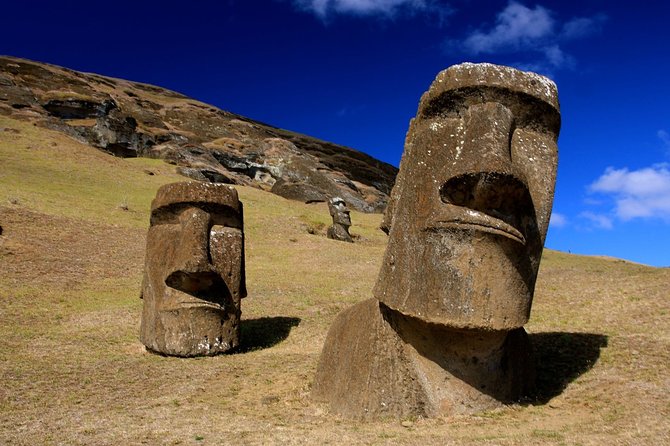
Rano Raraku is the heart of the tour. This volcanic crater served as the main carving area for the island’s moai, and around 397 unfinished statues remain here.
The unfinished figures are what make this place so powerful. At other sites, you see completed moai placed on ceremonial platforms. At Rano Raraku, you see statues still attached to the volcanic stone or left partway through their work. The crater becomes a record of the carving process, not merely a collection of finished monuments.
Your guide’s explanation is important here. Without context, the statues can look like scattered stone figures. With a good explanation, you can pay attention to the different stages of carving and the scale of the work.
The planned visit lasts about an hour. That is enough for a meaningful look, though you may wish it were longer if archaeology is your main reason for coming to Rapa Nui. The admission ticket is not included, and you must account for the Rapa Nui National Park entrance cost separately. The amount is not specified in the tour details, so check the current charge before booking.
A completely different kind of day out:
- 2-Day Private Tour Easter Island Highlights Complete Discovery
★ 5.0 · 110 reviews - Private Full-Day Easter Island Highlights North and West
★ 5.0 · 84 reviews - From Hanga Roa: Journey from Orongo to Ana Te Pahu
★ 4.3 · 75 reviews - Journey of the Ancestors: Tongariki, Rano Raraku & Anakena Beach
★ 4.5 · 70 reviews
Ahu Tongariki and the island’s most famous row of moai
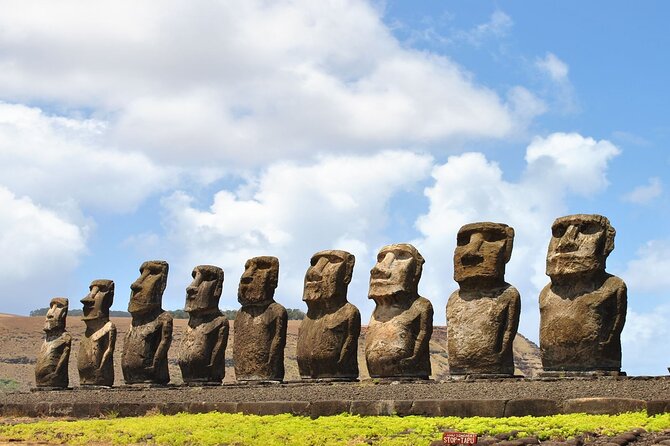
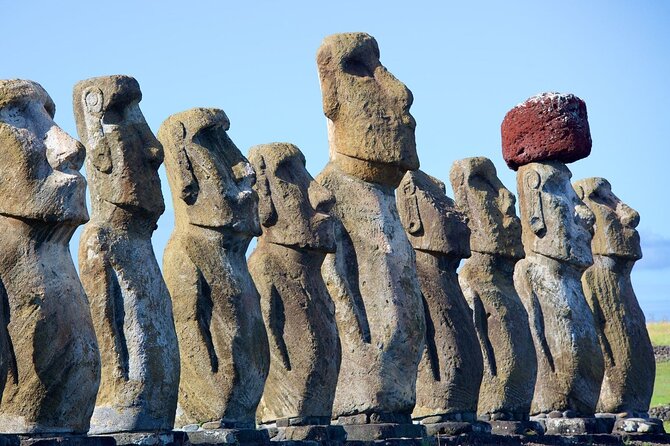
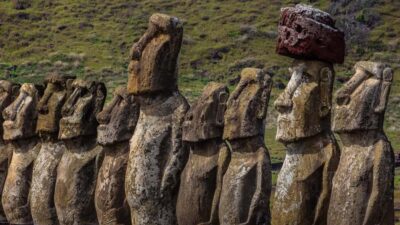
Ahu Tongariki is the visual centerpiece. Its ceremonial platform stretches about 200 meters and carries 15 large moai.
This is the place where scale becomes clear. A single moai is impressive, but 15 arranged together show the social and ceremonial importance of the ahu. The broad platform and coastal setting also make Tongariki one of the island’s essential stops.
You have about an hour here. That gives you time to look closely at the statues, listen to the guide, and take photographs without reducing the visit to a quick roadside stop.
The tour includes Ahu Tongariki and Ahu Te Pito Kura in the same general portion of the day. Check the exact timing with your guide, since the schedule may shift depending on road conditions, site procedures, and the group’s pace.
Ahu Te Pito Kura and Moai Paro
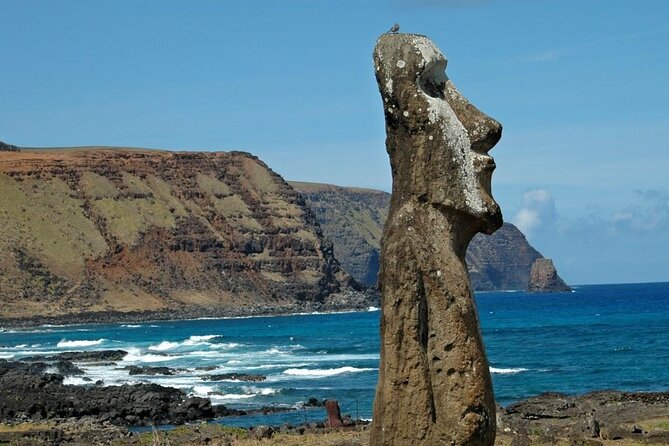
Ahu Te Pito Kura contains Moai Paro, described as the largest moai ever built. The statue is about 10 meters tall and weighs approximately 85 tons.
Even in a fallen state, a statue of this size helps explain the ambition behind Rapa Nui’s monumental tradition. It is also a useful contrast with Rano Raraku, where you saw statues in the making. Here, you confront the final scale of what the island’s carvers were attempting.
The site also includes a large spherical stone called Te Pito o Te Henua, commonly translated as the navel of the world. The stone is part of the cultural meaning attached to the place, so listen closely to the guide’s explanation rather than treating it as just another object to photograph.
Ahu Te Pito Kura is listed with about an hour of visiting time. Since this stop and Tongariki both receive substantial attention, the middle part of the tour is devoted mainly to monumental sites rather than long stretches of free time.
Anakena Beach: a gentler final hour
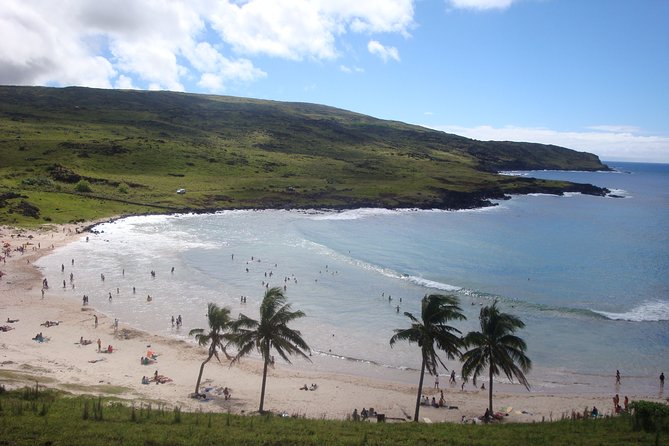
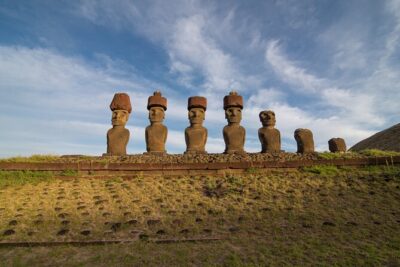
The final stop is Anakena Beach, a welcome change after several archaeological sites. You can relax on the sand, look out toward the coast, and see moai facing inland from the nearby ceremonial platforms.
The beach is also the scheduled lunch opportunity. Lunch is not included, so bring money and plan ahead. One person praised the tour overall but found the meal timing later than expected and was very hungry by the time lunch arrived. If you need food at a particular hour, carry a snack and ask your guide when the group expects to eat.
You receive about an hour at Anakena. That is enough for a meal and a short rest, but not a long beach day. One positive assessment also wished for more time here, which is fair. The tour is designed to cover Rapa Nui’s major sites, not to provide an extended swim or beach stay.
Anakena works well as the final stop because it gives you a chance to process the day. After quarry walls, ceremonial platforms, and enormous stone figures, the coast offers a quieter ending.
What the $100.84 price really covers
The listed price is $100.84 per person. It includes hotel pickup and drop-off from selected central hotels, a professional guide, the approximately six-hour outing, and walking between the sites.
It does not include the Rapa Nui National Park entrance fee, lunch, personal expenses, or other extras. Those omissions are important because the tour visits several protected archaeological areas. The advertised price is therefore not your complete cost for the day.
The small group helps support the price. A 10-person limit is more comfortable than a large coach, and a guide can respond to questions more easily. Group discounts may also be available, so check the price if you are booking for several people.
You should also compare the online price with the operator’s local direct rate. A serious price dispute involved a charge of $156.88 per person, while the local office reportedly offered a comparable service for 60,000 Chilean pesos without lunch or 80,000 pesos with lunch. The current advertised price here is lower than that disputed amount, but the difference shows why you should inspect the final checkout total, currency conversion, lunch terms, and pickup details.
If the online total is close to the local rate, the convenience of advance booking and a reserved English-speaking guide may be worth paying for. If the gap is very large, you may prefer to ask the local operator directly after arriving in Hanga Roa, provided you are comfortable arranging availability and payment in person.
Pickup, park entry, and other practical points
Hotel pickup and drop-off apply only to selected central hotels. If your accommodation is outside the service area, the operator will confirm the nearest meeting point. Do not assume that every Hanga Roa hotel receives door-to-door service.
The experience is offered in English and confirmation is provided at booking. Most people can participate, but the tour includes walking at multiple archaeological sites. The details do not specify a wheelchair-accessibility plan, so you should ask the operator directly if you need one.
This service is not valid for cruise passengers. Cruise visitors need a separate excursion or transfer arrangement with a different operating structure and rate.
Free cancellation is available if you cancel at least 24 hours before the local start time. Changes or cancellations made inside that window are not accepted for a refund.
Who will get the most from this tour?
I would choose this tour if you have limited time on Rapa Nui and want to see the island’s major moai sites in one organized day. It suits first-time visitors who want an English explanation at each stop instead of arranging separate transport.
The route also works well for anyone who values variety. You see fallen moai, an active-looking volcanic quarry, the 15 statues at Tongariki, the huge Moai Paro, and Anakena Beach. That is a strong introduction to the island.
You may want a different plan if you prefer slow visits, long beach time, or complete control over each stop. Six hours passes quickly, and the one-hour blocks may feel short at Rano Raraku or Anakena.
This is also not the right choice if your only priority is the lowest possible price. Compare the final online cost with the local rate and add the park entrance ticket and lunch before making the decision.
Should you book Anakena and Rapa Nui Culture?
Book it if you want an efficient, small-group overview of Easter Island’s main archaeological sights, especially Rano Raraku and Ahu Tongariki. The route is well chosen, the group cap is sensible, and strong guide feedback for Luis and Cesar suggests that the quality of the explanation can make the difference.
Before you commit, verify three things: your exact pickup point, the total amount after currency conversion, and the separate cost of park admission and lunch. If those terms are clear and the price feels reasonable, this tour gives you a practical first look at Rapa Nui without spending a full day organizing transport yourself.
FAQ
How long does the Anakena and Rapa Nui Culture tour last?
The experience lasts approximately six hours. It begins at 9:30 a.m., with the exact return time depending on the day’s schedule.
What sites does the tour visit?
The route includes Hanga Roa pickup, Ahu Vaihu, Ahu Akahanga, Rano Raraku, Ahu Tongariki, Ahu Te Pito Kura, Moai Paro, and Anakena Beach.
Is hotel pickup included?
Pickup and drop-off are included for selected centrally located hotels. If your hotel is outside the service area, the operator will confirm the closest meeting point.
Is lunch included?
No. Lunch at Anakena Beach is not included. You can use the beach stop as your lunch break, but you must pay for the meal yourself.
Is the Rapa Nui National Park entrance fee included?
No. Admission to Rapa Nui National Park is not included in the tour price.
How many people can join the tour?
The group has a maximum of 10 travelers.
Can cruise passengers book this experience?
No. This service is not valid for cruise passengers. Cruise excursions and transfers use a separate operation and rate.
Just added in Hanga Roa
- Volcanic Refuges: Excursion to Underground Civilization★ 4.7 · 8 reviews
- Volcanic Wonders and the Kingdom of the Birdman: Half Day★ 5.0 · 6 reviews
- Half Day Private Tour: Caves and Volcanic Refuges★ 4.0 · 14 reviews
- Easter Island Ancestral Dinner and Show with Transport★ 4.5 · 2 reviews
- 2 Day Small Group Tour in Moai Monuments and Historic Pathways★ 5.0 · 22 reviews
- Visit Rapa Nui in 4 days with 3 Tours and Accommodation included★ 4.0 · 2 reviews
- Tour to the Motus: Boat trip and snorkeling in Rapa Nui★ 5.0 · 8 reviews
- The birdman journey in Easter Island★ 5.0 · 1 review
Easter Island Tours, compared.
Two days of Full Day Tour of Rapa Nui + Sunrise in Tongariki
Read our review →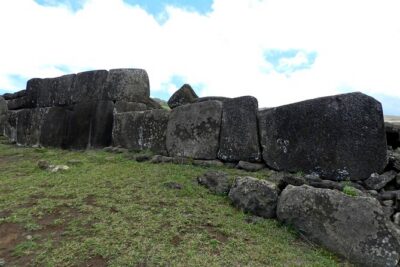
2-Day Private Tour Easter Island Highlights Complete Discovery
Read our review →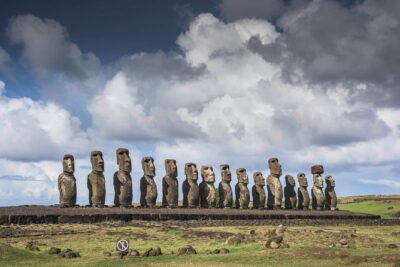
Private Tour: Full Day Easter Island Highlights
Read our review →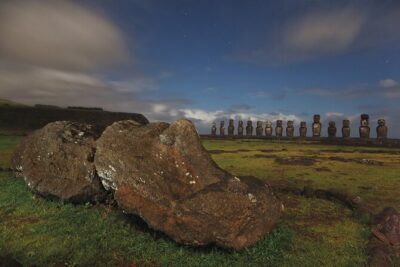
Browse the lists this tour appears in