
REVIEW · EASTER ISLAND TOURS
2 Days Highlights Tour in Easter Island Moai and Nature
The moai tell only half the story. This two-day tour crosses Easter Island from ceremonial platforms to volcanic craters, lava caves, and Anakena Beach, giving you a useful first look at Rapa Nui’s archaeology and natural beauty. I like the small maximum of 14 people and the use of local guides, especially when guides such as Fernanda, Franco, Zoe, and David bring island culture into the story. The main caution is uneven delivery: some guides wait for the group and speak clearly, while others talk while walking or give too little information in English.
I also like how much ground the tour covers without asking you to organize several separate excursions. Transportation and hotel pickup are included, and nearly every major stop is covered over the two days. But the $210 price feels fair only if you receive two strong guiding days. You must also pay for the National Park ticket separately, and lunch is not included.
The experience earns a solid 4.1 out of 5 from 55 ratings. That fits the overall picture: excellent sites, often warm and capable guides, and a few real problems with timing, communication, transport, and the second day’s lunch arrangements.
In This Review
- Key points to know before booking
- What the two-day route is really designed to do
- Day one: village ruins, the quarry, and the island’s great moai row
- Ahu Vaihu and the remains of a Rapa Nui village
- Ahu Akahanga and the coastal setting
- Rano Raraku, where the moai were carved
- Ahu Tongariki and the island’s most famous platform
- Te Pito Kura and the Navel of the World
- Anakena Beach, moai beside white sand
- Day two: caves, topknots, a crater, and the Birdman tradition
- Ahu Akivi and the seven moai facing inland
- Ana Te Pahu and the Banana Cave
- Puna Pau and the red stone topknots
- Ahu Vinapu and precise stone construction
- Rano Kau, the giant volcanic crater
- Orongo and the Birdman competition
- Guides can make two different tours out of the same route
- Transport, timing, and what to pack
- Is $210 good value for two days?
- Who should book this tour?
- Final verdict: a strong first look with a few important cautions
- FAQ
- How long is the tour?
- What is included in the price?
- Is the National Park ticket included?
- How many people can join the tour?
- Is lunch included?
- Is the tour physically demanding?
Key points to know before booking
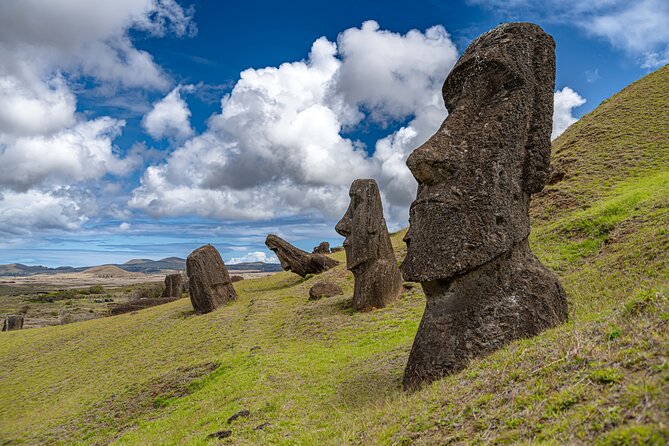
- Rano Raraku and Ahu Tongariki anchor the first day: These are the essential moai sites, with the quarry explaining how the statues were made and Tongariki showing them in their grand ceremonial setting.
- Day two adds the island’s natural drama: You visit Rano Kau, Orongo, and Ana Te Pahu, including a dark lava cave that requires bending and careful footing.
- The tour usually uses a small group: The advertised maximum is 14 people, a manageable size for a remote island where site explanations matter.
- Guiding quality can vary: Fernanda, Franco, Zoe, and David receive especially warm praise, while some visitors had trouble hearing guides or getting enough English commentary.
- Bring lunch or substantial snacks on day two: That day may run from pickup until about 3 p.m. without a meal stop.
- The National Park entry ticket is extra: It is not included in the $210 tour price and must be arranged separately.
What the two-day route is really designed to do
This is a broad sightseeing tour rather than a slow archaeological study. You move between sites by vehicle, then walk at each stop while your guide explains the moai, ceremonial platforms, volcanic geology, and Rapa Nui traditions.
That structure works well on Easter Island. The major sites are spread across the island, so hiring a vehicle and guide saves you from piecing together transport. You also gain context that is hard to get by simply walking up to a row of statues and taking photographs.
The tradeoff is time. Most stops last 30 to 60 minutes. That is enough for a guided visit and photographs, but not enough for long walks, quiet reflection, or repeated visits in changing light. The best experience comes when your guide gathers everyone before speaking and gives explanations during the drive as well as at the monuments.
The tour begins at about 10 a.m., though the exact order can change. One important practical detail is that the advertised Day 1 and Day 2 labels do not always match the order of your actual outings. Some departures begin with the longer crater and cave day, then run the moai-focused day afterward.
More things to do on Easter Island:
- From Hanga Roa: Rapa Nui Culture Sightseeing Tour
★ 4.6 · 307 reviews - From Hanga Roa: Easter Island Highlights 2-Day Tour
★ 4.3 · 205 reviews - Full Day Tour in Rapa Nui
★ 4.5 · 122 reviews
Day one: village ruins, the quarry, and the island’s great moai row
Ahu Vaihu and the remains of a Rapa Nui village
Ahu Vaihu introduces you to the ceremonial platform and the remains around it. Fallen moai lie among the ruins, giving the place a different feeling from the famous sites where statues remain upright.
The value here is not just the statues. Your guide can help you picture the old settlement, explain how the platform related to community life, and point out how the stones were arranged. You have about 45 minutes, which is enough for the main archaeological area and photographs.
Listen closely at this first stop. Some guides have begun explaining while walking toward the site, and people at the back have missed key details. Stay near the guide, and do not hesitate to ask the group to pause before the explanation begins.
Ahu Akahanga and the coastal setting
Ahu Akahanga offers more fallen moai and ceremonial remains beside the ocean. The open coastal setting gives you a sense of how exposed life on Rapa Nui could feel, with wind, volcanic ground, and broad Pacific views around the ruins.
The site rewards attention to the stonework and the relationship between the platform and the surrounding settlement. It is less polished as a sightseeing stop than Tongariki, but that is part of its appeal. The fallen statues and scattered remains show that the island’s ceremonial sites were not frozen in perfect condition.
You get another 45 minutes here. Wear shoes with a firm sole, since the ground around archaeological sites can be uneven. The tour calls for moderate fitness, not technical hiking, but you will spend much of both days getting in and out of the vehicle and walking over rough ground.
A completely different kind of day out:
- 2-Day Private Tour Easter Island Highlights Complete Discovery
★ 5.0 · 110 reviews - Private Full-Day Easter Island Highlights North and West
★ 5.0 · 84 reviews - From Hanga Roa: Journey from Orongo to Ana Te Pahu
★ 4.3 · 75 reviews - Journey of the Ancestors: Tongariki, Rano Raraku & Anakena Beach
★ 4.5 · 70 reviews
Rano Raraku, where the moai were carved
Rano Raraku is the day’s essential stop. This volcanic quarry is where the moai were shaped from tuff, a relatively soft volcanic stone. Unfinished figures remain in the quarry, while others appear partly buried along the slopes.
I consider this the place that makes the rest of Easter Island’s statues easier to understand. At other ahu, you see the finished result. Here, you see the work in progress, the abandoned forms, and the scale of the carving effort.
The visit lasts about an hour and includes admission to the site, though your separate National Park ticket is still required for the overall park system. Trails can include uphill sections, so take water and move at a pace that suits you.
Ahu Tongariki and the island’s most famous platform
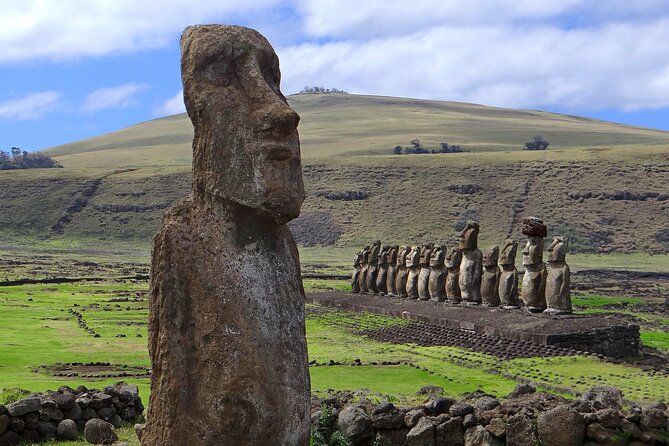
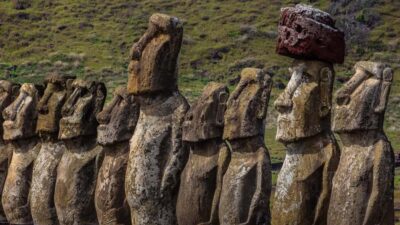
Ahu Tongariki is the visual centerpiece of the tour. Fifteen moai line the broad ceremonial platform, with the Pacific behind them and the volcanic slopes of Rapa Nui around them.
The arrangement gives you the full impact of the statues as a group. Each figure has its own shape and expression, but together they create the powerful effect people usually associate with Easter Island. The site is also a good place to hear about the island’s ceremonial traditions and the damage caused by natural forces and later events.
The scheduled visit is about 45 minutes. The description refers to sunrise at Tongariki, but with a 10 a.m. start, you should not assume this tour includes a sunrise visit. If sunrise photography is important to you, ask the operator how your departure is arranged.
Te Pito Kura and the Navel of the World
Te Pito Kura is a shorter, more mysterious stop. Its name means the Navel of the World, and the site is associated with a large smooth stone sphere called Te Pito o Te Henua.
Your guide can separate legend from archaeology here, which is useful because this is a place where stories carry much of the appeal. You have around 45 minutes to see the stone and the nearby remains. It is not as visually overwhelming as Tongariki, but it adds another layer to the island’s spiritual traditions.
Anakena Beach, moai beside white sand
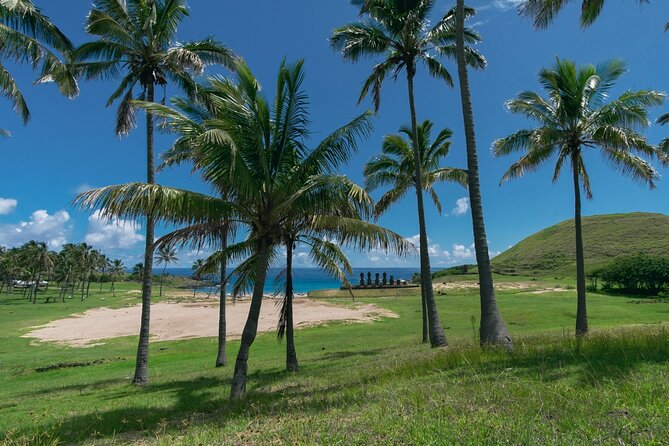
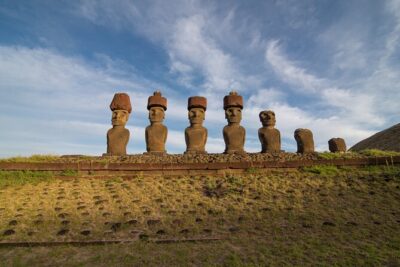
Anakena changes the rhythm of the day. After hours among volcanic stone and archaeological ruins, you reach a white-sand beach with turquoise water and Ahu Nau Nau nearby.
This is a pleasant finish, especially if you want to swim or simply cool off. The tour allows about an hour and describes opportunities for local food at a nearby restaurant or through a picnic arrangement. Confirm the food plan before departure, since lunch is not included in the tour price.
Anakena is also the stop I would rank lowest if your main goal is archaeology. It is beautiful and historically important, but you may prefer more time at Rano Raraku or Tongariki. For most people, though, the contrast makes the day feel less repetitive.
Day two: caves, topknots, a crater, and the Birdman tradition
Ahu Akivi and the seven moai facing inland
Ahu Akivi is unusual among Rapa Nui ceremonial sites. The seven moai are associated with ancestral navigators and are commonly described as facing toward the sea, although the exact visual impression depends on where you stand.
The site feels quieter than Tongariki. You have about 45 minutes to hear the story and take in the setting. This is a good place to ask questions about navigation, ancestry, and the meaning of ceremonial platforms rather than rushing straight to photographs.
Ana Te Pahu and the Banana Cave
Ana Te Pahu is the most physically demanding stop. This lava tube, also called the Banana Cave, combines geology with stories about how Rapa Nui people used the island’s caves and surrounding vegetation.
Expect darkness, low sections, bending, ducking, and at least one point that may require crawling away from the normal path. Some people in their sixties managed it comfortably, but the route is not suitable for every knee, back, or balance problem. Good grip on your shoes matters.
Bring a reliable flashlight. Mobile phone lights may not stay on, and the cave can be genuinely dark. The tour description refers to rock formations and cultural traces, but the safety issue is just as important as the scenery.
The planned visit lasts an hour, though the amount of actual walking can make this feel longer than the clock suggests. If rain has made the ground slippery, ask your guide about the safest route. Do not let the group’s pace push you into a section that feels unsafe.
Puna Pau and the red stone topknots
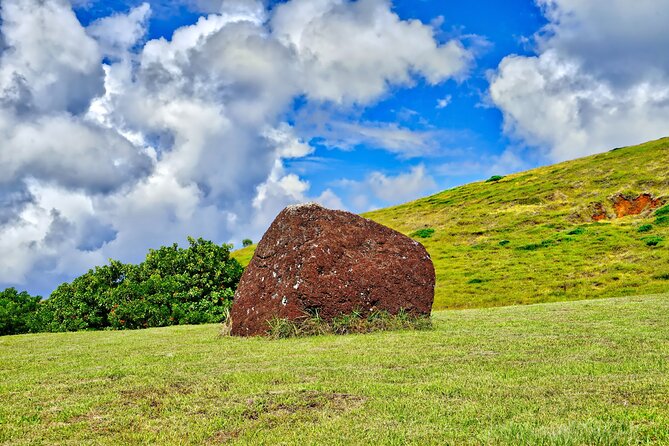
At Puna Pau, you see the quarry that supplied the red scoria used for pukao, the topknots placed on some moai. The site helps explain that the statues and their headpieces came from different materials and different parts of the island.
That detail adds practical meaning to the engineering story. Moving a huge stone figure was already a major task. Transporting a separate red stone cylinder and placing it on top required another feat of planning and strength.
The stop lasts around 45 minutes and offers broad views over the island. It is a worthwhile addition because it explains a feature you might otherwise treat as decoration.
Ahu Vinapu and precise stone construction
Vinapu is known for carefully fitted stonework and a ceremonial platform whose construction has prompted comparisons with stone buildings in South America. Your guide should explain both the similarities and the limits of those comparisons.
This is a good site for looking closely rather than only stepping back for a wide photograph. Notice the size, fit, and placement of the stones. The 45-minute visit gives you time to consider the workmanship and hear about the site’s place in Rapa Nui archaeology.
The ocean views add to the stop, but Vinapu’s main reward is the chance to think about construction methods and cultural connections. It is especially useful if you enjoy archaeological puzzles.
Rano Kau, the giant volcanic crater
Rano Kau is one of the most impressive natural sights on the island. The crater contains a lagoon, and the view from the rim shows the scale of the extinct volcano and the force of the island’s volcanic origins.
The scheduled stop is only 30 minutes, so this is more of a focused viewpoint visit than a long walk. Take photographs quickly, then spend a few minutes simply looking across the crater. Weather can change the experience sharply. On a clear day, the view is broad and dramatic. In rain or fog, the crater may feel more subdued, though the guide can still explain its geological and cultural role.
Orongo and the Birdman competition
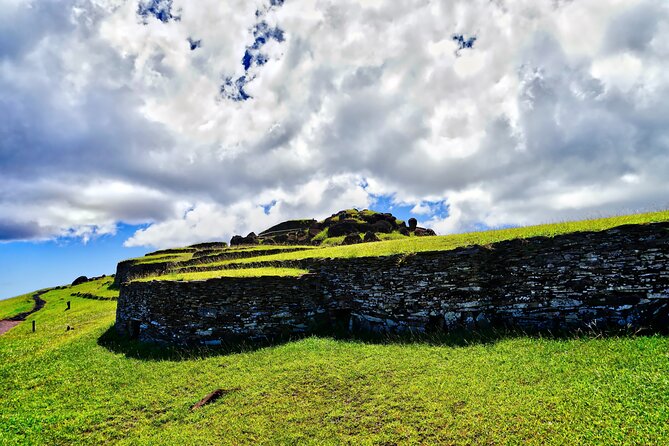
Orongo sits on the rim of Rano Kau and brings the natural and cultural parts of the second day together. The ceremonial village contains stone houses and petroglyphs connected with the Birdman competition, an annual event that helped determine leadership on the island.
The setting is powerful because the village looks toward the Pacific from the crater’s edge. Your guide can explain how the competition worked and why this site became so important in later Rapa Nui society.
You have about an hour here, the longest stop on day two. That is welcome, since Orongo rewards a careful walk and close attention to the carved images. If your guide is strong, this may be the most memorable cultural explanation of the tour.
Guides can make two different tours out of the same route
The strongest part of this experience is often the local guiding. Fernanda is praised for her warmth, pacing, and understanding of Rapa Nui culture. Franco receives similar praise for his clear explanations and passion, while Zoe and David are described as friendly and well prepared. One guide even added music with a ukulele, and another shared sea urchin from the shore, giving the day a more personal connection to island life.
But the standard is not consistent. Some guides have spoken mainly to Spanish speakers, leaving English speakers with brief translations. Others have started explanations before the whole group arrived. A few reports describe guides who gave little information or appeared to rush the second day.
If you are in a bilingual group, stand close to the guide and ask politely for English explanations before the walk begins. The tour is much better when the guide speaks to everyone together, then answers questions on the trail.
The two-day format can also mean two different guides. That is not necessarily a problem. It can give you two views of Rapa Nui, but it also means the quality and communication style may change from one day to the next.
Transport, timing, and what to pack
The small-group format should make the van more comfortable than a large coach, with a maximum of 14 people. Still, pickup delays have occurred, including waits of an hour or more. Confusion over passenger lists has also caused late starts.
I would confirm your pickup the day before and be ready at the stated time. If the vehicle is late, contact the operator rather than silently waiting. Transport quality has ranged from a clean, comfortable van to dirty or crowded vehicles, so expectations should remain practical rather than luxurious.
Pack these essentials:
- Plenty of water, since the island can be hot and bathroom stops are limited
- Lunch or filling snacks for day two
- A hat, sun protection, and light rain gear
- Shoes with good grip for uneven paths and Ana Te Pahu
- A working flashlight for the cave
- Extra patience if the weather changes the order or closes a site
The first day generally has better opportunities for a meal, drinks, and toilet breaks. Day two may finish around 3 p.m. without a lunch stop. Use bathrooms whenever they are offered.
Is $210 good value for two days?
At $210 per person, you are paying for transport across a remote island, two days of guiding, and access to a route that covers most of the major sights. For a first visit, that is a useful bundle, especially if you are not renting a car or arranging separate guides.
The value depends heavily on the guide. With clear cultural explanations, sensible pacing, and dependable transport, the price is reasonable for the amount of ground covered. With a late start, poor English interpretation, rushed commentary, or a half-day finish, it feels expensive.
Remember that the National Park ticket is not included. Lunch is also extra, and the food arrangements at Anakena may vary. Add those costs before comparing the tour with independent transport or a smaller private outing.
Who should book this tour?
I would recommend it to a first-time visitor who wants to see the major moai sites in two days and prefers a guide to explain what the stones mean. It suits people with moderate fitness who can manage uneven paths, some uphill walking, and the cave at Ana Te Pahu.
It is less suitable if you need guaranteed English commentary, cannot tolerate long vehicle waits, require a regular lunch break, or have difficulty bending and walking on rough ground. It also may not satisfy photographers who want long, unhurried sessions at each site.
Before paying, ask three direct questions: Will the guide speak English fluently? Is Ana Te Pahu included in your route, and can you skip the difficult section? How will lunch and the National Park ticket be handled? Those answers will tell you much about the likely value.
Final verdict: a strong first look with a few important cautions
I would book this tour if my priority were coverage. You see Rano Raraku, Tongariki, Anakena, Akivi, Vinapu, Rano Kau, and Orongo, plus smaller sites that help fill out the story. That is a lot of Rapa Nui in two days.
I would book with realistic expectations about organization and guiding. The best guides turn the route into a memorable lesson in ancestry, engineering, geology, and island life. The weaker days can feel rushed or hard to follow, especially for English speakers.
The tour is worth considering at $210 when confirmed with a good guide and when you arrive prepared with water, food, sturdy shoes, and a flashlight. If personal attention and guaranteed commentary matter more than seeing every major site, look for a private option instead.
FAQ
How long is the tour?
The experience lasts approximately two days. It begins around 10 a.m., and one reported second day finished at about 3 p.m.
What is included in the price?
A native guide and transportation are included. Pickup from your accommodation is provided.
Is the National Park ticket included?
No. The National Park ticket is not included and must be purchased separately.
How many people can join the tour?
The maximum group size is 14 people.
Is lunch included?
No. Lunch is not included. The first day may offer a lunch opportunity near Anakena, but you should bring food or snacks, especially for the second day.
Is the tour physically demanding?
A moderate level of fitness is recommended. The route includes walking on uneven ground, some uphill sections, and a dark lava cave at Ana Te Pahu that may require bending, ducking, and crawling.
Just added in Hanga Roa
- Volcanic Refuges: Excursion to Underground Civilization★ 4.7 · 8 reviews
- Volcanic Wonders and the Kingdom of the Birdman: Half Day★ 5.0 · 6 reviews
- Half Day Private Tour: Caves and Volcanic Refuges★ 4.0 · 14 reviews
- Easter Island Ancestral Dinner and Show with Transport★ 4.5 · 2 reviews
- 2 Day Small Group Tour in Moai Monuments and Historic Pathways★ 5.0 · 22 reviews
- Visit Rapa Nui in 4 days with 3 Tours and Accommodation included★ 4.0 · 2 reviews
- Tour to the Motus: Boat trip and snorkeling in Rapa Nui★ 5.0 · 8 reviews
- The birdman journey in Easter Island★ 5.0 · 1 review
Easter Island Tours, compared.
Two days of Full Day Tour of Rapa Nui + Sunrise in Tongariki
Read our review →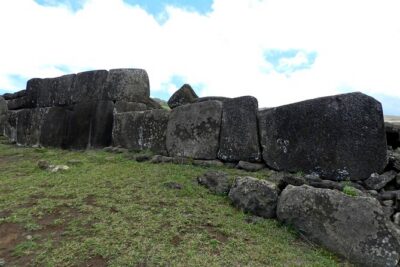
2-Day Private Tour Easter Island Highlights Complete Discovery
Read our review →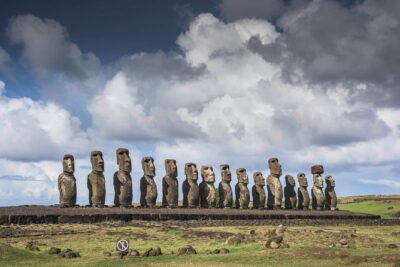
Private Tour: Full Day Easter Island Highlights
Read our review →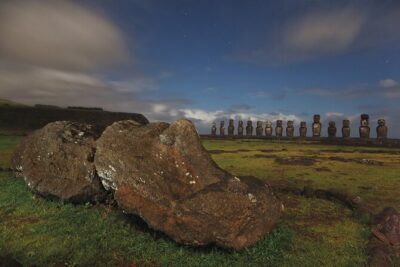
Browse the lists this tour appears in