
REVIEW · EASTER ISLAND TOURS
R3-THE RAPA NUI PENINSULA (non-cruise visitors)
Rapa Nui rewards walkers who leave the easy road. This private hike takes you across the Poike Peninsula to unusual moai, a Pleiades carving, and the cliffside cave of Ana O Keke. I like the small-group format, which keeps the day personal, and I like the route’s focus on places that feel less routine than the island’s famous headline sights.
You’ll also get private transport and pickup from your hotel, residence, guesthouse, or campsite. Guide David is praised for bringing the island’s stories to life, especially the tale of the bird-man ceremony. The main catch is the $80 national park ticket, which is not included, along with lunch and any picnic supplies.
In This Review
- Key points before you book
- Why this Poike Peninsula hike is worth your time
- Poike Volcano and the first walk to Vai To Heva
- Pu To Katiki, the summit of the peninsula
- Ahu Kava Kava Kioe and the unusual moai
- Papa Ui Hetu’u and the Pleiades stone
- Ana O Keke, the cave above the Pacific
- Motu Toremo Hiva and the buried moai head
- Five to six hours on foot, with private transport
- What the $159.19 price really covers
- Who will enjoy this route most
- Should you book the Poike Peninsula tour?
- FAQ
- How long does the Rapa Nui Peninsula tour last?
- What time does pickup take place?
- Where can I be picked up?
- Is the Rapa Nui National Park ticket included?
- Is lunch included?
- Is this a private tour?
Key points before you book
- Poike’s summit gives you wide views across Rapa Nui, with a small crater and the Pacific stretching beyond the island.
- Ana O Keke is a cliffside cave linked to the bird-man cult, with wall art and a strong sense of place.
- The route includes moai outside the usual Rano Raraku quarry setting, including a buried head near a crumbling platform.
- This is a private tour, so only your own group takes part and pickup comes directly to your accommodation.
- The hike lasts about five to six hours, with several short stops rather than one nonstop climb.
- A moderate fitness level is required, and the park admission fee, listed at $80 per person, is extra.
Why this Poike Peninsula hike is worth your time
Rapa Nui can be approached as a drive-by collection of moai. You stop, take a picture, hear a quick explanation, and move on. This outing offers something slower and more physical. You walk through the Poike Peninsula, pause at old stonework, look toward the sea, and hear how the island’s beliefs shaped these sites.
I like that the route is not built around a single famous statue. Instead, it links several smaller and more unusual places. The reward comes from the combination: a volcanic summit, a cave over the Pacific, scattered moai, carved stone, and views that help you understand how isolated Rapa Nui is.
The private setup matters here. Your guide can explain details at your pace, and you are not tied to a large bus group. If you want to stop for a little longer at a carving or ask questions about the bird-man tradition, this format gives you more room to do so.
The route is not a casual sightseeing loop, though. The operator asks for moderate physical fitness, and several stops require walking across open ground or along sloping terrain. You should be comfortable spending much of the day on your feet. The supplied details do not give a precise distance or trail surface, so ask about those points before booking if you have concerns.
More Boat Trips in Hanga Roa:
- Tour to the Motus: Boat trip and snorkeling in Rapa Nui
★ 5.0 · 8 reviews - T3+T4-RAPA NUI ARCHAEOLOGICAL SITES (non-cruise visitors)
★ 5.0 · 8 reviews - T2-THE MUST-HAVES OF RAPA NUI (non-cruise visitors)
★ 4.5 · 4 reviews
Poike Volcano and the first walk to Vai To Heva
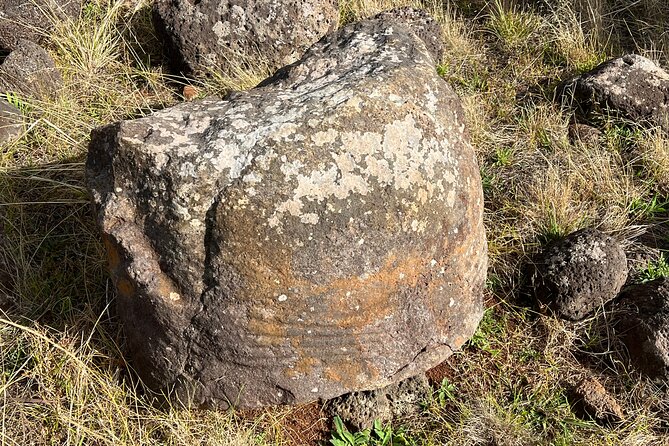
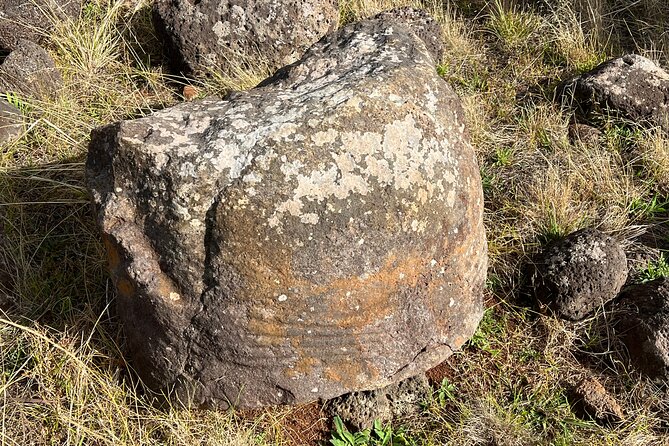
The first stop is Vai To Heva, about 30 minutes at the site. The rock here was carved by shaping and emphasizing a natural form already present in the stone. That detail is important. The work does not feel like a separate object dropped into the setting. It uses the existing profile of the rock and gives it a sacred role along the route toward the summit.
This is a good early stop because it introduces the way Rapa Nui’s old builders worked with natural features. You are not only looking at a finished monument. You are looking at how stone, position, and belief were brought together.
Admission to each stop is not included in the tour price. In practice, you need the Rapa Nui National Park ticket, listed at $80 per person. The supplied information also lists a $40 charge for ages seven to 17, though the wording calls it 40 years old, which appears to be a typo. Confirm the current child rate when you book.
Pu To Katiki, the summit of the peninsula
Pu To Katiki is the summit of Poike Volcano, with about 30 minutes planned here. The summit is described as easy to access, and the small crater gives you a fine reason to pause. From this high point, you can look across the right side of Rapa Nui from end to end, with the Pacific completing the view.
I would treat this as one of the day’s main rewards. The summit helps you read the island as a volcanic outpost rather than a flat collection of archaeological sites. The crater, the sea, and the distant reaches of the island give the rest of the walk a larger setting.
The word easy is relative. The tour still asks for moderate fitness, and the full outing lasts five to six hours. If you walk comfortably but do not often hike, this may be manageable, yet you should not assume it is a paved viewpoint visit. Wear shoes suited to walking and plan for changing weather, though the supplied details do not specify what equipment is provided.
Ahu Kava Kava Kioe and the unusual moai
At Ahu Kava Kava Kioe, the visit lasts about 20 minutes. Only a small number of moai were made from rock that did not come from the slopes of Rano Raraku, the island’s best-known moai quarry. The statues here use a lighter, denser stone.
The moai are lying on the ground, scattered near the remains of a platform. That may sound less dramatic than a row of upright statues, but it gives you a different view of the island’s stonework. Details remain visible, and the broken platform helps you see the site as an archaeological place rather than a polished display.
I like this stop because it rewards close attention. You may notice the material of the statues, the surviving shapes, and the way the stones sit among the remains. It is also a reminder that not every moai followed the same path from quarry to platform.
Your guide’s role matters here. Without context, fallen statues can look like loose stones. With an explanation of where the rock came from and how these figures differ, the stop becomes much easier to appreciate.
More things to do on Easter Island:
- From Hanga Roa: Rapa Nui Culture Sightseeing Tour
★ 4.6 · 307 reviews - From Hanga Roa: Easter Island Highlights 2-Day Tour
★ 4.3 · 205 reviews - Full Day Tour in Rapa Nui
★ 4.5 · 122 reviews - 2-Day Private Tour Easter Island Highlights Complete Discovery
★ 5.0 · 110 reviews
Papa Ui Hetu’u and the Pleiades stone
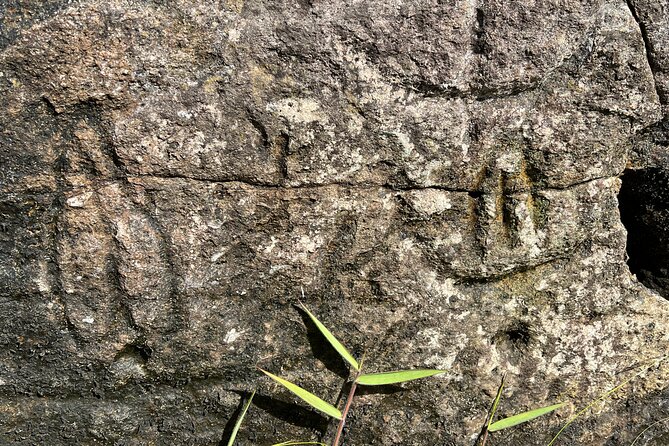
The next 20-minute stop follows the same platform area toward the cliffs and open ocean. Papa Ui Hetu’u is a large stone carved by the ancient inhabitants as a representation of the Pleiades constellation.
This is one of the route’s most distinctive details. The site connects the ground beneath your feet with the night sky above it. You are looking at a stone marker tied to a group of stars, while the sea opens out beyond the cliffs. That setting gives the carving more force than it might have in a museum or crowded compound.
The stop is short, so listen closely while the guide explains what you are seeing. If you want time for careful photographs or a longer look at the carving, ask whether the schedule allows it. The tour includes several locations, and the time at each one is limited.
Ana O Keke, the cave above the Pacific
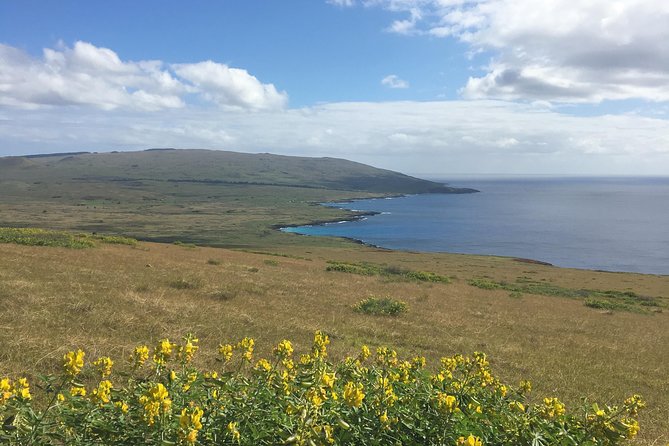
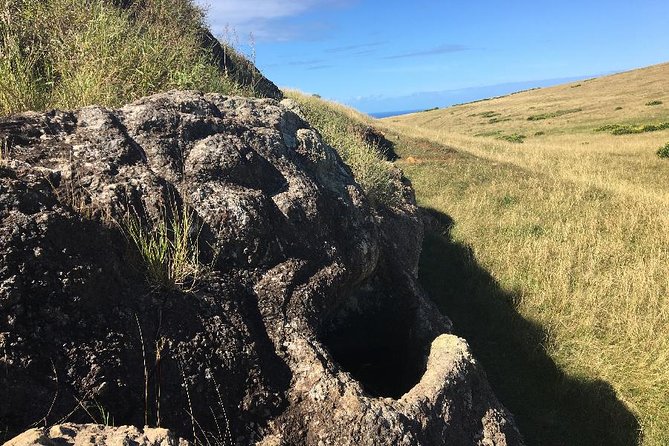
Ana O Keke is the route’s most atmospheric stop. The cave sits on the cliff side above the Pacific and is linked to the bird-man cult that took place across the water from Rapa Nui. It is also associated with the preparation of young girls for Tangata Manu, the bird-man tradition.
The cave includes wall art, adding another layer to the visit. You are not simply entering a natural hollow. The place carries evidence of ritual use and a connection to one of Rapa Nui’s most striking cultural traditions.
The planned visit lasts about 30 minutes. That is enough time to hear the explanation and take in the setting, but it is not an open-ended cave study. Follow the guide’s instructions carefully near the cliff side. The information provided does not describe railings, lighting, or the exact approach, so ask for practical details if you have any concern about heights or uneven ground.
This stop also shows why a guide adds real value. The bird-man tradition can be reduced to a dramatic tale if it is told too quickly. A good explanation connects the cave, the people prepared there, the ceremony, and the island across the water. David is specifically praised for making the story of Tangata Manu engaging and for explaining the volcanoes and island traditions in a way that holds attention.
Motu Toremo Hiva and the buried moai head
The final stop is Motu Toremo Hiva. Here, a buried moai head lies in front of a platform that is crumbling below. The figure acts like a guardian of the place, even though only the head is visible.
This is a fitting finish because it returns you to the moai, but in a less familiar form. Rapa Nui is famous for monumental faces, yet this one is partly swallowed by the earth and set beside a damaged platform. The worn setting makes the site feel connected to the island’s long past rather than arranged for easy viewing.
You have about 20 minutes here. By this point, you may be ready for a pause, water, and food. Lunch is not included, and the operator specifies a picnic lunch as an extra. Bring or arrange food in advance rather than counting on a meal during the route.
Five to six hours on foot, with private transport
The tour runs for approximately five to six hours. Private transportation is included, so you are picked up at your accommodation and transferred between the walking areas as needed. Pickup is available from a hotel, residence, guesthouse, or campsite, which is useful in Hanga Roa and for people staying outside a standard hotel.
The normal departure information gives 9:00 a.m. or 9:30 a.m., while a separate 5:45 a.m. departure is offered with the Sunrise over Tongariki option. The tour details also show a 9:30 a.m. start time. Because those times do not line up perfectly, confirm your exact pickup time after booking.
The early option is relevant only if you select the sunrise variation. The Poike and Ana O Keke route itself is presented as a daytime outing, so do not assume the early departure is part of every booking.
Since this is a private activity, only your group participates. That is useful for families, couples, or friends who want to walk at their own pace. Group discounts are offered, which may improve the value if several people book together.
The tour is offered in English, while the included description also calls the hike French-guided. If language matters to you, confirm whether your guide will conduct the tour in English, French, or both. Clear confirmation is worth doing before you pay.
What the $159.19 price really covers
At $159.19 per person, the base price is reasonable only after you account for what is included and what is not. You receive private transportation, pickup, and a guided walk through several remote and culturally important sites. For a private half-day experience on an island where transport can be a concern, that has real value.
The national park admission changes the final cost. Add the listed $80 per-person park fee, and the basic adult outing reaches about $239.19 before lunch. That is a sizeable total, but it includes more than a simple transfer or a short viewpoint stop.
I would compare this tour with the cost and effort of arranging a private vehicle and guide separately. The value is strongest if you want an organized route, direct pickup, and interpretation at places that are not easily understood from a quick photo stop.
The value is weaker if you want a cheap, flexible day or dislike paying extra for park entry. You also need to budget for a picnic. The price is not all-inclusive, so calculate the full amount before booking.
Confirmation is sent within 48 hours, subject to availability. The activity is non-refundable and cannot be changed after booking, so I would not reserve it until your Rapa Nui dates and transport plans are firm.
Who will enjoy this route most
I would choose this experience if you want a private, active outing with strong cultural context. It suits people who prefer cliffs, volcanic ground, caves, and scattered ruins to a quick circuit of the most photographed moai.
It is also a good fit if you value a guide’s storytelling. The strongest praise connected with David focuses on the way he explains Orongo, the bird-man ceremony, Rano Kau, the volcanoes, and Rapa Nui as a whole. Those comments concern his storytelling on an island route, so confirm that David will lead your departure if meeting him is important to you.
Families with older children may appreciate the private format and the shorter stops, but the operator still asks for moderate fitness. The details do not set a minimum age, so ask directly about children in your party.
I would hesitate to recommend it to anyone looking for an easy vehicle tour with almost no walking. The route includes a hike, a cave, cliffs, and open volcanic terrain. It is also not the best choice if you need a flexible cancellation policy.
Should you book the Poike Peninsula tour?
Book this tour if you want to see a quieter, more physical side of Rapa Nui and you care about the meaning behind the sites. The combination of Poike’s summit, unusual moai, the Pleiades carving, and Ana O Keke gives the day a clear identity. It is not just a list of stops.
Before paying, confirm three things: the exact pickup time, the language of the guide, and the current park ticket price. Bring or arrange a picnic, allow for five to six hours, and be ready for moderate walking.
I would pass if the added $80 admission fee makes the day too expensive or if you want a short, low-effort sightseeing trip. For an active visitor who wants private transport and a guide who can make Rapa Nui’s stories memorable, this is a strong choice.
FAQ
How long does the Rapa Nui Peninsula tour last?
The experience lasts approximately five to six hours.
What time does pickup take place?
The listed departures are 9:00 a.m. or 5:45 a.m. with the Sunrise over Tongariki option. Another part of the tour details gives a 9:30 a.m. start, so confirm your exact pickup time after booking.
Where can I be picked up?
Pickup is offered from your hotel, residence, guesthouse, or campsite.
Is the Rapa Nui National Park ticket included?
No. The park ticket is listed separately at $80 per person. The information also lists a $40 price for ages seven to 17, though the wording contains an apparent age typo, so confirm the current child rate.
Is lunch included?
No. A picnic lunch is not included.
Is this a private tour?
Yes. Only your own group participates in this private activity.
Just added in Hanga Roa
- Volcanic Refuges: Excursion to Underground Civilization★ 4.7 · 8 reviews
- Volcanic Wonders and the Kingdom of the Birdman: Half Day★ 5.0 · 6 reviews
- Half Day Private Tour: Caves and Volcanic Refuges★ 4.0 · 14 reviews
- Easter Island Ancestral Dinner and Show with Transport★ 4.5 · 2 reviews
- 2 Day Small Group Tour in Moai Monuments and Historic Pathways★ 5.0 · 22 reviews
- Visit Rapa Nui in 4 days with 3 Tours and Accommodation included★ 4.0 · 2 reviews
- The birdman journey in Easter Island★ 5.0 · 1 review
- The Route of Hotu Matua Full-Day Tour from Hanga Roa★ 5.0 · 1 review
Easter Island Tours, compared.
Two days of Full Day Tour of Rapa Nui + Sunrise in Tongariki
Read our review →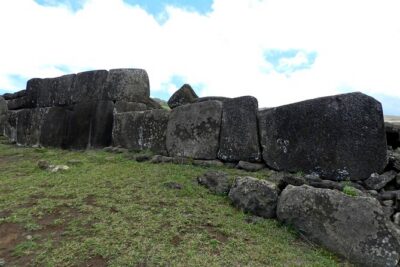
2-Day Private Tour Easter Island Highlights Complete Discovery
Read our review →
Private Tour: Full Day Easter Island Highlights
Read our review →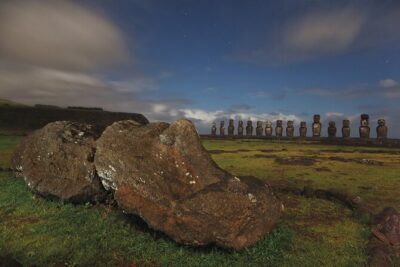
Browse the lists this tour appears in