
REVIEW · EASTER ISLAND TOURS
Private Tour Per Day In Following the Ancestral Orongo footprint and caves
The caves tell a different Easter Island story. This private tour moves beyond the familiar moai sites to connect Rapa Nui’s late civilization with the ceremonial village of Orongo, the birdman contest, volcanic places, and Ana Te Pahu, one of the island’s largest caves. I especially like the private transportation and the chance to travel with a native, certified guide. I also like the mix of major archaeological sites and an underground stop that feels very different from a standard moai day.
The main drawback is cost. At $219 per person, this is not a cheap half-day outing, and you still need to pay for the park entrance ticket and lunch. The advertised duration is roughly four to six hours, so the tour offers a focused look at several important places rather than a full day packed with every corner of Rapa Nui.
In This Review
- Key points to know before booking
- Why this route is different from a standard moai tour
- Rano Kau gives you the island’s opening view
- Orongo explains the Tangata Manu tradition
- Ahu Vinapu raises questions about stonework
- Ahu Akivi honors the seven explorers
- Puna Pau shows where the pukao came from
- Ana Te Pahu takes you below the surface
- What the private format is worth at $219
- Timing, lunch, and park admission
- Who should book this Rapa Nui tour?
- Should you book it?
- FAQ
- How long does the private Rapa Nui tour last?
- What sites are included in the route?
- Is the national park entrance ticket included?
- Is lunch included?
- Is this a private activity?
- Can I cancel for a full refund?
Key points to know before booking
- Orongo gives the tour its historical focus: This ceremonial village is tied to the Tangata Manu, or Bird Man, competition and the island’s royal leaders.
- Ana Te Pahu adds a rare underground experience: Plan for about an hour at the cave, with one account describing roughly 40 minutes spent walking below ground.
- The private format suits curious couples and small groups: Only your party takes part, and private transport removes the need to coordinate with strangers.
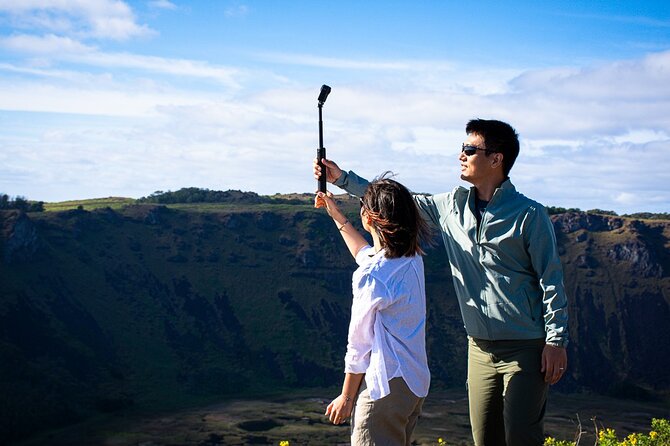
- Rano Kau provides the big opening view: From the volcano, you can see Hanga Roa and get a sense of the island’s setting.
- The six-stop route covers several kinds of heritage: You visit a volcano, ceremonial village, ahu platforms, a pukao quarry, and a refuge cave.
- Bring the park ticket into your budget: Entrance is not included, and lunch is also your responsibility.
Why this route is different from a standard moai tour
Many visits to Rapa Nui center on moai platforms. Those sites matter, but this route gives you a wider look at how the island’s society changed and how people used its volcanic terrain. You see places tied to ceremony, leadership, stonework, travel, refuge, and daily survival.
I like that the day is not simply a parade of statues. Orongo connects the tour to political and religious life. Puna Pau explains where the red stone headpieces came from. Ana Te Pahu changes the mood completely, taking you into a cave used by the island’s people for shelter.
The private setup also matters here. With only your group participating, you can ask questions, spend a little longer at a point that interests you, or keep moving when a stop has given you enough. The guide is described as native and certified, which is particularly useful on an island where place names, oral traditions, and archaeological remains carry layers of meaning.
Still, this is not a tour for someone who wants a slow, luxurious day with long meal breaks. Six stops in four to six hours requires a reasonably brisk pace. The schedule lists about 30 minutes at Rano Kau and 40 minutes at several other sites, with one hour at Orongo and Ana Te Pahu. You will see a lot, but you should not expect a long, unhurried visit at every location.
More things to do on Easter Island:
- From Hanga Roa: Rapa Nui Culture Sightseeing Tour
★ 4.6 · 307 reviews - From Hanga Roa: Easter Island Highlights 2-Day Tour
★ 4.3 · 205 reviews - Full Day Tour in Rapa Nui
★ 4.5 · 122 reviews
Rano Kau gives you the island’s opening view
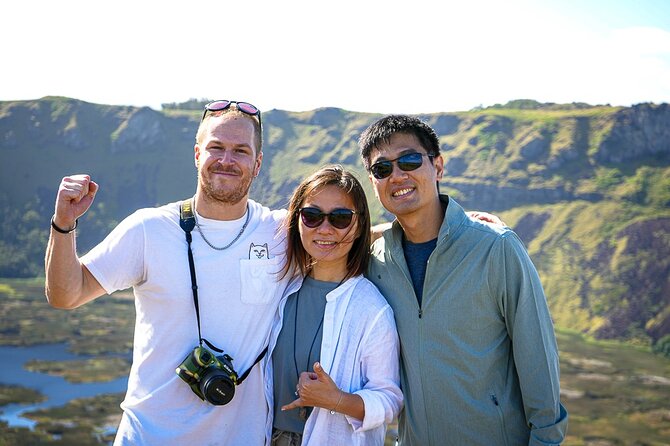
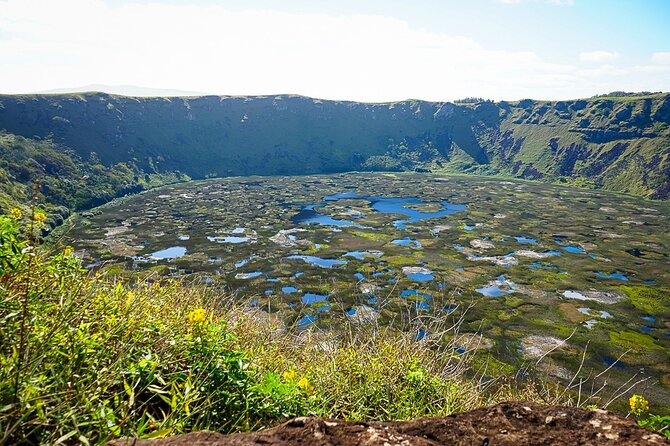
The first stop is Rano Kau, the only volcano on Rapa Nui described in this tour as offering a view across Hanga Roa. The planned visit lasts about 30 minutes, with no separate admission charge listed for the stop.
This is a good way to begin because it helps you place the island’s main town within its volcanic setting. Rather than starting with an isolated monument, you first get a broad view and a sense of how compact the inhabited part of Rapa Nui is.
With only half an hour here, expect a viewpoint visit rather than a long walk around the volcano. I would use this stop to take in the scale of the island, listen carefully to the guide’s explanation, and avoid spending the entire time taking photographs. The view does a lot of the teaching for you.
Orongo explains the Tangata Manu tradition
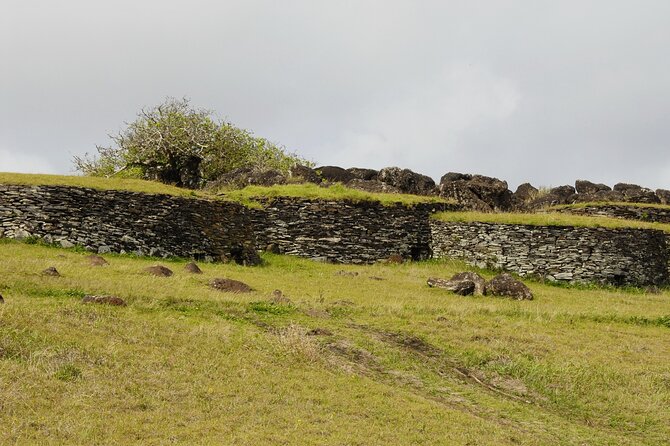
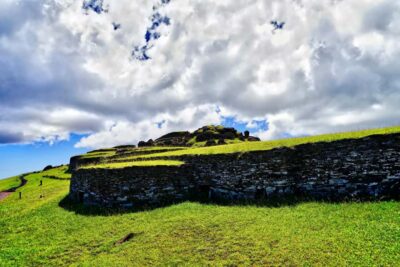
Orongo is the central stop of the tour. The visit lasts about one hour, and the site is presented as the city of the kings of Rapa Nui. It is also the place connected to the Tangata Manu, the Bird Man competition, one of the most distinctive institutions of the island’s later civilization.
This is where the tour shifts from scenery to social history. You are not only looking at stone remains. You are learning about ceremony, authority, competition, and the way the island’s leaders organized society during a later period.
The value of a guide is especially clear at Orongo. Without explanation, the village can look like a group of low stone structures near a dramatic volcanic setting. With context, the site becomes a place where political and religious power were displayed and contested.
The one-hour schedule is sensible. Orongo deserves more time than a quick photo stop, but the route still has four more locations ahead. Admission is not included, so you need to purchase the required national park ticket separately before or during your visit, according to the local arrangements.
Ahu Vinapu raises questions about stonework
The route continues to Ahu Vinapu for about 40 minutes. This is described as a place full of mysteries, with features that have led people to compare its stonework with construction traditions elsewhere in the world.
That comparison should be handled with care. The useful reason to visit Vinapu is not to chase a dramatic theory, but to look closely at how the stones were fitted and to ask what the site can tell you about Rapa Nui engineering and cultural connections. The guide can help separate evidence from speculation.
Forty minutes is enough for an introduction, especially if you have already seen other ahu sites. It may feel brief if you want to study every stone or photograph the platform from several angles. The stop works best as part of the larger route, since it adds a question about construction and contact to the political story introduced at Orongo.
Admission is not included here either. Keep the park ticket requirement in mind when judging the tour’s total price.
A few more options to weigh up in Hanga Roa
- 2-Day Private Tour Easter Island Highlights Complete Discovery
★ 5.0 · 110 reviews - Private Full-Day Easter Island Highlights North and West
★ 5.0 · 84 reviews - Full Day Private Tour: Factory of the Moai the stone giants
★ 4.5 · 63 reviews - Private Easter Island Full-Day Tour
★ 5.0 · 61 reviews
Ahu Akivi honors the seven explorers
At Ahu Akivi, you spend about 40 minutes seeing the ahu associated with the seven explorers who first arrived at Rapa Nui. This gives the tour another connection to origin stories and ancestral identity.
Compared with Orongo, Ahu Akivi is less about a famous contest and more about the way Rapa Nui remembers arrival and ancestry. The stop helps show that moai sites were not all created for the same purpose. Each ahu can carry its own story and place in the island’s social world.
If you have already visited several moai platforms, you may find this stop familiar in form. That is not necessarily a weakness. The guide’s interpretation is what makes the difference, and the private format gives you room to ask how Ahu Akivi fits with the other sites you have seen.
The planned 40 minutes keeps the day moving. You get time to understand the site without letting one platform take over the entire outing.
Puna Pau shows where the pukao came from
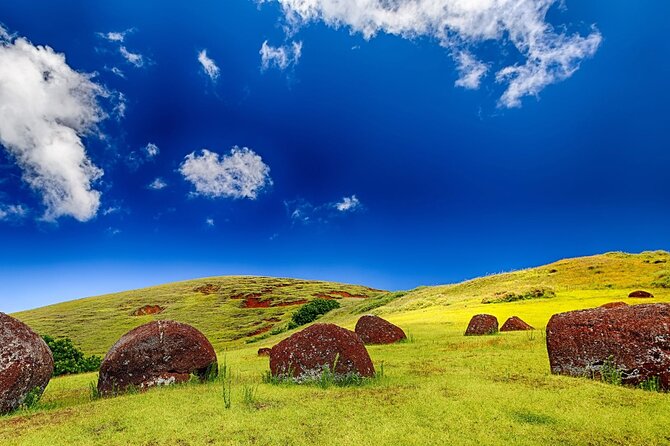
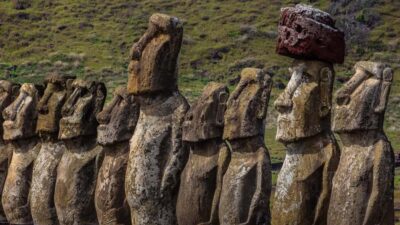
Puna Pau is the ancestral quarry where the Rapa Nui made the pukao, the red stone headpieces placed on some moai. The visit lasts around 40 minutes and gives useful context to something you may have noticed at other monuments.
This stop is valuable because it shifts your attention from the finished statue to the work behind it. A moai with a pukao required more than carving one large figure. The headpiece came from a different source and had to be shaped and moved as part of the wider building effort.
I like this kind of stop because it helps you read the island’s monuments as connected systems rather than isolated objects. After Puna Pau, you may look at moai and their red crowns with a better sense of the labor and choices involved.
Again, the time is focused. You will not have an entire afternoon to wander. If stone quarry sites are a major interest for you, this 40-minute visit may leave you wanting more, but it works well as one chapter in a route that covers several types of archaeological remains.
Ana Te Pahu takes you below the surface
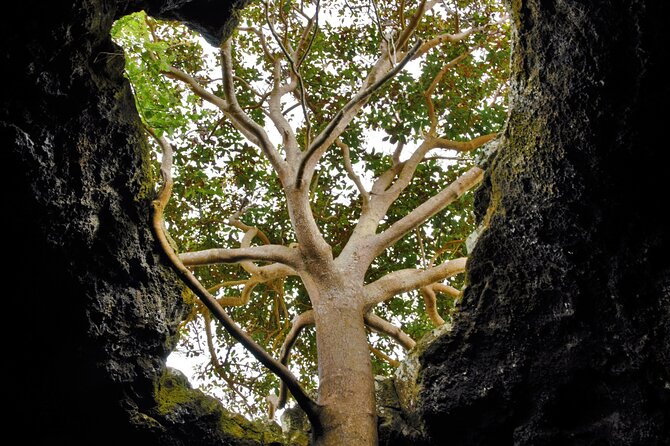
The final stop, Ana Te Pahu, is the most unusual part of the day. It is an ancestral cave where the people of Rapa Nui took refuge, and the planned visit lasts about one hour. The route is designed to let you explore its interior rather than simply view the entrance.
This is the stop that most clearly separates the tour from a day spent only at moai platforms. Inside the cave, the scale and atmosphere change. You are looking at a place connected to shelter and human use, not only ceremony or monument building.
One account of the experience describes about 40 minutes of walking underground. That detail is useful because it shows that this is more than a quick look into a dark opening. You should expect an active visit, though the supplied information does not specify the cave’s exact walking conditions or what equipment is provided.
Wear practical clothing and shoes suitable for uneven ground, even though the tour information does not list a formal equipment requirement. Also remember that the guide will be important here. A cave can be memorable on its own, but the explanation of how it was used turns a striking space into a meaningful archaeological stop.
Ana Te Pahu may be the physical highlight for you, especially if you have already spent another day visiting many moai locations. It is also the part of the tour most likely to require comfort with enclosed, irregular spaces. If you prefer entirely open-air sightseeing, consider that before booking.
What the private format is worth at $219
The price is $219 per person. That figure makes more sense when you look at what is included: private transportation and a native, certified guide, with only your group taking part.
The private vehicle is practical on a route with six stops. You do not have to wait for a large group to board, and you can ask questions without competing for the guide’s attention. For a couple or small group, that privacy may be the main reason to choose this tour instead of a cheaper shared outing.
The price is harder to justify if you are traveling alone or watching every dollar. You also need to add the park entrance ticket and lunch. Since the experience lasts about four to six hours, compare it with the cost of a longer shared tour before booking.
I would see the value this way: you are paying for interpretation, transport, and flexibility, not just admission to six places. The native guide is a particularly important part of that equation. If you want to understand how the sites connect, rather than simply collect photographs, the cost can be reasonable for a private experience.
The tour is often reserved well ahead of time, with an average booking lead time of 83 days. That suggests you should not leave it until the last minute if the date matters to you.
Timing, lunch, and park admission
Although the experience is described as a full-day tour in its general description, the stated operating time is approximately four to six hours. I would plan your day around the shorter end if you have a fixed afternoon commitment, then treat any extra time as useful breathing room.
Lunch is not included. The supplied details do not state whether a meal stop is built into the route, so ask about food arrangements when booking or carry what you need according to the operator’s instructions. Do not assume that the $219 price covers lunch.
The national park entrance ticket is also separate. The individual stops list admission as not included, and the additional information clearly says you must purchase the park ticket. Add that cost before comparing this tour with other options.
Pickup is offered, which simplifies the start of the day. The exact pickup area is not given, so confirm the meeting details after booking.
Who should book this Rapa Nui tour?
I would recommend it to you if you want a private, guide-led introduction to the island’s later civilization and prefer variety over a single theme. It suits people who want Orongo’s ceremonial story, several ahu sites, a volcanic viewpoint, a pukao quarry, and a cave in one organized outing.
It is also a strong choice after a day focused heavily on moai. The cave and volcano provide a change of pace, while Orongo and the other archaeological sites add social and cultural context.
The tour may be less suitable if you want a long, slow visit at each location, need lunch included, or are mainly interested in seeing as many moai as possible. You may also want to think carefully about the cave if enclosed spaces or uneven walking are difficult for you. The information says most people can participate, and service animals are allowed, but it does not give detailed cave accessibility notes.
The private format makes this a good option for families, couples, and small groups who value their own vehicle and guide. Group discounts are offered, so larger private parties should ask how the final per-person rate changes.
Should you book it?
Book this tour if you want to see Rapa Nui as more than a collection of famous statues. Orongo and Ana Te Pahu are the strongest reasons to choose it, with Rano Kau, Vinapu, Ahu Akivi, and Puna Pau filling out the story.
Skip it if the price feels too high after adding park admission and lunch, or if you want a full eight-hour day with extensive time at every site. For the right group, though, the private transport, local guide, and unusual cave visit make this a thoughtful way to understand the island’s people, beliefs, and changing society.
FAQ
How long does the private Rapa Nui tour last?
The experience lasts approximately four to six hours.
What sites are included in the route?
The route visits Rano Kau, Orongo, Ahu Vinapu, Ahu Akivi, Puna Pau, and Ana Te Pahu.
Is the national park entrance ticket included?
No. You must purchase the park entrance ticket separately.
Is lunch included?
No. Lunch is not included in the tour price.
Is this a private activity?
Yes. Only your group participates, with private transportation provided.
Can I cancel for a full refund?
Yes, if you cancel at least 24 hours before the experience start time. Cancellations made within 24 hours are not refunded, and changes within that period are not accepted.
Just added in Hanga Roa
- Volcanic Refuges: Excursion to Underground Civilization★ 4.7 · 8 reviews
- Volcanic Wonders and the Kingdom of the Birdman: Half Day★ 5.0 · 6 reviews
- Half Day Private Tour: Caves and Volcanic Refuges★ 4.0 · 14 reviews
- Easter Island Ancestral Dinner and Show with Transport★ 4.5 · 2 reviews
- 2 Day Small Group Tour in Moai Monuments and Historic Pathways★ 5.0 · 22 reviews
- Visit Rapa Nui in 4 days with 3 Tours and Accommodation included★ 4.0 · 2 reviews
- Tour to the Motus: Boat trip and snorkeling in Rapa Nui★ 5.0 · 8 reviews
- The birdman journey in Easter Island★ 5.0 · 1 review
Easter Island Tours, compared.
Two days of Full Day Tour of Rapa Nui + Sunrise in Tongariki
Read our review →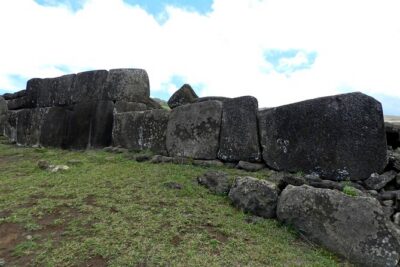
2-Day Private Tour Easter Island Highlights Complete Discovery
Read our review →
Private Tour: Full Day Easter Island Highlights
Read our review →
Browse the lists this tour appears in