
REVIEW · EASTER ISLAND TOURS
Private Tour: Full-Day Easter Island Archeological sites
The moai tell a bigger story. This private Easter Island tour links fallen statues, the great quarry, royal beaches, and the island’s most famous ceremonial platform in one well-paced day. I like the private vehicle and hotel pickup, which remove much of the fuss on an island where the main sites are spread far apart. I also like the chance to ask questions as you go, rather than follow a large group from statue to statue.
The main consideration is cost. At $263 per person, this is not a cheap outing, and the mandatory national park ticket adds another $100 per person. Lunch is optional at $50. Still, for up to eight people, the price can make sense if you want a flexible day and a guide who explains how the sites fit together.
In This Review
- Key points to know before booking
- Why this seven-hour route works
- Ahu Akahanga and the village behind the stones
- Rano Raraku, where the moai began
- Ahu Tongariki and 15 moai facing inland
- Ahu Te Pito Kura and the giant Ahu o Paro
- Anakena Beach, a softer final chapter
- What the private format is worth
- Timing, walking, and who should book
- Should you book the Easter Island archaeological sites tour?
- FAQ
- How long does the private Easter Island tour last?
- What sites are included?
- Is the national park ticket included?
- Is lunch included?
- How many people can join the private tour?
- Does the tour pick up cruise ship passengers?
- What is the cancellation policy?
Key points to know before booking
- Rano Raraku is the heart of the day, with a two-hour visit to the volcanic tuff quarry where the moai were made.
- Ahu Tongariki has 15 standing moai, making it the most imposing ceremonial platform on this route.
- The tour is private for your party, with a maximum of eight people and hotel pickup and drop-off included.
- The walking pace can matter, especially at Rano Raraku, where the main track includes a steady uphill section.
- The $100 national park ticket is mandatory, valid for 10 days from first entry and covering all park sites.
- Cruise ship passengers cannot use this tour, since port pickup is not available.
Why this seven-hour route works
Easter Island, also called Rapa Nui, is not a place where one famous statue tells the whole story. The moai were carved in one location, moved across the island, placed on ceremonial platforms, and tied to villages, ancestors, status, and ceremony. This tour gives you that sequence in a sensible order.
You begin at Ahu Akahanga, then visit Rano Raraku, where the statues were made. From there, you continue to Ahu Tongariki, the grandest platform on the route, before seeing Ahu Te Pito Kura and the great moai called Ahu o Paro. The final stop is Anakena Beach, where the setting shifts from stone and open grass to warm water and coral sand.
The listed stops total about four hours and 15 minutes. The rest of the seven-hour day allows time for driving between sites, getting out of the vehicle, walking, and listening to your guide. That balance matters. A rushed tour might technically cover the same places but leave you with little sense of how they connect.
With a private booking, you travel only with your own group. The maximum is eight people, so this works for a couple, a family, or a small group of friends who want more control than a standard coach excursion. You can also ask for explanations suited to your interests, although the exact amount of flexibility depends on your guide and the day’s timing.
More things to do on Easter Island:
- From Hanga Roa: Rapa Nui Culture Sightseeing Tour
★ 4.6 · 307 reviews - From Hanga Roa: Easter Island Highlights 2-Day Tour
★ 4.3 · 205 reviews - Full Day Tour in Rapa Nui
★ 4.5 · 122 reviews
Ahu Akahanga and the village behind the stones
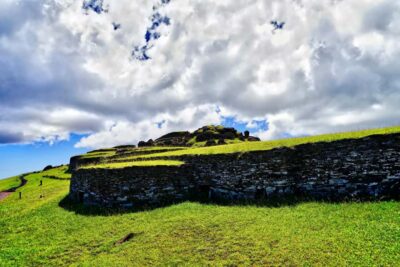
Your first stop is Ahu Akahanga on the southeast coast. This is a useful place to begin because it shows the relationship between a village and its ceremonial platform. The site helps you picture daily life arranged around the ahu, rather than treating each moai as an isolated work of art.
The fallen statues are the striking feature here. Some lie on their backs, while others rest face down on the ground. Their damaged position can feel more revealing than a neat row of restored figures. You see the effects of the island’s long and complicated past, including the fact that not every ceremonial site was rebuilt into a polished presentation.
Plan on about an hour here. That is enough time to walk around, look closely at the platform and fallen moai, and hear the story of how the settlement related to the ceremonial center. The ground may require care, so comfortable walking shoes are sensible. The national park admission is not included in the tour price, and the required ticket covers the park sites for 10 days from your first entry.
Rano Raraku, where the moai began
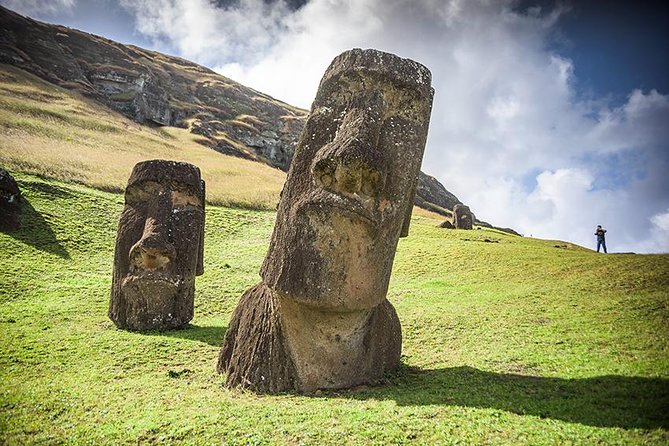
Rano Raraku is the major stop of the day, with two hours allotted. This volcanic cone contains the island’s only known quarry of volcanic tuff, the relatively workable stone used to carve the moai on a large scale.
This is where the tour shifts from looking at finished monuments to seeing the production site itself. Along the quarry slopes, you can encounter moai in different stages of completion. That unfinished quality helps you understand that the statues were not simply found and transported. They were shaped out of the volcanic rock, separated from the hillside, and then moved to ceremonial platforms around the island.
The main track includes a steady uphill walk. That detail is easy to underestimate, especially when planning a day around vehicle stops. A review of the experience specifically praised guide Maeva for letting the group set a comfortable pace, which is exactly the kind of help you want here. If Maeva is assigned to your tour, her ability to put the statues into historical context and explain current scientific understanding should add real value.
Two hours gives you time to walk the main section without treating the quarry like a quick photo stop. You should still tell your guide if you need a slower pace. The site is likely to be the most physically demanding part of the itinerary, though the supplied information does not give a precise distance or accessibility rating. Most people can participate, but anyone with walking concerns should discuss the pace before setting out.
Rano Raraku is also the place where a good guide earns the fee. Without explanation, you may see a hillside full of stone figures and wonder why some were left behind. With context, the quarry becomes a record of planning, labor, technical skill, and changing choices. I would give this stop your full attention and resist the urge to rush toward the next viewpoint.
Ahu Tongariki and 15 moai facing inland
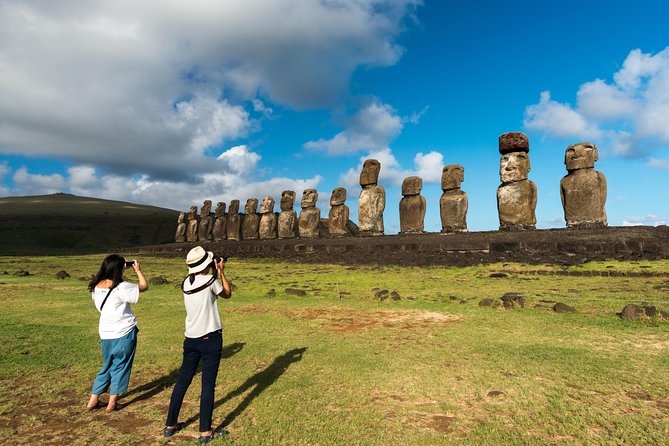
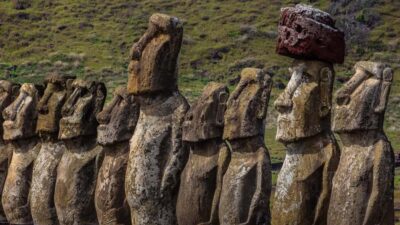
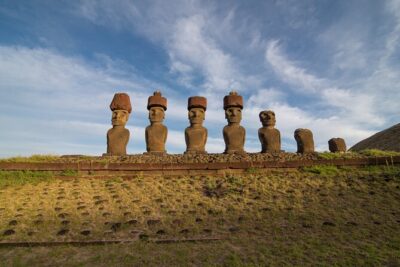
Ahu Tongariki is opposite Rano Raraku and receives about an hour. Its 15 upright moai form the largest reconstructed platform on the island, and the row is the visual centerpiece of the tour.
The statues face inland with their backs to the Pacific Ocean. That arrangement is not just a matter of appearance. It reinforces the role of the ahu as a ceremonial place connected to the people and communities on the island. Your guide can help explain why the platform matters, how it relates to the quarry, and what you are seeing in the larger sequence of carving and transport.
This is a good stop for taking in scale. At Rano Raraku, your attention goes to the process of making the statues. At Tongariki, you see the finished effect: a long ceremonial platform carrying a line of monumental figures. One hour should give you enough time for photographs and an explanation without making the stop feel drawn out.
Because Tongariki is one of the most recognizable sites on Rapa Nui, it can be tempting to focus only on getting the classic picture. Try to look at the platform itself, the spacing of the moai, and the way the figures relate to the open setting. The guide’s interpretation is important here because the visual impact is immediate, but the social meaning takes longer to grasp.
A few more options to weigh up in Hanga Roa
- 2-Day Private Tour Easter Island Highlights Complete Discovery
★ 5.0 · 110 reviews - Private Full-Day Easter Island Highlights North and West
★ 5.0 · 84 reviews - Full Day Private Tour: Factory of the Moai the stone giants
★ 4.5 · 63 reviews - Private Easter Island Full-Day Tour
★ 5.0 · 61 reviews
Ahu Te Pito Kura and the giant Ahu o Paro
The next stop, Ahu Te Pito Kura, is shorter at 30 minutes. Its main attraction is Ahu o Paro, a moai measuring about 11 meters long and weighing roughly 90 tons. It is described as the largest moai transported from Rano Raraku.
That fact changes how you look at the statue. At the quarry, you consider how the figures were cut from the rock. Here, you confront the scale of moving one of the largest completed examples across the island. Even lying on the ground, Ahu o Paro gives you a clear idea of the effort required.
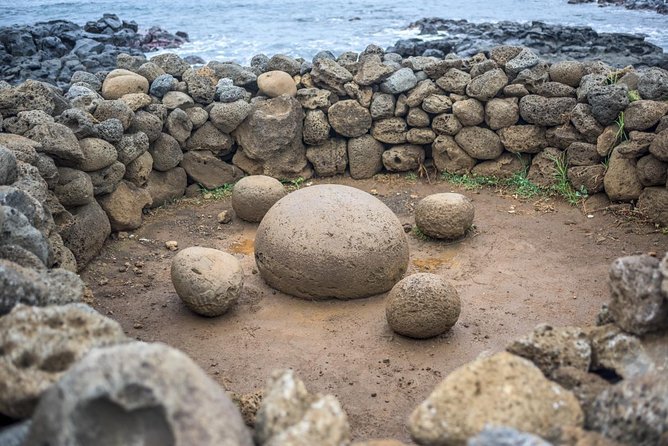
Nearby is the rounded stone known as Te Pito o te Henua. Local tradition says the stone was brought to the island by the ancestors. The site therefore combines a very large moai with a smaller object carrying traditional meaning. You will have less time here than at the quarry or Tongariki, so listen closely to the explanation and use the half-hour well.
This stop may feel brief if you want extensive walking or photography. That is the tradeoff of fitting five major places into one day. The private format may help if your group wants to spend a little more time examining Ahu o Paro, but the published schedule gives you a useful expectation: this is a focused stop, not a long exploration.
Anakena Beach, a softer final chapter
The day ends at Anakena Beach, the main beach on the island. Warm turquoise water and coral sand make this a marked change from the quarry and ceremonial platforms. It is also tied to the island’s past as the ancestral residence of the Miru Araki royal family.
The 45-minute visit is long enough to take in the beach, look at Ahu Nau Nau, and enjoy the change of setting. Ahu Nau Nau is known for the refinement of its moai, giving you one more chance to compare different ceremonial platforms before the tour ends.
I like this as a final stop because it prevents the day from becoming a single long march through stone monuments. Anakena shows that Rapa Nui is not only about statues. The island’s ceremonial sites, traditions, royal connections, and natural settings belong to the same story.
Do not expect a full beach day. Forty-five minutes is a short visit, and the tour is built around archaeology rather than swimming or lounging. If your main goal is time in the water, you may want a separate visit to Anakena. If you want a calm final stop that adds another part of the island’s identity, the timing works well.
What the private format is worth
The $263 price per person covers a professional guide, private transport, and hotel pickup and drop-off. The biggest benefit is not luxury. It is control.
You avoid being folded into a large group, and only your party participates. That can make it easier to ask why a statue was left at Rano Raraku, how Ahu Tongariki relates to the quarry, or what traditions surround Te Pito o te Henua. It also gives you a better chance of keeping a pace that suits the group.
The maximum booking size is eight people. For one or two people, the cost is a serious outlay. For a group of several people, the private arrangement may offer better value because everyone gets the same guide and vehicle without paying for separate transport.
Remember to add the mandatory $100 national park ticket per person. The ticket is valid for 10 days from first entry and works for all park sites, so it can be useful if you plan to visit more locations during your stay. Optional lunch costs $50 per person. Since lunch is not included, confirm how your day will handle the meal before departure.
The total can therefore reach $363 per person with the park ticket, or $413 if you add the optional lunch. That makes this a premium day tour, but it includes the core sites most people come to see and covers transport across the island. The value is strongest when you care about interpretation and convenience, not just checking locations off a list.
Timing, walking, and who should book
The start time is 9:00 a.m., and the tour lasts about seven hours. Hotel pickup and drop-off are included, which is especially useful in Hanga Roa because you do not need to arrange separate transport for a full day of scattered sites.
The key physical point is Rano Raraku’s uphill track. Most people can participate, but the tour is not simply a vehicle ride with views from the roadside. Wear practical shoes and be ready to walk at a pace that feels comfortable. The experience allows a private group, so tell the guide early if someone needs more time.
This tour suits you best if:
- You want the major archaeological sites in one full day.
- You prefer a private guide to a large shared group.
- You want historical and scientific context, not only photographs.
- You are staying in Hanga Roa and need hotel transport.
- You are comfortable with some walking, including an uphill section.
- You are not arriving by cruise ship.
It is less suitable if you want a low-cost outing, a slow beach day, or a tour built around long independent exploration at each site. The schedule is full, and the short visit at Ahu Te Pito Kura and Anakena may feel limiting if you prefer to linger.
The tour has free cancellation when you cancel at least 24 hours before the start time. Changes or cancellations inside that window are not accepted for a refund. Confirmation is provided at booking, and the activity is not available to cruise ship passengers because port pickup is not offered.
Should you book the Easter Island archaeological sites tour?
I would book this tour if you have one full day in Hanga Roa and want the island’s main moai sites explained in a logical order. The combination of Ahu Akahanga, Rano Raraku, Ahu Tongariki, Ahu Te Pito Kura, and Anakena gives you a broad look at carving, transport, ceremony, tradition, and royal connections.
The strongest reason to choose it is the guide. Maeva received special praise for placing the statues in historical context, explaining modern scientific understanding, and adjusting the walking pace. That kind of interpretation can turn a striking day into a genuinely meaningful one.
I would skip it only if the price is beyond your budget, you already have transport and a guide arranged, or you want to spend most of the day at the beach. For everyone else, the private format, hotel transport, and carefully chosen route make this a sound way to meet Easter Island’s most important archaeological sites without hurrying from one monument to the next.
FAQ
How long does the private Easter Island tour last?
The tour lasts approximately seven hours and starts at 9:00 a.m.
What sites are included?
The route includes Ahu Akahanga, Rano Raraku, Ahu Tongariki, Ahu Te Pito Kura, and Anakena Beach.
Is the national park ticket included?
No. A mandatory national park ticket costs $100 per person. It is valid for 10 days from first entry and covers all park sites.
Is lunch included?
No. Lunch is optional and costs $50 per person.
How many people can join the private tour?
A maximum of eight people can be included in one booking. Only your group participates.
Does the tour pick up cruise ship passengers?
No. The tour is not valid for cruise ship passengers because port pickup is not available.
What is the cancellation policy?
You can receive a full refund if you cancel at least 24 hours before the experience starts. Cancellations or changes made less than 24 hours before the start time are not accepted for a refund.
Just added in Hanga Roa
- Volcanic Refuges: Excursion to Underground Civilization★ 4.7 · 8 reviews
- Volcanic Wonders and the Kingdom of the Birdman: Half Day★ 5.0 · 6 reviews
- Half Day Private Tour: Caves and Volcanic Refuges★ 4.0 · 14 reviews
- Easter Island Ancestral Dinner and Show with Transport★ 4.5 · 2 reviews
- 2 Day Small Group Tour in Moai Monuments and Historic Pathways★ 5.0 · 22 reviews
- Visit Rapa Nui in 4 days with 3 Tours and Accommodation included★ 4.0 · 2 reviews
- Tour to the Motus: Boat trip and snorkeling in Rapa Nui★ 5.0 · 8 reviews
- The birdman journey in Easter Island★ 5.0 · 1 review
Easter Island Tours, compared.
Two days of Full Day Tour of Rapa Nui + Sunrise in Tongariki
Read our review →
2-Day Private Tour Easter Island Highlights Complete Discovery
Read our review →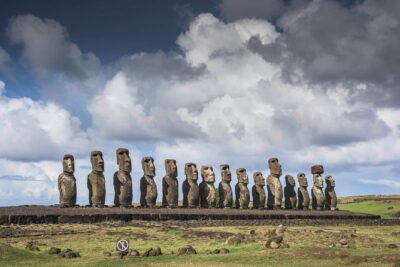
Private Tour: Full Day Easter Island Highlights
Read our review →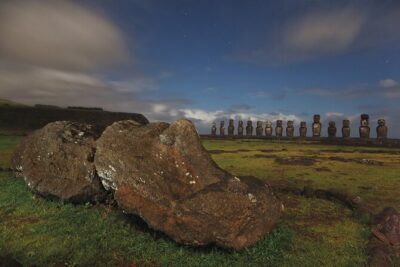
Browse the lists this tour appears in