
REVIEW · EASTER ISLAND TOURS
Private Tour: Easter Island Caves
Rapa Nui has a secret underground. This private four-hour outing pairs volcanic caves with archaeological sites, giving you a look at places that tell a different story from the island’s famous moai. I like the quiet, personal format and the chance to see Ahu Te Peu, where fallen statues remain in place rather than being rebuilt for display.
I also like that hotel pickup, private transport, and a local guide are included. The main caution is physical effort: the tour is described as moderately active, and one account reported roughly five miles of walking in strong midday sun. You should carry more water, sunscreen, and sun protection than the light-packing advice may suggest.
In This Review
- Key points to know before booking
- Why these caves add another side of Rapa Nui
- Ana Te Pahu: the biggest cave on the island
- Ana Te Pora: a short walk to an old refuge
- Ana Kakenga: two windows above the sea
- Ahu Te Peu: fallen moai and an unrestored village
- The real walking demand: do not trust the clock alone
- What a private vehicle and guide add
- Is the $250 price fair?
- Who should book this Easter Island cave tour?
- Should you book it?
- FAQ
- How long does the Easter Island caves tour last?
- What sites are included?
- Is hotel pickup included?
- Is the national park ticket included in the price?
- Is this tour available in English?
- Can cruise ship passengers book this tour?
Key points to know before booking
- Ana Te Pahu is Rapa Nui’s largest cave, with connected lava chambers and old umu cooking areas.
- Ana Kakenga has a very tight entrance, so it may not suit anyone uncomfortable in enclosed spaces.
- Ahu Te Peu remains unrestored, offering a rare look at fallen moai and an ancient village site.
- The tour is private, so only your own group takes part and the pace may be easier to discuss.
- The national park ticket costs $100 per person extra and is valid for 10 days from first entry.
- Plan for walking in sun and heat, even though the listed cave stops add up to only about 100 minutes.
Why these caves add another side of Rapa Nui
Most first impressions of Easter Island come from moai, grassy slopes, and broad ocean views. The caves bring you closer to the island’s volcanic foundations and to the practical ways Rapa Nui people used the land.
These are not polished attractions with large signs and easy paved routes. They are natural lava formations that also served as shelters, food-preparation areas, ceremonial places, and refuges. That mix makes the tour worthwhile for anyone who wants more than a quick photo beside a famous statue.
The private setup matters here. A guide can explain what you are seeing at each opening and adjust the pace for your group. You also avoid being tied to a large coach group, which is useful when the route includes narrow spaces and uneven walking.
The tour begins at 9:00 a.m. with hotel pickup in Hanga Roa. All transport between sites is in a private vehicle, and drop-off at your hotel is included. The advertised time is about four hours, but the actual walking time can feel longer because the route between stops and the conditions underfoot matter.
More things to do on Easter Island:
- From Hanga Roa: Rapa Nui Culture Sightseeing Tour
★ 4.6 · 307 reviews - From Hanga Roa: Easter Island Highlights 2-Day Tour
★ 4.3 · 205 reviews - Full Day Tour in Rapa Nui
★ 4.5 · 122 reviews
Ana Te Pahu: the biggest cave on the island
Ana Te Pahu is the main event for many people. Lava channels run through an important area of Rapa Nui, linking four underground chambers. Its size helped make it useful in earlier times, and the old umu, or cooking areas, show that this was more than a place for shelter.
The cave is also known as the cave of the bananas. Banana trees grow in large numbers around the entrance, where the sheltered conditions help plant life. That combination of dark lava, green growth, and archaeological remains gives the stop a special character.
I like Ana Te Pahu because it connects geology with daily life. You are not just looking at a hollow in the rock. You are seeing a place that could support cooking and refuge, with the cave itself shaping how people used the area.
The listed stop lasts about 30 minutes. That may be enough for a guided introduction, but you should not read the number as the total time spent walking in the area. The full outing includes movement between sites, and the physical demand may come from the approach routes as much as from time inside the cave.
Bring sturdy walking shoes. The tour information calls for moderate fitness, and the terrain can make a short stop feel more demanding than its clock time suggests. If you have knee problems, balance concerns, or trouble walking in heat, discuss the pace with the guide before setting out.
Ana Te Pora: a short walk to an old refuge
Ana Te Pora is a volcanic cave whose main entrance lies about 100 meters from the parking area. That short approach makes it one of the easier stops from a logistics point of view.
In earlier times, the cave served as both a shelter and a ceremonial place. The value here is less about size and more about function. A guide can help you think about how a natural cave could have had several roles within Rapa Nui society.
The listed visit is 20 minutes. That makes Ana Te Pora a compact stop, but it also means you should not expect a long underground exploration. The guide’s explanation is an important part of the experience, especially because the physical remains may not always speak for themselves.
The quality of guiding matters on this tour. The experience is offered in English, and the provider says its guides communicate in the language preferred by the group. One account raised concerns about the amount of English explanation and about a guide named Thais being unfamiliar with the cave route. That does not prove every departure will be the same, but it is a fair reason to confirm English service and the guide’s experience when booking.
Ana Kakenga: two windows above the sea
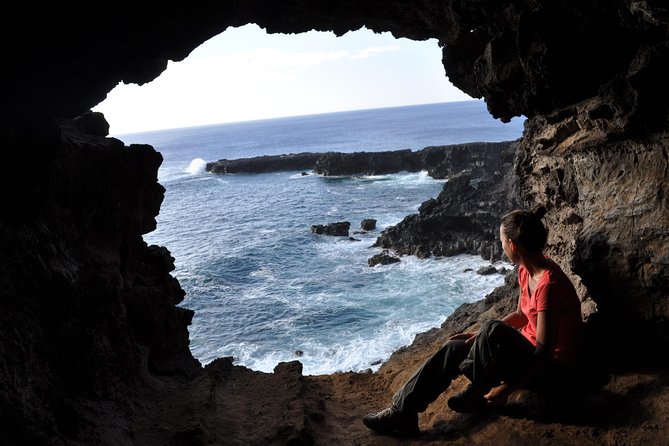
Ana Kakenga is known as the cave of the two windows. Lava once flowed toward the sea, leaving two openings that lead toward the cliff. The cave runs for about 50 meters and served as a kionga, or refuge, in earlier times.
This stop has the clearest physical warning. The entrance is described as very small. If tight spaces make you uncomfortable, you may prefer to skip the interior or ask the guide what alternatives are possible. That is not a minor point. The cave’s appeal depends partly on entering a confined volcanic passage.
Inside, the reward is the unusual connection between underground rock and the sea-facing openings. You are not simply walking into a dark chamber. The two mouths give the cave its identity and help explain why the site is memorable.
The scheduled stop lasts 30 minutes. Good shoes and careful footing are sensible, and a moderate fitness level is required. Keep your hands free where possible, but do not leave behind the basics you need for the day. Water, sunscreen, and a hat are more important than traveling light.
A few more options to weigh up in Hanga Roa
- 2-Day Private Tour Easter Island Highlights Complete Discovery
★ 5.0 · 110 reviews - Private Full-Day Easter Island Highlights North and West
★ 5.0 · 84 reviews - Full Day Private Tour: Factory of the Moai the stone giants
★ 4.5 · 63 reviews - Private Easter Island Full-Day Tour
★ 5.0 · 61 reviews
Ahu Te Peu: fallen moai and an unrestored village
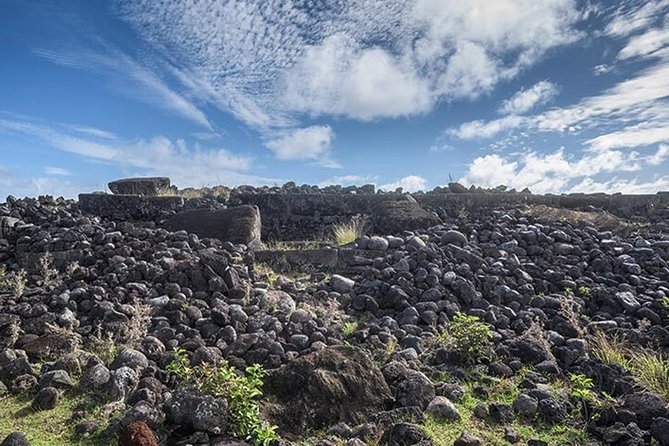
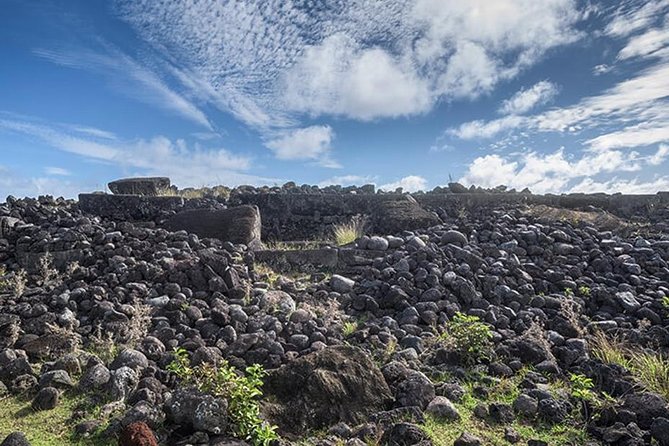
Ahu Te Peu changes the mood of the outing. This area has high archaeological value, but it has not been restored. The fallen moai remain where people left them after internal conflicts, giving you a direct view of a difficult period in the island’s past.
I consider this one of the strongest reasons to choose the private tour. A restored ceremonial platform can be impressive, but an unrestored site asks you to look more closely. The fallen statues, old village traces, and scattered remains show the site as an archaeological place rather than a finished monument.
Ahu Te Peu also contains the island’s largest known hare paenga, or boathouse foundation. The structure called Tore Tahuna measures 43 meters long and, according to tradition, belonged to the famous ariki Tu’u Ko Ihu. That detail gives the stop a human scale. You can picture the village that once occupied the area rather than seeing only isolated stone figures.
The visit is listed at 20 minutes. That is enough for an overview, but you may want to ask the guide questions if this site interests you most. Since it has not been rebuilt, careful explanation helps you understand what you are seeing and what is no longer visible.
The site’s quiet setting is another advantage of a private excursion. The exact number of other people cannot be guaranteed, but the private format gives your group more control over when to pause and look.
The real walking demand: do not trust the clock alone
The four stops total about 100 minutes of listed visit time. The tour itself lasts around four hours, so the balance is used for driving, approaches, transitions, and time with the guide.
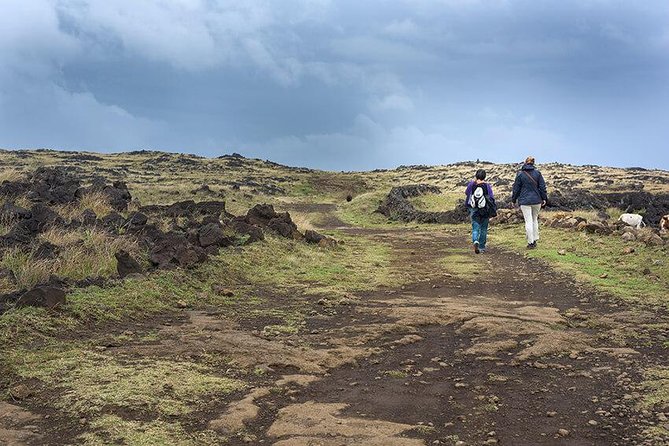
One account described roughly five miles of total walking, much of it in sun and heat. That is more useful for planning than the stop-by-stop minutes. Even if your route differs, you should prepare for a proper half-day outing rather than a vehicle tour with brief photo stops.
Pack:
- Plenty of water
- Sunscreen
- A sun hat
- Comfortable walking shoes
- Light clothing suitable for heat
- Any personal items you need for moderate walking
The provider recommends a moderate physical fitness level. Treat that seriously. The route includes caves, and one entrance is notably tight. The guide may also decide not to revisit a site if safety conditions or the group’s condition make that unwise.
That kind of decision can disappoint you if you expect to see every stop exactly as planned. It can also be the sensible choice in a protected area with uneven ground and heat. Before leaving Hanga Roa, confirm the full route, ask about walking distance, and make it clear if someone in your group needs a slower pace.
What a private vehicle and guide add
The private vehicle is not just a comfort feature. The cave sites are spread across the island, and hotel pickup saves you from arranging separate transport. At the end, you are returned to your hotel rather than left to find your own way back.
A private tour also gives you more room to ask questions about Rapa Nui customs, the caves’ uses, the fallen moai, and the old village at Ahu Te Peu. If your group has different walking abilities, you can raise that at the start.
The tradeoff is that the experience depends heavily on the individual guide. The provider identifies the service as led by a local professional guide and offers it in English. Still, because one account reported limited site knowledge and language frustration, I would confirm the guide’s English ability and familiarity with the cave route before paying the balance or setting out.
Do not expect a museum-style presentation at every site. Much of what you see is natural rock and archaeological remains. A good explanation makes the difference between a dark hole in the ground and a place connected to cooking, refuge, ceremony, conflict, and village life.
Is the $250 price fair?
The listed price is $250 per person. The national park ticket adds another $100 per person, bringing the known total to $350 before lunch, food, or drinks.
That is a serious price for four hours, but this is a private service rather than a shared group excursion. You are paying for hotel pickup and drop-off, private transport, a dedicated guide, and a route that combines four cave and archaeological sites.
The value improves for a small group that wants flexibility. If two or more people share the private vehicle and care about a personal pace, the price may feel reasonable. Group discounts are offered, though the amount is not specified, so ask for the current rate.
The value weakens if you mainly want a quick look at one cave. You could end up paying a premium for a physically demanding route that does not include lunch and requires a separate park ticket.
The park ticket is not a one-day charge only. It is mandatory, costs $100 per person, and is valid for 10 days from your first entry at all park sites. If you plan to visit several protected places during your stay, that ticket can serve other sightseeing plans too.
Who should book this Easter Island cave tour?
I would point this tour toward people who want archaeological context and natural sites in the same morning. It suits a private group that values hotel pickup, direct contact with a guide, and the chance to see Ahu Te Peu without making the day part of a larger bus itinerary.
It is also a good match for confident walkers who enjoy uneven ground and do not mind entering a small cave. Ana Te Pahu and Ahu Te Peu offer the broadest appeal, while Ana Kakenga is likely to be the most memorable for people who enjoy unusual geological spaces.
I would be careful recommending it to anyone who dislikes tight entrances, struggles in heat, or expects very short walks. It may also disappoint you if your priority is polished interpretation at every stop. Confirm the English guiding arrangements and the likely walking distance before booking.
Free cancellation is available up to 24 hours before the start time. Changes or cancellations inside that window are not refundable. The activity is not available to cruise ship passengers because port pickup is not offered, and service animals are allowed.
Should you book it?
Book this tour if you want a quieter, more personal look at Rapa Nui beyond the main moai sites. The strongest parts are Ana Te Pahu’s connected chambers, Ana Kakenga’s two sea-facing windows, and the untouched remains at Ahu Te Peu.
I would book only after confirming two things: the guide’s English and the expected walking distance. Carry serious sun protection and water, and treat the four-hour outing as a real hike with vehicle transfers. For fit walkers who want caves, old cooking areas, refuges, and fallen moai in one half-day, it offers a distinctive view of Easter Island. For anyone seeking an easy sightseeing loop, a less strenuous option may be the wiser choice.
FAQ
How long does the Easter Island caves tour last?
The tour lasts approximately four hours, beginning at 9:00 a.m. The listed visits to the four stops total about 100 minutes, with the remaining time used for transport, walking approaches, and guiding.
What sites are included?
The route includes Ana Te Pahu, Ana Te Pora, Ana Kakenga, and Ahu Te Peu. The first three are volcanic cave sites, while Ahu Te Peu is an unrestored archaeological area with fallen moai and a large hare paenga foundation.
Is hotel pickup included?
Yes. Hotel pickup and drop-off are included. You need to provide the name of your hotel on Easter Island for pickup arrangements.
Is the national park ticket included in the price?
No. The mandatory national park ticket costs $100 per person. It is valid for 10 days from your first entry and covers all park sites.
Is this tour available in English?
Yes. The experience is offered in English. Since the guide’s communication is important on an archaeological tour, confirm the English arrangements when booking.
Can cruise ship passengers book this tour?
No. The activity is not valid for cruise passengers because port pickup is not available.
Just added in Hanga Roa
- Volcanic Refuges: Excursion to Underground Civilization★ 4.7 · 8 reviews
- Volcanic Wonders and the Kingdom of the Birdman: Half Day★ 5.0 · 6 reviews
- Easter Island Ancestral Dinner and Show with Transport★ 4.5 · 2 reviews
- Half Day Private Tour: Caves and Volcanic Refuges★ 4.0 · 14 reviews
- 2 Day Small Group Tour in Moai Monuments and Historic Pathways★ 5.0 · 22 reviews
- Visit Rapa Nui in 4 days with 3 Tours and Accommodation included★ 4.0 · 2 reviews
- Tour to the Motus: Boat trip and snorkeling in Rapa Nui★ 5.0 · 8 reviews
- The birdman journey in Easter Island★ 5.0 · 1 review
Easter Island Tours, compared.
Two days of Full Day Tour of Rapa Nui + Sunrise in Tongariki
Read our review →
2-Day Private Tour Easter Island Highlights Complete Discovery
Read our review →
Private Tour: Full Day Easter Island Highlights
Read our review →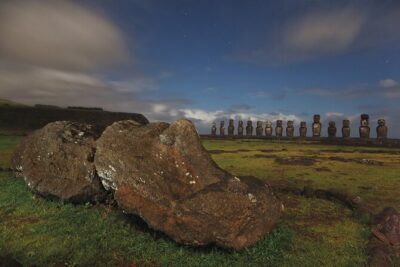
Browse the lists this tour appears in