
REVIEW · EASTER ISLAND TOURS
Private Full Day Tour to Easter Island
Rapa Nui rewards a well-planned day. This private tour links Anakena Beach, Ahu Tongariki, Rano Raraku, Ahu Akivi, Rano Kau, and Orongo in about six and a half hours, with your own guide and vehicle rather than a large bus group. I like the private format, which gives you room to ask questions and adjust the pace, and I like the range of sites, from a white-sand beach to a volcanic crater and the island’s great moai platforms.
I also value the strong local connection provided by guides such as Alex and Tokirau, who have been praised for their passion, personal stories, and respect for Rapa Nui traditions. The main drawback is cost: the tour is $295 per person, and the official National Park ticket adds another $100 per person. The day also moves quickly, so you will see a lot, but you will not have unlimited time at each site.
In This Review
- Key points to know before booking
- Why a private Rapa Nui tour makes sense
- Anakena Beach, where sacred history meets sand
- Ahu Tongariki and its line of 15 moai
- Rano Raraku, the quarry where the moai took shape
- Ahu Akivi and the legend of the seven explorers
- Rano Kau, a crater with a huge view
- Orongo and the birdman competition
- What the $295 price really includes
- The practical details that shape your day
- Who will get the most from this tour?
- Should you book the Easter Island private tour?
- FAQ
- How long does the Easter Island private tour last?
- What time does the tour start?
- Which sites are included?
- Is the National Park ticket included?
- How much does the tour cost?
- Is transportation included?
- Is this a group tour?
- What should I wear and bring?
- Can I cancel for a full refund?
Key points to know before booking
- Six major sites in one day: You visit the island’s most important archaeological and scenic places, including the 15 moai at Ahu Tongariki and the quarry at Rano Raraku.
- A genuinely private experience: Only your group participates, with private transportation, hotel pickup and drop-off, bottled water, and a private guide.
- Local guides can shape the day: Alex and Tokirau received especially warm praise for their storytelling, cultural insight, and thoughtful pacing.
- The National Park fee is extra: Budget $100 per person for the official Rapa Nui National Park ticket, in addition to the tour price.
- Walking shoes matter: Uneven ground is part of the experience, so sneakers or hiking shoes are essential.
- A good shore excursion option: Pickup can work well for ship passengers, but confirm timing carefully if your ship schedule changes.
Why a private Rapa Nui tour makes sense
Easter Island is small enough to cross by vehicle, yet its major sites are spread across the island. A private tour saves you from piecing together transport, park access, and site visits on your own. It also means you can hear the explanation for each place while the details are still in front of you.
The tour begins at 9:30 a.m. and lasts about 6 hours 30 minutes. That is a full day by sightseeing standards, especially when you include driving between sites and walking on rough ground. You will cover the main eastern and southern highlights, then finish around the volcanic crater of Rano Kau and the ceremonial village of Orongo.
The value is not just the vehicle. A good guide helps connect the moai to Rapa Nui culture rather than treating them as oversized stone objects for photographs. Alex has been praised for waiting at the port when a ship arrival was delayed, while Tokirau was praised for blending history, family stories, and respect for ancestral traditions. Guide assignment can vary, so you should not assume one particular person will lead your tour, but these comments show the level of personal attention the company aims to provide.
More things to do on Easter Island:
- From Hanga Roa: Rapa Nui Culture Sightseeing Tour
★ 4.6 · 307 reviews - From Hanga Roa: Easter Island Highlights 2-Day Tour
★ 4.3 · 205 reviews - Full Day Tour in Rapa Nui
★ 4.5 · 122 reviews
Anakena Beach, where sacred history meets sand
Anakena is an easy place to understand the appeal of Rapa Nui. It has pale sand, bright water, and a setting that feels very different from the island’s rough volcanic coast. Yet this is not simply a beach stop.
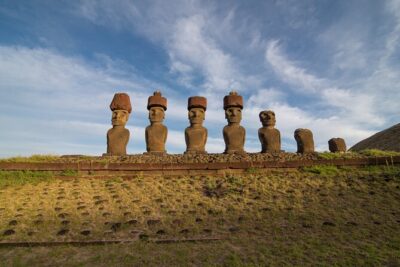
According to Rapa Nui tradition, the first king, Hotu Matu’a, landed here. Anakena was also a sacred royal site, and the moai at Ahu Nau Nau guard the shore. Your 50 minutes here should give you enough time to take in the beach, examine the platform, and listen to the explanation of why this place matters.
I like this early stop because it gives the day a human beginning. The island’s story starts with arrival, settlement, and leadership, not just monument building. The possible trade-off is time. Fifty minutes passes quickly if you want both a calm look at the beach and a careful examination of the carvings.
Bring sunscreen, a hat, and sunglasses. The sun can be strong, and shade may not be available where you want it.
Ahu Tongariki and its line of 15 moai
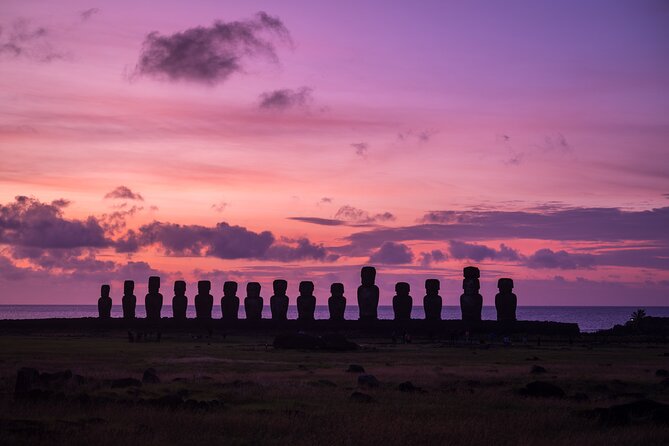
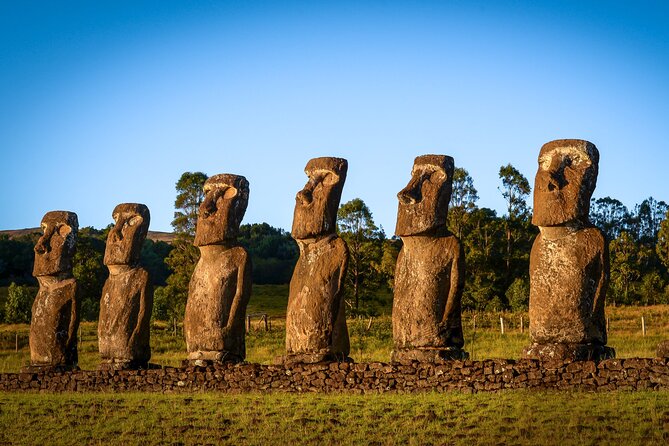
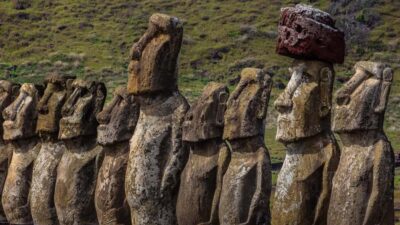
Ahu Tongariki is the tour’s biggest visual moment. Fifteen moai line a 100-meter rocky platform, with the statues ranging from about 6 to 10 meters tall. Each weighs more than 40 tons, making the scale difficult to grasp until you are standing near the platform.
The site is also a cemetery, which matters. These were not placed here as random decorations. The ahu is an ancestral monument, and the moai represent the people and lineages connected to the community.
You have about 40 minutes at Tongariki. That is enough to see the full row from different angles and hear the basic story of the site, but it may feel short if you are interested in photography. The broad arrangement is best viewed from a little distance, while the details of individual faces and bodies reward a closer look.
One review praised Tokirau for arranging a sunrise visit to Tongariki before a day of sightseeing. The standard tour described here begins at 9:30 a.m., so sunrise is not part of the published schedule. If that view matters to you, ask the operator if an early start or separate sunrise plan is possible.
Rano Raraku, the quarry where the moai took shape
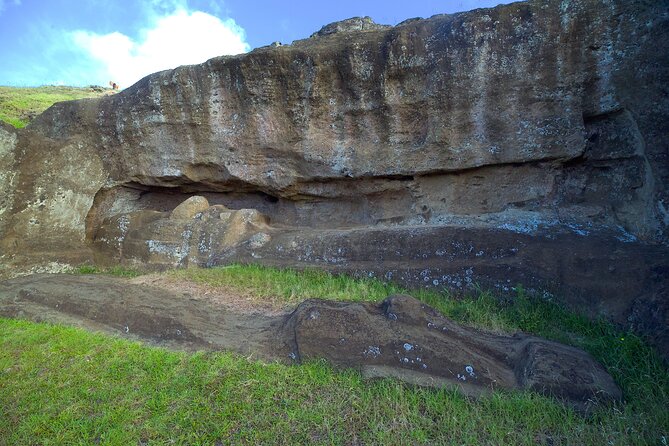
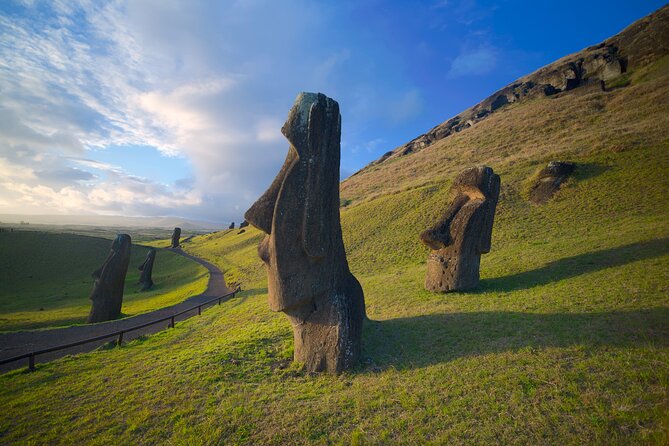
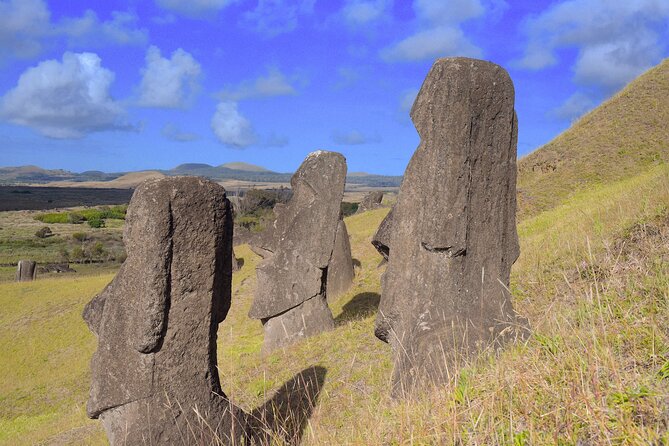
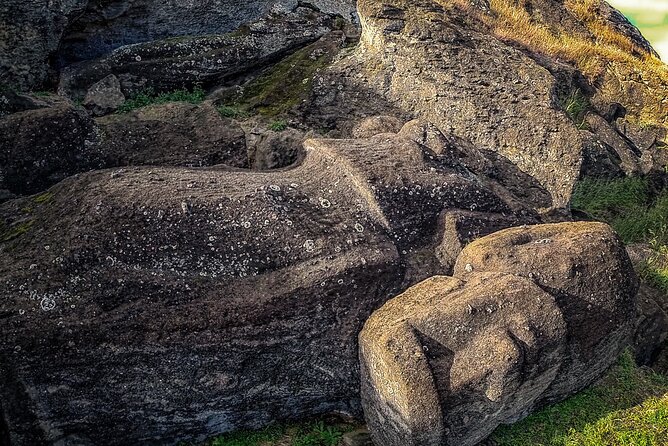
Rano Raraku is the place that turns moai-making from a mystery into a physical process. This volcanic quarry contains about 350 statues from different generations and stages of carving. Some are finished, some are partly carved, and others remain connected to the rock.
Allow two hours here, the longest stop of the day. That extra time is welcome because Rano Raraku is not a quick photo stop. You need time to walk, compare statues at different stages, and understand how the quarry functioned.
The guide’s explanation is especially useful here. Without context, you may see a hillside filled with stone figures. With context, you can begin to notice the sequence of work, the unfinished forms, and the scale of the effort required before a statue ever reached an ahu.
Lunch options are available at the on-site restaurant, surrounded by nature, or you may choose a traditional meal. The supplied information does not give the meal price or menu, so ask before ordering if you are watching your budget. Since this is the longest stop, it is also the best place in the schedule for a slower pause.
Wear shoes with a firm sole. The ground can be uneven, and comfortable walking footwear is listed as essential for this tour.
A few more options to weigh up in Hanga Roa
- 2-Day Private Tour Easter Island Highlights Complete Discovery
★ 5.0 · 110 reviews - Private Full-Day Easter Island Highlights North and West
★ 5.0 · 84 reviews - Full Day Private Tour: Factory of the Moai the stone giants
★ 4.5 · 63 reviews - Private Easter Island Full-Day Tour
★ 5.0 · 61 reviews
Ahu Akivi and the legend of the seven explorers
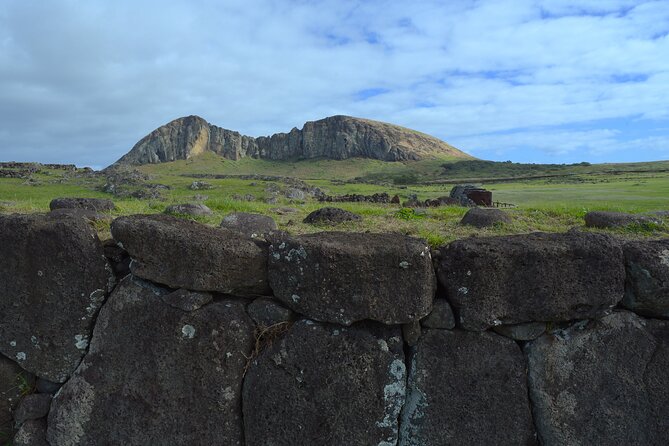
Ahu Akivi offers a different view of moai placement. The seven statues here face toward the sea, a feature tied to the oral tradition of the seven explorers. The platform is also described as the first ahu restored, and it functions as an ancestral cemetery.
This 30-minute stop is shorter and more focused than Rano Raraku. You will have time to see the seven figures together and hear the legend, but not necessarily to linger for long reflection. That is one reason the private setup helps. You can ask your guide to explain the story in greater depth without waiting for a large group to gather.
The seven moai create a strong sense of order. At Tongariki, the power comes from the sheer number and scale of the statues. At Akivi, the story centers more on the group of seven and their unusual orientation. The two sites work well together because they show different ideas about ancestry, community, and place.
Rano Kau, a crater with a huge view
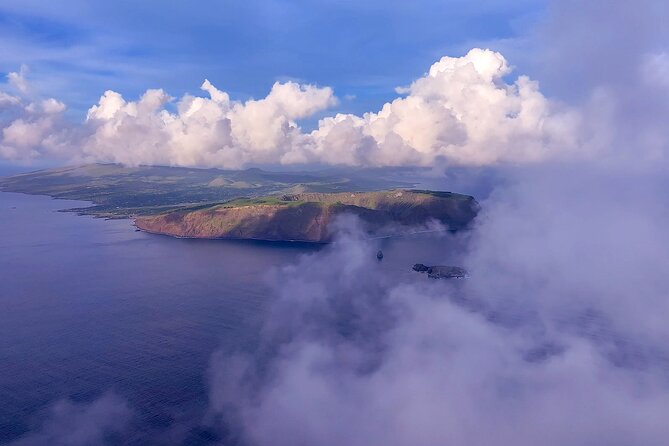
Rano Kau is one of the day’s major natural sights. Its crater has the largest perimeter on the island, and the viewpoint offers a broad view toward Hangaroa, described as the island’s fire. The stop lasts about 20 minutes.
That is enough for a look and photographs, but it is not a long walk around the crater. You should think of this as a viewpoint stop rather than a full crater hike. The short visit also helps keep the schedule moving toward Orongo.
Weather can change quickly on Rapa Nui. A raincoat or windbreaker is a sensible addition even when the morning begins clear. Wind at exposed viewpoints can also make a light layer useful.
Orongo and the birdman competition
Orongo is the most distinctive cultural stop on the route. This ceremonial village was the center of the birdman competition and worship, described as the last official religion of the Rapa Nui people.
You have about one hour here, which gives the guide time to explain the competition, the village, and the beliefs connected to it. This is not just another place to photograph stonework. Orongo helps you understand how religious and political power changed over time on the island.
I would save your best questions for this stop. Ask about the birdman tradition, the role of the village, and how it relates to the earlier moai period. The answers can help you see Rapa Nui history as a changing culture rather than a single story about statues.
Because Orongo sits in an exposed area near Rano Kau, bring sun protection and a windbreaker. The site also adds more uneven walking, so sturdy shoes remain important at the end of the day.
What the $295 price really includes
The tour costs $295 per person. That price includes private transportation, an air-conditioned vehicle, bottled water, hotel pickup and drop-off, live onboard commentary, and a private guide. Only your group takes part.
The official National Park ticket is not included and costs $100 per person. That brings the basic total to $395 per person before any tip, food, or purchases. Cash in Chilean pesos is recommended for the park ticket, souvenirs, and other small expenses.
That is a high price, but the comparison should be with other private ways of seeing Rapa Nui, not with a basic shared transfer. You are paying for a full route, private transport, guide time, and the ability to ask questions throughout the day. For two or more people sharing the private experience, the cost may feel easier to justify than it would for a solo visitor.
The tour is a better value if you have limited time on the island or want the convenience of hotel pickup and drop-off. It is less appealing if you prefer to spend a long time at one or two sites, since the schedule covers six major stops.
The practical details that shape your day
Start time is 9:30 a.m. Confirmation is provided when you book, and the tour is private. Service animals are allowed, and the meeting area is near public transportation, though hotel pickup and drop-off are included.
If you are arriving from a cruise ship, tell the operator your ship details and keep communication open. One particularly useful experience involved Alex waiting with a sign after a delayed arrival. That is encouraging for shore excursion planning, but you should still allow enough time for the return to the ship. No tour can control port delays or traffic.
Pack:
- Comfortable sneakers or hiking shoes
- Sunscreen, hat, and sunglasses
- A raincoat or windbreaker
- Water, although bottled water is provided
- Cash in Chilean pesos
- A camera or phone with room for photographs
Most people can participate, but you should be ready to walk on uneven terrain. The National Park access fee must be purchased separately, and tipping is not included.
Free cancellation is available until 24 hours before the start time for a full refund. Cancellations or changes made less than 24 hours before the tour are not accepted for a refund.
Who will get the most from this tour?
I would choose this tour if you want to see the major Rapa Nui sites in one organized day and care about having a private guide. It suits couples, families, and small groups who want their own vehicle and the freedom to ask questions without a fixed large-group script.
It also fits a short stay well. Six stops give you a useful first look at the island’s archaeology, religion, natural scenery, and settlement traditions. The tour is especially practical for a cruise shore visit, provided your port schedule allows enough time.
I would think twice if your main goal is solitude or extended photography. The day includes plenty of locations, but each stop has a set time. Rano Raraku receives two hours, while Rano Kau gets only 20 minutes. A private guide may help with pacing, yet the route still has to cover a lot of ground.
The quality of your day will also depend heavily on the guide. Alex and Tokirau were praised for their warmth, local perspective, and ability to avoid a rushed, scripted feel. If you want that kind of personal storytelling, request a guide who can offer it, while understanding that specific guide availability is not guaranteed.
Should you book the Easter Island private tour?
Book it if you want an efficient, private introduction to Rapa Nui and are comfortable with the added $100 National Park fee. The route gives you the island’s essential sights: a royal beach, the largest moai platform, the quarry, the seven explorers, the great crater, and the birdman village.
I especially like the combination of sites and the chance to spend real time at Rano Raraku and Orongo. The price is not modest, but private transport, hotel service, bottled water, and a guide for only your group make it reasonable for people who value comfort and context.
If you book, wear good shoes, bring protection from sun and wind, carry Chilean pesos, and confirm your pickup details. Ask about guide assignment and any special timing requests, especially if you hope to see Tongariki at sunrise. For a first full day on Easter Island, this is a strong choice, as long as you understand that the schedule favors broad coverage over slow exploration.
FAQ
How long does the Easter Island private tour last?
The tour lasts approximately 6 hours and 30 minutes.
What time does the tour start?
The stated start time is 9:30 a.m.
Which sites are included?
The tour visits Anakena Beach, Ahu Tongariki, Rano Raraku, Ahu Akivi, Rano Kau, and Orongo.
Is the National Park ticket included?
No. The official Rapa Nui National Park ticket costs $100 per person and must be purchased separately.
How much does the tour cost?
The tour price is $295 per person, before the separate National Park fee and any tip.
Is transportation included?
Yes. Private transportation, an air-conditioned vehicle, bottled water, and hotel pickup and drop-off are included.
Is this a group tour?
No. This is a private activity, and only your group participates.
What should I wear and bring?
Wear comfortable shoes, such as sneakers or hiking boots. Sunscreen, a hat, sunglasses, cash in Chilean pesos, a camera, and a raincoat or windbreaker are also recommended.
Can I cancel for a full refund?
Yes. You can cancel at least 24 hours before the start time for a full refund. Changes or cancellations made less than 24 hours before the tour are not accepted for a refund.
Just added in Hanga Roa
- Volcanic Refuges: Excursion to Underground Civilization★ 4.7 · 8 reviews
- Volcanic Wonders and the Kingdom of the Birdman: Half Day★ 5.0 · 6 reviews
- Half Day Private Tour: Caves and Volcanic Refuges★ 4.0 · 14 reviews
- Easter Island Ancestral Dinner and Show with Transport★ 4.5 · 2 reviews
- 2 Day Small Group Tour in Moai Monuments and Historic Pathways★ 5.0 · 22 reviews
- Visit Rapa Nui in 4 days with 3 Tours and Accommodation included★ 4.0 · 2 reviews
- Tour to the Motus: Boat trip and snorkeling in Rapa Nui★ 5.0 · 8 reviews
- The birdman journey in Easter Island★ 5.0 · 1 review
Easter Island Tours, compared.
Two days of Full Day Tour of Rapa Nui + Sunrise in Tongariki
Read our review →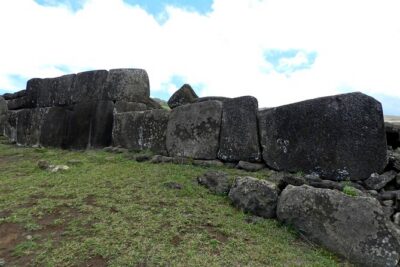
2-Day Private Tour Easter Island Highlights Complete Discovery
Read our review →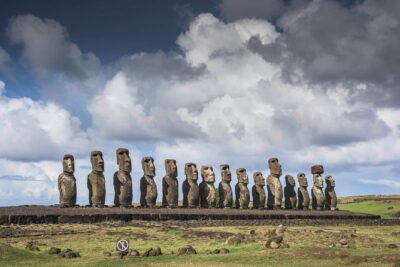
Private Tour: Full Day Easter Island Highlights
Read our review →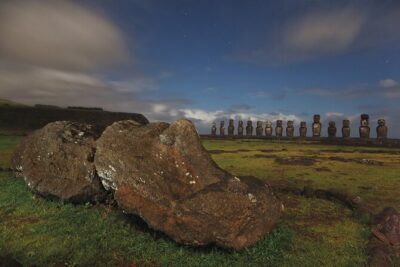
Browse the lists this tour appears in