
REVIEW · EASTER ISLAND TOURS
Private Full-Day Easter Island Highlights South and East
Moai country rewards a good guide. This private tour packs Easter Island’s southern and eastern highlights into about six and a half hours, with hotel pickup, a private air-conditioned minivan, and a bilingual guide who explains the island’s stories instead of leaving you to guess at piles of stones. I especially like the access to Rano Raraku, where most moai were carved, and the powerful finish at Ahu Tongariki, home to 15 statues.
I also like the private format, which gives your party room to ask questions and set a comfortable pace within the day’s schedule. The main drawback is cost: at $280 per person, plus the required $80 national park ticket and lunch, this is not a bargain for one day. It also does not serve cruise ship terminals, and the minivan may not suit every passenger.
In This Review
- Key points to know before you book
- Why this route matters on Easter Island
- Ahu Huri A Urenga and the first look at ancient astronomy
- Vinapu: precise stonework and a disputed connection
- Hanga Poukura, buried statues, and a coastal blowhole
- Ahu Vaihu and a window into village life
- Ahu Akahanga and the island’s fallen moai
- Lunch is a pause, not a free inclusion
- Rano Raraku, the quarry that explains the moai
- Ahu Tongariki and 15 moai at the finish
- What the private minivan adds
- The real price of the experience
- Who should choose this south and east tour?
- Should you book it?
- FAQ
- How long does the private Easter Island tour last?
- What time does hotel pickup begin?
- Is the Rapa Nui National Park ticket included?
- Does the tour include lunch?
- Can cruise ship passengers join this tour?
- Is this a shared group tour?
Key points to know before you book
- Rano Raraku is the star stop: You get about 1 hour and 40 minutes at the volcanic quarry where most of Easter Island’s moai were carved.
- Ahu Tongariki closes the day well: Fifteen restored moai create the tour’s strongest single view.
- Private means personal service: Only your party joins, rather than a large bus group.
- The park ticket costs extra: Buy the Rapa Nui National Park ticket online before the tour. It costs $80 per person and is valid for all sites and tours.
- Hotel pickup starts at 9:30 am: Transport, bottled water, and hotel drop-off are included.
- This is a south and east tour, not the whole island: You may want a second day for other parts of Rapa Nui.
Why this route matters on Easter Island
Easter Island, also called Rapa Nui, can look simple on a map. Hanga Roa sits on one side, the roads are limited, and many major sites are spread across the coast and inland volcanic slopes. The challenge is not merely reaching the ruins. It is understanding what you are seeing and why the sites matter.
This route follows the southern and eastern parts of the island. It combines fallen statues, carefully fitted stonework, old village remains, unusual lava formations, the quarry at Rano Raraku, and the island’s most famous restored ahu.
I would choose this tour if you want the main moai story in one concentrated day. The private setup is useful because you can ask about the statue carving process, local legends, or the meaning of an ahu without waiting for a whole coach group to catch up.
The published stop times add up to about four hours and 35 minutes, leaving roughly two hours for driving, hotel pickup, lunch, and transitions. That makes the six-hour-30-minute total believable, but you should not expect long, leisurely visits at every site.
More things to do on Easter Island:
- From Hanga Roa: Rapa Nui Culture Sightseeing Tour
★ 4.6 · 307 reviews - From Hanga Roa: Easter Island Highlights 2-Day Tour
★ 4.3 · 205 reviews - Full Day Tour in Rapa Nui
★ 4.5 · 122 reviews
Ahu Huri A Urenga and the first look at ancient astronomy
The day is described as beginning at Ahu Huri A Urenga, a single moai with four hands. The statue is aligned with the sunrise at the winter solstice, giving you an early reminder that Rapa Nui monuments were not placed at random.
This is a small stop compared with Tongariki or Rano Raraku, but it adds an important layer. You are not only looking at statues. You are also looking at how the island’s people observed the sun and organized ceremonial places around the year.
The detailed stop schedule also lists Vinapu as the first formal stop, so the exact order may change. That is worth keeping in mind when planning your expectations. The guide can place the stops in the order that best fits the day.
Vinapu: precise stonework and a disputed connection
Ahu Vinapu is known for Ahu Tahira, a platform built with remarkably tight-fitting stone blocks. The construction has led some people to suggest contact with the Inca Empire, based on similarities in stonework.
A good guide should help you separate what is visible from what remains debated. You can admire the engineering without treating every theory as settled fact. That is one of the main reasons I would pay for a guide here. A quick stop on your own may show you a wall, but a clear explanation can turn it into a useful clue about Rapa Nui building skills and outside-contact theories.
The scheduled visit is about 30 minutes. That is enough for an introduction, photographs, and a discussion, but not enough for a slow exploration. Admission is included in the tour schedule, but your national park ticket is still required separately.
Hanga Poukura, buried statues, and a coastal blowhole
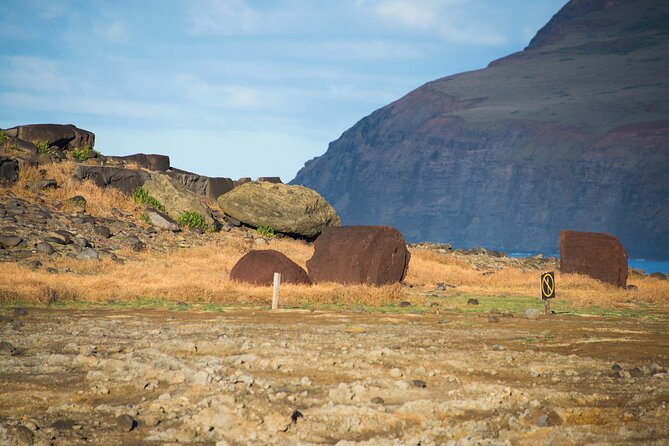
Near Vinapu, Hanga Poukura adds a different mood. The coast is marked by rough lava formations, and several statues lie buried in a line with only their backs visible.
That sight is easy to misunderstand. The partly buried moai are not simply a collection of abandoned sculptures waiting to be uncovered. Their position reflects the long changes that affected the sites after ceremonial use stopped. Let your guide explain the local setting and the condition of the monuments rather than rushing past.
Hanga Poukura also has a blowhole formed by the force of the sea meeting old lava flows. When the ocean is right, water shoots upward as waves enter the opening. The timing and spray depend on natural conditions, so treat it as a possibility, not a guaranteed show.
The stop is listed at about 30 minutes. The combination of lava, sea, stonework, and half-buried statues makes it a worthwhile pause, even if the blowhole is quiet during your visit.
A few more options to weigh up in Hanga Roa
- 2-Day Private Tour Easter Island Highlights Complete Discovery
★ 5.0 · 110 reviews - Private Full-Day Easter Island Highlights North and West
★ 5.0 · 84 reviews - Full Day Private Tour: Factory of the Moai the stone giants
★ 4.5 · 63 reviews - Private Easter Island Full-Day Tour
★ 5.0 · 61 reviews
Ahu Vaihu and a window into village life
Ahu Vaihu shifts the focus from isolated monuments to daily life. Here, you can see a modern reconstruction of an ancient village, including examples of old planting methods and replica boat houses.
This is useful because moai sites can make Rapa Nui seem like a civilization devoted only to carving statues. The village setting gives you a better sense of the people who grew food, lived in houses, traveled by sea, and organized community life around these monuments.
The visit lasts about 30 minutes. That is a practical length for seeing the reconstructions and hearing the basic explanation, though anyone hoping for a detailed archaeological workshop may find the time short.
Ahu Akahanga and the island’s fallen moai
Ahu Akahanga was once one of the island’s larger villages. You can see house foundations, a cave, and a large ahu with several fallen moai.
The fallen statues are part of the site’s power. At Tongariki, you see a restored ceremonial row. At Akahanga, you see a monument after its ceremonial life ended. Together, the two places help you understand the scale of change that took place across Rapa Nui.
Local tradition connects Akahanga with Hotu Matu’a, the great king associated with the island’s settlement. The story is part of Rapa Nui tradition, but it should be understood as legend rather than a fact that can be proven simply by standing beside the ahu.
The scheduled stop is about 40 minutes. Uneven ground and exposed conditions may make this a less comfortable visit for anyone with limited mobility, although the tour information says most people can participate.
Lunch is a pause, not a free inclusion
Lunch is not included in the stated price, so budget for it separately. The tour plan allows a break before Rano Raraku, but it does not specify a restaurant, menu, or exact lunch cost.
Some past arrangements connected with this operator included a hosted meal at the home of the company’s owners, with family members and traditional singing. That sounds memorable, but you should not assume it is part of this booking unless the provider confirms it directly. The information for this experience lists lunch as not included.
That distinction matters. A private tour at this price can feel reasonable if the day includes a personal meal and extended local contact, but the basic package only promises transport, bottled water, a professional local driver-guide, and hotel pickup and drop-off.
Rano Raraku, the quarry that explains the moai
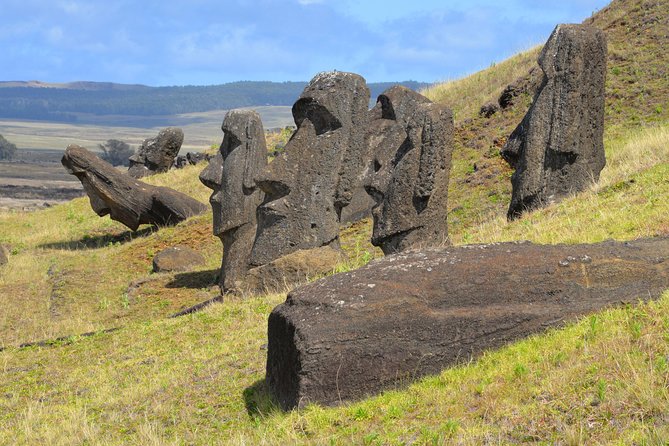
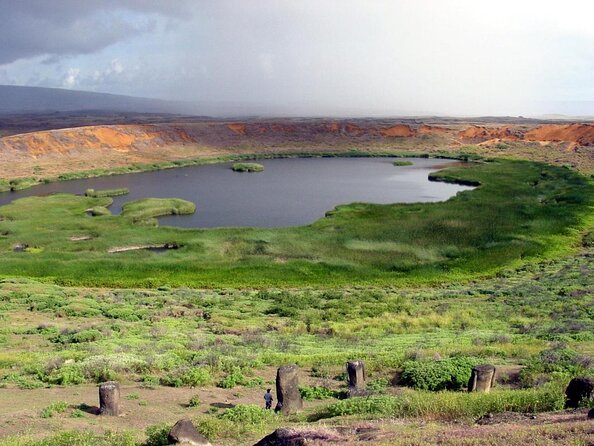
Rano Raraku is the most important stop on this route. The volcanic crater served as the main carving site for the island’s moai. When production stopped, hundreds of statues remained where they had been left.
You get about 1 hour and 40 minutes here, the longest stop of the day. That is exactly right. Rano Raraku deserves more than a quick photograph from a roadside viewpoint.
As you walk through the area, the unfinished and partly buried figures make the carving process easier to picture. Some statues appear to remain attached to the rock, while others were cut free but never transported. The site gives you a direct sense of the work involved, from shaping the volcanic stone to moving enormous figures across the island.
This is also where a guide adds the most value. You can ask how the statues were made, why so many remained behind, and how the quarry fits into the wider ceremonial system. The past guides named in the tour’s feedback include Albert, Andres, Simon, Benjamin, Sofia, and Bruna. Guide assignments can change, but the repeated praise for local explanations and attention to questions suggests that the human side of the tour is a major part of its appeal.
The walk may be the most physically demanding portion simply because it is the longest site visit. Wear practical shoes, bring sun protection, and use the bottled water provided.
Ahu Tongariki and 15 moai at the finish
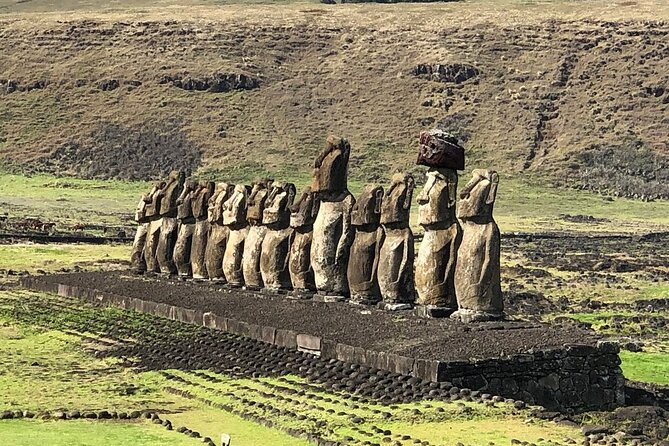
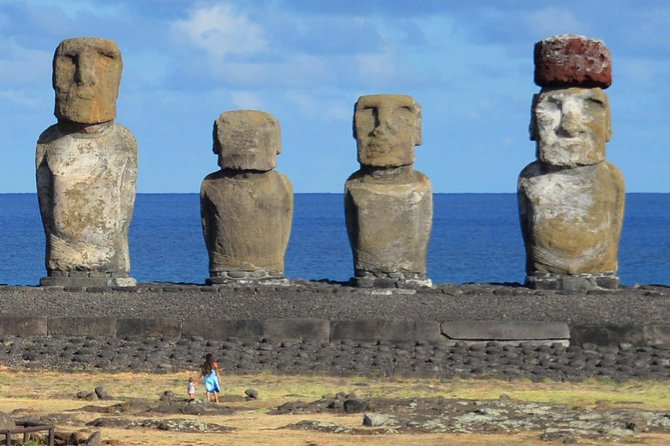
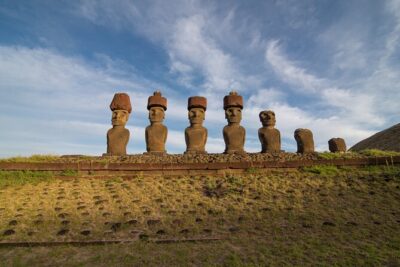
Ahu Tongariki is the grand finale. Fifteen moai face inland from the restored ceremonial platform, creating the most dramatic group view on the island.
The stop lasts about 45 minutes. That gives you time to take in the full row, look at individual statues, and hear how the ahu fits into Rapa Nui’s ceremonial world. The scale is difficult to grasp from a single photograph. Seeing the figures together is the point.
Tongariki is also a good final stop because it brings together the themes of the day: quarry production at Rano Raraku, stone transport, ceremonial platforms, and the later collapse and restoration of important sites.
The tour does not promise a sunrise visit. Pickup begins at 9:30 am, so you are seeing Tongariki during the main part of the day rather than for the famous early-morning light. If sunrise photography is your priority, you would need to arrange a separate plan.
What the private minivan adds
Your transport is an air-conditioned minivan, with hotel pickup and return included. For a route involving several stops and rural roads, that is more comfortable than arranging separate rides between sites.
The private format is the larger benefit. Only your party participates, so you can ask more questions and avoid the stop-and-go feel of a large coach. The guide can also spend more time on subjects that interest you, within the fixed schedule.
Still, do not assume the vehicle will be luxurious. One past passenger had a serious problem with the seat and back support in a replacement van and left the tour early. That appears to have been a vehicle-specific problem, not the normal description of the service, but it is a useful practical warning. If you have back issues or need an adjustable seat, contact the provider before booking and ask which vehicle will be used.
The tour is bilingual, conducted in English and Spanish by the same guide. Confirm your preferred language when booking, especially if precise explanations are important to you.
The real price of the experience
The listed price is $280 per person. Add the required $80 national park ticket, and the known total becomes $360 per person before lunch.
That is a high outlay for a six-and-a-half-hour excursion, but the comparison should be with the full cost and effort of arranging a private vehicle, driver, site knowledge, and hotel transfers on your own. If you are traveling as a couple, the price may feel steep. If you are splitting the private vehicle among several people, the value improves.
The strongest case for paying is the guide. Several past guides, including Benjamin, Sofia, Albert, Andres, and Simon, received specific praise for explaining Rapa Nui culture, answering questions, and making the sites easier to understand. If you are content to see monuments without much context, renting a vehicle or arranging independent transport could cost less. If you want the stories and connections, the private tour makes a stronger case.
The national park ticket is not optional for your budget. Buy it online beforehand, and carry it with you on tour. It is valid for all tours and sites, according to the supplied details.
Who should choose this south and east tour?
I would recommend it most strongly to:
- Couples or families who want a private day rather than a shared bus.
- First-time visitors with limited time on Rapa Nui.
- Anyone who wants Rano Raraku and Ahu Tongariki in the same outing.
- People who value a local guide’s stories, legends, and cultural explanations.
- Small groups that can share the private-tour cost.
I would look elsewhere if you are arriving by cruise ship, since the tour does not pick up at cruise terminals. I would also hesitate if your main goal is a slow photographic day, a sunrise at Tongariki, or a full-island route. This is a focused south and east circuit, not a complete introduction to every part of Easter Island.
Most people can participate, but the schedule includes outdoor walking and several exposed archaeological sites. The tour information does not give detailed accessibility specifications, so ask the provider about walking surfaces and vehicle seating if those details matter to you.
Free cancellation is available if you cancel at least 24 hours before the local start time. Changes or cancellations inside that window are not accepted for a refund.
Should you book it?
Book this tour if you have one strong sightseeing day and want the quarry, the great 15-moai platform, and several southern sites explained by one private guide. The itinerary moves at a firm pace, but it covers the places that make Rapa Nui’s statue story understandable.
Skip it if $360 per person before lunch feels too high, if you need cruise-terminal pickup, or if you prefer to explore independently. If you do book, buy the park ticket first, confirm the pickup and language, ask about the vehicle, and treat lunch as a separate expense.
For many people, the best plan is two days on the island. This route handles the south and east well. A second tour can cover other parts of Rapa Nui without forcing every major site into one rushed day.
FAQ
How long does the private Easter Island tour last?
The tour lasts approximately 6 hours and 30 minutes, including transfers between the hotel and the sites.
What time does hotel pickup begin?
The listed start time is 9:30 am. Hotel pickup and drop-off are included.
Is the Rapa Nui National Park ticket included?
No. You must buy the ticket online beforehand. It costs $80 per person and is valid for all tours and sites.
Does the tour include lunch?
No. Lunch is not included in the tour price.
Can cruise ship passengers join this tour?
No. The tour does not pick up at cruise ship terminals.
Is this a shared group tour?
No. This is a private activity, so only your party participates. The guide conducts the tour in English and Spanish.
Just added in Hanga Roa
- Volcanic Refuges: Excursion to Underground Civilization★ 4.7 · 8 reviews
- Volcanic Wonders and the Kingdom of the Birdman: Half Day★ 5.0 · 6 reviews
- Half Day Private Tour: Caves and Volcanic Refuges★ 4.0 · 14 reviews
- Easter Island Ancestral Dinner and Show with Transport★ 4.5 · 2 reviews
- 2 Day Small Group Tour in Moai Monuments and Historic Pathways★ 5.0 · 22 reviews
- Visit Rapa Nui in 4 days with 3 Tours and Accommodation included★ 4.0 · 2 reviews
- The Route of Hotu Matua Full-Day Tour from Hanga Roa★ 5.0 · 1 review
- Tour to the Motus: Boat trip and snorkeling in Rapa Nui★ 5.0 · 8 reviews
Easter Island Tours, compared.
Two days of Full Day Tour of Rapa Nui + Sunrise in Tongariki
Read our review →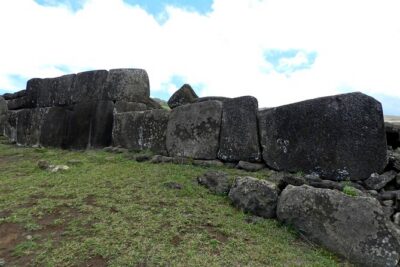
2-Day Private Tour Easter Island Highlights Complete Discovery
Read our review →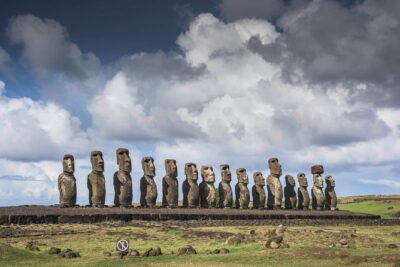
Private Tour: Full Day Easter Island Highlights
Read our review →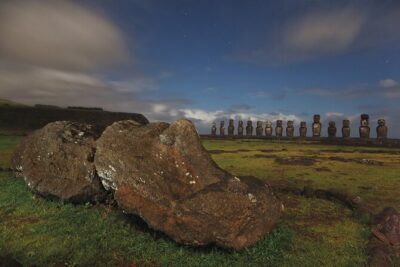
Browse the lists this tour appears in