
REVIEW · EASTER ISLAND TOURS
Private 2 Days Essential Tour of Easter Island
Moai, volcanoes, and one excellent guide. This private Easter Island tour packs the island’s major archaeological sites into two well-planned days, with private transport and a local guide who can explain what you are seeing without turning every stop into a lecture. I like the broad route, from the fallen statues at Akahanga to the fifteen moai at Tongariki, and I like that the small private format can be adjusted to your pace. The main catch is cost: $624 per person, plus the required $100 national park ticket, and lunch is included only on day one.
The tour also gets strong marks for clear communication and punctual guides. Thais has been praised for excellent English and for knowing when to move on, while Isabell brought humor and enthusiasm to the island’s story. Another guide, Akahanga, was especially patient, allowing time to enjoy Tongariki after the main crowd had gone. Cruise passengers cannot use this tour, despite one conflicting account, so check that point carefully before booking.
In This Review
- What makes this two-day tour worth considering
- Why the private format matters on Rapa Nui
- Day one: fallen moai, the quarry, and Anakena
- Ahu Akahanga, one hour among fallen statues
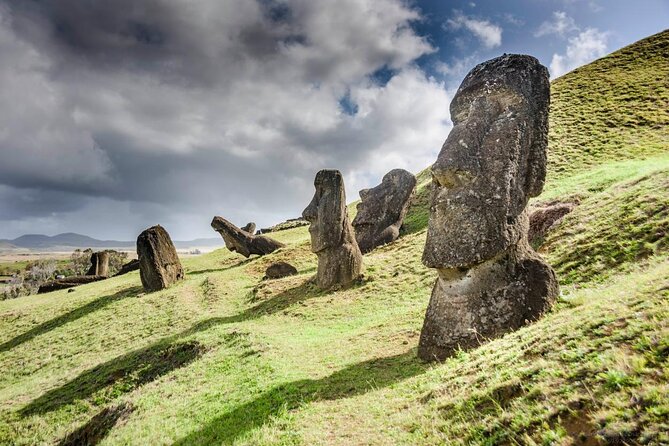
- Rano Raraku, where the moai began
- Ahu Tongariki, the essential photograph
- Ahu Te Pito Kura and the largest transported moai
- Anakena Beach, a change of pace
- Day two: volcano views, Birdman traditions, and red stone
- Orongo, the dramatic setting for the Birdman ceremony
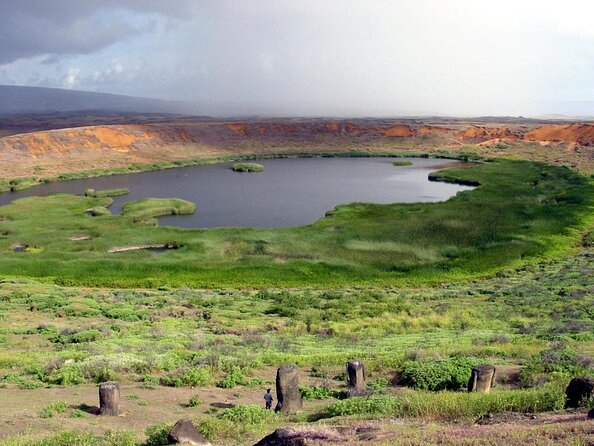
- Rano Kau, the island’s great volcanic crater
- Ahu Vinapu, careful stonework and unanswered questions
- Ahu Tahai, three platforms close to town
- Puna Pau, the red stone quarry
- Ahu Akivi, seven moai facing the setting sun
- The real price: $724 before any extras
- Timing, pickup, and important limits
- Who should book this tour
- FAQ
- What is included in the tour price?
- Is the national park ticket included?
- Does the tour include lunch on both days?
- Where does pickup take place?
- Can cruise ship passengers book this tour?
- What time does the tour begin?
- Can I cancel for a full refund?
- Should you book the Essential Tour?
What makes this two-day tour worth considering
- Fifteen moai at Ahu Tongariki: The island’s largest restored ceremonial platform is the visual centerpiece of day one.
- Rano Raraku explains the moai: You see the volcanic quarry where the statues were carved before being moved around the island.
- Private guiding keeps the pace human: You are not tied to a large group or forced to rush every stop.
- Day two covers Rano Kau and Orongo: These sites add the island’s volcanic setting and Birdman ceremony to the moai story.
- The $100 park ticket covers all tour sites: It is valid for 10 days from your first entry, useful if you plan extra visits.
- Hotel pickup starts at 9 a.m.: Pickup is offered at most hotels in Hanga Roa, but not at the port or by tender.
Why the private format matters on Rapa Nui
Easter Island is compact, but its sites are scattered around the coast and interior. A private vehicle saves you from arranging separate rides between places, and a private guide gives you room to ask questions or linger when a site catches your attention.
That flexibility matters most at the major stops. Ahu Tongariki can feel very different when you are not being hurried along with a large group. One guide, Akahanga, was praised for staying long enough to enjoy the site after the crowd had thinned, including time for sunrise viewing. Sunrise itself is not listed as part of the standard 9 a.m. departure, so do not assume it is included. Still, the example shows the value of discussing your priorities in advance.
The guides named in the tour feedback are Thais, Isabell, and Akahanga. Thais was praised for arriving promptly, speaking excellent English, and giving enough information without overloading each stop. Isabell was described as fun, informed, and passionate about the island. These details matter because the quality of a Rapa Nui tour depends heavily on the person explaining the stones in front of you.
More things to do on Easter Island:
- From Hanga Roa: Rapa Nui Culture Sightseeing Tour
★ 4.6 · 307 reviews - From Hanga Roa: Easter Island Highlights 2-Day Tour
★ 4.3 · 205 reviews - Full Day Tour in Rapa Nui
★ 4.5 · 122 reviews
Day one: fallen moai, the quarry, and Anakena
Ahu Akahanga, one hour among fallen statues
Your first stop is Ahu Akahanga on the southeast coast. This is a useful opening because it introduces the basic layout of an ancient Rapa Nui settlement: the village area in relation to the ahu, or ceremonial platform.
Several moai lie face down or on their backs. That sight can be startling after seeing upright statues in photographs, but it helps you understand that the island’s archaeological story includes collapse, abandonment, restoration, and ongoing study. Your guide can provide the context that a quick photo stop cannot.
The scheduled hour is enough to look carefully without making the beginning of the day feel rushed. Admission is not included in the tour price, but the mandatory national park ticket covers entry to the sites.
Rano Raraku, where the moai began
Rano Raraku is the day one stop that best explains how the island produced so many enormous statues. This volcanic cone is the island’s only quarry of volcanic tuff, the soft stone used to carve the moai on a large scale.
Allow two hours here, and you should. The quarry is not just a place where finished statues were stored. It shows the carving process and the point from which moai were transported to ceremonial platforms around the island. Seeing unfinished or partially carved figures makes the statues feel less like isolated monuments and more like the final stage of a demanding island-wide project.
This stop also gives you the best chance to ask practical questions about how the moai were shaped and moved. The quality of the explanation matters, so a guide who can give clear detail without drowning you in theory is a real advantage.
A few more options to weigh up in Hanga Roa
- 2-Day Private Tour Easter Island Highlights Complete Discovery
★ 5.0 · 110 reviews - Private Full-Day Easter Island Highlights North and West
★ 5.0 · 84 reviews - Full Day Private Tour: Factory of the Moai the stone giants
★ 4.5 · 63 reviews - Private Easter Island Full-Day Tour
★ 5.0 · 61 reviews
Ahu Tongariki, the essential photograph
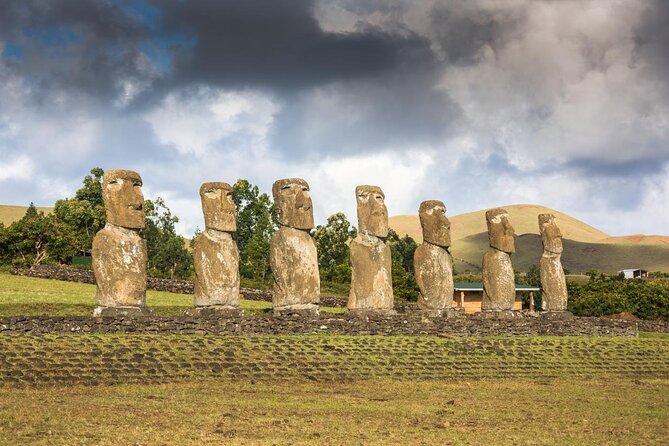
Across from Rano Raraku, Ahu Tongariki presents the most imposing group of restored moai on the tour. Fifteen statues face inland with their backs to the Pacific, arranged on the island’s largest reconstructed ahu.
This is the image most people carry home from Easter Island, and it deserves the attention it gets. The scale of the platform, the line of statues, and the open setting make Tongariki more than a quick photo opportunity. Give yourself time to look at the different shapes and expressions rather than treating the group as one object.
Two hours are scheduled here. That is generous, but useful. You can photograph the full platform, examine individual statues, and listen to the story of restoration. If you hope to catch a quieter visit or special light, ask your guide what flexibility is possible. The tour begins at 9 a.m., so the standard schedule is not an early sunrise outing.
Ahu Te Pito Kura and the largest transported moai
Ahu Te Pito Kura takes about 30 minutes. Its main claim is Ahu o Paro, a moai measured at 11 meters long and estimated at about 90 tons. It is described as the largest moai transported from Rano Raraku.
Near the ahu is the rounded stone called Te Pito o te Henua. Local tradition connects the stone with the island’s ancestors. This is a short stop, so expect a focused look rather than a long visit. It works well after the larger sites because your guide can connect the statue’s size and movement with what you have just seen at the quarry.
Anakena Beach, a change of pace
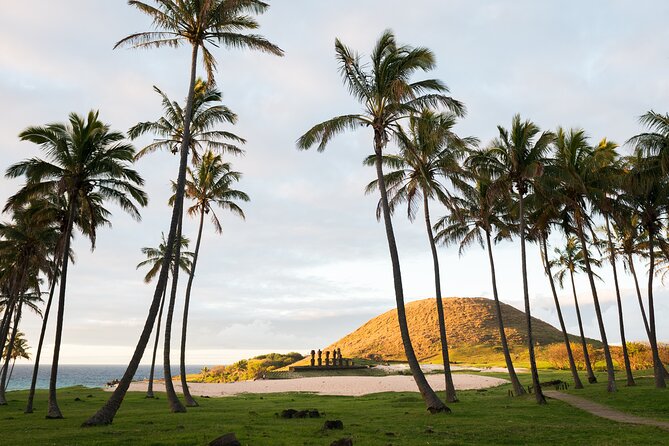
Anakena closes day one with warm turquoise water, coral sand, and a different side of Rapa Nui. It is the island’s main beach and was the ancestral home of the Miru Araki royal family.
The nearby Ahu Nau Nau is important for its finely finished moai. After a morning and early afternoon of stone platforms and volcanic rock, the beach gives the day a welcome change of pace. You can take in the setting while still learning about royal settlement and ceremonial life.
Lunch is included on day one, but the supplied information does not specify the restaurant, menu, or exact timing. Lunch on day two is not included, so plan your budget accordingly.
Day two: volcano views, Birdman traditions, and red stone
Orongo, the dramatic setting for the Birdman ceremony
Orongo sits beside the crater of Rano Kau and focuses on a later chapter of Rapa Nui culture: the Birdman ceremony. The village is one of the island’s two principal archaeological sites, and two hours are scheduled here.
The location gives the ceremony a strong sense of place. Rather than only hearing about a religious or political contest, you can connect the story to the volcanic rim and the sea beyond it. Your guide’s explanation is especially useful here because the significance of Orongo is not obvious from the stone structures alone.
Rano Kau, the island’s great volcanic crater
Rano Kau is one of the most striking natural sights on the island. Its crater measures about 1.5 kilometers across, and the lake inside once served as an important source of drinking water.
The visit is scheduled for 30 minutes, which suggests a viewpoint-style stop rather than a long walk around the crater. That is enough to take in the scale and hear how the crater supported endemic plant life. If volcanoes are your main interest, you may wish to ask in advance how much time can be spent here, since Orongo receives the longer visit.
One tour account singled out the volcano as a favorite, and that makes sense. The moai are the headline attraction, but Rano Kau shows the natural setting that shaped life on the island.
Ahu Vinapu, careful stonework and unanswered questions
Ahu Vinapu is a compact archaeological stop with a focus on construction technique. The site is known for finely worked stone, and some theories suggest a possible relationship with Inca building styles.
The wording matters here. The connection is presented as a theory, not a settled fact. A good guide should help you separate what is clearly supported from what remains debated. That makes Vinapu valuable for visitors who enjoy archaeology, but it may feel less immediately dramatic than Tongariki or Rano Raraku.
Ahu Tahai, three platforms close to town
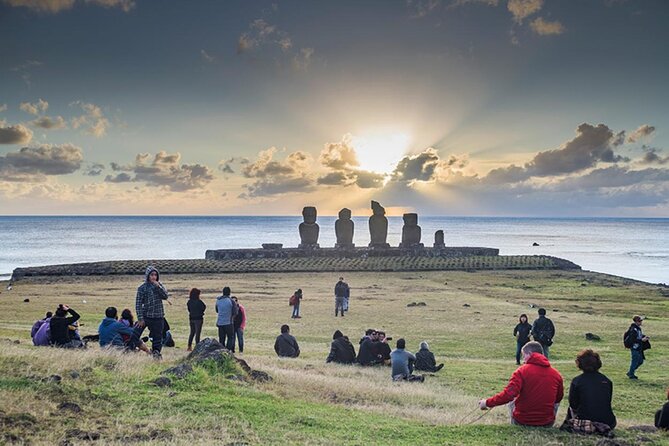
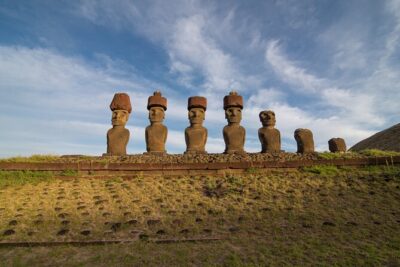
Ahu Tahai is convenient because it is near Hanga Roa and popular for sunset photography. Restored in 1974 by American archaeologist William Mulloy, the site includes three principal ahu: Ko Te Riku, Tahai, and Vai Ure.
Ko Te Riku is notable for its restored eyes. Seeing the three platforms together gives you a chance to compare different statue forms and settings without the scale of Tongariki. The one-hour visit should allow time for photographs and a clear explanation of the restoration work.
Because Tahai is close to town, it is also an easy place to revisit on your own if your schedule permits. The tour includes it as part of the second day, but the information provided does not promise a sunset departure or a particular sunset time.
Puna Pau, the red stone quarry
At Puna Pau, you see where the red volcanic stone used for the pu kao was extracted. These are the cylindrical stones placed on some moai, often described as their topknots or hair.
Twenty-three cylindrical prototypes remain at an early carving stage, showing how the pieces were prepared to make transport easier. The site also offers a privileged view over Hanga Roa. One hour is scheduled, giving you time to understand the stonework and look back toward the village.
Puna Pau is a good reminder that the moai were not made from one material. The statue body and the red topknot came from different sources, adding another layer to the island’s engineering story.
Ahu Akivi, seven moai facing the setting sun
Ahu Akivi is unusual because it is one of the few ceremonial platforms away from the coast. Its seven restored moai face the setting sun and have an astronomical orientation.
The restoration involved William Mulloy, Gonzalo Figueroa, and the Rapa Nui community. That shared work is worth noting because the site is not simply an ancient place frozen in time. It is also part of a modern effort to protect and restore the island’s heritage.
The one-hour stop provides a fitting end to the tour. After seeing coastal platforms, quarry sites, and volcanoes, Akivi brings the focus back to the statues and their position in the wider world.
The real price: $724 before any extras
The listed cost is $624 per person. Add the required $100 national park ticket, and the basic total becomes $724 per person. The ticket is valid for 10 days from your first entry and covers all national park sites, so its value improves if you stay longer and return to places independently.
Lunch is included on day one, but not day two. Private transportation and a professional local guide are included. Since this is a private activity, only your group participates, and group discounts are offered, though no discount amount is given.
I see the price as reasonable for a couple or small group that values a dedicated vehicle, a two-day route, and direct guiding. It is less attractive if you want only a few headline sites or are comfortable arranging transport yourself. The tour’s broad coverage means you are paying for access to nearly all the major stops in a short visit.
Timing, pickup, and important limits
The tour starts at 9 a.m., with pickup at most hotels in Hanga Roa. Port and tender pickup is not available, and the activity is specifically not valid for cruise ship passengers. If you are arriving by ship, do not rely on the one positive account that refers to cruise arrival. The stated operating rules are more important, and you should choose a tour that clearly accepts port pickup.
The two days include roughly 12 hours of listed sightseeing, before driving and meal breaks. That is a full schedule, but the private setup should make it easier to discuss the pace. Most people can participate, according to the supplied activity information, though no detailed accessibility information is provided.
Confirmation is received at booking. Free cancellation is available up to 24 hours before the start time for a full refund. Changes or cancellations inside that 24-hour window are not accepted for a refund, and poor weather may lead to a different date or a full refund.
Who should book this tour
I would choose this tour if you have only two full days on Easter Island and want the major archaeological sites covered with context. It suits couples, families, and small groups who prefer a private vehicle and the chance to ask questions without competing for a guide’s attention.
It is also a good match if you care about pacing. Thais was praised for not wasting time at lesser stops, while Akahanga was praised for being patient at Tongariki. That combination suggests the best result comes from telling your guide what matters most: photography, archaeology, volcanoes, beaches, or a slower visit.
I would hesitate if you are traveling by cruise ship, want a very cheap introduction, or dislike full sightseeing days. The park ticket adds a substantial cost, and day two does not include lunch. You should also remember that the tour has a fixed 9 a.m. start, so it is not designed around sunrise unless a special arrangement is confirmed.
FAQ
What is included in the tour price?
The price includes private transportation, a professional local guide, and lunch on day one.
Is the national park ticket included?
No. The mandatory national park ticket costs $100 per person. It is valid for 10 days from your first entry and covers all park sites.
Does the tour include lunch on both days?
No. Lunch is included on day one only. Lunch on day two is not included.
Where does pickup take place?
Pickup is offered at most hotels in Hanga Roa. Port and tender pickup is not available.
Can cruise ship passengers book this tour?
No. The activity is marked as not valid for cruise ship passengers.
What time does the tour begin?
The pickup and start time is 9 a.m.
Can I cancel for a full refund?
Yes, if you cancel at least 24 hours before the local start time. Cancellations or changes made less than 24 hours before the start time are not refunded or accepted.
Should you book the Essential Tour?
Book it if you want a private, well-paced introduction to Easter Island and have two days to give the island proper attention. The route covers the major moai sites, both great volcanic settings, Orongo, Anakena Beach, and the red-stone quarry at Puna Pau.
The strongest reason to choose it is the guide. A prompt, clear, patient local guide can turn a line of statues into a story you remember. Just budget $100 extra for the park ticket, arrange your own second-day lunch, and confirm pickup if you are not staying in a Hanga Roa hotel. For a short visit, this is a practical way to see the island without reducing it to a string of hurried photographs.
Just added in Hanga Roa
- Volcanic Refuges: Excursion to Underground Civilization★ 4.7 · 8 reviews
- Volcanic Wonders and the Kingdom of the Birdman: Half Day★ 5.0 · 6 reviews
- Half Day Private Tour: Caves and Volcanic Refuges★ 4.0 · 14 reviews
- Easter Island Ancestral Dinner and Show with Transport★ 4.5 · 2 reviews
- 2 Day Small Group Tour in Moai Monuments and Historic Pathways★ 5.0 · 22 reviews
- Visit Rapa Nui in 4 days with 3 Tours and Accommodation included★ 4.0 · 2 reviews
- Tour to the Motus: Boat trip and snorkeling in Rapa Nui★ 5.0 · 8 reviews
- The birdman journey in Easter Island★ 5.0 · 1 review
Easter Island Tours, compared.
Two days of Full Day Tour of Rapa Nui + Sunrise in Tongariki
Read our review →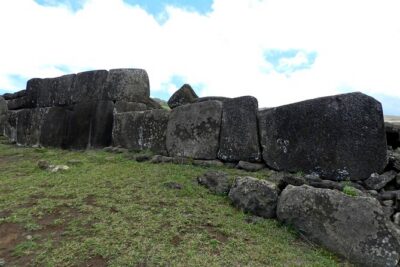
2-Day Private Tour Easter Island Highlights Complete Discovery
Read our review →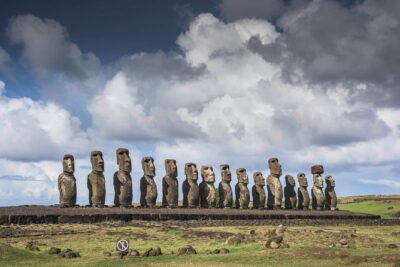
Private Tour: Full Day Easter Island Highlights
Read our review →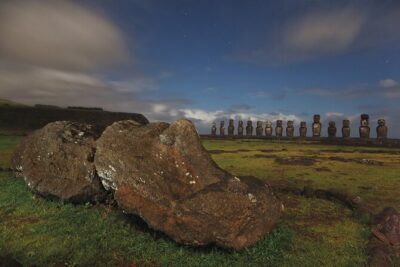
Browse the lists this tour appears in