
REVIEW · EASTER ISLAND TOURS
2 Half Days & 2 Full Days Private Tours | OPTION A
Four days can reveal Easter Island’s biggest stories. This private tour combines moai sites and Rapa Nui culture with a private vehicle, hotel pickup, and an English- or Spanish-speaking guide. I like the careful fit for a midday arrival and a fourth-day departure, and I especially like the sunrise visit to Tongariki, when fifteen moai face the Pacific in the early light. The main drawback is the extra $80 National Park ticket, which is not included in the $810 price.
I also like the balance between major archaeological sites and smaller stops, such as the Sebastian Englert Museum, Ahu Huri A’Urenga, Puna Pau, and the Catholic church in Hanga Roa. You get lunch on the long second day, but not on the other days, so you need to plan your own meals. The walking is moderate, and this tour is not suitable for wheelchair users, people with mobility impairments, or cruise ship visitors.
In This Review
- Key points at a glance
- Why this four-day plan works on Easter Island
- Day 1: Museum stories, Ahu Huri A’Urenga, and Tahai sunset
- Day 2: Akahanga, Te Pito Kura, Rano Raraku, and Anakena
- Day 3: Rano Kau, Orongo, Ahu A’Kivi, and Puna Pau
- Day 4: Tongariki before departure
- Private transport and guide support
- What the $810 price really buys you
- Who should choose Option A
- Should you book this Easter Island tour?
- FAQ
- How long does the tour last?
- What time does the first day begin?
- What time does the second day begin?
- What time does the third day begin?
- What time does the Tongariki sunrise visit begin?
- Is the National Park ticket included?
- Is lunch included?
- What languages are available?
- Is the tour private?
Key points at a glance
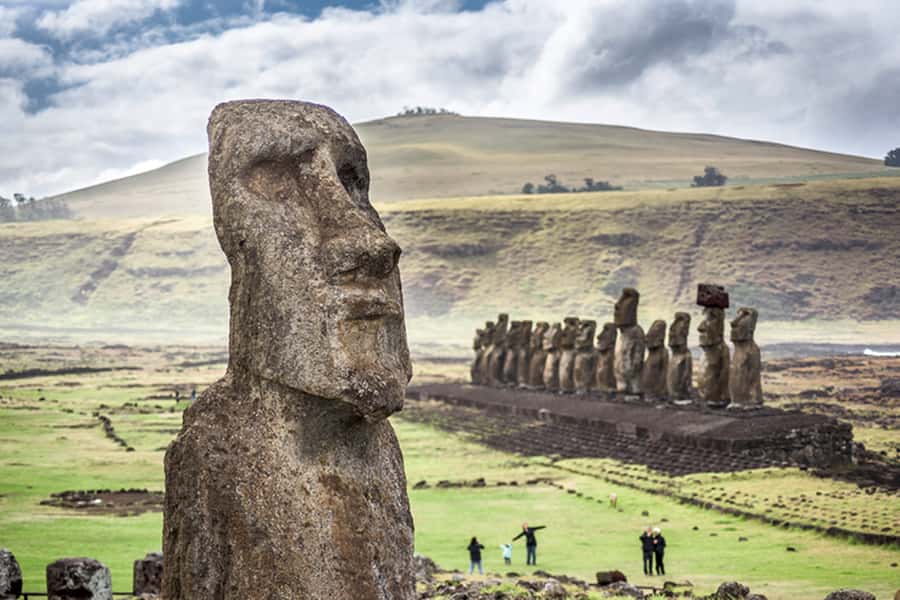
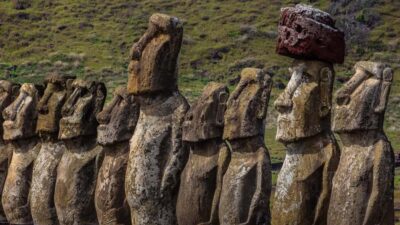
- Tongariki at sunrise: Begin the final day beside Easter Island’s largest restored platform and its fifteen moai.
- Rano Raraku and Ahu o Paro: See where the island’s famous statues were carved and the largest transported moai.
- Private touring for four days: Travel by private vehicle with hotel pickup and a choice of hotel or central drop-off.
- A strong first afternoon: Use your arrival day for the museum, Ahu Huri A’Urenga, the church and cemetery, and Tahai at sunset.
- Only one included lunch: Day 2 includes chicken or ribs, salads, rice, fruit, juice, and water or soda.
- Budget for the park ticket: The mandatory National Park entrance ticket costs $80 per person and is extra.
Why this four-day plan works on Easter Island
Easter Island, or Rapa Nui, rewards a well-planned schedule. The important sites are spread around the island, and a short stay can feel rushed if you spend too much time finding transport or arranging separate guides.
This four-day plan uses the arrival afternoon, two full touring days, and the departure morning. That makes it useful if your flight lands around midday and leaves on the fourth day. You are not trying to squeeze every site into one frantic loop, though the second day is still a full one.
The private format gives you a vehicle and guide for your own group. That matters here because you can focus on the places that interest you most, ask questions as you go, and avoid waiting for a larger group. At the end of each day, you can return to your hotel or choose a central drop-off point, giving you some time to walk around Hanga Roa on your own.
The $810 per person price is not cheap, but it covers four days of private touring, transport, hotel pickup and drop-off, a professional guide, water, and one lunch. You also need to add the $80 National Park ticket. The value is strongest for couples, families, or small groups who want a private schedule and do not want to arrange several separate excursions.
More things to do on Easter Island:
- From Hanga Roa: Rapa Nui Culture Sightseeing Tour
★ 4.6 · 307 reviews - From Hanga Roa: Easter Island Highlights 2-Day Tour
★ 4.3 · 205 reviews - Full Day Tour in Rapa Nui
★ 4.5 · 122 reviews
Day 1: Museum stories, Ahu Huri A’Urenga, and Tahai sunset
Your first pickup is scheduled for 3:00 p.m., making this day practical after a midday arrival. You begin at the Antropologic P. Sebastian Englert Museum, where more than 20,000 artifacts help explain Rapa Nui culture and the island’s archaeological record.
I like starting here rather than rushing straight to the giant statues. The museum gives you names, objects, and cultural context before you visit the open-air sites. It can also help you understand that the moai were not isolated works of stone. They belonged to a wider society with its own ceremonies, beliefs, and stories.
Next comes Ahu Huri A’Urenga, a restored archaeological site known for a moai with four arms and hands. That unusual feature has kept historians interested. It is a good reminder that Rapa Nui archaeology still contains questions, not just tidy answers.
The stop at the Catholic Church and cemetery shows another side of the island. Crosses and crucifixes appear alongside moai imagery, revealing the meeting of Christian and Rapa Nui traditions. I find this kind of stop especially valuable because it connects archaeology with living culture rather than treating the island as an outdoor museum.
The day ends at Tahai, one of the best places for sunset near Hanga Roa. The ceremonial complex gives you a memorable first look at moai beside the Pacific, and the late light is well suited to photography. Since you are already near town, this is also a comfortable first day rather than an exhausting island-wide drive.
You should wear comfortable shoes from the start. The tour involves moderate walking, and weather can change. Bring a layer suitable for rain or wind even if the afternoon begins clear.
Day 2: Akahanga, Te Pito Kura, Rano Raraku, and Anakena
The second day begins at 9:00 a.m. and covers some of the island’s most important sites. You start at Akahanga, an emblematic archaeological area that reveals an ancient village and ceremonial center.
Akahanga helps you look beyond individual statues. You can think about how the moai related to community life, ceremony, and place. The setting also gives you a sense of how much of Rapa Nui’s story remains tied to stone platforms and settlement areas, not only to the famous upright figures.
At Te Pito Kura, you see Ahu o Paro, known as the largest transported moai. The site also includes Te Pito ‘o te Henua, a mysterious stone associated with the area’s legends. This is a stop where your guide’s explanations matter, since the meaning of the place goes beyond simply measuring the statue.
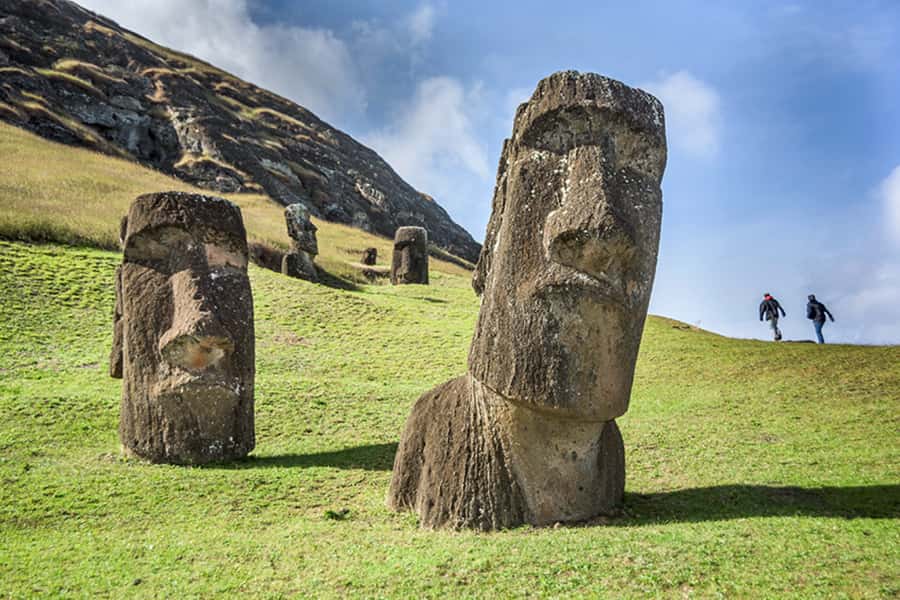
The centerpiece of the day is Rano Raraku, the volcanic cone tuff quarry that supplied the stone for the moai. This is where the statues began their journey. The quarry makes the scale of the island’s statue-building tradition easier to grasp because you can see the source material and the carved forms in the same setting.
I would give Rano Raraku your full attention. The quarry is not just another photo stop. It helps answer a basic question: how could such large statues be made and moved? The tour does not promise a single final answer, but the physical setting gives you useful clues.
After the quarry, you continue to Anakena Beach. Its warm turquoise water and coral sand offer a welcome change from the stone sites. Anakena was also the ancestral home of the Miru Araki royal family, so it combines relaxation with cultural importance.
Lunch is included on this day, either in the Anakena area, at the Rano Raraku quinchos, or at a similar location. The meal includes a choice of chicken or ribs, fresh salads, rice, fresh fruit, juice, and mineral water or soda. If rain or another unexpected problem affects the plan, lunch may be served somewhere else.
Because this day includes several major stops, lunch is more than a bonus. It saves you from arranging food during a long circuit. Still, remember that lunch is included only on Day 2. You will need to handle meals on Days 1, 3, and 4.
Day 3: Rano Kau, Orongo, Ahu A’Kivi, and Puna Pau
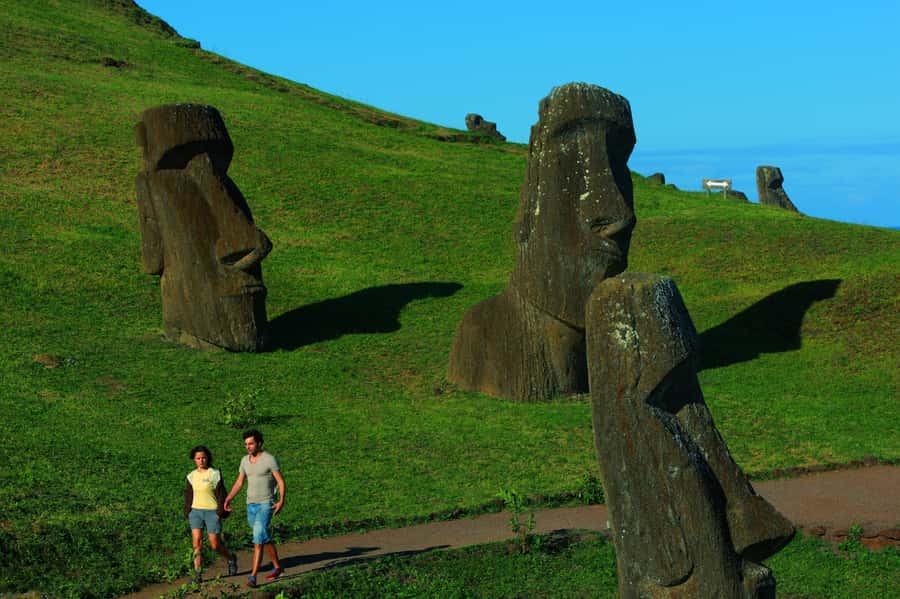
Day 3 begins at 9:00 a.m. with a visit to Orongo Village, set beside the crater of Rano Kau. This is the site connected with the Birdman ceremony, one of the most striking chapters in Rapa Nui culture.
The location is important because the ceremony joined politics, religion, competition, and the natural world. From Orongo, you look across the crater and out toward the sea, gaining a sense of why the site carried such power.
Rano Kau itself is one of the island’s most impressive natural features. Its crater contains a water source and endemic plant life. The broad crater gives you a break from the repeated pattern of platforms and statues, while also showing how natural places shaped life on Rapa Nui.
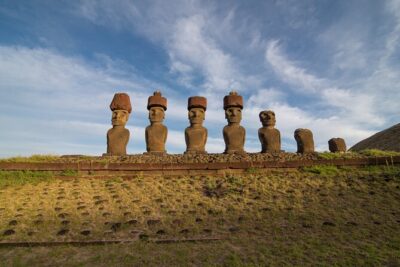
Later, you visit Ahu A’Kivi, where seven moai were restored to standing positions. The statues have a special astronomical connection, facing toward the setting sun. This makes the site different from many other moai locations and gives your guide another chance to explain how orientation and ceremony worked together.
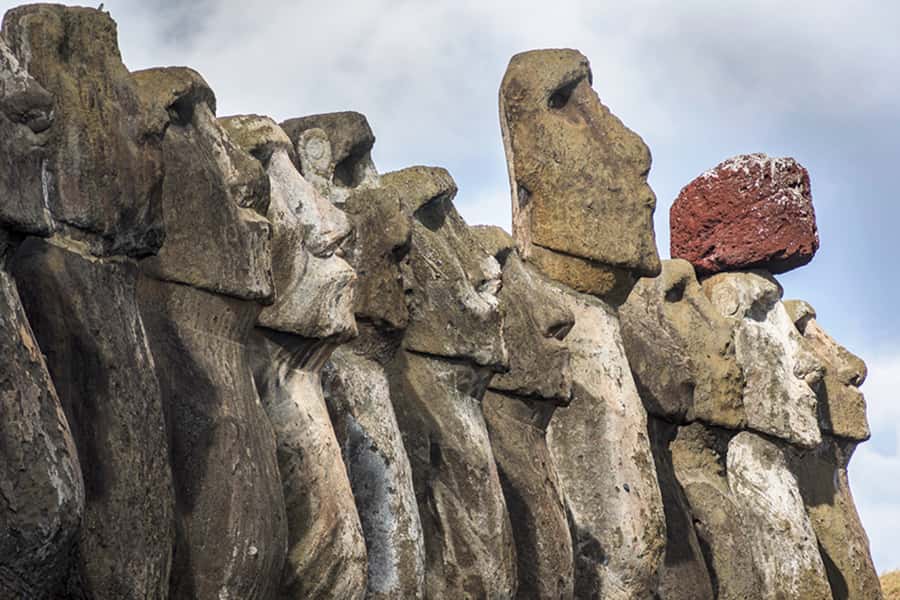
Puna Pau is the source of the red volcanic stone used for the moai’s hair, or topknots. It is an easy detail to miss if you only focus on the gray statues, but the red stone adds another piece to the construction story. I like this stop because it shows that the finished moai required more than one type of volcanic material.
The day also includes a privileged view of Hanga Roa. After two days of archaeological sites, that viewpoint helps you understand the relationship between the modern settlement and the rest of the island. You are not simply moving between remote ruins. Hanga Roa remains the practical center of your stay.
There is no lunch included on Day 3, so plan accordingly. The tour information does not specify a restaurant or meal stop for this day. Ask your guide about the day’s timing and food arrangements when you meet, and keep weather-appropriate clothing with you.
A few more options to weigh up in Hanga Roa
- 2-Day Private Tour Easter Island Highlights Complete Discovery
★ 5.0 · 110 reviews - Private Full-Day Easter Island Highlights North and West
★ 5.0 · 84 reviews - Full Day Private Tour: Factory of the Moai the stone giants
★ 4.5 · 63 reviews - Private Easter Island Full-Day Tour
★ 5.0 · 61 reviews
Day 4: Tongariki before departure
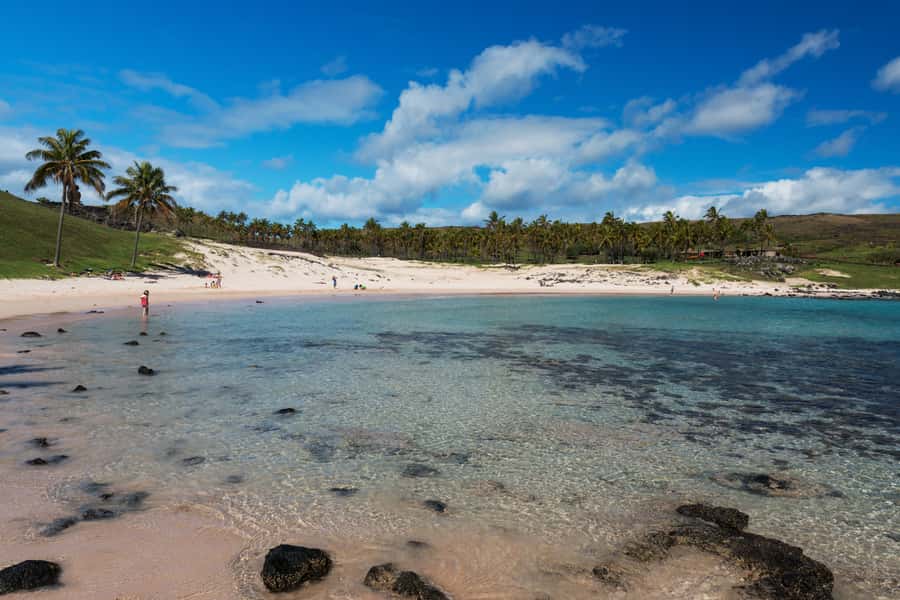
The final pickup is scheduled for 6:00 a.m., although the exact time depends on the season. This early start takes you to Tongariki for sunrise, so check your departure schedule carefully before booking.
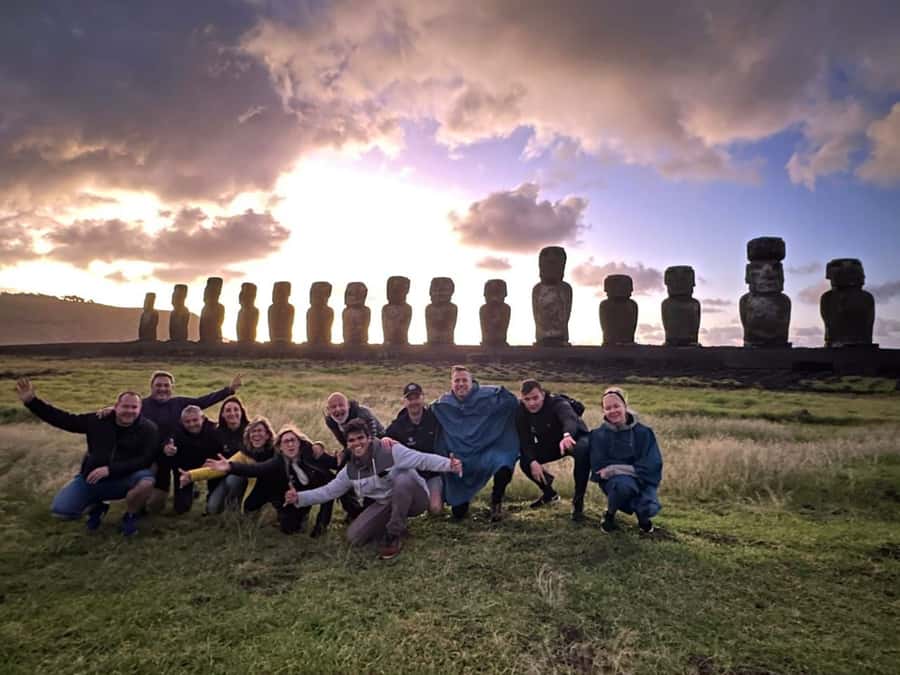
Tongariki is the largest reconstructed platform on Easter Island. Fifteen moai face the Pacific, creating one of the island’s most memorable views. Seeing them in the early morning gives you quiet time at a site that can feel very different from the bright midday version.
Morning coffee is provided at the site, adding a small comfort to the early start. I like this final visit because it does not try to cram in another long list of monuments. Instead, you get a focused moment at one of the island’s most important ceremonial platforms before returning to your hotel.
You need to confirm that the 6:00 a.m. visit works with your flight. The schedule is designed for a departure day, but the tour does not state a precise return time or guarantee compatibility with every flight. If you have a tight airport schedule, ask before reserving.
Private transport and guide support
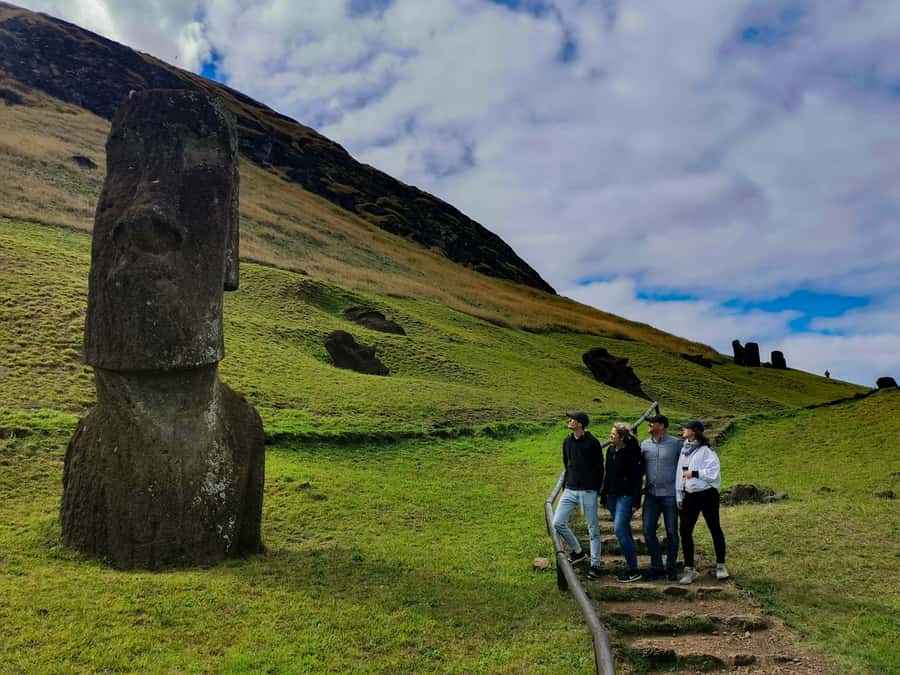
The private vehicle is one of the strongest practical features. Easter Island’s main attractions are spread across the island, and private transport keeps the four days organized. Hotel pickup is available at most hotels in Hanga Roa, and drop-off can be at your hotel or a central location.
The guide speaks English or Spanish. Since the itinerary includes legends, archaeology, Christian and Rapa Nui traditions, and the Birdman ceremony, good explanation adds real value. I would use the private format to ask about the meaning of each site rather than treating the tour as a simple drive between photo stops.
Water is included, which is useful during the walking portions. Comfortable shoes are essential. The tour runs in rain or shine, so you should bring clothing suited to the conditions and expect the plan to continue in wet weather unless an unforeseen issue requires a change.
The experience is not suitable for wheelchair users or people with mobility impairments. It includes moderate walking over archaeological areas, and no accessibility support is stated. It is also not designed for cruise ship visitors, since port pickup is not included.
What the $810 price really buys you
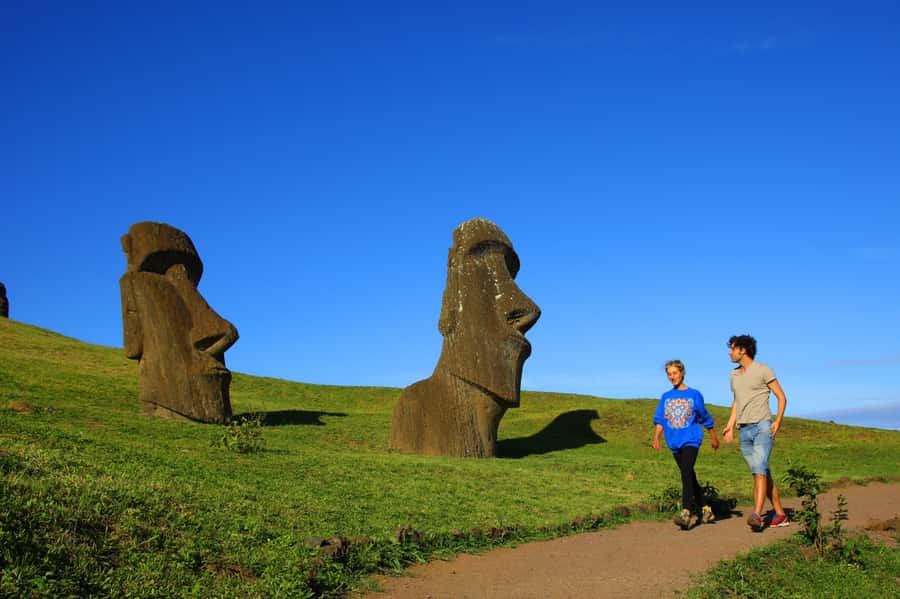
At $810 per person, this is a premium tour package. The important question is not simply if it costs more than a group excursion. You should ask what you gain in return.
You receive four days of private guiding and private transport, rather than one isolated sightseeing loop. The schedule uses your arrival afternoon and departure morning, which is valuable when your time on Easter Island is limited. You also receive hotel pickup and drop-off, water, and lunch on the longest day.
The $80 National Park entrance ticket is mandatory and must be added to the advertised price. That brings the known total to $890 per person before any other personal spending. Since only one lunch is included, you should also budget for meals on the other days.
I see the price as reasonable for a small private group that values comfort, a fixed plan, and direct access to a guide. It is less attractive if you are a solo visitor watching every dollar or if you prefer to explore at your own pace. In that case, compare the total cost with separate group tours, but make sure you account for transport and guiding rather than comparing ticket prices alone.
Who should choose Option A
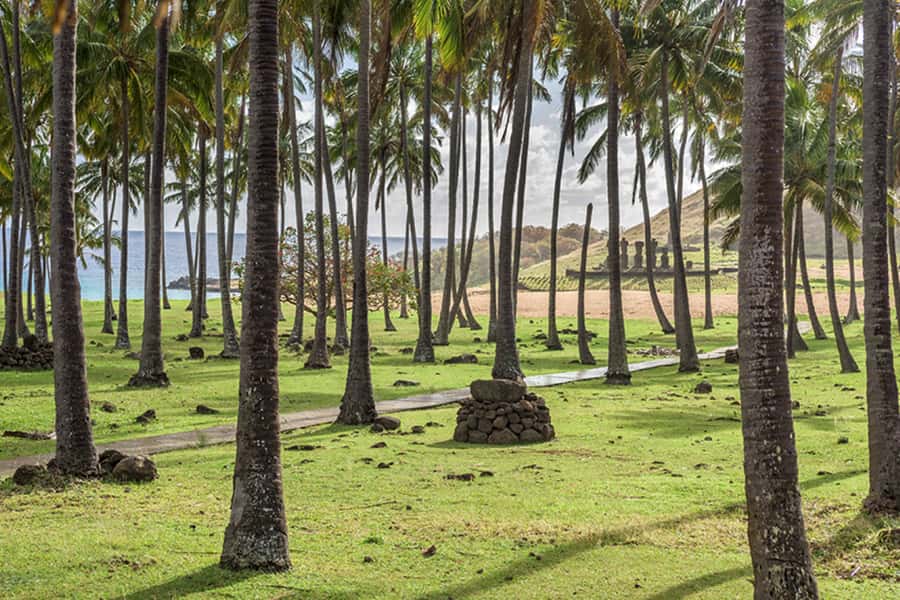
I would recommend this tour to you if you have four days on Easter Island, want to cover the major sites, and prefer not to manage transport yourself. It is particularly well suited to a couple, family, or private group arriving around midday and leaving on the fourth day.
It also suits people who want a blend of culture, archaeology, natural scenery, and beach time. The museum and church provide cultural context, Rano Raraku and the platforms cover the major moai story, Rano Kau and Orongo bring in nature and ceremony, and Anakena gives you a lighter afternoon.
You should think twice if your mobility is limited, if your flight schedule makes a 6:00 a.m. departure-day outing risky, or if you want every meal included. Cruise ship visitors should choose another arrangement because port pickup is not offered.
The cancellation policy is generous: you can cancel up to 24 hours in advance for a full refund. You can also reserve now and pay later, which helps if your flight plans are not fully settled.
Should you book this Easter Island tour?
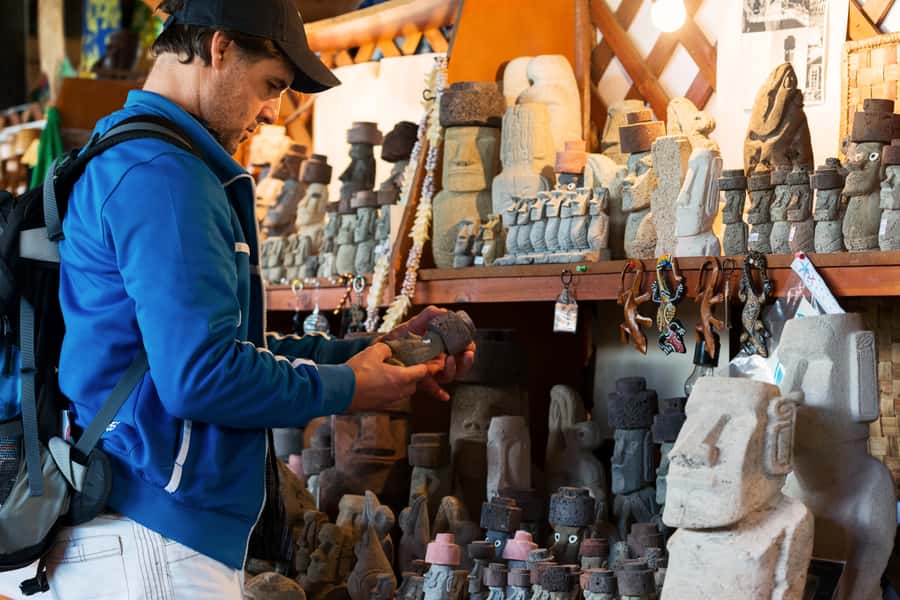
I would book this tour if your priority is seeing Easter Island’s key sites in a private vehicle with a guide and a clear four-day plan. The strongest moments are Rano Raraku, the unusual Ahu Huri A’Urenga, the seven moai at Ahu A’Kivi, and sunrise at Tongariki.
Before paying, confirm three things: the $80 National Park ticket, the exact Day 4 timing for your season, and how the private schedule fits your departure flight. If those details work, this is a well-balanced way to see Rapa Nui without wasting your short stay on transport planning.
FAQ
How long does the tour last?
The experience lasts four days, with two half-day outings and two full-day outings.
What time does the first day begin?
Pickup on Day 1 is scheduled for 3:00 p.m., making it suitable for an arrival around midday.
What time does the second day begin?
Pickup on Day 2 is scheduled for 9:00 a.m.
What time does the third day begin?
Pickup on Day 3 is scheduled for 9:00 a.m.
What time does the Tongariki sunrise visit begin?
Pickup is scheduled for 6:00 a.m., but the exact time is confirmed according to the time of year.
Is the National Park ticket included?
No. The mandatory National Park entrance ticket costs $80 USD per person and is not included.
Is lunch included?
Lunch is included only on Day 2. It includes chicken or ribs, salads, rice, fresh fruit, juice, and mineral water or soda.
What languages are available?
The live guide is available in English or Spanish.
Is the tour private?
Yes. It is a private group tour using private transport, with hotel pickup available at most hotels in Hanga Roa.
Just added in Hanga Roa
- Volcanic Refuges: Excursion to Underground Civilization★ 4.7 · 8 reviews
- Volcanic Wonders and the Kingdom of the Birdman: Half Day★ 5.0 · 6 reviews
- Half Day Private Tour: Caves and Volcanic Refuges★ 4.0 · 14 reviews
- Easter Island Ancestral Dinner and Show with Transport★ 4.5 · 2 reviews
- 2 Day Small Group Tour in Moai Monuments and Historic Pathways★ 5.0 · 22 reviews
- Visit Rapa Nui in 4 days with 3 Tours and Accommodation included★ 4.0 · 2 reviews
- Tour to the Motus: Boat trip and snorkeling in Rapa Nui★ 5.0 · 8 reviews
- The birdman journey in Easter Island★ 5.0 · 1 review
Easter Island Tours, compared.
Two days of Full Day Tour of Rapa Nui + Sunrise in Tongariki
Read our review →
2-Day Private Tour Easter Island Highlights Complete Discovery
Read our review →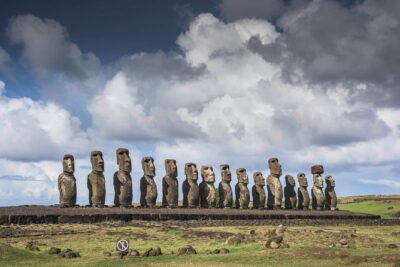
Private Tour: Full Day Easter Island Highlights
Read our review →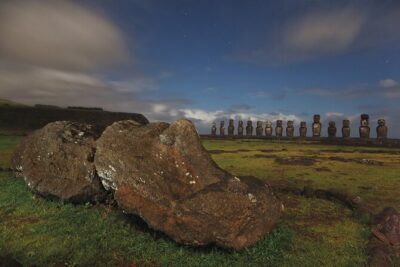
Browse the lists this tour appears in