
REVIEW · EASTER ISLAND TOURS
Sacred Horizons – 2 MUST VISIT full-day tours + lunch
Sacred stones tell Easter Island’s story. This two-day tour links the island’s great moai sites with volcanic craters, caves, a ceremonial village, and Anakena Beach, giving you a clear sense of how Rapa Nui culture and geology fit together. I especially like the wide site coverage and the chance to see both famous monuments and less-visited places.
I also like the small maximum group of 15, air-conditioned vehicle, and two included lunches. The main tradeoff is pace: each stop is scheduled for about 45 minutes, and some visitors may find the two days could be shortened. You must also pay the National Park entrance fee separately.
In This Review
- Key points to know before booking
- Why two days make sense on Easter Island
- Day one: crater views, caves, and inland moai
- Orongo and Rano Kau: where ceremony meets geology
- Ahu Vinapu: precise stonework and unanswered questions
- Ana Te Pahu: a lava tube used as shelter
- Ahu Akivi: seven moai facing the sea
- Puna Pau: the red quarry behind the topknots
- Day two: the island’s greatest moai sites
- Ahu Akahanga: toppled statues and a changed society
- Rano Raraku: the quarry that made the moai famous
- Ahu Tongariki: fifteen moai in one unforgettable row
- Ahu Te Pito Kura: the largest moai ever erected
- Anakena Beach: white sand, turquoise water, and Ahu Nau Nau
- Two lunches and the value of a guided vehicle
- Pickup, timing, and who should book
- Should you book Sacred Horizons?
- FAQ
- How long is the Sacred Horizons tour?
- What is included in the price?
- Is the National Park entrance fee included?
- Is pickup available?
- Can cruise passengers book this tour?
- How large is the group?
- What happens if bad weather cancels the tour?
Key points to know before booking
- Two full days cover nearly every major Rapa Nui highlight, from Orongo and Rano Kau to Rano Raraku, Ahu Tongariki, and Anakena Beach.
- The second day has the biggest visual rewards, including 15 upright moai, the island’s largest fallen statue, and a white-sand beach.
- Two lunches are included, with generous local dishes served at a pleasant restaurant connected to the tour provider’s home and kitchen team.
- A maximum of 15 people keeps the group manageable, though this is still a shared tour rather than private transportation.
- The National Park entrance fee is extra, and you should confirm pickup by email or WhatsApp before setting out.
- Cruise passengers and charter-flight passengers cannot use this reservation, so check the restriction carefully before paying.
Why two days make sense on Easter Island
Easter Island, or Rapa Nui, is not a place where you simply tick off one monument and move on. The island’s famous moai are only part of the story. Quarries, ceremonial platforms, lava caves, red volcanic stone, beaches, and oral traditions all help explain how this remote Polynesian society lived.
This tour divides the sightseeing into two long days beginning at 9:00 a.m. That gives you time to visit the major archaeological sites without trying to force the whole island into one rushed outing. You ride in an air-conditioned vehicle, which matters when the sun is strong and the roads between sites add up.
The timing is also the tour’s main weakness. Most stops last about 45 minutes. That is enough for an explanation, photographs, and a walk around the main area, but not enough for slow exploration at every site. If you like lingering at ruins or taking long scenic walks, you may wish for more free time.
The price is $260 per person. That is not a budget outing, especially since the National Park entrance fee is not included. Still, the cost covers roughly two full days of transport, guiding, and two lunches, and it removes the need to arrange separate visits across a spread-out island. For a first visit, I see the price as reasonable if you want structure and broad coverage rather than a self-guided trip.
More tours with lunch in Easter Island:
- Portillo and Laguna del Inca Tour with Lunch at Hotel Portillo
★ 5.0 · 642 reviews - Santa Rita Vineyard Tour with Lunch An unforgettable experience!
★ 5.0 · 356 reviews - Puero Natales: Glacier Tour with Lunch & Whiskey Aperitif
★ 4.6 · 110 reviews
Day one: crater views, caves, and inland moai
Orongo and Rano Kau: where ceremony meets geology
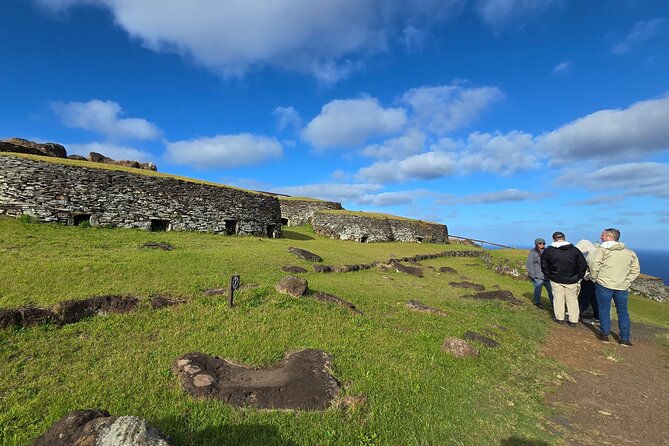
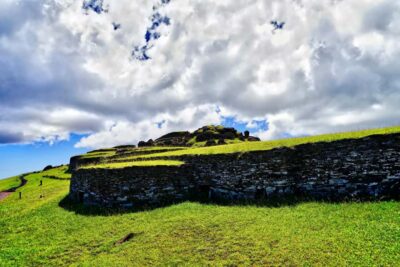
The first stop is Orongo, an ancient ceremonial village set on the edge of Rano Kau crater. Its low stone houses and petroglyphs connect the site to the Tangata Manu, or birdman, cult, one of the most distinctive religious traditions of Rapa Nui.
You get about 45 minutes here. That is enough to take in the dramatic setting and focus on the ceremonial remains, but the site deserves your attention rather than a quick photograph. Look for the relationship between the stone buildings, the crater rim, and the ocean beyond. The location helps explain why this was a place of ritual, not simply a settlement.
Rano Kau receives its own 45-minute stop. This volcanic crater contains a freshwater lagoon and thick plant growth, creating a sharp contrast with the open sea outside its rim. The view is one of the day’s great rewards, and it gives you a useful reminder that Rapa Nui is a volcanic island before it is an open-air museum.
Because Orongo and Rano Kau are closely connected in both setting and meaning, some visitors may feel that the two scheduled stops overlap. That is fair. Still, the separate time allows your guide to explain the ceremonial village and the crater as two parts of one important place.
Ahu Vinapu: precise stonework and unanswered questions
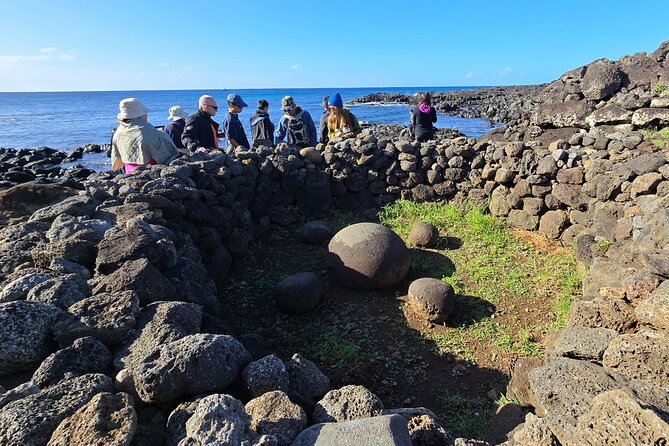
Ahu Vinapu introduces another side of ancient Rapa Nui achievement. The site is known for carefully fitted stone walls and precise alignment, evidence of advanced construction skills among the Rapanui people.
You will not find a row of upright moai here as you do at Tongariki or Ahu Akivi. The interest is in the platform itself and the quality of its stonework. This makes Vinapu especially useful if you want to understand that Rapa Nui culture was not defined only by statues.
The 45-minute visit should give you time to inspect the masonry and hear the interpretation. Bring your attention to the joins between stones rather than expecting a single dramatic viewpoint. Vinapu rewards curiosity more than spectacle.
More things to do on Easter Island:
- From Hanga Roa: Rapa Nui Culture Sightseeing Tour
★ 4.6 · 307 reviews - From Hanga Roa: Easter Island Highlights 2-Day Tour
★ 4.3 · 205 reviews - From Hanga Roa: Easter Island Sightseeing Full Day Tour
★ 4.5 · 189 reviews - Two days of Full Day Tour of Rapa Nui + Sunrise in Tongariki
★ 4.5 · 132 reviews
Ana Te Pahu: a lava tube used as shelter
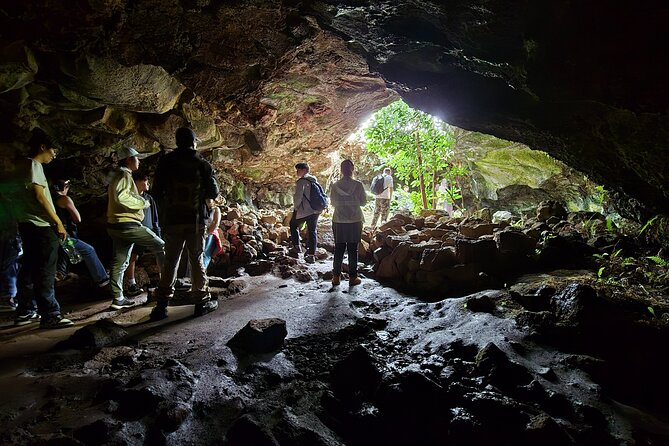
At Ana Te Pahu, the subject shifts from ceremonial monuments to daily survival. This ancient lava tube was used by the Rapanui as a dwelling and refuge, with archaeological remains linked to periods of social unrest.
A cave changes the rhythm of the tour. After open crater rims and exposed stone platforms, you enter a place shaped by volcanic activity and adapted for human use. The stop offers a more personal view of island life, showing how people used the natural environment for protection and shelter.
You have about 45 minutes here. Wear practical shoes and pay attention to the ground, since a cave visit is less about broad views and more about moving carefully through a historic space. The tour information does not promise restrooms on board, so use facilities whenever they are available before or after the stop.
Ahu Akivi: seven moai facing the sea
Ahu Akivi is one of the best-known inland ahu, or ceremonial platforms. Its seven moai face toward the sea, an unusual placement that links the statues to oral traditions about the island’s first explorers.
The setting makes this stop different from the coastal platforms. You see the statues in an inland environment, and the guide can connect the monuments to Rapa Nui memory and origin stories. At 45 minutes, you have enough time to appreciate the alignment without feeling hurried.
This is one of the tour’s strongest day-one stops for visitors who want a classic moai sight without saving every major statue for the second day. The seven figures create a clean, powerful composition, especially when viewed together rather than one at a time.
Puna Pau: the red quarry behind the topknots
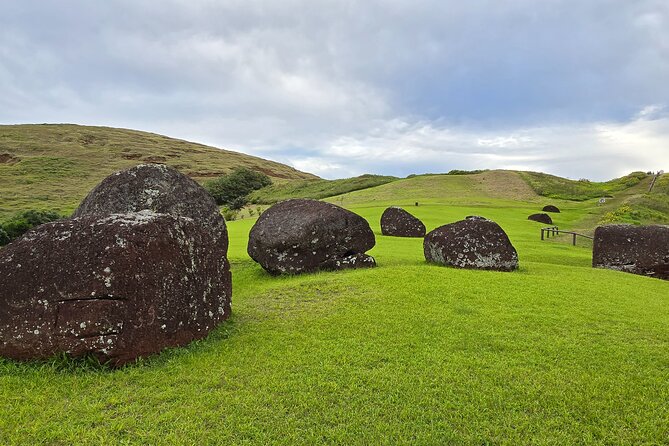
Puna Pau is a red scoria quarry where the pukao were carved. These are the large topknots placed on some moai, and their presence shows that statue construction involved more than carving the main body from gray volcanic rock.
The quarry also provides broad views of the island. That combination makes Puna Pau a useful closing stop for the day: you learn about a specific piece of moai design while looking across the terrain where these materials were shaped and moved.
The visit lasts about 45 minutes. It is not as instantly famous as Rano Raraku, but it adds an important piece to the story. If you want to understand the engineering and labor behind the statues, do not treat this as an optional extra.
Day two: the island’s greatest moai sites
Ahu Akahanga: toppled statues and a changed society
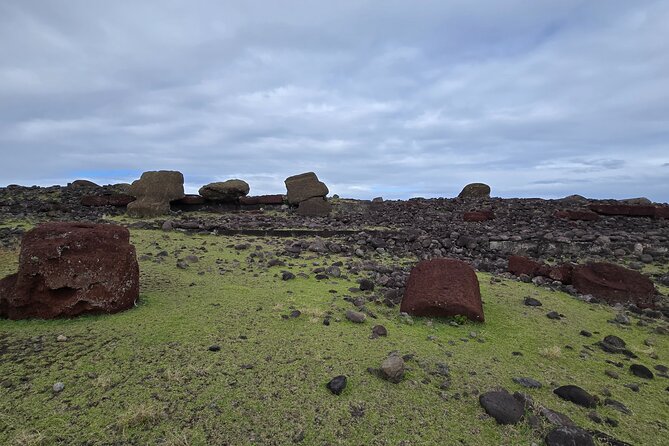
The second morning begins at Ahu Akahanga, where toppled moai reflect the island’s periods of tribal conflict and social change. The fallen figures can be less visually tidy than a restored platform, but that is exactly why the site matters.
You see the remains in a state that raises questions about how Rapa Nui society changed over time. Rather than presenting the island as a frozen world of perfect statues, Akahanga points to political tension, conflict, and the eventual decline of the old monument-building system.
The planned 45 minutes works well here. You can examine the platform and toppled figures, then leave with a stronger sense that the island’s story includes disruption as well as achievement.
Rano Raraku: the quarry that made the moai famous
Rano Raraku is the core of the second day. This volcanic quarry is where most of the moai were sculpted, and unfinished statues remain in the rock, offering a rare look at the carving process.
This is not simply another place with statues. It is the workshop. Unfinished figures show different stages of production and make the scale of the work easier to grasp. You can see how many statues were still tied to the quarry rather than transported to their final ceremonial platforms.
The tour allows 45 minutes. For many people, that will feel short, since Rano Raraku is one of the sites where you may want to pause, walk, and compare the unfinished figures. Keep your expectations realistic: the guided format gives you an organized introduction, not unlimited time to explore every path.
The National Park entrance fee is not part of the $260 price. Since Rano Raraku is one of the island’s essential protected archaeological areas, confirm the admission arrangement before the tour begins.
Ahu Tongariki: fifteen moai in one unforgettable row
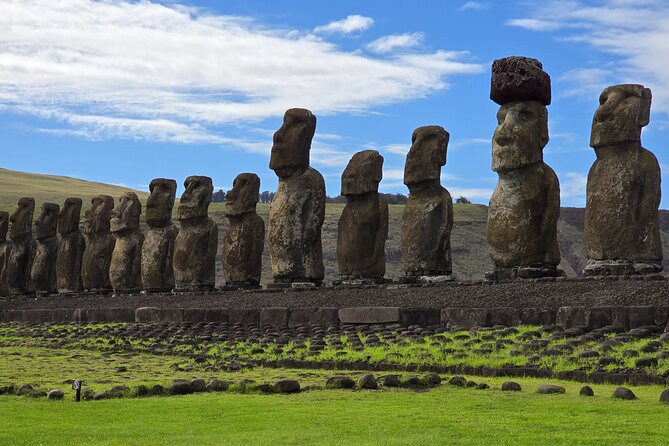
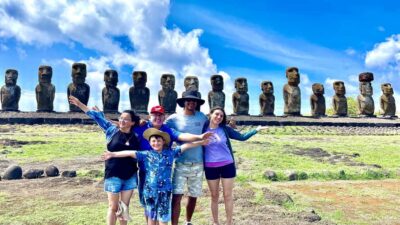
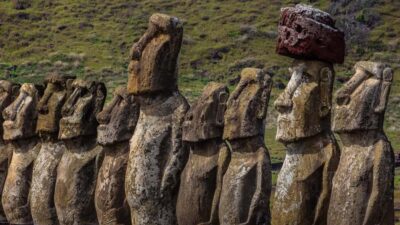
Ahu Tongariki is the visual centerpiece of day two. Fifteen moai stand together on the island’s largest and most restored ahu, creating the kind of broad, powerful view that people associate with Rapa Nui.
The restored platform gives you a strong sense of scale. One statue is impressive, but 15 aligned figures create a different effect. The site also helps you understand the effort required to rebuild a major ceremonial place after the statues had fallen.
You get about 45 minutes. Use the time to look at the group as a whole, then study details such as differences in size and form. This is a good place for photographs, but do not spend the entire stop behind your phone. The arrangement is best understood with your eyes.
Tongariki is one of the clearest reasons to choose the two-day program. It brings together the island’s artistic ambition, political organization, and modern restoration work in one setting.
Ahu Te Pito Kura: the largest moai ever erected
Ahu Te Pito Kura is associated with Paro, described as the largest moai ever erected on the island. The statue now lies toppled, but its size remains the central fact of the site.
The area also contains a spherical stone tied to Rapa Nui tradition as the navel of the world. That detail adds a spiritual layer to a stop that might otherwise focus only on physical scale.
The visit is scheduled for 45 minutes. It is a quieter counterpoint to Tongariki, and the fallen statue asks you to imagine the work involved rather than presenting a restored monument ready for display. If you enjoy archaeological sites that leave room for questions, this stop earns its place.
Anakena Beach: white sand, turquoise water, and Ahu Nau Nau
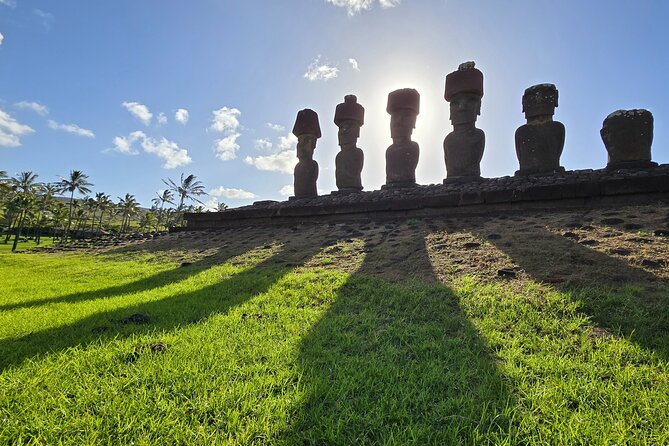
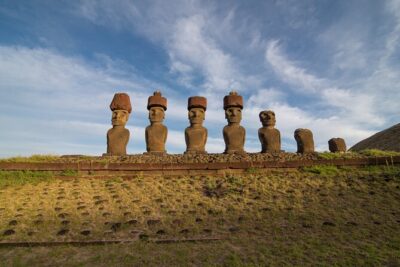
The final stop is Anakena Beach, a white-sand beach with turquoise water and a major place in Rapa Nui origin traditions. It is associated with the landing of the first Polynesian settlers and includes Ahu Nau Nau, where several moai have been restored.
You have one hour here, longer than at the other stops. That extra time matters. Anakena gives the second day a welcome change of pace after quarries, platforms, and toppled statues. You can take in the beach, study the restored moai, and, if conditions and your plans allow, enjoy a swim.
A beautiful swim was a highlight of the experience for one visitor, and the beach is clearly one of the tour’s most appealing rewards. Still, do not assume swimming is guaranteed. The tour requires good weather, and the schedule, conditions, and your own comfort will affect how much time you spend in the water.
Anakena also helps correct a common picture of Easter Island as only stark volcanic rock. The beach, palms, clear water, and ceremonial statues show a softer side of the island without separating nature from culture.
Two lunches and the value of a guided vehicle
Two lunches are included, one on each day. The meal is served at a pleasant restaurant connected with the provider’s home, and the food is prepared that day by the kitchen team using local ingredients. Generous portions of local dishes make this more than a basic roadside break.
For me, the practical value is just as important as the food. You do not need to leave an archaeological area searching for lunch, and you can keep the day moving without arranging another reservation. The downside is that two included lunches add time to an already full schedule. If you prefer a faster tour or would rather choose your own food, this may feel like more than you need.
The air-conditioned vehicle is another useful inclusion. You will be outside at exposed sites, so a cool ride between stops provides a real break. WiFi is not available on board, and there is no restroom on the vehicle. Plan around those limits rather than expecting the comforts of a long-distance coach.
Private transportation is not included. This is a shared experience with a maximum of 15 people, which offers a social and usually manageable format but less control over the pace than a private tour.
Pickup, timing, and who should book
The meeting point is on Mahinatur Atamu Tekena in central Hanga Roa. Pickup may be offered, but the reservations staff confirms the details by email or WhatsApp. If you do not receive confirmation, go to the provider’s downtown sales office.
The tour starts at 9:00 a.m. and returns to the meeting point after each day. Do not book this reservation if you are arriving by cruise ship or charter flight, since it is specifically not valid for those passengers.
Confirmation arrives at booking. Service animals are allowed, the meeting area is near public transportation, and most people can participate. The information does not give detailed mobility guidance for every archaeological stop, so contact the provider if you need specific assistance.
I would choose this tour if you have two days on Rapa Nui, want the main sites explained in context, and prefer not to manage transport yourself. It suits first-time visitors particularly well, since the sequence introduces the island’s ceremonies, engineering, conflict, quarrying, and settlement traditions in a sensible order.
You may want another option if you have only one day, dislike fixed schedules, or want to spend long stretches at one site. The 45-minute stops are efficient, but they do not leave much room for wandering.
Should you book Sacred Horizons?
Book it if your priority is broad coverage with simple logistics. You will see the key volcanic sites, the major moai platforms, the quarry where most statues were made, and the island’s best-known beach. The guide, lunches, vehicle, and group size make the $260 cost easier to justify, though the National Park fee remains extra.
Skip it if you want a private vehicle, flexible timing, or a slower archaeological visit. Also check your arrival method, confirm the pickup, and remember that the tour depends on good weather. For a two-day introduction to Rapa Nui, this is a strong, well-planned choice with a brisk pace and a particularly memorable second day.
FAQ
How long is the Sacred Horizons tour?
The experience lasts approximately two days, with both days beginning at 9:00 a.m. Each day ends back at the meeting point.
What is included in the price?
The $260 per person price includes an air-conditioned vehicle and two lunches, one lunch on each day.
Is the National Park entrance fee included?
No. The National Park entrance fee is not included and must be paid separately.
Is pickup available?
Pickup is offered, but the reservations staff confirms the details by email or WhatsApp. If pickup is not confirmed, you need to report to the downtown sales office.
Can cruise passengers book this tour?
No. The reservation is not valid for people traveling by cruise or charter flight.
How large is the group?
The activity has a maximum of 15 travelers.
What happens if bad weather cancels the tour?
The experience requires good weather. If poor weather causes cancellation, you will be offered a different date or a full refund.
Just added in Easter Island
- Volcanic Refuges: Excursion to Underground Civilization★ 4.7 · 8 reviews
- Volcanic Wonders and the Kingdom of the Birdman: Half Day★ 5.0 · 6 reviews
- Half Day Private Tour: Caves and Volcanic Refuges★ 4.0 · 14 reviews
- Easter Island Ancestral Dinner and Show with Transport★ 4.5 · 2 reviews
- 2 Day Small Group Tour in Moai Monuments and Historic Pathways★ 5.0 · 22 reviews
- Visit Rapa Nui in 4 days with 3 Tours and Accommodation included★ 4.0 · 2 reviews
- Tour to the Motus: Boat trip and snorkeling in Rapa Nui★ 5.0 · 8 reviews
- The birdman journey in Easter Island★ 5.0 · 1 review
Easter Island Tours, compared.
Two days of Full Day Tour of Rapa Nui + Sunrise in Tongariki
Read our review →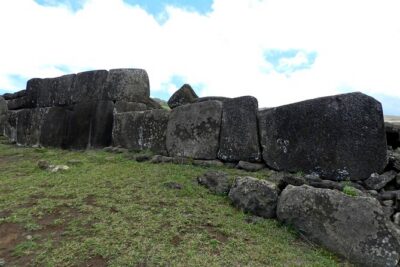
2-Day Private Tour Easter Island Highlights Complete Discovery
Read our review →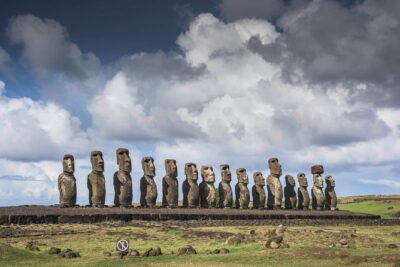
Private Tour: Full Day Easter Island Highlights
Read our review →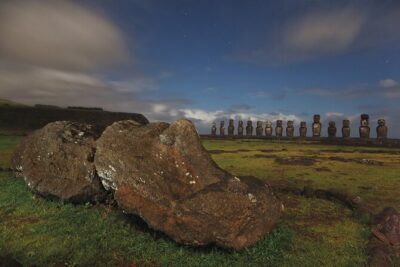
Browse the lists this tour appears in