
REVIEW · CHILEAN WINE TOURS
Santa Rita Vineyard Tour with Lunch An unforgettable experience!
History tastes better with a glass in hand. Santa Rita pairs three wine tastings with grand gardens, old cellars, Chilean history, and a three-course lunch in the Maipo Valley. I like the beautiful estate and the chance to visit the Andean Museum, both of which make this more than a quick tasting. The main drawback is time: a nine-hour outing can include long transfers and less vineyard time than you may expect.
I also like the small-group limit of 10 people, bilingual guiding, hotel pickup, and the gift wine glass. The estate guide can be excellent, with one especially praised guide, Madias, making the winemaking process clear in both English and Spanish. Still, the wider transport operation can feel untidy, and some departures involve a central bus change before the winery.
In This Review
- Key points to know before you book
- From Santiago to the Maipo Valley
- Santa Rita’s gardens and colonial setting
- The story of the 120 Patriots
- Inside the cellars and bottling plant
- Three wines and a souvenir glass
- Lunch, the Andean Museum, and free time
- Is $207 a fair price?
- Who will enjoy Santa Rita most?
- Should you book this Santa Rita tour?
- FAQ
- How long does the Santa Rita Vineyard Tour last?
- What is included in the price?
- How many wines will I taste?
- Is the wine tasting available for children?
- Is the Andean Museum included?
- Is hotel pickup included?
- Can I cancel for a refund?
Key points to know before you book
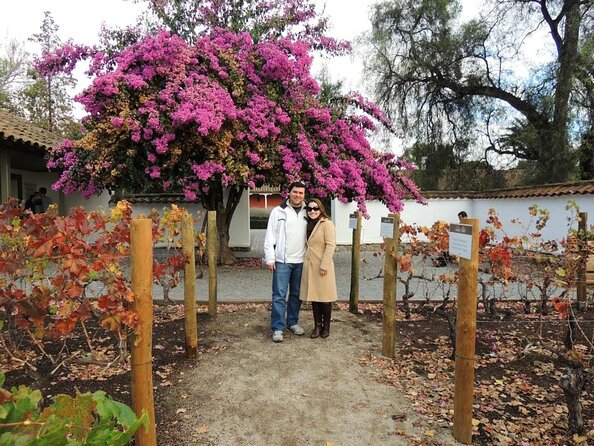
- Santa Rita is more than a vineyard: You get gardens, colonial buildings, historic cellars, a church, the Andean Museum, a wine shop, and dining on the estate.
- The wine tasting covers three pours: Expect Santa Rita 120 plus reserve wines such as Cabernet Sauvignon, Merlot, Chardonnay, or Cabernet Franc. Tastings are for adults.
- The day may be longer than the winery visit: The listed duration is about nine hours, but some of that time can go to hotel pickups, a transfer hub, and Santiago traffic.
- The grounds earn much of the praise: Manicured gardens and old buildings are a major part of the appeal, even if you do not see much active vineyard work.
- Lunch is part of the package: The included meal is described as a three-course menu, though the exact restaurant arrangement may affect how leisurely the meal feels.
- Book ahead: This experience is commonly reserved about 31 days before departure, a useful sign that popular dates can fill early.
From Santiago to the Maipo Valley
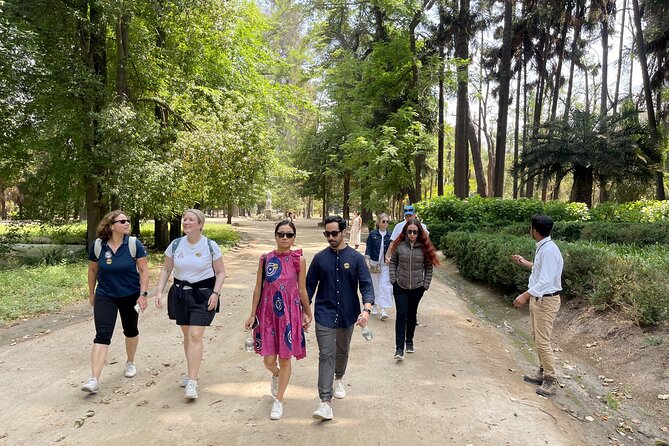
The outing begins with round-trip hotel transport in an air-conditioned minivan or tour vehicle. That is useful in Santiago, where arranging a taxi, finding the winery entrance, and handling a return ride can take work. You can simply leave the city and let the driver handle the route.
The route may include a brief stop near Parque Arauco. This is one of Santiago’s major shopping centers, with restaurants, cinemas, a theater, and an open-air boulevard. Parque Araucano is nearby, with paths and open space for a short walk. I would not count this as a highlight of the wine visit. It functions more as a pickup or gathering point than a meaningful sightseeing stop.
The transport system is the part I would watch most closely. Some departures collect people from several hotels, then move to a central meeting point where different groups change buses. One account described waiting about an hour before finally heading toward Santa Rita, even though the winery itself is much closer than that delay suggests.
That does not happen in every outing, but you should understand the tradeoff. You are buying convenience, not a private transfer straight from your hotel. The maximum group size is listed as 10, yet the wider bus operation can involve more people before the winery portion begins.
The drive into the Maipo Valley is worthwhile. Santiago gives way to open agricultural views, vineyards, and the lower mountain country around the city. The setting helps explain why this area is one of Chile’s best-known wine regions.
More Wine Tours in Santiago:
- Valparaiso Port and Viña del Mar with Casablanca Wine Tasting
★ 5.0 · 6,110 reviews - Santiago: Vina Del Mar, Valparaiso, Casablanca & Reñaca Tour
★ 4.2 · 2,838 reviews - Tour to Valparaíso, Viña del Mar, Pablo Neruda Museum and Vineyard
★ 5.0 · 2,273 reviews
Santa Rita’s gardens and colonial setting
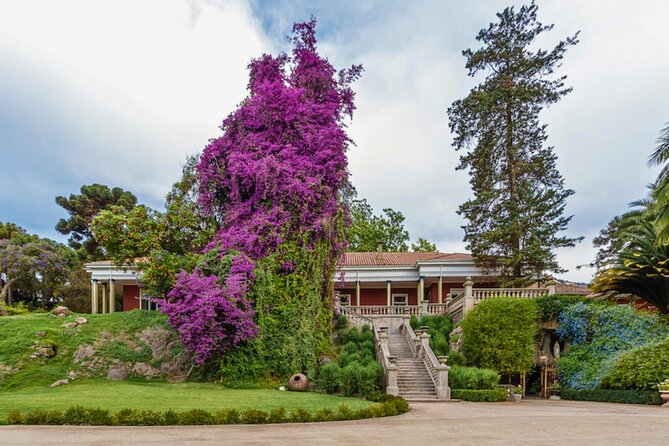
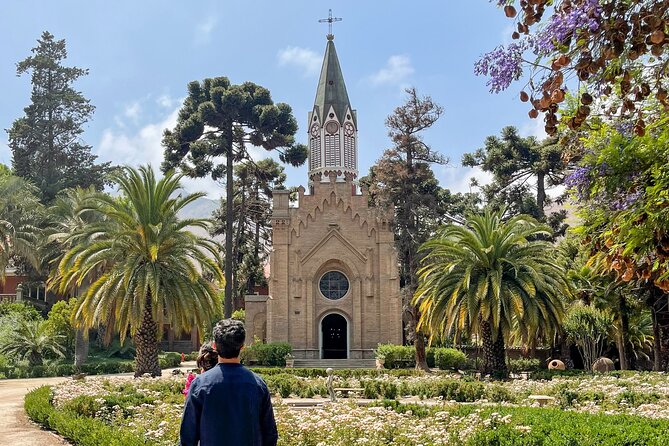
Santa Rita welcomes you in landscaped grounds rather than at an anonymous industrial warehouse. The estate combines old buildings, formal gardens, a church, historic monuments, and broad green spaces where you can slow down between organized activities.
I like this opening because it gives the visit a sense of place. You are not only being told how wine is produced. You are walking through an estate shaped by Chilean history, architecture, religion, and agriculture.
The gardens receive especially strong praise. You can stroll beneath trees, admire the grounds, and take photographs without rushing through every minute. Bicycle use is included, so you may have another way to move around the property, depending on how the day is organized.
One memorable feature is Bodega 1, a stone and mortar structure connected with the estate’s early wine production. The older cellars give the visit a tangible link to Santa Rita’s past. They are atmospheric and visually impressive, but it is important to set your expectations correctly.
Some people expect to see an active, modern production floor with tanks, machinery, and workers making wine in real time. This tour may show more historic cellar space and bottling facilities than current winemaking activity. If your top priority is technical production, ask how much of the route will include the active plant.
The story of the 120 Patriots
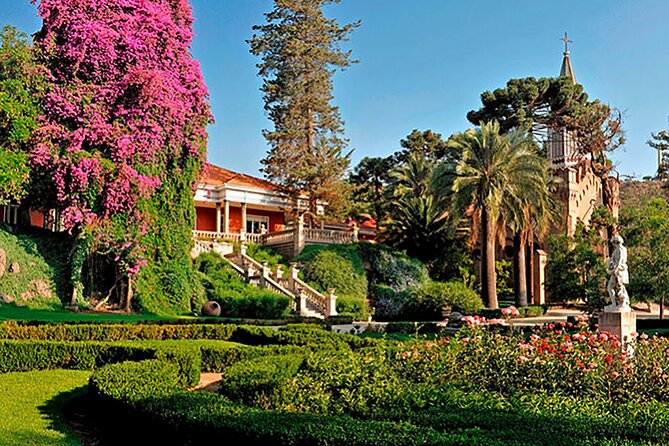
The most distinctive piece of Santa Rita’s story is tied to the 120 Patriots. During Chile’s struggle for independence, soldiers sought refuge on the estate. Their story is remembered through the Santa Rita 120 wine, which you taste as part of the visit.
This is one of the better uses of history on a winery tour. The wine is not just a label selected for a tasting flight. It connects the bottle to a specific place and a dramatic episode involving people who hid at the estate.
The tour also visits Doña Paula Restaurant, where this story is presented. The setting helps connect the buildings, the wine, and the national history. Guides may spend a fair amount of time on the estate’s religious and historical traditions, so the storytelling can feel more cultural than purely agricultural.
That will suit you if you enjoy hearing how a property fits into Chile’s past. If you want a fast, technical explanation of grape growing and fermentation, parts of the narration may feel slow. One account found the repeated discussion of prayers and saints less engaging, especially for a visitor hoping to focus on wine.
Inside the cellars and bottling plant
The winery tour explains how Santa Rita handles its wine, with visits to cellar areas and the bottling plant. This gives you a look at the steps between vineyard and bottle, even if the exact route can vary.
You will hear about Santa Rita’s role in bringing European grape varieties to Chile. That background matters because it places the winery within the development of Chilean wine, rather than treating the estate as only a pretty backdrop.
The tour has earned praise for clear explanations in English and Spanish. One guide, Madias, was singled out for making the visit both interesting and easy to follow. Other accounts praised guides who explained the grounds, cellars, and production process in two languages without making the tour feel stiff.
Mixed-language groups can be less comfortable. English explanations may be shorter, and chatter from another language group can make it hard to hear. If you are placed in a large combined group, stay close to the guide and ask for clarification when needed.
The same issue applies to group size. The advertised maximum is 10, which should allow questions and a more personal feel. Yet some tours have had around 20 people, particularly when separate groups are combined at the estate. That difference can change the experience from relaxed to crowded.
More tours with lunch in Santiago:
- Portillo and Laguna del Inca Tour with Lunch at Hotel Portillo
★ 5.0 · 642 reviews - Casablanca world class wines, 4 vineyards & Tanino lunch stop
★ 5.0 · 109 reviews - Nevado Valley Tour with Lunch in Hotel
★ 5.0 · 73 reviews - Penguin Watching Navigation Cachagua Lunch From STGO Private Tour
★ 5.0 · 50 reviews
Three wines and a souvenir glass
The tasting includes three wines for adults. The flight can include Santa Rita 120 and reserve examples such as Cabernet Sauvignon, Merlot, Chardonnay, and Cabernet Franc. The exact combination may depend on the scheduled tasting.
This is a sensible format for a first introduction to Chilean wine. You can compare a red with another red, notice the difference between red and white, and learn the basic character of several familiar grape varieties. The guide’s explanation is as important as the pours, since it gives you a way to pay attention to aroma, body, acidity, and finish.
The tasting setup may be simple. Some groups have received water, while others found that there was no water or food such as cheese and crackers. One account also noted that the same glass was used when moving from white wine to red. If you care about formal tasting service, this may seem plain.
I would treat the tasting as an introduction rather than a full wine education session. The wines themselves receive good marks, and the shop can be a useful place to buy bottles at attractive prices. Bring a payment card if you plan to shop, and remember that carrying several bottles can complicate your return transfer.
The included Santa Rita wine glass is a pleasant extra. It is more useful than a generic souvenir because it connects directly with the estate and gives you something practical to take home.
Lunch, the Andean Museum, and free time
Lunch is listed as a three-course menu, adding real value to a long day outside Santiago. A meal on the estate means you do not have to find a restaurant between the tour and the return ride. One account praised an excellent lunch at the property café and wished for more time at the main restaurant, whose menu looked especially appealing.
The meal may not always feel leisurely. A nine-hour schedule has many moving parts, and the winery tour, tasting, museum, shop, and transport all compete for time. If lunch matters greatly to you, confirm the planned restaurant and meal timing before departure.
The Andean Museum is another strong feature. This modern museum houses about 3,000 archaeological and ethnographic objects from pre-Columbian peoples. It broadens the day beyond wine and gives you a chance to see material from the cultures that existed in the region long before the modern Chilean wine industry.
The scheduled museum time is listed as one hour, but timing can be uneven. At least one person expected to see the museum but had too little free time after the winery visit. I would not assume that every minute listed will be available for independent exploration.
If the full program runs as planned, you can choose how to use unstructured time. Walk in the gardens, sit under a tree, visit the museum, browse the shop, or use the included bicycle. That flexibility is valuable after a guided tour, especially if you prefer not to rush from one explanation to another.
Is $207 a fair price?
At $207 per person, this is not a cheap tasting. The price includes hotel transportation, bilingual guiding, the Santa Rita tour, three wines, a wine glass, bicycle use, and a three-course lunch. Admission to the Andean Museum is also included.
I see the value in the all-in-one format. You get a full day away from Santiago, a major winery estate, a museum, food, transport, and a guide. For someone who wants a simple package with no planning beyond the booking, that can be worth paying for.
The calculation changes if you expect many hours among active vines or production equipment. Some of the day can be spent collecting people, changing vehicles, waiting, or driving. A person who wants a focused winery visit may get better value from a smaller local operator that goes directly to Santa Rita.
You should also compare the actual time on site with the advertised nine-hour duration. Several accounts describe only a few hours at the winery, while others felt the full visit was well organized and good value. The difference appears to come from transport arrangements, group size, and how much time is given to lunch and the museum.
The high overall rating, 4.8 from 356 ratings, suggests that the core estate experience works very well for many people. The 96 percent recommendation rate points in the same direction. I would read those numbers as a sign that the winery and guides are strong, but not as a guarantee that every transfer will run smoothly.
Who will enjoy Santa Rita most?
I would choose this tour if you want a polished introduction to Chilean wine without renting a car or planning several separate stops. It suits couples, solo visitors, and families who like gardens, museums, architecture, and food as much as they like tasting wine.
It is also a good choice for a first visit to Santiago. You get outside the city, see a major wine area, and return with enough evening time to continue exploring if the schedule stays close to plan.
Families can participate, although only adults receive wine tastings. Children may enjoy the gardens and museum, but the historical explanation and cellar tour may be less exciting for younger children.
I would hesitate if you are a serious wine enthusiast seeking vineyard work, detailed production science, or a long tasting with food pairings. I would also think twice if you dislike group transfers or have limited patience for pickup delays.
The weather matters. The experience requires good weather, so a poor forecast can lead to a new date or a full refund. Cancellation is free when made at least 24 hours before the start time. Changes or cancellations inside that window are not accepted for a refund.
Should you book this Santa Rita tour?
Book it if you want history, gardens, wine, lunch, and transport in one package. Santa Rita is a handsome estate with a memorable independence-era story, attractive grounds, a useful museum, and guides who can make the visit engaging.
Skip it, or seek a smaller direct operator, if your main goal is maximum vineyard time and a tightly run transfer. The winery itself receives the strongest praise. The weakest point is the broader transport system, especially when pickup routes and bus changes eat into your day.
My practical call: this is a good Santiago day trip for a first-time wine visitor, a couple, or anyone who values a complete cultural outing. Book well ahead for a preferred date, confirm the pickup plan, and arrive ready for a beautiful estate rather than a purely technical winery inspection.
FAQ
How long does the Santa Rita Vineyard Tour last?
The listed duration is approximately nine hours. That total includes hotel transfers, the winery visit, museum time, lunch, and the return journey.
What is included in the price?
The package includes round-trip group transport, a bilingual guide in Spanish, English, or Portuguese, the Santa Rita winery tour, three wine tastings for adults, a Santa Rita wine glass, bicycle use, and a three-course lunch.
How many wines will I taste?
You will taste three wines. The selection can include Santa Rita 120 and reserve wines made from Cabernet Sauvignon, Merlot, Chardonnay, or Cabernet Franc.
Is the wine tasting available for children?
No. The wine tasting is only for adults. The tour itself allows most people to participate.
Is the Andean Museum included?
Yes. Admission to the Andean Museum is included. The museum contains about 3,000 archaeological and ethnographic pieces from pre-Columbian peoples.
Is hotel pickup included?
Yes. Round-trip transport to the departure point is included. The transport may involve a central meeting point or a vehicle change, depending on the day’s pickup arrangements.
Can I cancel for a refund?
You can cancel at least 24 hours before the local start time for a full refund. A cancellation or change made less than 24 hours before departure is not accepted for a refund. If bad weather or an insufficient number of bookings cancels the tour, you will be offered another date or experience, or a full refund.
Just added in Santiago
- Walking City Tour with Funicular, Cable Car and Tasting★ 4.3 · 6 reviews
- VIÑA DEL MAR AND VALPARAISO TOUR★ 4.8 · 20 reviews
- Tour VIÑA CONCHA Y TORO + CASA MARQUES – Chile, from Santiago.★ 5.0 · 2 reviews
- Undurraga + Isla Negra + San Afonso del Mar —– Full day★ 4.1 · 8 reviews
- Undurraga Wine tour★ 4.2 · 15 reviews
- Southcoast – Private Full-Day tour★ 5.0 · 6 reviews
- Santiago Private walking tour with Lunch★ 5.0 · 5 reviews
- Zapallar : nature, sea and local flavours★ 5.0 · 6 reviews
Chilean Wine Tours, compared.
Valparaiso Port and Viña del Mar with Casablanca Wine Tasting
Read our review →
Vina Del Mar, Valparaiso, Casablanca & Reñaca Tour
Read our review →
Tour to Valparaíso, Viña del Mar, Pablo Neruda Museum and Vineyard
Read our review →
Maipo Valley Wine Tour with 4 vineyards from Santiago.
Read our review →
Inca Lagoon in Andes Mountain Range – Visit Local Vineyard with Tasting included
Read our review →
Valparaiso -Casablanca -Reñaca-Oceanic Rock-Concon
Read our review →
Valparaiso, Viña del Mar, & Casablanca Valley Tour
Read our review →
Marquis de Casa Concha: Wine tasting in Concha y Toro
Read our review →Browse the lists this tour appears in