
REVIEW · EASTER ISLAND TOURS
Private Tour: Full-Day Easter Island Birdman Cult
Birdman stories begin on a volcano rim. This private Easter Island tour links the sacred Orongo village with Rano Kau, moai platforms, and the red-stone quarry at Puna Pau. I like the private vehicle, which keeps the day flexible, and the chance to discuss Rapa Nui traditions with a local guide. The main drawback is cost: $263 per person is before the required $100 national park ticket.
I also like the mix of cultural and archaeological sites. You get the famous Birdman setting, but also Ahu Vinapu, Ahu Tahai, Ahu Akivi, and Puna Pau in one six-hour outing. The short schedule means you see a lot, though each stop receives limited time, and pickup is available only from hotels in Hanga Roa, not from the port or a tender.
In This Review
- Key points to know before booking
- Why the Birdman ceremony gives this tour its focus
- Orongo: two hours at the Birdman village
- Rano Kau: a huge crater with a useful past
- Ahu Vinapu and the question of stonework
- Ahu Tahai: three platforms near Hanga Roa
- Puna Pau: where the red stone came from
- Ahu Akivi and the seven inland moai
- What the six-hour schedule feels like
- Is $263 a fair price?
- The guide can shape the entire day
- Who should book this Easter Island tour?
- Should you book the Birdman Cult tour?
- FAQ
- How long does the Easter Island Birdman Cult tour last?
- What time does the tour begin?
- Where is hotel pickup available?
- Is pickup available at the port or from a tender?
- Is the tour private?
- Is the national park ticket included?
- What is included in the tour price?
- Is the tour offered in English?
- Can I cancel for a full refund?
Key points to know before booking
- Orongo is the heart of the day: You spend two hours at the village tied to Rapa Nui’s Birdman ceremony.
- Rano Kau adds a powerful natural setting: The volcanic crater is about 1.5 kilometers wide and contains a lake once used as a water source.
- Six sites fit into roughly six hours: The schedule covers major highlights, but several stops last only 30 minutes.
- The tour is private: Only your group joins, with private transport and bottled water included.
- The true price is $363 per person: The tour costs $263, plus the mandatory $100 national park ticket.
- Guide quality is a major strength: Toke, Sebastian, and Soledad received warm praise for their personal approach and their command of Rapa Nui traditions.
Why the Birdman ceremony gives this tour its focus
Many Easter Island tours center mainly on moai. This one takes a different route. It puts the Birdman ceremony at the center, then uses nearby archaeological sites to show how religion, power, stonework, and astronomy shaped Rapa Nui society.
The ceremony took place at Orongo, on the rim of Rano Kau. Contestants competed to retrieve the first manutara, or sooty tern egg, from a small offshore islet and bring it back to the island. The details of the contest are only part of the appeal. The setting helps you understand why Orongo was such a dramatic place for a ceremony tied to leadership and status.
I like that the tour allows two hours at Orongo. That is the longest stop of the day, and rightly so. You need time to take in the village, the crater, and the ceremonial meaning of the site without treating it as a quick photo stop.
The guide’s role matters here. A strong guide can connect archaeological evidence with Rapa Nui oral traditions, while making clear where scholars still disagree. Toke, Sebastian, and Soledad were each praised for making those conversations personal and engaging. Guide assignments can vary, so you should not assume one particular person will lead your visit, but the company has a clear record of warm, culture-focused guiding.
More things to do on Easter Island:
- From Hanga Roa: Rapa Nui Culture Sightseeing Tour
★ 4.6 · 307 reviews - From Hanga Roa: Easter Island Highlights 2-Day Tour
★ 4.3 · 205 reviews - From Hanga Roa: Easter Island Sightseeing Full Day Tour
★ 4.5 · 189 reviews
Orongo: two hours at the Birdman village
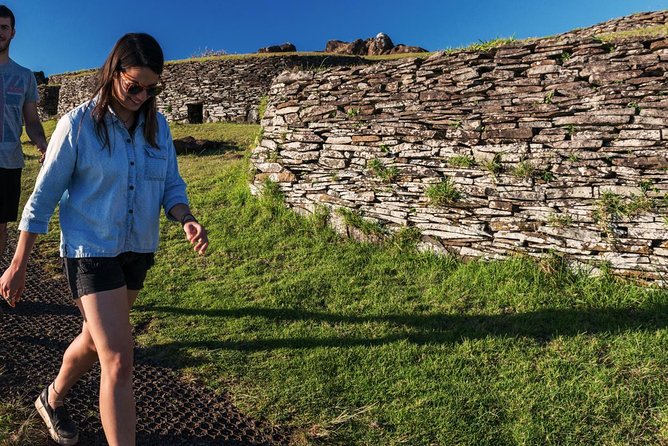
Orongo sits along one side of Rano Kau’s crater. The village is one of Easter Island’s two major archaeological sites, and it is the tour’s main reason for existing.
You can expect the visit to focus on the Birdman ceremony and the ceremonial village itself. The location gives you a view toward the ocean and the small islands connected to the contest. The combination of stone structures, steep volcanic edges, and open sea makes Orongo unlike the inland moai sites later in the day.
The two-hour stop is generous compared with the rest of the schedule. I see that as a real advantage. The Birdman tradition needs explanation, and you will get more from the site if you have time to listen, ask questions, and look carefully instead of rushing from one point to another.
The practical catch is that Orongo is also the most important place to spend your attention. If you are fascinated by Rapa Nui religion and oral tradition, you may wish the tour offered even more time here. If you prefer a slow visit at every location, the six-stop format may feel brisk.
Rano Kau: a huge crater with a useful past
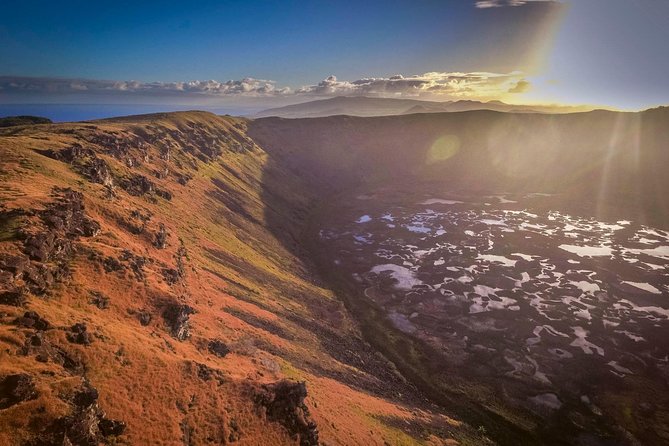
The Rano Kau stop lasts about one hour. It is located in the southwest of the island and offers one of Rapa Nui’s most striking natural views.
The crater measures about 1.5 kilometers across. Inside, the lake once served as an important drinking-water source, and the crater contains a major reserve of endemic plant life. Those details give the view more weight than a simple scenic overlook. You are looking at a place that supported both the island’s ecology and its ancient communities.
Rano Kau also helps explain Orongo’s location. The village sits on the crater’s edge, so seeing the crater separately gives you time to appreciate its size and shape. I like the pairing of these two stops because the cultural story and the physical setting are closely linked.
The tour schedule gives you enough time to see the crater without making the entire day about geology. If you enjoy taking long walks or photographing every angle, one hour may feel short. Still, it is a sensible amount of time in a day that also includes four other archaeological sites.
Ahu Vinapu and the question of stonework
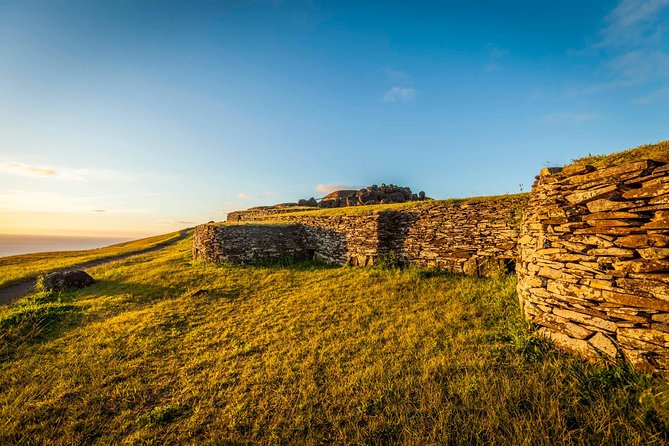
Ahu Vinapu receives about 30 minutes. This archaeological site is known for the precise work of its ancient builders, especially the way the stone blocks were fitted together.
The site has prompted theories about a possible connection with Inca construction methods. That is an interesting subject, but it should be treated as a theory rather than settled fact. A good guide can explain the similarities without presenting speculation as certainty.
This short stop works best if you want a focused look at Rapa Nui building skill. You will not have a long period for wandering, but the limited time also keeps the day moving. I would pay attention to the construction details here rather than expecting a large collection of moai.
Vinapu adds variety to the tour. Orongo is about ceremony and setting, while Vinapu is about engineering and craftsmanship. That contrast helps prevent the day from becoming a sequence of similar statue stops.
A few more options to weigh up in Easter Island
- 2-Day Private Tour Easter Island Highlights Complete Discovery
★ 5.0 · 110 reviews - Private Tour: Full Day Easter Island Highlights
★ 5.0 · 106 reviews - Private Full-Day Easter Island Highlights North and West
★ 5.0 · 84 reviews - Full Day Private Tour: Factory of the Moai the stone giants
★ 4.5 · 63 reviews
Ahu Tahai: three platforms near Hanga Roa
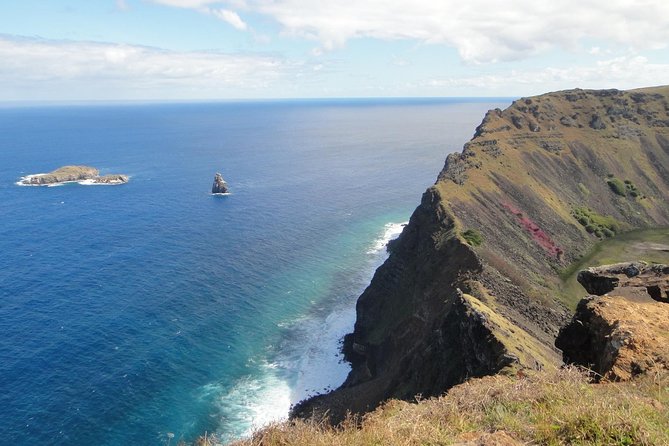
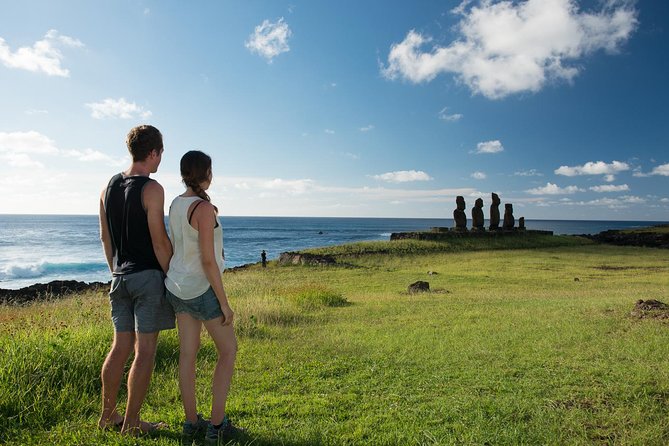
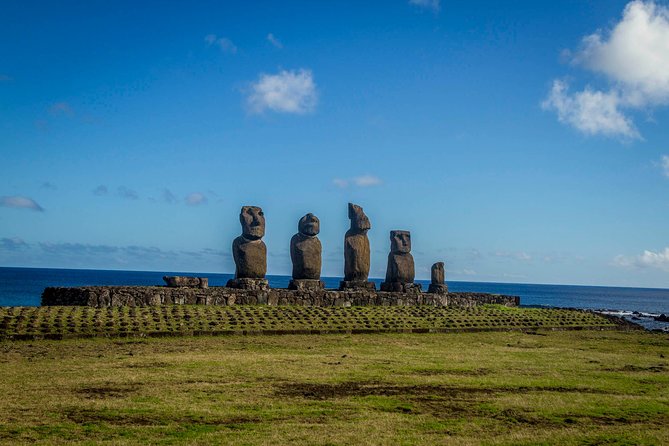
Ahu Tahai is a restored ceremonial complex close to Hanga Roa. The visit lasts about 30 minutes.
The complex includes three principal ahu, or ceremonial platforms, arranged from north to south: Ko Te Riku, Tahai, and Vai Ure. Ko Te Riku is especially notable for its restored eyes, giving you one of the clearest chances to see how a moai may have appeared with its original features restored.
The site was restored in 1974 by American archaeologist William Mulloy. That restoration is an important part of what you are seeing today. The platforms are not untouched ruins, so your guide can help explain the difference between ancient construction and modern archaeological work.
Tahai is also known as a good place for sunset photographs because of its location near town. This tour visits during a daytime schedule beginning at 9 a.m., so you should not book it expecting a sunset stop. Even so, the complex is a useful introduction to the ahu system and a convenient final or near-final archaeological stop.
Puna Pau: where the red stone came from
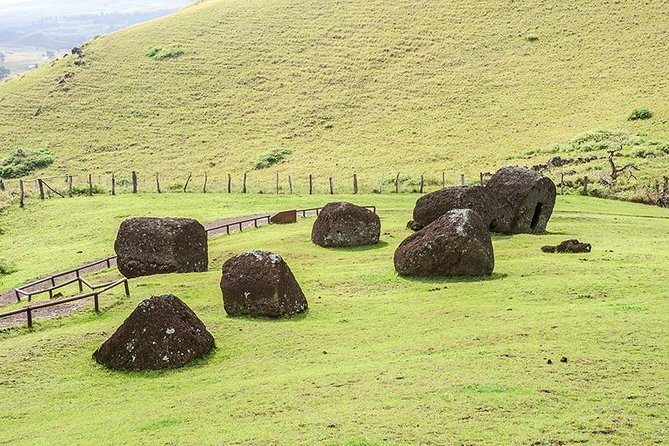
At Puna Pau, you spend about 40 minutes at the quarry used for the moai’s red pukao, the cylindrical stone topknots often described as hair.
The quarry still contains 23 cylindrical pukao prototypes in early stages of carving. Their unfinished condition helps you think about production and transport. These pieces were shaped in a way that made moving them toward the ahu easier, and the site gives you a direct look at the work before the final placement.
Puna Pau is more than a quarry visit. It also provides a broad view toward Hanga Roa, so the stop combines archaeology with a useful sense of the island’s settled area. After Orongo and Rano Kau, this change in setting keeps the day varied.
Forty minutes is enough to understand the site and take in the view. I would not expect an extended walk or a detailed workshop demonstration, since none is included in the tour description. The value comes from seeing where this distinctive red stone originated.
Ahu Akivi and the seven inland moai
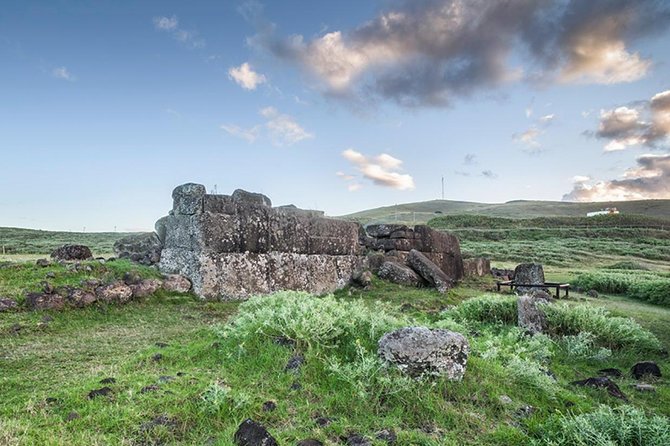
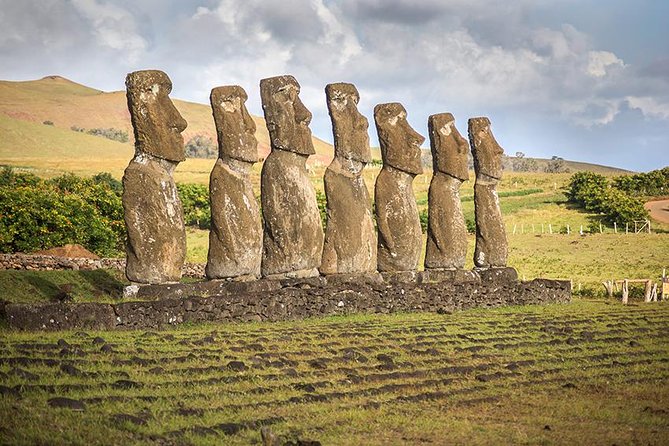
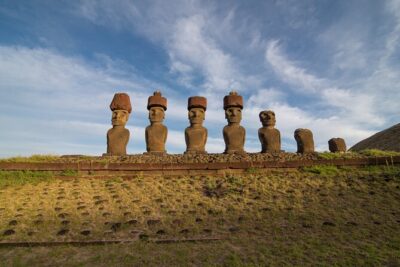
Ahu Akivi lasts about 30 minutes and offers one of the most unusual moai groupings on the island. Its seven statues are on an inland ceremonial platform rather than beside the sea.
Archaeologists William Mulloy and Gonzalo Figueroa restored the moai to standing positions with help from the Rapa Nui community. That community role is worth noting. The site reflects both archaeological work and local involvement in bringing the statues back into view.
The seven moai also have an astronomical alignment. They look toward the setting sun, giving the site a connection to the sky and the calendar as well as to ceremony. Ahu Akivi is a good place to ask your guide how much is supported by archaeological evidence and how much remains open to interpretation.
Thirty minutes is a quick visit, but the site is visually direct. You can see the full group and learn why its inland location and orientation matter. If you are especially interested in astronomy, you may want to ask how the alignment relates to the time of year, since the supplied tour information does not give a more exact explanation.
What the six-hour schedule feels like
The tour begins at 9 a.m. and lasts about six hours. The listed visits add up to roughly four hours and ten minutes, leaving the rest of the day for driving between sites, short pauses, and the practical movement involved in a private outing.
That timing is efficient. You cover six major places without giving up an entire day. It also means the tour is not designed for long independent exploration at every stop. The 30-minute visits at Vinapu, Tahai, and Ahu Akivi are enough for an introduction, but not enough for a slow archaeological study.
Private transport makes this format easier. Your group does not have to wait for strangers, and you can direct questions to the guide throughout the day. Group discounts are available, which may improve the per-person value if you are traveling with family or friends.
Pickup is offered from hotels in the Hanga Roa urban area. Port and tender pickup is not available, so this tour is not a good fit if you are arriving by ship and need a shore excursion from the harbor. You should also plan around the 9 a.m. start rather than expecting a flexible departure.
Bottled water is included. The information provided does not promise meals, snacks, or special equipment, so you should not count on those being part of the day.
Is $263 a fair price?
The listed cost is $263 per person, but the mandatory national park ticket adds $100 per person. That makes the basic total $363 each before any group discount.
That is a serious price for a six-hour tour. Still, this is a private activity with private transportation, a guide, and admission coverage for the tour’s stops, while the national park ticket remains valid for 10 days and all park sites. If you plan to visit other protected places during your stay, that ticket has value beyond this one outing.
I would judge the price by the size of your group and your interest in guided interpretation. For one or two people, the cost may feel steep. For a small group sharing a private vehicle, the experience can make more sense, especially if you want to ask detailed questions about Rapa Nui culture and competing interpretations of the past.
The biggest value is not the number of sites alone. It is the chance to connect Orongo and Rano Kau with Vinapu, Tahai, Puna Pau, and Akivi in one focused route. If you only want photographs of moai, a less expensive group option might suit you better. If you want context and personal attention, the private format earns its keep more easily.
The guide can shape the entire day
The strongest praise attached to this experience concerns the guides’ personal approach. Toke and Sebastian were described as making the day feel warm and family-like, while Soledad was singled out as an exceptional guide for visitors who wanted to learn as much as possible about Rapa Nui.
That personal quality matters on Easter Island. The sites are impressive, but their meaning is not always obvious from the stones alone. You will get more from Orongo if the guide can explain both oral tradition and archaeological thinking. You will get more from Ahu Akivi if someone can separate known facts from theories about astronomical positioning.
A birthday celebration was also handled with personal gifts for one group. That is a small detail, but it suggests the company can pay attention to special occasions when told in advance. It is not a guaranteed feature, so you should request it rather than expect it.
The guide names associated with this experience include Toke, Sebastian, and Soledad, but availability is not promised. I would book this tour for the guiding style and private setting, not for a guarantee that one particular person will lead it.
Who should book this Easter Island tour?
I think this tour suits you best if you have a full day available, want a private outing, and care about the Birdman ceremony as much as the moai. It is also a good choice if you prefer to ask questions freely rather than follow a large group.
It works well for a small group that can use the group discount. Families may appreciate the private vehicle, while couples and friends can keep the day focused on the sites that interest them most.
You should think twice if you are arriving by cruise ship, since port and tender pickup is not available. You should also look elsewhere if you want a slow, highly specialized archaeology tour at only one or two sites. Six stops in six hours is efficient, not leisurely.
The national park ticket is valid for 10 days from first entry and all park sites. That makes this tour easier to justify if you will spend several days on Rapa Nui and plan to visit more protected locations.
Should you book the Birdman Cult tour?
I would book it if you want a private, culture-centered introduction to Easter Island with Orongo as the main event. The route covers the Birdman village, Rano Kau, a red-stone quarry, three important ahu sites, and the island’s famous inland moai group.
I would skip it if the $363 basic cost per person is beyond your budget, if you need port pickup, or if you prefer to linger at each archaeological site. For everyone else, the combination of strong local guiding, private transport, and a clear focus on Rapa Nui tradition makes this a worthwhile choice, especially for a small group sharing the cost.
Free cancellation is available if you cancel at least 24 hours before the 9 a.m. start time. Changes or cancellations made later are not accepted for a refund.
FAQ
How long does the Easter Island Birdman Cult tour last?
The tour lasts approximately six hours.
What time does the tour begin?
The tour begins at 9 a.m.
Where is hotel pickup available?
Pickup is available from hotels in the Hanga Roa urban area.
Is pickup available at the port or from a tender?
No. Port and tender pickup is not available.
Is the tour private?
Yes. Only your group participates in the private activity.
Is the national park ticket included?
No. The mandatory national park ticket costs $100 per person. It is valid for 10 days from first entry and applies to all national park sites.
What is included in the tour price?
Private transportation and bottled water are included.
Is the tour offered in English?
Yes. The tour is offered in English.
Can I cancel for a full refund?
Yes, if you cancel at least 24 hours before the experience start time. Cancellations made less than 24 hours before the start are not refunded.
Just added in Easter Island
- Volcanic Refuges: Excursion to Underground Civilization★ 4.7 · 8 reviews
- Volcanic Wonders and the Kingdom of the Birdman: Half Day★ 5.0 · 6 reviews
- Half Day Private Tour: Caves and Volcanic Refuges★ 4.0 · 14 reviews
- Easter Island Ancestral Dinner and Show with Transport★ 4.5 · 2 reviews
- 2 Day Small Group Tour in Moai Monuments and Historic Pathways★ 5.0 · 22 reviews
- Visit Rapa Nui in 4 days with 3 Tours and Accommodation included★ 4.0 · 2 reviews
- Tour to the Motus: Boat trip and snorkeling in Rapa Nui★ 5.0 · 8 reviews
- The birdman journey in Easter Island★ 5.0 · 1 review
Easter Island Tours, compared.
Two days of Full Day Tour of Rapa Nui + Sunrise in Tongariki
Read our review →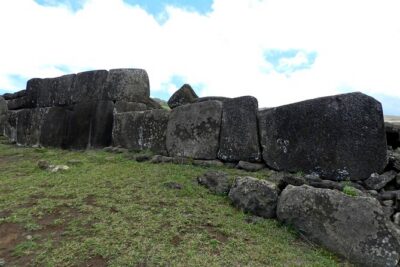
2-Day Private Tour Easter Island Highlights Complete Discovery
Read our review →
Private Tour: Full Day Easter Island Highlights
Read our review →
Browse the lists this tour appears in