
REVIEW · EASTER ISLAND TOURS
Private Tour: 2 Half Days & 1 Full Day Easter Island Essentials
Moai, volcanoes, and one unforgettable sunrise. This three-day private tour gives you a smart way to see Easter Island, especially if you have only two nights and want both the major archaeological sites and the stories behind them. I like the private vehicle and flexible guide service, since your day can be adjusted around your interests, children, shopping, or photography. I also like that the plan includes the island’s main ceremonial centers, quarry sites, beach, and volcanic crater rather than focusing only on the famous statues.
The main drawback is cost. At $795 per person, plus the $80 national park ticket, this is a serious part of your Easter Island budget. The schedule is also full, with an early sunrise and several long site visits. Still, if your time is short, the price buys convenience, personal attention, and a much better chance of understanding what you are seeing.
In This Review
- Key points to know before booking
- Why this three-day format works
- Day one: Orongo and the volcanic southwest
- Day two: The great moai circuit
- Day three: Sunrise with fifteen moai
- What the private format adds
- Who should book this experience?
- Final call: Is Easter Island Essentials worth $795?
- FAQ
- How long is the Easter Island Essentials tour?
- How much does the tour cost?
- Is the national park ticket included?
- Is lunch included?
- Is transportation included?
- Is this a private tour?
- Can cruise ship passengers book this tour?
- What happens at Ahu Tongariki?
- Can I cancel for a full refund?
Key points to know before booking
- Three days cover the essential Rapa Nui sites: You visit Orongo, Rano Kau, Vinapu, Tahai, Akahanga, Tongariki, Rano Raraku, Anakena, Ahu Akivi, and Puna Pau.
- Sunrise at Ahu Tongariki is the emotional high point: Fifteen moai face inland while the Pacific sits behind them.
- Your guide can shape the day: Alberto adjusted plans for shopping and family needs, while Yo-yo accommodated a later start for children.
- The quarry at Rano Raraku explains the moai better than any photograph: You see unfinished statues and the volcanic material used to carve them.
- The tour is genuinely private: Only your party participates, with hotel pickup, private transport, lunch, and a professional guide included.
- Budget for the national park fee: The $80 ticket per person is not included in the advertised price.
Why this three-day format works
Easter Island, or Rapa Nui, is not a place where you want to spend your limited time guessing which road leads to the next major site. The important places are spread around the island, and the meaning of the moai is tied to the ahu, quarries, volcanoes, coast, and old settlement patterns around them.
This plan breaks the visit into two shorter days and one full day. That gives you a useful rhythm. Day one covers the southwest and nearby Tahai. Day two makes the long east and north circuit. Day three begins before sunrise, then finishes with inland sites and a view over Hanga Roa.
I especially like the private setup because the itinerary is not locked in stone. Alberto helped one family fit shopping into the day and even created playful phone photographs that made it look as though they were standing beside the statues. Yo-yo was praised for being punctual and for allowing a family with children to start a few minutes late. Those details matter. A private tour should respond to you, not simply move you from one stop to another.
The guide can also help with meals and activities based on your schedule and location. Tokerau was singled out for his passion for Rapa Nui, his wide circle of island connections, and his ability to keep the drives entertaining. Sebastian Paoa was praised for speaking excellent English and explaining what happened where and why in a clear way.
Guide assignments may vary, so you should not assume you will get one particular person. The useful point is that the company has several guides who bring local knowledge and flexibility to the day.
More things to do on Easter Island:
- From Hanga Roa: Rapa Nui Culture Sightseeing Tour
★ 4.6 · 307 reviews - From Hanga Roa: Easter Island Highlights 2-Day Tour
★ 4.3 · 205 reviews - From Hanga Roa: Easter Island Sightseeing Full Day Tour
★ 4.5 · 189 reviews
Day one: Orongo and the volcanic southwest
Your first stop is Orongo, one of Rapa Nui’s most important ceremonial sites. It sits on the rim of Rano Kau, where the dramatic setting helps explain why this place carried such power.
Orongo is tied to the Birdman ceremony, an annual contest connected with status, leadership, and the island’s spiritual life. Your guide’s explanation is especially valuable here because the stone houses and crater rim can otherwise seem like an isolated ruin. Plan on about 90 minutes, enough time to take in the site without rushing.
The nearby Rano Kau crater is one of the day’s great natural sights. The crater is about 1.5 kilometers wide, and its interior contains a lake that once served as an important source of drinking water. It is also the largest reserve of endemic plant life on Rapa Nui.
You have about 30 minutes here. That is enough for the main view, but it is not a long walking session. If you love geology, plants, or wide open views, you may wish the schedule allowed more time. The short visit does, however, keep the day moving.
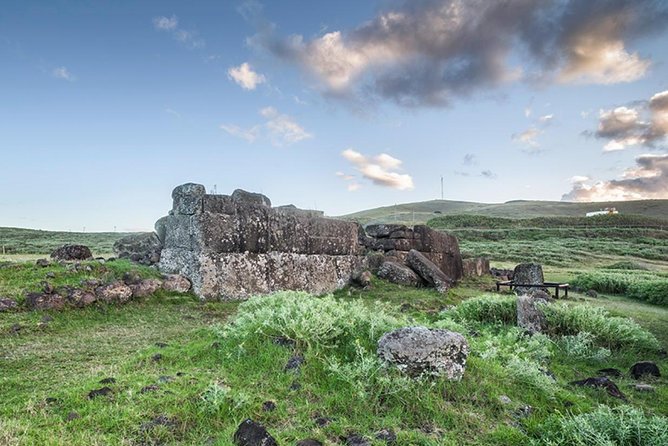
At Ahu Vinapu, the focus shifts from nature to stonework. The site is known for its carefully fitted masonry, and some theories have compared parts of its construction to Inca building methods. Your guide can help you separate established facts from speculation, which is important at a place where dramatic theories can easily outrun the evidence.
The final stop is Ahu Tahai, a restored ceremonial complex close to Hanga Roa. It includes three principal ahu: Ko Te Riku, the restored statue with eyes, Tahai, and Vai Ure. The complex was restored in 1974 by American archaeologist William Mulloy.
Tahai is a good place to end the first day because it is close to town and often used for sunset photographs. You have about an hour there. The setting is calmer than the more remote sites, and the three ahu give you an early look at the range of styles and arrangements found across the island.
Day two: The great moai circuit
Day two is the longest and most packed portion of the tour. You begin at Ahu Akahanga on the southeast coast, where fallen moai lie on their backs or faces. The site helps you see how an old village was arranged around its ceremonial center.
Akahanga is not polished or tidy, and that is part of its value. You are looking at a place that shows the collapse of the ahu system rather than a fully reconstructed display. Allow about an hour.
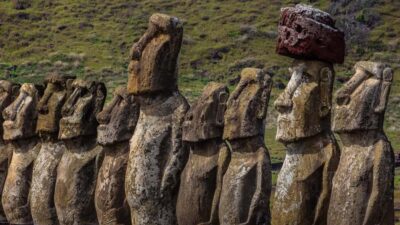
Next comes Ahu Tongariki, the largest reconstructed platform on Rapa Nui. Fifteen moai rise in a long row with their backs to the Pacific. This is the image many people carry home from Easter Island, but seeing the full platform in person gives it a different scale.
You spend about 90 minutes here. Take time to notice the spacing of the statues and the relationship between the platform, the coast, and the inland volcanic slopes. Tongariki is one of the stops where a guide’s explanation adds real value. Without context, you see a row of huge stone figures. With context, you begin to understand the effort involved in carving, moving, and placing them.
The next stop, Rano Raraku, is the practical heart of the moai story. This volcanic tuff quarry is where the statues were carved before being moved to ahu around the island. You see moai at different stages of work, including unfinished figures still connected to the quarry.
Two hours are allowed here, and that is sensible. This is not a quick photo stop. You need time to walk, look closely at the unfinished forms, and understand how the quarry functioned. The visit may also be the most physically demanding part of the tour, depending on how much ground you cover. Wear practical shoes and keep your pace comfortable.
At Ahu Te Pito Kura, you see Ahu o Paro, the largest moai transported from Rano Raraku. It is about 11 meters long and weighed roughly 90 tons. Nearby is the rounded stone called Te Pito o te Henua, which tradition says was brought to the island by the ancestors.
You have 30 minutes here. The stop is shorter and more focused than Rano Raraku, but it adds scale to the story. After seeing the quarry, you can better appreciate what moving a statue of this size meant.
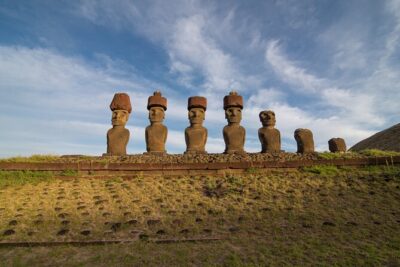
Anakena Beach provides a change of mood. Its warm turquoise water and coral sand make it the island’s main beach, and it was once associated with the Miru Araki royal family. The Ahu Nau Nau moai are the main cultural reason to visit, with their carefully finished forms.
About an hour is planned here. Anakena is useful because it shows that Rapa Nui is not only about stone monuments and volcanic slopes. You get a coastal setting, a place linked to royal tradition, and a chance to pause after the more demanding archaeological stops.
Lunch is included, although the supplied details do not specify the menu or where it is served. Ask your operator about meal timing if food preferences or dietary needs matter to you.
Day three: Sunrise with fifteen moai
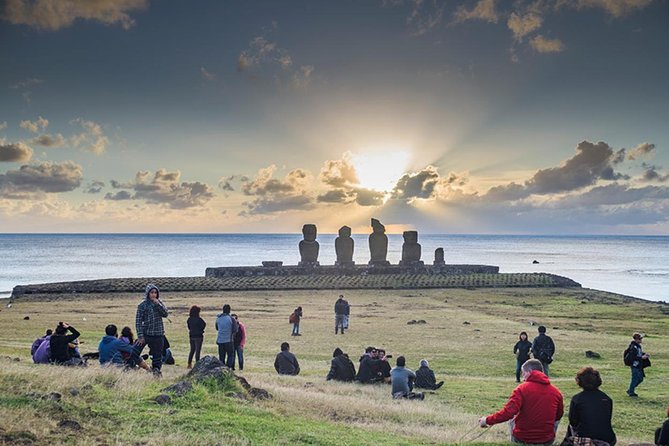
The final day begins at Ahu Tongariki for sunrise. This is the most time-sensitive part of the tour, so be ready for an early start. The sun rises behind the platform during the warmer months from October through March. During the rest of the year, it rises from the direction of Poike volcano.
The exact light depends on the season and weather. Winter has a greater chance of unclear skies, so nobody can promise a perfect sunrise. Even with cloud, the combination of the horizon, the enormous platform, and fifteen moai makes this a strong final morning.
You have about 90 minutes at Tongariki. That gives you time to watch the light change and take photographs without being rushed away immediately. Since the same site appears on day two, the two visits serve different purposes. The first is about scale and history. The second is about light, silence, and atmosphere.
After sunrise, the tour moves to Ahu Akivi. This inland ceremonial platform is unusual because it is not located beside the sea. Its seven restored moai face toward the setting sun, and their positioning has an astronomical connection.
The visit lasts about 30 minutes. It is a compact stop, but it adds an important contrast to the coastal ahu. You see that ceremonial sites were not placed according to one simple rule.
Puna Pau is the last stop. This quarry supplied the red volcanic stone used for the pukao, the cylindrical topknots often described as the moai’s hair. Twenty-three cylindrical pukao are found here in early stages of carving, showing how the pieces were prepared for transport.
You also get a privileged view over Hanga Roa. After the scale of Tongariki and the quiet of Ahu Akivi, this final outlook helps bring the island back to the present day. The stop lasts about 30 minutes.
A few more options to weigh up in Easter Island
- 2-Day Private Tour Easter Island Highlights Complete Discovery
★ 5.0 · 110 reviews - Private Tour: Full Day Easter Island Highlights
★ 5.0 · 106 reviews - Private Full-Day Easter Island Highlights North and West
★ 5.0 · 84 reviews - Full Day Private Tour: Factory of the Moai the stone giants
★ 4.5 · 63 reviews
What the private format adds
A private tour is not automatically better than a group tour. It costs more, and some people enjoy the social side of joining a larger party. Here, though, the private format fits the tight schedule well.
You can ask questions as they occur instead of waiting for a guide to finish a group explanation. You can also spend more time at a place that catches your attention and less time at one that does not. The examples from Alberto and Yo-yo show how this can work in practice: shopping was added, family timing was handled kindly, and the planned route was treated as a guide rather than a rigid contract.
Private transportation also saves you from arranging your own vehicle and navigating between distant sites. Hotel pickup and drop-off are included, as is transport by private vehicle. That makes the $795 price easier to understand, especially for a couple or family that would otherwise need to organize several days of transport and guiding.
The price still deserves a clear warning. Add the $80 national park ticket per person, and the effective cost is $875 per person before any other personal spending. Lunch is included, but the park entrance is not. If you are counting every dollar, this is not a budget excursion.
Who should book this experience?
I would choose this tour if you have only two nights on Easter Island and want a strong first visit without wasting time on transport planning. It suits couples, families, and small private groups who want explanations tailored to them.
It is also a good match if you care about the culture and history as much as the photographs. The statues are the draw, but Orongo, Rano Raraku, Vinapu, Akivi, and the old village sites give the visit its meaning.
Families may appreciate the private pacing, particularly if children need breaks or a later start. The early Tongariki morning still requires cooperation from everyone, however. If your group dislikes early mornings, the sunrise portion will be a challenge.
Cruise ship passengers cannot use this tour. It is built for people staying on the island, with hotel pickup and drop-off across the three-day schedule.
Final call: Is Easter Island Essentials worth $795?
For a short stay, I think this tour is worth considering, provided you accept the price and the extra park fee. You get the major moai sites, the quarry, Orongo, Rano Kau, Anakena Beach, private transportation, lunch, and a guide who can shape the experience around your group.
The strongest reason to book is not simply the number of stops. It is the chance to have someone explain how the sites connect, then adjust the day when your real interests appear. The sunrise at Tongariki is the signature moment, but the quarry at Rano Raraku and the cultural story of Orongo may stay with you longer.
Book it if you want an efficient, personal introduction to Rapa Nui and do not mind paying for convenience. Skip it if you have a longer stay, prefer exploring independently, or need to keep the budget low. Free cancellation is available until 24 hours before the start time, but changes or cancellations inside that window are not refunded.
FAQ
How long is the Easter Island Essentials tour?
The experience lasts approximately three days, arranged as two half days and one full day.
How much does the tour cost?
The listed price is $795 per person.
Is the national park ticket included?
No. The national park ticket costs $80 per person and is not included in the tour price.
Is lunch included?
Yes. Lunch is included.
Is transportation included?
Yes. Private transportation, transport by private vehicle, and hotel pickup and drop-off are included.
Is this a private tour?
Yes. Only your group participates in the activity.
Can cruise ship passengers book this tour?
No. The tour is not available for cruise ship passengers.
What happens at Ahu Tongariki?
You visit Ahu Tongariki on day two to see its fifteen-moai platform, then return on day three for sunrise. The sunrise position changes by season, and winter has a greater chance of unclear skies.
Can I cancel for a full refund?
Yes, if you cancel at least 24 hours before the experience start time. Cancellations or changes made less than 24 hours before the start time are not accepted for a refund.
Just added in Easter Island
- Volcanic Refuges: Excursion to Underground Civilization★ 4.7 · 8 reviews
- Volcanic Wonders and the Kingdom of the Birdman: Half Day★ 5.0 · 6 reviews
- Half Day Private Tour: Caves and Volcanic Refuges★ 4.0 · 14 reviews
- Easter Island Ancestral Dinner and Show with Transport★ 4.5 · 2 reviews
- 2 Day Small Group Tour in Moai Monuments and Historic Pathways★ 5.0 · 22 reviews
- Visit Rapa Nui in 4 days with 3 Tours and Accommodation included★ 4.0 · 2 reviews
- Tour to the Motus: Boat trip and snorkeling in Rapa Nui★ 5.0 · 8 reviews
- The birdman journey in Easter Island★ 5.0 · 1 review
Easter Island Tours, compared.
Two days of Full Day Tour of Rapa Nui + Sunrise in Tongariki
Read our review →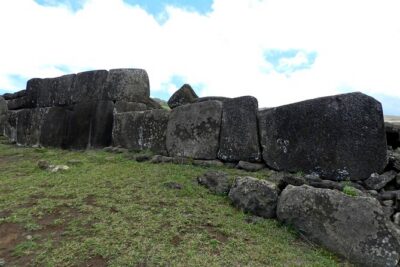
2-Day Private Tour Easter Island Highlights Complete Discovery
Read our review →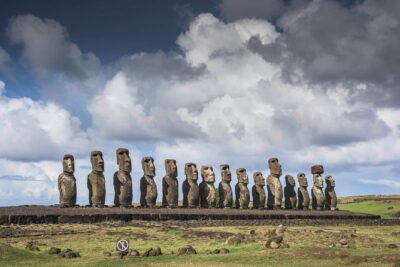
Private Tour: Full Day Easter Island Highlights
Read our review →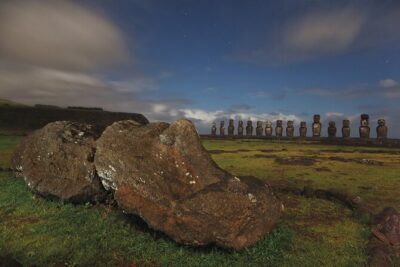
Browse the lists this tour appears in