
REVIEW · EASTER ISLAND TOURS
Easter Island Private Tour: Majestic Megaliths South & East
Rapa Nui saves its biggest stones for last. This private south and east coast tour brings you to Ahu Tongariki, with its 15 moai, and Rano Raraku, the volcano where nearly every statue was carved. I like the route’s strong mix of famous sights and quieter coastal stops, and I like that the timing is planned around better light and smaller crowds. The main drawback is the long, active day on uneven ground, with a national park ticket and lunch added to the $210 price.
The guide makes a real difference here. Jo, the guide named in the available feedback, received direct credit for turning a good day into a great one. You get hotel pickup, private transport, bottled water, and an English or Spanish-speaking local guide, but you should still bring sturdy shoes, sun protection, and patience for the island’s changeable weather.
In This Review
- Key points to know before booking
- Why this six-and-a-half-hour route works
- Ahu Vinapu and the island’s precise stonework
- Hanga Poukura and the rough south coast
- Vaihu shows an ancient village in outline
- Akahanga, the largest village in oral tradition
- Lunch before the main quarry visit
- Rano Raraku, where the moai were carved
- Ahu Tongariki and the strongest final view
- What the $210 price really covers
- Who should book this private tour
- What to bring for a smoother day
- Should you book it?
- FAQ
- How long does the Easter Island private tour last?
- What locations does the tour visit?
- Does the tour include hotel pickup and drop-off?
- Is lunch included in the price?
- Do I need a national park ticket?
- What languages does the guide speak?
- Is this a private group tour?
- What should I bring?
- Are children under eight allowed?
- Is the tour suitable for wheelchair users?
Key points to know before booking
- Rano Raraku is the tour’s centerpiece: Walk among unfinished moai left in the quarry when work suddenly stopped.
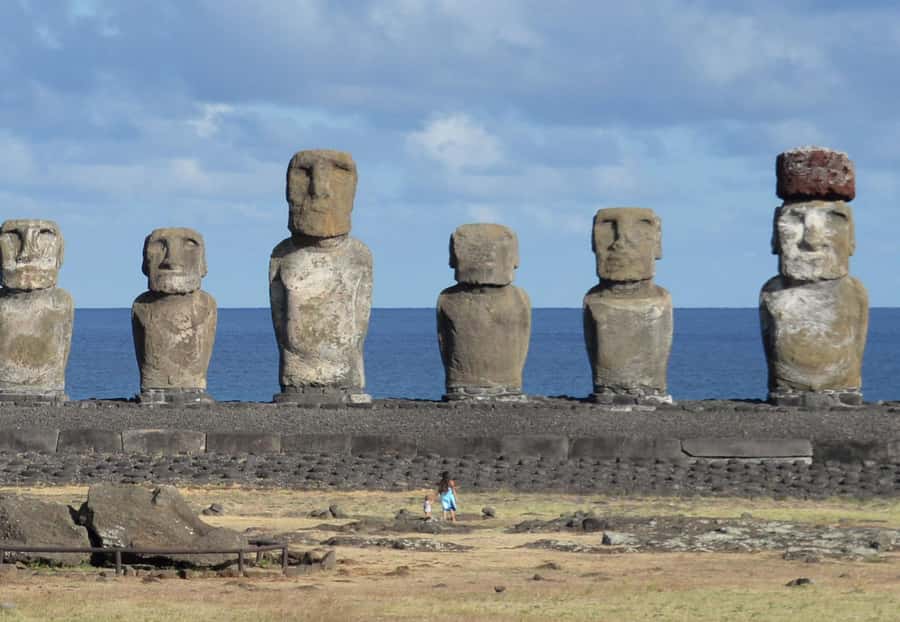
- Ahu Tongariki delivers the big finish: Fifteen restored moai face inland from the largest monument on Rapa Nui.
- Vinapu shows remarkable stone fitting: Ahu Tahira is known for its carefully fitted rock wall.
- The south coast is rough and dramatic: Hanga Poukura brings crashing surf, sharp lava formations, and a strange line of buried statues.
- The private format keeps the day focused: You travel with your own group, guide, and vehicle rather than following a large coach.
- Budget beyond the tour price: The national park ticket costs about $80 per person for your entire stay, and lunch costs roughly 5,000 to 25,000 CLP.
Why this six-and-a-half-hour route works
At 390 minutes, this is a full half-day plus, not a quick sightseeing loop. That matters on Easter Island, where the major archaeological sites are spread around the coast and inland roads. The short transfers, usually 5 to 25 minutes, let you spend most of the day looking rather than sitting in a vehicle.
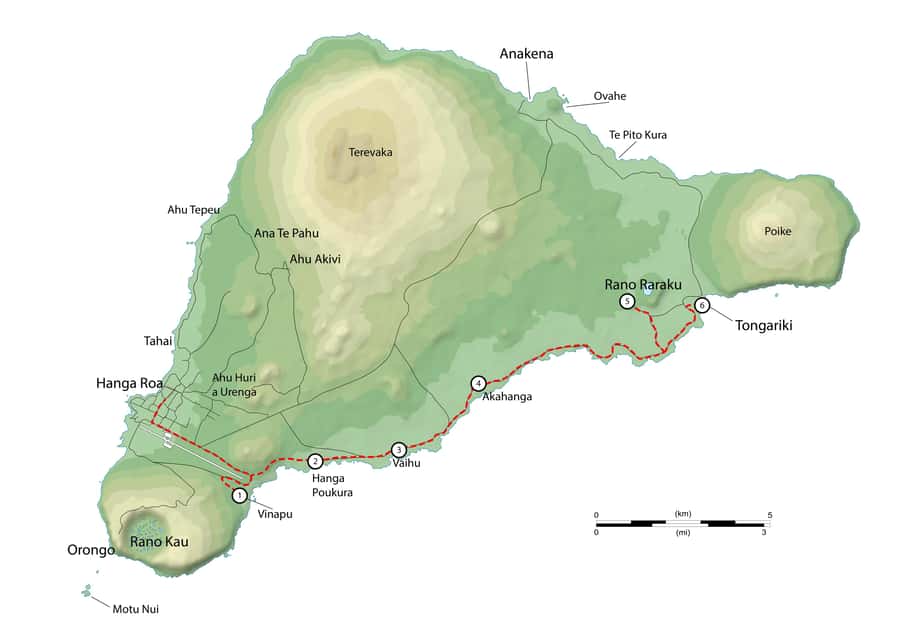
The route also has a sensible rhythm. You begin with stonework at Vinapu, move through coastal formations and former village sites, stop for lunch, then spend the longest stretch at Rano Raraku before ending at Tongariki. In other words, the tour builds toward the two places most people come to Rapa Nui to see.
I like the private setup for this particular route. A private group gives you a better chance to ask about carving methods, village life, and the meaning of the monuments without trying to hear a guide over a crowd. It can also make photo stops less rushed, although your exact pace will depend on the guide and the group.
The tour is designed for photography as well as sightseeing. The timing aims for better light at each location and fewer people when possible. That is useful on Rapa Nui, where the angle of sunlight changes the way moai faces, carved stone, and rough volcanic rock appear in photographs.
More things to do on Easter Island:
- From Hanga Roa: Rapa Nui Culture Sightseeing Tour
★ 4.6 · 307 reviews - From Hanga Roa: Easter Island Highlights 2-Day Tour
★ 4.3 · 205 reviews - From Hanga Roa: Easter Island Sightseeing Full Day Tour
★ 4.5 · 189 reviews
Ahu Vinapu and the island’s precise stonework
Your first major stop is Ahu Vinapu, reached after about a 10-minute transfer from pickup. The guided visit lasts around 20 minutes, so you will want to listen closely and use your time well.
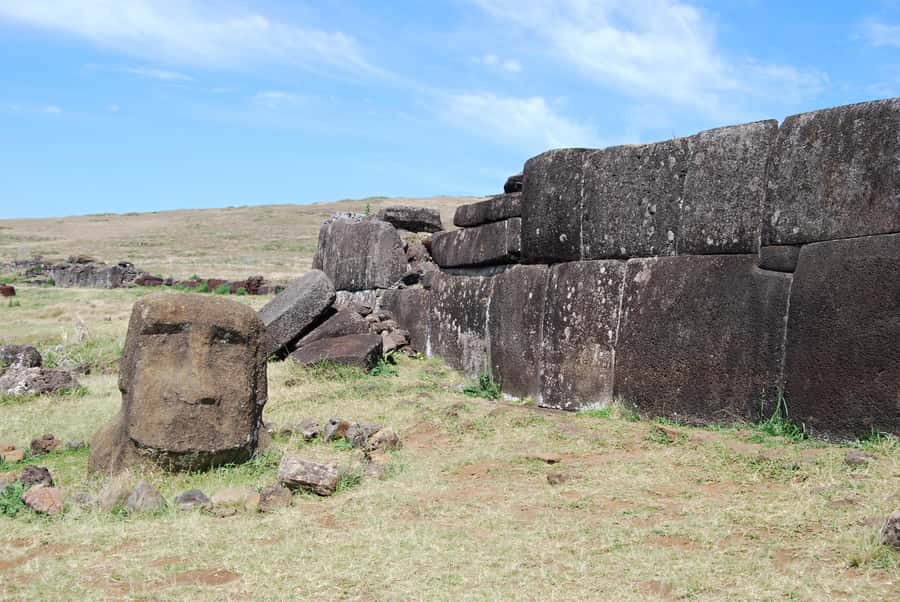
The focus here is Ahu Tahira, a wall made from large volcanic blocks fitted with remarkable precision. The site is especially useful at the start of the day because it gives you an immediate look at the engineering behind Rapa Nui’s monuments. Before you see the famous rows of moai, you see the care that went into the platforms beneath them.
This stop is not mainly about a standing statue. It is about the base, the joins, and the physical labor required to move and fit heavy stone. If you enjoy construction, archaeology, or ancient engineering, Vinapu may surprise you.
The short visit is the one limitation. Twenty minutes passes quickly when you are examining the wall and listening to an explanation. Stay close to your guide and ask questions early rather than wandering off for photos first.
Hanga Poukura and the rough south coast
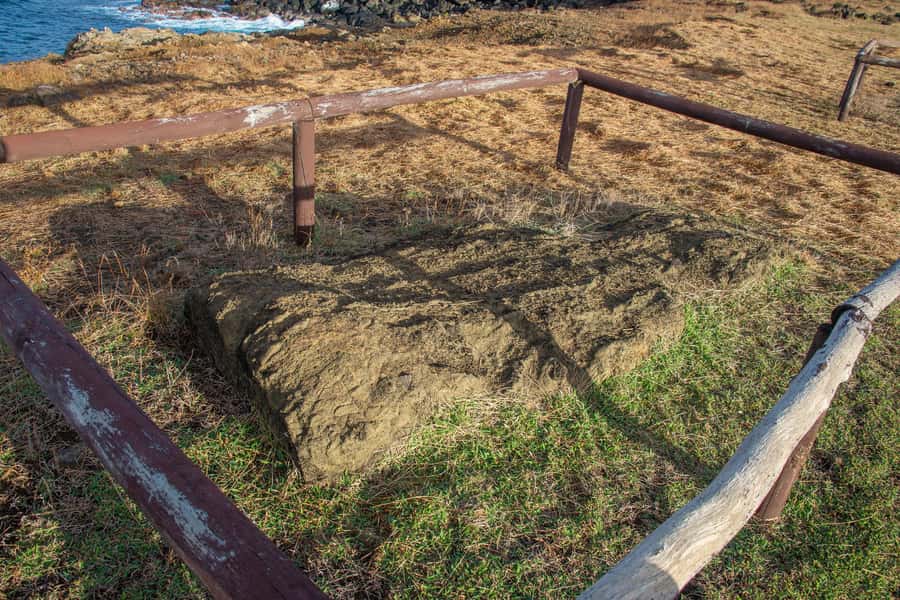
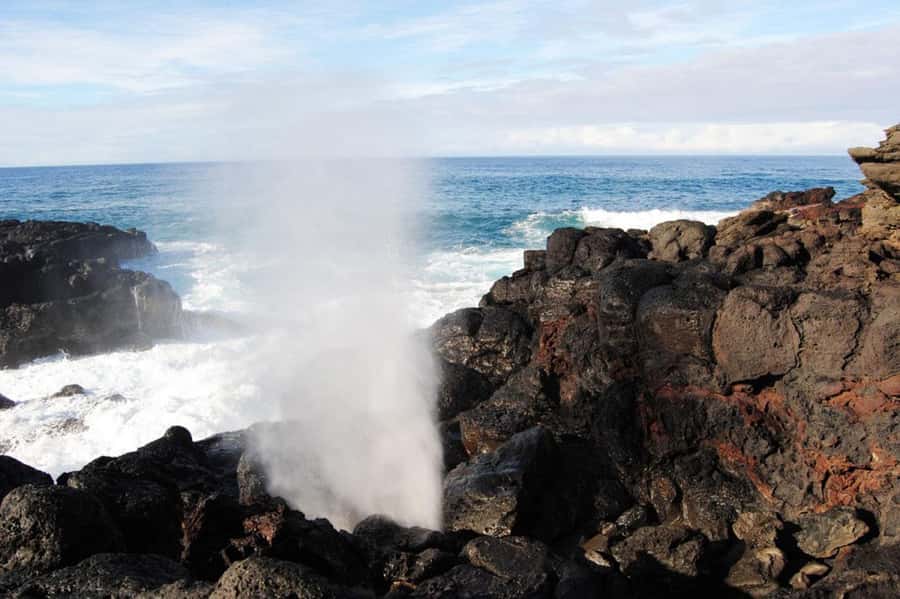
Another short transfer brings you to Hanga Poukura, a coastal area shaped by dark, broken lava. The rock formations are rough rather than polished, and the sea gives this stop much of its character. Waves crash against the southern coast, making the setting feel stark and exposed.
This is a good change of pace after Vinapu. You are no longer studying carefully fitted blocks. Instead, you are looking at the raw volcanic material from which much of the island was formed. The contrast helps you understand the setting in which the Rapa Nui monuments were made.
The coast also includes several statues lying in a strange line, with only their backs visible. That odd view is one of the route’s more memorable details. It is less familiar than the classic moai profile, and it gives you a reminder that many monuments were toppled, abandoned, or left in unusual positions.
Expect uneven ground. Comfortable walking shoes are important here, and you should not count on smooth paths at every stop. The tour information also asks you not to climb or touch plants, so keep your exploration to the permitted areas.
Vaihu shows an ancient village in outline
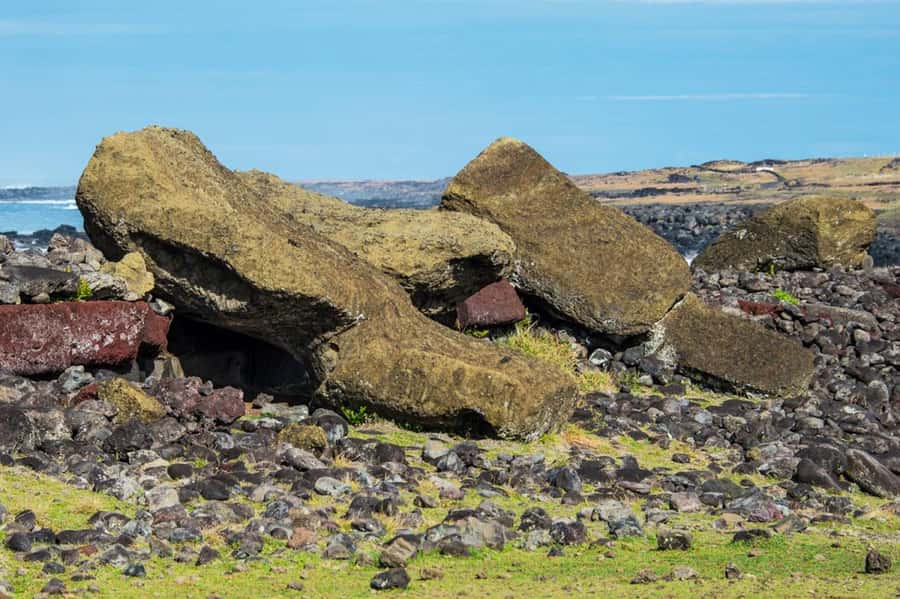
The route continues to Vaihu, where a reconstruction of an old village helps you picture daily life beyond the moai. The stop lasts about 20 minutes, which makes it more of an introduction than a long archaeological study.
This is valuable because moai can easily become a parade of giant stone figures. Vaihu shifts attention to the people who built, moved, displayed, and lived alongside them. A reconstructed village gives you a clearer sense of community organization and the small scale of ordinary life.
I would listen for the guide’s explanation here rather than treating the stop as a quick photo break. The setting is meant to show what a small Rapa Nui community might have looked like long ago, and that context makes the later monuments easier to understand.
Because the visit is brief, this will not satisfy you if you want a long, detailed examination of village remains. It works best as part of the larger route.
A few more options to weigh up in Easter Island
- 2-Day Private Tour Easter Island Highlights Complete Discovery
★ 5.0 · 110 reviews - Private Tour: Full Day Easter Island Highlights
★ 5.0 · 106 reviews - Private Full-Day Easter Island Highlights North and West
★ 5.0 · 84 reviews - Full Day Private Tour: Factory of the Moai the stone giants
★ 4.5 · 63 reviews
Akahanga, the largest village in oral tradition
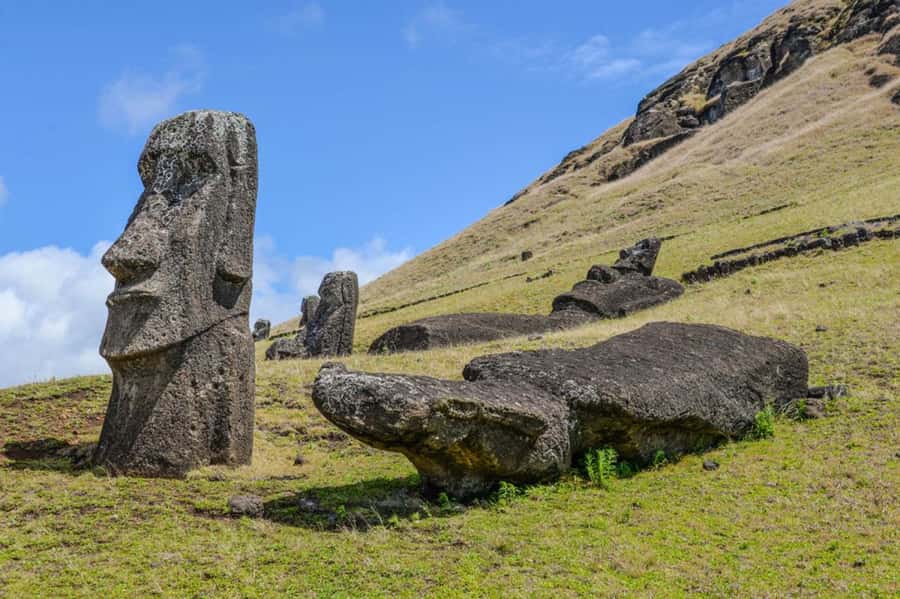
At Ahu Akahanga, the guided visit expands to about 30 minutes. According to oral tradition, this was the largest village in ancient times. The site adds another layer to the day because it connects monumental stonework with settlement and community.
Akahanga is not presented as a neat, fully restored complex. That is part of its appeal. You are looking at an archaeological place where the remains, toppled statues, and surrounding terrain require explanation. A good guide helps you read what is visible instead of expecting the site to explain itself.
The added time compared with Vaihu is welcome. You can take in the setting, hear the story of the village, and still have room for photographs without turning the stop into a race.
For some people, this will be a quieter stop than Tongariki or Rano Raraku. If your main goal is a long list of standing moai, Akahanga may seem less dramatic. If you want to understand how monuments fit into wider island life, it earns its place.
Lunch before the main quarry visit
Lunch is not included, and the tour allows about 1.5 hours for the meal. The stated cost ranges from approximately 5,000 to 25,000 CLP, depending on what you choose. That is a wide range, so ask about prices before ordering if you are keeping a close eye on expenses.
You can also bring snacks, but remember that eating and drinking are not allowed at the archaeological sites. Eat during the designated lunch break or outside protected areas, and keep water available for the walking portions.
The long lunch may feel generous, especially if you prefer a fast touring day. I see it as useful breathing room. Rano Raraku is the most demanding and important stop, and you do not want to arrive hungry, overheated, or distracted.
The practical approach is to treat lunch as part of the day’s cost and schedule. The $210 tour price does not cover it, and the national park ticket is also separate.
Rano Raraku, where the moai were carved
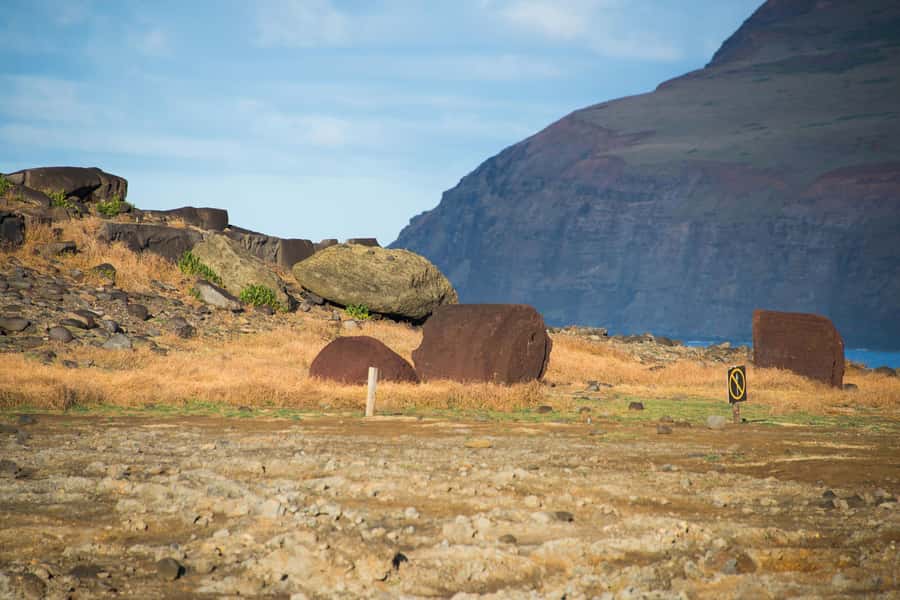
Rano Raraku is the heart of the experience. This volcanic site was turned into a mass-production workshop for enormous stone statues. Nearly all of the island’s moai were carved here, and hundreds remain where they were left.
The unfinished figures change the way you think about the statues. At Tongariki, the moai appear as a finished group on a platform. At Rano Raraku, you see the work in progress: statues still connected to the rock, abandoned figures, and huge forms left behind when the workers stopped.
The guided visit lasts about 1.5 hours, the longest walking and interpretation period of the day. That gives you time to see the quarry at a useful pace rather than taking a single overlook photo and moving on.
This is also where the route’s physical demands become clearest. The ground is uneven, and the tour advises comfortable walking shoes. You should expect outdoor exposure, sun, and possible rain. Bring a hat, sunglasses, sunscreen, and raingear when the forecast calls for it.
Do not climb the statues or touch plants. Those rules are not minor technicalities. The moai and the surrounding archaeological remains are fragile, and staying on the allowed route protects the place for future visitors.
The site can be powerful even if you know little about Rapa Nui. You do not need to memorize dates or technical terms to understand the basic wonder: a society created immense stone figures here, moved many of them across the island, and then left hundreds unfinished.
Ahu Tongariki and the strongest final view
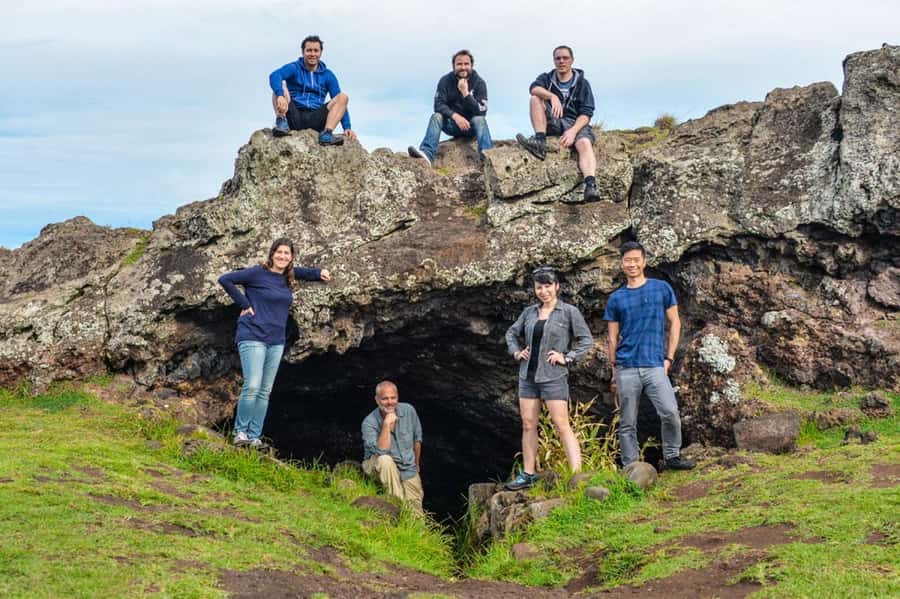
After Rano Raraku, it is only about a five-minute transfer to Ahu Tongariki. The guided visit lasts around 40 minutes, giving you enough time to take in the full monument and hear how it fits into the island’s story.
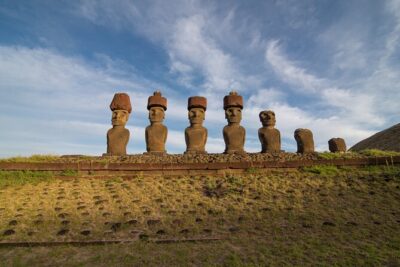
Tongariki is the largest and most impressive monument on Rapa Nui, with 15 mighty moai arranged on a single platform. The scale is the point. After seeing the quarry where the statues were made, you now see a complete ceremonial arrangement.
I like the decision to place Tongariki near the end. The earlier stops give you useful preparation: Vinapu shows the platform’s stonework, Vaihu and Akahanga add village context, and Rano Raraku shows where the statues came from. By the time you reach the 15 moai, the scene feels connected rather than isolated.
This is likely to be the tour’s most photographed stop. The plan to visit sites in favorable light can help, but no schedule can control clouds, glare, wind, or how long you want to look. Bring your camera, but do not spend the whole 40 minutes behind it. Give yourself time to face the monument directly.
What the $210 price really covers
At $210 per person, this is not the cheapest way to see Rapa Nui. You are paying for a private group, hotel pickup and drop-off, transport, a certified local guide, and a carefully ordered route through the island’s most important south and east coast sites.
The value is strongest if you want personal guiding and a complete route in one day. Hiring transport alone would not provide the same archaeological explanation, and trying to arrange these stops without local help could make the day less efficient. The guide is the central part of the purchase, not just the vehicle.
Your total cost will be higher. The national park ticket is about $80 per person and is valid for your whole stay, while lunch is extra. Since the park ticket is not limited to this tour, it should be viewed as an island-wide travel expense rather than a fee created only for this outing.
The tour becomes less attractive if you already have a vehicle, prefer to explore alone, or want to spend a very long time at one site. The private format gives you flexibility within the route, but the day still follows a broad schedule with several stops.
Who should book this private tour
I would choose this tour if you have limited time on Easter Island and want the essential south and east coast sights covered with a guide. It is also a good match if you care about photography, ancient engineering, and the connection between quarry, village, coast, and ceremonial platform.
It suits adults and older children who can walk on uneven terrain. Children under eight are not considered suitable for the experience. Pregnant people, people with mobility impairments, and wheelchair users are also listed as unsuitable.
There is conflicting accessibility information in the activity details: one section says the tour is wheelchair accessible, while the suitability information excludes wheelchair users and people with mobility impairments. If this affects your plans, ask the operator for a clear answer before paying.
The tour is available with English or Spanish live guiding. It is a private group, so you get a more direct exchange with the guide than you normally would on a large group outing.
Free cancellation is available up to 24 hours before the start, and you can reserve now and pay later. Those policies are useful if your island plans may change, but they do not remove the need to check the park ticket, lunch budget, and weather clothing.
What to bring for a smoother day
Wear shoes that can handle uneven ground. Open footwear may be uncomfortable at the quarry and coastal sites.
Pack a hat, sunscreen, sunglasses, a camera, snacks, and water. One 50 cl bottle of water is included, but extra water may be useful on a sunny walking day.
Dress for the forecast rather than relying on a single outfit. The guidance specifically recommends raingear when rain is possible, along with sun protection when conditions are hot.
Keep food and drinks for the lunch stop or other permitted areas. Smoking is not allowed at the archaeological sites, and you should not climb or touch plants.
Should you book it?
Book this private tour if you want the major moai sites explained in one well-paced day, especially Rano Raraku and Ahu Tongariki. The route gives you more than a quick statue checklist, with stonework at Vinapu, village context at Vaihu and Akahanga, and the rough south coast at Hanga Poukura.
Skip it if you need a low-cost outing, dislike uneven walking, or prefer to set your own schedule. At $210 per person before the park ticket and lunch, it is a significant expense, but the private transport, local guide, and carefully planned sequence make it a reasonable choice for a first, focused visit to Rapa Nui. If Jo is your guide, the available feedback suggests you may be in especially good hands.
FAQ
How long does the Easter Island private tour last?
The tour lasts 390 minutes, or about six and a half hours, including transfers, sightseeing, and the lunch break.
What locations does the tour visit?
The route includes Ahu Vinapu, Hanga Poukura, Vaihu, Ahu Akahanga, Rano Raraku, and Ahu Tongariki.
Does the tour include hotel pickup and drop-off?
Yes. Hotel pickup and hotel drop-off are included.
Is lunch included in the price?
No. Lunch is not included. The expected cost is approximately 5,000 to 25,000 CLP, depending on your choice.
Do I need a national park ticket?
Yes. The national park ticket is not included and costs around $80 per person for your whole stay.
What languages does the guide speak?
Live guiding is available in English and Spanish.
Is this a private group tour?
Yes. The experience is operated as a private group.
What should I bring?
Bring comfortable walking shoes, a hat, sunscreen, water, snacks, and a camera. Sunglasses and raingear are also useful depending on the weather.
Are children under eight allowed?
No. The tour is listed as unsuitable for children under eight.
Is the tour suitable for wheelchair users?
The information is inconsistent. One section describes the activity as wheelchair accessible, while another excludes wheelchair users and people with mobility impairments. Contact the operator for confirmation before booking.
Just added in Easter Island
- Volcanic Refuges: Excursion to Underground Civilization★ 4.7 · 8 reviews
- Volcanic Wonders and the Kingdom of the Birdman: Half Day★ 5.0 · 6 reviews
- Half Day Private Tour: Caves and Volcanic Refuges★ 4.0 · 14 reviews
- Easter Island Ancestral Dinner and Show with Transport★ 4.5 · 2 reviews
- 2 Day Small Group Tour in Moai Monuments and Historic Pathways★ 5.0 · 22 reviews
- Visit Rapa Nui in 4 days with 3 Tours and Accommodation included★ 4.0 · 2 reviews
- Tour to the Motus: Boat trip and snorkeling in Rapa Nui★ 5.0 · 8 reviews
- The birdman journey in Easter Island★ 5.0 · 1 review
Easter Island Tours, compared.
Two days of Full Day Tour of Rapa Nui + Sunrise in Tongariki
Read our review →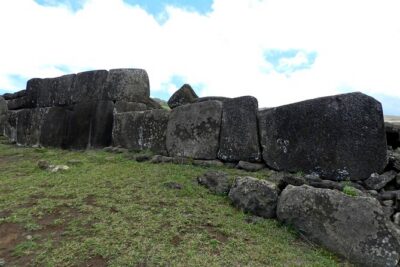
2-Day Private Tour Easter Island Highlights Complete Discovery
Read our review →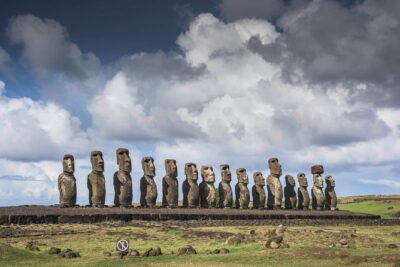
Private Tour: Full Day Easter Island Highlights
Read our review →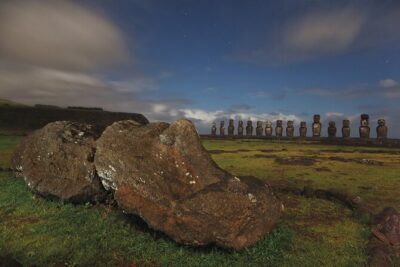
Browse the lists this tour appears in