
REVIEW · EASTER ISLAND TOURS
Caves and Lava Fields: Half Day Hike
Rapa Nui has secrets beneath its surface. This four-hour private hike takes you beyond the famous moai to lava tubes, sea-facing cave windows, fallen statues, and archaeological remains in the western part of the island. I like the chance to see a quieter side of Easter Island, and I like that the experience connects geology with Rapa Nui oral traditions and human settlement. The main caution is physical: some cave sections require crawling and climbing, and the route calls for moderate fitness.
The tour costs $250 per person, which is a serious price for half a day. Still, the private vehicle, personal guide, access to several cave systems, and time spent at sites many people miss make the cost easier to understand. You will need to buy the Rapa Nui National Park ticket separately, and poor weather can affect the schedule.
In This Review
- Key points to know before booking
- Why this western Rapa Nui route is worth your time
- Starting in Roiho, where lava and ruins meet
- Ana Te Pahu and three stages of darkness
- Ahu Te Peu and the remains of ceremonial life
- Ana Te Pora, a small shelter with a narrow side tunnel
- Ana Kakenga and the two windows to the sea
- What the private guide adds
- Four hours, private transport, and the $250 price
- Fitness, cave conditions, and what to bring
- Who should book this Rapa Nui cave hike?
- Should you book the Caves and Lava Fields hike?
- FAQ
- How long does the Caves and Lava Fields hike last?
- Where does the hike begin?
- Is the Rapa Nui National Park ticket included?
- What sites does the tour visit?
- Is this a private tour?
- Is transportation included?
- Can I choose a morning or afternoon departure?
- Do the caves require crawling or climbing?
- What happens if bad weather cancels the tour?
- Can I cancel for a full refund?
Key points to know before booking
- The caves are active walking experiences: Expect uneven ground, narrow passages, increasing darkness, crawling, and some climbing.
- The route covers several distinct sites: You visit Ana Te Pahu, Ahu Te Peu, Ana Te Pora, and Ana Kakenga, not just one cave.
- The archaeology is part of the story: Fallen moai, ceremonial platforms, ovens, house foundations, gardens, and chicken houses appear along the route.
- The tour is private: Only your group participates, giving you a more personal pace and more room for questions.
- You choose morning or afternoon: This makes it easier to fit the hike around other Rapa Nui visits.
- The park ticket is extra: Admission to Rapa Nui National Park is required at the starting area and is not included in the tour price.
Why this western Rapa Nui route is worth your time
Most people come to Easter Island with the moai at the top of their list. That makes sense. The statues are extraordinary, and the ceremonial sites deserve time. But the island becomes much easier to understand when you see the volcanic ground that shaped daily life.
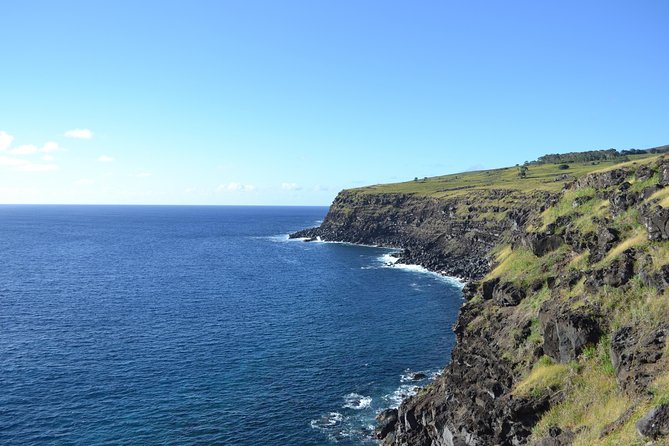
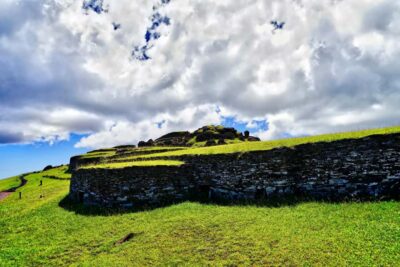
This outing focuses on the Roiho area in the western part of Rapa Nui National Park. Here, lava once flowed across the island and left behind tubes, cliffs, hollows, and rough open ground. Later, people used parts of this underground network for shelter and movement. Archaeological remains nearby show that these places were not empty geological curiosities.
I like this combination because it gives you three ways to read the same place. You see the volcanic formation, hear about the plants and animal species associated with human settlement, and examine the remains of ceremonial and domestic life. The guide’s job is not just to point at a hole in the ground. It is to explain how the physical setting and Rapa Nui culture fit together.
The private format also matters. With only your group participating, you can ask more questions about oral traditions, the ruins, or the cave formations without trying to hear a guide over a large crowd. You may also find the pace more manageable, though the total route still requires a moderate level of fitness.
More Hiking Tours in Hanga Roa:
- Puerto Natales: Base of the Towers Day Hike
★ 4.8 · 727 reviews - From Santiago: Cajón del Maipo and Volcán San José Hike 8K
★ 4.9 · 418 reviews - Puerto Natales: Base of the Towers Trekking Experience
★ 4.8 · 191 reviews
Starting in Roiho, where lava and ruins meet
The hike begins in the Roiho area of Rapa Nui National Park. The park admission ticket is not part of the $250 tour price, so plan for that separate cost before you arrive.
The opening section takes about 20 minutes and introduces the setting. You move across lava fields and see several lava tubes, cliffs, and archaeological ruins. You also get a sense of the topography created by relatively young volcanic activity. This first part is useful because it gives context before you enter the darker underground sections.
Do not expect a smooth nature walk. The surface can be uneven, and the route involves real walking rather than a short roadside stop. The available information does not specify the exact trail surface or equipment, so practical shoes and clothing that can get dirty are sensible choices. The tour requires moderate physical fitness, and that warning deserves attention.
The guide also uses this section to explain how people came to occupy the island and how scientific, historical, and ethnographic evidence relates to Rapa Nui oral traditions. That broader approach is one of the better reasons to choose this outing. You are not being given a simple story with one explanation. You are hearing how different kinds of evidence help describe the island’s past.
Ana Te Pahu and three stages of darkness
Ana Te Pahu is the first major cave stop. The visit lasts about 45 minutes and focuses on the western wing of the lava tube.
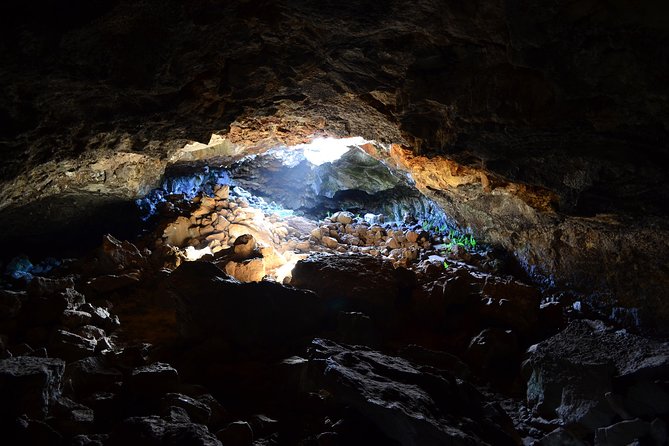
What makes this stop interesting is the changing character of the cave. The route includes three stages of increasing darkness. In the beginning, natural light still helps you read the space. As you go farther, the cave becomes more enclosed and the sense of being underground grows stronger.
You also see native vegetation and species introduced by early Polynesians. That detail is easy to miss if you think of a cave as a completely separate world. At Ana Te Pahu, the guide can show how plant life and human movement are connected to the volcanic formation.
The darkness and uneven passage are also the first clear reminder that this is not a polished attraction. The supplied experience information does not promise artificial lighting, paved paths, or handrails. The point is the cave itself, in its natural condition. You should be comfortable with confined spaces and walking carefully.
Ana Te Pahu gives the tour a strong beginning because it joins geology and settlement. You see how an underground space can offer shelter and how the island’s early inhabitants interacted with a difficult, volcanic environment.
Ahu Te Peu and the remains of ceremonial life
After the cave, the route reaches Ahu Te Peu, a large archaeological complex. The stop lasts around 40 minutes and is centered on Ahu Te Peu, whose moai have fallen.
Ahu means a ceremonial platform, and this complex includes several ahu rather than a single isolated structure. The fallen moai are striking, but the surrounding remains are just as useful for understanding how people lived here. You may see Polynesian ovens, foundations of hare pa’enga houses, manavai, hare moa, and other archaeological features.
These terms describe different parts of an occupied settlement. Hare pa’enga were traditional houses with an oval foundation. Manavai are stone-lined garden areas, and hare moa are structures associated with raising chickens. The ovens point to food preparation. Together, these remains show a community space rather than a statue field.
I especially like this stop for visitors who want more than photographs of standing moai. The fallen statues can prompt questions about political change, ceremony, weathering, and the long process by which sites become archaeological remains. The tour description does not assign a cause to their fall, so your guide’s interpretation and the evidence visible at the site are important here.
Ahu Te Peu also breaks up the cave walking. You spend time in the open, looking across an archaeological complex before heading back underground. That variety helps make the four-hour outing feel like a connected visit rather than a string of similar tunnels.
More things to do on Easter Island:
- From Hanga Roa: Rapa Nui Culture Sightseeing Tour
★ 4.6 · 307 reviews - From Hanga Roa: Easter Island Highlights 2-Day Tour
★ 4.3 · 205 reviews - Full Day Tour in Rapa Nui
★ 4.5 · 122 reviews - 2-Day Private Tour Easter Island Highlights Complete Discovery
★ 5.0 · 110 reviews
Ana Te Pora, a small shelter with a narrow side tunnel
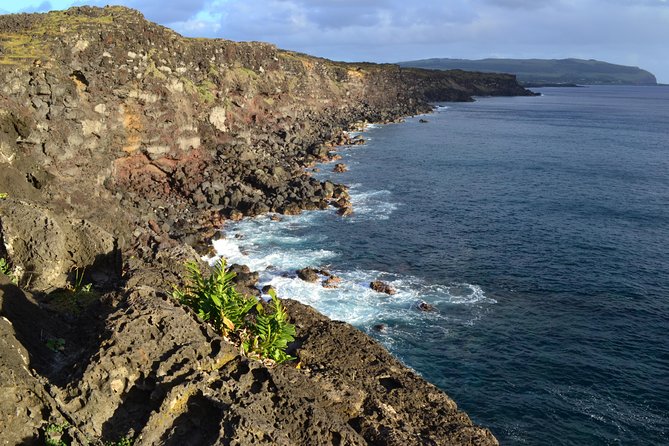
The route then continues toward Ana Te Pora. Reaching it involves about an hour of hiking, making this one of the more demanding sections of the experience.
Ana Te Pora is a small, smooth lava tube that was adapted as an Ana Kionga, or shelter cave. This is a good example of how the island’s volcanic features could be used in practical ways. It is not simply a natural tube that happens to be on the route. Human use changed its role.
A narrow side tunnel leads toward the west coast cliffs and is described as almost inaccessible. That detail is important. You should not expect to walk through every passage or explore the entire cave network. Some sections are part of the story because they show how extensive and difficult the underground routes can be.
The long walk to Ana Te Pora makes the private format useful. You can ask the guide about the cave’s use and take time to look at the stone rather than being pushed along by a large group. At the same time, the route’s length means this is not the best pick if you want a low-effort sightseeing trip.
Ana Kakenga and the two windows to the sea
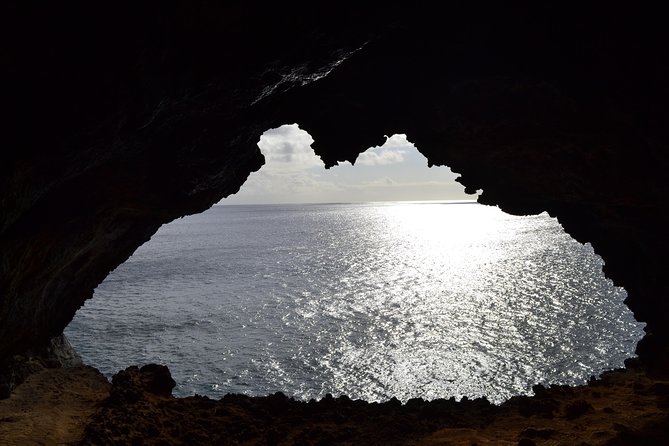
After another short hike, you reach Ana Kakenga. The cave visit takes about 45 minutes.
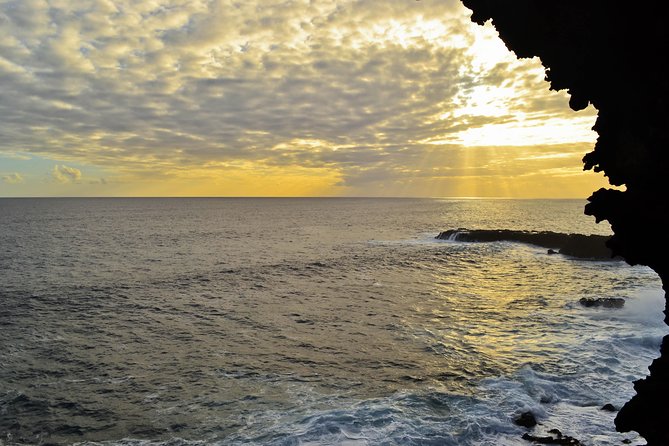
The entrance has been modified slightly, leading into a narrow tunnel that gradually widens. The passage is part of the experience, but the main reward comes at the far end, where two openings look out toward the sea.
These windows give Ana Kakenga a very different feeling from Ana Te Pahu. At Ana Te Pahu, the focus is on stages of darkness, vegetation, and shelter. At Ana Kakenga, the route ends with open views and the meeting of underground rock and ocean. The change is memorable because you reach the view through a confined passage rather than from an ordinary lookout.
The cave still calls for care. The information provided for the tour specifically notes that cave travel may involve crawling and climbing. A small or modified entrance does not mean the route is easy, and the narrow tunnel may not suit anyone uncomfortable in tight spaces.
The sea views are a fine final scene for the hiking portion. You finish with a sense of how the island’s volcanic rock has been shaped by both underground flow and the coastline.
What the private guide adds
A private guide is the central feature of this experience. You are not placed into a large shared group, and only your party takes part. That can make a big difference at cave entrances, archaeological sites, and during explanations in places where sound may carry poorly.
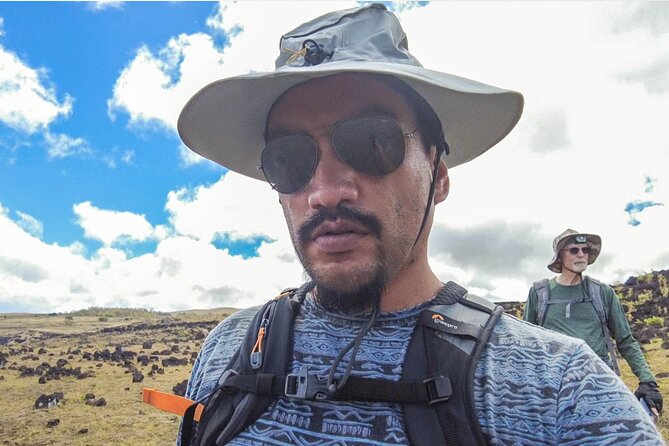
The guide is expected to bring local cultural knowledge and explain the area through scientific, ethnographic, and historic evidence. The focus is not limited to geology. You hear about how people occupied the island, how Rapa Nui oral traditions fit into the story, and how the ruins reflect ceremonial and everyday activity.
The supplied details do not give a guide’s name, so I cannot recommend a particular person. I can say that the tour’s design gives the guide plenty to work with: lava tubes, plants, cliffs, fallen moai, ovens, houses, gardens, and chicken structures all appear within one route.
Because the tour is private, you can use your time well by asking focused questions. Ask about the difference between a natural cave and a modified shelter, the purpose of the archaeological structures, or how the guide separates oral tradition from physical evidence. That is where the experience can become much more than a hike.
Four hours, private transport, and the $250 price
The tour lasts approximately four hours and includes private transportation in an air-conditioned vehicle. Pickup is offered, which simplifies the start of the outing in Hanga Roa. Morning and afternoon departures are available, so you can choose the slot that fits your other plans.
At $250 per person, the price is high compared with a basic walk or a general sightseeing stop. The value comes from the combination of a private vehicle, a private guide, several separate sites, and a route that reaches parts of the island many people do not visit.
You are paying for interpretation as much as transport. Without a guide, you could enter or view some of these places and miss the meaning of the archaeological remains, the evidence of human use, and the relationship between the caves and the wider volcanic terrain.
The value improves for people who care about archaeology and culture, or for small groups that want control over the pace. It is harder to justify if your main goal is simply to see one cave quickly. Group discounts are offered, which may make the cost more manageable for a larger private party.
Remember that the National Park ticket is extra. Include that admission in your total budget before comparing the tour with other Rapa Nui activities.
Fitness, cave conditions, and what to bring
You need moderate physical fitness for this experience. The route includes walking between several sites, an approximately one-hour stretch before Ana Te Pora, short hikes between later stops, and uneven cave passages.
Crawling and climbing are specifically part of the cave experience. If you have difficulty with these movements, or dislike narrow and dark spaces, you should think carefully before booking. The three levels of darkness at Ana Te Pahu and the narrow entrance at Ana Kakenga may be more demanding than their short visit times suggest.
The provided information does not list a required gear pack. I would choose practical footwear and clothing suited to rough ground and caves. A comfortable outfit is more useful here than anything designed for polished sightseeing.
Good weather is required. If poor weather forces cancellation, you are offered another date or a full refund. You can also cancel for a full refund up to 24 hours before the start time. Changes or cancellations made less than 24 hours ahead are not accepted for a refund.
Who should book this Rapa Nui cave hike?
I would choose this tour if you want to understand Easter Island beyond its best-known statues. It suits people who enjoy archaeology, geology, local culture, and active sightseeing in equal measure.
It is particularly good for a small group that values privacy. The guide can spend more time on your questions, and the vehicle is reserved for your party. The morning or afternoon choice also helps if you are building a busy schedule in Hanga Roa.
I would be cautious if you have limited mobility, poor fitness, or a strong dislike of crawling and climbing. The tour is not described as accessible, and the cave sections are clearly physical. It is also weather-dependent, so keep some flexibility in your Rapa Nui plans.
Should you book the Caves and Lava Fields hike?
Book it if you want a quieter, more physical side of Rapa Nui and you are willing to pay for a private guide. The strongest features are the variety of sites, the archaeological remains around Ahu Te Peu, the shelter cave at Ana Te Pora, and the two sea windows at Ana Kakenga.
Skip it if you want an easy ride with short walks and no confined spaces. For the right person, this is a valuable four-hour lesson in how volcanic rock, human settlement, ceremony, shelter, and oral tradition connect on Easter Island. Just budget for the park ticket, bring sensible clothing, and take the fitness warning seriously.
FAQ
How long does the Caves and Lava Fields hike last?
The experience lasts approximately four hours.
Where does the hike begin?
The hike starts in the Roiho area of Rapa Nui National Park.
Is the Rapa Nui National Park ticket included?
No. The National Park admission ticket is required but is not included in the tour price.
What sites does the tour visit?
The route includes Roiho, Ana Te Pahu, Ahu Te Peu, Ana Te Pora, and Ana Kakenga.
Is this a private tour?
Yes. Only your group participates in the activity.
Is transportation included?
Yes. Private transportation in an air-conditioned vehicle is included, and pickup is offered.
Can I choose a morning or afternoon departure?
Yes. The experience offers both morning and afternoon tour times.
Do the caves require crawling or climbing?
Yes. Cave sections can require some crawling and climbing, so a moderate level of physical fitness is recommended.
What happens if bad weather cancels the tour?
You will be offered a different date or a full refund if poor weather causes the experience to be canceled.
Can I cancel for a full refund?
Yes. You can cancel at least 24 hours before the experience start time for a full refund. Cancellations or changes made less than 24 hours before the start time are not accepted for a refund.
Just added in Hanga Roa
- Volcanic Refuges: Excursion to Underground Civilization★ 4.7 · 8 reviews
- Volcanic Wonders and the Kingdom of the Birdman: Half Day★ 5.0 · 6 reviews
- Half Day Private Tour: Caves and Volcanic Refuges★ 4.0 · 14 reviews
- Easter Island Ancestral Dinner and Show with Transport★ 4.5 · 2 reviews
- 2 Day Small Group Tour in Moai Monuments and Historic Pathways★ 5.0 · 22 reviews
- Visit Rapa Nui in 4 days with 3 Tours and Accommodation included★ 4.0 · 2 reviews
- The birdman journey in Easter Island★ 5.0 · 1 review
- The Route of Hotu Matua Full-Day Tour from Hanga Roa★ 5.0 · 1 review
Easter Island Tours, compared.
Two days of Full Day Tour of Rapa Nui + Sunrise in Tongariki
Read our review →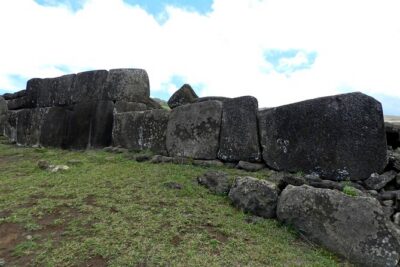
2-Day Private Tour Easter Island Highlights Complete Discovery
Read our review →
Private Tour: Full Day Easter Island Highlights
Read our review →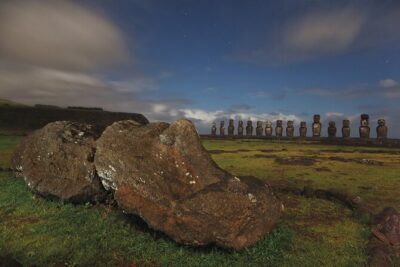
Browse the lists this tour appears in