
REVIEW · EASTER ISLAND TOURS
Birdman Cult and Caves
Ancient stone, volcanic fire, and seabirds meet here. This six-hour tour links several of Easter Island’s most important sites, from the seven moai of Ahu Akivi to the ceremonial village of Orongo, where the old Birdman cult once shaped island life. I like the strong mix of culture and scenery, and I like that transportation, pickup, drop-off, and a local guide are included.
The tour also reaches places that feel very different from one another: a moai platform, a cave, a red-stone quarry, a massive crater, and a cliff-top ceremonial site. The main caution is guide quality. The current score is 3 out of 5, with one short complaint describing the guide as bad, so the experience may depend heavily on who leads your group.
In This Review
- Key things to know before booking
- A full morning or afternoon across Easter Island
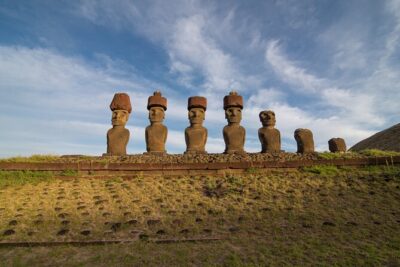
- Ahu Akivi and the seven moai
- Ana Te Pahu and the island’s underground world
- Puna Pau, where the red topknots came from
- Vinapu and the question of outside influence
- Rano Kau, a crater with a wide view
- Orongo and the Birdman cult
- What the $90 price really covers
- Who will enjoy this tour most?
- Booking, timing, and cancellation
- Should you book Birdman Cult and Caves?
- FAQ
- How long does the Birdman Cult and Caves tour last?
- What locations are included?
- Is transportation included?
- Is the National Park ticket included?
- What languages are available?
- Can I cancel for a full refund?
Key things to know before booking
- Seven moai at Ahu Akivi: Learn about the unusual platform and the celestial orientation of its statues.
- Ana Te Pahu cave: See a ceremonial cave on the slopes of Rano Kau, with petroglyphs and paintings.
- Puna Pau’s red scoria: Visit the quarry that supplied the topknots placed on many moai.
- Vinapu’s precise stonework: Compare its massive masonry with structures associated with South America.
- Rano Kau and Orongo: Finish beside a volcanic crater and the Birdman cult’s ceremonial village.
- Six hours with transport included: English and Spanish guiding are available, while the National Park ticket costs extra.
A full morning or afternoon across Easter Island
This is not a single-site visit. It is a broad circuit through the island’s religious, artistic, volcanic, and political past. In six hours, you cover enough ground to see how the moai were made, placed, decorated, and tied to the natural world around them.
The route also has a useful rhythm. Ahu Akivi and Vinapu focus on stone and architecture. Ana Te Pahu brings you into a darker, more intimate setting. Puna Pau explains the red crowns found on many moai. Rano Kau changes the scale completely, with a giant volcanic crater and wide Pacific views. Orongo then brings the tour back to human ritual and power.
I value this kind of route because it gives you connections instead of isolated photo stops. A statue makes more sense after you have seen where part of its decoration came from. A ceremonial village feels more meaningful after you have looked across the crater and understood its setting.
The six-hour length is useful if your time on Easter Island is limited. It is long enough to cover the main points without requiring a full day devoted to one theme. Still, the pace may feel busy if you prefer to linger, sketch, photograph every stone, or ask many questions at each stop.
More things to do on Easter Island:
- From Hanga Roa: Rapa Nui Culture Sightseeing Tour
★ 4.6 · 307 reviews - From Hanga Roa: Easter Island Highlights 2-Day Tour
★ 4.3 · 205 reviews - From Hanga Roa: Easter Island Sightseeing Full Day Tour
★ 4.5 · 189 reviews
Ahu Akivi and the seven moai
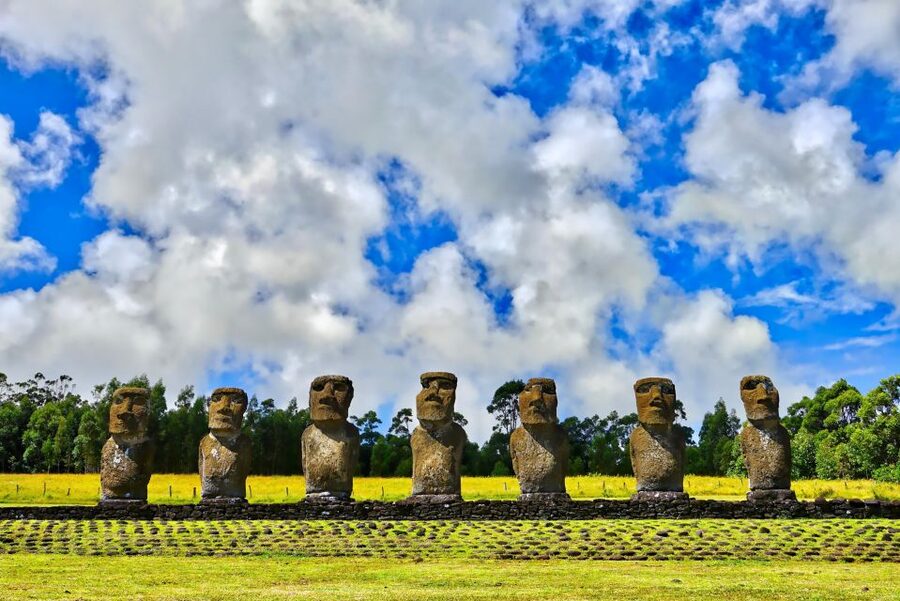
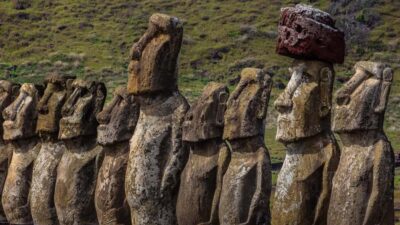
Ahu Akivi is an excellent opening stop because it introduces the island’s moai culture through a platform with seven statues. The tour highlights their celestial orientation, giving you more to consider than their size and familiar silhouettes.
The important point is that these figures are not simply decorative monuments. Their placement and relationship with the sky form part of the larger questions surrounding Rapa Nui society. A good guide can turn the stone platform into a lesson about ceremony, belief, and the way people organized meaning around the stars.
I would pay close attention here to how the guide explains the platform. This is one of the stops where clear storytelling matters. A short description of what you are seeing is helpful, but a thoughtful explanation of orientation and purpose can make the site much more memorable.
Ahu Akivi also sets up a useful contrast with later stops. You begin with finished statues in a ceremonial setting, then move toward the places where stone was cut and shaped. That progression helps you see the moai as part of a working system, not as scattered objects.
Ana Te Pahu and the island’s underground world
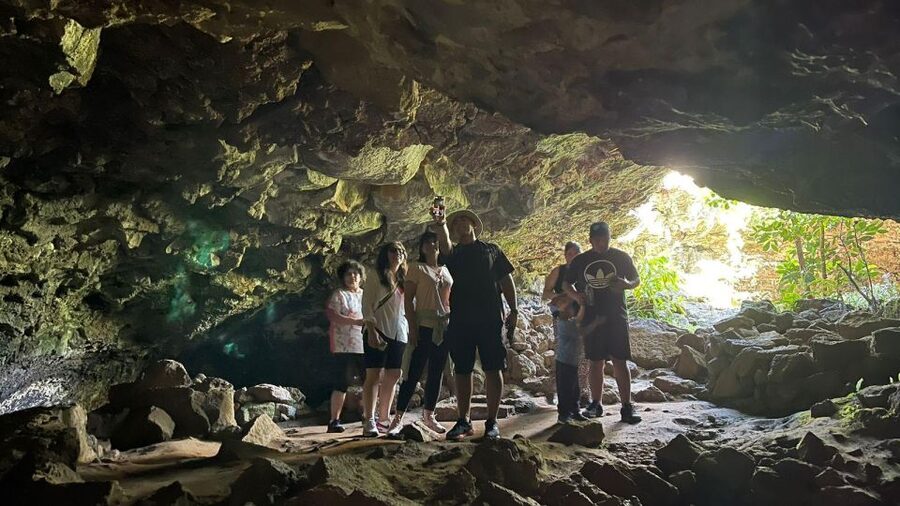
Ana Te Pahu is described as a ceremonial cave on the slopes of Rano Kau. Inside, you may find petroglyphs and paintings connected with the island’s traditions and past.
A cave changes the mood of the day. After open platforms and broad views, this stop brings you into a more enclosed space. The rock itself becomes part of the story, and the marks on its surface invite questions about ceremony, art, and daily life.
You should listen closely to the local guide here. Cave sites can be hard to understand without context, especially when paintings or carvings are weathered. The value of this stop is not just seeing a dark opening in volcanic stone. It is learning why the site mattered and how it fits into Rapa Nui culture.
The available information does not specify the cave’s walking conditions or the amount of time spent inside. If you have mobility concerns, ask the provider before booking. The tour is listed as wheelchair accessible, but individual cave surfaces and access points can still affect how comfortable a stop feels.
Puna Pau, where the red topknots came from
Puna Pau is one of the most useful stops on the route because it explains a detail that is easy to miss in photographs. This quarry supplied the distinctive red scoria topknots, often called pukao, placed on many moai.
The red stone creates a visual contrast with the darker volcanic rock used elsewhere. At Puna Pau, you can think about the work required to shape these pieces and move them to platforms around the island. The site gives practical meaning to what can otherwise seem like a mysterious accessory.
I like that the tour includes both the statues and the source of their headpieces. You gain a better sense of craftsmanship and symbolic expression. The stop also reminds you that Rapa Nui monument building involved several stages, materials, and skills.
This is a place where a local guide can add real value. The details of stone type, production, and meaning are not always obvious on site. Since guide quality is the chief concern attached to this experience, Puna Pau is one of the stops where you will notice the difference between a basic escort and a strong interpreter.
A completely different kind of day out:
- Two days of Full Day Tour of Rapa Nui + Sunrise in Tongariki
★ 4.5 · 132 reviews - Full Day Tour in Rapa Nui
★ 4.5 · 122 reviews - 2-Day Private Tour Easter Island Highlights Complete Discovery
★ 5.0 · 110 reviews - Private Tour: Full Day Easter Island Highlights
★ 5.0 · 106 reviews
Vinapu and the question of outside influence
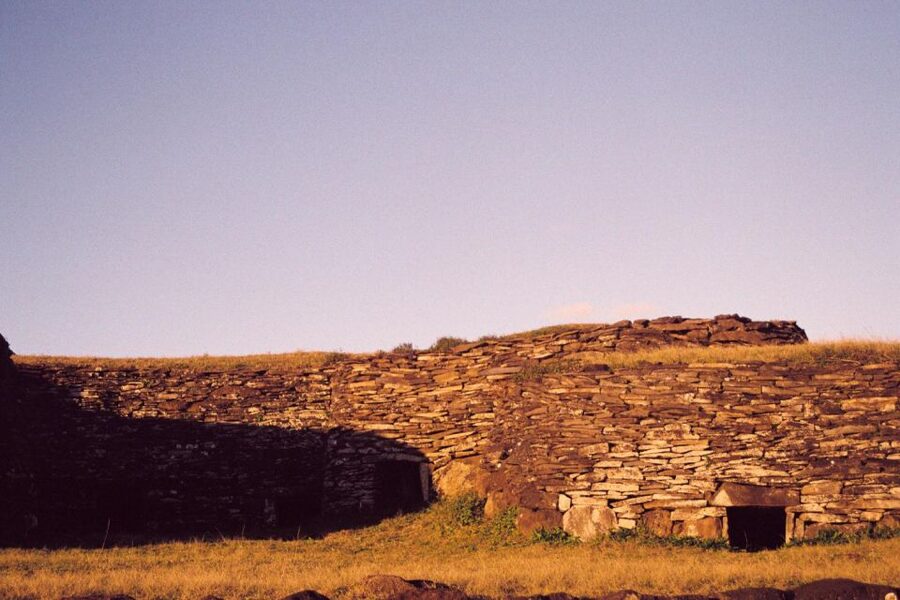
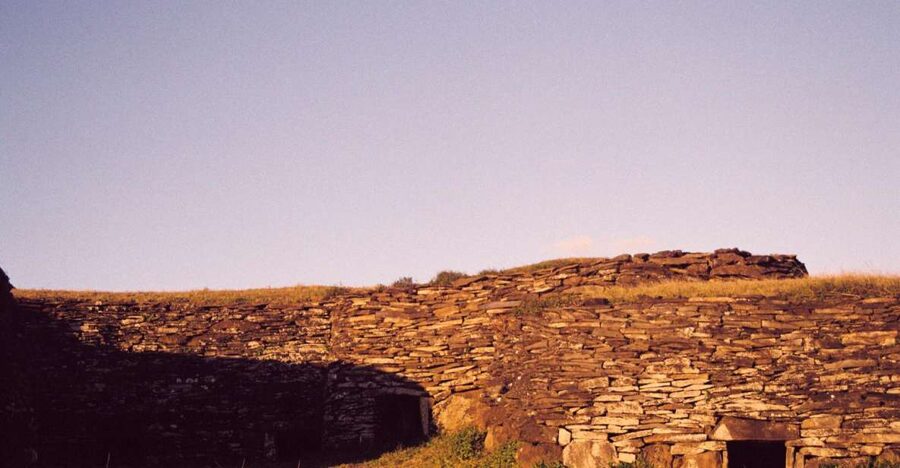
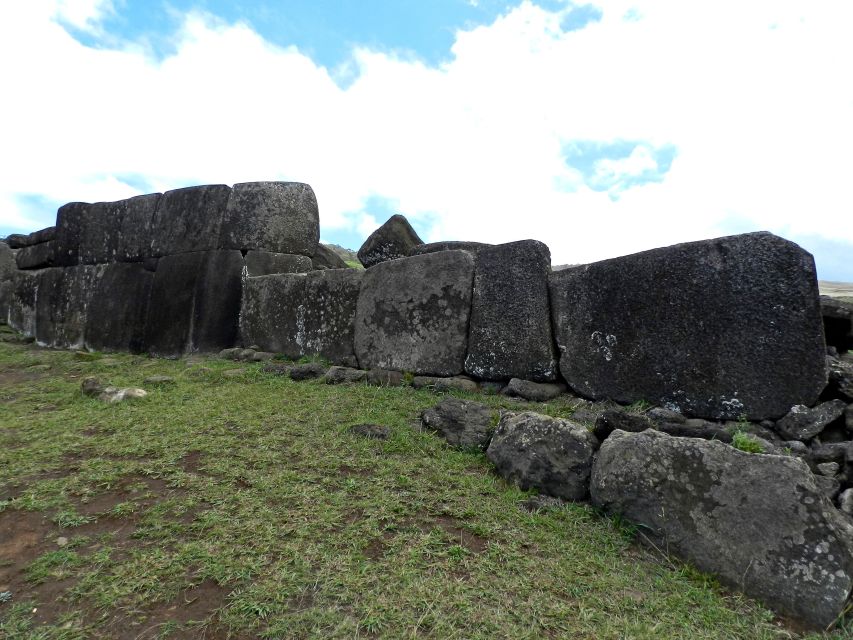
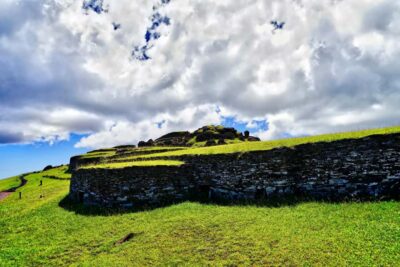
Vinapu presents another side of Easter Island’s stonework. Here, the focus is on megalithic construction and the very precise fitting of large stones. The style has prompted comparisons with structures in South America, including those associated with Cuzco.
You should treat this as a chance to ask questions rather than a simple answer to the island’s origins. Similar-looking stonework can lead to interesting discussions about contact, influence, independent development, and the limits of what can be proved. A careful guide should explain what is known and what remains debated.
The stop is especially useful after Ahu Akivi and Puna Pau. You have already seen the island’s moai tradition and red scoria quarrying. At Vinapu, attention shifts to engineering. The question becomes how stone was selected, shaped, placed, and fitted with such care.
I would not expect Vinapu to be a quick monument photo. Its value is in studying the construction. Look at the joints, the scale of the stones, and the way the site differs from the more recognizable moai platforms. The better your guide’s explanation, the more rewarding this stop becomes.
Rano Kau, a crater with a wide view
Rano Kau gives the tour its biggest natural setting. The volcanic crater offers broad views toward the Pacific and contains unusual ecosystems within its great bowl.
This is a welcome pause from the close study of stone. The crater helps explain the island’s volcanic origins while also showing how nature and ceremony overlap. The tour uses Rano Kau not simply as a scenic overlook, but as a place to understand the geology that shaped Rapa Nui.
You will want time to take in the view, but the tour has several more sites to cover. If photography is important to you, stay aware of the schedule. Six hours sounds generous, yet a route with six major stops can leave less free time than you might expect.
Rano Kau also prepares you for Orongo. The crater is not just a backdrop for the ceremonial village. Its rim, ocean outlook, and steep setting help explain why Orongo became such a powerful place.
Orongo and the Birdman cult
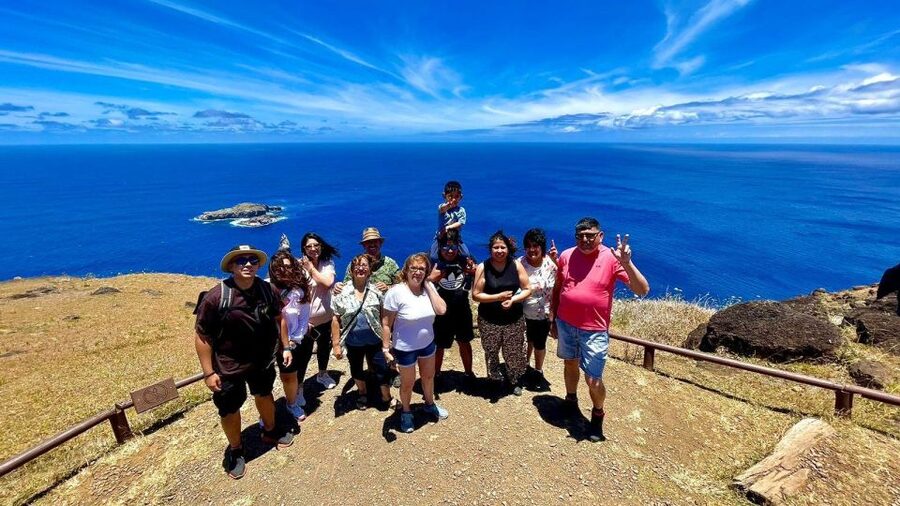
The tour ends at Orongo, a ceremonial village set on the rim of Rano Kau. This is the emotional high point of the route, bringing together ritual, competition, petroglyphs, architecture, and dramatic Pacific views.
The Birdman cult was a later religious and political system on Easter Island. At Orongo, you can focus on how the ceremonial village and its carvings connect with the sea and the crater. The setting makes clear that the site was chosen for more than convenience. Culture here is closely tied to cliffs, water, volcanic rock, and visibility.
Petroglyphs at Orongo add another layer. Their presence gives the site a visual language that differs from the moai platforms. You are not only looking at stone figures, but at symbols linked to a different period of island belief and leadership.
I would save questions for this final stop. Ask how the Birdman cult related to earlier moai traditions, what the carvings represent, and why Orongo became important. The supplied information promises English and Spanish guides, so you should be able to request explanations in either language when booking.
The views are a major part of the experience, but they should not overshadow the ceremony. Take a few minutes to look outward, then turn your attention back to the village and carvings. That balance is what makes Orongo more than a scenic stop.
What the $90 price really covers
At $90 per person, the tour’s value rests mainly on its route and included transport. You receive pickup, drop-off, transportation during the tour, and a local guide. For a six-hour visit across several parts of Easter Island, that can be useful, especially if you want one organized outing rather than separate arrangements for each site.
The price does not include the National Park ticket. This is an important extra cost to plan for, and the provider does not sell that ticket. You should confirm the current ticket price and purchase requirements before your tour date.
I see the tour as better value for someone who wants structure and coverage. You are paying for access to a linked itinerary, vehicle transport, and interpretation at major cultural sites. If you already have transport and prefer to explore slowly, the value is less clear.
The guide is the swing factor. A local guide who explains the moai, the topknots, Vinapu’s stonework, Rano Kau, and Orongo can make the $90 worthwhile. A weak guide could reduce the day to a series of stops and photographs. The 3 out of 5 score and the direct complaint about poor guiding make this the main point to consider before paying.
Who will enjoy this tour most?
I would recommend it to first-time visitors who want a broad introduction to Easter Island in one half-day. It suits you if you care about both culture and nature, and if you want to see more than the most famous moai platform.
It is also a good fit if you do not want to arrange transportation on your own. Pickup and drop-off remove some of the practical work, while the six-hour format leaves part of the day open for other plans.
You may want another option if you prefer a slow, highly detailed visit at each site. The route covers Ahu Akivi, Ana Te Pahu, Puna Pau, Vinapu, Rano Kau, and Orongo, so the schedule may feel full. It may also be less appealing if your main interest is only moai, since almost half the day is devoted to caves, quarrying, volcanic geology, and the Birdman cult.
Because accessibility is listed, the tour may suit some wheelchair users. Still, ask for specific information about cave access and surfaces before booking. The general accessibility label does not explain every site in detail.
Booking, timing, and cancellation
The activity lasts six hours, but starting times depend on availability. Check the schedule before you commit, especially if you have flights, another tour, or a fixed meal plan later in the day.
English and Spanish live guiding are offered. If language matters to you, select the option carefully when reserving so you receive the explanation style you need.
You can reserve now and pay later, which helps if your plans are still changing. Free cancellation is available up to 24 hours in advance for a full refund. The National Park ticket remains separate, so remember to budget for it in addition to the $90 tour price.
Should you book Birdman Cult and Caves?
Book this tour if you want an efficient six-hour route through Easter Island’s major cultural and natural themes. The combination of seven moai, a ceremonial cave, the red scoria quarry, Vinapu’s stonework, Rano Kau, and Orongo gives you a strong overview in one outing. The included transport and local guide add practical value.
I would book with one reservation: guide quality. The experience depends on clear explanations, and the available score of 3 out of 5 includes a blunt complaint about poor guiding. If you can confirm that an English or Spanish-speaking local guide is available and ask how the day is organized, the tour becomes a sensible choice. If you want maximum depth and a slower pace, look for a private or more specialized option instead.
FAQ
How long does the Birdman Cult and Caves tour last?
The tour lasts six hours. Starting times depend on availability.
What locations are included?
The route includes Ahu Akivi, Ana Te Pahu, Puna Pau, Vinapu, Rano Kau, and Orongo.
Is transportation included?
Yes. Transportation, pickup, and drop-off are included in the tour.
Is the National Park ticket included?
No. The National Park ticket is not included, and the provider does not sell it.
What languages are available?
Live guiding is available in English and Spanish.
Can I cancel for a full refund?
Yes. You can cancel up to 24 hours in advance for a full refund.
Just added in Easter Island
- Volcanic Refuges: Excursion to Underground Civilization★ 4.7 · 8 reviews
- Volcanic Wonders and the Kingdom of the Birdman: Half Day★ 5.0 · 6 reviews
- Half Day Private Tour: Caves and Volcanic Refuges★ 4.0 · 14 reviews
- Easter Island Ancestral Dinner and Show with Transport★ 4.5 · 2 reviews
- 2 Day Small Group Tour in Moai Monuments and Historic Pathways★ 5.0 · 22 reviews
- Visit Rapa Nui in 4 days with 3 Tours and Accommodation included★ 4.0 · 2 reviews
- Tour to the Motus: Boat trip and snorkeling in Rapa Nui★ 5.0 · 8 reviews
- The birdman journey in Easter Island★ 5.0 · 1 review
Easter Island Tours, compared.
Two days of Full Day Tour of Rapa Nui + Sunrise in Tongariki
Read our review →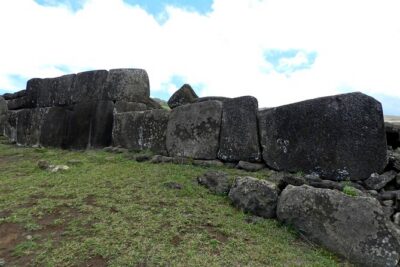
2-Day Private Tour Easter Island Highlights Complete Discovery
Read our review →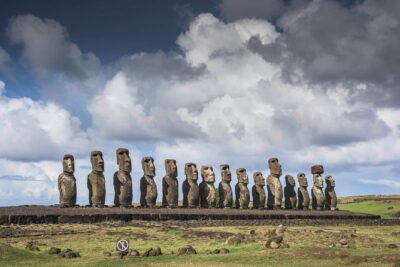
Private Tour: Full Day Easter Island Highlights
Read our review →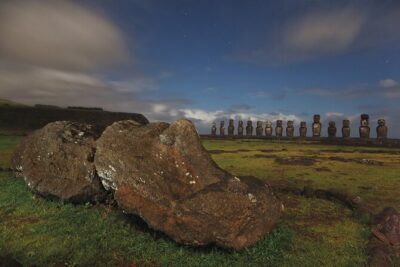
Browse the lists this tour appears in