
REVIEW · EASTER ISLAND TOURS
3 Tours on Easter Island.
Moai, crater, beach, and birdman lore fill one day. This full-day Easter Island outing brings together the island’s major sights, from the 15 moai at Ahu Tongariki to the white coral sands of Anakena. I like the way it combines famous monuments with less polished places, including an old Rapanui village, family ovens, chicken coops, and unfinished statues at Rano Raraku.
I also like the small maximum group of 12, plus a guide in English or Spanish and shared hotel pickup. The main drawback is the pace: 13 hours is a long day, and the $299 price does not include the National Park entrance fee. You need to buy that ticket when you arrive at the airport.
Bruno is one guide named in the feedback, and his passion for the island earned especially warm praise. That matters here. Easter Island is not simply a place to photograph moai. The guide’s explanations help connect the statues to village life, ceremony, carving, competition, and the island’s changing religious world.
In This Review
- Key points to know before booking
- Why this long Easter Island day makes sense
- South coast villages at Vaihu and Ahu Akahanga
- Ahu Tongariki and the island’s most famous moai line
- Rano Raraku: where hundreds of moai were carved
- Anakena beach, Ahu Nau Nau, and Ahu Ature Huki
- Ahu Vinapu and the unusual Tahira wall
- Rano Kau and the ceremonial village of Orongo
- Ahu Tahai and the rare coral eyes
- Seven moai at Ahu Akivi
- Puna Pau and the red scoria pukao
- Is $299 a fair price?
- Who should book this experience?
- FAQ
- How long does the full experience last?
- Where does pickup take place?
- Is transportation shared or private?
- Is lunch included?
- Is the National Park entrance fee included?
- Is the tour offered in English?
- Can I cancel and receive a refund?
- Should you book the 3 Easter Island tours?
Key points to know before booking
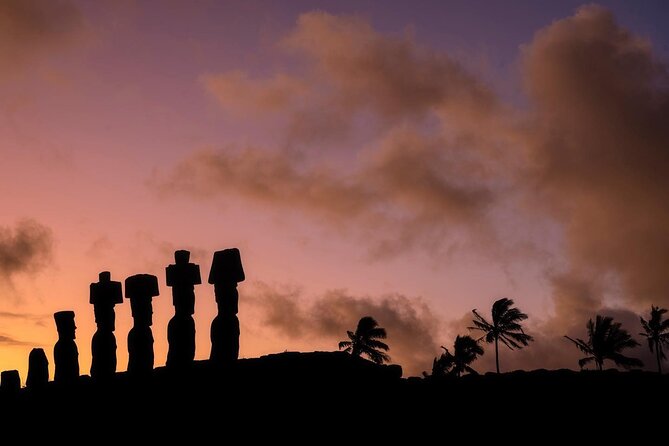
- Ahu Tongariki has 15 restored moai, making it one of the grandest sights on the island.
- Rano Raraku includes more than 400 moai in different stages of carving, with about a one-hour walk.
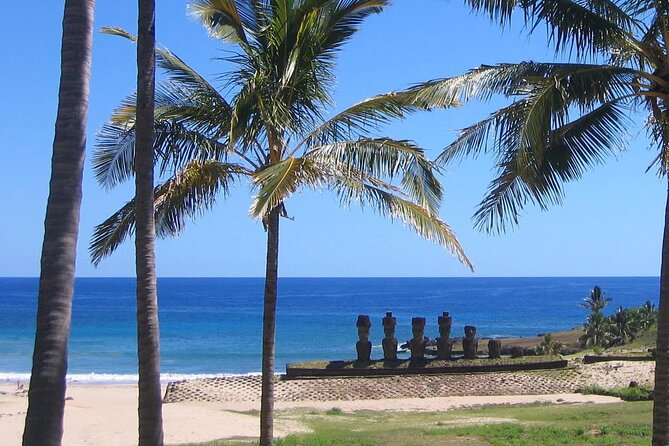
- Anakena combines history and beach time, with white coral sand, turquoise water, Ahu Nau Nau, and Ahu Ature Huki.
- Orongo explains the Tangata Manu, or Bird Man, contest, which lasted for more than two centuries.
- Ahu Akivi has seven moai facing the sea, while Puna Pau shows where the red scoria pukao were made.
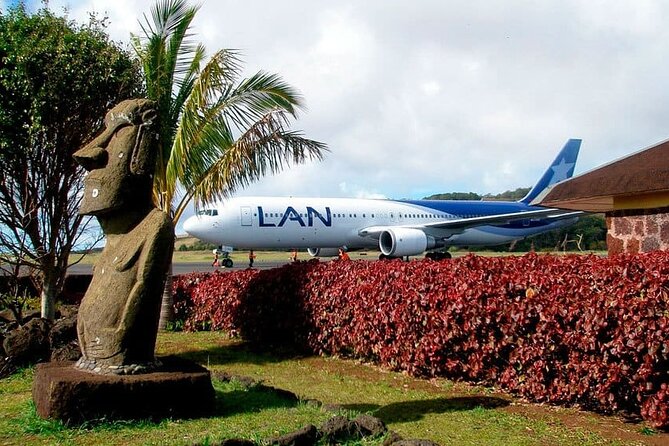
- The schedule covers about 13 hours, beginning at 7:00 a.m. with pickup at your hotel or Mataveri International Airport.
Why this long Easter Island day makes sense
Easter Island is compact, but its important sites are spread across the coast, volcanic slopes, village area, and ceremonial centers. Seeing the main places independently would require careful planning, transport, and a clear idea of how much time to allow at each stop.
This outing joins three separate sightseeing circuits into one day. You visit the south and east coast, the Orongo area, and the western interior sites around Ahu Tahai and Ahu Akivi. That makes it useful if your stay is short or if you want a strong first look at the island before deciding where to spend extra time.
The trade-off is obvious: you cover a lot of ground. Some stops receive only a short visit, while Rano Raraku includes a one-hour walk and Anakena gives you the chance to slow down by the sea. You should expect a full schedule rather than a relaxed beach day.
Transport is shared, with a maximum of 12 people. That is a useful middle ground. You avoid the cost of a private vehicle, but the group is still small enough for a guide to explain details and answer questions. Pickup is offered from your hotel, with Mataveri International Airport listed as the starting point and 7:00 a.m. given as the start time.
More things to do on Easter Island:
- From Hanga Roa: Rapa Nui Culture Sightseeing Tour
★ 4.6 · 307 reviews - From Hanga Roa: Easter Island Highlights 2-Day Tour
★ 4.3 · 205 reviews - From Hanga Roa: Easter Island Sightseeing Full Day Tour
★ 4.5 · 189 reviews
South coast villages at Vaihu and Ahu Akahanga
The first circuit begins along the south coast at Vaihu. The focus here is a Rapa Nui village site called Interpretive Nui, where you can see the kinds of structures used by families in the past.
The remains include houses, ovens, and chicken coops. These details may sound modest next to a row of giant statues, but they are some of the most useful parts of the day. They show how ordinary family life worked around the ceremonial platforms. You get a glimpse of cooking, shelter, and food keeping instead of seeing the island only as a collection of monumental stone figures.
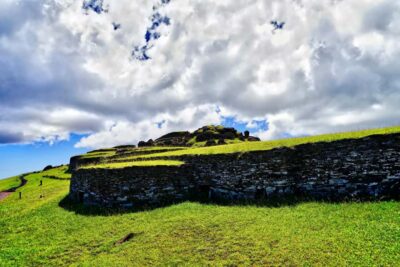
Next comes Ahu Akahanga, where a platform is associated with 12 moai. The site also includes an unrestored Rapanui village, old ovens, house remains, and a small cave. The lack of restoration is part of its appeal. You see a place with visible age and disorder, rather than a site arranged entirely for a polished photograph.
I like this early section because it gives the statues a human setting. The moai were made by communities with homes, cooking areas, family groups, and ceremonial duties. The guide’s role is important here, since the physical remains can be easy to miss if you do not know what you are looking at.
Ahu Tongariki and the island’s most famous moai line
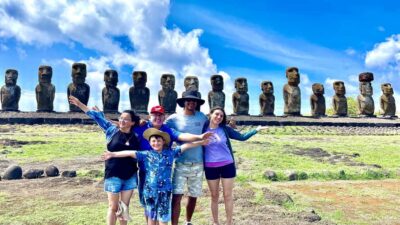
Ahu Tongariki is likely to be one of the day’s biggest visual moments. Fifteen restored moai line the platform, creating the scene many people picture when they think of Easter Island.
The scale is impressive, but the site is also a reminder that restoration changed what you see. The figures were returned to the platform as part of modern conservation work, allowing you to understand the original arrangement more clearly. Your guide can add the human story behind the platform and explain how it fits into the island’s ceremonial tradition.
Give yourself a little time to look at the group as a whole, then study individual figures. Their size, shape, and condition vary. That variation helps you see that moai were not produced as identical objects. Each statue reflects a particular stage of carving, transport, placement, or later damage.
Because this is a major stop, it may be the busiest-feeling part of the route, although the supplied information does not promise a particular crowd level. Your best approach is to listen first, then take photographs once you understand what you are seeing.
Rano Raraku: where hundreds of moai were carved
Rano Raraku is the most important stop for understanding how the moai were made. The volcanic site contains more than 400 statues in different stages of carving. Some appear incomplete, some are partly attached to the rock, and others sit in the surrounding area.
The planned walk lasts about one hour. Wear shoes you can walk in and allow yourself to look closely. This is not just a quick roadside photo stop. You are tracing the working area where the statues were shaped and learning how they were transferred from the quarry to other parts of the island.
I consider this the educational heart of the day. At Tongariki, you see the finished arrangement. At Rano Raraku, you see the production process before the statues became ceremonial monuments. The unfinished figures give the island’s stone tradition a sense of process rather than mystery alone.
The one-hour walk also affects the day’s rhythm. After several coastal stops, you will need to stay alert and keep moving with the group. If you prefer slow visits with long pauses, this combined tour may feel rushed. If you want a clear overview of the island’s major sites, the walk is a fair use of time.
A completely different kind of day out:
- Two days of Full Day Tour of Rapa Nui + Sunrise in Tongariki
★ 4.5 · 132 reviews - Full Day Tour in Rapa Nui
★ 4.5 · 122 reviews - 2-Day Private Tour Easter Island Highlights Complete Discovery
★ 5.0 · 110 reviews - Private Tour: Full Day Easter Island Highlights
★ 5.0 · 106 reviews
Anakena beach, Ahu Nau Nau, and Ahu Ature Huki
The south and east circuit ends at Anakena, a beach with white coral sand and turquoise water. This is a welcome change after the moai quarries and village remains. The setting is attractive, but Anakena is not only a scenic break.
The beach includes Ahu Nau Nau and Ahu Ature Huki, both linked to important discoveries and Rapa Nui traditions. Ahu Nau Nau gives you another chance to see moai in a coastal ceremonial setting, while the beach provides a more open and restful place to take in the island.
A box lunch is included for this part of the tour. That is practical because the day is long and the schedule leaves little room to arrange a separate meal. The provided information does not specify the menu, so bring any special food you require only if you know you need it.
Anakena may be the stop where you most want extra time. The challenge is that it comes within a tightly planned day. You should enjoy the sand and water, but you may not have the freedom of a full beach excursion. Think of it as a scenic and cultural stop, not a dedicated swimming tour.
Ahu Vinapu and the unusual Tahira wall
The second circuit begins at Ahu Vinapu. Here you see the wall of Ahu Tahira, which has been compared with Inca stonework because of the way the stones fit together.
That comparison is intriguing, but you should treat it as a point for discussion rather than a final answer to Easter Island’s past. The value of the stop is in looking closely at the stonework and hearing how your guide explains its construction and significance.
You can also see a moai made of red scoria, described as possibly representing a woman with two heads. The unusual material and form add variety to a day otherwise dominated by large figures carved from volcanic stone. This is the sort of detail that can disappear if you visit only the best-known platforms.
The tour then goes by vehicle up to Rano Kau. That transfer matters. You get the height and views of the volcanic area without needing to make the entire climb on foot.
Rano Kau and the ceremonial village of Orongo
Rano Kau has the largest and most striking crater on the island, according to the tour description. From the volcano, you can look toward the sea and the surrounding area. The setting gives you a strong sense of Easter Island as a volcanic island rather than simply a field of statues.
Orongo adds a different layer. This ceremonial village explains the period before Catholic missionaries arrived and focuses on the Tangata Manu, or Bird Man, competition. The contest lasted for more than two centuries and ended around 1864.
The basic challenge was dangerous and demanding: a competitor went to the islet Motu Nui to find the egg of the Manutara bird. The person connected to the winning egg could be proclaimed king or leader of the island. At Orongo, the story becomes easier to understand because the village, crater, ocean, and offshore islets form one connected setting.
This is one of the strongest reasons to have a guide. Without context, Orongo can look like another group of stone structures beside a crater. With an explanation of the contest, leadership, ceremony, and the island’s changing traditions, the site becomes much more meaningful.
The circuit ends back in town, where you can enjoy sunset near Ahu Tahai or another place beside the sea. The timing is appealing, but it depends on the actual pace of the day and conditions. The tour description presents sunset as an option, not a guaranteed timed event.
Ahu Tahai and the rare coral eyes
The final circuit begins at Ahu Tahai in town. The site has three restored platforms, making it a useful introduction or closing scene for the island’s ceremonial architecture.
One moai has eyes made of white coral. That detail deserves attention. The eyes help you imagine how these figures may have looked when completed and given a more active ceremonial role. It also shows why looking beyond the overall silhouette matters. The smallest details can change how you read the statues.
Tahai is convenient because it is close to town, yet it still gives you a strong coastal setting. If you have time after the organized visit, this is one of the places where you may want to pause and take in the sea rather than rush straight to the next photograph.
Seven moai at Ahu Akivi
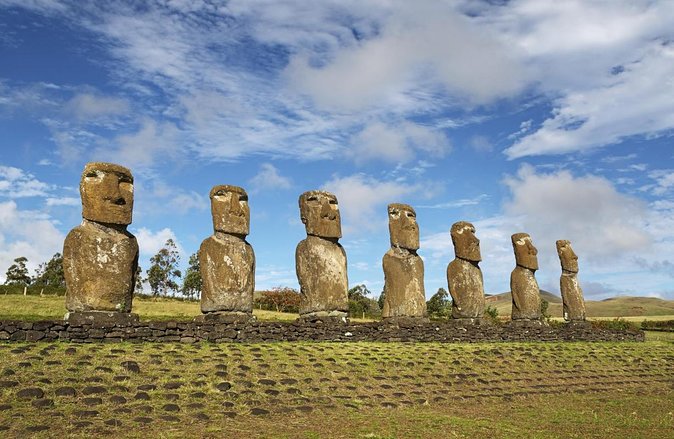
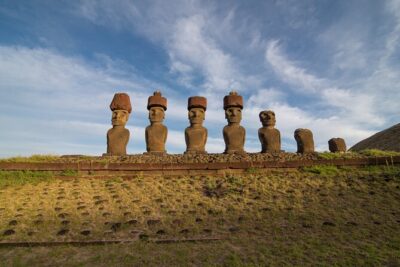
Ahu Akivi has seven moai restored in 1960. These figures face the sea, which makes them different from many of the inland-facing arrangements you see elsewhere on the island.
The seven statues are a compact and memorable stop. After seeing 15 figures at Tongariki and hundreds at Rano Raraku, Ahu Akivi offers a more contained view. The arrangement lets you compare posture, scale, spacing, and restoration without the same sense of visual overload.
The fact that the moai face the sea is the main feature highlighted by the tour. Your guide can help place that orientation within the larger story of the site. I would pay close attention here, since the contrast with other platforms is one of the day’s most useful comparisons.
Puna Pau and the red scoria pukao
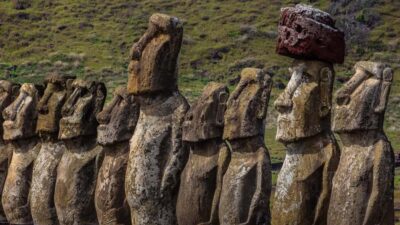
The final stop is Puna Pau, a small volcano associated with the carving of the pukao, or the red scoria top pieces placed on some moai.
You walk toward the top of the volcano to see the red scoria crater where these pieces were carved. The site also offers views toward Terevaka and the village. This gives the day a final look at a different kind of stonework and a different volcanic setting.
Puna Pau is valuable because it separates the statue from its top piece. A moai and its pukao were not one solid object carved from the same material. Seeing the source of the red scoria helps explain the skill and labor involved in moving these large elements around the island.
The walk is described as going toward the tip of a small volcano. As with Rano Raraku, comfortable footwear is sensible. The tour information does not give a detailed difficulty rating, so you should be prepared for some walking on uneven volcanic ground.
Is $299 a fair price?
At $299 per person, this is not a budget sightseeing outing. The price includes shared transport, a local guide in English or Spanish, and a box lunch during the Anakena portion. It does not include the National Park entrance fee, which you must purchase at the airport when you arrive.
The value depends on how much time you have. If you are staying briefly, the tour gathers the island’s major highlights into one organized day. You do not need to arrange transport between distant sites, work out the route, or decide how long to allow for Rano Raraku and Orongo.
The price also covers interpretation, not just a vehicle. A guide such as Bruno can make the difference between seeing stones and understanding village life, carving, ceremony, and the Bird Man contest. The strongest praise attached to this experience focused on his passion and informative approach.
Still, you should be comfortable with shared transport and a firm schedule. A private tour could offer more control, but this experience may be the better value if you want broad coverage and do not need to set the pace yourself.
Who should book this experience?
I would choose this for you if you want to see the major Easter Island sites in one day, especially if your visit is short. It suits people who value historical explanation, practical transport, and a small group more than long unscheduled pauses.
It is also a good fit if you want variety. In one day, you see family structures, unrestored village remains, major platforms, unfinished moai, a coral-sand beach, a huge crater, a ceremonial village, seven sea-facing statues, and the source of the red scoria pukao.
I would think twice if your priority is a slow beach day, private touring, or extended photography at each platform. Thirteen hours is a serious commitment, and the National Park fee is extra. You should also check that the English or Spanish guiding option matches your needs.
The experience is rated five out of five from the supplied feedback, with particular praise for Bruno and for reaching the island’s major sights. That is a strong signal about the guide-led format, though the sample is very small. I would treat the rating as encouraging rather than as a guarantee of the exact same guide or experience on every departure.
FAQ
How long does the full experience last?
The combined experience lasts approximately 13 hours. The listed start time is 7:00 a.m.
Where does pickup take place?
Pickup is offered from your hotel. Mataveri International Airport on Easter Island is also listed as the starting location.
Is transportation shared or private?
Transportation is shared. The maximum group size is 12 people.
Is lunch included?
A box lunch is included for the Anakena portion of the tour.
Is the National Park entrance fee included?
No. The National Park entrance ticket must be purchased when you arrive at the airport.
Is the tour offered in English?
Yes. A local guide is available in English or Spanish.
Can I cancel and receive a refund?
No. The experience is non-refundable and cannot be changed for any reason. Confirmation is received at the time of booking.
Should you book the 3 Easter Island tours?
Book it if you want a highly efficient first look at Easter Island and are willing to trade a relaxed pace for broad coverage. The combination of Ahu Tongariki, Rano Raraku, Anakena, Orongo, Ahu Tahai, Ahu Akivi, and Puna Pau gives you an unusually full day of major sights.
I especially like the mix of famous platforms and everyday Rapa Nui remains. Add the small group, hotel pickup, lunch, and the chance for a passionate guide such as Bruno, and the $299 price can make sense for a short stay.
Just budget separately for the National Park ticket, prepare for a long day, and do not expect every stop to receive equal time. For a first, all-in-one introduction to Easter Island, this is a strong choice.
Just added in Easter Island
- Volcanic Refuges: Excursion to Underground Civilization★ 4.7 · 8 reviews
- Volcanic Wonders and the Kingdom of the Birdman: Half Day★ 5.0 · 6 reviews
- Half Day Private Tour: Caves and Volcanic Refuges★ 4.0 · 14 reviews
- Easter Island Ancestral Dinner and Show with Transport★ 4.5 · 2 reviews
- 2 Day Small Group Tour in Moai Monuments and Historic Pathways★ 5.0 · 22 reviews
- Visit Rapa Nui in 4 days with 3 Tours and Accommodation included★ 4.0 · 2 reviews
- Tour to the Motus: Boat trip and snorkeling in Rapa Nui★ 5.0 · 8 reviews
- The birdman journey in Easter Island★ 5.0 · 1 review
Easter Island Tours, compared.
Two days of Full Day Tour of Rapa Nui + Sunrise in Tongariki
Read our review →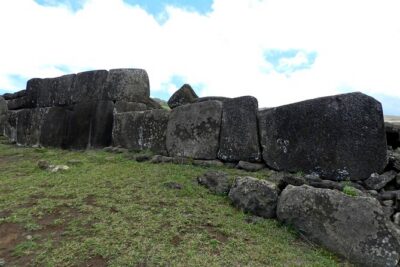
2-Day Private Tour Easter Island Highlights Complete Discovery
Read our review →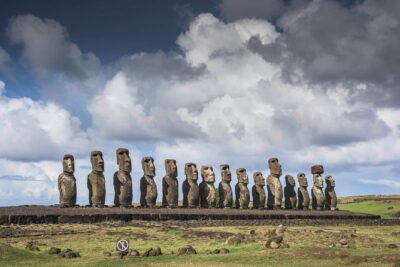
Private Tour: Full Day Easter Island Highlights
Read our review →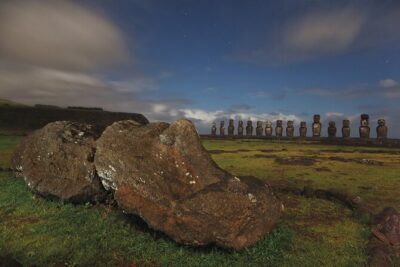
Browse the lists this tour appears in