
REVIEW · STARGAZING AND OBSERVATORY TOURS
Stargazing in the Andes from Santiago
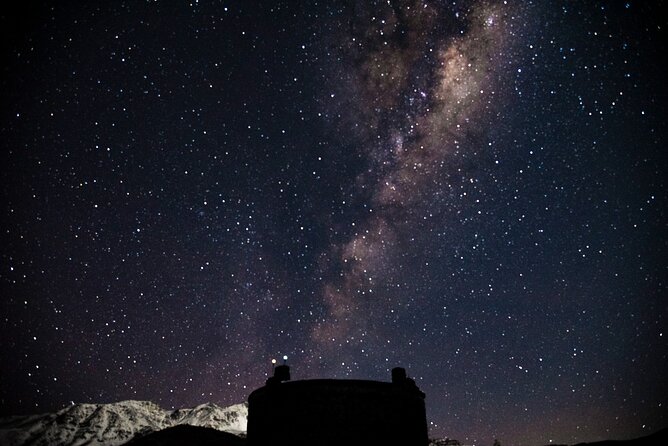
The stars here have a story. This private evening trip from Santiago takes you 105 kilometers north into the Andes, where very dark skies, an astronomer, and a welcoming local family turn stargazing into a cultural experience. I like the 260 clear nights a year and the chance to see more than bright stars through a telescope. I also like the homemade once chilena, served with bread, cheeses, sweets, savory treats, tea, coffee, juice, and wine.
The main drawback is the long drive. The activity itself lasts about three hours, but the full experience takes roughly seven hours because of the road time. The observatory is private and self-built, so this is not a polished commercial planetarium. That is part of its charm, but you should book it for personal attention and local character, not for a large visitor center or a quick city excursion.
In This Review
- Key points to know before booking
- Why the long ride north can be worth it
- Arriving at a family-run observatory
- The Andean sky through Mapuche and Incan eyes
- From the observation tower to the telescope
- How the $286.40 price measures up
- Timing, pickup, and the shape of the evening
- Who will enjoy this most
- Weather, cancellations, and practical planning
- The personal touch is the main attraction
- Should you book this Andes stargazing tour?
- FAQ
- Where does the stargazing tour take place?
- How long does the full experience last?
- Is hotel pickup available in Santiago?
- What time does pickup usually occur?
- What food and drinks are included?
- What cultures and astronomy topics are covered?
- Is the tour private?
- Can children join the experience?
- What happens if the weather is poor?
Key points to know before booking
- A private Andes observatory: You visit a self-built observatory 105 kilometers north of Santiago, with only your own group taking part.
- Two ways to read the sky: The astronomer explains Western cosmology alongside Mapuche and Incan views of the heavens.
- A proper local welcome: The traditional once chilena includes homemade bread, local cheeses, sweet and savory foods, hot drinks, juice, and wine.
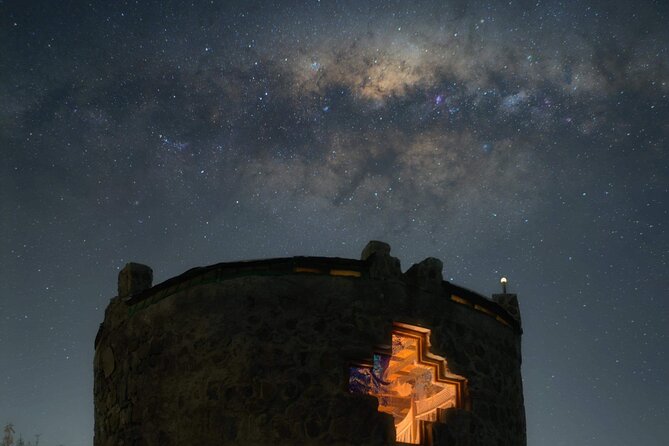
- Built around celestial events: The structures at the site are designed to line up with astronomical phenomena.
- Good for photography and telescope time: You have time to look through the telescope and, depending on the group’s pace, work on astrophotography.
- Weather matters: Poor conditions can lead to a new date or a full refund, and cancellation is free up to 24 hours before departure.
Why the long ride north can be worth it
Santiago is a fine base for city sightseeing, but city lights are not helpful when you want to study the night sky. This tour tackles that problem by taking you into the Andes, about 105 kilometers north of the capital, to a private observatory with notably dark skies.
The drive is the biggest practical issue. Pickup and the return journey account for much of the approximately seven-hour outing. You should not think of this as a short evening activity squeezed between dinner and bed. It is a full night outside Santiago, with several hours devoted to transport.
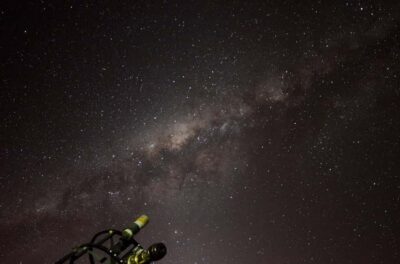
Still, the distance has a clear purpose. The site is described as having around 260 clear nights each year, and the darkness allows you to see stars and parts of the Milky Way with the naked eye. That matters because telescope viewing is only one part of stargazing. A dark sky gives you the wide picture first, before the astronomer points out particular objects.
The experience is private, so your group is not combined with a large busload of people. That gives the astronomer more room to adjust the pace. If your group wants extra time at the telescope, or someone is interested in astrophotography, the evening can be adapted where possible.
More stargazing nights in Santiago:
- Santiago: Sky Costanera Observatory Admission Ticket
★ 4.3 · 208 reviews - Observatory Stargazing Tour from Santiago
★ 4.5 · 32 reviews - Santiago: Sky Costanera Observatory Skip-the-Line Entry Ticket
★ 4.0 · 27 reviews
Arriving at a family-run observatory
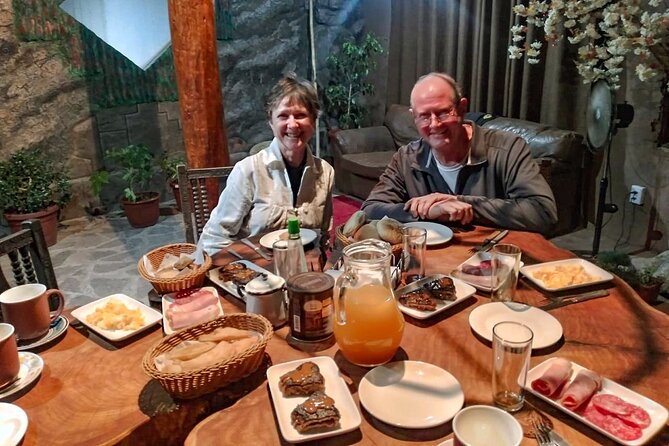
The welcome begins with a traditional once chilena, Chile’s version of afternoon tea. This is not simply a packaged snack handed out beside the vehicle. You sit down to homemade bread, craft cheeses, local products, sweet and savory treats, tea, coffee, juice, and wine.
I see this meal as an important part of the outing. It gives you time to settle in after the drive, meet your hosts, and experience a Chilean food tradition before the astronomy begins. The food also helps make the evening feel like an invitation into a home rather than a standard tour stop.
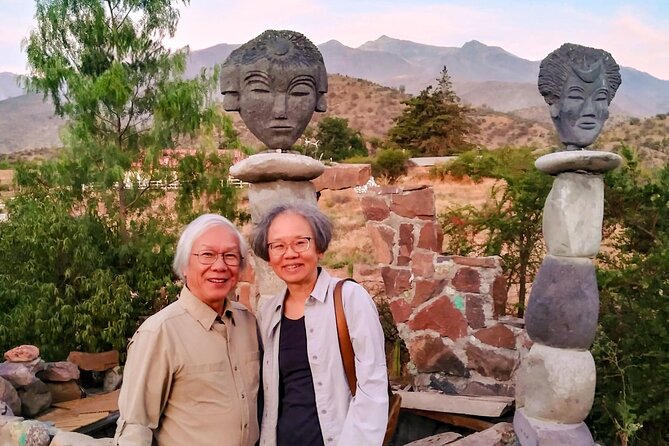
The hosts, Ali and Yerko, are central to that feeling. Their observatory and home are connected with the warmth of a small local business, and the personal welcome is one of the strongest reasons to choose this outing over a more formal astronomy center. Ali is described as opening her home to visitors, while Yerko contributes to the astronomy program.
Do not expect a large facility with rows of equipment and a gift shop. This is a private, self-built observatory. Structures at the site are made to coincide with astronomical phenomena, which adds a thoughtful design element to the visit. The setting and the people matter as much as the equipment.
The Andean sky through Mapuche and Incan eyes
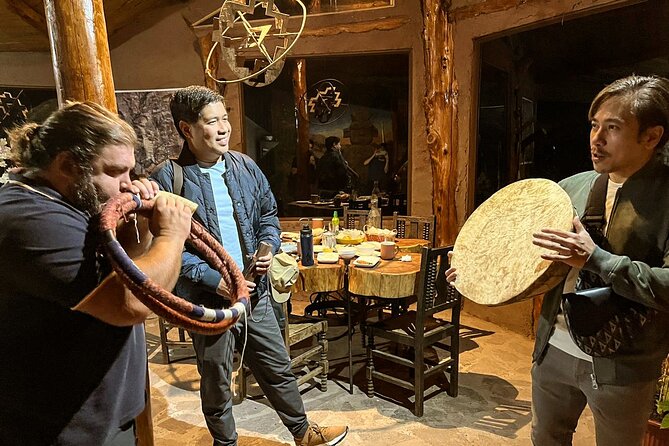
Before you look through the telescopes, the astronomer introduces you to the cosmology of Andean cultures. The discussion includes Mapuche and Incan ideas, with attention to the importance of specific celestial objects to ancestral communities.
This approach gives the night more meaning. A standard stargazing session may teach you the names of planets or constellations, then move straight to telescope viewing. Here, you first consider how people living in the Andes understood the sky and used it as part of their cultural world.
One especially interesting subject is the negative space within the Milky Way. Instead of focusing only on bright stars, you learn to notice the dark shapes and gaps between them. These areas were sacred to many ancient peoples of the southern part of the continent.
That change in viewpoint can make the sky feel less like a diagram and more like something people have watched, interpreted, and respected for generations. You are not asked to choose between traditional knowledge and modern astronomy. The program places them side by side, then uses Western cosmology to explain the objects you observe through the telescopes.
The quality of this part depends partly on your astronomer and your group’s interests. The experience is offered in English and includes a bilingual guide, so language support is built into the program. Still, if you want a technical lecture packed with equations, this may not be the right format. The emphasis is on clear explanation, culture, and observation.
From the observation tower to the telescope
After the introductory talk, you move to the tower. This is where the site’s astronomy-focused construction becomes more than a decorative detail. The structures were built to line up with astronomical events, so the physical setting supports what you are learning.
The group then studies the Milky Way with the naked eye, including its dark spaces. This stage is easy to overlook, but it may be the most useful for someone new to stargazing. You learn to pause and look broadly before relying on a telescope.
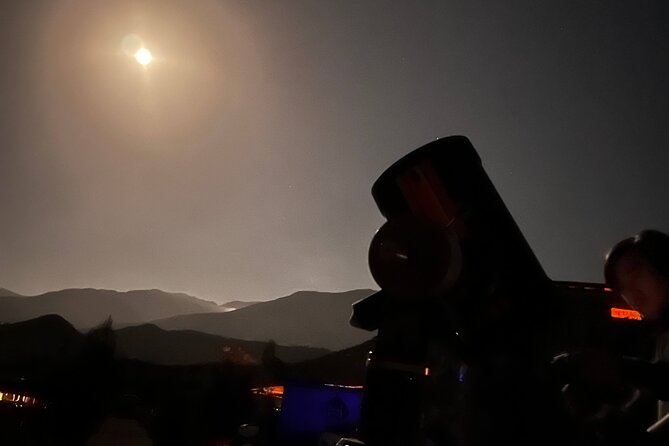
Next comes telescope observation and a shift toward current Western cosmology. The astronomer uses the objects you are viewing to explain the modern scientific understanding of the universe. That order works well: cultural context first, naked-eye observation second, scientific explanation third.
You should also allow for personal viewing time. One person who enjoyed the tour particularly liked looking through the telescope and having free time for astrophotography. The hosts try to adjust the rhythm of the evening to suit the group, which is a real advantage of a private booking.
Astrophotography still requires patience and suitable equipment, and the tour does not promise professional photography instruction. But if you bring the gear you need, the darker site and available free time may give you a chance to work on your own images. Ask about this when booking if photography is a major goal.
More things to do in Santiago:
- Valparaiso Port and Viña del Mar with Casablanca Wine Tasting
★ 5.0 · 6,110 reviews - Santiago: Cajon del Maipo/Embalse del Yeso Tour with Picnic
★ 4.3 · 3,789 reviews - Santiago: Vina Del Mar, Valparaiso, Casablanca & Reñaca Tour
★ 4.2 · 2,838 reviews - Cable Car, Funicular and Sightseeing Bus in Santiago one day
★ 5.0 · 2,325 reviews
How the $286.40 price measures up
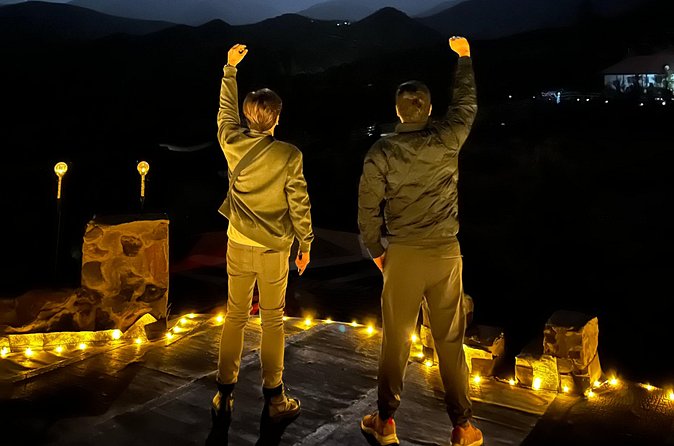
At $286.40 per person, this is not a bargain evening activity. The price makes more sense when you look at what is bundled together: private transport from Santiago, a bilingual guide, a traditional meal with drinks, an astronomer-led program, telescope viewing, and a private group format.
You are paying for time as well as equipment. The driver takes you well outside the city, and the hosts provide a full evening rather than a brief telescope demonstration. The meal and cultural presentation also make this different from simply arranging a ride to a dark-sky viewpoint.
The value is strongest for couples, families, or small groups who care about personal attention. Group discounts are offered, so the per-person cost may work better for a larger private party. A minimum of two people is required, and the tour is not designed as an individual drop-in experience.
I would compare the cost with your priorities. If you mainly want a cheap view of the stars, this will feel expensive. If you want a private outing that combines astronomy, food, local hospitality, and Andean cultural context, the price is easier to justify.
Timing, pickup, and the shape of the evening
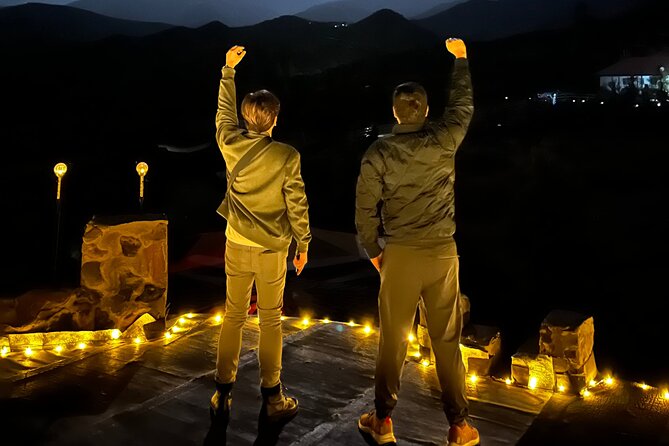
Pickup is offered from your Santiago hotel, but the exact time is set by the astronomer and sent after booking. In summer, pickup is usually around 5:00 or 5:30 p.m. In winter, it is usually around 3:00 or 4:30 p.m.
The earlier winter departure makes sense because darkness arrives sooner. You should keep your schedule flexible, since the astronomer determines the final pickup time. The total experience lasts about seven hours, with the remaining time assigned to transport.
That timing can make this difficult to combine with another fixed evening booking. I would avoid scheduling a late restaurant reservation, theater performance, or airport transfer afterward. The weather requirement also means you should leave some flexibility in your itinerary if seeing the stars is a top priority.
The tour includes private transport, which removes the need to arrange a separate vehicle for the mountain journey. It also means your group can travel together from the hotel and return there after the program.
Who will enjoy this most
I would recommend this experience to you if you enjoy astronomy but also want to understand how the sky has been viewed by different cultures. It suits people who prefer a small, personal activity to a large organized excursion.
It is also a good choice for:
- Couples looking for a quiet evening outside Santiago
- Families with children who are accompanied by an adult
- Amateur photographers who want time for astrophotography
- Anyone interested in Mapuche, Incan, and Western cosmology
- Visitors who value homemade food and contact with local hosts
- Small groups that want private transport and a flexible pace
Children can participate when accompanied by an adult, and most people can take part. Service animals are allowed. The available information does not promise specialized accessibility arrangements, so you should ask the provider about any mobility needs before booking.
This may not suit you if you dislike long drives, need a tightly timed evening, or want a major observatory with many exhibits. The site’s appeal comes from its intimate, homemade character.
Weather, cancellations, and practical planning
Clear skies are essential, so the experience can be canceled in poor weather. If that happens, you are offered another date or a full refund. That policy is sensible because clouds would limit the main purpose of the trip.
You can cancel for a full refund up to 24 hours before the start time. Changes or cancellations made less than 24 hours before departure are not accepted for a refund. The cut-off follows local time.
Bring clothing suited to an evening in the mountains, but do not assume a particular temperature because none is provided. It is also wise to keep your hotel pickup details ready when booking. Exact pickup instructions come from the astronomer, rather than being fixed at one universal time.
The activity is offered in English, with a bilingual guide included. Dinner, tea, coffee, juice, and wine are included. Travel insurance, gratuities, and personal purchases are not included.
The personal touch is the main attraction
The most praised part of this experience is not just the telescope. It is the combination of expertise and warmth. The hosts, Ali and Yerko, are presented as people who welcome you like family, while the astronomer brings the scientific and cultural explanation.
That balance matters. A formal lecture can teach you facts but leave little room for conversation. A casual visit can feel friendly but lack substance. This outing aims for both: a home-cooked meal and personal welcome, followed by serious attention to the night sky.
The private format helps preserve that mood. You are not moving through a crowded schedule with dozens of strangers. Your group can ask questions, spend time at the telescope, and adjust the pace around personal interests.
Should you book this Andes stargazing tour?
Book it if you want more than a quick look through a telescope. The long drive from Santiago is the cost of reaching darker skies, and the evening adds local food, Andean cultural context, and a private welcome from Ali and Yerko.
Skip it if your priority is convenience, a low price, or a short activity close to central Santiago. For everyone else, especially astronomy fans, photographers, couples, and curious families, this offers a thoughtful night under the stars with a human touch. Check the weather forecast, keep your schedule open, and allow the full seven hours. That is the practical key to enjoying it.
FAQ
Where does the stargazing tour take place?
The tour visits a private, self-built observatory in the Andes, about 105 kilometers north of Santiago.
How long does the full experience last?
The experience lasts approximately seven hours. About three hours are devoted to the observatory program, with the rest used for travel.
Is hotel pickup available in Santiago?
Yes. Pickup is offered from your Santiago hotel. You provide the hotel details, and the astronomer confirms the exact pickup time.
What time does pickup usually occur?
In summer, pickup is usually around 5:00 or 5:30 p.m. In winter, it is usually around 3:00 or 4:30 p.m. Exact times are communicated after booking.
What food and drinks are included?
The traditional once chilena includes homemade bread, craft cheeses, sweet and savory local treats, tea, coffee, juice, and wine.
What cultures and astronomy topics are covered?
The astronomer discusses Western, Mapuche, and Incan culture and cosmology. You also learn about the Milky Way’s dark spaces and observe celestial objects through telescopes.
Is the tour private?
Yes. Only your group participates in the activity, and private transport is included.
Can children join the experience?
Yes. Children can participate, but they must be accompanied by an adult.
What happens if the weather is poor?
If poor weather causes the experience to be canceled, you are offered another date or a full refund. You can also cancel up to 24 hours before the start time for a full refund.
Just added in Santiago
- Walking City Tour with Funicular, Cable Car and Tasting★ 4.3 · 6 reviews
- VIÑA DEL MAR AND VALPARAISO TOUR★ 4.8 · 20 reviews
- Tour VIÑA CONCHA Y TORO + CASA MARQUES – Chile, from Santiago.★ 5.0 · 2 reviews
- Undurraga + Isla Negra + San Afonso del Mar —– Full day★ 4.1 · 8 reviews
- Undurraga Wine tour★ 4.2 · 15 reviews
- Southcoast – Private Full-Day tour★ 5.0 · 6 reviews
- Santiago Private walking tour with Lunch★ 5.0 · 5 reviews
- Zapallar : nature, sea and local flavours★ 5.0 · 6 reviews
Stargazing and Observatory Tours, compared.
The Roofless Experience San Pedro de Atacama Stargazing Tour
Read our review →
Astronomical Tour with Guide and Pick Up San Pedro de Atacama
Read our review →
“Astronomical Adventure in San Pedro de Atacama”
Read our review →Browse the lists this tour appears in