
REVIEW · STARGAZING AND OBSERVATORY TOURS
Astronomical Tour “Under the Night Sky”
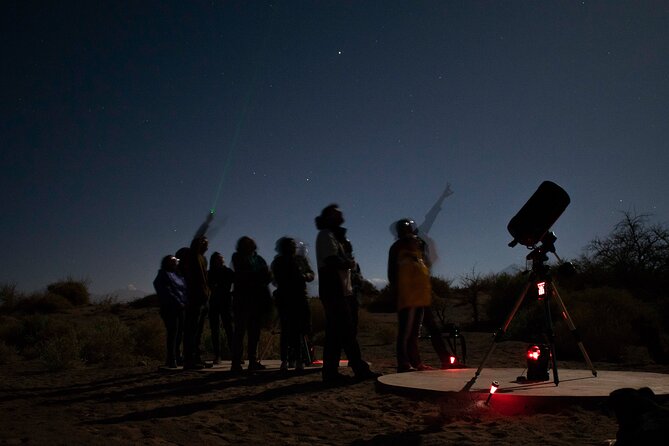
Look up, and the desert changes shape. In San Pedro de Atacama, Bajo la Noche de Atacama offers a thoughtful night of sky watching for $45, beginning with laser-guided constellations and continuing with automatic telescopes aimed at planets, stars, and distant objects. I especially like the clear teaching style of Rodrigo Zúñiga and the chance to see sights such as Saturn’s rings rather than simply hearing about them.
The warm finish helps make the cold worthwhile. You sit by a fire with wine, hot chocolate, coffee, blankets, and snacks, then receive an astrophotographic portrait. The main consideration is timing: the evening can run three hours in practice, and you may not return to San Pedro until after midnight. A faint glow from town can also show on the horizon.
In This Review
- At a glance
- Why San Pedro is made for stargazing
- The short drive beyond San Pedro
- First lesson: learning the sky without a telescope
- The telescopes and the thrill of Saturn
- A campfire finish with wine and hot chocolate
- The night-sky portrait
- Price, group size, and overall value
- Timing, weather, and what to pack
- Who will enjoy this most
- Should you book Under the Night Sky?
- FAQ
- Where does the astronomical tour take place?
- How long does the experience last?
- How much does the tour cost?
- How many people can join the tour?
- What will I see through the telescopes?
- Are drinks and food included?
- Are photographs included?
- What happens if the weather is poor?
At a glance
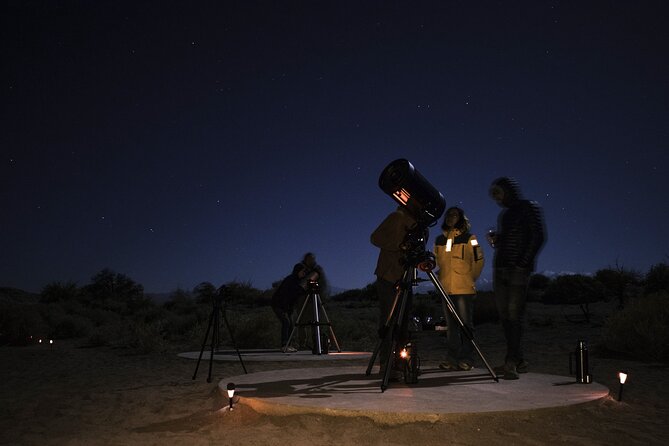
- Rodrigo Zúñiga leads with a laser pointer: You learn to identify constellations and stars with your own eyes before using the telescopes.
- Two automatic telescopes reveal fine detail: Depending on the night and season, you might see Saturn and its rings, Jupiter and its moons, the Moon, galaxies, or other deep-sky objects.
- The group is limited to 16 people: That keeps the experience more personal than a large coach outing.
- A fire, drinks, and snacks close the evening: Wine, hot drinks, sweet items, and savory bites give you time to warm up and talk.
- You receive night-sky photographs: The service includes one photograph per person and at least one photograph per booking.
- Cold-weather clothing matters: Even in December, the desert night can feel very cold. Bring layers, and use the supplied blankets.
Why San Pedro is made for stargazing
The Atacama is famous for its clear, dry air and major astronomical facilities. You do not need to be a serious amateur astronomer to appreciate the sky here. Even a simple look upward can reveal far more stars than you usually see at home.
This tour takes you away from the strongest town lights to a quiet outdoor site. It is not presented as a visit to one of Chile’s giant research observatories. Instead, it gives you a guided look at the southern sky, with enough equipment and explanation to make the experience feel personal.
That difference matters. A large observatory visit can explain science and research, but this evening is about learning how to look. Rodrigo points out stars and patterns with a laser, tells stories about the constellations, and gives you a way to recognize them later without help.
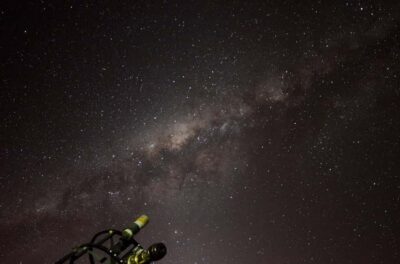
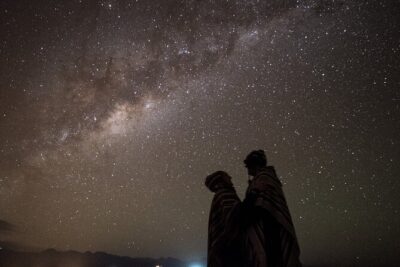
The darkness is a major part of the value. On a moonless night, you might see the Milky Way without optical aid. Still, conditions change with the season, the moon, and the weather. One evening may offer a spectacular display, while another gives you a softer view. The tour remains worthwhile because the instruction, setting, photographs, and fire do not depend entirely on perfect visibility.
More stargazing nights in San Pedro de Atacama:
- San Pedro de Atacama: Etno-Stargazing Tour with Transfer
★ 4.8 · 629 reviews - The Roofless Experience San Pedro de Atacama Stargazing Tour
★ 5.0 · 522 reviews - San Pedro de Atacama: Stargazing Experience
★ 4.7 · 489 reviews
The short drive beyond San Pedro
Pickup is arranged from accommodations in San Pedro, with communication handled through WhatsApp. One useful touch is the live vehicle tracking and advance information about the pickup order. You are not left standing outside wondering when the minibus will appear.
The drive to the site is short, often around 10 to 20 minutes, though the full outing takes much longer. The transport has been described as comfortable and air conditioned. Once you arrive, you walk into an organized outdoor area with chairs, blankets, telescopes, and a fire pit.
The setting is simple rather than luxurious. You are in the desert at night, not inside a heated visitor center. That is exactly the point, but it also means you should dress for the conditions. Wear warm layers, cover your legs, and bring something for your head and hands. Blankets are provided, yet they work best as extra help, not as a substitute for proper clothing.
Bathrooms are available at the site, which is useful during a long outdoor evening. The group size is capped at 16 people, a sensible limit for telescope viewing. With more than that, each person would spend too much time waiting for a turn.
First lesson: learning the sky without a telescope
The program begins with naked-eye observation. Rodrigo uses a powerful laser pointer to show exactly which star or constellation he is discussing. This makes a big difference. Without that guide, a newcomer can stare at a crowded sky and still have no idea what to look at.
The talk may include the Southern Cross, zodiac constellations, Orion’s Belt, Gemini, Taurus, Leo, Venus, Saturn, and other visible objects. The exact lineup depends on the season and time of night, so you should not expect the same sky on every visit.
I like this part because it gives the evening a structure. You are not simply waiting for your turn at a telescope. You begin by learning how the sky is organized, how constellations relate to one another, and how to find familiar patterns from the ground.
Rodrigo’s calm speaking style also suits the setting. He explains astronomy in plain language and takes questions without making beginners feel out of place. One bilingual family found that he could move between Spanish and English while keeping the explanation complete in both languages. That is valuable if your group includes people with different language needs.
There is one small practical issue. Since the program takes place outdoors, sound carries differently than it would in a room. One person found that amplification would have helped. If you have difficulty hearing in a group, sit near the guide and ask others to keep conversation low during the explanation.
The telescopes and the thrill of Saturn
After the naked-eye lesson, the telescopes become the main event. Two automatic instruments are used to examine objects in the solar system and beyond. The guides position the equipment, then help you take turns at the eyepiece.
Seeing Saturn’s rings is often the most memorable moment. The rings are not visible to the naked eye, so the telescope changes your sense of scale. Jupiter and its moons, the Moon, stars, galaxies, and other deep-sky targets may also appear, depending on what is visible that night.
You should keep your expectations realistic. Astronomy is governed by the sky, not by a fixed checklist. A planet that was visible during one visit may not be in a good position on another. One comment noted that the morning would have been better for certain planets, while this tour operates at night. That is not a flaw in the guide’s work, but it is a reminder that the program cannot promise every famous object every evening.
The telescopes are still valuable for beginners because the guide explains what you are seeing. A small bright point becomes a planet with moons. A faint patch becomes a distant galaxy. The instruction turns a quick glance into a moment you can remember.
You may also see shooting stars during the waiting periods. Keep looking upward after you leave the eyepiece. The best part of the sky may arrive when nobody is directing your gaze.
More things to do in San Pedro de Atacama:
- San Pedro de Atacama: El Tatio Geysers Tour
★ 4.7 · 943 reviews - Tour to the Hidden Lagoons of Baltinache
★ 5.0 · 694 reviews - Piedras Rojas, Altiplanics Lagoons & Salar Full-Day Tour
★ 4.7 · 592 reviews - Half Day Tour to Geysers del Tatio
★ 5.0 · 499 reviews
A campfire finish with wine and hot chocolate
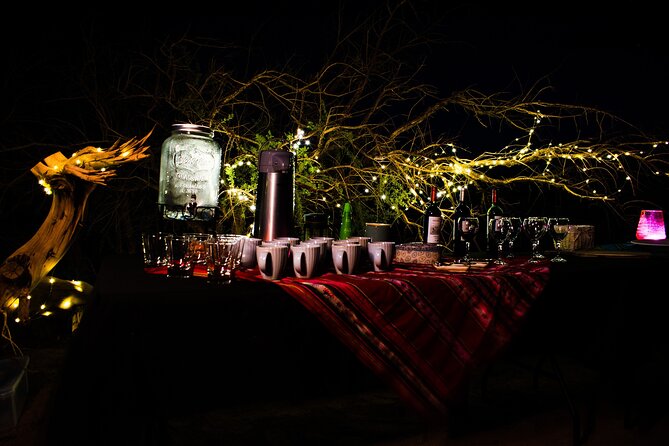
The fire is more than a decorative ending. Atacama nights can be cold, and sitting around the flames gives you time to warm up after standing or sitting outside for the observation session.
The refreshments include reserve wines, hot drinks, and snacks. Coffee, hot chocolate, sweet treats, and savory appetizers have all been part of the spread. If you do not drink alcohol, the hot drinks make the finale just as pleasant.
This is also when the evening slows down. The first part asks you to listen and focus. Around the fire, you can talk with your companions, look back at the sky, and let the experience settle. I consider this a strong use of the final half hour because it keeps the outing from feeling like a technical demonstration.
The fire and food do not turn the tour into a dinner. Think of them as generous light refreshments. If you need a full meal, eat before pickup or plan food for afterward, keeping in mind that the return may be after midnight.
The night-sky portrait
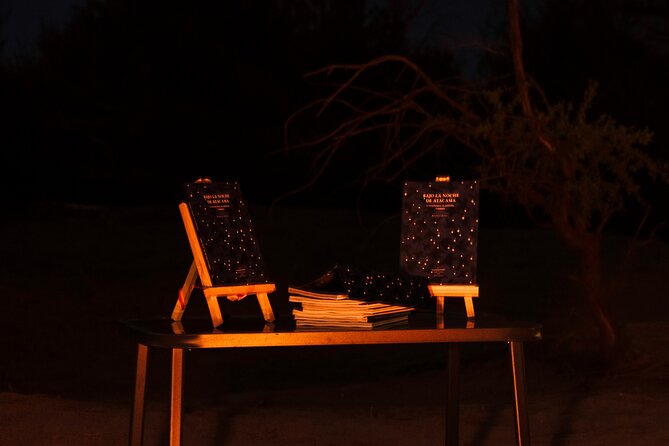
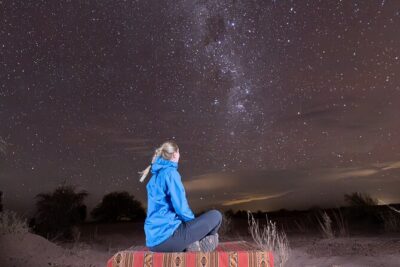
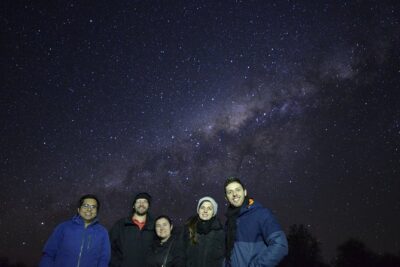
The included photography adds a personal souvenir. Each person receives one photograph, plus at least one photograph per booking. Participants are photographed individually or as couples against the stars, with the night sky behind them.
This is a practical benefit because desert night photography is difficult without the right equipment. You can enjoy the sky rather than spending the evening trying to manage a camera in the dark.
Photographs are sent through WhatsApp the following day, according to the experience details shared by participants. Make sure your contact information is correct when booking and keep an eye on your messages after the tour.
Do not expect a full professional photo session. The portrait is one part of a larger evening, not the central service. Its value is that it preserves the memory of the setting without requiring you to bring a tripod, camera, or photography skills.
Price, group size, and overall value
At $45 per person, this is a good-value evening for San Pedro. You are paying for transportation, a trained astronomy guide, telescope access, blankets, refreshments, a campfire, and photographs. Comparable activities can cost more when they include a larger production or specialized photography, so the modest price makes this appealing.
The group limit of 16 is especially important. Telescope tours can become frustrating when many people crowd around a single instrument. Two telescopes and a controlled group should keep the waiting manageable, though you will still need patience while everyone takes a turn.
The strongest value comes from the guide. The equipment matters, but a telescope alone does not teach you how to understand the sky. Rodrigo’s writing and astronomy background add depth, and his style appears suited to both complete beginners and people who already know a few constellations.
The value is slightly lower if your only goal is a perfect Milky Way photograph or a long list of planets. Light from San Pedro may be visible along the horizon, and moon or cloud conditions can soften the view. For a relaxed introduction to astronomy with a social ending, the price is easier to justify.
Timing, weather, and what to pack
The stated duration is about two and a half hours. In practice, allow three to three and a half hours from pickup to return. The program may begin around 10 p.m., and some groups arrive back in town after midnight.
That late schedule is necessary for a dark sky, but it can be tiring. I would avoid booking this on a night before an early airport transfer, sunrise excursion, or long drive. It works best when you can sleep in the next morning.
Good weather is required. If poor conditions cancel the experience, you are offered another date or a full refund. The regular cancellation rule allows a full refund when you cancel at least 24 hours before the start time. Changes or cancellations inside that window are not refunded.
Bring:
- Warm layers, even during summer
- Comfortable shoes for sitting outdoors
- A phone with WhatsApp access for pickup and photo delivery
- Patience for telescope turns
- A willingness to look up without a screen
Service animals are allowed, and most people can take part. The supplied information does not describe a fully accessible site, so anyone needing specific mobility arrangements should ask the operator before booking.
Who will enjoy this most
This is an excellent choice for first-time sky watchers. You do not need prior astronomy knowledge, and the laser pointer makes the lesson easy to follow. The guides also welcome questions, so curious beginners can get more from the evening than they might from a self-guided look at the stars.
Couples and friends will appreciate the photographs and fire. Families can enjoy it too, especially if children can manage a late night and cold outdoor conditions. The calm pace suits people who prefer a quiet activity over a loud evening out.
It is also a good match for solo visitors. The group is small enough to feel social without forcing you into constant conversation. You can listen, look through the telescopes, and enjoy the setting at your own pace.
I would think twice if you dislike cold, late-night outings, or waiting your turn. I would also lower my expectations if clouds, moonlight, or seasonal visibility are poor. Astronomy always involves some uncertainty, and that is part of the bargain.
Should you book Under the Night Sky?
Yes, I would book it if you want more than a quick photo beneath the stars. The strongest reasons are Rodrigo’s engaging instruction, the powerful telescopes, the chance to see objects such as Saturn’s rings, and the warm campfire ending with drinks, snacks, and photographs.
Book it for a night when you can sleep late afterward. Bring serious layers, sit close to the guide if hearing is a concern, and accept that the exact celestial lineup depends on nature. If you do that, this $45 experience offers one of San Pedro’s most memorable evenings without asking you to be an astronomy expert first.
FAQ
Where does the astronomical tour take place?
The tour begins with pickup in San Pedro de Atacama and continues to a quiet outdoor site away from the strongest town lights.
How long does the experience last?
The listed duration is about two hours and 30 minutes. In practice, allow roughly three to three and a half hours, including pickup and return.
How much does the tour cost?
The price is $45 per person.
How many people can join the tour?
The maximum group size is 16 people.
What will I see through the telescopes?
The telescopes are used for deep-sky objects and solar system targets. Depending on the night, you might see Saturn and its rings, Jupiter and its moons, the Moon, galaxies, stars, or other visible objects.
Are drinks and food included?
Yes. The evening includes reserve wines, hot drinks, and snacks, followed by time around a campfire.
Are photographs included?
Yes. The service includes one astrophotographic portrait per person and at least one photograph per booking.
What happens if the weather is poor?
The experience requires good weather. If it is canceled because of poor conditions, you can choose a different date or receive a full refund.
Just added in San Pedro de Atacama
- Vallecito★ 4.7 · 13 reviews
- Atacama Desert and Magic Bus Visit★ 4.8 · 15 reviews
- San Pedro de Atacama: Valle de la luna★ 3.0 · 3 reviews
- Valle de la Luna: A Moon-Like Escape in Atacama★ 5.0 · 3 reviews
- Triple Tour: Piedras Rojas + Altiplanic Lagoons + Chaxa Lagoon★ 5.0 · 1 review
- Red Stones + Altiplánica Lagoons★ 5.0 · 1 review
- Atacama Stargazing Tour Under One of the World’s Clearest Skies★ 4.0 · 3 reviews
- Tour to Laguna Cejar and Tibenquinche★ 4.5 · 7 reviews
Stargazing and Observatory Tours, compared.
The Roofless Experience San Pedro de Atacama Stargazing Tour
Read our review →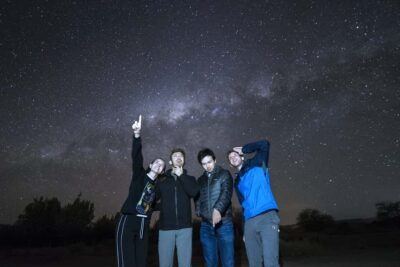
Astronomical Tour with Guide and Pick Up San Pedro de Atacama
Read our review →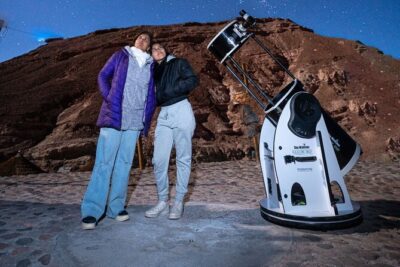
“Astronomical Adventure in San Pedro de Atacama”
Read our review →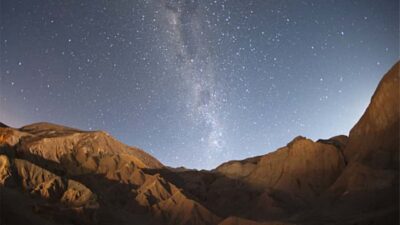
Browse the lists this tour appears in