
REVIEW · STARGAZING AND OBSERVATORY TOURS
San Pedro de Atacama: Etno-Stargazing Tour with Transfer
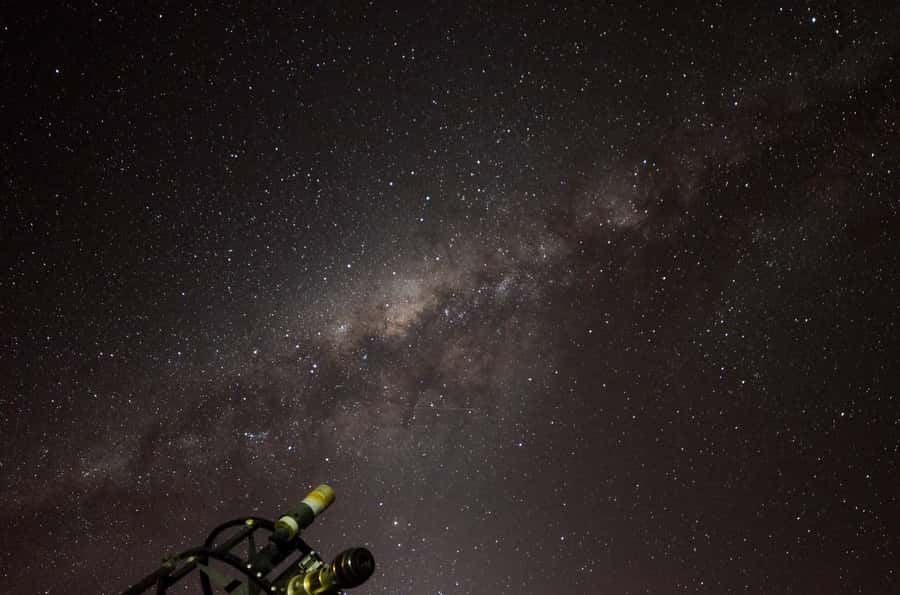
The Atacama sky puts on a show. This 150-minute evening tour combines clear Southern Hemisphere stars with astronomy, telescope viewing, and Andean interpretations of the night sky. I like the way it joins modern science with indigenous sky knowledge, and I like that you get hands-on time at the telescope rather than simply pointing at stars from a parking lot.
The $41 price is also appealing. It includes transport from central San Pedro, a specialist astronomy guide, telescope equipment, hot drinks or red wine, and a photo sent by email. The main thing to plan for is the cold. Even in a warm desert, the temperature drops quickly after sunset, and a bright moon can wash out many of the fainter stars.
In This Review
- Key points before you book
- Why San Pedro is such a good place for stargazing
- The 15-minute ride out of town
- First lesson: modern astronomy under the desert sky
- Second lesson: the Andean reading of the Milky Way
- Telescope viewing: the evening’s main event
- The cold, the fire, and the refreshments
- The souvenir star photo
- Price, timing, and overall value at $41
- Language, access, and small practical details
- Who should book this stargazing tour?
- Should you book it?
- FAQ
- How long does the Etno-Stargazing Tour last?
- Where is pickup provided?
- What time does pickup take place?
- Is the tour offered in English?
- What can I see through the telescope?
- Does the tour include drinks?
- Is a photo included?
- What should I wear?
- Can the tour be changed because of bad weather?
Key points before you book
- Two ways of reading the sky: Learn modern astronomy, then hear how Andean cultures used stars, dark spaces, animals, rivers, and the Milky Way to understand daily life.
- Real telescope time: Depending on the season and conditions, you might see planets, binary stars, star clusters, nebulae, galaxies, or solar-system objects.
- Excellent guides: Felipe, Claudio, Salvador, Yvonne, and other astronomy guides are praised for clear explanations, patience, and enthusiasm.
- A proper cold-weather stop: Ponchos, blankets, warm drinks, and a fire have made a big difference for people caught unprepared by the desert night.
- Strong value at $41: Transport, instruction, equipment, and a souvenir photo make this one of the more complete evening activities in San Pedro.
- Moon and clouds matter: Check the lunar calendar before booking, and keep your evening flexible in case weather forces a later start.
Why San Pedro is such a good place for stargazing
San Pedro de Atacama sits in one of the most famous astronomy regions on Earth. The desert is dry, remote, and far from the bright lights of major cities. That gives you a darker sky and a better chance of seeing a crowded field of stars.
You do not need to know any astronomy before arriving. The guide begins with the basics: how stars differ in brightness and color, how planets appear, what constellations are, and how scientists think about the formation of the cosmos. The explanations are designed for ordinary curious people, not only for amateur astronomers.
I especially like the Southern Hemisphere focus. Depending on where you live, many of these stars and constellations may be unfamiliar. The Southern Cross is a major highlight, and the guide helps you locate it rather than leaving you to search the sky alone.
Still, the desert does not guarantee perfect viewing every night. Clouds, wind, and moonlight can change the experience. A full or nearly full moon may be beautiful in its own right, but it makes faint stars harder to see. One useful feature is the willingness to change the start time when conditions are poor. A late-night departure is possible, so do not schedule an early, nonrefundable commitment immediately afterward.
More Private Drivers in San Pedro de Atacama
- San Pedro de Atacama: Stargazing Experience with Transfer
★ 3.5 · 8 reviews - Private Transfer to Calama Airport (CJC)
★ 5.0 · 5 reviews - San Pedro de Atacama: Etno-Stargazing Tour with Transfer
★ 3.5 · 5 reviews
The 15-minute ride out of town
Pickup is in central San Pedro de Atacama, with Restaurant Tara at Licancabur 10 given as the meeting point. The transfer out takes about 15 minutes, according to the planned route. Pickup is listed at 7 p.m. from April through August, and around 9 to 9:20 p.m. during Chilean summer time.
That transfer matters. San Pedro itself has plenty of street lighting, so the darkest part of the experience takes place away from the town center. The short ride also keeps the evening from turning into a long expedition. You spend most of your time looking at the sky, not sitting in a vehicle.
Do take the meeting point seriously. One person had trouble finding Restaurant Tara because local people did not recognize the name. Confirm the exact location before the evening begins, and arrive early enough to avoid a frantic search through town. Pickup is included in San Pedro, but not in the ayllus, so you need to check your accommodation area before booking.
The return transfer is listed as about 25 minutes, with drop-off back at Licancabur 10 or Restaurant Tara. The precise timing can change if the tour is delayed for clouds or poor visibility.
First lesson: modern astronomy under the desert sky
At the viewing site, the guide begins with the Western astronomy tradition. The presentation covers the universe, star brightness, planets, constellations, and the way celestial objects formed.
The phrase Western vision also includes the old Greek habit of organizing the sky into familiar figures. That section gives you a useful introduction to the constellations and to the idea that people have always looked up and searched for patterns. You are not only told where to look. You learn why a star may appear bright, how planets differ from stars, and how the same sky can be organized into a system of stories and measurements.
Guides such as Felipe and Claudio have earned particular praise for making difficult subjects easy to follow. Felipe has been described as willing to connect current astronomy with research and ancient ideas, while Claudio is praised for keeping children engaged without drowning them in facts. Salvador is noted for his energy and warmth.
That range matters if you are booking for a family or a mixed group. You can ask questions, and the tone is informal rather than academic. The best guides adjust the talk to the people in front of them, including requests about specific stars or planets.
Second lesson: the Andean reading of the Milky Way
The most distinctive part of this tour is the move from modern astronomy to indigenous Andean astronomy. Long before Spanish arrival, observers in the Andes studied the sky closely and gave meaning to what they saw.
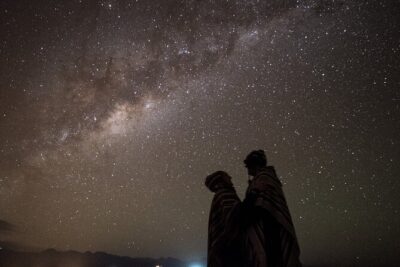
The guide explains how ancient communities interpreted not only the bright constellations, but also the dark areas between the stars. Animals, water, rivers, schedules, and ideas about life after death could all be read in the night sky. The Milky Way becomes more than a bright band overhead. It becomes part of a system tied to daily life and the natural world.
I find this approach more rewarding than a standard constellation lecture. It reminds you that astronomy is not only about naming planets and measuring distance. It is also about how communities use the sky to understand time, travel, weather, animals, and their place in the world.
The Southern Cross is one of the key sights. Your guide points it out and explains its importance, while also helping you recognize stars that may be impossible to see from your home country. This cultural portion is a real reason to choose the Etno-Stargazing format over a simple telescope session.
More stargazing nights in San Pedro De Atacama:
- The Roofless Experience San Pedro de Atacama Stargazing Tour
★ 5.0 · 522 reviews - San Pedro de Atacama: Stargazing Experience
★ 4.7 · 489 reviews - Astronomical Tour “Under the Night Sky”
★ 5.0 · 284 reviews - Stargazing Tour in San Pedro de Atacama
★ 4.5 · 191 reviews
Telescope viewing: the evening’s main event
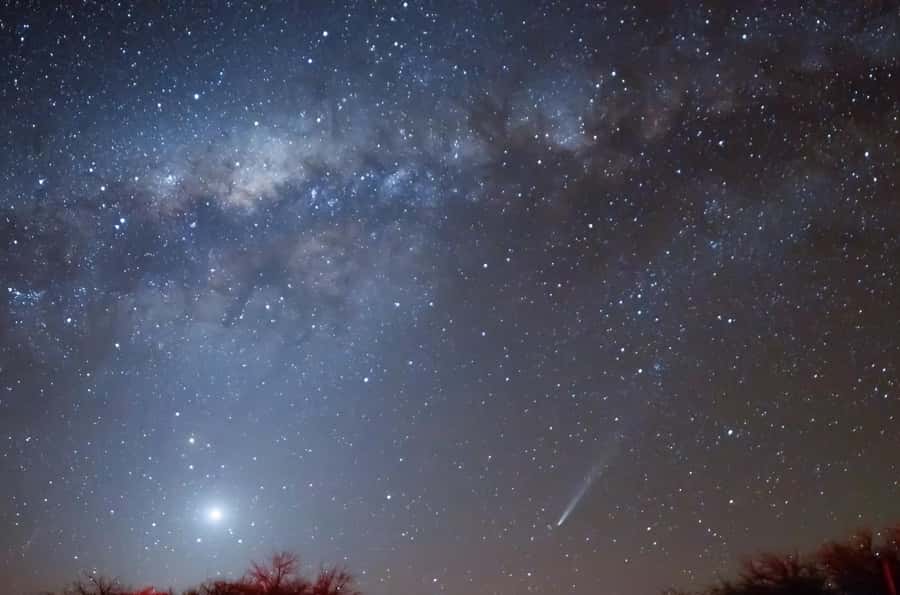
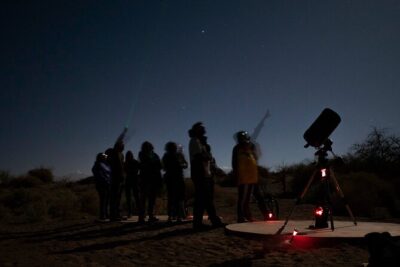
After the explanations, you get a chance to use the telescope with help from the guide. The objects available depend on the season, the moon, and the condition of the sky. Possibilities include planets, stars, binary stars, clusters, nebulae, and galaxies.
Recent viewing highlights have included Saturn, Antares, the crescent moon, and star clusters. Saturn is often the object people hope for, but the guide does not promise a fixed list. That is the honest nature of astronomy. The sky changes every night, and a cloudy evening cannot be repaired by a good script.
The equipment is a major part of the value. People describe looking through large telescopes, including mirror telescopes, with the guide refocusing the instrument for each object. On some departures, two telescopes have been available, reducing the amount of standing around while someone else looks.
You should still expect a shared experience rather than private telescope time. The guide needs to point out the object, explain what you are seeing, and give everyone a turn. That social format works well for families and first-time stargazers, but serious amateur astronomers may want a more technical observatory visit.
Bring binoculars if you have them. They are listed as a suggested item and can help you scan the sky while waiting for your turn at the telescope. They will not replace the telescope, but they make the open-sky portion more active.
The cold, the fire, and the refreshments
The desert cold is the practical issue most worth planning for. Several people have praised the supplied ponchos and blankets, but others make clear that the night can be very cold. Wear several layers, long trousers, warm socks, and closed comfortable shoes. Do not rely on daytime temperatures when packing.
The official inclusions list coffee, tea, and red wine. Accounts of the evening also describe warm drinks, snacks, a bonfire, and in some cases a small meal or picnic-style spread. A fire at the end gives the group a chance to warm up and talk after concentrating on the sky.
This closing stop adds real value. You are not rushed from telescope to van. Instead, you have a relaxed finish with something warm to drink. Some departures have included wine served in proper glasses, while others have featured hot chocolate, snacks, or pisco sour. Since the formal information specifically promises coffee, tea, or red wine, treat the extra food and drink as subject to the departure rather than a guaranteed menu.
Alcohol and drugs are not allowed on the tour, aside from the included serving of red wine. Smoking is also prohibited. That keeps the remote viewing site comfortable for the group and protects the equipment.
The souvenir star photo
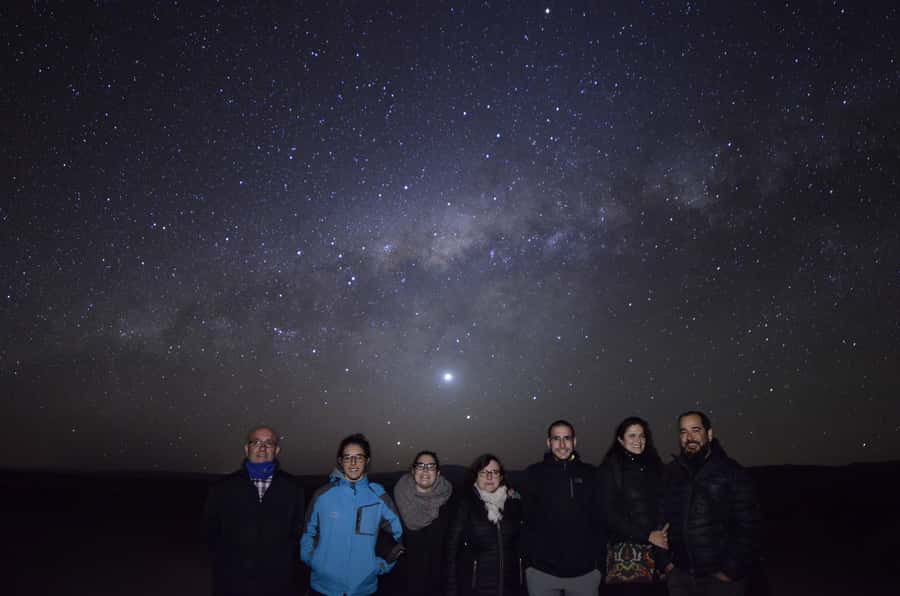
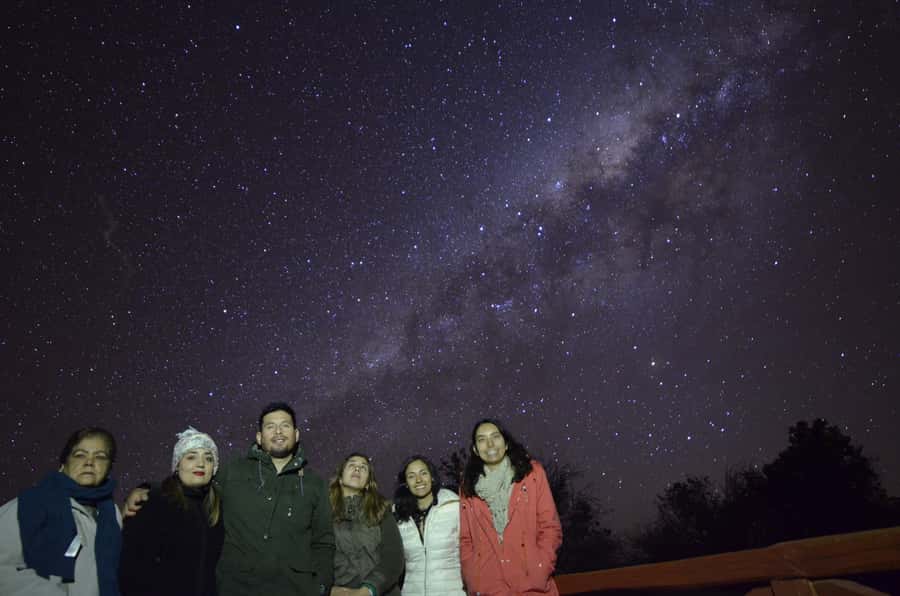
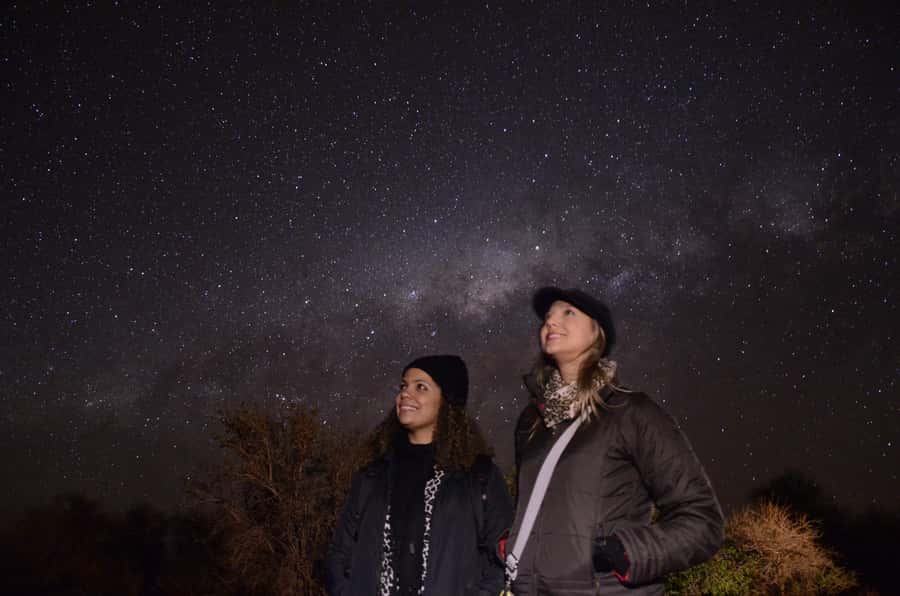
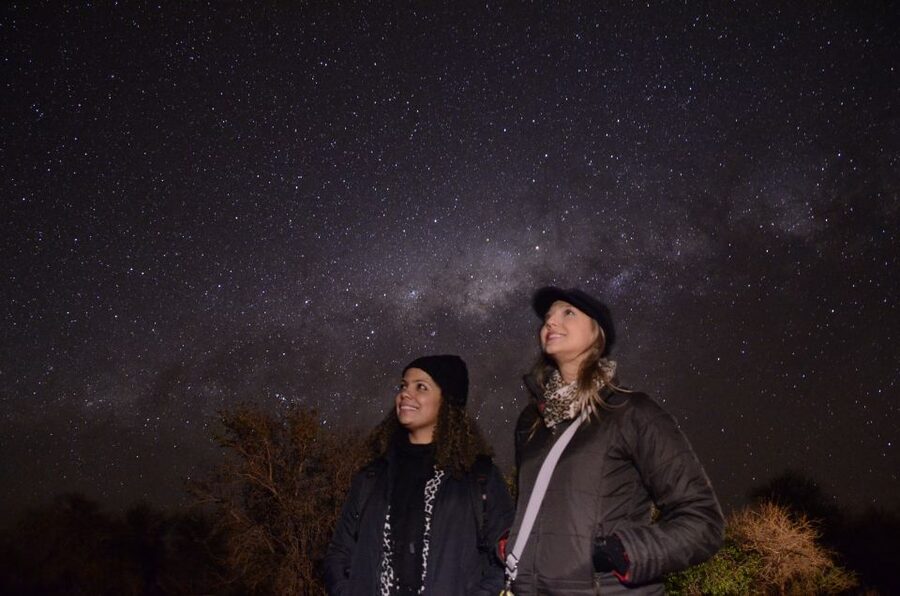
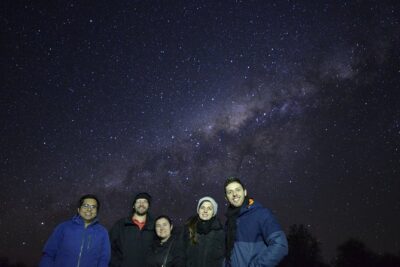
At the end, the tour includes a photo with the stars, sent by email. This is more than a quick phone snapshot. The guides or photographer help arrange individual and group poses, and several people have praised the quality of the finished images.
You should understand the moonlight limitation. During periods of strong moonlight, the included photo may be taken only through the telescope eyepiece. That can produce an interesting astronomy image, but it may not be the wide, dark-sky portrait you imagined.
The photo is a nice extra at this price, especially because ordinary phones struggle with the Atacama sky. It also gives you a lasting record of the evening without requiring you to operate a camera in the dark.
Price, timing, and overall value at $41
At $41 per person, this is strong value for a two-and-a-half-hour evening. You receive central pickup and drop-off, an astronomy guide, telescope use, a cultural presentation, drinks, and a courtesy photo.
The value comes from the combination. A short transfer gets you away from town lights, the guide gives the sky a clear structure, the telescope brings distant objects closer, and the fire keeps the ending social. If you booked transport, a private astronomy lesson, telescope access, and a professional night photo separately, the cost would rise quickly.
The price is especially fair for families. Children from about school age onward can follow the main ideas, and Claudio has been praised for keeping younger people involved. The long evening may not suit a tired child, though, particularly if weather pushes the start time toward 11 p.m.
The tour is also a good choice if you have only one evening free in San Pedro. It does not require a full day away from town, and you return the same night. If astronomy is your top priority, check the forecast and lunar phase before committing. A clear, dark night can be extraordinary, while a bright moon gives you a different, less star-filled experience.
Language, access, and small practical details
The live guide is available in English and Spanish. The English explanations have been praised for being clear and easy to follow, but you should confirm your preferred language at booking if it is important to you.
The activity is listed as wheelchair accessible. Because the experience takes place at an outdoor desert viewing site, ask the provider about the exact ground conditions and telescope access if you use a wheelchair or have limited mobility. The supplied information confirms accessibility but does not describe every surface or seating arrangement.
Bring your passport or ID card, comfortable clothes, warm clothing, sturdy comfortable shoes, and binoculars if you have them. The passport requirement is easy to overlook, so keep identification with you.
Weather can change the plan. The tour may be moved to a later time the same night or to the following night, and you will be notified if conditions require a change. If the activity must be canceled, alternative options may be offered. Free cancellation is available up to 24 hours in advance, and you can reserve now and pay later.
Who should book this stargazing tour?
I would choose this tour if you want more than a quick look at stars. It suits first-time stargazers, families, couples, and anyone interested in the connection between astronomy and Andean culture.
It is particularly good for you if you want:
- A guide who can explain the sky in plain language
- A chance to see Southern Hemisphere stars
- Telescope viewing with help from an astronomy specialist
- A short transfer rather than a full-night desert expedition
- A warm drink, fire, and photo at the end
- An activity that works in English or Spanish
I would think twice if you dislike late nights, standing outdoors, cold temperatures, or plans that depend on clouds. You should also manage expectations around the moon. A full moon may make the desert feel dramatic, but it reduces visibility of faint stars and galaxies.
Should you book it?
Yes, if the forecast and lunar phase look favorable. The strongest part is not any single object in the telescope. It is the way the tour joins science, Greek constellation traditions, Andean sky stories, hands-on viewing, and a comfortable finish by the fire.
At $41, the mix of transport, instruction, equipment, drinks, and a photo is hard to fault. Pack warmer clothes than you think you need, confirm the Restaurant Tara meeting point, and keep your schedule flexible in case the start is delayed. For a short evening in San Pedro, this is an excellent way to let the Atacama sky become the main attraction.
FAQ
How long does the Etno-Stargazing Tour last?
The tour lasts 150 minutes, or two and a half hours. The planned route includes a short van transfer, about 1.5 hours of guided astronomy, and the return drive.
Where is pickup provided?
Pickup and drop-off are provided in San Pedro de Atacama, with Restaurant Tara at Licancabur 10 listed as the meeting point. Pickup is not included from the ayllus.
What time does pickup take place?
Pickup is listed at 7 p.m. from April through August. During Chilean summer time, pickup is around 9 to 9:20 p.m. Start times can change because of weather.
Is the tour offered in English?
Yes. Live guiding is available in English and Spanish.
What can I see through the telescope?
Depending on the season and sky conditions, you might see planets, stars, binary stars, star clusters, nebulae, galaxies, and other solar-system objects.
Does the tour include drinks?
Yes. Coffee, tea, or red wine are included. Some departures also include snacks, a fire, or other refreshments, but the exact food offering should be confirmed.
Is a photo included?
Yes. A courtesy photo with the stars is included and sent by email. During periods of high moonlight, the photo may be taken only through the telescope eyepiece.
What should I wear?
Bring warm clothing, comfortable clothes, and comfortable shoes. The desert can become very cold at night. Ponchos or blankets may be provided, but you should still dress in layers.
Can the tour be changed because of bad weather?
Yes. The tour may be moved to a later time the same night or to the next night. If it is canceled, other options may be offered, and you will be notified.
Just added in San Pedro De Atacama
- Vallecito★ 4.7 · 13 reviews
- Atacama Desert and Magic Bus Visit★ 4.8 · 15 reviews
- San Pedro de Atacama: Valle de la luna★ 3.0 · 3 reviews
- Valle de la Luna: A Moon-Like Escape in Atacama★ 5.0 · 3 reviews
- Triple Tour: Piedras Rojas + Altiplanic Lagoons + Chaxa Lagoon★ 5.0 · 1 review
- Red Stones + Altiplánica Lagoons★ 5.0 · 1 review
- Atacama Stargazing Tour Under One of the World’s Clearest Skies★ 4.0 · 3 reviews
- Tour to Laguna Cejar and Tibenquinche★ 4.5 · 7 reviews
Stargazing and Observatory Tours, compared.
The Roofless Experience San Pedro de Atacama Stargazing Tour
Read our review →
Astronomical Tour with Guide and Pick Up San Pedro de Atacama
Read our review →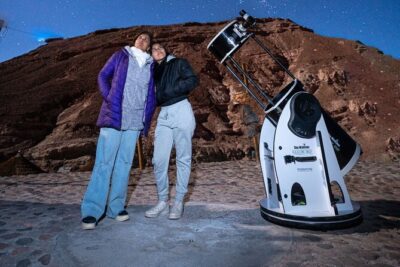
“Astronomical Adventure in San Pedro de Atacama”
Read our review →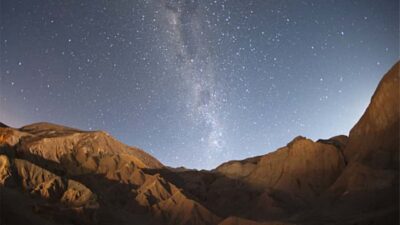
Browse the lists this tour appears in