
REVIEW · STARGAZING AND OBSERVATORY TOURS
Astronomical Tour with Guide and Pick Up San Pedro de Atacama
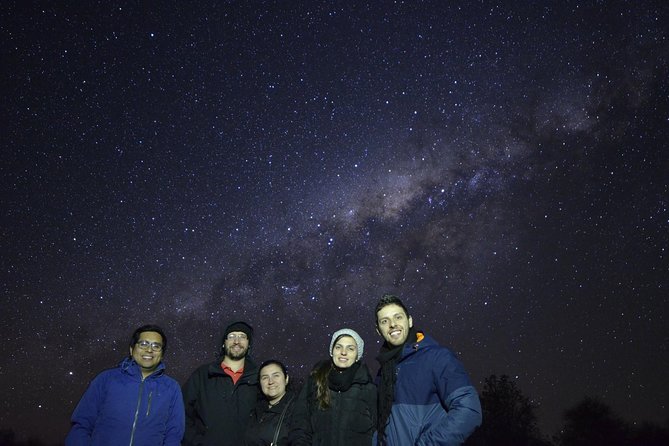
The desert sky does the heavy lifting. This 2.5-hour evening outing combines powerful telescopes with clear explanations of southern constellations, and I like that the price includes hotel pickup, warm drinks, snacks, blankets, chairs, and a professional night-sky photo. I also like the chance to see planets, star clusters, the Moon, and distant galaxies rather than simply standing outside and pointing at bright stars.
The main caution is that your experience depends heavily on the Moon, clouds, group size, and guide. A dark, clear night can be remarkable, while a bright Moon may wash out the Milky Way, and a crowded session can leave you waiting longer than expected to use the telescopes. English support is available, but the quality and amount of translation can vary.
In This Review
- What makes this San Pedro stargazing tour worth considering
- Arriving under San Pedro’s famously clear skies
- What happens during the 2.5-hour program
- Looking through the telescopes: thrilling, but not always fast
- The Moon, the Milky Way, and choosing your date
- English explanations and guide quality
- Astrophotography and the included souvenir
- Drinks, snacks, and staying warm
- Is $38 a fair price?
- Who will enjoy this night most?
- Weather cancellations and sensible booking plans
- Should you book the Astrotour?
- FAQ
- How long does the astronomical tour last?
- What time does the tour begin?
- Is hotel pickup included?
- What is included in the price?
- How many people can join the tour?
- What happens if the weather is poor?
What makes this San Pedro stargazing tour worth considering
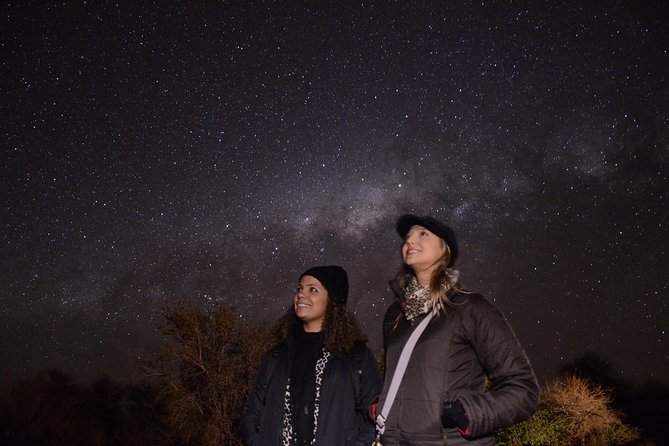
- The telescopes show more than your eyes can: Depending on the season and conditions, you may view planets, clusters, galaxies, nebulae, and stars with visible shapes and colors.
- Patricio brings astronomy down to earth: His explanations cover stars, galaxies, distances, and the southern sky in plain language, making the activity suitable for beginners.
- The Moon changes the whole experience: A new Moon gives you the best chance of seeing the Milky Way, while a bright Moon can become the main attraction.
- You get a professional souvenir photo: Astrophotography is included on moonless nights, and several participants especially valued the finished image.
- It is a small-group experience on paper: The stated maximum is 16 people, though group size has reportedly been larger at especially busy times.
- The final drinks matter in the desert cold: Coffee, tea, soft drinks, snacks, and alcoholic drinks are provided, along with blankets and chairs.
Arriving under San Pedro’s famously clear skies
San Pedro de Atacama is one of the best places in the world for looking upward. Its high desert setting, dry air, and limited city light create unusually good conditions, but the phrase cleanest skies in the world should not make you expect a perfect view every night.
Clouds, wind, humidity, and the Moon can all change what you see. The operator checks weather reports and satellite information before deciding if a session should go ahead. That is sensible, but it also means a cancellation can happen close to the start time if conditions turn poor.
The tour begins around 9:30 p.m. You are collected from your accommodation in San Pedro and driven to an observing site outside the town. The transfer is useful because you do not need to arrange a car or find a dark patch of desert yourself. It also adds to the actual time commitment: some past pickups and drop-offs took much longer than expected when several hotels were involved.
Pickup is not available from the ayllus of Cucuter, Tulor, Coyo, Solor, or Quitor. If you are staying in one of those areas, check the meeting arrangement before paying. The activity is held near San Pedro, not near Santiago, despite occasional confusion caused by online destination categories.
More stargazing nights in San Pedro de Atacama:
- San Pedro de Atacama: Etno-Stargazing Tour with Transfer
★ 4.8 · 629 reviews - The Roofless Experience San Pedro de Atacama Stargazing Tour
★ 5.0 · 522 reviews - San Pedro de Atacama: Stargazing Experience
★ 4.7 · 489 reviews
What happens during the 2.5-hour program
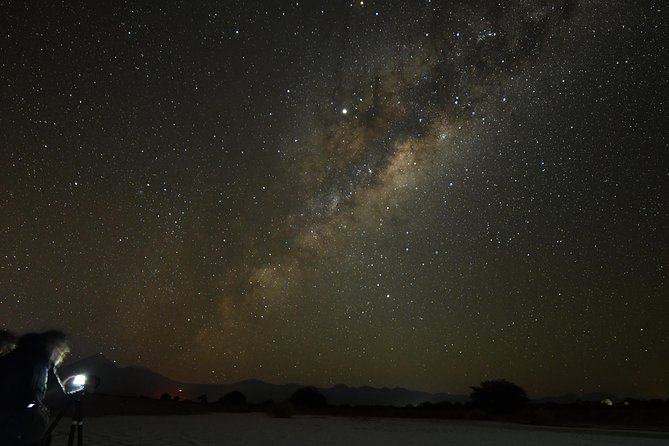
The stop is listed simply as San Pedro de Atacama, but the practical sequence is easy to understand. You leave town, reach the outdoor observing site, take a seat near the telescopes, listen to an introduction, and then rotate through the viewing stations.
Chairs and blankets are provided, which is more important than it sounds. Atacama days can be warm, but the temperature drops after dark, and you spend much of the session standing or sitting still. Wear warm layers anyway. The blankets help, but they are not a substitute for a jacket.
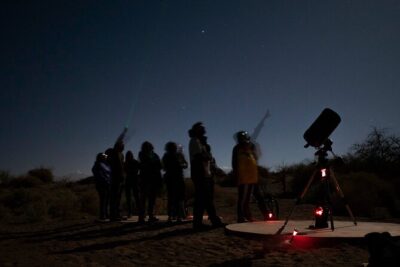
The guide uses an astronomical laser pointer to identify constellations in the southern hemisphere. This is one of the best parts for a newcomer because it gives you a way to understand the entire sky, not just the object currently visible through a telescope.
You may hear about the scale and age of the universe, the lives of stars, planets, galaxies, and the patterns formed by major constellations. Patricio has received especially strong praise for explaining difficult ideas simply and answering questions without making beginners feel lost. Nathan has also been singled out for an engaging presentation and for patiently helping with amateur camera settings.
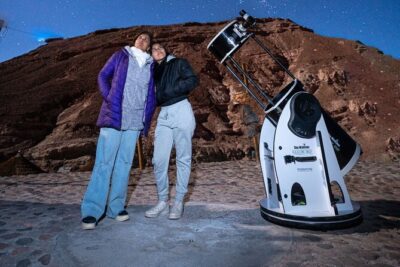
The telescopes are both computerized and manually operated. The equipment is intended for public viewing, not for producing space-agency images. That distinction matters. You may see Saturn’s rings, storms on Jupiter, lunar details, or a star cluster with much more definition than the naked eye allows, but atmospheric conditions limit sharpness and color.
Looking through the telescopes: thrilling, but not always fast
The central activity is taking turns at the telescopes. The guide points each instrument toward selected objects, then participants look one by one while the explanation continues nearby.
On a well-run night, the rotation feels smooth. Some groups have had three telescopes for around 12 people and felt they had enough time at each station. The stated maximum of 16 people should help keep the queue manageable.
Still, the format can become slow. If the group is larger, if people linger at the eyepiece, or if everyone gathers around the photography setup, you may spend more time waiting than expected. One unhappy participant estimated only a few minutes of actual telescope viewing, while other people felt they were never rushed. That difference may come down to group size, staff, and how strictly the schedule is managed.
The best way to set your expectations is to think of this as a guided introduction to astronomy with several telescope views, not a private observatory appointment. You will probably see a limited selection of targets, often around four objects per telescope, rather than scanning the whole universe.
That is still good value for many people. A guide can select worthwhile objects quickly and explain what makes each one special. Looking at a faint cluster after hearing how far away it is gives the view more meaning than simply staring into a telescope with no context.
The Moon, the Milky Way, and choosing your date
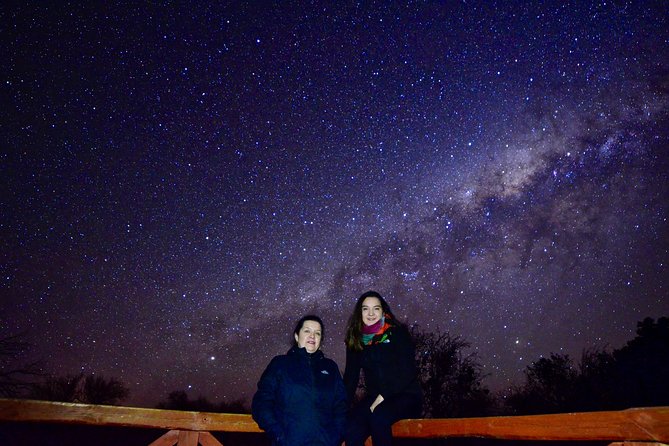
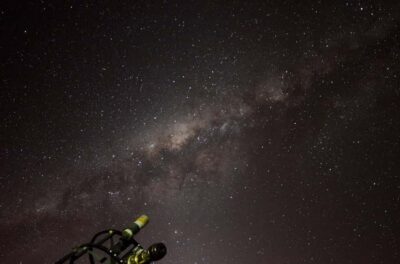
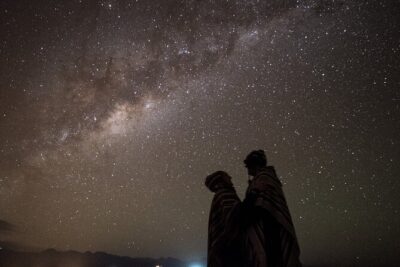
The lunar cycle may be the single biggest factor in your enjoyment. A new Moon or nearly moonless night gives you the strongest chance of seeing the Milky Way and faint deep-sky objects. This is the date I would choose if your priority is a dense field of stars, dark-sky photography, and subtle galaxies or nebulae.
A bright Moon does not ruin the evening, but it changes the emphasis. Moonlight reduces the contrast of the Milky Way and can hide fainter objects. On the other hand, the Moon itself can be spectacular through a telescope, with craters and shadows that are easy for children to appreciate. You may also still see planets, brighter clusters, and many stars.
Some sessions with a full Moon have included striking lunar photographs. Other sessions produced a sky that felt less different from a clear night in a less remote location. If you are booking specifically for the Milky Way, check the lunar phase first and ask the operator what targets are likely at your chosen date.
The season also affects what appears overhead. The tour description notes that planets, clusters, galaxies, and stars vary during the year. Do not assume that a particular planet will be visible simply because someone else saw it on a different visit.
More things to do in San Pedro de Atacama:
- San Pedro de Atacama: El Tatio Geysers Tour
★ 4.7 · 943 reviews - Tour to the Hidden Lagoons of Baltinache
★ 5.0 · 694 reviews - Piedras Rojas, Altiplanics Lagoons & Salar Full-Day Tour
★ 4.7 · 592 reviews - Half Day Tour to Geysers del Tatio
★ 5.0 · 499 reviews
English explanations and guide quality
The experience can operate in Spanish with English translation, and some sessions are conducted fully in English. This is a point worth checking before you book if you do not speak Spanish.
Patricio is often praised for his clear astronomy lessons, while Nathan has been praised for excellent English and a warm, enthusiastic style. Those are strong signs for the educational side of the activity. The operator uses more than one guide when translation is needed, but that setup can create problems if one person is explaining beside a telescope while the other is translating and managing the viewing line.
I would ask at booking whether your date is Spanish-only, bilingual, or fully English. Even when translation is offered, the Spanish explanation may take most of the time, leaving the English version shorter. In a busy group, people looking through the equipment can also interrupt the flow.
For families, this matters less if everyone is comfortable with a basic explanation and visual experience. For an adult who wants a detailed astronomy lecture, language and guide assignment deserve more attention.
Astrophotography and the included souvenir
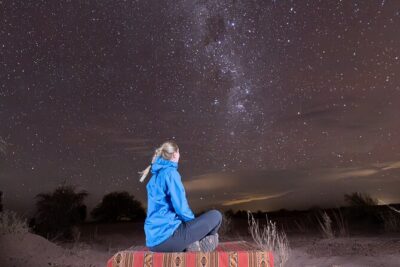
Astrophotography is included without the Moon. The guide uses a professional camera setup to create a photo of you beneath the stars, giving you something more polished than a quick phone snapshot.
This is a real benefit at $38, especially if you are traveling without a tripod or a camera suited to night work. Several people valued the finished images, and one person received help setting up a personal camera for basic astrophotography. The results are not guaranteed to be perfect. A photograph has been described as blurry, and the process can take a large portion of the evening if many people want repeated poses.
You should also know that the included photo is tied to the night conditions. A moonless sky is best for a Milky Way background, while a bright Moon can produce a different type of image. If photography is your main reason for booking, ask how many photos are included and when they will be delivered, since those details are not specified here.
The practical advantage is convenience. You can enjoy the telescope session, then leave with a professionally made keepsake instead of trying to balance a phone on a rock in the dark.
Drinks, snacks, and staying warm
After the observing portion, the group is offered refreshments. These can include coffee, tea, soft drinks, snacks, wine, whiskey, and other alcoholic drinks. The selection has been praised as a pleasant finish, especially because the cold becomes more noticeable late at night.
Do not expect a full meal. The food is a light snack, and the drinks are an extra comfort rather than the reason to choose the tour. Hot drinks are particularly useful after sitting outside, while alcohol should be enjoyed sensibly in the cold and at altitude.
The timing of the refreshments has caused some confusion. The information says they are included, but the most detailed descriptions place them after the telescope viewing and photographs. If you expect a drink during the astronomy talk, you may be disappointed.
A restroom is available at the site. That small detail can make the late-night outing easier, particularly for families.
Is $38 a fair price?
At $38 per person, the tour is reasonably priced if you want transport, instruction, telescope access, refreshments, and a professional photo in one package. Renting a car and organizing your own dark-sky stop could cost more in time and effort, and you would still need to know where to point the camera or telescope.
The value drops if you mainly want uninterrupted telescope time. A private or very small-group session would likely offer more turns and less waiting, though this particular experience does not promise a private format.
The advertised group limit of 16 is encouraging. However, a past holiday-weekend session reportedly exceeded 20 people, creating long waits for the telescopes and camera. I would avoid the busiest holiday periods if you can, and consider the operator’s suggestion of lower-season dates from April through August, excluding holiday weekends.
The tour is often booked about 23 days ahead, so popular dates may fill early. That is useful information if your San Pedro schedule is tight. I would book early, but choose a date with a favorable Moon phase rather than automatically selecting the first available night.
Who will enjoy this night most?
I would recommend it to families, couples, and first-time astronomy fans who want a guided activity rather than a technical observing session. Children may find the Moon and planets especially exciting, while adults often appreciate the explanations about distance, time, and the life of stars.
It also suits anyone who wants an easy night out without driving. Pickup, chairs, blankets, refreshments, and a restroom remove much of the usual desert-night fuss.
You may want another option if you already own good astronomy equipment, want long periods of quiet observation, or care mainly about advanced astrophotography. You may also be frustrated if you dislike queues or if your English needs to be precise and continuous.
The tour is accessible to most people, according to the supplied information, but no detailed mobility information is provided. Ask ahead if you need specific assistance with the outdoor site, seating, or transport.
Weather cancellations and sensible booking plans
Good weather is required. If poor conditions force a cancellation, you are offered another date or a full refund. That policy is fair, though communication has not always been perfect, with one cancellation reportedly reaching a customer late.
You can cancel for a full refund if you do so at least 24 hours before the 9:30 p.m. start time. Cancellations or changes inside that window are not accepted for a refund, and the cut-off follows local San Pedro time.
I would not place this activity on your final night if stargazing is a top priority. Give yourself a spare evening so a weather cancellation can be moved without disrupting your plans. Cloud cover can be difficult to judge from town, and a clear afternoon does not guarantee a clear night.
Should you book the Astrotour?
Book it if you want a friendly, educational introduction to the southern sky, especially on a moonless night. The combination of expert guidance, telescopes, pickup, warm drinks, and a professional photo gives the $38 price solid value.
Book with realistic expectations. You are joining a shared outdoor session, not visiting a major research observatory. Telescope time may be brief in a large group, English translation may be uneven, and a bright Moon can replace a Milky Way show with a fine lunar one.
My best advice is simple: choose a dark-Moon date, avoid holiday crowds, confirm the language of the guide, and bring warm clothes. Do that, and this can become one of the most memorable evenings in San Pedro.
FAQ
How long does the astronomical tour last?
The experience lasts approximately 2 hours and 30 minutes, including pickup and return transport.
What time does the tour begin?
The stated start time is 9:30 p.m.
Is hotel pickup included?
Yes, pickup from your accommodation in San Pedro de Atacama is included. Pickup is not provided from the ayllus of Cucuter, Tulor, Coyo, Solor, or Quitor.
What is included in the price?
The tour includes accommodation pickup, blankets, chairs, astrophotography without the Moon, alcoholic beverages, coffee or tea, soft drinks, snacks, and access to a restroom.
How many people can join the tour?
The stated maximum is 16 participants. Group size may vary by date, and a past busy-period session was reported to have more than 20 people.
What happens if the weather is poor?
The experience requires good weather. If it is canceled because of poor conditions, you can choose another date or receive a full refund. Free cancellation is also available when you cancel at least 24 hours before the start time.
Just added in San Pedro de Atacama
- Vallecito★ 4.7 · 13 reviews
- Atacama Desert and Magic Bus Visit★ 4.8 · 15 reviews
- San Pedro de Atacama: Valle de la luna★ 3.0 · 3 reviews
- Valle de la Luna: A Moon-Like Escape in Atacama★ 5.0 · 3 reviews
- Triple Tour: Piedras Rojas + Altiplanic Lagoons + Chaxa Lagoon★ 5.0 · 1 review
- Tour to Laguna Cejar and Tibenquinche★ 4.5 · 7 reviews
- Red Stones + Altiplánica Lagoons★ 5.0 · 1 review
- Atacama Stargazing Tour Under One of the World’s Clearest Skies★ 4.0 · 3 reviews
Stargazing and Observatory Tours, compared.
The Roofless Experience San Pedro de Atacama Stargazing Tour
Read our review →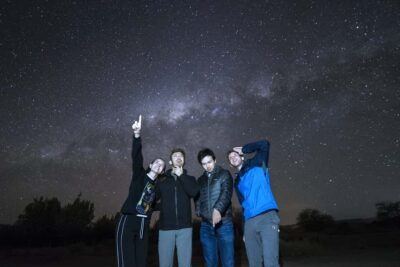
“Astronomical Adventure in San Pedro de Atacama”
Read our review →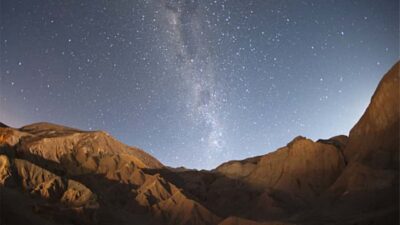
Browse the lists this tour appears in