
REVIEW · TICKETS
Santiago: 2-Day Hop-On Hop-Off Bus Ticket and Cable Car
Santiago reveals itself in layers. This two-day bus ticket links the city’s grand plazas, leafy parks, modern shopping districts, and San Cristóbal Hill without making you solve Santiago’s transport puzzle every hour. I especially like the included cable car and funicular, plus the freedom to stop for a proper visit instead of snapping a photo and rushing on.
I also like the recorded commentary, available in six languages, which gives useful context as you ride between districts. The main drawback is practical rather than scenic: stops can be hard to identify, and bus intervals of roughly 20 to 30 minutes mean you need to watch the clock.
In This Review
- Key points to know before you book
- Why this bus is useful in a sprawling capital
- Starting at Parque Arauco, Santiago’s polished eastern side
- Parque Bicentenario: open space, lagoons, and a slower pace
- San Cristóbal Hill: the best use of the included extras
- Bellavista and the historic funicular
- Plaza de Armas and Santiago’s old center
- La Moneda and Plaza de la Constitución
- Santa Lucía Hill and Lastarria
- Plaza de la Aviación and the Mapocho River
- Costanera Center and Las Condes
- How to use the two days without rushing
- Is the $69 price good value?
- What the staff and audio system are like
- Small problems that can affect your day
- Who should book this Santiago tour?
- Should you book it?
- FAQ
- How long is the ticket valid?
- Where can I first board the bus?
- How many stops are on the route?
- Is the cable car included?
- Does the tour operate on Mondays?
- What languages are available for the audio guide?
- What happens if I need to cancel?
Key points to know before you book
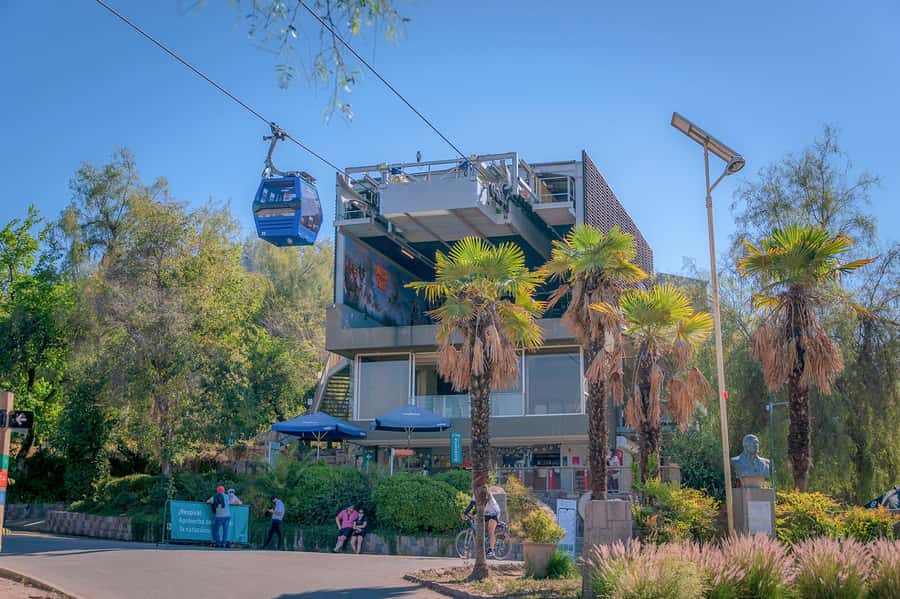
- Cable car and funicular included: You get two days of access to both San Cristóbal attractions, plus the panoramic buses inside Metropolitan Park.
- Ten stops cover a wide spread: The route reaches Parque Arauco, Parque Bicentenario, Bellavista, the historic center, Santa Lucía Hill, Providencia, and Las Condes.
- Best for orientation: A full circuit gives you a useful first look at Santiago before you decide where to spend more time.
- Start early for the hills: The cable car, funicular, and panoramic buses are closed on Mondays.
- Buses run about every 20 to 30 minutes: That is workable, but you should not expect a bus to appear instantly after every stop.
- The pickup signs need improvement: Keep the route map handy and remember where you got off, especially near the funicular.
Why this bus is useful in a sprawling capital
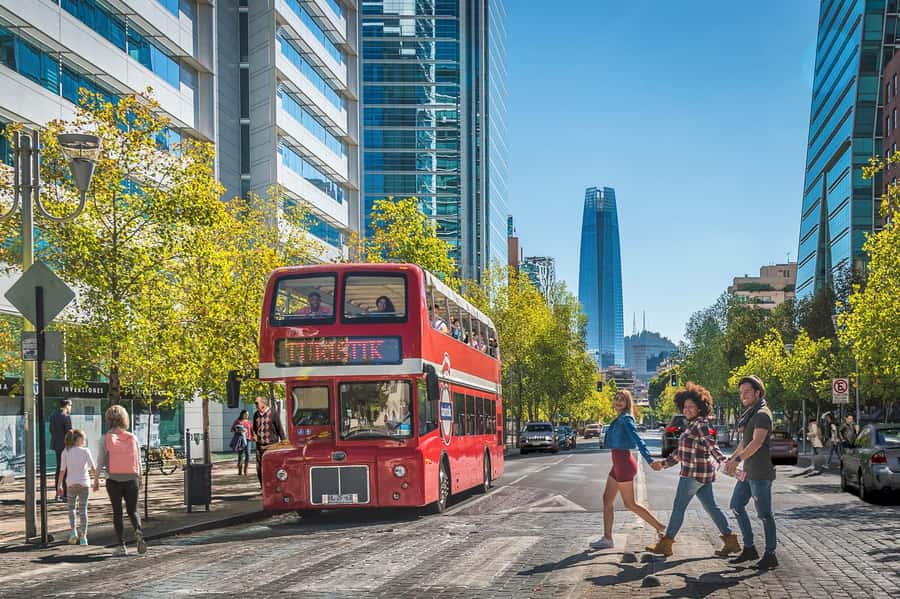
Santiago is easy to underestimate. The historic center, the wealthy eastern districts, the Mapocho River, Bellavista, and San Cristóbal Hill are spread across a broad urban area. You can walk some sections, but reaching Parque Bicentenario or the eastern shopping districts takes more effort.
This ticket gives you unlimited hop-on hop-off access for two consecutive days. You can ride the full route first, then use the second day to return to the places that deserve more time. That makes it more useful than a standard sightseeing circuit, especially if you want to combine city views with museums, parks, lunch stops, and shopping.
The buses operate daily, with service listed from about 9:30 AM to 6:00 PM. Another schedule detail gives the hop-on hop-off period as 10:00 AM to 6:30 PM, so I would confirm the day’s operating times before setting out. The important rule is to catch the last complete circuit before 4:00 PM if you want to remain on board for the entire loop.
The route’s recorded commentary is available in Spanish, Portuguese, English, German, French, and Chinese. You receive headphones, though one bus used a QR code system instead of the usual audio setup. If listening to the commentary matters to you, bring your own headphones and keep your phone ready.
More things to do in Santiago:
- Valparaiso Port and Viña del Mar with Casablanca Wine Tasting
★ 5.0 · 6,110 reviews - Santiago: Cajon del Maipo/Embalse del Yeso Tour with Picnic
★ 4.3 · 3,789 reviews - Santiago: Vina Del Mar, Valparaiso, Casablanca & Reñaca Tour
★ 4.2 · 2,838 reviews
Starting at Parque Arauco, Santiago’s polished eastern side
The usual starting point is Parque Arauco Mall at Avenida Kennedy Lateral 5059, beside the Ripley department store. The broader address is Avenida Presidente Kennedy 5413 in Las Condes. This is a large shopping and dining center, with international brands and an open-air food area.
Parque Arauco works well as a starting point because it gives you an easy first stop for coffee, lunch, or souvenirs. It also shows you a very different side of Santiago from the old center: modern, affluent, and built around shopping and restaurants.
The catch is finding the exact bus location. Several red buses may be nearby, and the stop is not always marked as clearly as you might expect. Arrive a little early, look for the operator’s bus, and ask staff if you are unsure. The ticket can be scanned at any of the ten stops, so you are not necessarily tied to the first departure point after the initial boarding.
Parque Bicentenario: open space, lagoons, and a slower pace
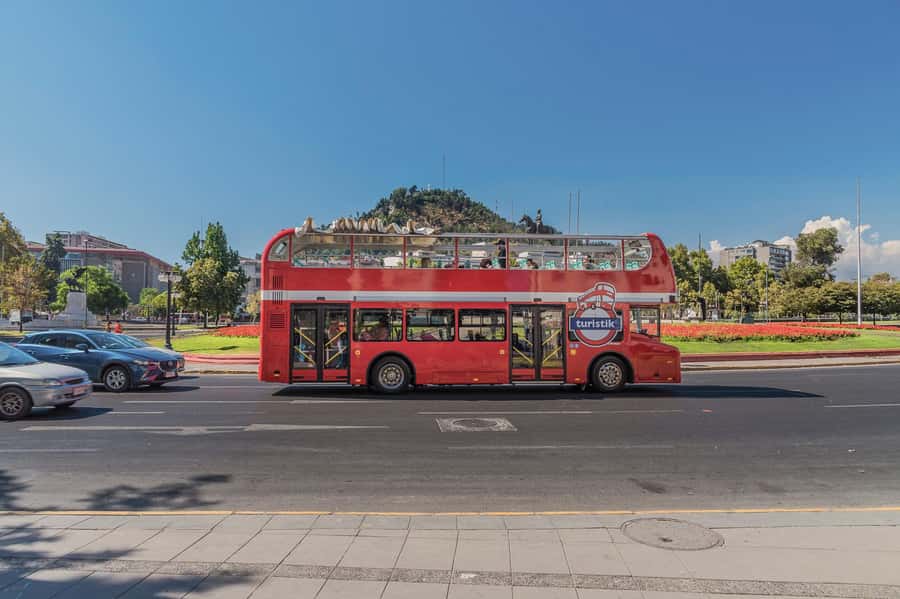
Stop 2 brings you to Parque Bicentenario in Vitacura, near Isabel Montt and Avenida Bicentenario. This large park has lagoons, walking trails, and wildlife. It is one of the better stops for a break from traffic and dense city streets.
Give yourself enough time here to walk rather than treating it as a quick photo stop. The park provides a calmer contrast to the malls and central plazas, and it is a good place to use the camera. If you only have one day, you may need to choose between this stop and the historic center. With two days, you can do both without turning the outing into a race.
The bus stop is near the park, but you should note the exact place where you get off. The route does not always provide the highly visible stop markers found on some city sightseeing systems.
San Cristóbal Hill: the best use of the included extras
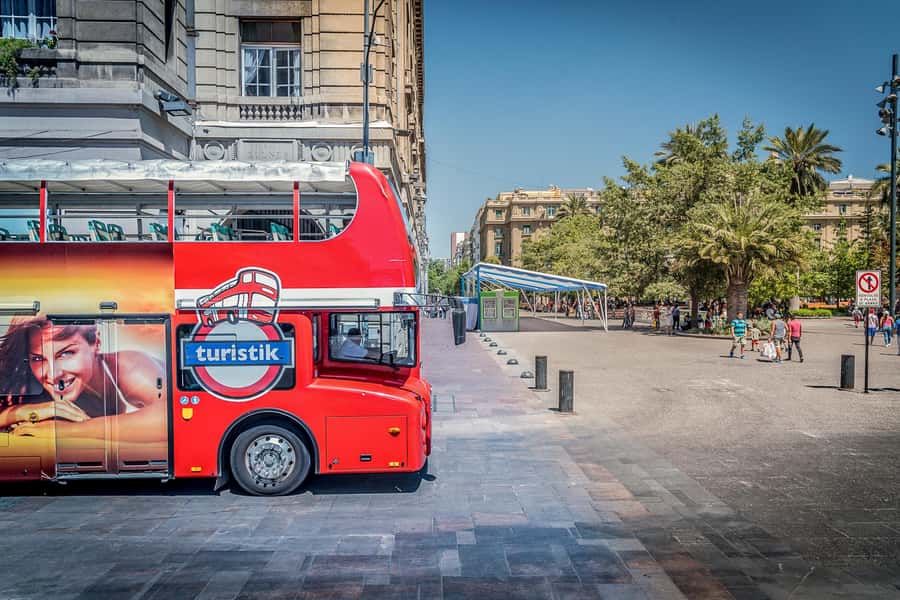
Stop 3, listed near Los Conquistadores and Pedro de Valdivia Norte, is about a five-minute walk from the Santiago Cable Car. This is the part of the ticket that gives it much of its value.
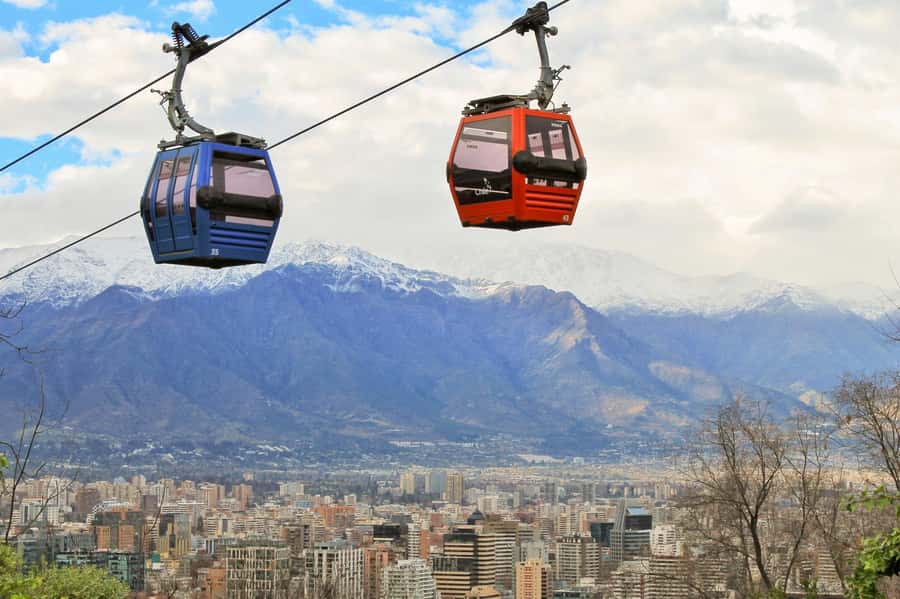
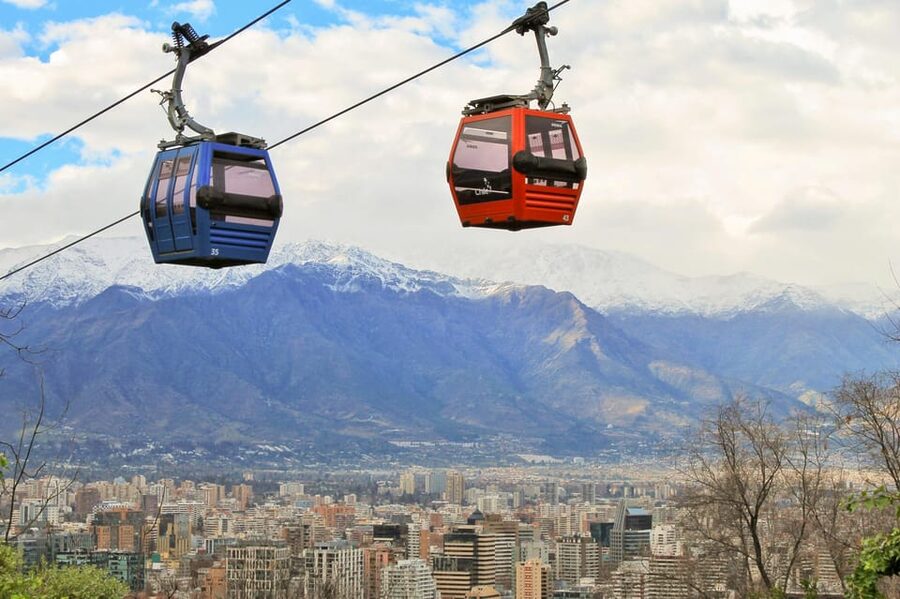
The cable car carries you up San Cristóbal Hill, giving you broad views over Santiago from an unusual angle. On a clear day, this is where you will want your camera and sunglasses. The city spreads below you, while the ride itself adds a memorable change from street-level sightseeing.
Your ticket includes two days of cable car access, the historic funicular, and unlimited use of the panoramic buses inside Metropolitan Park. You can use the cable car and funicular as part of your sightseeing rather than paying for each separately.
Plan this section carefully. The cable car and funicular are not operating on Mondays, so Monday is the least useful day to prioritize this ticket. If you are visiting on another day, start early enough to allow for walking, waiting, and the return to the bus route.
A few more options to weigh up in Santiago
- Santiago: 1-Day Hop-On Hop-Off Bus and Cable Car Ticket
★ 4.3 · 332 reviews - Tour Parque Farellones Ticket+Transportation, optional Snowwear
★ 4.5 · 248 reviews - Santiago: Sky Costanera Observatory Admission Ticket
★ 4.3 · 208 reviews - Santiago: Hop-on Hop-off Bus Day Ticket with Audio Guide
★ 4.3 · 137 reviews
Bellavista and the historic funicular
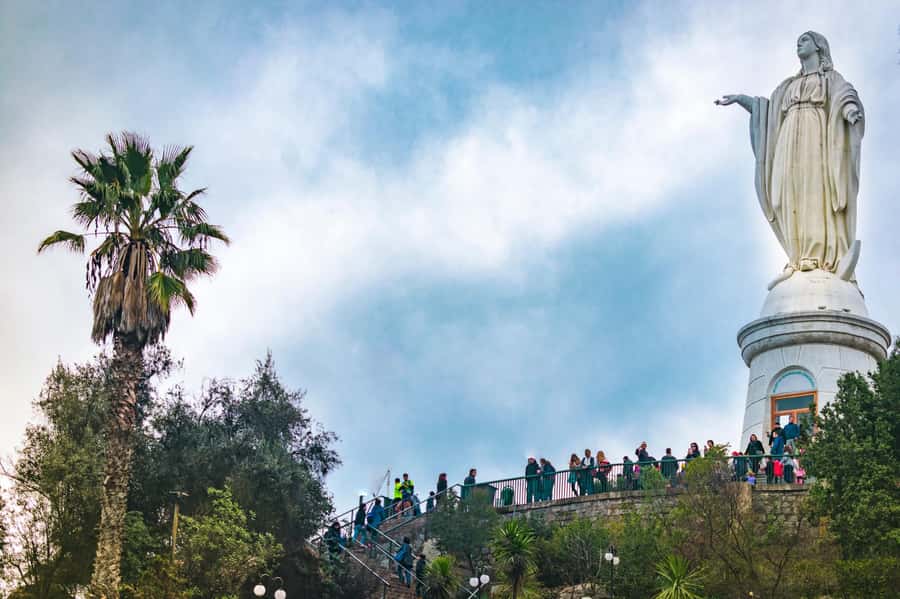
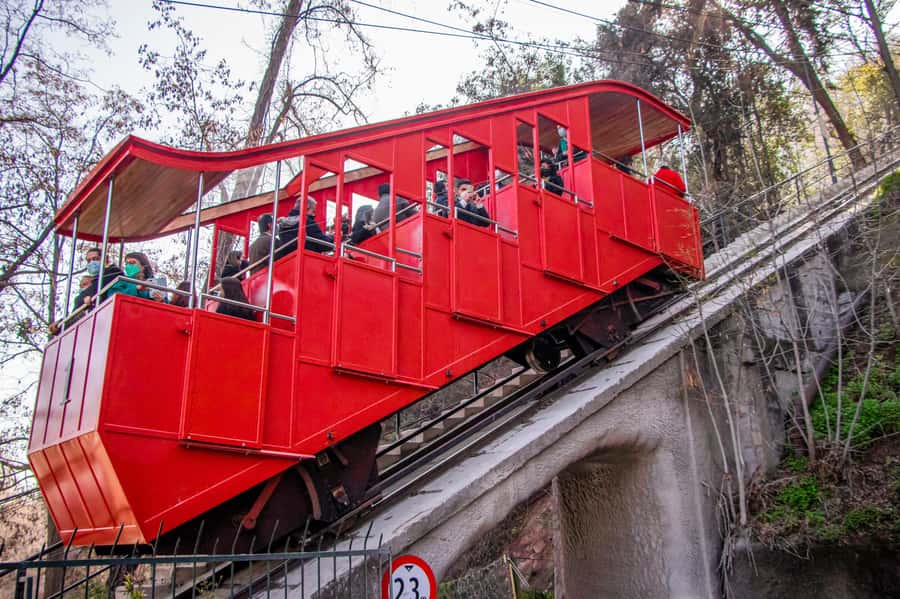
Stop 4 is Bellavista, at Pío Nono 445, close to the historic funicular. The funicular connects Bellavista with San Cristóbal Hill and can be combined with the cable car for a pleasant loop.
A popular plan is to ride the cable car up, spend time around the hill, and return by funicular. The order can work in reverse as well, but check the access points and keep your ticket validation details in mind. One past visitor had to pay twice after failing to get the ticket validated at an entrance, so do not assume a bracelet or voucher explains itself.
Bellavista gives you a chance to stop for lunch. It is also a useful place to break up the hill visit before returning to the bus. The funicular stop has restaurants nearby, which makes it more practical than trying to eat between two hurried bus departures.
The main nuisance here is navigation. The route map has not always shown the pickup point accurately. After coming down on the funicular, the real bus pickup is at the funicular entrance rather than several blocks away as one map suggested. Look for the bus there and ask staff if the location seems unclear.
Plaza de Armas and Santiago’s old center
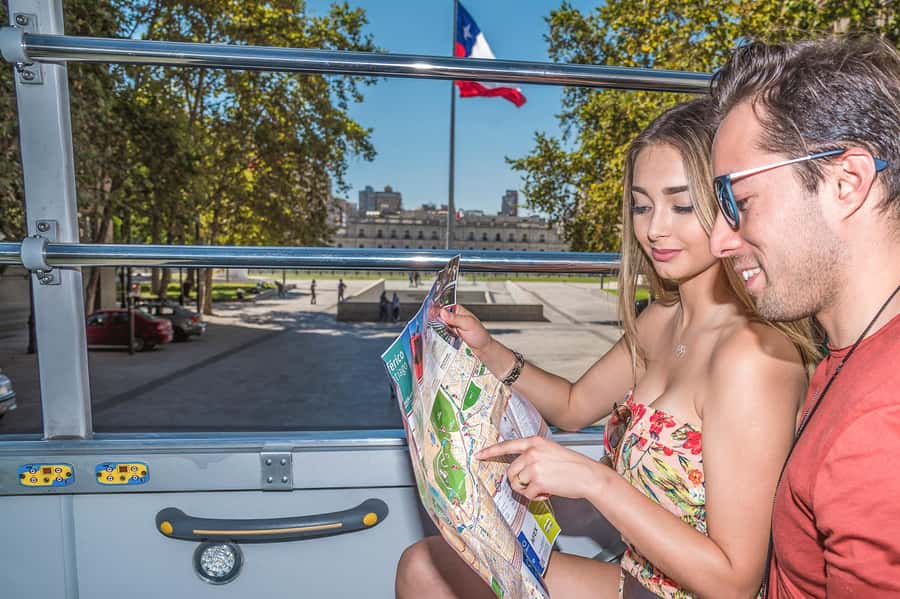
Stop 5 is Plaza de Armas, the heart of Santiago’s historic center. This is where the city’s colonial-era layout and major public buildings come together. You can step off, walk around the square, and continue toward nearby central sights at your own pace.
The bus commentary helps you understand what you are seeing while moving through the older districts. Still, the best part of this stop is getting off and walking. The square is not a place to experience through a bus window.
Allow more time here if you want to see the surrounding streets, rather than simply checking the plaza off your list. The two-day ticket is useful because you do not have to make every stop fit into one circuit.
La Moneda and Plaza de la Constitución
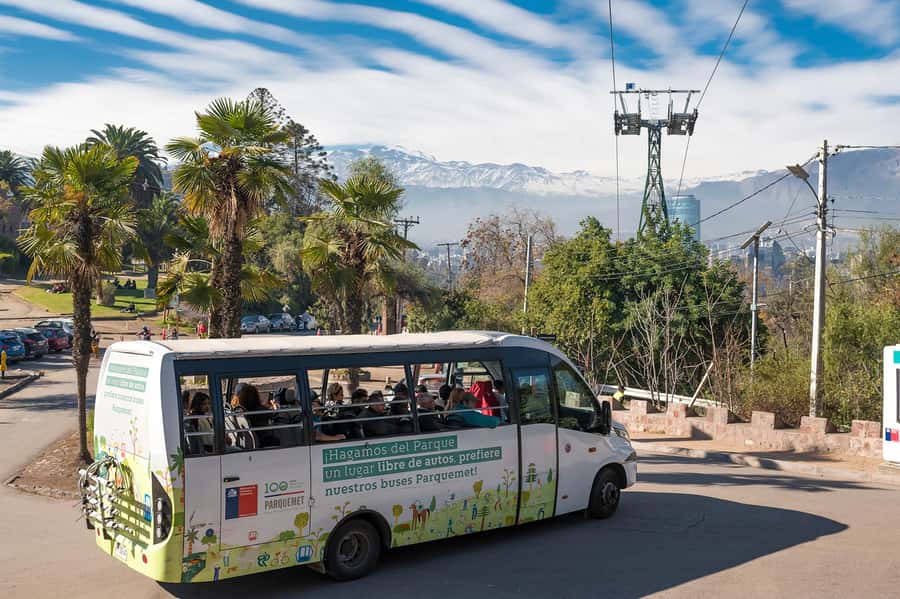
Stop 6 is Plaza de la Constitución, in front of La Moneda Palace at Teatinos 254. La Moneda is Chile’s government headquarters, and the surrounding civic space gives you a clear sense of the capital’s political importance.
This stop pairs naturally with Plaza de Armas. You can ride between the two, or get off at both and walk through the center. The route allows you to see the main civic sights without arranging separate transport.
Because the bus follows a timetable, keep an eye on the time if you leave the vehicle here. A complete circuit takes around two hours, and the buses may arrive every 20 to 30 minutes. That is frequent enough for a relaxed visit, but not so frequent that you can ignore the schedule.
Santa Lucía Hill and Lastarria
Stop 7 is Cerro Santa Lucía, at Avenida Alameda 390. This historic urban hill has terraces and viewpoints, and it sits near the Lastarria district.
Santa Lucía is a good stop for a short climb and city views without committing to the larger San Cristóbal excursion. The terraces give you a different perspective on central Santiago, and Lastarria provides a natural place to continue on foot.
I would choose Santa Lucía for an easy central viewpoint, then save San Cristóbal for the day when you have time for both cable car and funicular. The two hills are not interchangeable: Santa Lucía is a compact central visit, while San Cristóbal is the bigger panoramic outing.
Wear comfortable shoes. The tour involves getting on and off, walking between stops and attractions, and using hill paths and viewpoints. Carry water, sunscreen, and weather-appropriate clothing.
Plaza de la Aviación and the Mapocho River
Stop 8 is Plaza de la Aviación on Avenida Providencia. The area is known for its fountain and green spaces beside the Mapocho River.
This is a lighter stop than the main historic sights, but it gives you a feel for Providencia and the river corridor. It can work well as a brief photo break or as part of a longer walk if you want to spend time outside the central tourist zone.
You might find this stop less essential if your schedule is tight. It is most useful when you have a second day and want to see how Santiago changes from the old center to the modern eastern districts.
Costanera Center and Las Condes
Stop 9 is the Costanera Center at Avenida Vitacura 2653. It is one of the city’s largest and most recognizable shopping centers, next to the Sky Costanera observatory.
The ticket does not include other entry fees, so admission to Sky Costanera is separate. Still, the mall is useful for souvenirs, fashion, local products, food, and a convenient indoor break.
Stop 10 is the Las Condes Interactive Museum at Isidora Goyenechea 3365. The surrounding area has restaurants and a modern urban feel, while the museum offers interactive experiences. This stop is a good fit if you want something beyond monuments and viewpoints.
These eastern stops show why the bus is more than a central sightseeing loop. You can compare Santiago’s financial and shopping districts with the older civic center in one ticket, without arranging separate rides across town.
How to use the two days without rushing
On the first day, I would ride enough of the route to understand the geography. You can begin at Parque Arauco, pass through Parque Bicentenario, and continue toward San Cristóbal Hill. After the cable car and funicular, continue to Plaza de Armas, La Moneda, and Santa Lucía if time allows.
On the second day, return to the stops you skipped or rushed. Parque Bicentenario deserves more than a quick look, while the historic center and Bellavista are easier to enjoy when you are not watching every minute.
A practical plan looks like this:
- Morning: San Cristóbal Hill, cable car, panoramic buses, and funicular.
- Midday: Bellavista for lunch, then Plaza de Armas and La Moneda.
- Afternoon: Santa Lucía, Lastarria, or the eastern parks and malls.
- Second day: Focus on Parque Bicentenario, Plaza de la Aviación, Costanera Center, and Las Condes.
The recommendation to start with the closest stop is sensible. You can board at any of the ten stops, and the ticket can be used as often as you like across the two days. Just remember that the final full circuit needs to begin before 4:00 PM.
Is the $69 price good value?
At $69 per person, the ticket is not the cheapest way to move around Santiago. Its value depends on how much you use the included attractions.
The cable car and funicular rides alone make the price more appealing, especially if you also use the panoramic buses inside Metropolitan Park. Add two days of city transport, the audio guide, and access to areas that are not close to the historic center, and the package can make financial sense.
I would be less enthusiastic about it if you plan to spend nearly all your time walking around Plaza de Armas, La Moneda, and Santa Lucía. In that case, you may not use enough of the route to justify the full price.
The strongest value comes when you visit San Cristóbal Hill, ride both hill transport systems, and use the bus on both days. It is also useful for a short Santiago stay because it helps you reach Parque Bicentenario and the eastern districts without sacrificing your entire day to transport.
What the staff and audio system are like
The service receives strong marks for friendly, helpful staff. Daniela Torres was singled out for taking time to help at the end of a second day, while Nicole earned special praise for her warm assistance. Another staff member reportedly left the bus to warn people about possible risks, which suggests that the team takes its job seriously.
The recorded commentary is generally clear and useful. It is offered in Spanish, Portuguese, English, German, French, and Chinese, which makes the ride more informative than a simple vehicle transfer.
The audio equipment is not perfect. One bus used a QR code system, and the supplied headphones did not work well for one passenger using an iPhone. Bring your own headphones if you want to be certain you can follow the narration.
Small problems that can affect your day
The main weakness is signage. Stops are not always clearly marked, and the map may show an approximate rather than exact pickup point. Before you get off, look around and memorize a nearby landmark.
The second issue is timing. A bus every 20 to 30 minutes is reasonable, but a long stop can cause you to miss the next circuit. Since the route’s published hours vary slightly, confirm the current schedule and avoid leaving the last full circuit too late.
You should also keep personal belongings with you. The operator is not responsible for objects left inside the buses.
Bring your passport or ID card, comfortable shoes, sunglasses, a camera, sunscreen, water, and clothing suited to the weather. The experience is outdoors much of the time, particularly around the hills and parks.
Who should book this Santiago tour?
I would recommend it to first-time visitors who want a broad introduction to Santiago and prefer not to arrange several separate rides. It suits couples, families, and independent sightseers who value flexibility more than a tightly guided walking tour.
It is especially good for anyone who wants both city landmarks and panoramic views. The included cable car, funicular, and panoramic buses give the ticket something extra, and the two-day validity lets you slow down.
I would hesitate if you dislike fixed routes, need perfectly marked pickup points, or plan to spend only a few hours in the city. It also loses some value if your visit falls on a Monday, when the San Cristóbal attractions are closed.
You can cancel up to 24 hours before the activity for a full refund, and the reserve-now, pay-later option keeps your plans flexible.
Should you book it?
Book this tour if you want an easy first look at Santiago, plan to use San Cristóbal Hill, and have two days to spread the route out. The cable car and funicular are the key value, while the bus removes much of the effort involved in reaching distant districts.
Skip it if you prefer exploring one neighborhood slowly or if you will be in Santiago for only a short central-city visit. For most first-time visitors, though, this is a practical way to get oriented, see the major sights, and enjoy excellent city views without rushing through every stop.
FAQ
How long is the ticket valid?
The ticket provides unlimited hop-on hop-off access for two consecutive days. Cable car, funicular, and panoramic bus access inside Metropolitan Park are also included for two days.
Where can I first board the bus?
You can start at Parque Arauco Shopping Center, at Avenida Kennedy Lateral 5059 beside the Ripley department store. You can also board at any of the ten listed stops.
How many stops are on the route?
There are ten stops: Parque Arauco, Parque Bicentenario, Santiago Cable Car, Bellavista and the funicular, Plaza de Armas, Plaza de la Constitución, Santa Lucía Hill, Plaza de la Aviación, Costanera Center, and the Las Condes Interactive Museum.
Is the cable car included?
Yes. The ticket includes two days of cable car access at San Cristóbal Hill, along with two days of funicular access and unlimited panoramic buses inside Metropolitan Park.
Does the tour operate on Mondays?
The bus service operates daily, but the Teleférico, Funicular, and Panoramic Buses at Cerro San Cristóbal do not operate on Mondays.
What languages are available for the audio guide?
The audio guide is available in Spanish, English, French, German, Portuguese, and Chinese.
What happens if I need to cancel?
You can cancel up to 24 hours in advance for a full refund. The reserve-now, pay-later option lets you book without paying immediately.
Just added in Santiago
- Walking City Tour with Funicular, Cable Car and Tasting★ 4.3 · 6 reviews
- VIÑA DEL MAR AND VALPARAISO TOUR★ 4.8 · 20 reviews
- Tour VIÑA CONCHA Y TORO + CASA MARQUES – Chile, from Santiago.★ 5.0 · 2 reviews
- Undurraga + Isla Negra + San Afonso del Mar —– Full day★ 4.1 · 8 reviews
- Undurraga Wine tour★ 4.2 · 15 reviews
- Southcoast – Private Full-Day tour★ 5.0 · 6 reviews
- Santiago Private walking tour with Lunch★ 5.0 · 5 reviews
- Zapallar : nature, sea and local flavours★ 5.0 · 6 reviews
Tickets, compared.


Tour Parque Farellones Ticket+Transportation, optional Snowwear
Read our review →

Museo Chileno de Arte Precolombino Admission Ticket
Read our review →

Skiing in Farellones Park: Ski Tickets, Lessons, Transportation and More
Read our review →
Sky Costanera Observatory Skip-the-Line Entry Ticket
Read our review →Browse the lists this tour appears in