
REVIEW · STARGAZING AND OBSERVATORY TOURS
San Pedro de Atacama: Stargazing + Hot Drinks
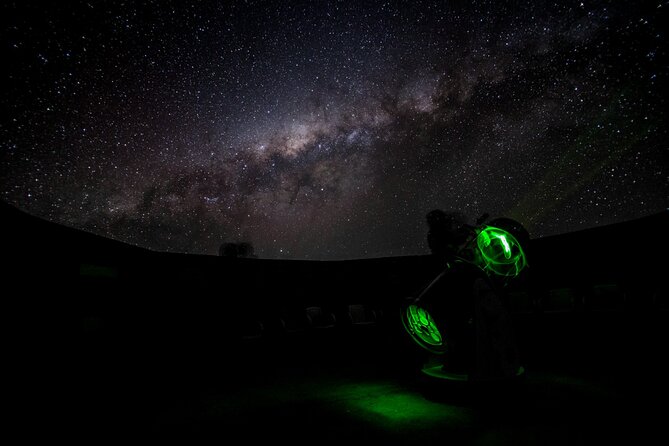
Look up, and the desert changes completely. This two-and-a-half-hour evening outing uses specialized telescopes to show you planets, star clusters, galaxies, and the striking southern sky. I like the mix of serious astronomy and Andean cultural stories, and I also like the small group limit of 15 people, which should make telescope time and questions easier.
The $42 price is fair for a focused astronomy experience, especially with pickup offered, hot drinks, a laser-guided tour of the constellations, and possible astrophotography. One thing to keep in mind is the moon: bright moonlight can reduce the number of faint objects you see, even though the guides can still make the evening interesting.
In This Review
- Key points about this Atacama night tour
- Why San Pedro is such a good place for stargazing
- The 9:00 pm start and the first part of the evening
- Astrotour Chile and the telescope session
- Constellations, Andean astronomy, and the human side of the sky
- Hot drinks and the cold desert night
- Astrophotography and the final memory of the night
- Is $42 a good value?
- Who will enjoy this experience most?
- Practical advice before you book
- Should you book the San Pedro stargazing tour?
- FAQ
- What time does the stargazing experience start?
- How long does the tour last?
- Where does the activity take place?
- Is pickup available?
- What language is the tour offered in?
- What can I see through the telescopes?
- What should I bring?
- What happens if bad weather cancels the tour?
Key points about this Atacama night tour
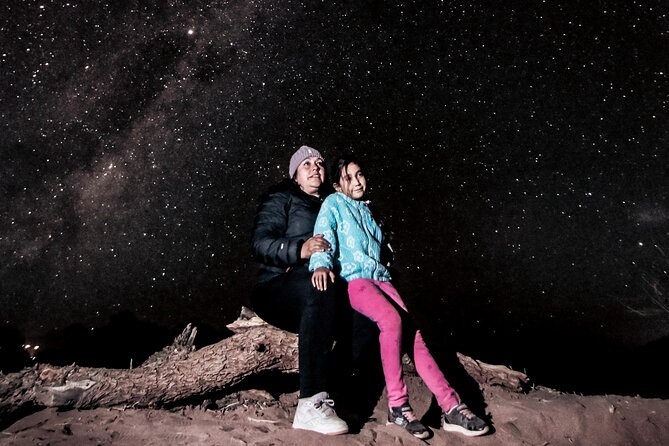
- Specialized telescopes: Look for planets, star clusters, galaxies, and lunar details through dedicated observing equipment.
- Southern Hemisphere stars: A laser pointer helps you identify constellations that may be unfamiliar if you normally watch the sky from the north.
- Andean astronomy: The guides connect the night sky with ancestral cultures and archaeoastronomy from the region.
- Small group size: The maximum of 15 people should give you a more personal experience than a large bus outing.
- Warm drinks after dark: Hot drinks are a welcome touch in a desert setting where temperatures can fall quickly at night.
- Seasonal viewing: What you see changes through the year, so the sky is different on different dates.
Why San Pedro is such a good place for stargazing
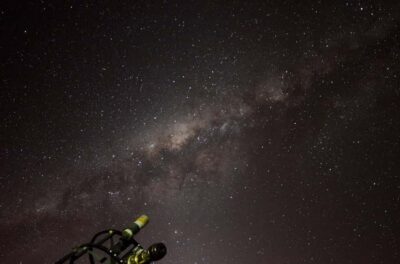
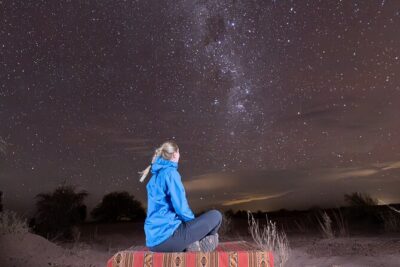
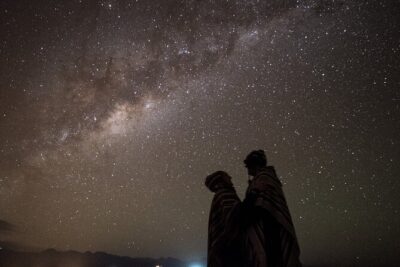
San Pedro de Atacama is famous for its night sky, and this experience makes that sky the main event. Away from the distractions of daytime sightseeing, you get time to look upward and make sense of what you see.
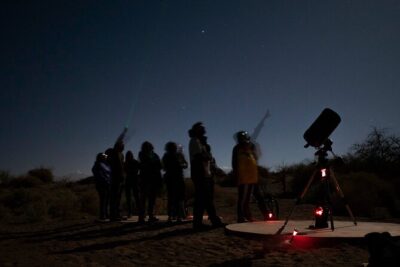
The tour is not only about pointing a telescope at a bright object. It begins with orientation. A laser pointer helps the guide trace constellations across the Southern Hemisphere sky, giving you a useful starting point before the telescope viewing begins.
That matters because many southern constellations may be new to you. Rather than staring at a field of stars with no idea where to begin, you get a visual map of the sky. The guide can show how individual stars fit into larger patterns and explain how the season affects what is visible.
The desert setting also gives the evening a strong sense of place. You are not simply attending a general astronomy lecture indoors. You are standing beneath the actual sky discussed by the guide, with the stars overhead and the cold desert air reminding you that this is a night activity.
More stargazing nights in San Pedro de Atacama:
- San Pedro de Atacama: Etno-Stargazing Tour with Transfer
★ 4.8 · 629 reviews - The Roofless Experience San Pedro de Atacama Stargazing Tour
★ 5.0 · 522 reviews - San Pedro de Atacama: Stargazing Experience
★ 4.7 · 489 reviews
The 9:00 pm start and the first part of the evening
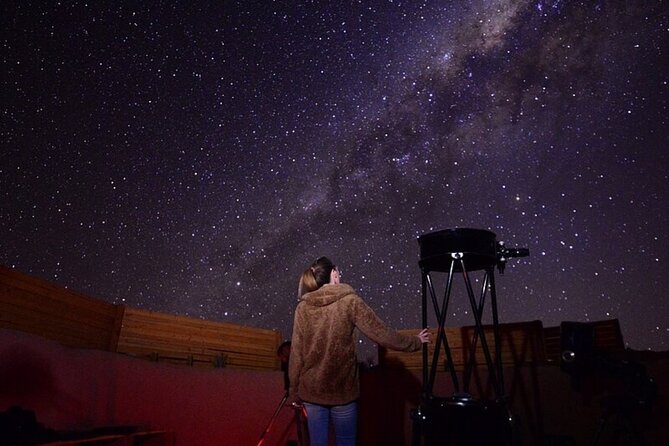
The experience starts at 9:00 pm, with pickup offered. Exact pickup arrangements are not specified, so you should check the meeting details carefully after booking rather than assume the vehicle will collect you from every address.
The late start makes sense. The sky needs to be properly dark for the strongest viewing, and the timing keeps the activity separate from the daytime trips around San Pedro. You can spend the day visiting other parts of the Atacama and reserve the night for astronomy.
The tradeoff is that the tour ends late enough to affect your next morning. That matters if you have an early departure or a dawn excursion planned. For many people, though, the timing is part of the appeal. The Atacama is at its most dramatic after sunset, and a daytime astronomy tour simply would not offer the same experience.
The duration is approximately two hours and 30 minutes. That is long enough for an introduction, constellation viewing, telescope sessions, questions, and hot drinks without turning the evening into an exhausting all-night program.
Astrotour Chile and the telescope session
The listed stop is Astrotour Chile, where the central focus is observation through specialized telescopes. The equipment is designed to bring distant objects closer and make details visible that you cannot see clearly with the naked eye.
Depending on the season and the conditions that night, you may look at planets, star clusters, galaxies, or the Moon. The available feedback gives especially strong examples: Saturn, Andromeda, and the lunar surface were singled out as memorable telescope targets.
That list shows the range of the session. Saturn gives you the thrill of seeing a planet with a recognizable shape. Andromeda offers a view far beyond our own solar system. The Moon, when visible, can show surface detail that turns a familiar object into something worth studying again.
You should not expect the exact same lineup every night. The experience changes by season, and the amount of moonlight also matters. One evening with a bright Moon was still described as very interesting, but strong moonlight can make faint galaxies and star clusters harder to see.
This is a useful point when setting expectations. The Atacama sky is extraordinary, but astronomy is not a fixed stage show. The guide works with what is visible on the night you attend. If a target is less suitable, the session can focus on other objects, constellation stories, or the Moon.
The group limit of 15 people is another practical advantage. It does not guarantee that you will have unlimited telescope time, but it is a manageable number for a guided session. You should have a better chance to hear the explanations and ask questions than you would in a very large group.
Constellations, Andean astronomy, and the human side of the sky
The laser pointer is more than a handy tool. It helps connect the dots between modern astronomy and the way earlier cultures read the heavens.
The experience introduces Andean cultural astronomy and archaeoastronomy. In plain terms, you learn about the relationship between the sky and the ancestral cultures of the region. The stars were not merely distant lights. They helped shape stories, beliefs, observations, and ways of understanding time and place.
I like this part because it gives the night more depth without taking away from the telescope work. You get both the scientific view and a local cultural perspective. The result is more meaningful than a simple list of planets.
The quality of this section depends heavily on the guide. The available feedback gives high praise to Alex, Alex Izquierdo, and Alex and Jane for their professionalism, attention to detail, and clear passion for the cosmos. One comment specifically described Alex as someone who shares his enthusiasm openly, which is exactly what you want in an astronomy guide.
A good guide can make a technical subject approachable. You do not need a background in science to enjoy the experience. The important thing is that the explanations help you notice more, remember more, and understand why the southern sky matters.
More things to do in San Pedro de Atacama:
- San Pedro de Atacama: El Tatio Geysers Tour
★ 4.7 · 943 reviews - Tour to the Hidden Lagoons of Baltinache
★ 5.0 · 694 reviews - Piedras Rojas, Altiplanics Lagoons & Salar Full-Day Tour
★ 4.7 · 592 reviews - Half Day Tour to Geysers del Tatio
★ 5.0 · 499 reviews
Hot drinks and the cold desert night
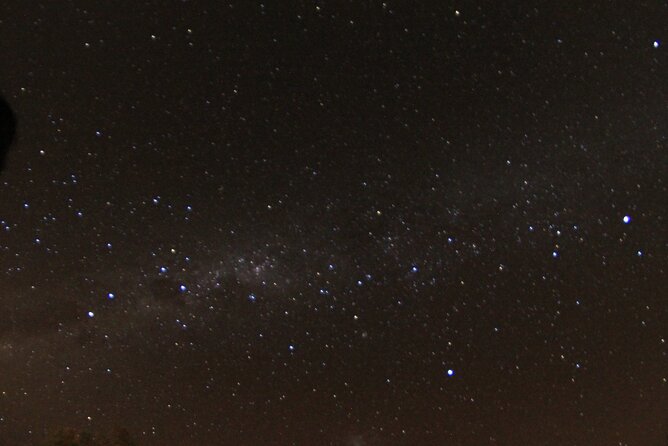
The hot drinks are a small but useful feature. San Pedro can feel warm during the day, yet nighttime temperatures and wind can make an open-air astronomy session surprisingly cold.
Bring warm clothing suited to wind and low temperatures. Do not rely on the fact that the day was sunny or mild. Once you are standing still and looking through a telescope, you will feel the cold more than you would while walking.
Several warm layers are more useful than one heavy item because you can adjust as the night changes. The tour specifically advises suitable warm clothing, so treat that as essential preparation, not a minor suggestion.
The drinks help, but they are not a replacement for proper clothing. The supplied information does not specify the type of drink or whether food is included, so you should think of this as a warm refreshment rather than a full meal.
Astrophotography and the final memory of the night
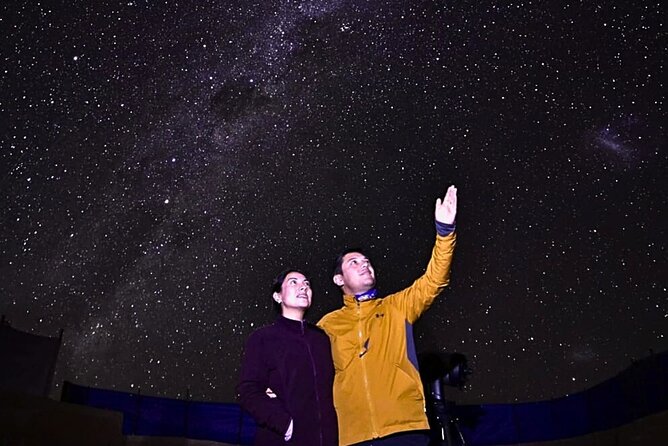
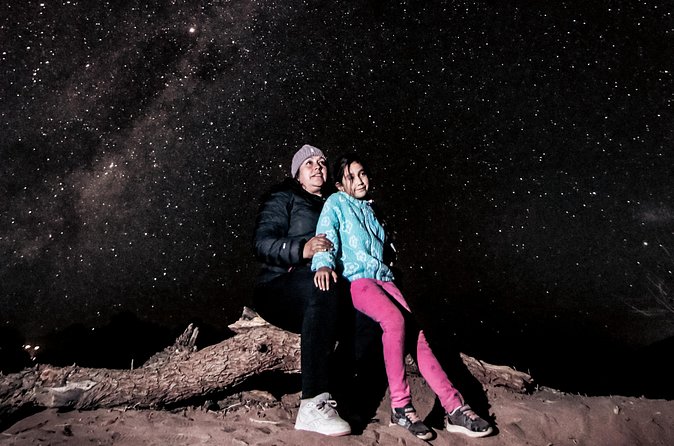
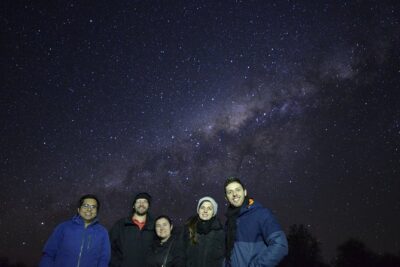
Astrophotography was part of the experience praised in the available feedback. A night-sky photo was described as the finishing touch, and another account refers to astrophotography after the introductory lesson and telescope viewing.
You should confirm exactly what is included on your date, since the tour description does not give technical details about the camera, the number of photos, or how the images are delivered. Still, the possibility adds value for anyone who wants more than a visual memory.
Photography under a star-filled sky can also be a good way to slow down. You are not rushing from one attraction to the next. You get a chance to appreciate the scale of the sky and leave with a record of the setting.
Do not book the experience solely for a guaranteed perfect photograph. The weather, moonlight, and equipment setup all affect the result. Think of the photo as a possible bonus attached to a broader astronomy evening.
Is $42 a good value?
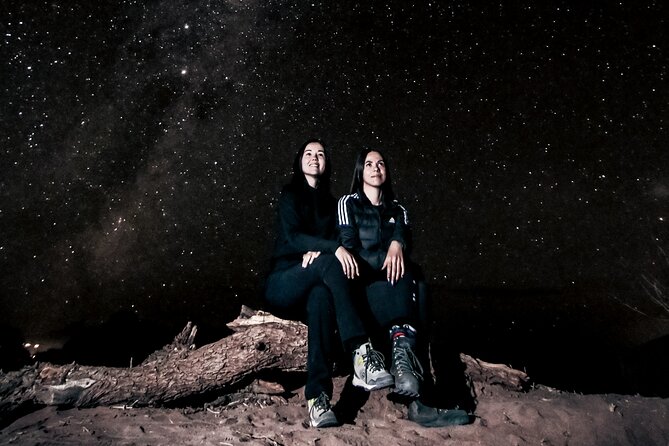
At $42 per person, this sits in a reasonable range for a specialized evening activity. You are paying for about two and a half hours, a guided introduction, telescope observation, southern constellations, cultural astronomy, hot drinks, and a small group capped at 15 people.
The value is strongest if you are genuinely interested in the sky. The experience is not simply a scenic drive with a quick look upward. Its purpose is to teach you what you are seeing and give you access to telescopes that make distant objects easier to appreciate.
Pickup offered also adds practical value, though the exact transport arrangement should be confirmed. You do not need to plan the evening around finding a dark viewing location on your own, and the activity is organized around the night sky rather than added as a rushed extra.
The price may feel less worthwhile if you expect a guaranteed list of famous objects every night. Astronomy depends on season, moonlight, and weather. A bright Moon can reduce visibility of fainter objects, and poor weather can cancel the outing.
Still, the cancellation policy protects you in that situation. If bad weather forces cancellation, you are offered another date or a full refund. You can also cancel for a full refund if you do so at least 24 hours before the start time. Changes or cancellations inside that window are not accepted, and the local time cutoff applies.
Who will enjoy this experience most?
I would recommend this outing to you if you want a quieter evening with real content. It suits first-time stargazers because the laser-guided introduction gives you a way into the subject. It also suits people who already enjoy astronomy and want to see southern objects through specialized equipment.
The cultural astronomy section makes it a good choice if you prefer experiences connected to the region rather than a generic activity that could happen anywhere. You are not only looking at stars. You are also hearing how the sky relates to Andean traditions and ancient observation.
The small maximum group size helps couples, families, and small groups who want room for questions. Most people can participate, so you do not need special experience or advanced astronomy knowledge.
You may want to skip it if you strongly dislike cold nighttime activities, have an early morning departure, or want a guaranteed clear view of specific objects. The tour needs good weather, and the sky changes from night to night.
Practical advice before you book
Plan your clothing first. Warm layers and protection from wind will have a bigger effect on your comfort than almost anything else.
Keep your expectations flexible. Saturn, Andromeda, or the lunar surface may be visible, but the exact viewing list depends on the season and the conditions. A night with more moonlight can still be worthwhile, but it may favor some targets over others.
If photography matters to you, ask what is included before booking. The experience has been praised for astrophotography, but the published details do not explain the process or the final product.
The tour is offered in English and comes with a mobile ticket. Confirmation is received at booking, and most people can take part. The stated start time is 9:00 pm, and the activity lasts approximately two hours and 30 minutes.
Should you book the San Pedro stargazing tour?
Yes, if you want an accessible introduction to the Atacama night sky with more substance than a quick look at the stars. The best reasons to book are the specialized telescopes, the southern constellation lesson, the Andean astronomy connection, and the chance to see objects such as Saturn, Andromeda, or the Moon.
I would especially choose it early in your stay if the schedule allows. That gives you a memorable first look at the sky and leaves room to decide later whether you want more astronomy time.
Book with the understanding that nature controls the program. Moonlight and weather affect the view, and the exact celestial targets change by season. If you bring serious warm clothing and stay open to whatever the night offers, the $42 cost is a sensible investment in one of San Pedro’s most distinctive after-dark experiences.
FAQ
What time does the stargazing experience start?
The stated start time is 9:00 pm.
How long does the tour last?
The experience lasts approximately two hours and 30 minutes.
Where does the activity take place?
The listed stop is Astrotour Chile in San Pedro de Atacama.
Is pickup available?
Pickup is offered, but the available information does not specify the exact pickup locations or arrangements.
What language is the tour offered in?
The tour is offered in English.
What can I see through the telescopes?
Depending on the season and night conditions, you may see planets, star clusters, galaxies, and the Moon. Examples praised in the available information include Saturn, Andromeda, and the lunar surface.
What should I bring?
Bring warm clothing suitable for wind and low temperatures.
What happens if bad weather cancels the tour?
If poor weather causes cancellation, you will be offered a different date or a full refund. You can also cancel for a full refund at least 24 hours before the start time.
Just added in San Pedro de Atacama
- Vallecito★ 4.7 · 13 reviews
- Atacama Desert and Magic Bus Visit★ 4.8 · 15 reviews
- San Pedro de Atacama: Valle de la luna★ 3.0 · 3 reviews
- Valle de la Luna: A Moon-Like Escape in Atacama★ 5.0 · 3 reviews
- Triple Tour: Piedras Rojas + Altiplanic Lagoons + Chaxa Lagoon★ 5.0 · 1 review
- Red Stones + Altiplánica Lagoons★ 5.0 · 1 review
- Atacama Stargazing Tour Under One of the World’s Clearest Skies★ 4.0 · 3 reviews
- Tour to Laguna Cejar and Tibenquinche★ 4.5 · 7 reviews
Stargazing and Observatory Tours, compared.
The Roofless Experience San Pedro de Atacama Stargazing Tour
Read our review →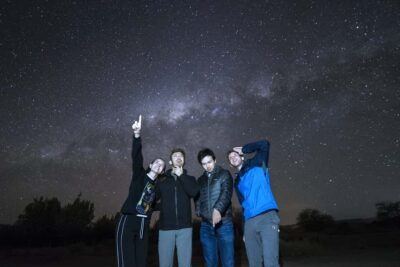
Astronomical Tour with Guide and Pick Up San Pedro de Atacama
Read our review →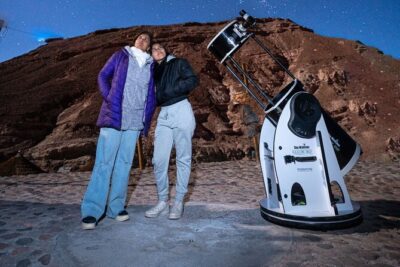
“Astronomical Adventure in San Pedro de Atacama”
Read our review →Browse the lists this tour appears in