
REVIEW · STARGAZING AND OBSERVATORY TOURS
Astronomical tour
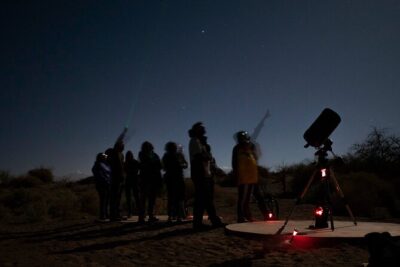
Under an Atacama sky, darkness does the talking. I like the tour’s Andean worldview presentation and its small maximum of 12 people, which should make the night easier to follow. The main consideration is the moon: the dark constellations, including the Chakana Cross, can only be seen without moonlight.
This 2-hour-30-minute experience costs $50 per person and includes pickup. I also like that it connects local Lickan-Antay traditions with modern astronomy instead of treating the desert sky as a simple photo stop. The listed start time is 12:00 am, so confirm the exact pickup hour before booking.
In This Review
- Key Points About the Atacama Stargazing Experience
- Why San Pedro Is Such a Strong Place for Stargazing
- Beginning With the Lickan-Antay Sky
- Finding the Chakana Cross Without Moonlight
- Moving From Andean Constellations to Modern Ones
- What the Two-and-a-Half-Hour Format Means
- Small Groups, Pickup, and the $50 Price
- Weather, Moonlight, and Other Conditions to Consider
- Who Will Enjoy This Tour Most
- My Booking Advice for a Clear, Moonless Night
- FAQ
- How much does the astronomical tour cost?
- How long does the tour last?
- Is pickup available?
- What time does the tour start?
- How many people can join the tour?
- What happens if the weather is poor or the tour does not reach its minimum group size?
Key Points About the Atacama Stargazing Experience
- The Chakana Cross appears only without a moon: The tour focuses on dark constellations tied to the Andean worldview, including the llama, partridge, and snake.
- Andean and modern astronomy share the same night: You begin with Lickan-Antay sky knowledge, then move to modern constellations.
- The group is capped at 12 people: This is a useful limit for a presentation where you may want to see the guide’s tablet and ask questions.
- Pickup is offered in San Pedro de Atacama: That removes one practical problem from a late-night activity.
- The tour lasts about 2 hours and 30 minutes: It is long enough for a focused evening without taking over your whole night.
- Weather and moon phase matter: Poor weather can cancel the outing, and a bright moon can limit the dark-constellation portion.
Why San Pedro Is Such a Strong Place for Stargazing
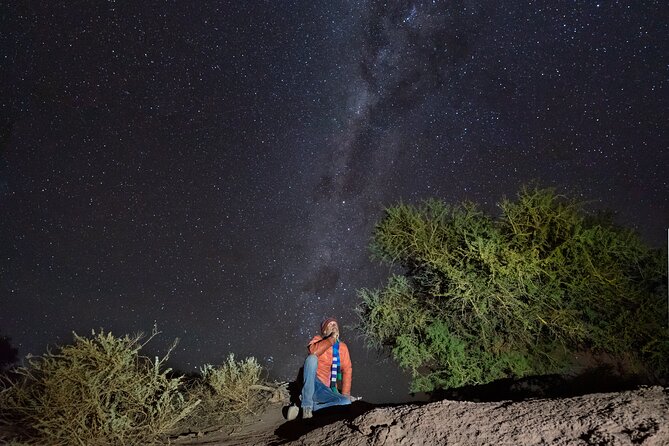
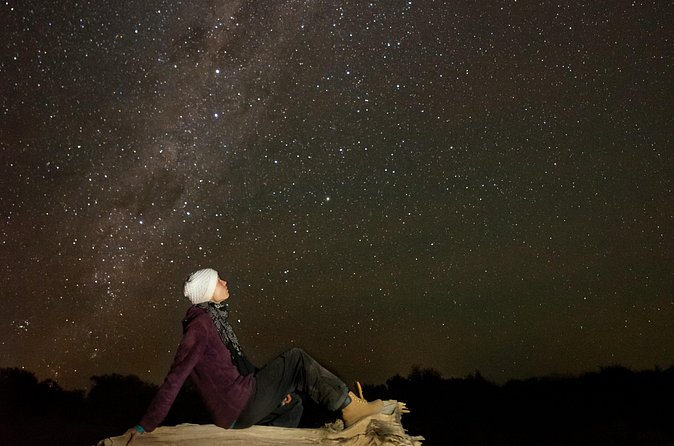
The Atacama Desert has three traits that matter for astronomy: low humidity, high elevation, and low light pollution. Together, they can produce a very clear view of the night sky. National Geographic has identified the region as one of the best places on Earth for observing the firmament, which helps explain Chile’s growing role in astrotourism.
You do not need to be an amateur astronomer to enjoy this setting. The value comes from seeing familiar stars placed in a completely different cultural frame. Instead of beginning with the modern European constellation system, this tour first introduces the sky as understood by the Andean people.
That shift gives the evening more meaning. A starry sky is easy to admire for a few minutes. It is more memorable when you learn that different communities have read the same stars as animals, roads, seasons, and signs.
The desert setting also makes the timing important. This is not a daytime visit with a quick look through a telescope. The tour is built around darkness, and the listed start time of midnight suggests a very late outing. If you prefer early evenings, this may feel tiring. If your main goal is a serious look at the stars, the late hour may be part of the appeal.
More stargazing nights in San Pedro de Atacama:
- San Pedro de Atacama: Etno-Stargazing Tour with Transfer
★ 4.8 · 629 reviews - The Roofless Experience San Pedro de Atacama Stargazing Tour
★ 5.0 · 522 reviews - San Pedro de Atacama: Stargazing Experience
★ 4.7 · 489 reviews
Beginning With the Lickan-Antay Sky
The first part of the activity is a presentation on the Andean worldview and Lickan-Antay culture. This is the heart of the experience for anyone who wants more than a standard constellation lesson.
The Lickan-Antay, an Indigenous people of the Atacama region, have their own ways of understanding the sky. The presentation gives you a cultural starting point before moving into modern constellations. That order matters because it treats local knowledge as central, not as a short aside before a familiar astronomy talk.
A guide named Francisco has been praised for explaining Andean cosmology in an entertaining way with a tablet. That detail is useful. A tablet can help show star patterns and explain how separate points of light form an animal or symbol, especially when your eyes are adjusting to the dark.
You should expect this portion to be educational rather than purely observational. The supplied details do not promise a telescope, specialist instruments, or a formal astronomy lecture. The focus is the story of the sky, the patterns people see, and the contrast between Andean and modern constellations.
That makes this tour a good fit if you enjoy cultural context. If you only want uninterrupted stargazing or advanced technical information about galaxies and planets, ask for more details before reserving.
Finding the Chakana Cross Without Moonlight
The tour then turns to the dark constellations. The Chakana Cross is described as the foundation of the Andean worldview, with a constellation connected to the llama, partridge, and snake.
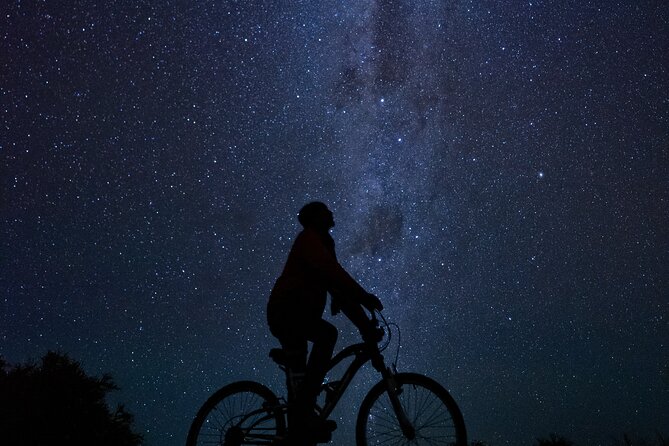
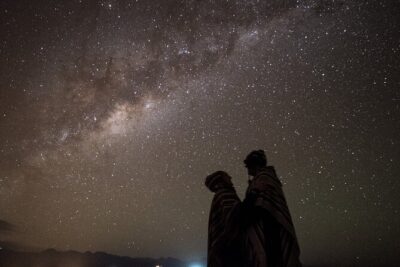
These dark constellations are different from the bright star patterns many people learn first. Rather than tracing lines between bright stars, they are formed from dark spaces in the Milky Way. That is why moonlight is such a serious factor here. A bright moon washes out the subtle shadows and makes these shapes hard, or impossible, to see.
This is the most important practical point in the entire tour. Check the moon phase when choosing your date. A moonless night gives the dark constellations their best chance, while a bright moon may still allow some modern constellations but reduce the Andean section.
The information provided does not give exact moon dates or a guaranteed viewing schedule. You should not assume every departure will show the full Chakana Cross. The tour also requires good weather, so cloud cover can affect the experience even when the moon is favorable.
Still, the concept itself makes this more than a basic star chart lesson. You are not only looking for bright objects. You are learning to notice the dark areas between them. That is a small change in technique, but it can make the sky feel new again.
Moving From Andean Constellations to Modern Ones
After the Andean portion, the program moves to modern constellations. This gives the evening a clear two-part structure.
First, you learn how the Lickan-Antay worldview reads the sky. Then you shift to the modern constellation system used in much of contemporary astronomy. The comparison can help you understand that constellations are not physical groupings of nearby stars. They are patterns created from our point of view on Earth.
You may find this transition especially helpful if you already know a few modern constellations. It lets you compare a familiar system with a local one instead of starting from zero. You can also see how the same night sky supports different stories and meanings.
The details do not specify which modern constellations are covered, so you should not book this expecting a fixed list of planets, galaxies, or star clusters. The emphasis is on the movement from traditional sky knowledge to modern constellations, not on a published catalog of objects.
That lack of a detailed object list is a small limitation. The strength is flexibility. The guide may be able to respond to the conditions of the night rather than follow a rigid script, although that is something you should confirm directly with Enjoy Atacama.
More things to do in San Pedro de Atacama:
- San Pedro de Atacama: El Tatio Geysers Tour
★ 4.7 · 943 reviews - Tour to the Hidden Lagoons of Baltinache
★ 5.0 · 694 reviews - Piedras Rojas, Altiplanics Lagoons & Salar Full-Day Tour
★ 4.7 · 592 reviews - Half Day Tour to Geysers del Tatio
★ 5.0 · 499 reviews
What the Two-and-a-Half-Hour Format Means
The tour lasts about 2 hours and 30 minutes, with the itinerary describing roughly two hours at the San Pedro de Atacama stop. The difference may allow for pickup, movement, or setup, but the exact breakdown is not given.
For you, this means the activity is substantial but manageable. It is not a quick 45-minute look at the stars, yet it should still leave room in your itinerary for other evening plans on a different night.
The late start deserves careful thought. The booking information lists 12:00 am, or midnight. Since the experience includes pickup, the actual time you leave your accommodation may differ. Confirm this before you pay, especially if you are arranging transportation, traveling with children, or planning an early morning excursion the next day.
A late-night tour can also affect your energy. You may need to choose between this activity and an early start for another desert outing. San Pedro de Atacama has a full schedule of day trips, so managing sleep matters.
Small Groups, Pickup, and the $50 Price
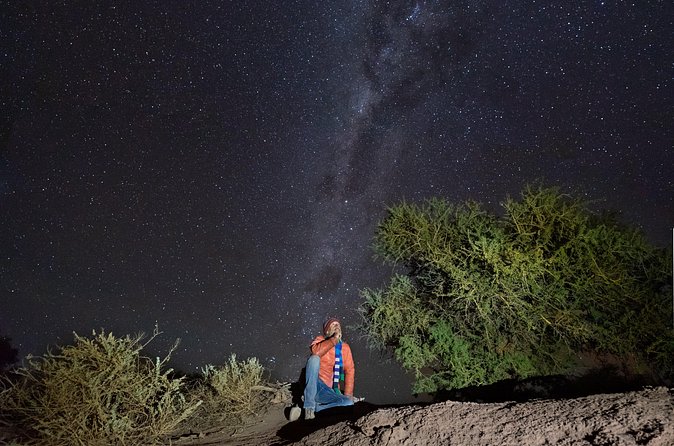
At $50 per person, this tour sits in a reasonable range for a guided evening activity, especially because pickup is offered and the group is limited to 12 people.
The group cap is important. Stargazing works best when you can hear the guide and see any visual material being used. Francisco’s tablet presentation would be less useful if a large crowd gathered around it. A maximum of 12 should create a more personal setting than a coach-sized outing, although the actual group size may be smaller or close to the limit.
Pickup also adds real value. A midnight activity is not the ideal time to search for a meeting point or walk unfamiliar streets. The precise pickup area is not specified, so confirm whether your accommodation in San Pedro de Atacama is included and what time you should be ready.
The price does not appear to promise meals, drinks, telescope use, or professional photographs. Do not count on those extras unless Enjoy Atacama confirms them. The supplied praise for Francisco also mentions hospitality and excellent Peruvian food, but that came from a three-day private tour with the company, not clearly from this astronomy outing. It is fair to view that as a positive sign about the wider company, but not as a promised feature of this specific activity.
The strongest value here is the combination of interpretation, local cultural content, pickup, and a small group. If you want equipment-heavy astronomy, compare the inclusions carefully before deciding.
Weather, Moonlight, and Other Conditions to Consider
This experience requires good weather. If poor conditions cancel the tour, you are offered a different date or a full refund. That policy is reassuring in a desert setting, where a clear forecast does not always guarantee perfect visibility at the exact time of the activity.
The moon is a separate issue. A tour can operate in good weather while still offering limited views of the dark constellations because of moonlight. If the Chakana Cross is your main reason for booking, ask about the moon phase and the expected viewing conditions.
The experience also requires a minimum number of people. If that minimum is not reached, you are offered another date or experience, or a full refund. That means your reservation is protected in the event of a provider cancellation, but you should keep some flexibility in your schedule.
Free cancellation is available up to 24 hours before the start time for a full refund. Cancellations or changes made less than 24 hours before departure are not refunded or accepted. The cutoff uses local time in San Pedro de Atacama.
Service animals are allowed, and most people can participate. The activity information does not provide further details about walking distances, seating, terrain, or equipment, so ask Enjoy Atacama if you have mobility concerns or need specific arrangements.
Who Will Enjoy This Tour Most
I would recommend this experience to you if you like astronomy with a cultural layer. The Andean worldview section gives the night a clear sense of place, and the Chakana Cross offers something different from a standard tour of modern constellations.
It also suits first-time stargazers. You do not need to arrive with a working knowledge of astronomy to follow the basic contrast between Andean and modern star patterns. Francisco’s use of a tablet may also make the visual explanation easier to follow.
The tour may appeal to families and small groups because most people can participate and the maximum group size is 12. Still, the midnight start could be difficult for young children or anyone who needs a full night’s sleep.
I would be more cautious if you are looking for a technical observatory visit. The provided information emphasizes storytelling, cosmology, dark constellations, and modern constellations. It does not confirm telescopes, detailed astrophysics, or a long list of celestial objects.
My Booking Advice for a Clear, Moonless Night
Book this tour if you want to understand how the people of the Atacama read the heavens, not just point a camera upward. The combination of Lickan-Antay tradition and modern constellation study gives the experience a stronger identity than a generic night-sky outing.
Before booking, check three things: the exact pickup time, the moon phase, and the equipment included. The listed midnight start may be correct, but it should be confirmed. The moon phase matters because the Chakana Cross and related dark constellations need a moonless sky. Finally, ask if the outing includes a telescope or focuses entirely on guided observation and presentation.
At $50, the experience offers good value if pickup, cultural interpretation, and a small group matter to you. It is less clearly suited to you if you want a formal observatory session with guaranteed telescope viewing.
The single rating and the praise for Francisco point to a warm, personal style, especially in the guide’s use of a tablet to explain Andean cosmology. I would choose this tour for its sense of place and its unusual approach to the night sky, while keeping expectations realistic about weather, moonlight, and the late hour.
FAQ
How much does the astronomical tour cost?
The tour costs $50 per person.
How long does the tour last?
The experience lasts approximately 2 hours and 30 minutes. The San Pedro de Atacama portion is listed as about two hours.
Is pickup available?
Yes. Pickup is offered, but the exact pickup location and time should be confirmed before the tour.
What time does the tour start?
The listed start time is 12:00 am. Confirm the precise departure and pickup time with Enjoy Atacama.
How many people can join the tour?
The activity has a maximum of 12 participants.
What happens if the weather is poor or the tour does not reach its minimum group size?
If poor weather cancels the experience, you are offered another date or a full refund. If the minimum number of participants is not reached, you are offered another date or experience, or a full refund.
Just added in San Pedro de Atacama
- Vallecito★ 4.7 · 13 reviews
- Atacama Desert and Magic Bus Visit★ 4.8 · 15 reviews
- Valle de la Luna: A Moon-Like Escape in Atacama★ 5.0 · 3 reviews
- San Pedro de Atacama: Valle de la luna★ 3.0 · 3 reviews
- Triple Tour: Piedras Rojas + Altiplanic Lagoons + Chaxa Lagoon★ 5.0 · 1 review
- Red Stones + Altiplánica Lagoons★ 5.0 · 1 review
- Atacama Stargazing Tour Under One of the World’s Clearest Skies★ 4.0 · 3 reviews
- Tour to Laguna Cejar and Tibenquinche★ 4.5 · 7 reviews
Stargazing and Observatory Tours, compared.
The Roofless Experience San Pedro de Atacama Stargazing Tour
Read our review →
Astronomical Tour with Guide and Pick Up San Pedro de Atacama
Read our review →
“Astronomical Adventure in San Pedro de Atacama”
Read our review →Browse the lists this tour appears in