
REVIEW · STARGAZING AND OBSERVATORY TOURS
Astronomical Tour with Guide and Pick Up San Pedro DE Atacama
The desert turns the lights off. This evening astronomy outing takes you from San Pedro de Atacama to the Observatorio Etno-Astronómico Licanantay, where you can study the night sky through several telescopes rather than simply glance upward and guess at the constellations. I like the three-telescope setup, which gives everyone more chances to look, and I like the thoughtful extras: blankets, seats, hot coffee or tea, and a campfire. The main caution is practical: you meet at a set point in town, and pickup is not available from several outlying ayllus.
At about $46 per person, this is a reasonably priced way to make sense of Atacama’s famously clear skies. The session lasts roughly two to two hours and 40 minutes, with the observing portion listed at about 90 minutes. I would confirm the meeting arrangements before leaving your hotel, since one documented booking involved a missed pickup and a long wait.
In This Review
- Key details before you book
- Why San Pedro is such a good place for stargazing
- Meeting at Paso del Inca at 9:00 p.m.
- At the Observatorio Etno-Astronómico Licanantay
- Blankets, seats, hot drinks, and the campfire
- The reserved photograph and the moon question
- How the price compares with the experience
- What the guide adds
- Weather, cancellations, and the best night to go
- Who will enjoy this evening most
- Should you book the Licanantay astronomy tour?
- FAQ
- Where does the astronomy tour start?
- What time does the tour begin?
- Where does the activity finish?
- How long does the experience last?
- What might I see through the telescopes?
- Is transportation included?
- Are drinks and blankets included?
- Is the star photograph included automatically?
- What happens if the weather is poor?
Key details before you book
- Three telescopes may be available: You can get more viewing time than at a setup where a whole group shares one telescope.
- The sky changes with the season: You might see constellations, nebulae, galaxies, planets, or star clusters, depending on the date.
- The evening begins at 9:00 p.m.: Plan your dinner and transport around a late start.
- Hot drinks and blankets are included: These small comforts matter during a long, still night in the desert.
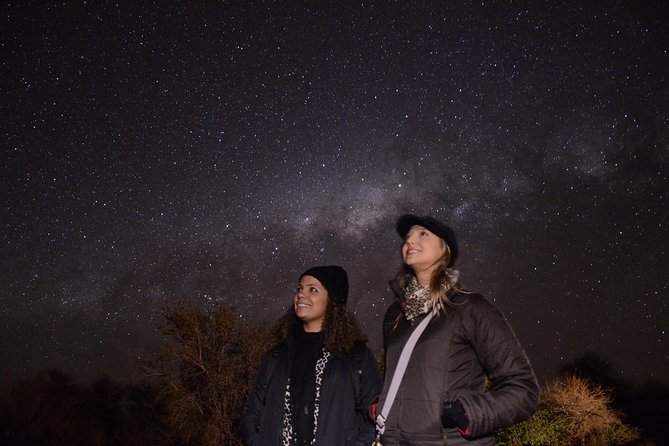
- A reserved star photo is possible: The photo option is offered without the moon, so ask about reserving it when you book.
- The group is capped at 14 people: That is small enough for a more personal telescope session.
Why San Pedro is such a good place for stargazing
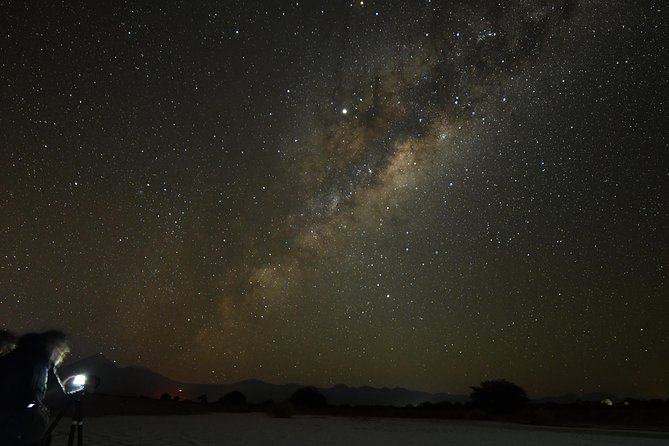
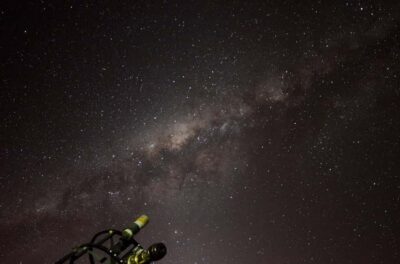
San Pedro de Atacama is an excellent base for looking up. The town sits in the Atacama Desert, far from the bright city glow found in larger urban areas. This tour uses that setting for a guided introduction to the sky, rather than leaving you to identify a bright dot as Saturn and hope for the best.
The appeal is not only the number of stars. A guide can explain what you are seeing and point out how the sky changes through the year. The exact view depends on the season, so you might spend the night looking at planets, nebulae, galaxies, constellations, or clusters of stars. That uncertainty is part of the fun, though you should not book with one single object in mind.
I especially like the educational side of this experience. A telescope can show you Saturn, but a guide helps you understand why it is there, what else surrounds it, and how to find your way around the sky. One especially happy account described seeing Saturn and getting plenty of telescope time, which is a strong sign that the evening is built around participation rather than a quick demonstration.
More stargazing nights in San Pedro de Atacama:
- San Pedro de Atacama: Etno-Stargazing Tour with Transfer
★ 4.8 · 629 reviews - The Roofless Experience San Pedro de Atacama Stargazing Tour
★ 5.0 · 522 reviews - San Pedro de Atacama: Stargazing Experience
★ 4.7 · 489 reviews
Meeting at Paso del Inca at 9:00 p.m.
The listed meeting point is Paso Del Inca on Ruta 23 in San Pedro de Atacama, and the activity returns to that same meeting point. The start time is 9:00 p.m., so allow room for dinner beforehand and avoid arranging another late evening activity afterward.
The title refers to pickup, but the details are more limited than that wording suggests. Pickup is not provided from the ayllus of Cucuter, Yaye, Tulor, Coyo, Solor, or Quitor. If you are staying in one of those areas, you need to make your own way to the stated meeting point.
An air-conditioned vehicle is included. That is useful for the transfer, especially after spending time outside in cool night air. Still, do not treat the vehicle as hotel-to-hotel service unless that has been confirmed for your accommodation.
I would arrive a little early. One account describes a group reaching the parking area ahead of time and waiting when the vehicle did not appear. The booking company later issued a refund, but that does not make the experience of standing in the dark any better. Keep your confirmation details handy and make sure you know exactly where Paso Del Inca is before 9:00 p.m.
At the Observatorio Etno-Astronómico Licanantay
The main stop is the Observatorio Etno-Astronómico Licanantay, where the observing session lasts about one hour and 30 minutes. The name points to an astronomy experience with an Andean cultural frame, although the supplied details do not spell out a separate cultural presentation. What you can count on is a guided session focused on objects in the sky.
The guide chooses what to show based on the time of year. That could include a planet, a nebula, a galaxy, or a star cluster. You may also spend time learning the shapes of constellations. This makes the tour a good choice if you want help putting the night sky into context instead of simply taking a few photographs.
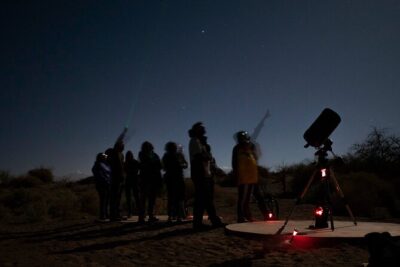
The most useful feature is the reported presence of three telescopes. Many astronomy outings depend on one telescope, which can mean a long line and only a few seconds at the eyepiece. Three instruments should spread the group out and create more chances to look. With a maximum of 14 people, the ratio is promising, although the actual pace may depend on the guide and the objects visible that night.
Do not expect every object to look like a glossy space photograph. Through a telescope, some objects may appear small or faint. The reward is seeing them directly, with your own eye, while the guide explains what makes them worth finding. That personal scale is what gives the session its value.
Blankets, seats, hot drinks, and the campfire
The included comforts are simple but well chosen. You receive blankets and seats, as well as coffee or tea. At night, when you are standing still and looking upward for an extended period, a blanket can matter more than another piece of equipment.
A campfire is also described as part of the setting. It gives the group a warm place to gather between telescope views and makes the evening feel less like a technical class. An account of the experience praised the campfire as a thoughtful touch, along with the food and drinks.
The food is not listed as a formal inclusion in the supplied details, so I would not book this expecting a full meal. Coffee and tea are clearly included. The campfire and refreshments may add comfort, but the core product is the astronomy session.
Bring sensible layers anyway. The presence of blankets does not mean you should arrive in light clothing. Conditions can feel cold when you remain outside for a long period, and the tour begins late. The data does not specify whether additional clothing or special equipment is supplied, so plan around the blanket rather than relying on it completely.
More things to do in San Pedro de Atacama:
- San Pedro de Atacama: El Tatio Geysers Tour
★ 4.7 · 943 reviews - Tour to the Hidden Lagoons of Baltinache
★ 5.0 · 694 reviews - Piedras Rojas, Altiplanics Lagoons & Salar Full-Day Tour
★ 4.7 · 592 reviews - Half Day Tour to Geysers del Tatio
★ 5.0 · 499 reviews
The reserved photograph and the moon question
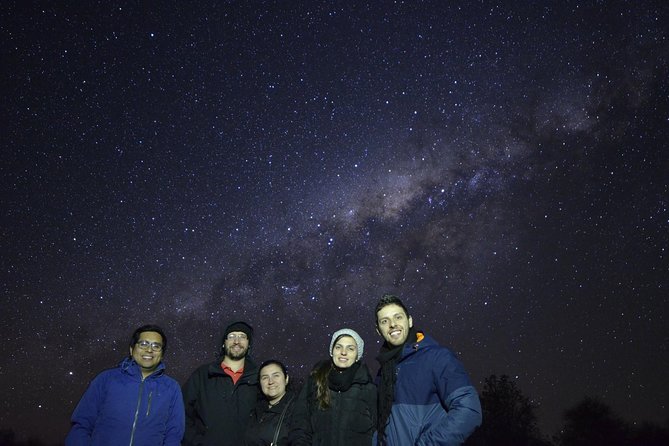
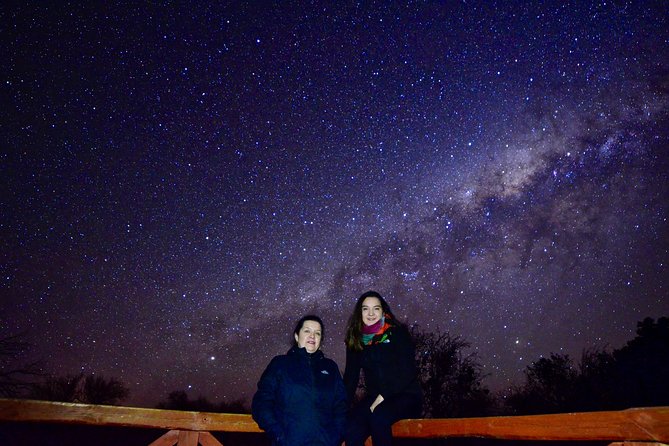
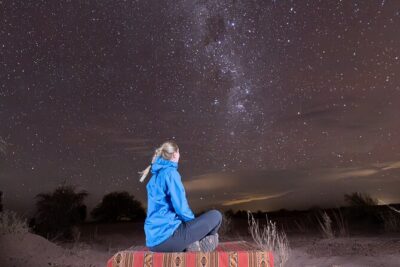
A photo with the stars in the background is available by reservation, without the moon. This is a useful detail because moonlight changes the appearance of the sky. A darker night can make fainter stars and deep-sky objects easier to see, while a bright moon can add its own beauty but reduce contrast.
The photo is not presented as an automatic part of every booking. You need to reserve it. If this matters to you, ask for the photo when making your reservation rather than assuming the guide will offer it on arrival.
The phrase without the moon is important. It tells you that the photo option is designed around a darker sky, not a moonlit portrait. You should also keep your expectations reasonable: the available information does not specify the camera, the number of images, the delivery method, or the exact pose.
How the price compares with the experience
At $46 per person, the tour offers a fair package for an evening activity. You receive transportation in an air-conditioned vehicle, a guided telescope session, hot coffee or tea, blankets, seats, and the use of the observatory. The small group limit and the reported three-telescope arrangement add value because they can reduce waiting time.
The price is strongest for someone who wants instruction. If you already own a telescope and know the night sky well, the guide’s explanation may be less important to you. You may still enjoy the setting, but the educational portion is a major reason to choose this outing over simply walking outside San Pedro.
The duration also supports the price. Although the central observing stop is about 90 minutes, the full activity lasts around two to two hours and 40 minutes. That extra time likely covers the transfer and the evening’s setup, though the exact timing is not stated. Do not schedule a tightly timed dinner, show, or bus immediately afterward.
The group maximum of 14 is another positive. It is not a private tour, but it is far more manageable than a large coach outing. A smaller group gives the guide a better chance to answer questions and helps the telescope rotation move at a reasonable pace.
What the guide adds
Astronomy can be confusing without help. The sky looks full, but most people cannot tell a galaxy from a planet or a cluster from a bright star. A guide gives you a way into that pattern.
The instruction has been praised for being clear and friendly, with one Spanish-language account describing the telescope observation as spectacular and highlighting the instructor’s kindness and expertise. The supplied information does not give the guide’s name, so I cannot offer a personal name to look for when you book.
Language details are also not specified. If you need a tour in a particular language, ask before paying. The published information confirms a guide, but it does not state the language of instruction.
The best approach is to arrive with a few questions. Ask what is visible that night, how the objects differ, and why the guide selected them. You will get more from the telescope if you treat the evening as a short lesson rather than a passive viewing session.
Weather, cancellations, and the best night to go
The activity depends on good weather. If poor conditions force a cancellation, you are offered another date or a full refund. That policy is important for astronomy because clouds can erase the main reason for the outing.
You can cancel for a full refund up to 24 hours before the local start time. Cancellations made less than 24 hours ahead are not refunded, and changes inside that period are not accepted. The experience also requires a minimum number of participants. If that minimum is not reached, you are offered another date or experience, or a full refund.
You cannot control the clouds, but you can avoid adding pressure to the evening. Keep the next morning flexible, and do not choose this activity if a late finish would damage an important early departure.
The moon is another factor, especially if you want the reserved star photo. The information specifically describes the photo as being without the moon, so confirm the date and photo arrangements if dark-sky conditions matter to you.
Who will enjoy this evening most
I would recommend this tour to first-time stargazers, couples, families, and anyone who wants a calm evening away from San Pedro’s streets. The blankets, seats, drinks, and small group make it friendlier than a bare telescope stop.
It also suits people who enjoy learning. You do not need to arrive with astronomy experience. The changing seasonal program means the guide can work with what is visible, and the three-telescope setup may give you more time to look closely.
Families should note the 9:00 p.m. start. Most participants can take part, and service animals are allowed, but the supplied information does not give a minimum age or say how suitable the session is for very young children. If bedtime is an issue, ask before booking.
The tour may be less suitable for anyone who wants a private experience, a guaranteed view of one named planet, or hotel pickup from an excluded ayllu. It is also not the right choice if you dislike waiting outdoors or need a fully detailed schedule in advance.
Should you book the Licanantay astronomy tour?
Yes, if you want a reasonably priced, guided look at the Atacama sky with useful comforts and a good chance of telescope time. The reported three-telescope setup, maximum group size of 14, hot drinks, blankets, and campfire make this more appealing than a basic star talk.
Book with care if pickup is important. Use the stated Paso Del Inca meeting point, check how you will reach it, and confirm the departure details before 9:00 p.m. I would also reserve the star photo in advance if you want one.
The single serious concern is the documented no-show. It appears to be an isolated service failure rather than a problem with the astronomy itself, but it is enough reason to confirm the meeting point and keep your booking contact information available.
For most visitors to San Pedro, this is a good-value evening choice. You get guidance, equipment, warmth, and a chance to see objects that are easy to miss with the naked eye. Just let the weather and the late start shape your plans.
FAQ
Where does the astronomy tour start?
It starts at Paso Del Inca, Ruta 23, in San Pedro de Atacama, Antofagasta, Chile.
What time does the tour begin?
The start time is 9:00 p.m.
Where does the activity finish?
The activity ends back at the meeting point.
How long does the experience last?
The full experience lasts approximately two hours to two hours and 40 minutes. The observatory session itself is listed as about one hour and 30 minutes.
What might I see through the telescopes?
Depending on the time of year, you might see constellations, nebulae, galaxies, planets, or star clusters.
Is transportation included?
An air-conditioned vehicle is included. Pickup is not provided from the ayllus of Cucuter, Yaye, Tulor, Coyo, Solor, or Quitor.
Are drinks and blankets included?
Yes. Coffee or tea, blankets, and seats are included.
Is the star photograph included automatically?
A photo with the stars in the background is available by reservation and is described as being without the moon. You should reserve it rather than assume it is automatic.
What happens if the weather is poor?
If poor weather cancels the experience, you are offered a different date or a full refund. The same options apply if the minimum number of participants is not reached.
Just added in San Pedro de Atacama
- Vallecito★ 4.7 · 13 reviews
- Atacama Desert and Magic Bus Visit★ 4.8 · 15 reviews
- San Pedro de Atacama: Valle de la luna★ 3.0 · 3 reviews
- Valle de la Luna: A Moon-Like Escape in Atacama★ 5.0 · 3 reviews
- Triple Tour: Piedras Rojas + Altiplanic Lagoons + Chaxa Lagoon★ 5.0 · 1 review
- Tour to Laguna Cejar and Tibenquinche★ 4.5 · 7 reviews
- Red Stones + Altiplánica Lagoons★ 5.0 · 1 review
- Atacama Stargazing Tour Under One of the World’s Clearest Skies★ 4.0 · 3 reviews
Stargazing and Observatory Tours, compared.
The Roofless Experience San Pedro de Atacama Stargazing Tour
Read our review →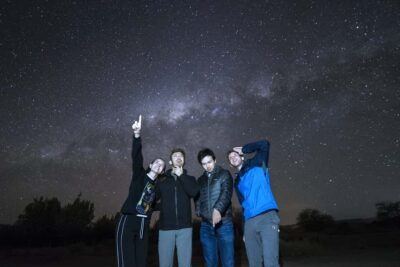
Astronomical Tour with Guide and Pick Up San Pedro de Atacama
Read our review →
“Astronomical Adventure in San Pedro de Atacama”
Read our review →Browse the lists this tour appears in