
REVIEW · STARGAZING AND OBSERVATORY TOURS
Astronomical Tour in San Pedro de Atacama
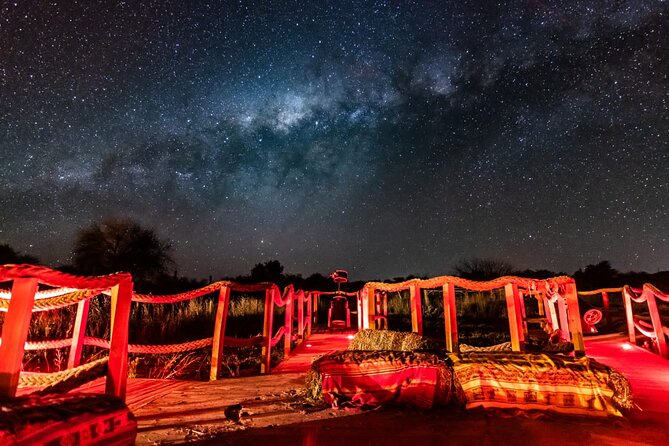
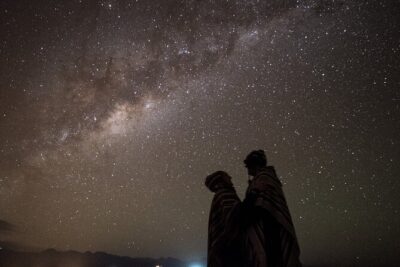
The desert sky does the talking. This three-hour evening at Observatorio Etno-Astronómico Licanantay combines sharp stargazing with an introduction to Licanantay sky traditions, a welcome change from tours built only around Greek constellations. I especially like the chance to view planets and deep-sky objects through telescopes, then receive Milky Way photographs to take home. I also like the warm, sociable finish with hot drinks, snacks, wine, pisco sour, and a cocktail beneath the stars.
The main caution is pickup and communication. Several people had smooth transportation, but others waited far longer than expected or received no pickup at all. Weather can also cancel the evening, and a nearly full moon or passing car headlights can reduce the darkness you came to see.
In This Review
- Key points to know before booking
- Why San Pedro is made for astronomy
- Arriving at Observatorio Etno-Astronómico Licanantay
- The opening talk: stars through a Licanantay lens
- Telescope viewing: planets, stars, and deep-sky objects
- Real-time astrophotography and Milky Way pictures
- Staying warm in the desert night
- The pickup question deserves attention
- How the $49 price measures up
- Weather, moonlight, and realistic expectations
- Who will enjoy this evening most
- My practical verdict
- FAQ
- Where does the astronomical tour take place?
- How long does the tour last?
- What time does the tour begin?
- How many people can join?
- What can I see through the telescopes?
- Is photography included?
- What happens if bad weather cancels the tour?
Key points to know before booking
- Ancestral astronomy takes center stage: You learn about dark constellations and their place in Licanantay culture, not only familiar European star patterns.
- Telescopes add real detail: Depending on the night, you may see the Moon, planets such as Saturn and Jupiter, stars, and selected deep-sky objects.
- Astrophotography is part of the evening: The team takes individual and group photographs with the Milky Way and may help with personal astrophotography.
- The group is capped at 15 people: That keeps the experience smaller than a large bus-based astronomy outing.
- Warmth and refreshments are thoughtfully included: Expect blankets and a hot drink early on, followed by wine, pisco sour, snacks, or a cocktail at the end.
- The sky controls the schedule: Poor weather can lead to a new date or a full refund, and a bright Moon can make faint stars harder to see.
Why San Pedro is made for astronomy
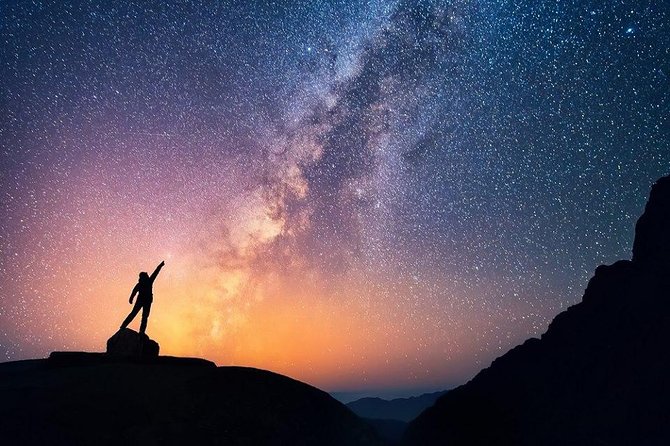
San Pedro de Atacama is one of the world’s great places for looking up. The surrounding Atacama Desert is famously dry, and the darkness outside town gives the night sky a clarity that city residents rarely experience.
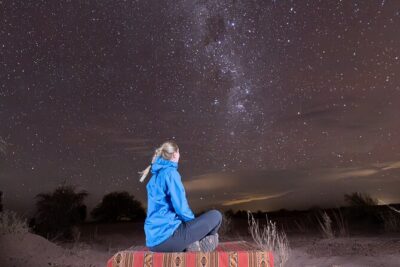
That does not mean every evening will look the same. Clouds, moonlight, road traffic, and seasonal conditions all matter. A clear night with little moonlight can reveal the Milky Way in a way that feels almost unreal. A nearly full moon may make the sky brighter, but it can still give you excellent views of the Moon and bright planets.
This tour is not simply a telescope session. Its cultural angle gives the night a human meaning. The guide introduces dark constellations, the shapes formed in the dark spaces between stars, and explains their importance in local tradition. That is a useful counterpoint to the usual star talk based on Greek mythology.
I particularly value this part because you are not only being told what an object is. You are also being shown how a local culture interpreted the same sky. The experience is aimed at people who want astronomy with a sense of place.
More stargazing nights in San Pedro de Atacama:
- San Pedro de Atacama: Etno-Stargazing Tour with Transfer
★ 4.8 · 629 reviews - The Roofless Experience San Pedro de Atacama Stargazing Tour
★ 5.0 · 522 reviews - San Pedro de Atacama: Stargazing Experience
★ 4.7 · 489 reviews
Arriving at Observatorio Etno-Astronómico Licanantay
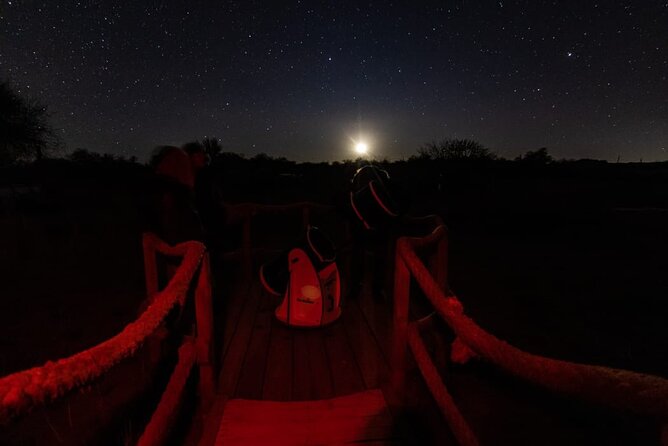
The advertised start window is between 8:30 and 9:00 PM, and the experience lasts about three hours. That makes it a late night, especially if you have an early departure or a sunrise excursion the next morning.
The group limit of 15 is a useful detail. A smaller group generally makes it easier to hear the guide, ask questions, take turns at the telescopes, and receive help with photographs. It also suits couples and families who prefer a personal setting rather than a large crowd.
The setting has received mixed impressions. Some people found it remote, welcoming, and home-like. Others described a backyard setting beside a road, with passing headlights interfering with the darkness. Both points can be true depending on the exact night and position within the grounds.
So keep your expectations sensible. This is not necessarily a huge professional observatory complex with a silent mountaintop horizon. It is a more intimate astronomical setting, with the comfort and social feel of a hosted evening.
The opening talk: stars through a Licanantay lens
The guide begins by helping you identify stars, planets, and constellations overhead. The presentation is given in English and Spanish, so the pace can vary when both languages are used.
A strong guide makes a big difference here. Joaquin and Vicente are singled out for their warm manner, passion, and ability to explain the sky clearly. One guide also took extra time to help with astrophotography and made sure a missed section of the telescope viewing was covered later.
The cultural material is one of the best reasons to choose this tour. You learn about local ways of reading the sky and the role of dark constellations in Licanantay culture. If your interest is only in counting telescope targets, you may find the talk long. If you like stories, interpretation, and the connection between people and the night sky, this section gives the experience more weight.
The bilingual format deserves a practical warning. If the group has many Spanish speakers, the Spanish explanations may be longer than the English ones. That does not make the tour unusable for English speakers, but you may receive less detail or spend more time waiting between translations.
Telescope viewing: planets, stars, and deep-sky objects
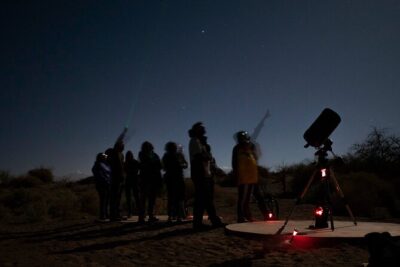
The tour includes telescopes and time to look at several objects. The exact lineup depends on the season and conditions, but the experience has included views of Saturn, Jupiter, the Moon, and other stars and planets.
Expect the telescope portion to be shared. You will not spend three uninterrupted hours at an eyepiece. Much of the evening includes explanations, pointing out objects with a laser, waiting your turn, and moving between activities.
That rhythm suits beginners. You do not need to know the difference between a nebula, a planet, and a constellation before you arrive. The guide provides the framework, then helps you connect the bright points overhead with actual objects.
People who already spend a lot of time with astronomy equipment may want a more technical session. The tour is better suited to a mixed group, especially families, couples, and first-time stargazers who want clear explanations rather than advanced observing theory.
A bright Moon can change the experience. One evening with an almost full Moon still provided views of planets and stars, but faint Milky Way detail was limited. If your priority is the darkest possible sky, check the moon phase before choosing your date.
More things to do in San Pedro de Atacama:
- San Pedro de Atacama: El Tatio Geysers Tour
★ 4.7 · 943 reviews - Tour to the Hidden Lagoons of Baltinache
★ 5.0 · 694 reviews - Piedras Rojas, Altiplanics Lagoons & Salar Full-Day Tour
★ 4.7 · 592 reviews - Half Day Tour to Geysers del Tatio
★ 5.0 · 499 reviews
Real-time astrophotography and Milky Way pictures
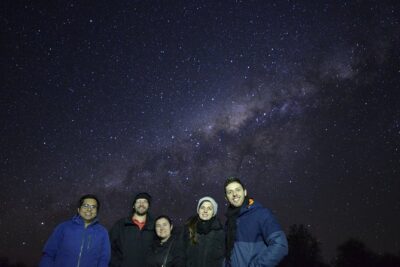
Photography is a major part of the appeal. The team offers real-time astrophotography, and photographs with the Milky Way are provided as part of the evening.
This is valuable because night photography is not easy with a phone or standard camera. The guides can position people, manage the equipment, and create a keepsake that shows more than a dark blur above your head. The result depends on clouds, moonlight, and equipment, but the photographs have been a highlight for many people.
You may also receive help with your own camera setup. Vicente assisted one visitor with astrophotography, while Joaquin helped fill in missed telescope viewing. That kind of individual attention is a strong reason to choose a small-group tour.
Still, photography takes time. If every person receives an individual picture, the process can stretch the evening. One account found that a large part of the tour involved photos after the astronomy talk. If you would rather spend every minute observing, this may feel like a tradeoff.
Bring your patience, and if you have a camera, ask in advance what support is available. The supplied details confirm that astrophotography is part of the activity, but they do not promise a particular camera system, file format, or number of images.
Staying warm in the desert night
Desert days can be hot and desert nights can feel cold. The tour addresses this with hot tea or coffee and lap blankets at the start. That small touch matters because standing still beside a telescope for several hours can make even a mild evening feel chilly.
You should still bring warm clothing. A jacket and additional layers are sensible, especially if you are sensitive to cold. The warm drink is a comfort, not a replacement for proper clothing.
The order of the refreshments is worth noting. The hot drink and blankets come early, while the wine, pisco sour, snacks, and cocktail are generally offered at the end. One person felt the evening ran longer than needed because the snacks arrived only after the stargazing.
That late reception has its own charm. The garden setting, music, lights, bonfire, drinks, and small bites create a relaxed finish. Some people particularly enjoyed the friendly, home-like mood and the sociable guides. You may even encounter the resident cats, which added to the informal atmosphere for some visitors.
If you are driving, remember that alcohol is served. The supplied details do not specify transport arrangements for every booking, so confirm the pickup plan before you reserve.
The pickup question deserves attention
Transportation is the least consistent part of the experience. Some evenings had fine transportation, while others involved confusing pickup instructions, delays, or no pickup at all.
The stated meeting window runs from 8:30 to 9:00 PM, but one person waited about an hour beyond the expected pickup period. Another reported that nobody arrived and that messages went unanswered. Those are serious problems, especially in San Pedro, where you may be standing outside at night with limited information.
I would confirm the pickup details on the day of the tour. Save the provider’s contact information, ask for the exact pickup point and expected time, and do not assume that a vague 30-minute window will be followed closely.
The tour is operated by Agencia GuiasTours. Confirmation is provided at booking, but it is still wise to check the practical details again. This is not a criticism of the astronomy itself. It is advice to protect the evening from an avoidable start.
How the $49 price measures up
At $49 per person, the tour offers more than a simple look through a telescope. The price covers about three hours, admission to the observatory, guiding in astronomy and local sky traditions, telescope access, astrophotography, and refreshments.
That is a fair package if the night is clear and the transport works as planned. The photographs add value for people who want a souvenir without bringing specialized camera equipment. The drinks and food also make the evening feel like a hosted occasion rather than a bare-bones equipment demonstration.
The value is lower if your main goal is a very dark, uninterrupted sky. A road beside the property can bring headlights, and photography and bilingual explanations may take up much of the session. You are paying for a social and educational evening, not only for maximum observing time.
The group size helps justify the cost. With no more than 15 people, the guides have a better chance of helping with questions and cameras than they would in a large coach group. That small scale also makes the reception more personal.
Weather, moonlight, and realistic expectations
Astronomy is never fully predictable. Poor weather can cancel the tour, with the choice of another date or a full refund. The activity also requires a minimum number of participants, so a cancellation for that reason comes with the same general alternatives.
You can cancel for a full refund if you do so at least 24 hours before the start time. Cancellations or changes made inside that window are not refunded or accepted, so do not wait until the afternoon if your plans have changed.
Clouds are the obvious risk, but moonlight is just as important. A clear sky with a full Moon can be beautiful, especially for lunar viewing, yet it will wash out many faint stars. For the best Milky Way chance, choose a date with less moonlight and keep your schedule flexible.
The tour’s strongest evenings have included clear skies, striking Milky Way photographs, shooting stars, and good views through the telescopes. No operator can promise all of that on one night. The right attitude is to treat the sky as part of the program, not a guaranteed display.
Who will enjoy this evening most
I would recommend this tour to:
- First-time stargazers who want patient explanations
- Couples who like a romantic drink and photographs under the stars
- Families looking for an evening activity with a cultural element
- People curious about Indigenous South American sky traditions
- Amateur photographers who want help with night-sky images
- Anyone who prefers a small group and a friendly setting
You may want another option if you want a strictly technical astronomy session, total silence, or the darkest possible site with no nearby road. You should also think twice if you have an early morning tour and dislike late nights.
The bilingual format is manageable, but English speakers should be ready for some uneven timing. If detailed English instruction is essential, confirm how the evening will be divided between languages.
My practical verdict
This is a warm, personal astronomy evening with real strengths: excellent desert skies when conditions cooperate, well-presented astronomy, Licanantay cultural context, telescopes, and memorable Milky Way photographs. Joaquin and Vicente add to the feeling of being welcomed into a small local gathering rather than processed through a large attraction.
The weak points are practical and environmental. Pickup can be disorganized, the road may bring unwanted headlights, the bilingual talk may not be evenly balanced, and refreshments and photographs can extend the late-night schedule.
I would book it if you want astronomy plus culture and companionship, especially if you are happy with a hosted garden-style setting. Book at least a few weeks ahead if possible, since the experience is often reserved about 25 days in advance. Before the evening, confirm pickup, check the moon phase, bring warm layers, and keep your expectations tied to weather.
For many people, one clear night here can make the $49 worthwhile. Just remember that in the Atacama, the sky is the star of the show, and even the best guide cannot order it to perform.
FAQ
Where does the astronomical tour take place?
The tour takes place at Observatorio Etno-Astronómico Licanantay in San Pedro de Atacama, Chile.
How long does the tour last?
The experience lasts approximately three hours.
What time does the tour begin?
The stated opening window is between 8:30 PM and 9:00 PM, from Monday through Sunday.
How many people can join?
The tour has a maximum group size of 15 people.
What can I see through the telescopes?
Depending on the night, you may see the Moon, Saturn, Jupiter, stars, planets, and deep-sky objects. The exact viewing conditions are affected by weather and moonlight.
Is photography included?
Yes. The experience includes real-time astrophotography and photographs with the Milky Way. The guides may also provide help with personal astrophotography.
What happens if bad weather cancels the tour?
You will be offered a different date or a full refund if the experience is canceled because of poor weather. A cancellation caused by the minimum number of participants also comes with the option of another date, another experience, or a full refund.
Just added in San Pedro de Atacama
- Vallecito★ 4.7 · 13 reviews
- Atacama Desert and Magic Bus Visit★ 4.8 · 15 reviews
- San Pedro de Atacama: Valle de la luna★ 3.0 · 3 reviews
- Valle de la Luna: A Moon-Like Escape in Atacama★ 5.0 · 3 reviews
- Triple Tour: Piedras Rojas + Altiplanic Lagoons + Chaxa Lagoon★ 5.0 · 1 review
- Red Stones + Altiplánica Lagoons★ 5.0 · 1 review
- Atacama Stargazing Tour Under One of the World’s Clearest Skies★ 4.0 · 3 reviews
- Tour to Laguna Cejar and Tibenquinche★ 4.5 · 7 reviews
Stargazing and Observatory Tours, compared.
The Roofless Experience San Pedro de Atacama Stargazing Tour
Read our review →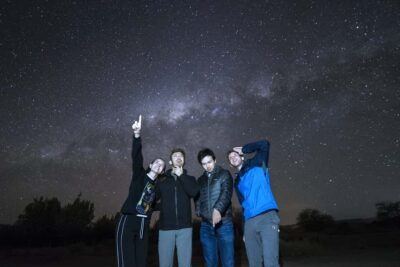
Astronomical Tour with Guide and Pick Up San Pedro de Atacama
Read our review →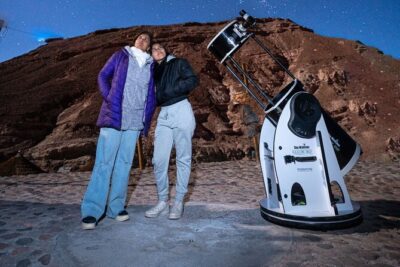
“Astronomical Adventure in San Pedro de Atacama”
Read our review →Browse the lists this tour appears in