
REVIEW · STARGAZING AND OBSERVATORY TOURS
Astronomical Experience with Astrophotography in Atacama
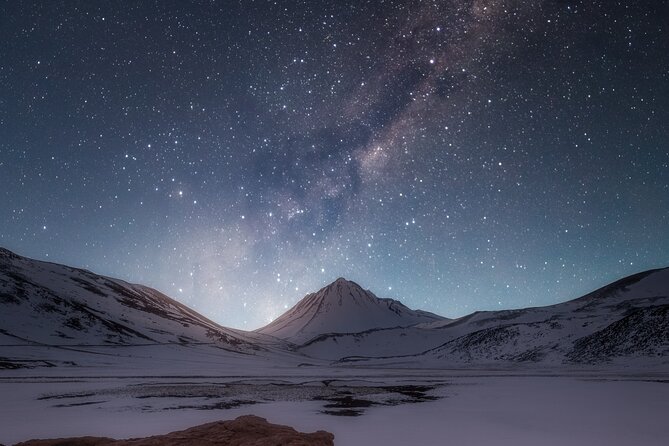
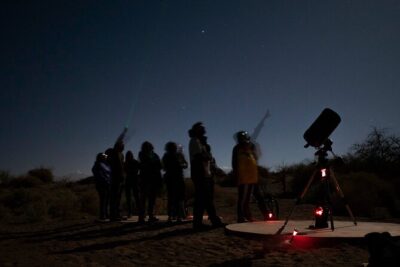
The desert sky puts on the show. This two-and-a-half-hour night tour takes you 10 kilometers from San Pedro de Atacama, where low light pollution gives the stars room to shine. You’ll hear about the Andean view of the heavens, look through telescopes, and pose for photographs beneath the southern sky.
I like the tidy three-part plan and the small maximum group of 14. I also like that the $42 price includes transport to the viewing site, telescope time, drinks, a small midnight snack, and astrophotography. The main catch is simple: clear skies are not guaranteed, and moonlight or cloud can weaken the experience.
In This Review
- Atacama starlight in five useful points
- Leaving San Pedro at 8 p.m. for darker skies
- The Andean worldview gives the stars a human meaning
- Telescope time turns bright points into actual worlds
- Astrophotography creates the souvenir
- Drinks and a small snack round out the night
- How much value do you get for $42?
- The biggest risk is not the telescope
- Language and photo follow-up deserve attention
- Who will enjoy this 2.5-hour astronomy outing?
- Should you book the Atacama astrophotography tour?
- FAQ
- Where does the astronomy tour take place?
- What time does the tour start?
- How many people can join?
- What are the three stages of the experience?
- Can I see planets through the telescopes?
- Are food and drinks included?
- Will I receive digital photographs?
- What happens if the weather is bad?
Atacama starlight in five useful points
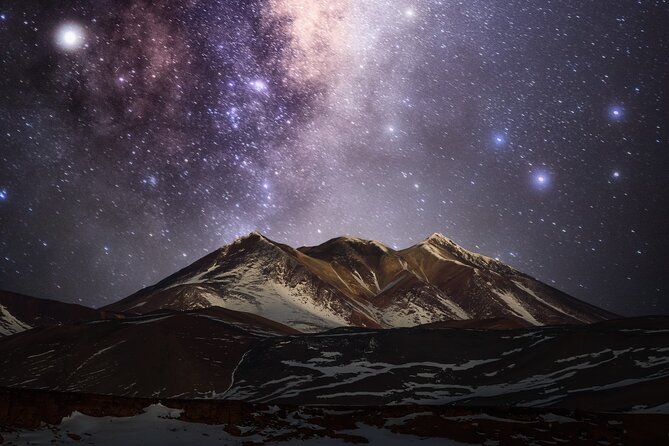
- 10 kilometers outside San Pedro: The tour leaves town for a darker setting with less artificial light.
- Three distinct stages: You get an Andean worldview talk, telescope observation, and a night-sky photo session.
- Telescopes reveal more than your eyes: Planets and details that are not visible without optical help are part of the viewing.
- A small group of up to 14: This is more manageable than a large bus outing, especially around a telescope.
- Photos are part of the experience: The astrophotography session gives you a souvenir, though photo delivery should be confirmed.
- Weather controls the evening: Poor conditions can lead to a new date or a full refund, while moonlight may still reduce star visibility.
Leaving San Pedro at 8 p.m. for darker skies
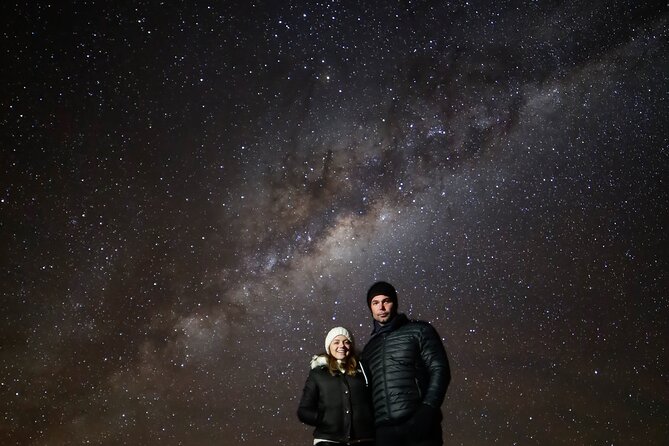
The evening begins at the meeting point in San Pedro de Atacama at 8 p.m. From there, you travel about 10 kilometers to the observation site. That short ride matters because the town’s artificial light is reduced once you leave the built-up area behind.
You should think of this as a focused night outing rather than a full evening expedition. The listed duration is about two hours and 30 minutes, so the time is used for astronomy, explanation, and photographs instead of a long drive.
The maximum group size is 14 people. That is a useful limit for an activity built around one or more telescopes. You are less likely to feel lost in a crowd, and it should be easier to get a turn at the eyepiece or ask a question.
The tour is suitable for most people, according to the activity information. Still, the evening is outdoors and the experience depends on looking upward for extended periods. If you dislike night activities or prefer a tightly scheduled indoor program, this may not be your best choice.
More stargazing nights in San Pedro de Atacama:
- San Pedro de Atacama: Etno-Stargazing Tour with Transfer
★ 4.8 · 629 reviews - The Roofless Experience San Pedro de Atacama Stargazing Tour
★ 5.0 · 522 reviews - San Pedro de Atacama: Stargazing Experience
★ 4.7 · 489 reviews
The Andean worldview gives the stars a human meaning
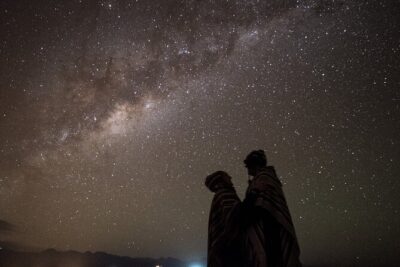
The first stage is a talk about the Andean worldview. This helps keep the evening from becoming a simple checklist of planets and constellations.
Astronomy in the Atacama is not only about identifying objects in space. The sky also carries cultural meaning, and an explanation of the Andean view gives you a better sense of how the heavens have been understood from this part of South America.
I like this opening because it gives context before the telescope appears. A good sky talk can help you notice patterns and ideas that you might otherwise miss. It also gives the experience a local connection instead of treating the desert as merely a convenient dark room for stargazing.
Language balance is worth checking before you go. One English-speaking participant praised the guide for translating everything well, even though only a few people in the group spoke English. Another person felt that roughly 80 percent of the explanation was in Spanish and only 20 percent in English, and missed much of the information.
That difference may come down to the group on a particular night, but it is a fair concern. If you need the talk in English, ask the operator about the expected language balance before departure. The astronomy can still be enjoyable, but the cultural explanation is a major part of what you are paying for.
Telescope time turns bright points into actual worlds
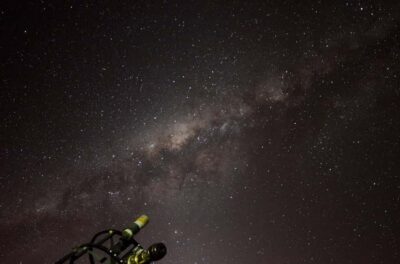
The second stage uses telescopes to show planets and details that you cannot see with the naked eye. This is where the outing shifts from broad sky watching to a closer look at selected objects.
The value of telescope time depends on the conditions and the guide’s ability to explain what you are seeing. A bright point overhead can become a planet, with visible detail that gives you a stronger sense of scale and distance. The activity description does not promise a fixed list of planets, so the exact view will change with the date, weather, and position of objects in the sky.
That uncertainty is normal in astronomy. You are not visiting a museum exhibit with the same display every day. The sky changes, and the guide must work with what is visible that night.
Some nights can offer extra rewards. One account describes seeing several shooting stars, which is the sort of unscheduled moment that no tour can guarantee. You might see something similar, or you might simply get a clear look at planets and stars through the equipment.
The group limit of 14 helps here. Telescope viewing can become frustrating when too many people are waiting, especially if the explanation is repeated in several languages. A small group does not remove waiting entirely, but it should make the process more practical.
Astrophotography creates the souvenir
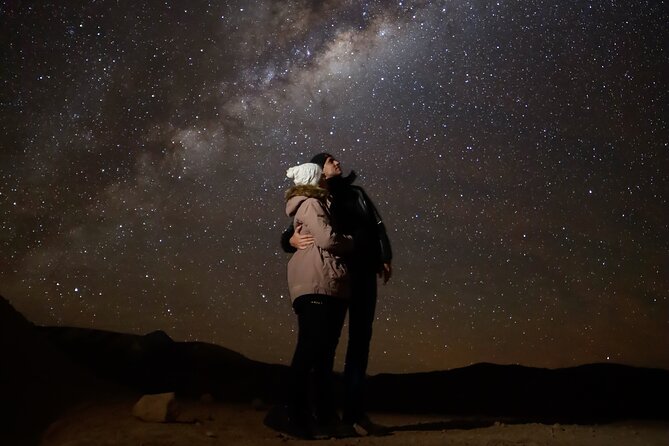
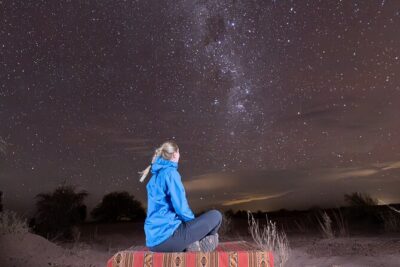
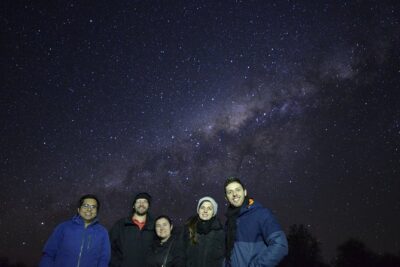
The final stage is a photo session with the starry sky behind you. This is a nice touch because it gives you something more lasting than a memory card full of dark photographs.
Night-sky photography is not the same as taking a quick portrait on a phone. The supplied information indicates that the photographs used to promote the experience were made with a high-resolution lens and flash, so you should keep your expectations sensible. The best images may look more polished than what you can create by simply pointing your own camera upward.
You are meant to receive digital pictures from the experience, but delivery has not always been reliable. One person said two promised digital photographs never arrived. The operator apologized and asked the customer to contact them on WhatsApp to receive the files.
My practical advice is to confirm how and when the photos will be sent before you leave the site. Keep any booking details and the operator’s contact information. The photo session is a strong part of the package, but it only adds value if the images reach you.
The photo stop also changes the mood of the evening. Instead of only standing in the dark and looking up, you get a short personal record of being there. For many people, that is worth more than another technical explanation of a constellation.
More things to do in San Pedro de Atacama:
- San Pedro de Atacama: El Tatio Geysers Tour
★ 4.7 · 943 reviews - Tour to the Hidden Lagoons of Baltinache
★ 5.0 · 694 reviews - Piedras Rojas, Altiplanics Lagoons & Salar Full-Day Tour
★ 4.7 · 592 reviews - Half Day Tour to Geysers del Tatio
★ 5.0 · 499 reviews
Drinks and a small snack round out the night
The price includes drinks and, according to one detailed account, a small midnight snack. Wine was also mentioned as part of the evening, including a description of wine helping warm people up.
These extras are modest, but they matter during a late outdoor activity. You are not buying a meal, so you should not arrive expecting dinner. Still, a drink and snack can make the waiting and viewing periods more comfortable.
The exact food and drink selection is not specified. For that reason, bring your own expectations down to refreshment level. If you have strict dietary needs, ask the provider directly rather than assuming the snack will suit you.
The social side of the stop may appeal to you as much as the astronomy. A shared drink beneath the night sky can make the evening feel relaxed rather than technical. If you prefer a quiet, science-focused session with no social extras, this part may feel less important.
How much value do you get for $42?
At $42 per person, the tour is priced as an accessible introduction to the Atacama night sky. You are paying for the ride 10 kilometers out of San Pedro, a guided talk, telescope observation, a photograph session, drinks, and a small snack.
That is a fair package if the sky is clear and the language arrangement works for you. You do not need to arrange separate transport to a darker location, find telescope equipment, or organize a photographer. The tour brings those pieces together in one short evening.
The value drops if the conditions are poor. One person attended when the stars were barely visible, possibly because of increasing moonlight, and felt the operator should have offered an advance warning or a free change of date. This is important: a clear forecast is not the same as a dark sky. Clouds can block the stars, while a bright or growing moon can wash out fainter points even when the weather is technically good.
The operator states that poor weather can lead to a different date or a full refund. You can also cancel for a full refund if you do so at least 24 hours before the start time. Cancellations made less than 24 hours before the 8 p.m. start are not refundable, and late changes are not accepted.
Because the tour is booked around 31 days ahead on average, you may want to reserve early if your schedule is tight. At the same time, do not arrange your entire trip around one night of stargazing. Leave room for a second possible date if the sky forecast looks uncertain.
The biggest risk is not the telescope
The most important question is not whether the tour includes a telescope. It does. The question is how good the sky will be on your chosen night.
The operator says the activity requires good weather and may cancel when conditions are unsuitable. That is the correct call for an astronomy outing. A cloudy sky offers little return for your time or money, and a cancellation can protect you from a disappointing night.
The harder case is partial visibility. If the sky is clear but the moon is bright, the tour may still operate while the star field looks less dramatic. One person felt this should have been explained in advance, with an option to cancel or move the booking.
I would ask three questions before the tour:
- Is the forecast suitable for clear viewing?
- How bright will the moon be?
- If conditions are poor but the tour is not formally canceled, can you move to another night?
You may not receive a guarantee, but the answers will help you decide if this is the right evening to go.
Language and photo follow-up deserve attention
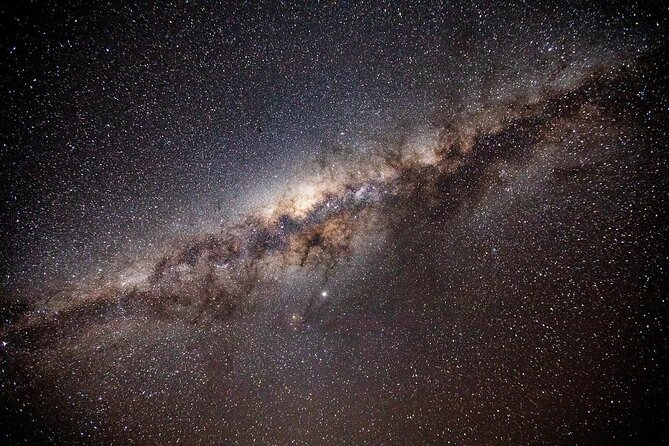
The experience can work well for English speakers, but the language balance is not guaranteed in the supplied information. One English-speaking participant praised the guide’s effort to translate, while another found the English portion too short.
This is not a minor detail. The Andean worldview talk and telescope explanations are central to the tour. If you understand little Spanish, ask for clear confirmation that the guide can provide the key explanations in English.
The photo handoff also needs a little attention. Since one participant did not receive the promised two digital pictures, check the delivery process before the group disperses. If the operator uses WhatsApp, save the contact and send a message promptly if the files do not appear.
These are easy issues to manage, but they can affect your final impression. A good star photo is a fine souvenir. Chasing it after returning home is less pleasant.
Who will enjoy this 2.5-hour astronomy outing?
I would recommend this experience to you if you are visiting San Pedro for a short time and want a simple introduction to the southern night sky. It suits first-time stargazers, couples, families, and anyone who likes the idea of combining science, culture, and a few relaxed extras.
It is also a good fit if you are coming from the northern hemisphere and want help getting oriented to a different part of the sky. The change in visible stars can make the evening feel fresh even if you already know a little astronomy.
You may want a different plan if you are a serious astrophotographer seeking long, uninterrupted exposure time. This is a guided group activity with a fixed schedule, not a private photography workshop.
You should also think twice if your only available night has poor conditions and you cannot spare another date. The tour’s strongest feature, the sky itself, is also the part nobody can control.
Should you book the Atacama astrophotography tour?
Book it if you want a reasonably priced, compact introduction to stargazing with transport, a cultural talk, telescopes, drinks, and a photo session in one package. The small group size and southern-hemisphere setting add real value.
Before paying, check the expected language balance, ask about the moon and cloud forecast, and confirm how the digital photographs will be delivered. If the sky looks doubtful, use the free cancellation rule at least 24 hours ahead, or ask about moving to another night.
I would choose this tour for its structure and price, but I would treat the clear sky as the deciding factor. On a good night, it can be a memorable way to meet the Atacama stars. On a poor one, the telescopes and photos cannot do much to rescue the evening.
FAQ
Where does the astronomy tour take place?
The tour meets in San Pedro de Atacama and then travels about 10 kilometers to the observation location, which has very little light pollution.
What time does the tour start?
The stated start time is 8 p.m. The activity lasts approximately two hours and 30 minutes.
How many people can join?
The maximum group size is 14 people.
What are the three stages of the experience?
The evening includes a talk about the Andean worldview, observation through telescopes, and a photo session with the starry sky behind you.
Can I see planets through the telescopes?
Yes. The activity includes telescope viewing of planets and some details that cannot be seen with the naked eye.
Are food and drinks included?
Drinks and a small snack are included. Wine has also been described as part of the experience, but the exact refreshments are not specified.
Will I receive digital photographs?
A digital photo souvenir is part of the experience, and two digital pictures have been promised. Since delivery has not always been reliable, confirm the process with the operator.
What happens if the weather is bad?
If poor weather causes the tour to be canceled, you will be offered another date or a full refund. You can cancel your booking for a full refund up to 24 hours before the start time.
Just added in San Pedro de Atacama
- Vallecito★ 4.7 · 13 reviews
- Atacama Desert and Magic Bus Visit★ 4.8 · 15 reviews
- San Pedro de Atacama: Valle de la luna★ 3.0 · 3 reviews
- Valle de la Luna: A Moon-Like Escape in Atacama★ 5.0 · 3 reviews
- Triple Tour: Piedras Rojas + Altiplanic Lagoons + Chaxa Lagoon★ 5.0 · 1 review
- Red Stones + Altiplánica Lagoons★ 5.0 · 1 review
- Atacama Stargazing Tour Under One of the World’s Clearest Skies★ 4.0 · 3 reviews
- Tour to Laguna Cejar and Tibenquinche★ 4.5 · 7 reviews
Stargazing and Observatory Tours, compared.
The Roofless Experience San Pedro de Atacama Stargazing Tour
Read our review →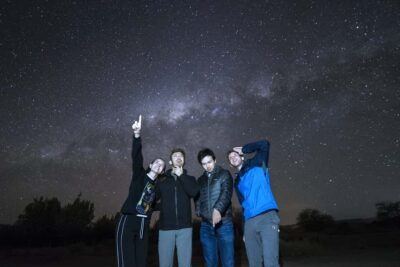
Astronomical Tour with Guide and Pick Up San Pedro de Atacama
Read our review →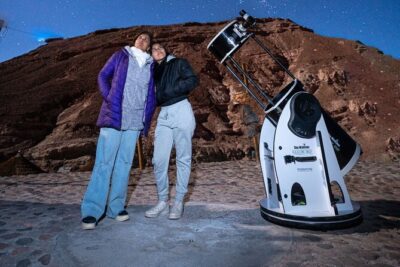
“Astronomical Adventure in San Pedro de Atacama”
Read our review →Browse the lists this tour appears in