
REVIEW · CHILEAN FOOD TOURS
Santiago Chilean and Peruvian Cooking Class with a Local Carol
Cooking tastes better at home. This private Santiago class lets you prepare Chilean or Peruvian dishes with Carol and Paulo, then sit down to eat together. I especially like the personal setting and the choice between two South American food traditions. I also like that the meal, ingredients, local alcohol, taxes, and gratuities are included. The main drawback is the small kitchen, so much of the preparation happens at the dining table rather than around a large cooking station.
You get about three hours with the couple, including roughly one hour of hands-on preparation and a relaxed meal afterward. Carol explains the local ingredients and cooking steps, while the conversation can turn to food, daily life in Chile, and the differences between Chilean and Peruvian cooking. At $184 per person, this is not a bargain meal, but it can be good value if you want a private cultural evening rather than a standard restaurant dinner.
In This Review
- Key points at a glance
- A home kitchen in Providencia
- The first hour: preparing a Chilean or Peruvian menu
- What you actually do at the table
- Sitting down to eat what you prepared
- Why the private format matters
- Understanding the $184 price
- Timing, meeting point, and practical planning
- Who will enjoy this Santiago cooking class?
- Final call: should you book Carol’s cooking class?
- FAQ
- Where does the cooking class take place?
- How long does the experience last?
- Is this a private activity?
- Can I choose Chilean or Peruvian food?
- Is a vegetarian option available?
- Are food and drinks included?
- Is hotel pickup provided?
Key points at a glance
- Choose Chilean, Peruvian, or a mixed menu: You can request dishes from either tradition, giving you more control than a fixed cooking class.
- Cook in Carol’s Santiago home: The experience takes place at a private apartment in Providencia, not a formal culinary school.
- Expect about one hour of cooking: You will help with preparation, while Carol handles some of the work and final touches in the kitchen.
- The meal is part of the lesson: After cooking, you eat the dishes together and can continue talking about food and life in Chile.
- Small groups get the most from it: This is a private activity for only your party, with no strangers added.
- Plan your own way there: Hotel pickup and drop-off are not included, and the meeting point is on Antonio Bellet.
A home kitchen in Providencia
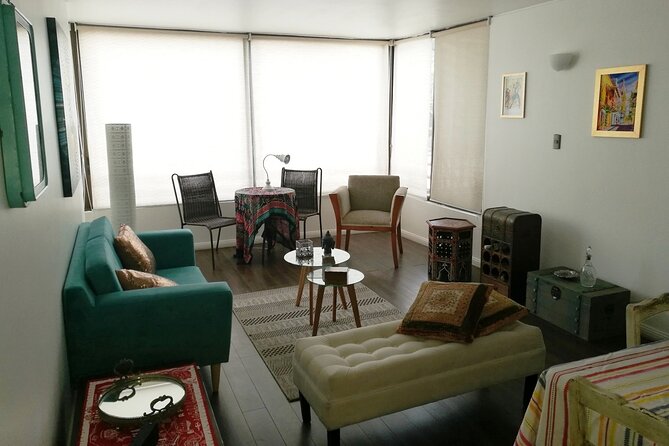
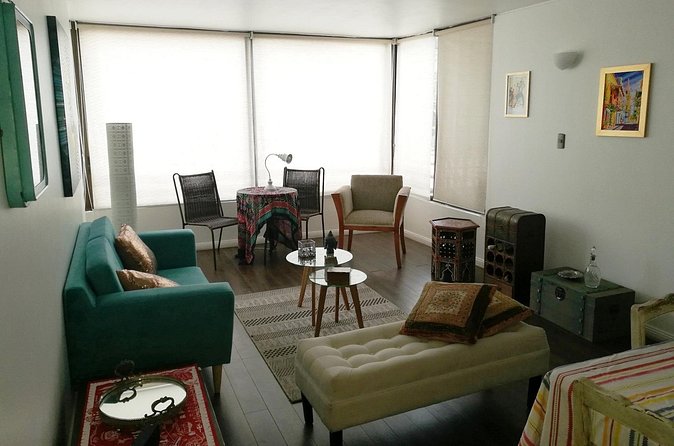
The class begins at Antonio Bellet in Providencia, one of Santiago’s central urban areas. You meet Carol there and enter a private home, which immediately gives the experience a more personal feel than a class held in a restaurant or cooking studio.
Carol and Paulo host the experience, and Carol leads the cooking. At times, she may be joined by an assistant such as Christine, who has spoken fluent English and helped explain local ingredients and South American food traditions.
I like this setting because the focus is not only on recipes. You are also seeing how a meal comes together in an actual Santiago home. The conversation is part of the evening, and the tone is social rather than strictly instructional.
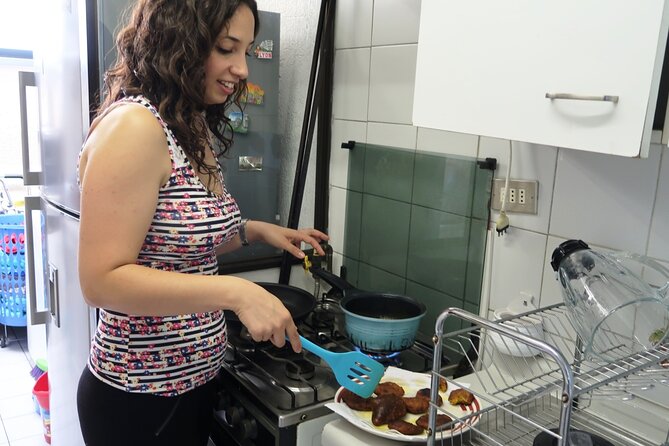
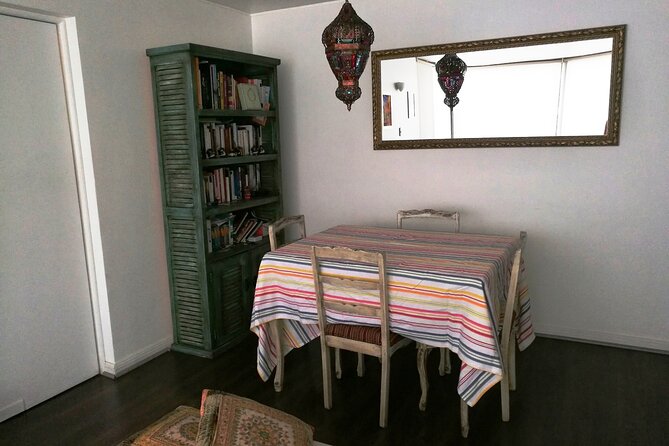
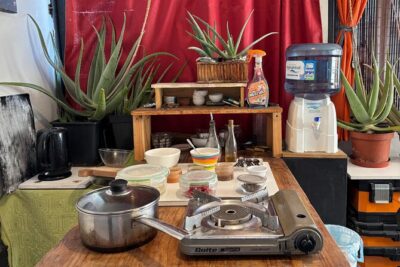
That said, you should know what kind of kitchen you are entering. The kitchen is small, so you will not spend the entire class standing at a counter with your own burner and cutting board. Instead, you will use the dining table for much of the preparation and watch Carol finish parts of the meal in the kitchen.
For some people, this makes the class feel more natural. For others, especially serious home cooks looking for technical training, it may feel less hands-on than expected. I would treat it as a shared meal with cooking instruction, not as a professional chef workshop.
More Food Tours in Santiago
- Cajon Del Maipo Including Wine with Picnic and Empanada
★ 5.0 · 612 reviews - Santiago Half-Day Walking Tour with Hotel Pick up & Food Sample
★ 4.5 · 467 reviews - New Concha y Toro Tour Marques with class, extra tasting y food
★ 4.0 · 329 reviews
The first hour: preparing a Chilean or Peruvian menu
The cooking portion lasts about one hour. Carol and Paulo guide you through the preparation of an appetizer or dessert and a main dish, with the exact menu changing according to the season and your choice.
You can select a Chilean menu, a Peruvian menu, or a combination of both. That flexibility is one of the strongest reasons to book this experience. Chile and Peru share ingredients and food influences, but their traditional dishes can feel quite different in flavor and style.
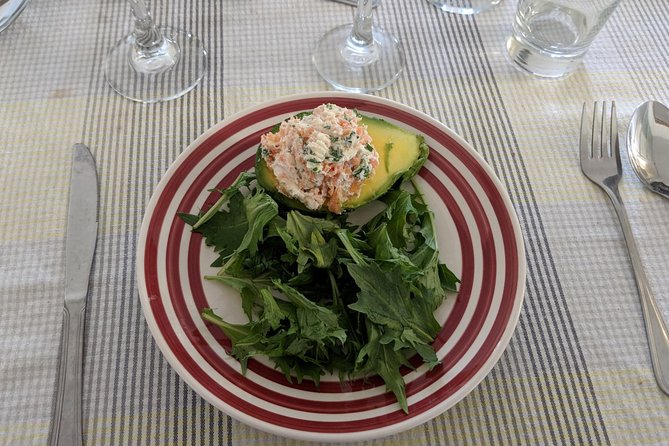
A Chilean meal might begin with sopaipillas, fried pastries often served as a snack or starter, or pebre, a fresh mixture of tomatoes, onion, and coriander. You might also prepare palta reina, avocado filled with smoked salmon, cream cheese, and parsley.
For a Chilean main course, pastel de jaiba is a possible choice. This is a crab casserole, a comforting dish that gives you a taste of Chile’s coastal food traditions without requiring a separate seafood restaurant visit.
The Peruvian choices offer a different route. You might start with cancha, toasted corn nuts, along with fried plantain and olives. A possible main course is ají de gallina, a creamy, gently spiced chicken dish that has some similarities to curry.
Dessert can also shift the national focus. A Chilean cake may finish the meal, while crema volteada offers the Peruvian version of a smooth caramel flan.
The menu is not fixed, so you should give Carol clear information when booking. Vegetarian requests are possible, and you should report allergies, dietary restrictions, and cooking preferences at that time. Since the food depends on the season, you should also expect some changes in the final dishes.
What you actually do at the table
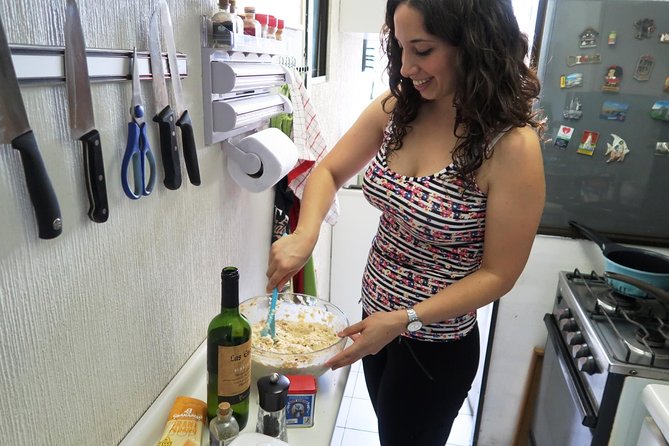
The class is hands-on, but not every step is performed by you. Carol does some of the preparation and then shows you how to help, explains the ingredients, and directs the cooking process.
You may work at the dining table while Carol adds the finishing touches in the kitchen. This arrangement means you can ask questions and keep the conversation going, but it also limits how much of the cooking you control.
I see that as a fair trade for the home setting. You are not simply watching a demonstration, yet you are also not expected to manage a full meal alone in an unfamiliar kitchen. The pace should suit people who want to learn a few useful dishes without spending an entire day on culinary technique.
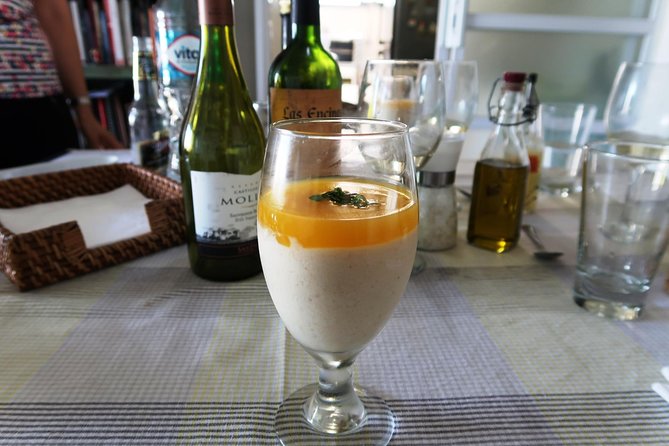
The food itself provides a useful introduction to local ingredients. Pebre, avocado, crab, smoked salmon, toasted corn, plantain, and creamy sauces each point to different parts of Chilean and Peruvian food culture. Carol’s explanations help connect those ingredients to the meal instead of leaving you with a recipe and no context.
If you want to bring the lesson home, pay attention to the basic methods rather than trying to memorize every measurement. The experience is short, and the value comes from understanding how the dishes are assembled and served.
Sitting down to eat what you prepared
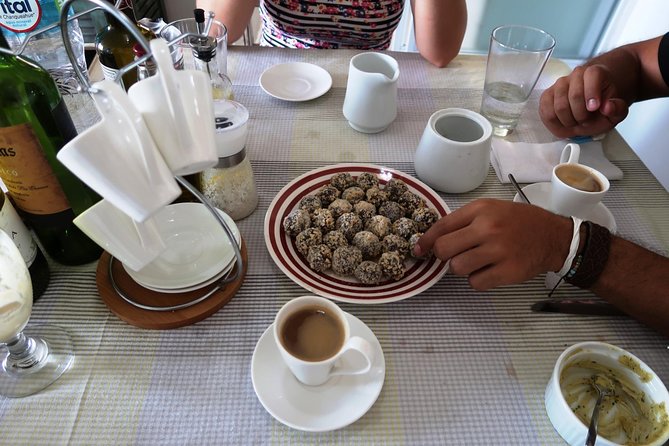
After about an hour of cooking, you sit down for the meal. This is not a quick tasting at the end of class. The food you helped prepare becomes a shared home-cooked dinner, and you eat it with Carol, Paulo, and possibly an assistant.
That social time is a major part of the experience. The conversation can cover Chilean and Peruvian food, local drinks, and what daily life is like in Chile. Several people have found the relaxed talk with the young couple just as meaningful as the food itself.
You receive one or two glasses of local alcohol with the meal. The drinks are included, along with all food, taxes, fees, and gratuities. If you do not drink alcohol, you should clarify your preference when arranging the experience, since the provided inclusion is specifically local alcohol.
The meal also gives you a chance to compare the two cuisines in a way a single restaurant visit may not. You might taste the fresh, sharp character of pebre beside a creamy ají de gallina, or compare a Chilean dessert with crema volteada.
I appreciate this format because it leaves room for conversation. A restaurant can give you polished food, but it rarely gives you the same chance to ask how a dish fits into someone’s home cooking or national food culture.
A completely different kind of day out:
- Valparaiso Port and Viña del Mar with Casablanca Wine Tasting
★ 5.0 · 6,110 reviews - Santiago: Cajon del Maipo/Embalse del Yeso Tour with Picnic
★ 4.3 · 3,789 reviews - Santiago: Vina Del Mar, Valparaiso, Casablanca & Reñaca Tour
★ 4.2 · 2,838 reviews - Cable Car, Funicular and Sightseeing Bus in Santiago one day
★ 5.0 · 2,325 reviews
Why the private format matters
This is a private activity, so only you and your own party participate. That matters at $184 per person because the price is buying privacy as much as food instruction.
A private format is especially useful if your group has dietary needs, a strong interest in one cuisine, or different levels of cooking experience. You can request Chilean food, Peruvian food, or a mixture instead of accepting a menu designed for a large class.
It also creates more space for questions. You can ask about ingredients, preparation, Chilean customs, or life in Santiago without competing with a room full of people.
The trade-off is that the price is high for a three-hour food experience. A restaurant meal would cost less, and a larger cooking class might offer more active cooking time for a lower rate. I would choose this only if the home visit and personal conversation are important to you.
The strongest value is found by people who want a warm cultural exchange. If you only want to learn a large number of recipes, this may not be the best use of your budget.
Understanding the $184 price
At $184 per person, this class is a premium experience. The cost includes the private instruction, the home-cooked meal, all ingredients, one or two glasses of local alcohol, taxes, handling charges, and gratuities.
You are also paying for a private host couple, a flexible menu, and a small-group setting. There is no separate bill at the end, which makes the price easier to understand once you consider everything included.
Still, three hours is a fairly short period for the price. Only about one hour is devoted to cooking, while the rest is the meal and conversation. That is a benefit if you want an easy evening with food and company. It is a limitation if your goal is intensive kitchen practice.
I would compare it with what you value in Santiago. If your ideal evening includes a local home, personal attention, and dishes you helped prepare, the price can make sense. If you are choosing based mainly on quantity of food or technical instruction, you may find better value elsewhere.
The consistently positive response to Carol’s warmth and organization also matters. A poorly run home dinner would not justify this price, but the experience is designed around careful planning and personal hosting.
Timing, meeting point, and practical planning
The experience lasts approximately three hours and ends back at the meeting point on Antonio Bellet. Hotel pickup and drop-off are not included, so you need to arrange your own way to Providencia.
Allow enough time to reach the meeting point. The booking confirmation is sent within 48 hours, subject to availability, so it is sensible to arrange this before your Santiago schedule becomes crowded. The activity is often booked about 13 days ahead, which suggests that leaving it until the last minute may not be wise.
You can cancel for a full refund if you do so at least 24 hours before the start time. Changes or cancellations made inside that period are not accepted for a refund.
Because the event takes place in a private home, tell the host about allergies, dietary restrictions, vegetarian needs, or cooking preferences at booking. Do not wait until you arrive. The seasonal menu may change, but early notice gives Carol the best chance to plan a suitable meal.
The experience is also worth placing on an evening when you do not have another fixed activity immediately afterward. The cooking lasts one hour, but the meal and conversation are an important part of the visit. Rushing away would undercut much of what you are paying for.
Who will enjoy this Santiago cooking class?
I would recommend it most strongly to couples, families, and small private groups who enjoy talking with local people. It also suits solo visitors who want a personal meal and do not mind paying a premium for a private booking.
Food-focused visitors will appreciate the menu choices. You can sample a Chilean dish, compare Chilean and Peruvian flavors, or ask for a mixture of both. People interested in daily life in Santiago may value the home setting even more than the recipes.
English speakers should find the class manageable. Carol and her assistant Christine have been described as speaking flawless English, which helps when discussing unfamiliar ingredients and cooking methods.
This is less suitable for anyone expecting a large professional kitchen, a full chef’s course, or constant physical participation. Since the kitchen is small, some of the work happens at the dining table and Carol handles the final cooking steps.
It may also be a poor fit if you want a completely fixed menu. Seasonal changes apply, and the dishes depend partly on the menu you select and the ingredients available.
Final call: should you book Carol’s cooking class?
Book it if you want a private evening built around food, conversation, and a real Santiago home. Carol and Paulo’s friendly hosting, the Chilean and Peruvian menu choices, and the included meal and drinks make this more than a recipe lesson.
Think carefully about the price and the kitchen setup. At $184 per person, you should value the social side of the experience. If that sounds like your kind of evening, this is a thoughtful way to learn about Chile through food. If you want maximum cooking time for your money, choose a formal class instead.
FAQ
Where does the cooking class take place?
The class takes place in a local home near Antonio Bellet in Providencia, Santiago, Chile. The activity ends back at the meeting point.
How long does the experience last?
The experience lasts approximately three hours. The cooking portion takes about one hour, followed by the meal you helped prepare.
Is this a private activity?
Yes. Only your group participates, so the class is private and personalized.
Can I choose Chilean or Peruvian food?
Yes. You can choose a Chilean menu, a Peruvian menu, or a mixture of both. The menu may vary with the season.
Is a vegetarian option available?
Yes. A vegetarian option is available, but you must request it when booking.
Are food and drinks included?
All food is included, along with one or two glasses of local alcohol. Taxes, fees, handling charges, and gratuities are also included.
Is hotel pickup provided?
No. Hotel pickup and drop-off are not included. You must make your own way to the meeting point on Antonio Bellet.
Just added in Santiago
- Walking City Tour with Funicular, Cable Car and Tasting★ 4.3 · 6 reviews
- VIÑA DEL MAR AND VALPARAISO TOUR★ 4.8 · 20 reviews
- Tour VIÑA CONCHA Y TORO + CASA MARQUES – Chile, from Santiago.★ 5.0 · 2 reviews
- Undurraga + Isla Negra + San Afonso del Mar —– Full day★ 4.1 · 8 reviews
- Undurraga Wine tour★ 4.2 · 15 reviews
- Southcoast – Private Full-Day tour★ 5.0 · 6 reviews
- Santiago Private walking tour with Lunch★ 5.0 · 5 reviews
- Zapallar : nature, sea and local flavours★ 5.0 · 6 reviews
Chilean Food Tours, compared.
Cajon Del Maipo Including Wine with Picnic and Empanada
Read our review →
Santiago Half-Day Walking Tour with Hotel Pick up & Food Sample
Read our review →
New Concha y Toro Tour Marques with class, extra tasting y food
Read our review →
Valparaiso & Casablanca : Wine, Gastronomy and Living Culture
Read our review →
4h Cooking Class in Santiago with 8 Recipes & Bottomless Drinks
Read our review →
Santiago city experience: Walking tour, Market visit, Lunch & Coffee included
Read our review →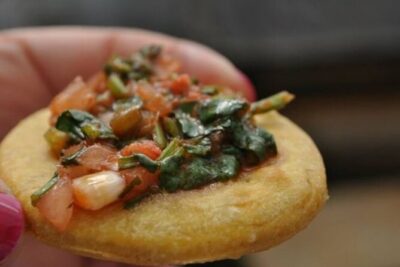
Learn to Prepare the Famous Chilean Pine Empanada
Read our review →Browse the lists this tour appears in