
REVIEW · CHILEAN FOOD TOURS
Street Food Tour in Santiago with a Local Guide
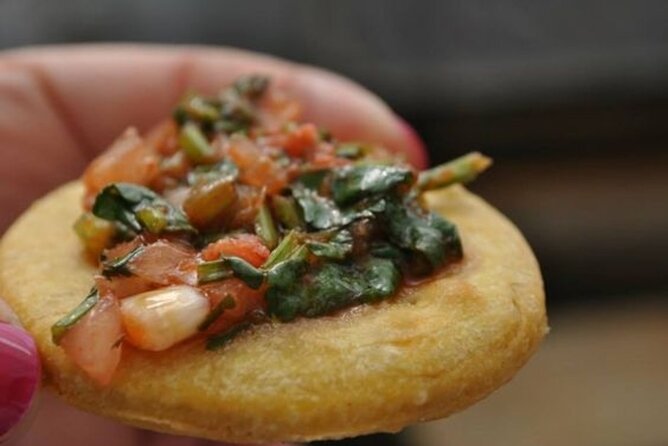
Come hungry, leave oriented. This private three-hour walk pairs Chilean street food with Santiago’s central sights, moving from Barrio Lastarria and the National Museum of Fine Arts to Mercado Central, Plaza de Armas, and Cerro Santa Lucia. I like the personal format, since your guide can adjust the food and pace to your interests. I also like the chance to try local staples such as empanadas, the completo Italiano, pastel de choclo, and a traditional peach drink. The main caution is that the quality and route can depend heavily on your assigned guide, and one poor experience involved missed stops and weak knowledge of the city.
With a price of $58.71 per person, this is not a cheap snack crawl. It makes better sense if you value a private introduction to Santiago, several tastings, and a walk through the city center all at once. The tour earns a 4.8 rating from 28 ratings, with 96 percent recommending it, and guides named David and Caroline receive especially warm praise for their flexibility and cultural insight.
In This Review
- Key points to know before you book
- Why this tour works best on your first day
- Starting near Morandé 25 in central Santiago
- Barrio Lastarria: cafés, culture, and a gentle introduction
- National Museum of Fine Arts: food with a cultural frame
- Mercado Central: the tour’s strongest food setting
- Plaza de Armas: Santiago’s civic heart
- Cerro Santa Lucia: gardens and a city view
- What you might eat along the way
- David, Caroline, and the importance of the guide
- Is $58.71 good value?
- Who should book this Santiago food walk?
- FAQ
- How long does the street food tour last?
- Where does the tour begin?
- Where does the tour finish?
- Is the tour private?
- What languages can the guide speak?
- Is transportation included?
- Can I share dietary requirements?
- Should you book it?
Key points to know before you book
- Five central Santiago stops: The route links Barrio Lastarria, the National Museum of Fine Arts, Mercado Central, Plaza de Armas, and Cerro Santa Lucia.
- A genuinely private outing: Only your group takes part, with no strangers joining the walk.
- Food can be adapted: Dietary requirements and personal preferences should be given when booking, and guides such as David have adjusted the plan when people were full or wanted something different.
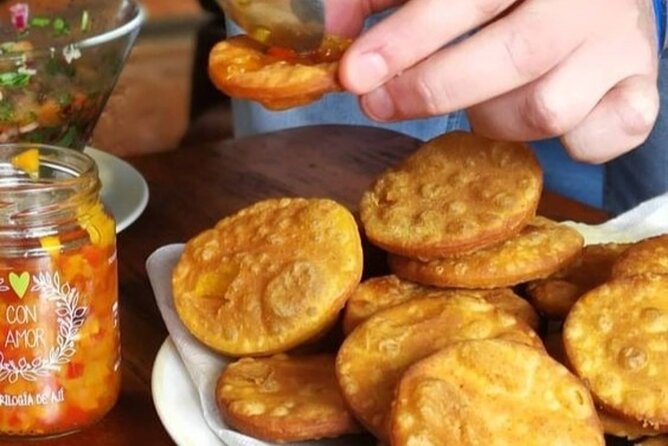
- Expect Chilean comfort food: Tastings may include empanadas, completo Italiano, pastel de choclo, and a peach-based traditional drink.
- Guide quality matters: David and Caroline are praised for warmth, local context, and flexibility, but one low-rated experience reported a weak route and limited site information.
- Book early for popular dates: The experience is booked about 40 days ahead on average, a useful warning if your schedule is tight.
Why this tour works best on your first day
A food walk is often a fine way to get your bearings, and this one has a useful advantage: the sights are woven into the meal rather than treated as separate photo stops. You walk through several of Santiago’s central districts while your guide explains what you are eating and how it fits Chilean life.
I would schedule it near the start of your stay. One guide, David, is repeatedly praised for giving people a fast grounding in Chilean food, customs, neighborhoods, and city life. That early context can help you make better choices for the rest of your visit.
The three-hour length is long enough to sample several foods without taking over your day. It is also short enough to pair with another museum, a neighborhood walk, or an evening meal. Since this is a walking experience with no transportation included, wear comfortable shoes and think about how much walking you can manage.
The private setup is a major benefit. You can ask questions without holding up a large group, and your guide can change the plan. One couple stopped eating when they were full and went to look for lapis jewelry instead. On a Sunday, David substituted a flea market because many food businesses were closed. That sort of adjustment is much harder on a fixed group tour.
More Food Tours in Santiago
- Cajon Del Maipo Including Wine with Picnic and Empanada
★ 5.0 · 612 reviews - Santiago Half-Day Walking Tour with Hotel Pick up & Food Sample
★ 4.5 · 467 reviews - New Concha y Toro Tour Marques with class, extra tasting y food
★ 4.0 · 329 reviews
Starting near Morandé 25 in central Santiago
The meeting point is Morandé 25, in the central part of Santiago. The tour ends back at the same meeting point, and the area is near public transportation. You will need to arrange your own way there and back because transportation is not included.
The details suggest a city-center walk rather than a vehicle tour. That is good news if you want to see Santiago at street level, but it also means you should not expect a ride between districts or a restaurant-only meal. Food tastings are part of the experience, yet the tour is also about streets, public spaces, buildings, and everyday city rhythms.
Ask about the exact meeting time and food plan when you book. The supplied details do not list a fixed start hour, and the reviews show that opening hours can affect the route. One guide change happened very close to the scheduled meeting time, although the operator found a replacement two hours later. That was handled well in the end, but it is a reminder to keep a little flexibility if this is your only day in Santiago.
Barrio Lastarria: cafés, culture, and a gentle introduction
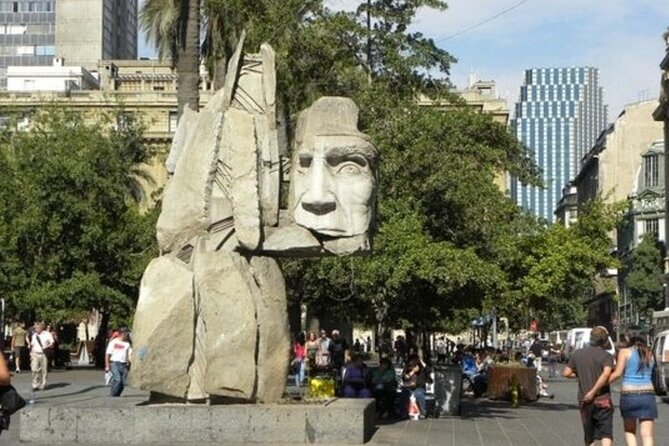
Barrio Lastarria is a sensible opening stop. The area is known for cultural venues, cafés, street performances, and a mix of local and visitor activity. It gives your guide a natural setting to introduce Santiago before you begin working through the food.
This is also a good place to ask what counts as everyday Chilean food rather than food made mainly for tourists. The best part of a private tour is the conversation. Guides praised for this experience, especially David and Caroline, seem to use food as a way into wider topics such as local customs, architecture, and city life.
Do not expect a long neighborhood lecture or a formal tasting menu here. The stop is listed at about 36 minutes, so the pace is purposeful. You may get a short orientation, a tasting, and time to look around before moving on.
National Museum of Fine Arts: food with a cultural frame
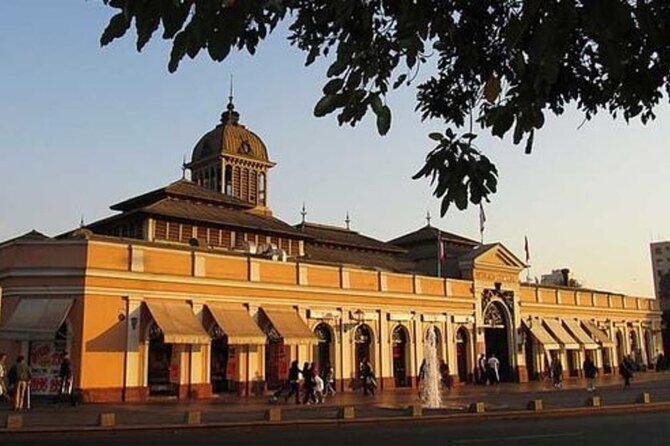
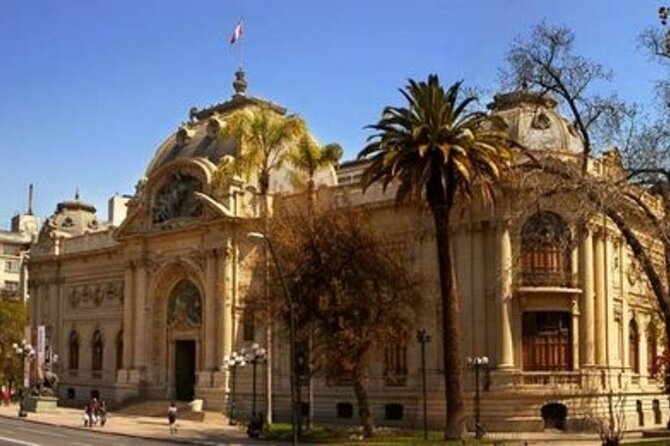
The National Museum of Fine Arts occupies a grand neoclassical building and presents Chilean art. The tour does not include a museum admission ticket, and the itinerary does not promise an extended indoor museum visit. Treat this stop mainly as an architectural and cultural marker unless your guide confirms otherwise.
I like its place in the route because food makes more sense when it is tied to the city’s creative life and public spaces. You are not simply moving from one snack counter to another. You are walking through a central part of Santiago and seeing how art, architecture, cafés, and street life sit close together.
The practical point is simple: admission is listed as free, but that does not necessarily mean you will spend a full museum visit inside. If the art collection is important to you, plan a separate visit so you are not relying on this three-hour walk to cover the galleries.
A completely different kind of day out:
- Valparaiso Port and Viña del Mar with Casablanca Wine Tasting
★ 5.0 · 6,110 reviews - Santiago: Cajon del Maipo/Embalse del Yeso Tour with Picnic
★ 4.3 · 3,789 reviews - Santiago: Vina Del Mar, Valparaiso, Casablanca & Reñaca Tour
★ 4.2 · 2,838 reviews - Cable Car, Funicular and Sightseeing Bus in Santiago one day
★ 5.0 · 2,325 reviews
Mercado Central: the tour’s strongest food setting
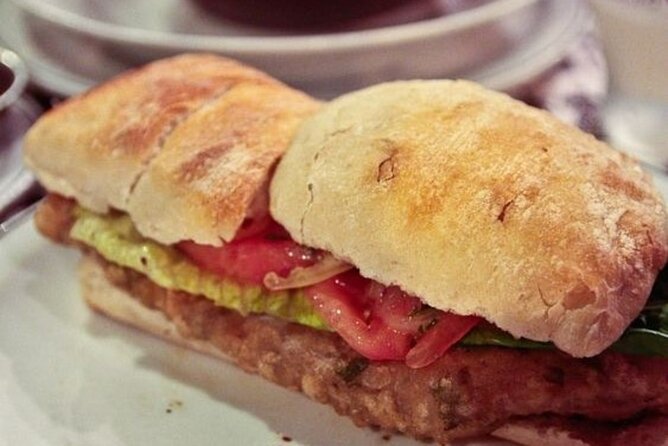
Mercado Central is the natural food center of this route. It is a busy market filled with local flavors, and it gives you a chance to connect what you taste with the ingredients and food culture of Santiago.
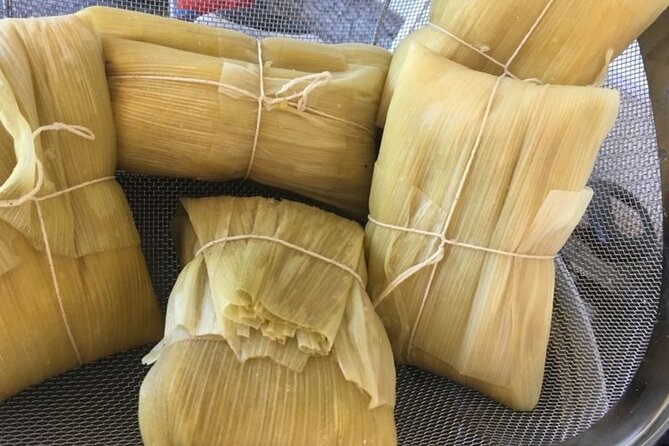
The available information does not provide a fixed menu, so you should not book this expecting a guaranteed list of dishes. Still, the food examples give you a useful idea of the range. You might encounter an empanada, a completo Italiano with mayonnaise, ketchup, and avocado, or an introduction to pastel de choclo, a Chilean corn-based dish.
The market can also be the place where your guide explains how Chileans eat casually, what counts as a quick meal, and how traditional dishes fit beside modern city food. That is more useful than simply collecting small bites without context.
There is one practical water tip worth taking seriously: bring your own water. A rating note says restaurants provide bottled water rather than free tap water. It is a minor expense, but you will appreciate having water with you during a three-hour walk.
Plaza de Armas: Santiago’s civic heart
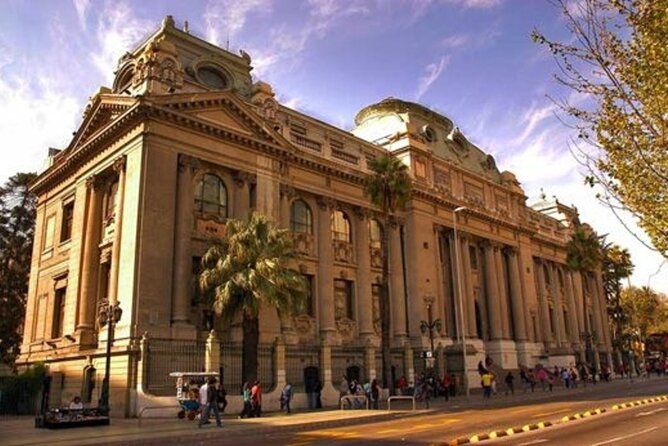
Plaza de Armas is Santiago’s main square, surrounded by historic buildings and constant activity. It is a good place to pause after the market and see the city’s public face.
The square helps connect the food stops to the city’s past and present. Your guide can point out the buildings and explain how the center functions as a meeting place. The quality of this part depends on the guide. Many comments praise David and Caroline for giving the food cultural meaning, while one low-rated account said the assigned guide knew little about the sites or history and did not follow the advertised route.
That contrast matters. The itinerary gives you the right places, but a place list alone does not make a strong city tour. If you receive a guide who is responsive and well prepared, Plaza de Armas can become one of the most useful orientation points of the morning. If not, it may be little more than a quick square-side stop.
Cerro Santa Lucia: gardens and a city view
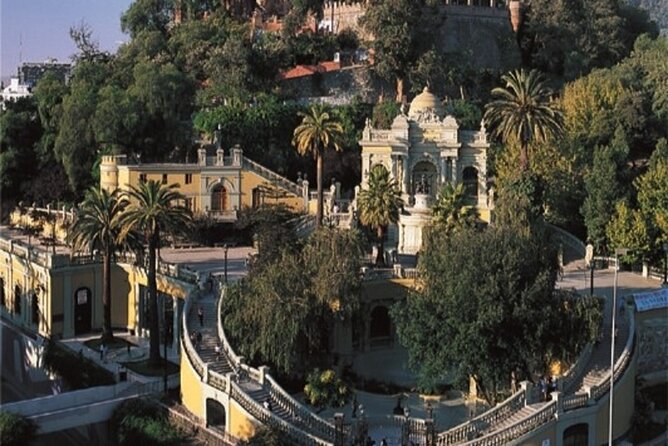
Cerro Santa Lucia provides a change of pace. Its gardens and elevated views offer a break from the dense central streets, and it is a pleasant final stop for taking in Santiago from above.
The itinerary describes it as a beautiful park with sweeping city views. The supplied details do not confirm how many stairs are involved or exactly how far you will climb, so ask the operator if mobility is a concern. The walk is described as suitable for most people, but one participant with a disability found walking very challenging. Her guide tried to accommodate her, yet the route was still difficult.
For most people, this stop gives the tour a satisfying finish. You have tasted local foods, walked through several central areas, and then gained a broader view of the city. The sequence also helps prevent the tour from feeling like three hours spent entirely indoors or at counters.
What you might eat along the way
The precise tastings can change, which is both the strength and weakness of the experience. A fixed menu gives you certainty. A flexible local guide can respond to what is open, what you like, and what you can still fit in your stomach.
Foods specifically associated with the experience include:
- Empanadas: A classic Chilean snack and an easy first taste of local cooking.
- Completo Italiano: A hot dog served with the familiar combination of tomato, avocado, and mayonnaise, with ketchup also mentioned in one tasting.
- Pastel de choclo: A traditional corn dish that gives you more than a quick street snack.
- A peach-based traditional drink: One couple particularly enjoyed this drink alongside the empanadas and completo Italiano.
- Other local specialties: The menu is not fixed, so your guide may choose different stops based on opening hours and your preferences.
One guide introduced a native drink that a participant disliked, only for the same drink to taste much better at another place on a later tour. That is a useful lesson: a dish or drink can depend on the vendor, preparation, and your own taste. You are paying for the local guidance as much as the individual bite.
Tell the operator about dietary requirements when booking. Because this is a private tour, the guide has more room to adjust than a large group operator would, but the supplied information does not promise a particular substitute for every diet.
David, Caroline, and the importance of the guide
The strongest part of the experience is the human element. David is praised for acting more like a well-connected local friend than a scripted guide. He adjusts the route, asks what you want to eat and see, and explains Chilean food in a way that helps you recognize it later in your trip.
Caroline receives similar praise for combining city history, cultural context, and fun. That balance is important. A food walk should teach you something, but it should not feel like a lecture delivered between mouthfuls.
The guide roster may also include Luciano, Maria, Fernando, or others, and the experience is offered in Spanish, English, French, and Italian. Since the guide can shape the day so strongly, I would state your interests clearly before the tour begins. Tell the guide if you want more food, more architecture, a slower pace, markets, or local history.
The one two-star experience should not be ignored. The participant described the guide as kind and accommodating, but said he lacked site knowledge and did not follow the stated route. The operator apologized and contacted the customer afterward. With a 96 percent recommendation rate, this appears to be an exception, but it shows why expectations and guide assignment matter.
Is $58.71 good value?
At $58.71 per person, the value depends on how you use the tour. If you compare it with buying a few snacks alone, the price is high. If you include a private guide, city orientation, five central stops, several tastings, and the freedom to adjust the route, the price is easier to justify.
The biggest advantage is the private format. A couple, family, or small group can ask questions and guide the conversation toward its own interests. You are not paying for transportation, and tips are optional, so budget separately for your food-related spending if the tasting allowance is not clearly explained at booking.
I would see this as part meal, part orientation walk, and part private introduction to Santiago. It is most valuable on your first full day, when you can use the guide’s suggestions for the rest of your stay. It is less appealing if you want a strict food itinerary, a large number of substantial meals, or a fully accessible route with confirmed distances and surfaces.
Free cancellation is available if you cancel at least 24 hours before the start time. Changes or cancellations made inside that window are not accepted for a refund.
Who should book this Santiago food walk?
I would recommend it for couples, solo visitors, and small groups who want local conversation rather than a scripted group tour. It suits people who enjoy walking, trying unfamiliar foods, and learning how dishes connect to neighborhoods and daily life.
It is also a good fit if you have only one day in Santiago. The route covers enough of the center to help you decide where to return, and the private format lets you focus on your own questions.
I would hesitate if you have serious mobility limits unless the operator confirms the route can be adjusted. I would also hesitate if you need a guaranteed menu or a fixed sequence of restaurants. Sunday openings, guide changes, and local business hours can alter the plan.
FAQ
How long does the street food tour last?
The tour lasts approximately three hours.
Where does the tour begin?
The meeting point is Morandé 25, Santiago, Región Metropolitana, Chile.
Where does the tour finish?
The experience ends back at the meeting point.
Is the tour private?
Yes. Only your group participates, and no other group is added to your booking.
What languages can the guide speak?
The guide may conduct the tour in Spanish, English, French, or Italian.
Is transportation included?
No. This is a walking tour, and transportation is not included.
Can I share dietary requirements?
Yes. You should provide your dietary requirements when booking so the private tour can be adjusted as far as possible.
Should you book it?
Book this tour if you want a personal first look at Santiago, especially if food, neighborhood walks, and cultural conversation matter more to you than a fixed restaurant schedule. The private format, flexible guides, and central route give it real value, and David and Caroline appear particularly strong at turning a simple food walk into a useful introduction to Chile.
Before paying, confirm the meeting time, expected tastings, pace, and mobility needs. If you do that and arrive hungry, this should be a friendly, practical way to meet Santiago through its streets and its food.
Just added in Santiago
- Walking City Tour with Funicular, Cable Car and Tasting★ 4.3 · 6 reviews
- VIÑA DEL MAR AND VALPARAISO TOUR★ 4.8 · 20 reviews
- Tour VIÑA CONCHA Y TORO + CASA MARQUES – Chile, from Santiago.★ 5.0 · 2 reviews
- Undurraga + Isla Negra + San Afonso del Mar —– Full day★ 4.1 · 8 reviews
- Undurraga Wine tour★ 4.2 · 15 reviews
- Southcoast – Private Full-Day tour★ 5.0 · 6 reviews
- Private Casa Blanca Valley Wine Experience from Santiago★ 4.5 · 8 reviews
- Santiago Private walking tour with Lunch★ 5.0 · 5 reviews
Chilean Food Tours, compared.
Cajon Del Maipo Including Wine with Picnic and Empanada
Read our review →
Santiago Half-Day Walking Tour with Hotel Pick up & Food Sample
Read our review →
New Concha y Toro Tour Marques with class, extra tasting y food
Read our review →
Valparaiso & Casablanca : Wine, Gastronomy and Living Culture
Read our review →
4h Cooking Class in Santiago with 8 Recipes & Bottomless Drinks
Read our review →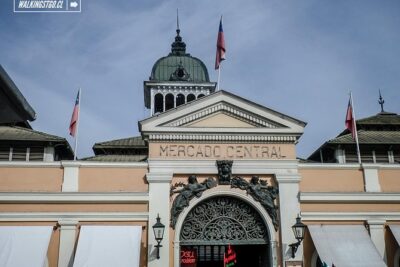
Santiago city experience: Walking tour, Market visit, Lunch & Coffee included
Read our review →
Learn to Prepare the Famous Chilean Pine Empanada
Read our review →
Surfing, Sandboarding & wild Sea lions + Chilean drinks & food
Read our review →Browse the lists this tour appears in